Discover the best snook fishing destinations, guided trips, and lodge-based experiences worldwide. Explore remote waters and world-class angling with expert local hosts.
No results available
Snook are ambush predators found in tropical estuaries, surf, and mangrove-lined creeks. Known for explosive takes and acrobatic fights, they’re a favorite inshore target for anglers who value visual strikes and close-quarters action.
Snook (Centropomus spp.) thrive in brackish waters along the Atlantic and Pacific coasts of the Americas. The most well-known is the common snook (Centropomus undecimalis), found from Florida and Mexico to northern South America. Other regional species include Pacific black snook and white snook.
They’re typically targeted near mangroves, creek mouths, and along beaches during dawn or dusk. Snook feed aggressively on baitfish and crustaceans, striking topwater plugs, jigs, and streamers with power and precision. On fly, they respond well to baitfish patterns when the presentation is tight to cover or current seams.
Snook are notorious for their ability to wrap around mangrove roots or jump off the hook in open water. They’re a technical but rewarding target for anglers who thrive on sight-casting, patience, and accuracy. Many lodges now promote catch-and-release, especially for trophy fish over 30 inches.
Colombia’s Pacific coast holds quality snook fishing in tidal estuaries, river mouths, and surf zones. Juvenile fish can be caught in mangrove systems, while larger snook are often found near river outflows and submerged channels during tide movement.
Yucatán’s northern coast and protected lagoons offer excellent snook fishing, particularly in summer and fall. Anglers cast jigs, soft plastics, or streamers into tight mangrove cuts, often spotting fish before the strike.
Snook are a staple of inshore fishing in Florida, especially along the Gulf Coast and in the Everglades. Sight-casting with lures or flies is common in back bays, passes, and near beaches in summer and fall.
Snook in Belize are often found around river mouths and mangroves near tarpon and baby permit habitats. They’ll take well-placed flies and lures in low-light or stained water conditions.
Pacific snook are found in estuaries, beaches, and jungle river systems from Colombia through Costa Rica. They tend to be larger than Atlantic snook and respond well to bait and topwater plugs.
In Brazil, snook inhabit mangrove edges and slow-flowing river mouths. The fishing here is less pressured but more bait-oriented, with early morning sessions offering the best shot at a big fish.
Snook are the ultimate inshore ambush predator—fast, aggressive, and cunning. They hit hard and fight dirty, diving into roots or launching into head-shaking jumps. The best fishing often involves close-quarters accuracy, whether skipping lures under branches or dropping flies tight to a bank. For anglers who like challenges with visual rewards, snook deliver.
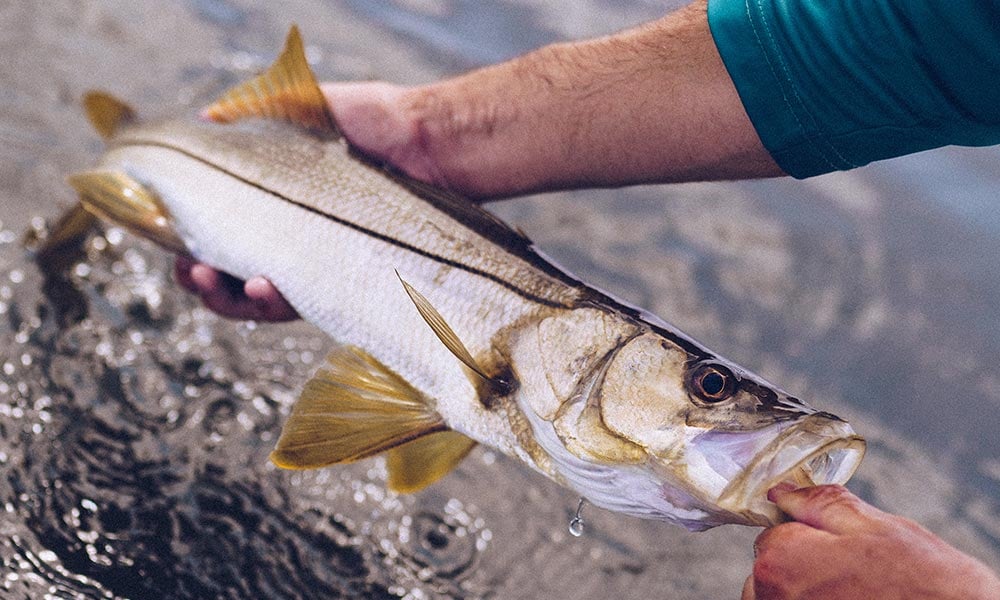
Snook have a long, sleek profile with a distinct black lateral line running from head to tail. Their coloration shifts from pale silver to bronze depending on water clarity and habitat. A sharp snout, underslung jaw, and broad tail give them speed and power. Average size ranges from 3–15 pounds, but trophy fish can exceed 30 pounds in prime regions like Florida, Colombia, and Panama.
Snook fishing improves with warm water, moving tides, and low-light conditions. Mornings and evenings, especially around new or full moons, provide peak chances for larger fish close to shore or in tight mangrove cuts.
FishingExplora features snook-focused lodge trips in Colombia and Mexico’s Yucatán Peninsula, where anglers explore wild mangrove systems, river deltas, and remote surf zones. These trips offer shots at snook on both spin and fly, with local guides who understand tidal patterns and habitat transitions. Whether sight-casting tight to the bank or drifting live bait through current, snook bring the fight in shallow water.
Snook fishing peaks in warm months with strong tides—typically May through October, depending on region. In Colombia and the Yucatán, dry season clarity and active bait movement make for prime early morning sessions near creeks and beaches.
Use an 8–10 weight rod with floating line and short leaders for turnover. Cast baitfish or shrimp patterns close to overhangs and root lines. Focus on early morning tides when snook push shallow, and use short, accurate strips to trigger ambush strikes near cover.
Colombia, Panama, Florida, and the Pacific coast of Costa Rica are known for large snook. River mouths, surf zones, and mangrove estuaries produce fish over 30 pounds when tides and bait align during warm months.
Medium spinning gear with 20–30 lb braid and strong fluorocarbon leaders is ideal. Snook strike hard and fight close to cover, so gear must handle both abrasion and quick direction changes during the fight.
Snook are considered excellent table fare with white, mild flesh—but regulations vary by region. In many lodge programs, catch-and-release is encouraged to protect breeding fish and maintain healthy inshore populations.
We use cookies to improve your experience and enable key features on the platform. You can choose which cookies to allow. Some features may not work fully without consent.