Discover top flats fishing destinations worldwide, with experienced local guides and lodges offering direct access to prime waters.
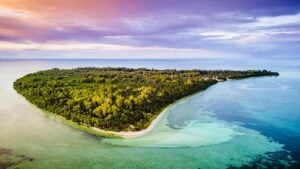
Outer Islands, Seychelles
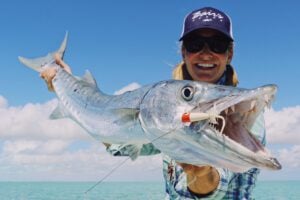
Barracuda, Bonefish, Bumphead Parrotfish
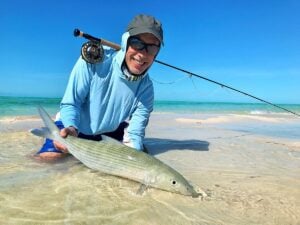
South Andros, The Bahamas
Bonefish, Permit, Tarpon
Outer Islands, Seychelles
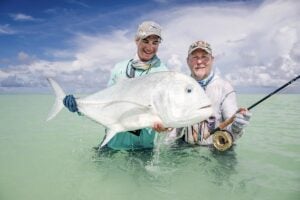
Barracuda, Bonefish, Giant Trevally (GT)
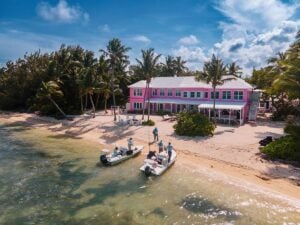
Abaco, The Bahamas
Amberjack, Barracuda, Bonefish
Yucatan Peninsula, Mexico
Barracuda, Bonefish, Grouper
Abaco, The Bahamas
Barracuda, Bonefish, Grouper
Mangrove Cay, The Bahamas
Barracuda, Bonefish, Snapper
No results available
Flats fishing is built around sight. You are not waiting for a bite — you are spotting fish, reading their movement, and making a targeted cast before they reach you. The margin for error is small: a clumsy approach, an early cast, or a fly that lands a foot off line can end a shot in seconds.
Most flats fisheries sit in warm tropical latitudes where water is shallow and clarity is exceptional. The combination of hard sunlight, white sand or coral bottoms, and fish moving in inches of water creates conditions where the angler can see everything — and the fish can too. That visual, technical quality is what draws serious anglers to flats fishing and keeps them coming back.
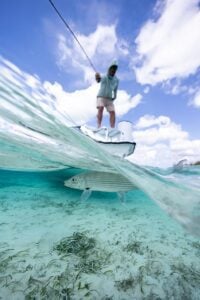
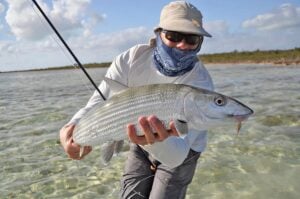
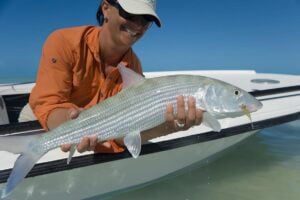
Bonefish tail in small groups or cruise solo over sand, turtle grass, and marl flats. Their combination of speed, wariness, and shallow habitat makes them the defining target of tropical flats fishing. The Bahamas holds the largest populations and biggest average fish sizes in the world, with Andros widely regarded as the benchmark destination.
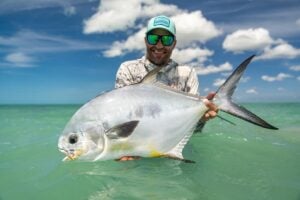
Permit feed selectively on crabs and shrimp near channel edges and sand depressions, typically in singles or pairs. They are notoriously difficult to fool — even a technically good cast and accurate fly can result in a refusal. Mexico’s Yucatán coast, particularly Ascension Bay, and parts of the Bahamas offer the most consistent permit fishing available to lodge-based anglers.
Juvenile tarpon hold in warm backcountry bays and mangrove creek systems year-round. Migratory adult fish — typically in the 80–150 lb range — push onto oceanside flats in spring and early summer, following established tide-driven routes. Timing and stealth are both critical; tackle needs to handle sustained runs and aerial acrobatics on a short line.
Several trevally species hunt tropical flats and reef edges. Bluefin trevally are among the most commonly encountered, tracking baitfish along coral edges and mangrove margins. They are aggressive, hard-fighting, and available across a wide range of Indo-Pacific destinations — a bonus species on many flats programs that often provides the fastest action of the day.
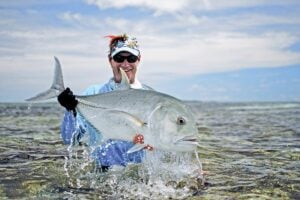
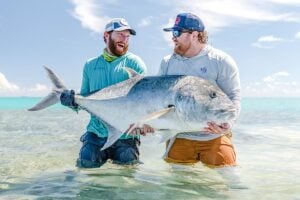
Giant trevally patrol tropical flats and reef edges with an aggression that sets them apart from most flats species. They hit hard, run fast, and demand heavy fly rods — typically 12-weights — with strong leaders and large-arbor reels. The Seychelles Outer Islands, remote Indian Ocean atolls, and parts of the Pacific offer the benchmark GT fisheries for lodge-based anglers.
Triggerfish tail in inches of water over coral and rubble flats, often in conditions that make presentation extremely difficult. They are selective feeders with excellent eyesight and a strong startle response — a technically demanding target that rewards patience and precise fly placement.
Snook hold tight to mangrove fringes, channel edges, and structure, ambushing prey on the tide. They strike hard and immediately use their surroundings to their advantage. Behavior changes significantly with tide and light, which makes reading conditions as important as the cast itself.
The Bahamas holds more productive flats acreage than any other destination in the Caribbean. Andros alone covers roughly 2,300 square miles and is widely regarded as the Bonefish Capital of the World, with guide families who have been reading these tides for three and four generations. Lodge programs here are built specifically around the fishing.
Mexico’s Yucatán offers productive flats fishing for all three grand slam species — bonefish, permit, and tarpon — across Ascension Bay, Espíritu Santo Bay, and Campeche. Permit fishing in particular is among the most consistent in the world, with large fish present year-round and peak action from March through July.
The Outer Islands of the Seychelles offer some of the most species-diverse flats fishing available — giant trevally, triggerfish, bonefish, and bumphead parrotfish across remote coral flats and lagoon systems. Access is typically by liveaboard or fly-in camp, and the fishing is managed under strict conservation protocols.
Other productive flats fishing destinations include Belize, the Florida Keys, Cuba, Honduras, Mauritius, and French Polynesia — all known for bonefish, permit, and tarpon fisheries, though not all are currently featured on FishingExplora.
FishingExplora lists carefully selected lodges and guided programs specializing in shallow-water sight fishing — from remote atolls to well-established bonefishing destinations. Contact hosts directly to discuss program structure, guiding approach, and availability.
FishingExplora’s editorial content draws on lodge input, guide experience, published field reports, and independent research to help anglers make informed decisions about premium fishing destinations.
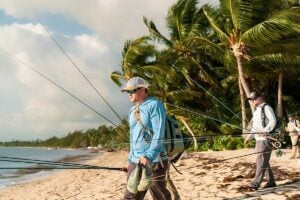
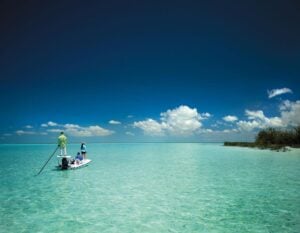
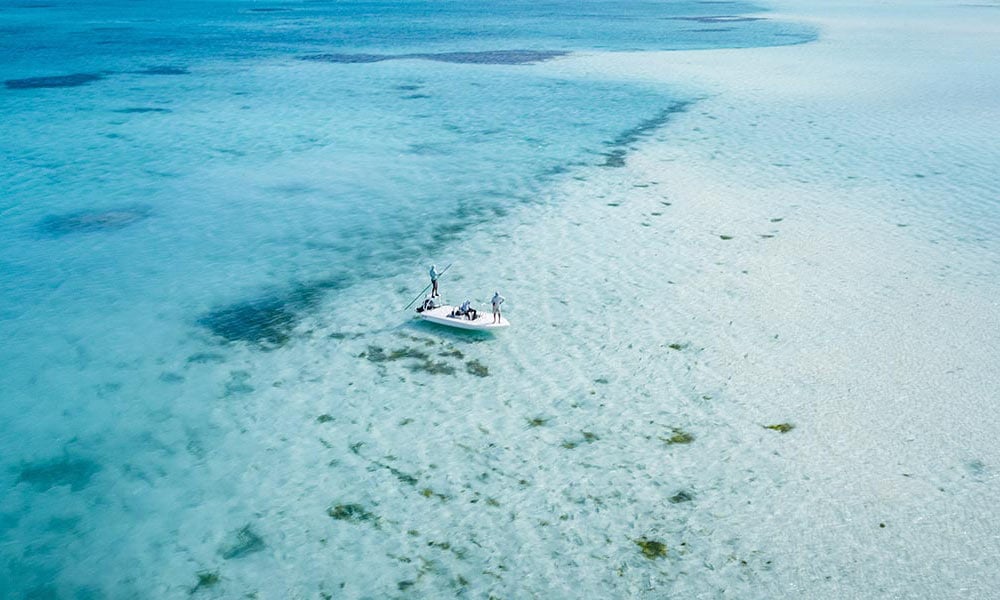
Flats fishing is sight fishing in shallow water — typically saltwater — where anglers spot, stalk, and cast to individual fish on open sand, coral, turtle grass, or marl flats. The defining characteristic is that fish are visible before the cast. Most flats fishing is done by wading or from a poled skiff in tropical destinations where water clarity allows visual contact with fish in water from inches to a few feet deep.
The Bahamas is the most established flats fishing destination in the world, particularly for bonefish — Andros holds the largest fish and most extensive flats acreage. Mexico’s Yucatán Peninsula is the benchmark for permit, with Ascension Bay producing consistent action year-round. The Seychelles Outer Islands offer the most species-diverse Indo-Pacific flats fishing. Belize, the Florida Keys, and Cuba are also strong destinations depending on target species.
Permit are easily spooked, highly selective feeders, and capable of refusing a well-placed fly with no apparent reason. They often tail on crab beds or cruise channel edges in singles and pairs — giving the angler a clear shot that still requires precise presentation, the right fly pattern, and no small amount of luck. Catching a permit on fly is considered one of the most difficult achievements in saltwater fishing.
Bottom composition directly influences which species are present, how visible they are, and what flies work. White sand offers the best visibility and is ideal for wading. Turtle grass holds bonefish and permit feeding on crabs and shrimp. Marl and soft mud flats are typically fished from a skiff as wading is impractical. Coral rubble in the Indo-Pacific attracts triggerfish and trevally. Matching the fly to the bottom type and depth is as important as the cast.
Rod weight depends on the target species. An 8- or 9-weight is standard for bonefish — heavy enough for wind, light enough for accurate presentation. Permit require a 9- or 10-weight. Tarpon demand a 12-weight with a reel capable of handling sustained runs. Giant trevally are typically fished on a 12-weight with heavy leader and shock tippet. Bring a backup outfit — a spare rod is always worth the bag space on a week-long flats trip.
Wind is a constant on most tropical flats and the single biggest challenge for visiting anglers. A low, compact casting stroke delivers more accuracy than a high overhead cast in a crosswind. Sidearm and backhand presentations keep the fly out of the wind and reduce the time between spotting a fish and making the shot. Most guides position the skiff to give the angler a downwind or crosswind presentation — communicating your casting strengths before the first shot of the day helps significantly.
We use cookies to improve your experience and enable key features on the platform. You can choose which cookies to allow. Some features may not work fully without consent.