Discover the best golden dorado fishing destinations, guided trips, and lodge-based experiences worldwide. Explore remote waters and world-class angling with expert local hosts.

Santa Fe, Argentina
Golden Dorado, Pacú, Surubi
Corrientes, Argentina
Golden Dorado, Pacú, Pirá Pitá
Buenos Aires, Argentina
Golden Dorado, Pacú, Pirá Pitá
Buenos Aires, Argentina
Golden Dorado, Surubi, Tararira (Wolf Fish)
Corrientes, Argentina
Golden Dorado
Corrientes, Argentina
Golden Dorado, Pacú, Pirá Pitá
No results available
Golden dorado are apex predators of South America’s warm rivers — known for brutal strikes, aerial fights, and relentless power. Found in fast-moving waters across northern Argentina and into Bolivia and Brazil, they are a technically demanding target and one of the most rewarding in freshwater fly fishing.
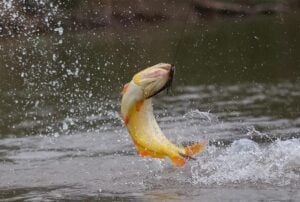
Golden dorado (Salminus brasiliensis), known across the continent as “river tigers,” are among the most sought-after freshwater gamefish in the world. They hunt in structure-rich rivers, ambushing baitfish with explosive energy. Their golden scales, muscular frame, and powerful jaws are built for fast-flowing water — and for punishing gear.
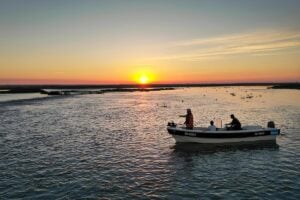
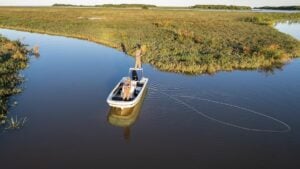
Targeting dorado means reading banks, casting tight to submerged wood and eddies, and reacting fast when fish commit. The take is rarely subtle. Most programs are boat-based, giving access to braided river systems that shift with season and water level.
For more on how Argentina’s lodge programs are structured and what a fishing week looks like, see our guide to golden dorado fishing in Argentina.
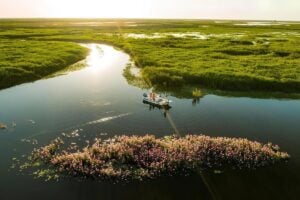
This northeastern province is the primary destination for golden dorado in Argentina. The Iberá Wetlands offer clear marsh creeks where fish can be stalked on surface flies; the Paraná system to the east holds larger, migratory fish in heavier water. Most lodges run skiff-based programs with access to both environments.
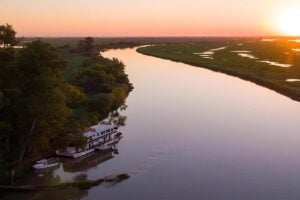
Santa Fe’s stretch of the Paraná provides consistent dorado fishing, particularly during seasonal migrations. Skiff access is standard, allowing guides to work side channels and feeding zones as water levels shift.
The lower Paraná and Uruguay River systems around Buenos Aires offer short-trip options for anglers with limited time. Fish quality depends heavily on guide knowledge and seasonal timing.
The Sécure, Agua Negra, and Pluma Rivers in the Tsimane territory offer a fundamentally different experience — clear, freestone streams where dorado can be stalked and sight-cast on single-hand rods. Average fish run smaller than on the Paraná, but the setting is unmatched. The season runs May through mid-October, coinciding with the dry season when rivers clear.
The Paraguay and upper Paraná systems carry healthy dorado populations and a growing catch-and-release culture among sport anglers. Infrastructure is less developed than in Argentina.
The Río Negro and lower Uruguay River offer solid dorado fishing, consistently overlooked by international anglers. Access and guide quality vary.
Golden dorado are prized for aggression, power, and the visual nature of the take. They are freshwater predator fishing targets that fight like saltwater fish — tearing through current, shaking hooks, and running hard in both directions. They reward accurate casting, a fast strip, and a confident hookset.
The environment adds to the challenge. Remote river systems, shifting channels, and dense jungle banks mean that reading water matters as much as presentation. On the Paraná, trophy fish in the 20–30 lb range are a realistic target; on Bolivia’s clear headwater streams, fish of 10–15 lbs are common and hard-earned.
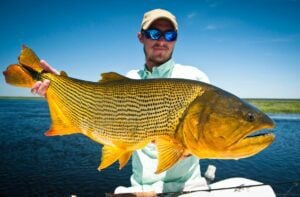
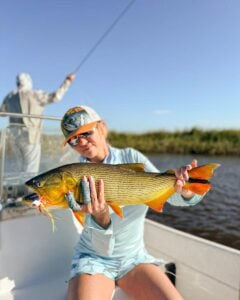
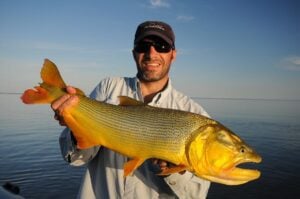
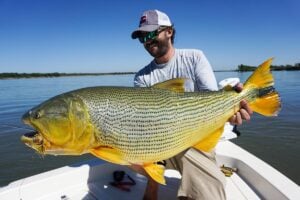
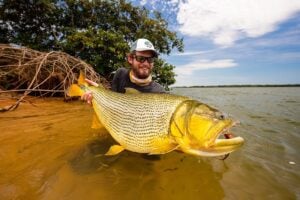
Golden dorado are unmistakable in good light. Adults carry deep golden flanks, a darker green back, and a pale silver belly — the fins run from gold to reddish-orange, and dark spots on each scale form faint longitudinal stripes along the body. Their large, bony head and powerful jaws are built for ambush; the lower jaw is notably strong and slightly upturned. The body is muscular and torpedo-shaped, built for short bursts of speed in fast current.
Juveniles are silvery rather than golden and display faint vertical bars — the pattern that gives the species its “river tiger” nickname. Full golden coloration develops as fish mature and is most vivid in clear water and during the spawn.
FishingExplora’s current lodge relationships cover Argentina — primarily Corrientes, with additional programs on the Paraná in Santa Fe and Buenos Aires province. Bolivia programs are listed here for reference.
FishingExplora’s editorial content draws on lodge input, guide experience, published field reports, and independent research to help anglers make informed decisions about premium fishing destinations.
An 8- or 9-weight fast-action rod is standard across Argentina and Bolivia. Pair it with a floating or sink-tip line and a large-arbor reel with a sealed drag. Large baitfish patterns — Andino Deceivers, Tarpon Bunnies, and similar articulated streamers — are the go-to flies. Strip fast, set hard.
In Bolivia’s jungle headwaters — particularly on the Sécure and Agua Negra — dorado are regularly sight-fished while wading. In Argentina, some clear marsh creeks in the Iberá system also offer walk-and-wade options. Most Argentine fishing, particularly on the Paraná, is boat-based.
Yes. Dorado have sharp teeth and violent headshakes that will cut fluorocarbon, particularly when fish roll or dive into structure. Titanium or steel wire in the 30–40 lb range is standard practice across all dorado fisheries. Soft mono or fluoro leaders will not survive contact with a hooked fish.
High water spreads fish across floodplains and makes sight fishing difficult. Dropping or stable levels concentrate dorado in side channels and defined current seams — typically the most productive and visual conditions for both fly and conventional anglers. Guides across the Corrientes system rate stable or falling water as the most reliable indicator of a good day.
Most golden dorado caught on fly weigh between 3–10 kg (6.6–22 lb), with a 4–5 kg fish considered a quality catch. Females grow considerably larger than males — trophy fish over 20 lb are a realistic target on Argentina’s Paraná system, and exceptional specimens exceed 30 lb. The IGFA all-tackle world record stands at 55 lb 11 oz, caught on the Uruguay River in 2006.
Golden dorado are native to the warm freshwater river systems of central and eastern South America — primarily the La Plata basin, which spans Argentina, Paraguay, Uruguay, southern Brazil, and Bolivia. They favor fast-moving water with structure: submerged timber, rock gardens, channel edges, and current seams where they can ambush prey. The largest and most accessible populations for sport fishing are found in Argentina’s Paraná River system and the Iberá wetlands of Corrientes province.
We use cookies to improve your experience and enable key features on the platform. You can choose which cookies to allow. Some features may not work fully without consent.