Explore Argentina’s best fly fishing lodges, from the wild trout rivers in Patagonia to golden dorado waters in the north.
Santa Cruz, Argentina
Brown Trout, Rainbow Trout
Santa Fe, Argentina
Golden Dorado, Pacú, Surubi
Corrientes, Argentina
Golden Dorado, Pacú, Pirá Pitá
Neuquén, Argentina
Brook Trout, Brown Trout, Rainbow Trout
Tierra del Fuego, Argentina
Sea Trout, Sea-Run Brown Trout
Neuquén, Argentina
Brook Trout, Brown Trout, Rainbow Trout
Buenos Aires, Argentina
Golden Dorado, Surubi, Tararira (Wolf Fish)
Patagonia Argentina
Brook Trout, Brown Trout, Rainbow Trout
Neuquén, Argentina
Brook Trout, Brown Trout, Rainbow Trout
Corrientes, Argentina
Golden Dorado, Pacú, Pirá Pitá
Corrientes, Argentina
Golden Dorado
Patagonia Argentina
Brook Trout, Brown Trout, Rainbow Trout
Neuquén, Argentina
Brown Trout, Rainbow Trout
Santa Cruz, Argentina
Brown Trout, Rainbow Trout
Río Negro, Argentina
Brook Trout, Brown Trout, Rainbow Trout
Tierra del Fuego, Argentina
Sea Trout, Sea-Run Brown Trout
Buenos Aires, Argentina
Golden Dorado, Pacú, Pirá Pitá
No results available
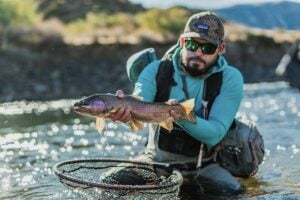
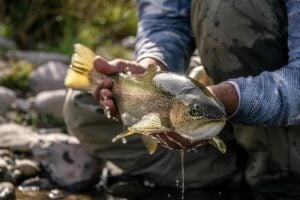
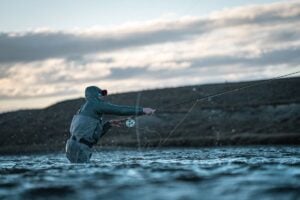
From the Andes of Patagonia to the tropical wetlands of the north, Argentina fly fishing covers more ground than almost any other destination on earth. Sea-run browns, golden dorado, and wild trout headline a country defined by strong outfitting, remote lodges, and specialized waters.
Argentina stands out among South American fishing destinations for its range — from the glacier-fed trout rivers of Patagonia to the jungle-wrapped dorado waters of the north. Swinging for sea-run browns on the Río Grande, drifting dries on the Malleo, or chasing dorado through the Iberá Wetlands are three entirely different pursuits, each with its own season, technique, and lodge culture.
For those comparing different lodge structures — from fixed-base dorado lodges to mobile Patagonia trout programs and beat-based sea trout weeks — see our Editorial Guide to Argentina Fishing Lodges, which explains how these programs differ and how to choose the right fit.
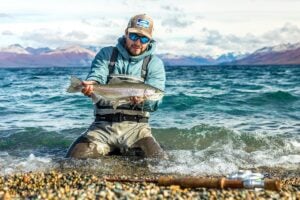
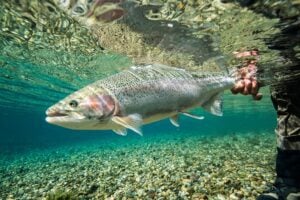
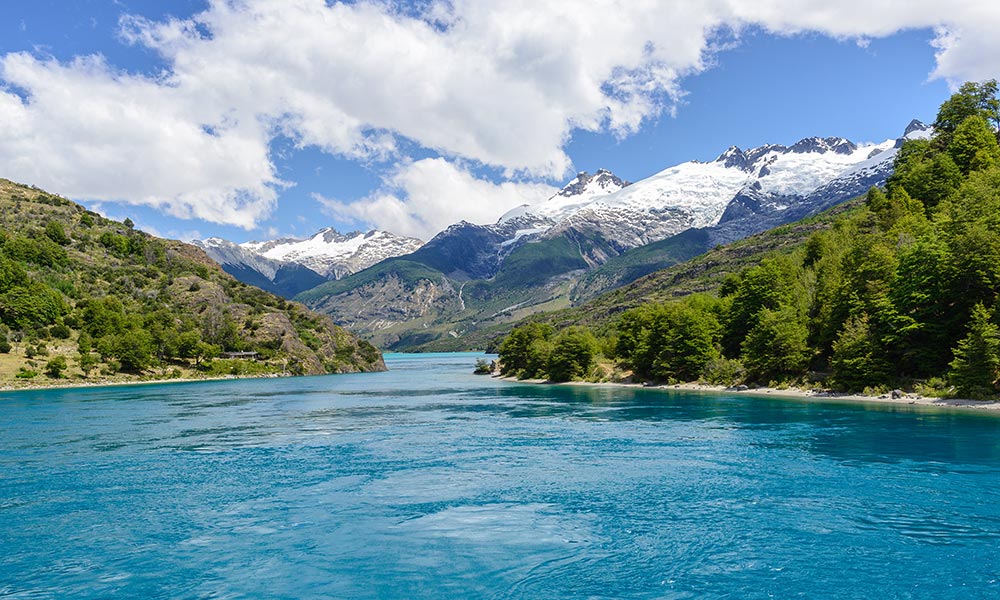
The Patagonian provinces form the backbone of Argentina’s trout fishery, covering a broad arc from Neuquén in the north to Santa Cruz in the south. Neuquén holds the country’s most storied rivers — the Chimehuin, Malleo, and Aluminé — alongside the Limay, a tailwater fishery producing large migratory brown trout.
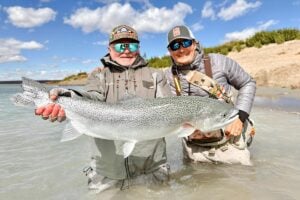
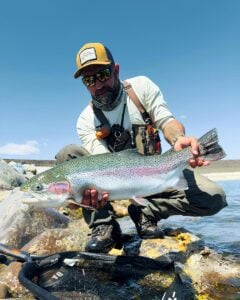
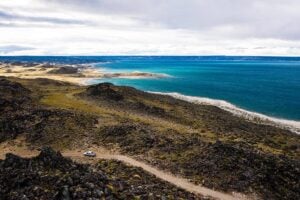
Río Negro offers Limay drift fishing and deep glacial lakes with Bariloche as a practical gateway. Chubut is known for technical spring creeks and remote backcountry lakes around Río Pico and Esquel. Santa Cruz, in the far south, is home to Lago Strobel — Jurassic Lake — a 65-square-kilometer stillwater widely regarded as the world’s most prolific trophy rainbow trout fishery, with rainbows averaging 6 to 8 pounds and double-figure fish routine.
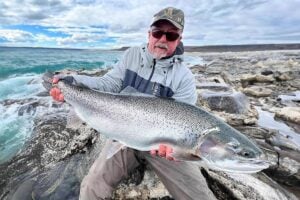
Tierra del Fuego is the southernmost of Argentina’s Patagonian provinces, lying on the archipelago south of the Strait of Magellan. Its fishery is entirely distinct from the mainland trout rivers to the north — the Río Grande is the top global destination for sea-run brown trout, with tightly managed private beats and consistent mid-summer runs. Average fish run over 9 lbs, with 20-lb fish released every week of the season.
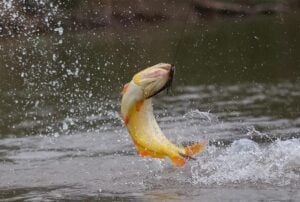
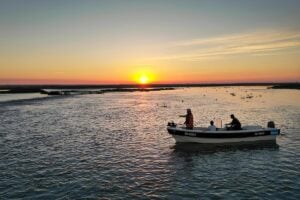
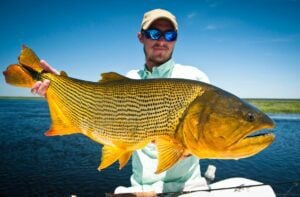
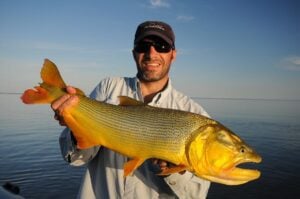
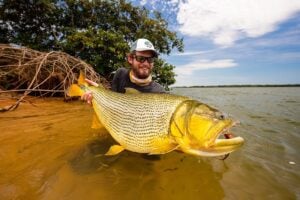
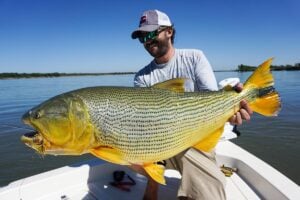
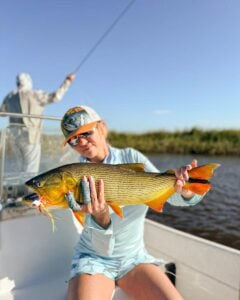
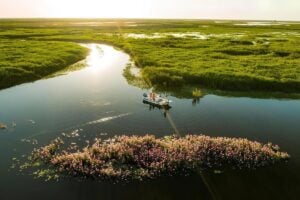
Float trips through the Iberá Wetlands and upper Paraná basin target golden dorado, surubí, and pacú in a wild, subtropical setting suited to both fly and spin anglers. The Iberá channels offer sight fishing and topwater action; the main Paraná runs bigger fish in heavier structure. You may also encounter pirá pitá and wolffish (tararira), two native species central to northern Argentina programs.
Santa Fe delivers consistent dorado action on the middle Paraná, with migratory baitfish and deep channel structure producing powerful strikes. Anglers planning northern Argentina dorado trips often combine Corrientes and Santa Fe across a single week.
The Paraná Delta — a UNESCO Biosphere Reserve — sits approximately one hour from the city center, offering dorado and tararira fishing in jungle channels without the logistics of a northern trip. A practical option for short programs or combining with time in the capital.
Argentina’s waters support exceptional biodiversity — from golden dorado and wild trout to native species like pacú, pirá pitá, and tararira (wolf fish). Each region delivers distinct techniques, environments, and seasonal dynamics.
To see a full breakdown of how each season fishes across trout, dorado, and sea trout, see our best time to fish in Argentina guide.
FishingExplora lists lodges across Argentina’s main fishing regions. Contact hosts directly to discuss seasons, program structure, and availability.
For more lodge-based options across the larger region, explore all our fishing lodges in South America.
FishingExplora’s editorial content draws on lodge input, guide experience, published field reports, and independent research to help anglers make informed decisions about premium fishing destinations.
Yes, a fishing license is required in most provinces, including across Patagonia and the northern dorado regions. Licenses are issued provincially — a Neuquén license does not cover Tierra del Fuego, for example. Most lodge programs include the relevant license in the weekly package or arrange it in advance; confirm this at booking.
Most travelers from North America, the EU, Australia, and the UK do not need a visa for short fishing trips to Argentina. Stays of up to 90 days are typically visa-free. Check current entry requirements and passport validity rules before traveling, as regulations can change.
Catch-and-release is mandatory on most regulated trout rivers, including all rivers in Neuquén province. Barbless hooks are required on many systems, and seasonal closures protect spawning fish. Golden dorado fishing in the north is also predominantly catch-and-release, enforced by lodge policy on better-managed waters. Most lodge programs include a full briefing on local regulations on arrival.
For Patagonian trout a 5–6 weight single-hand rod covers most situations. For sea-run brown trout on the Río Grande, an 8 or 9-weight two-handed rod of 12–14 feet is the practical standard. For golden dorado, an 8–9 weight single-hand with a strong drag system. Bring floating and sink-tip lines for each application. Many lodges provide loaner gear if arranged in advance — confirm specifics at booking.
International flights arrive in Buenos Aires (EZE), with frequent domestic connections to regional hubs including Bariloche (BRC), San Martín de los Andes (CPC), Río Grande (RGA), and Corrientes (CNQ). Most lodge programs include ground transfers from the arrival airport. Travel time from Buenos Aires to the fishing is typically three to five hours including domestic connection and transfer.
English is widely spoken at Argentina’s top fishing lodges and by professional guides. In small towns or remote areas, a few basic Spanish phrases help. Most lodges offer bilingual staff who handle logistics and transfers throughout your stay.
Tipping is customary. Plan to tip 10–20% of your guided trip cost for your guide and around 5–10% of your stay for lodge staff. Cash in U.S. dollars or Argentine pesos is preferred. Most lodges can advise on current local tipping norms when you arrive.
The Argentine peso is the official currency, but many fishing lodges quote prices in U.S. dollars. Credit cards are accepted in cities but less reliable in remote areas. Carry pesos for tips, local transfers, and purchases outside the lodge — most programs can advise on the best way to handle currency exchange on arrival.
Conditions vary significantly by region. In Patagonia, expect cool summers with temperatures ranging from around 45°F to 65°F (7°C to 18°C), reliable wind, and rapid weather changes — layering and waterproofs are essential regardless of the month. In northern Argentina during dorado season, expect heat and humidity, with temperatures regularly exceeding 85°F (30°C). Sun protection and light, breathable clothing are the priority there.
We use cookies to improve your experience and enable key features on the platform. You can choose which cookies to allow. Some features may not work fully without consent.