

The Lodge’s Location
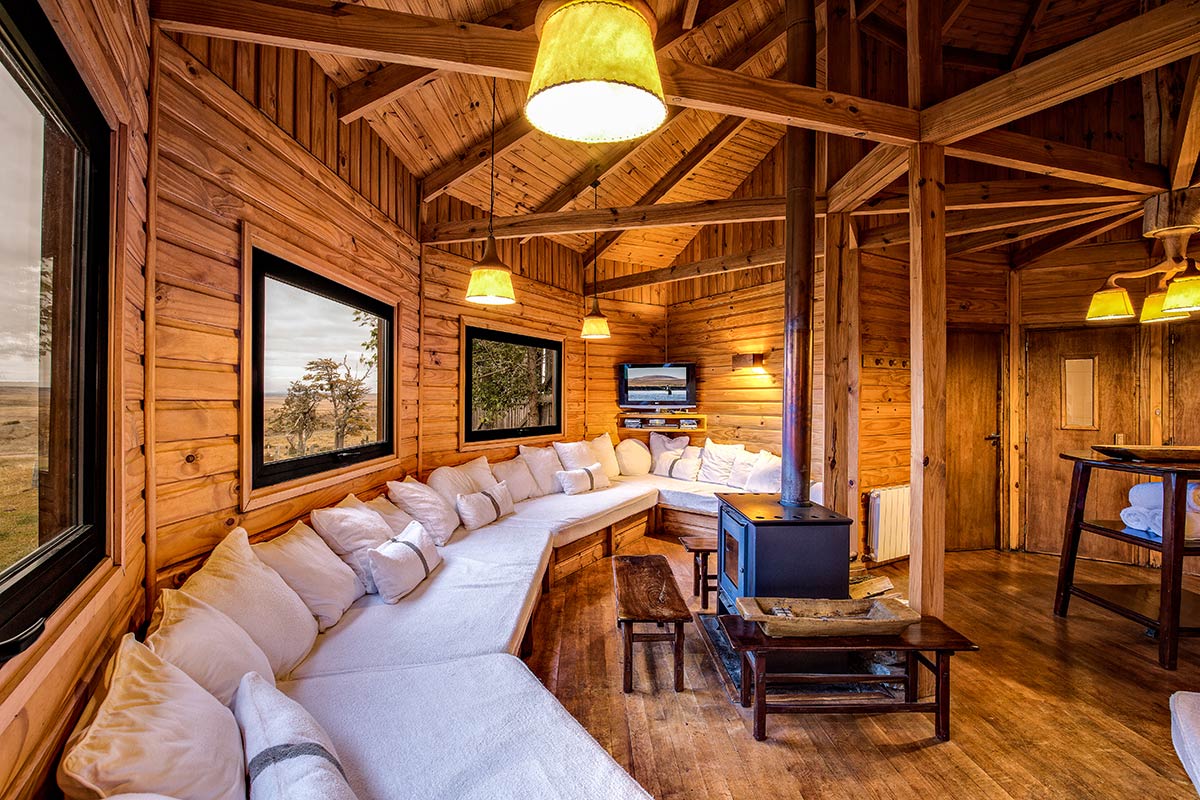
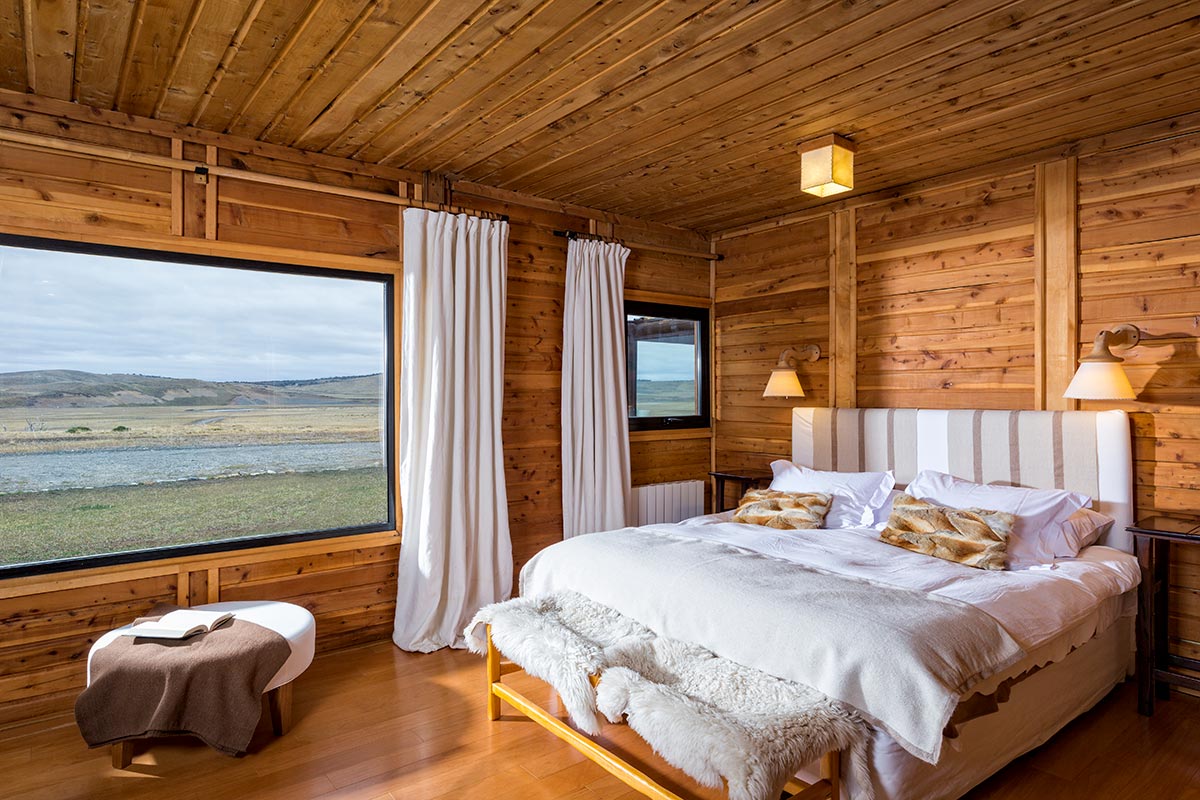
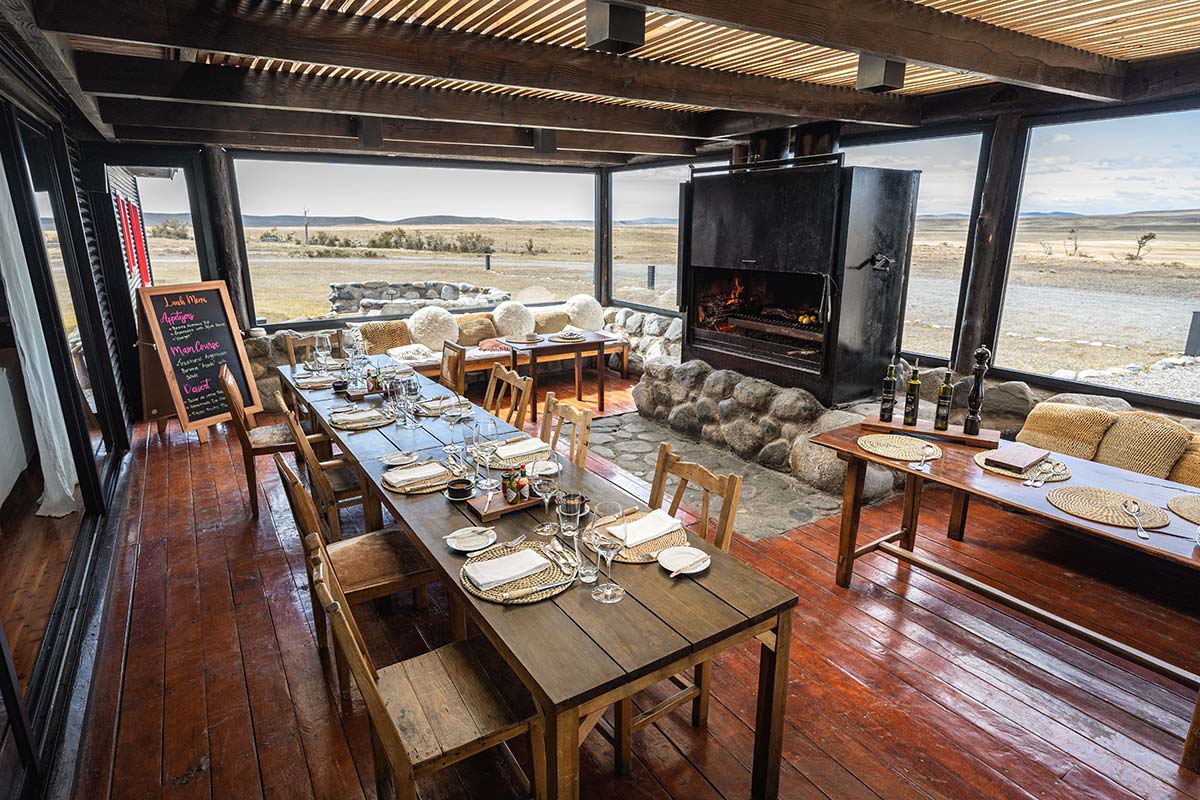
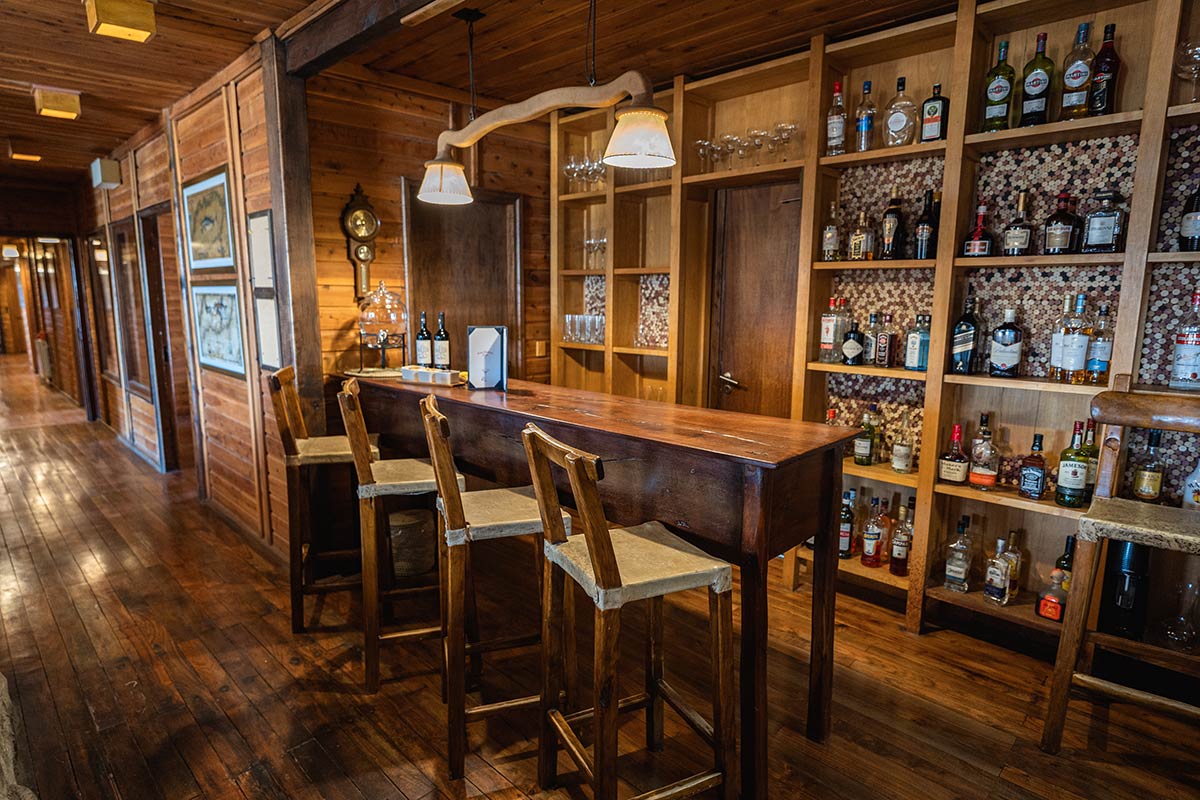
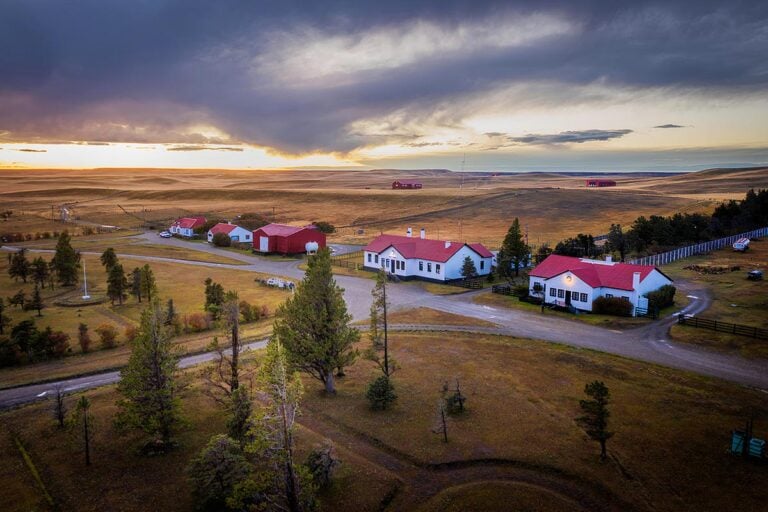
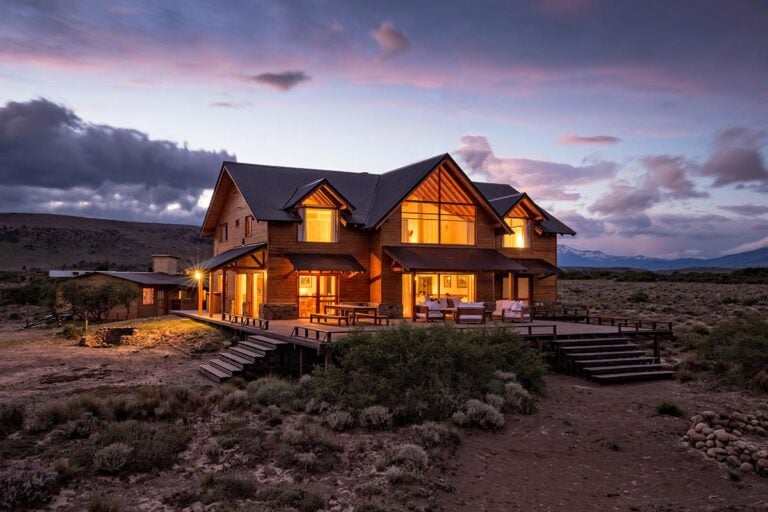
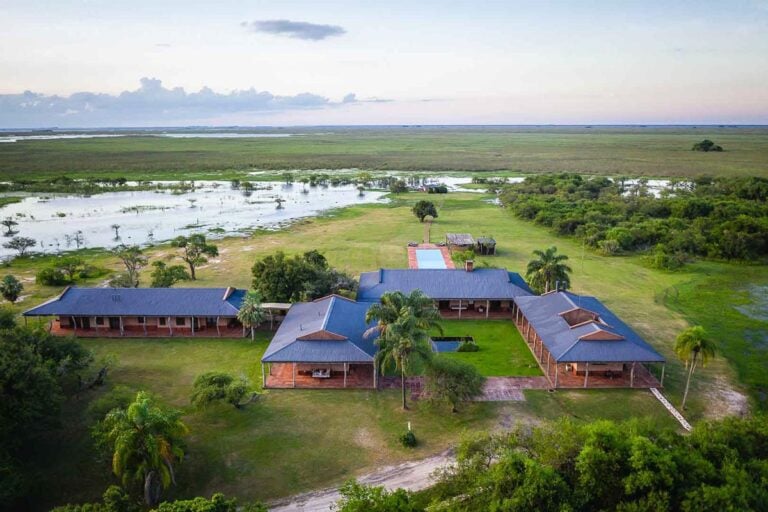
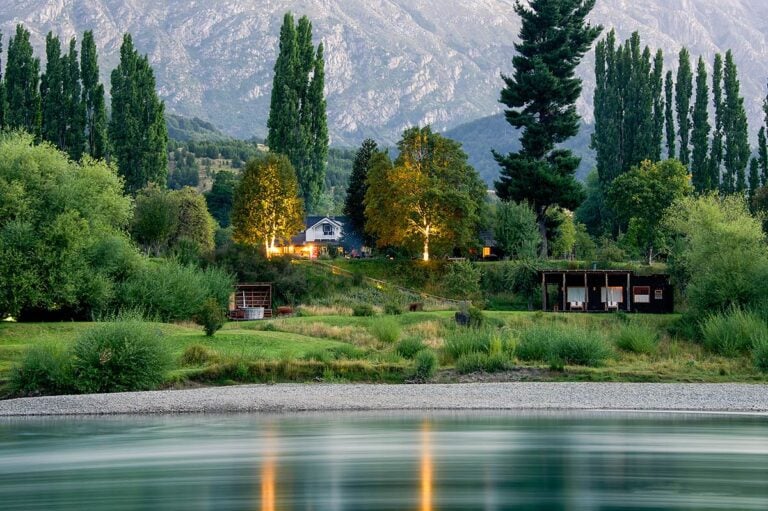
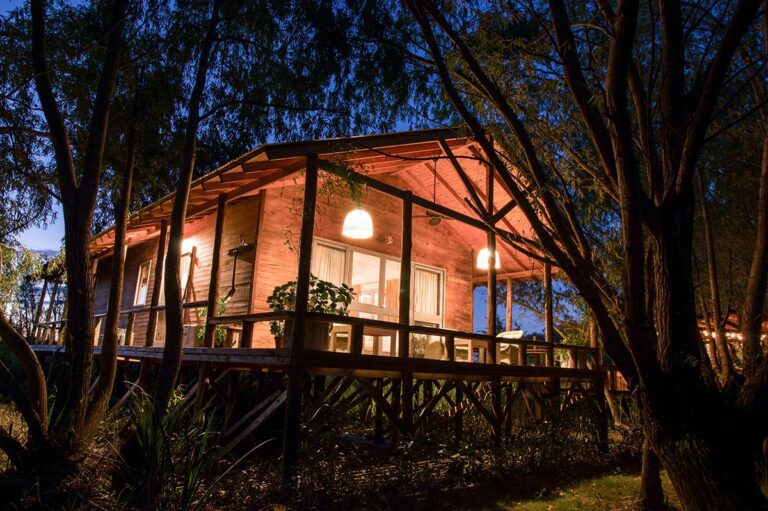
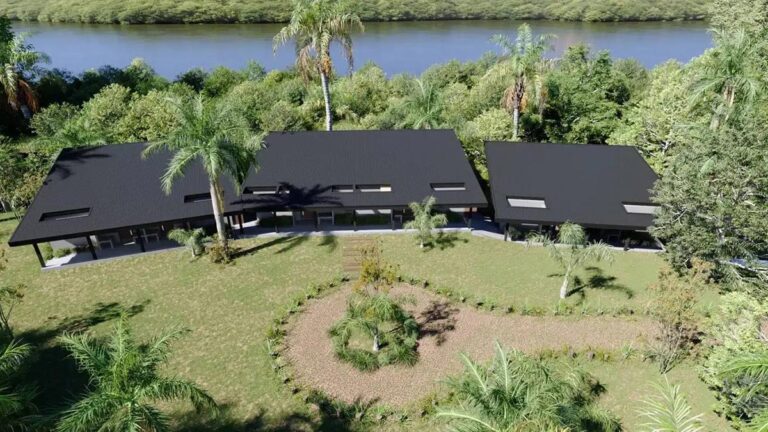
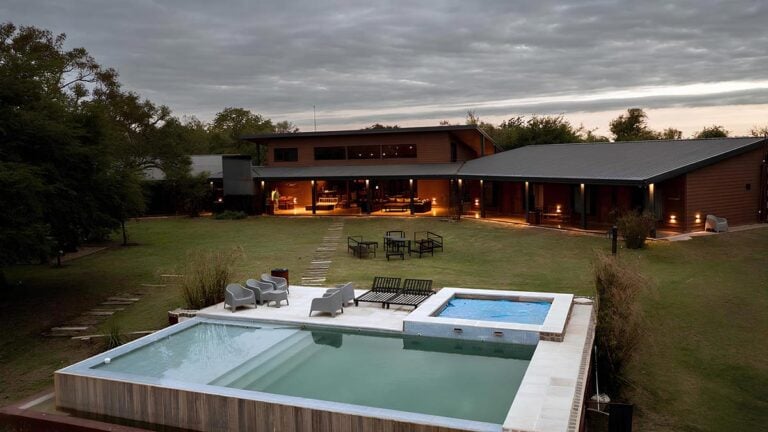
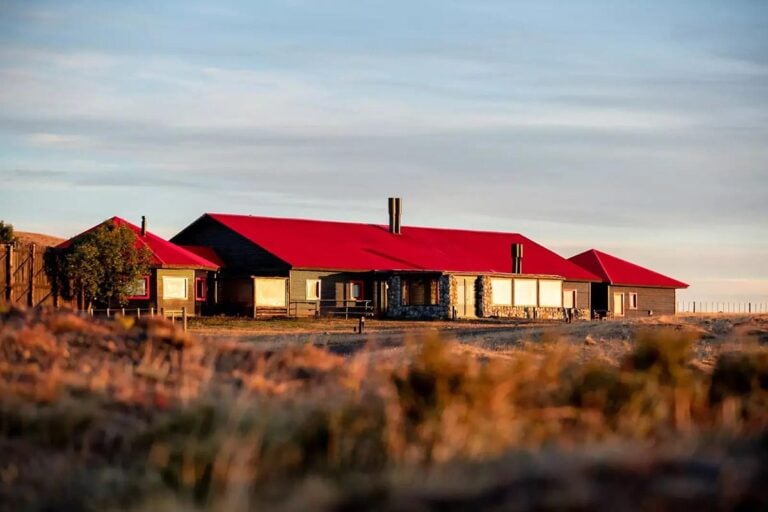
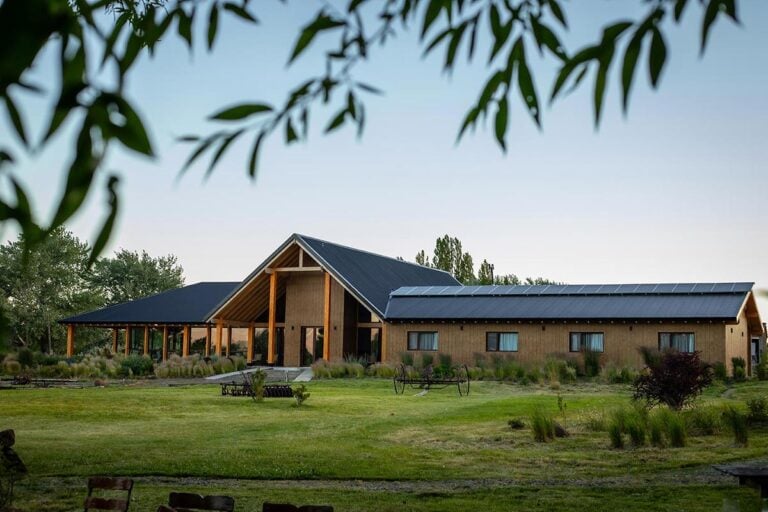
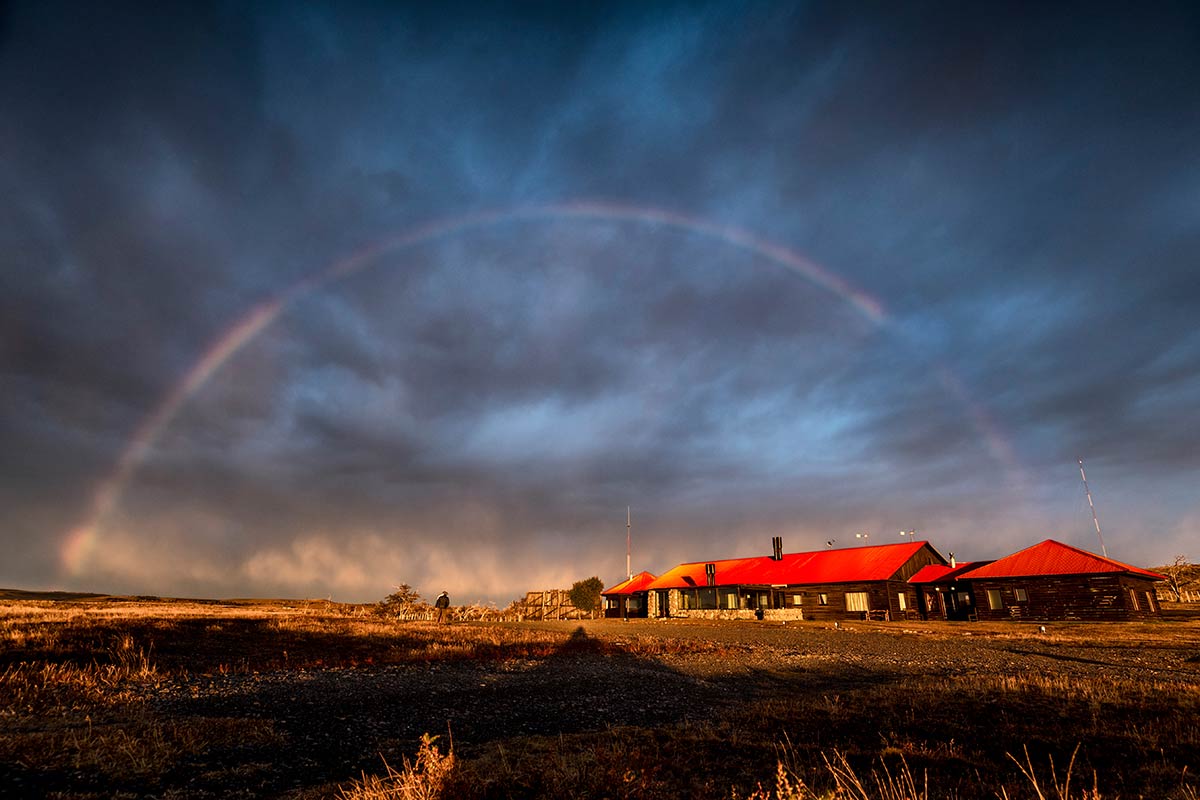
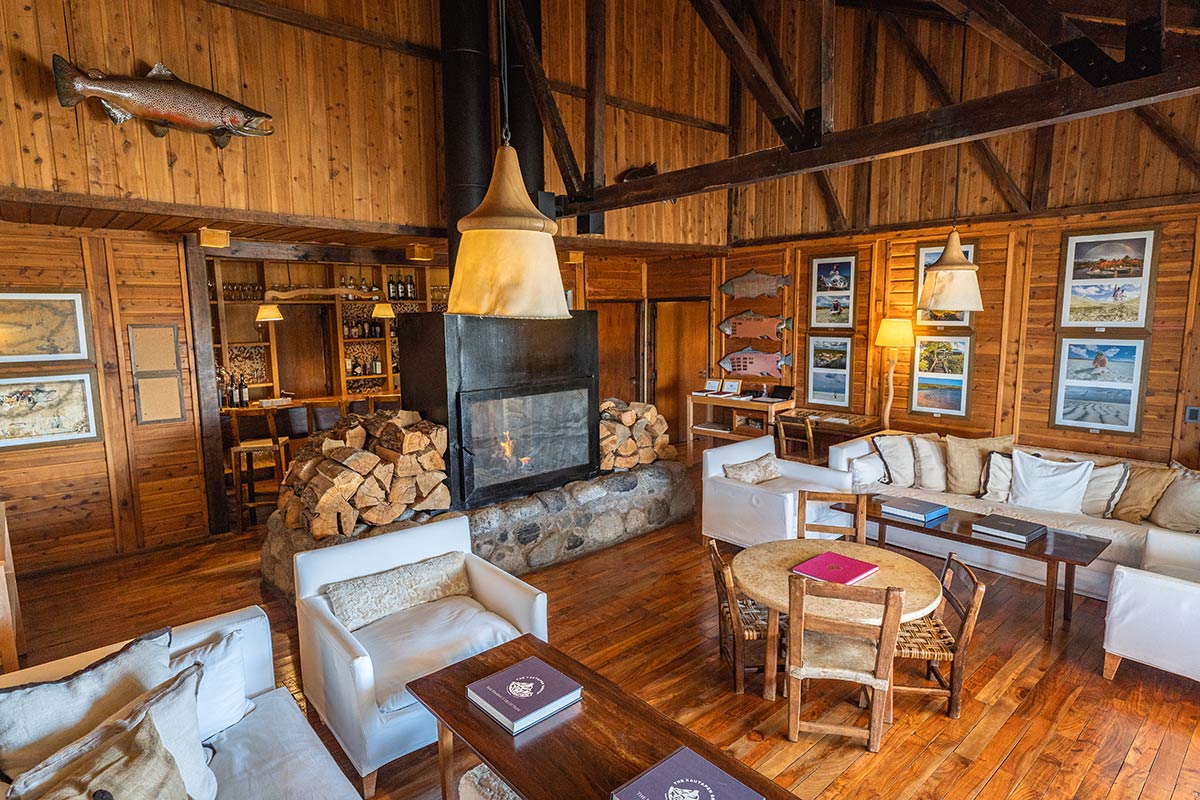
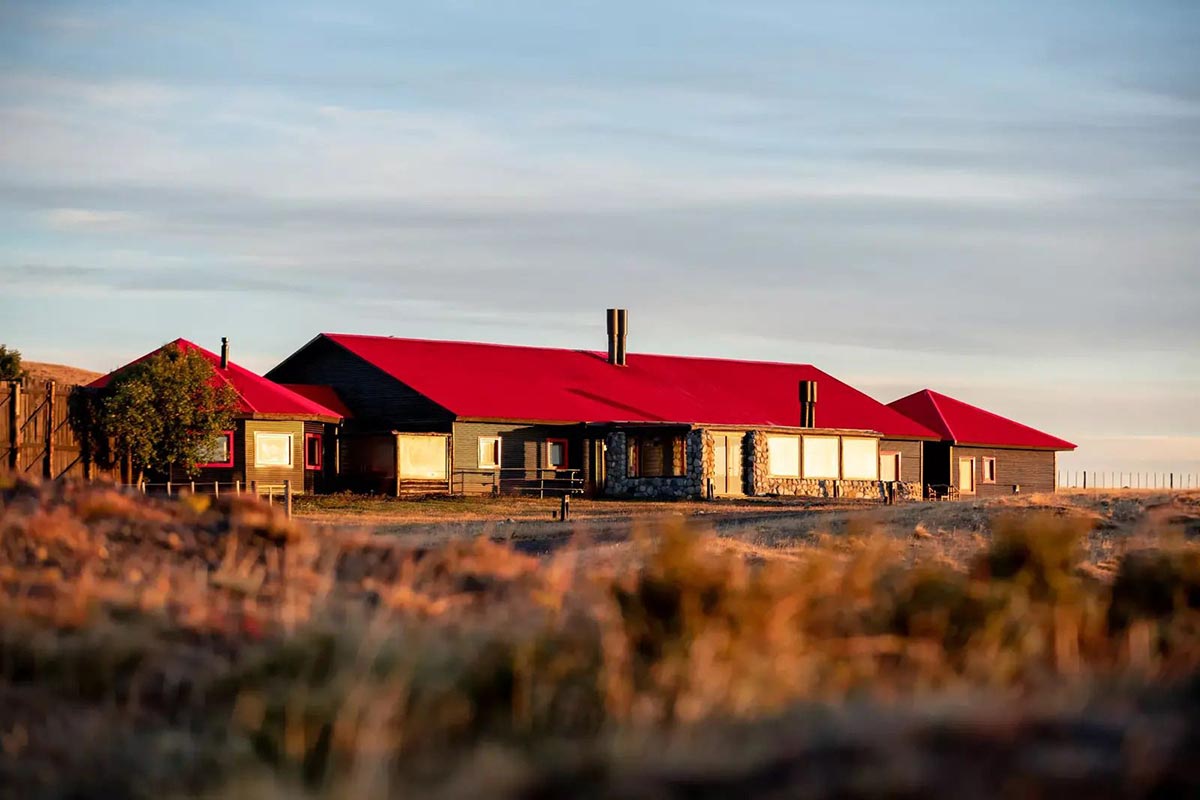
Founded in 1984 as the first purpose-built fishing lodge on the Río Grande, Kau Tapen sits in the heart of Tierra del Fuego, roughly halfway between the lower Villa María beats and the upper headwaters. The lodge accommodates up to ten anglers in single ensuite rooms and serves as a central base for both banks of the Río Grande and the Menéndez River.
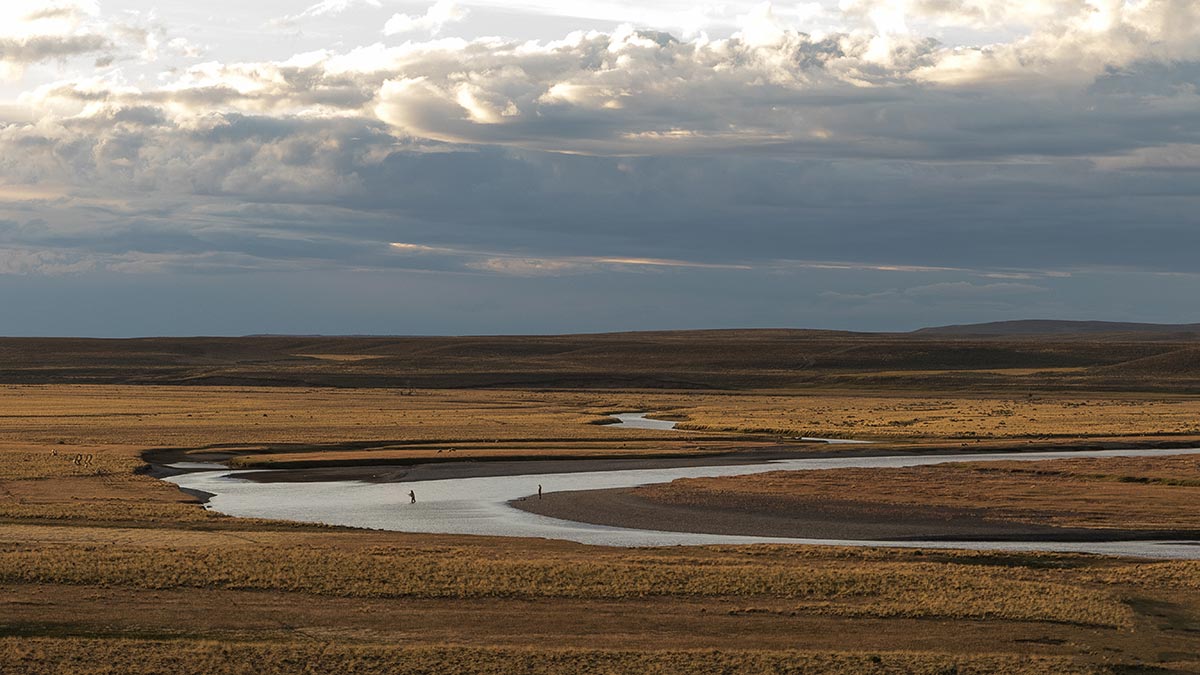
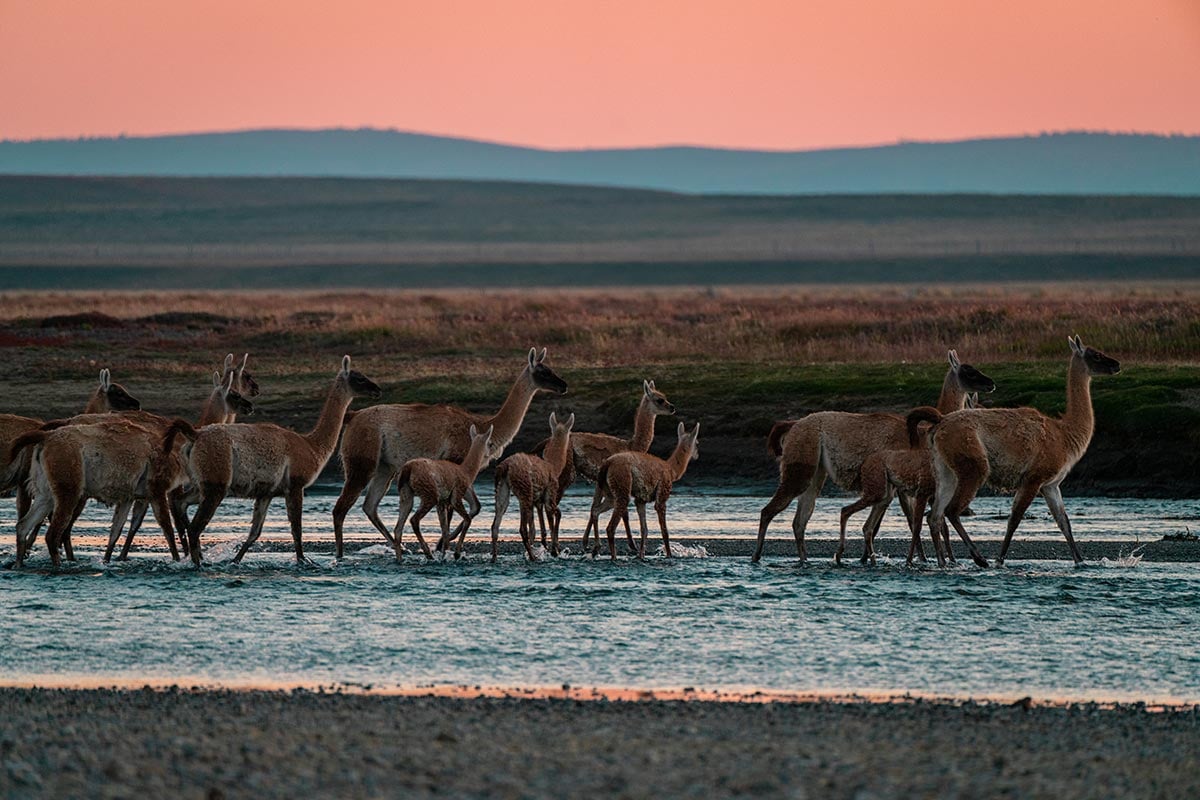
Open grasslands, grazing guanacos, and wide southern skies give the area its distinctive character and a strong sense of remoteness. From this setting, the lodge provides quick access to the most consistent mid-river water on the system, where steady flows, open banks, and reliable wind create ideal fly fishing conditions for sea-run browns throughout the season.
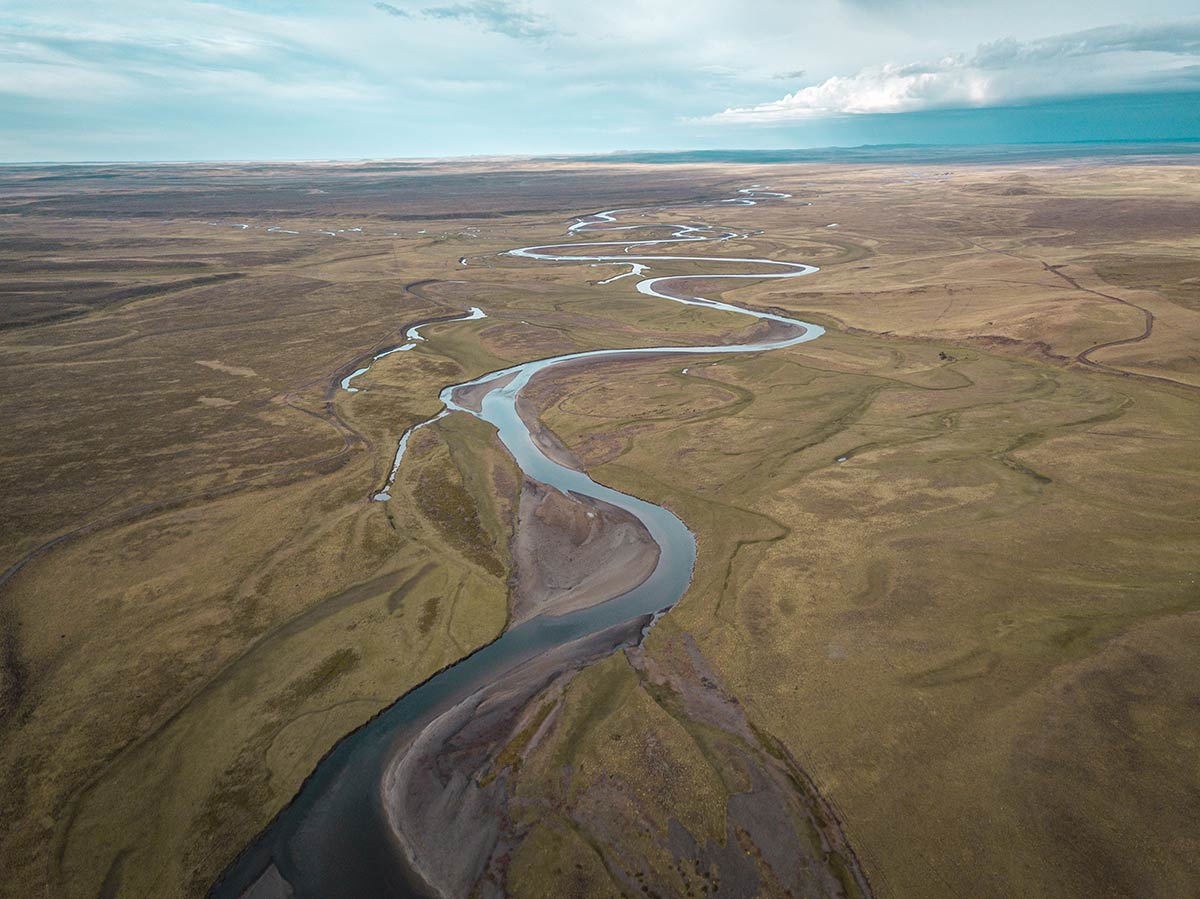
The Menéndez, a key tributary of the Grande, provides a smaller, more technical contrast to the main river and forms an important addition to the lodge’s fishing program.
Río Grande Fly Fishing at Kau Tapen
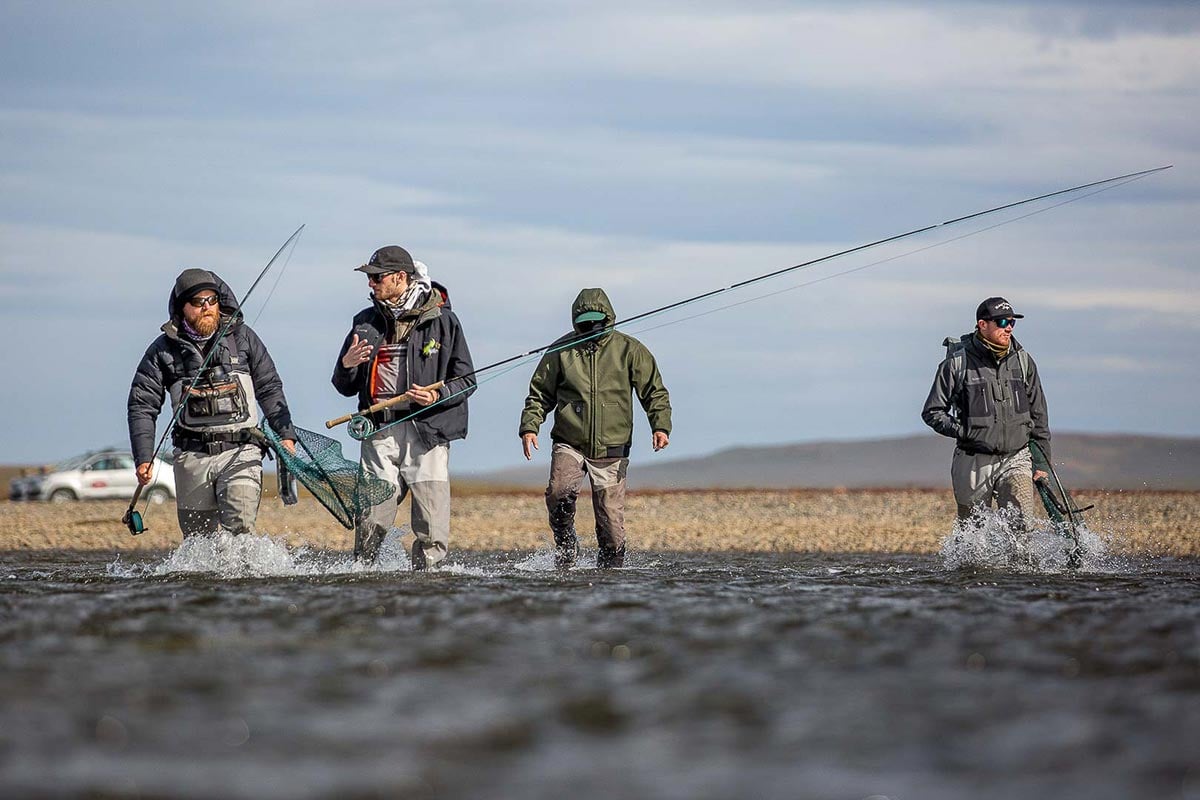
Guests at Kau Tapen fish the middle section of Argentina’s Río Grande—the stretch long regarded as the most reliable for sea-run brown trout. The river’s even gradient and clean gravel bottom make it one of the easiest large rivers in South America to wade, and keeps the focus on swing and timing rather than footing.
Two anglers share a guide and rotate between beats morning and evening, fishing four to eight pools per session. Each pool fishes differently—some quick and narrow, others slow and wide—and guides adjust depth and pace to keep you in productive water.
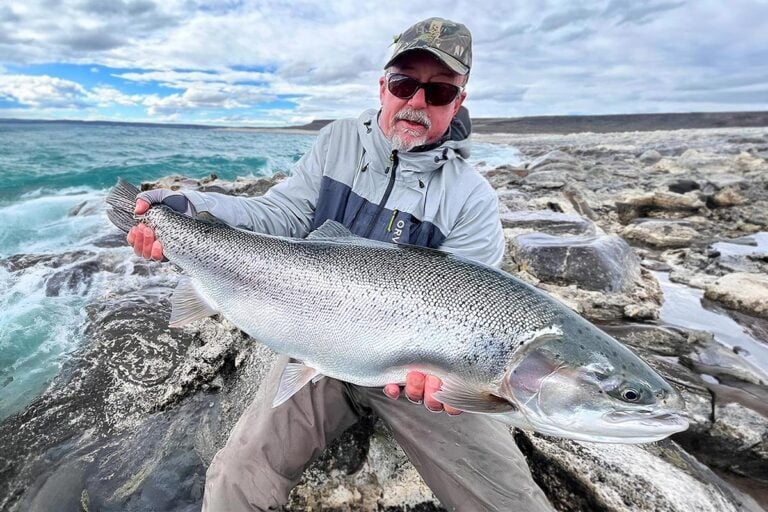
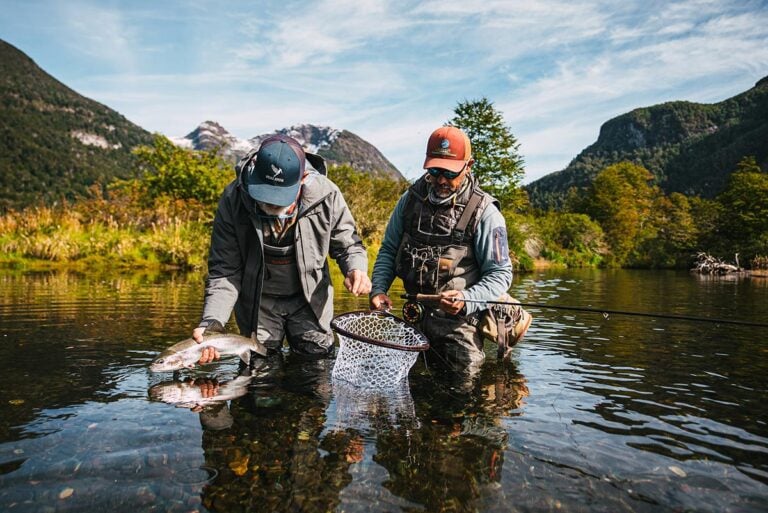
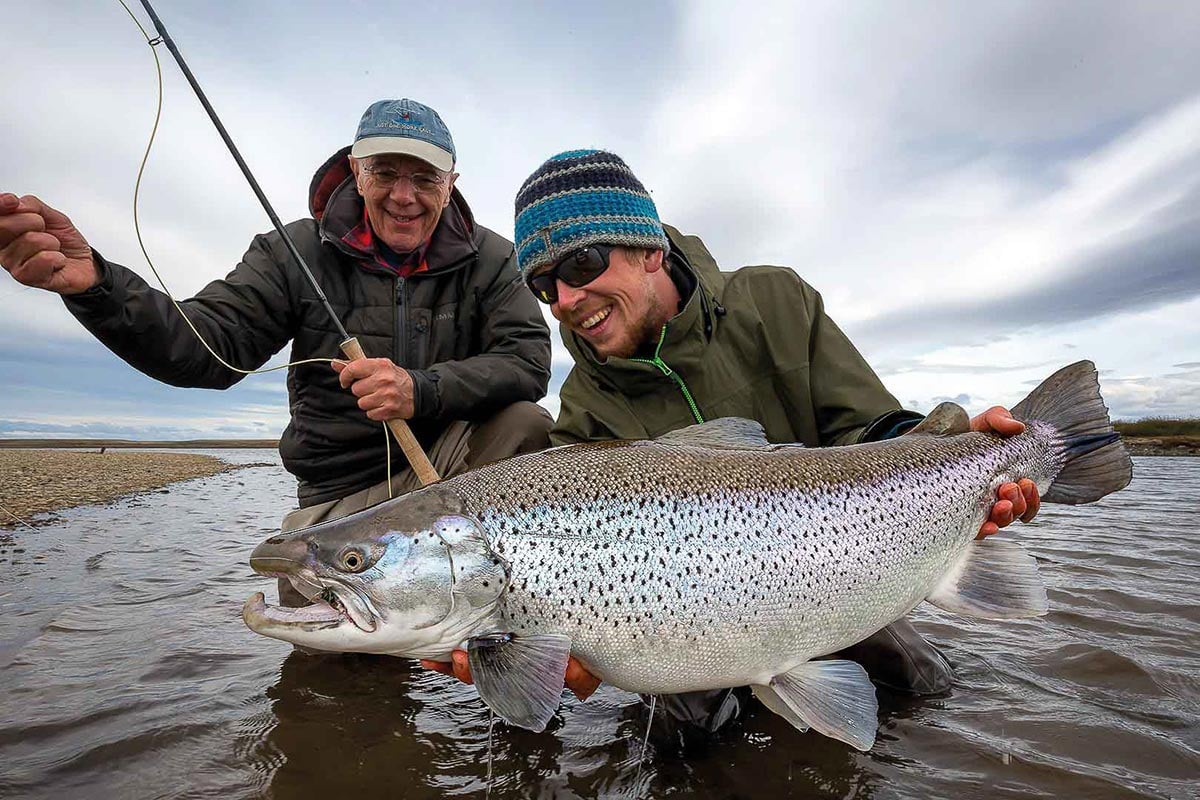
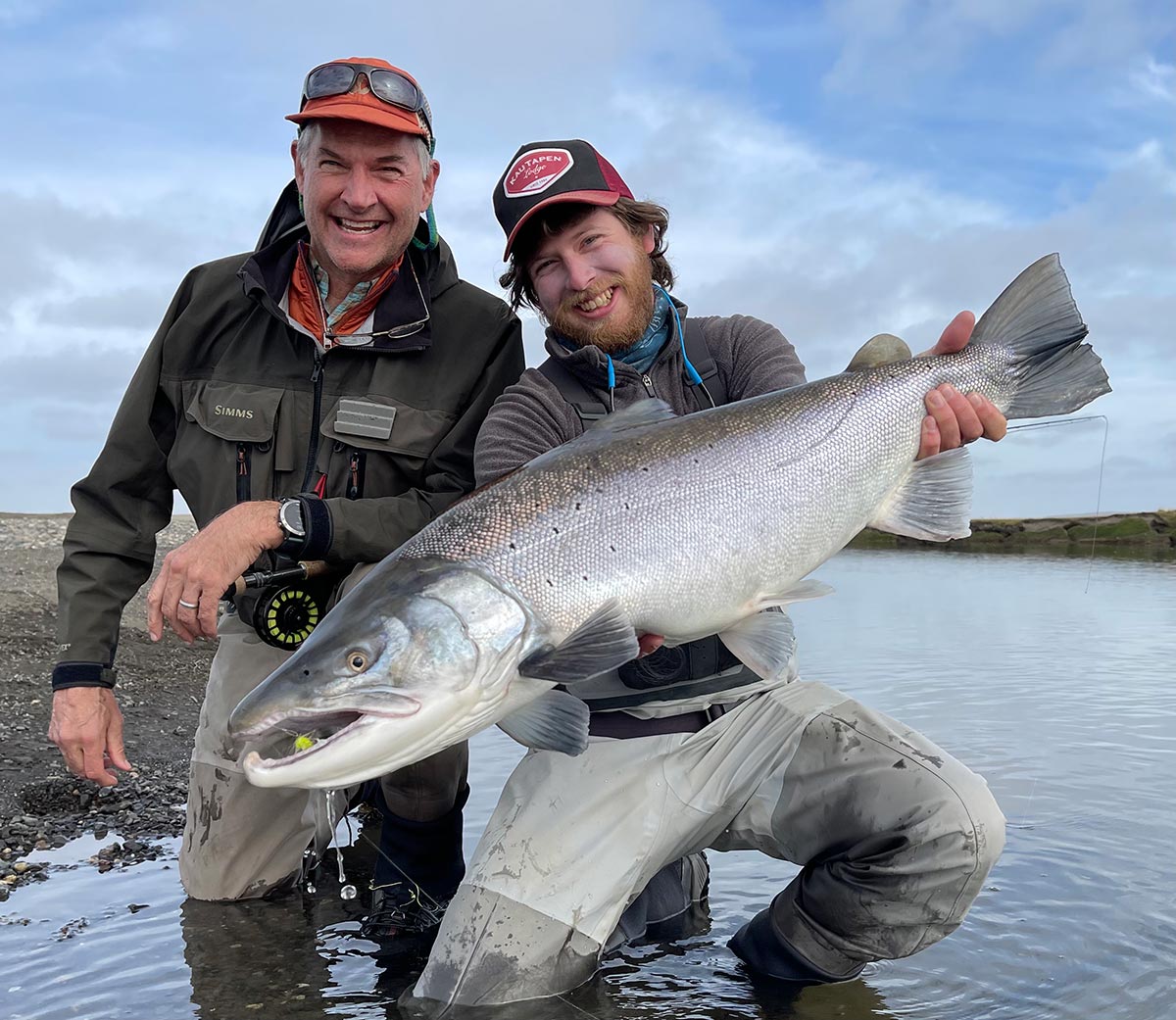
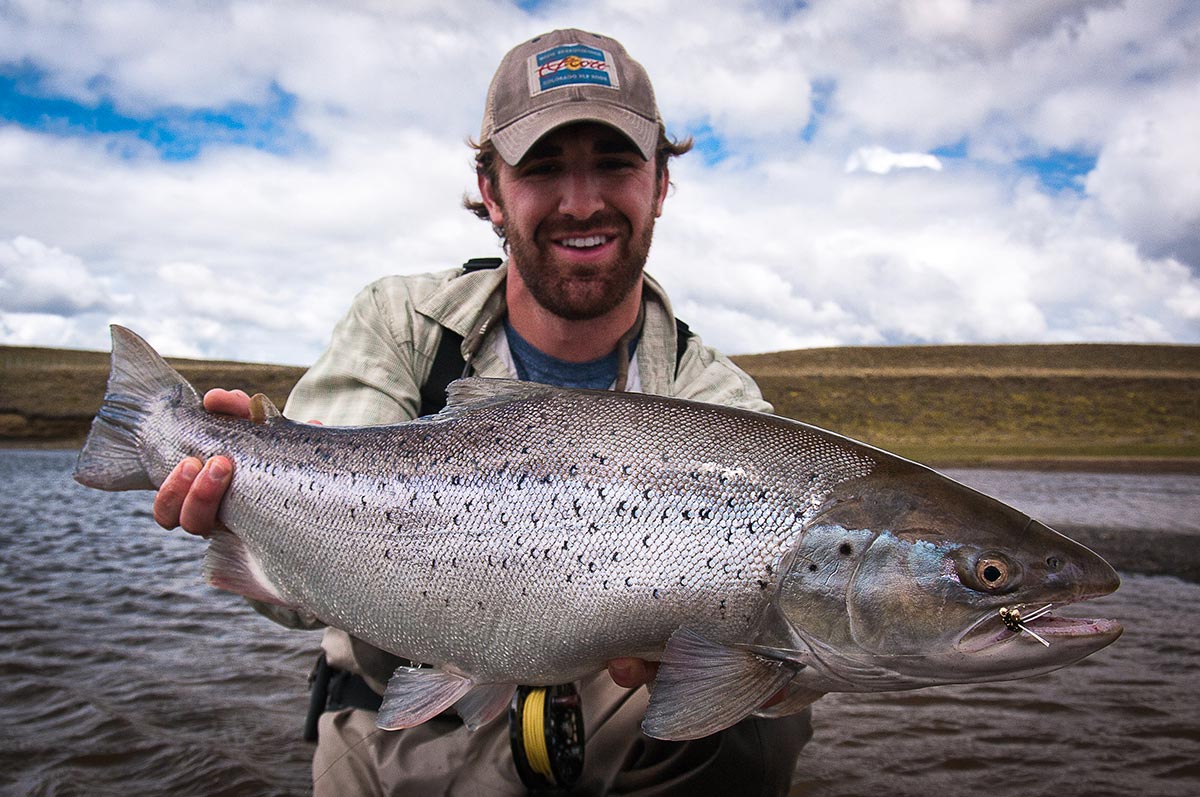
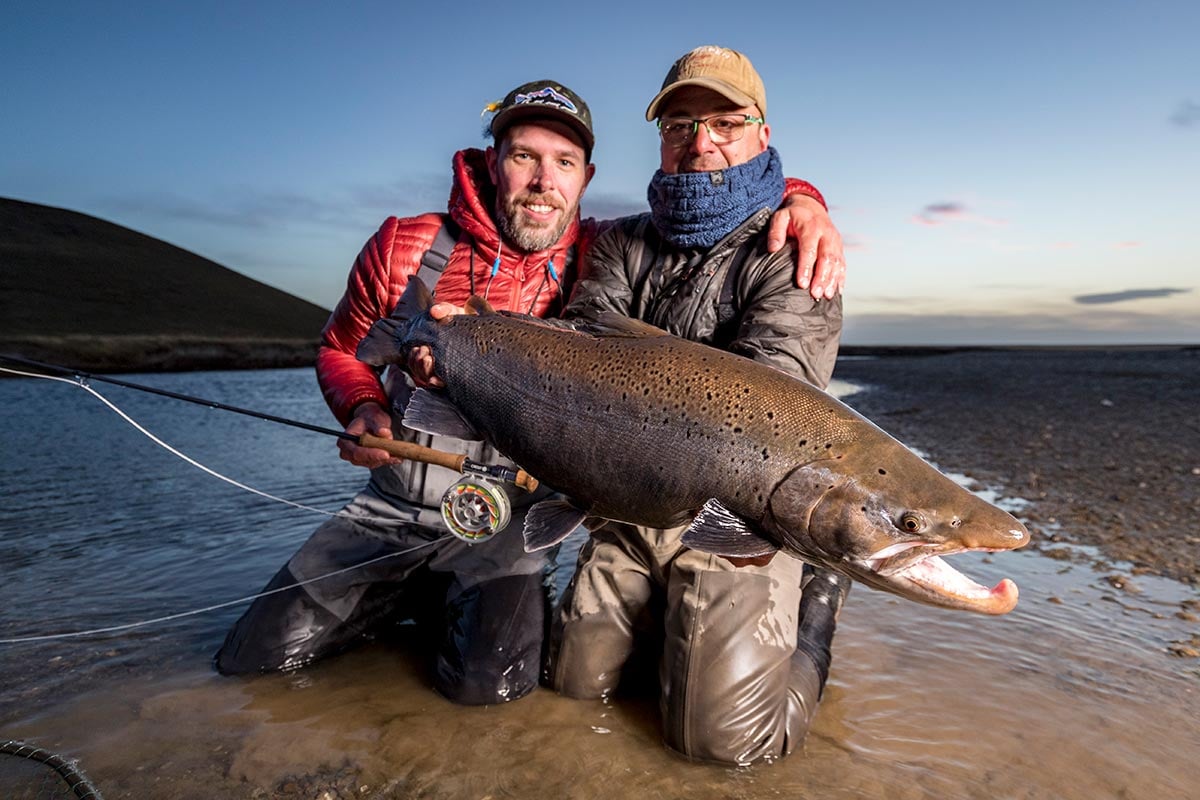
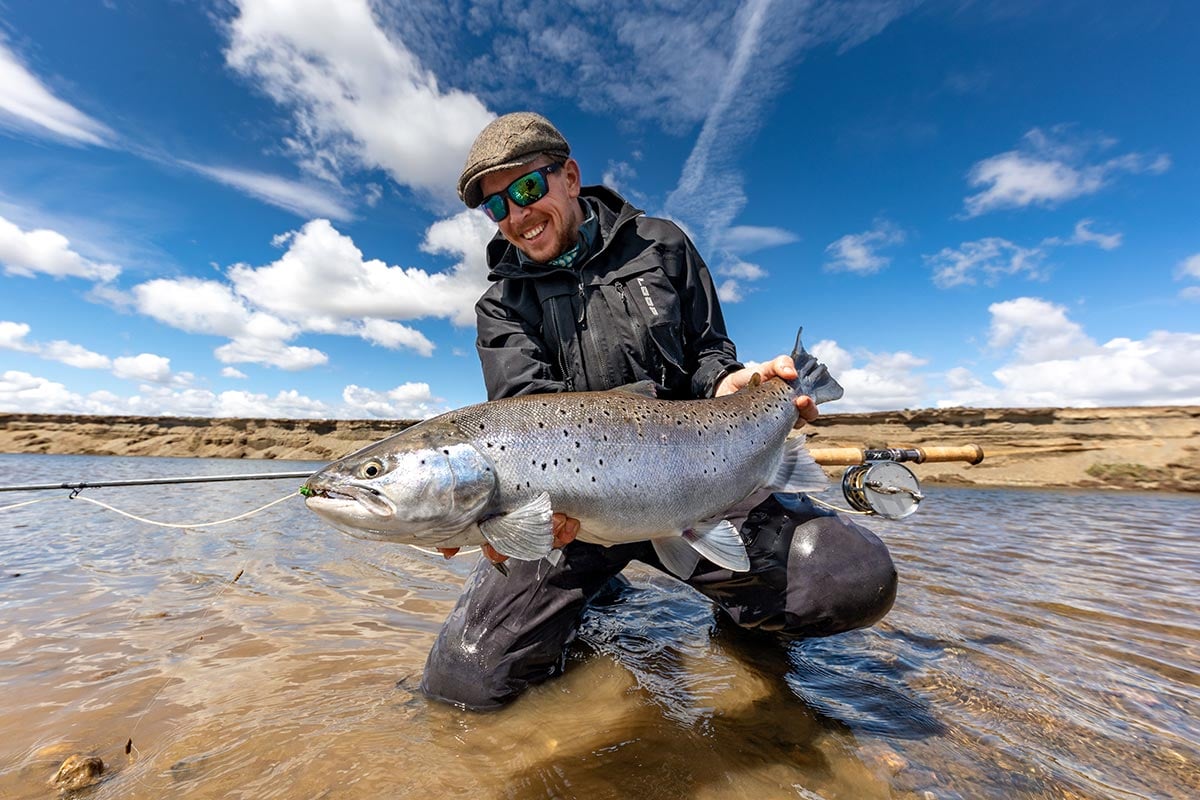
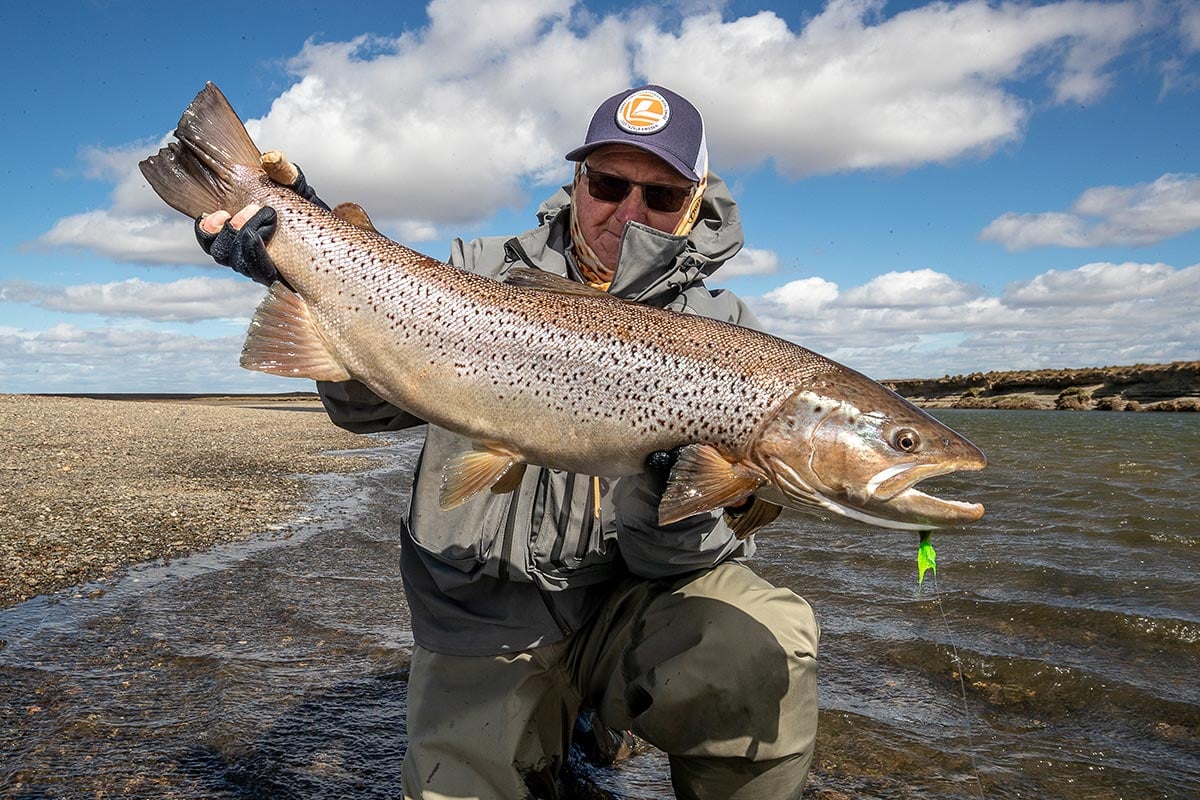
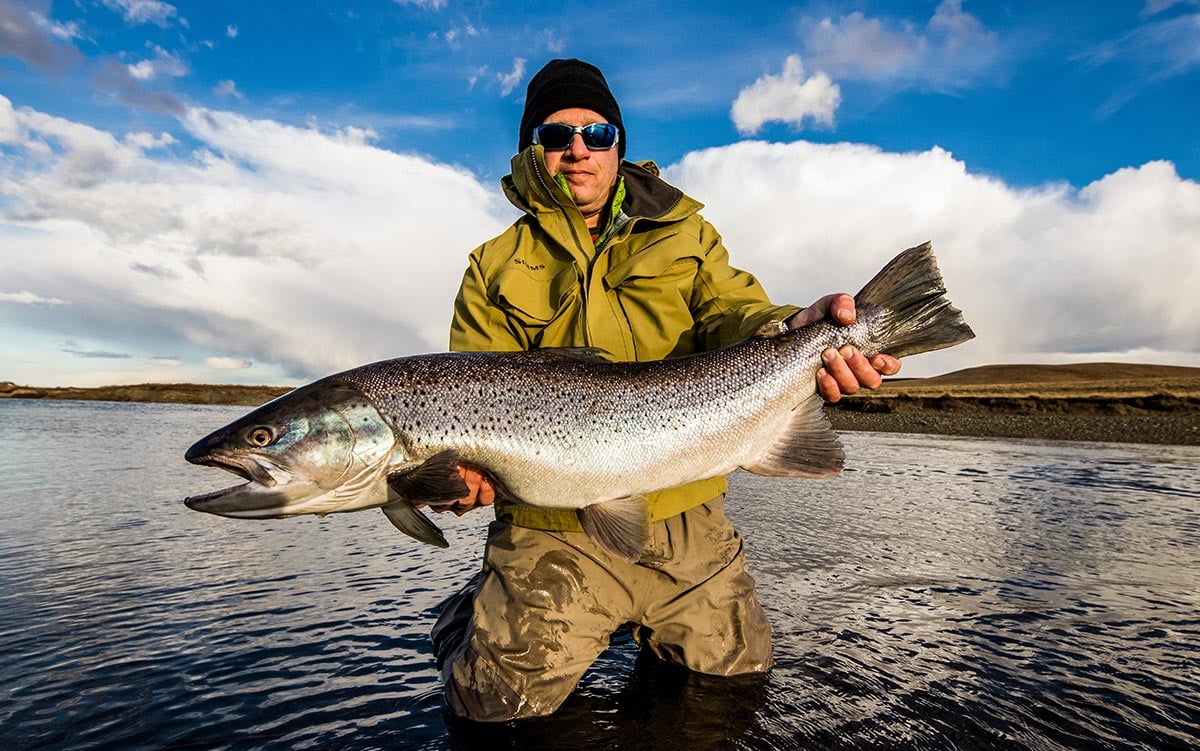
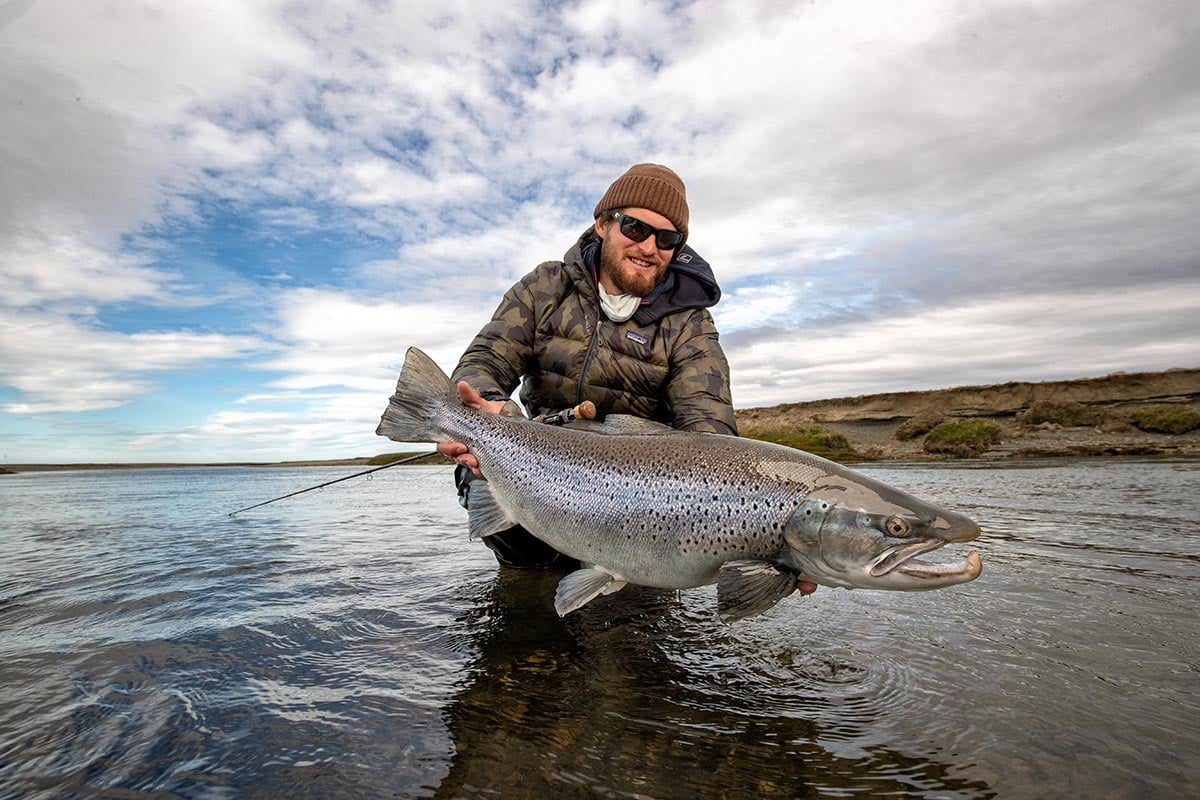
Most weeks see anglers land multiple sea-trout in the 8–15 lb range, with fish exceeding 20 lb caught regularly and a handful each season topping 25 lb. These are powerful, ocean-run browns that demand solid tackle and patient handling. Most casts reach fish within easy range, a contrast to the broader, tide-influenced lower river, where anglers often rely on longer spey strokes to cover the main channels.
Water Access and Beat Rotation
This is classic Tierra del Fuego water: dramatic landscapes, steady wind, and unpressured pools that reset between sessions. With just ten rods in the program, there is ample space across the private beats, and the twice-daily beat changes mean pools generally rest between sessions.
Mornings usually start on tails and inside lines where fish slide in with low light; evenings target heads and main runs as trout move upstream.
An informal warm-up session on arrival day lets guests fish before the week begins—many land their first sea trout within hours of arrival. The daily routine follows the best windows for fish movement rather than the clock, and guides coordinate beats so no groups overlap.
Style of Fishing and Tackle
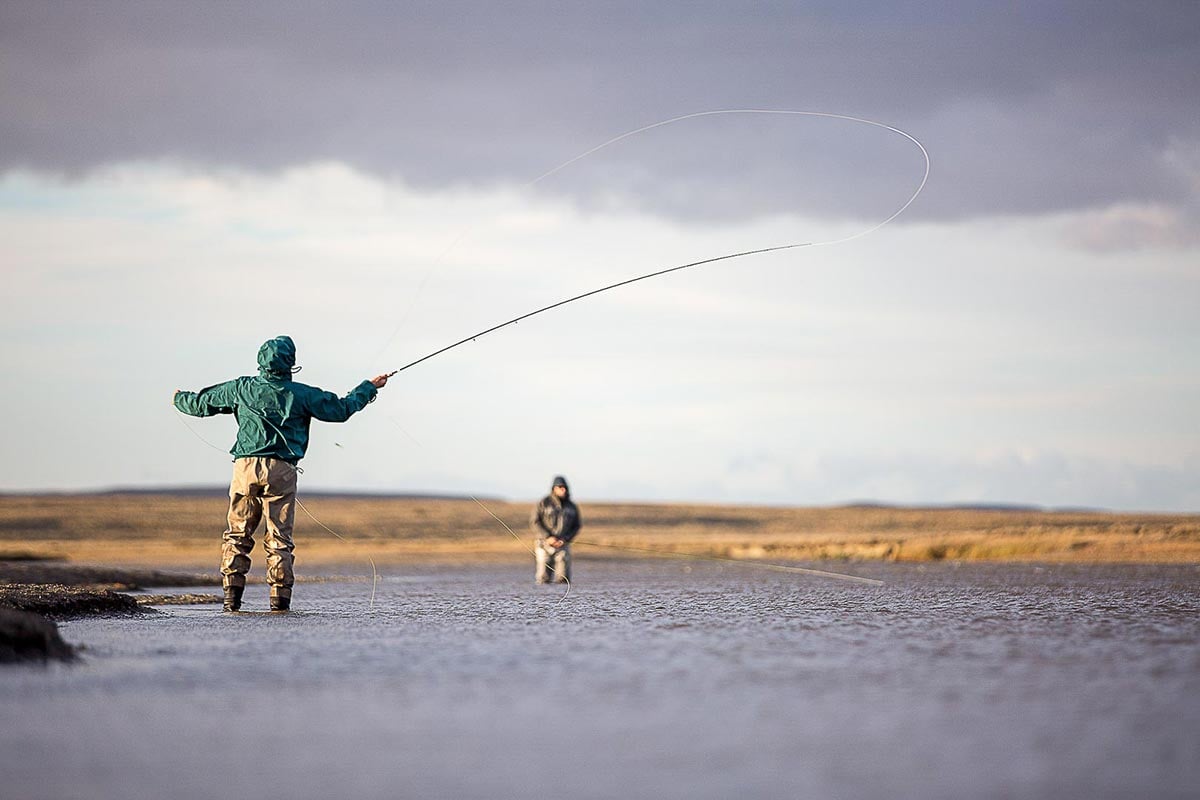
Fishing here centers on swing presentation and line control more than distance. An 8-weight single-hand rod covers close work or nymphing on the Menéndez, while most anglers favor 12- to 13-foot two-hand rods in 7–8 weights for the Río Grande’s steady wind and broad lanes, where mending and line control are rather easier with a Spey setup.
Floating, intermediate, and light sinking heads handle nearly all conditions. Leaders of 10–15 lb test turn flies cleanly yet cushion strong takes.
Flies range from dark tubes and Sunray-style patterns in low light to rubber-leg nymphs, small wets, and leeches as the river clears. On calm evenings, skating or waking flies can trigger explosive surface strikes. Barbless hooks are standard—doubles or trebles are not allowed.
Season Overview: January to April
Kau Tapen’s season runs from late December through early April, covering the full migration cycle of the Río Grande’s sea-trout.
December / January – Opening Period: Higher flows and a strong early run define the start. Bright, newly arrived fish move steadily through the middle river, mixing with heavier, colored residents. Guides helps guests to effectively cover water, using moderate sink tips and weighted flies to reach deeper lies while water temperatures remain cool.
February – Mid Season: Levels drop and clarity improves. Trout grow more selective, often holding tight to banks and slower currents. Anglers lighten lines, lengthen leaders, and downsize flies for a natural swing. Occasional rain showers refresh the system and draw new fish from the lower beats.
March – Late Season: Cooler days and rising flows trigger renewed movement. Fresh silver fish arrive with each tide, while territorial males turn aggressive in the upper pools. Slower swings and long hangs near cut-banks often produce strikes. Overcast skies and reduced glare make March one of the most productive months to fish.
April – Closing Weeks: The river cools quickly, but average size peaks. Midday warmth brings the best activity, and patient anglers often connect with the season’s heaviest trout—thick, fully colored fish preparing to spawn.
Fishing the Menéndez River
Kau Tapen also controls twenty-two miles of the Menéndez River, a smaller tributary that fishes like a spring creek for sea-trout. Its clear, even flow suits single-hand or short-switch rods and floating lines. The approach is quiet and technical: stay low, avoid wading until necessary, and make the first cast count.
Late in the season, large fish move in from the Grande after rain, stacking in deep pockets and reacting well to skated or waking patterns. The Menéndez is a key part of the weekly itinerary, providing contrast and variety throughout each stay.
Wind and Weather on the Río Grande
Wind defines each session but rarely limits fishing. Most days bring a steady southwest breeze that helps turn over the fly and carry it across the run. Guides position anglers to use it, adjusting stance and cast direction for clean presentation. Weather can change fast—carry a shell, warm layers, and polarized glasses for shifting light. The open landscape and constant airflow keep temperatures moderate, averaging 50–60 °F (10–15 °C) mid-season.
Guides and Instruction
Kau Tapen’s guide team combines Argentine and international experience, many having spent decades on the Río Grande. The daily beat schedule gives anglers a range of approaches and fresh insight into how each beat fishes. Instruction focuses on subtle adjustments—tempo, angle, and depth—to keep the fly working naturally through each pool.
With two anglers per guide, feedback is steady and personal, while the head guide coordinates beat assignments and conditions across the river each day.
Catch-and-Release and Conservation Ethos
The lodge has practiced strict catch-and-release since opening. Strong leaders and firm pressure shorten fights; fish are unhooked in the water and released immediately. Controlled access, low angler numbers, and cooperation with local river keepers maintain a healthy run of multi-sea-winter trout. This stewardship keeps the Río Grande fishery stable and gives every guest a genuine chance at a double-digit trout in a week of focused, guided fishing.
From its private middle-river beats on the Río Grande, Kau Tapen combines the history of Tierra del Fuego’s first sea-trout lodge with modern comfort and expert guiding—an unmatched base for anglers chasing powerful, ocean-run brown trout in Argentina.
To learn more about the fishing and express an interest, message Nervous Waters.