Explore fishing trips in Patagonia Argentina, staying at carefully selected lodges that combine expert guiding, remote wilderness settings, and exceptional angling.
Patagonia Argentina
Brook Trout, Brown Trout, Rainbow Trout
Neuquén, Argentina
Brook Trout, Brown Trout, Rainbow Trout
Tierra del Fuego, Argentina
Sea Trout, Sea-Run Brown Trout
Neuquén, Argentina
Brook Trout, Brown Trout, Rainbow Trout
Río Negro, Argentina
Brook Trout, Brown Trout, Rainbow Trout
Neuquén, Argentina
Brook Trout, Brown Trout, Rainbow Trout
Neuquén, Argentina
Brown Trout, Rainbow Trout
Santa Cruz, Argentina
Brown Trout, Rainbow Trout
Santa Cruz, Argentina
Brown Trout, Rainbow Trout
Patagonia Argentina
Brook Trout, Brown Trout, Rainbow Trout
Tierra del Fuego, Argentina
Sea Trout, Sea-Run Brown Trout
No results available
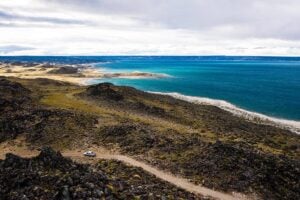
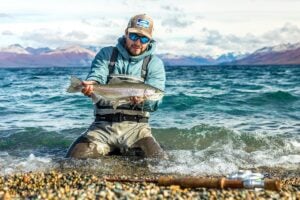
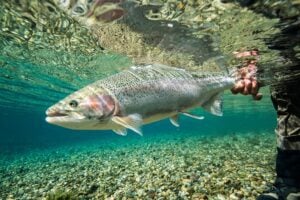
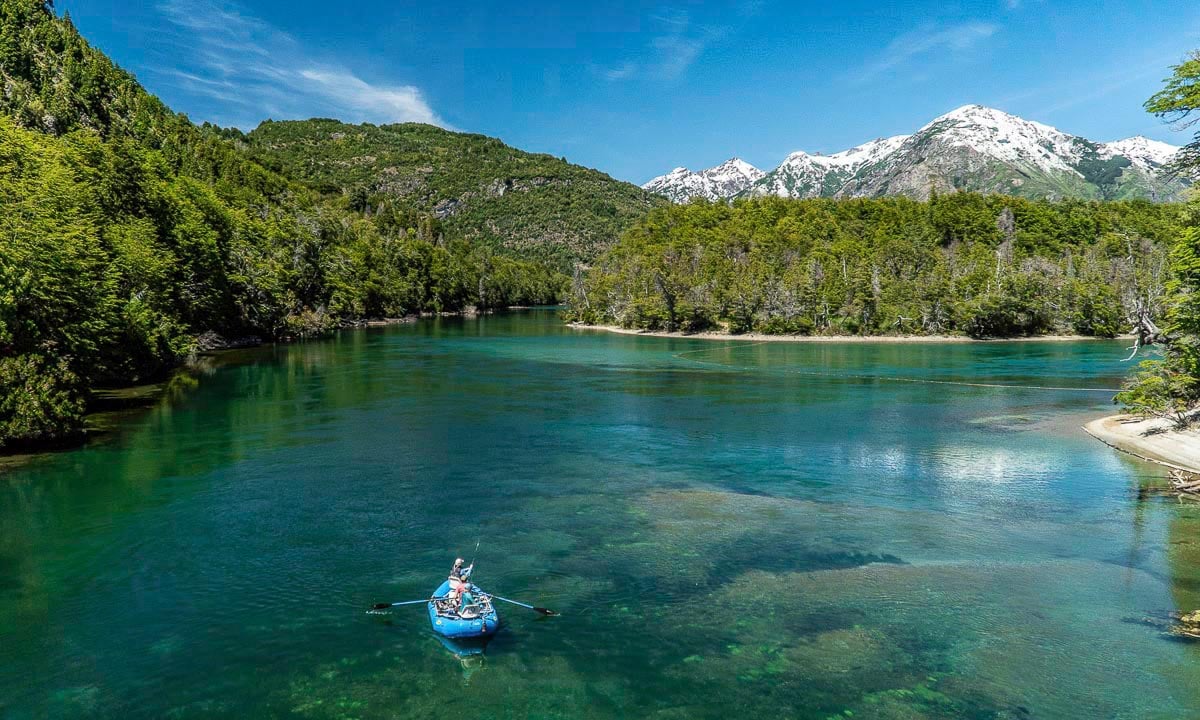
Stretching along the eastern slopes of the Andes, Patagonia Argentina holds one of the most diverse trout fisheries on the planet. Freestone rivers, technical spring creeks, and vast glacial lakes support wild brown and rainbow trout across a landscape built for lodge-based exploration, with consistent seasons and remarkably low fishing pressure.
Argentine Patagonia has become one of the world’s defining fly fishing destinations not because of a single famous river, but because of the sheer range of water available within a relatively compact area. From the broad currents of the Limay to the delicate dry-fly water of the Malleo, anglers can experience radically different fisheries within a few hours’ drive.
The region’s modern fly fishing culture began in the mid-20th century when trout introduced from North America and Europe established thriving wild populations in Patagonia’s cold Andean waters. Today, provinces such as Neuquén, Río Negro, Chubut, and Santa Cruz form the backbone of Argentina’s trout fishing tradition, supported by a long-standing network of estancias, lodges, and professional guides.
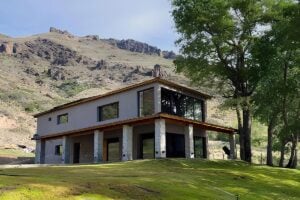
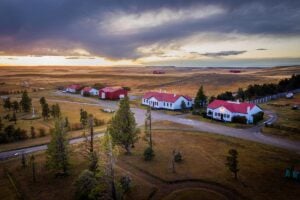
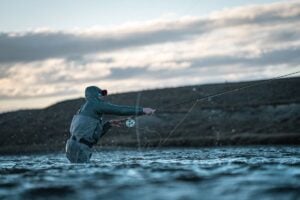
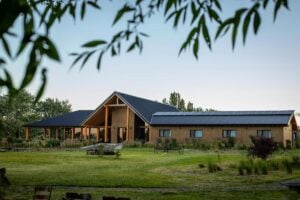
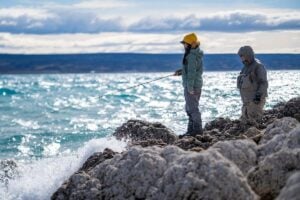
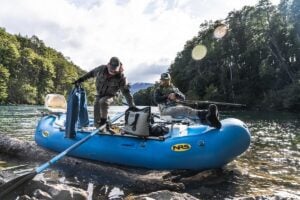
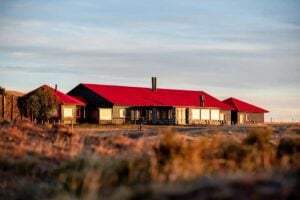
Most fishing lodges in Patagonia operate from fixed estancias or small riverside lodges, with daily access to several nearby rivers or lakes depending on water conditions and seasonal hatches. Wind is a defining feature of the landscape, especially across the southern steppe regions — experienced guides adapt daily plans around weather patterns, often shifting between rivers, lakes, and sheltered valleys to maintain productive fishing conditions.
For those comparing different lodge programs — from fixed-base trout lodges and mobile multi-river operations to beat-based sea-run brown trout weeks on the Río Grande and trophy stillwater fishing on the Strobel Plateau — see our Editorial Guide to Patagonia Argentina Fishing Lodges, which explains how these programs differ and how to choose the right fit.
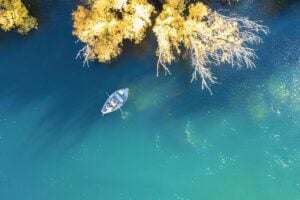
Northern Patagonia forms the historic heart of Argentina’s trout fishing culture. Rivers such as the Limay, Aluminé, and Chimehuín provide long drift sections with strong hatches and healthy populations of wild brown and rainbow trout. Spring creeks like the Malleo add technical dry-fly fishing that draws experienced anglers back year after year.
Centered around Bariloche and the Nahuel Huapi National Park region, Río Negro offers a blend of floatable rivers and deep glacial lakes. The upper Limay and nearby lake systems support large resident trout and consistent summer fishing, making the region one of Patagonia’s most versatile lodge bases.
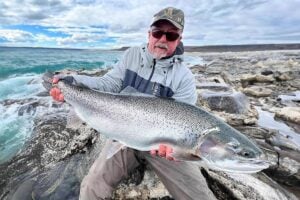
The windswept steppe of Santa Cruz holds some of Patagonia’s most productive trout water. Lago Strobel — known internationally as Jurassic Lake — holds rainbow trout averaging 6 to 8 pounds across the season, with fish regularly reaching double figures and the lake’s largest specimens exceeding 20 pounds. Remote freestone rivers crossing the steppe offer vast stretches of water that see little angling pressure.
At the southern edge of Patagonia, Tierra del Fuego is home to the Río Grande, widely regarded as the world’s most consistent sea-run brown trout river. Strict beat rotations and limited rod numbers have preserved a fishery capable of producing some of the largest migratory trout found anywhere.
Patagonia’s geography supports a wide range of trout fisheries, each requiring a different approach depending on river size, elevation, and seasonal conditions.
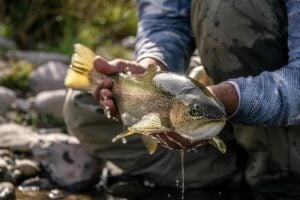
Patagonia’s cold Andean waters support thriving populations of wild trout introduced during the early twentieth century. Over time these fish adapted remarkably well to the region’s rivers and lakes.
The trout fishing season in Patagonia generally runs from November through April, coinciding with the Southern Hemisphere summer.
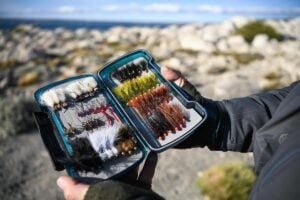
Patagonia’s summer fishing is often defined by terrestrial activity — large hoppers, beetles, and ants bring trout tight to grassy banks and create some of the region’s most memorable dry fly fishing.
FishingExplora connects anglers with carefully selected lodge operators across Patagonia — from classic estancia-based operations to mobile programs covering multiple rivers during the week. You can contact hosts directly and plan your program from here.
For more lodge-based options across the country, explore all our Argentina fishing lodges.
FishingExplora’s editorial content draws on lodge input, guide experience, published field reports, and independent research to help anglers make informed decisions about premium fishing destinations.
The combination of water variety and fish quality. Within a few hours’ drive, anglers can access large migratory brown trout rivers like the Limay, technical spring creeks like the Malleo with prolific caddis and mayfly hatches, and trophy rainbow trout lakes like Lago Strobel in Santa Cruz — where fish regularly run 10 to 20 pounds. Wild populations, low pressure, and a well-developed lodge network make it one of the most consistently productive trout destinations in the world.
November through April covers the full season. January and February deliver stable weather and peak dry fly conditions across most rivers, driven by strong terrestrial hatches. March and April are prime for streamer fishing as water cools and large brown trout become aggressive — the Limay’s migratory fall run peaks during this period. Early season from November onward suits lake fishing and larger-river streamer work as snowmelt stabilizes.
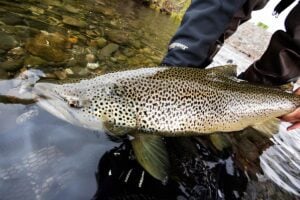
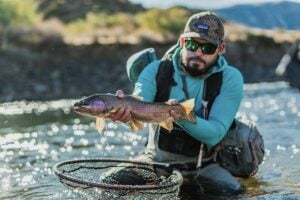
Wild brown and rainbow trout are the primary targets throughout Patagonia’s rivers and lakes. In Tierra del Fuego, sea-run brown trout returning from the Atlantic to the Río Grande are among the largest migratory trout caught anywhere on a fly rod. Lago Strobel in Santa Cruz regularly produces rainbow trout in the 10 to 20-pound range — an entirely different style of fishing from the Andean river fisheries to the north.
For most visiting anglers, yes. Lodge programs provide access to private water, drift boats, and multiple rivers within driving distance — essential for adapting daily plans to weather, water levels, and hatches. Some rivers have public access sections, but the most productive water on rivers like the Malleo and Chimehuín runs through private estancia beats. Independent fishing is possible on public stretches of larger rivers, but the infrastructure gap is significant.
The Limay, Chimehuín, Aluminé, and Malleo define northern Patagonia’s trout fishing reputation — a mix of drift fishing and walk-and-wade opportunities with strong insect hatches and healthy wild trout populations. In the south, the Río Grande in Tierra del Fuego is the benchmark sea-run brown trout river. The Collón Curá and Caleufu are less famous but consistently produce strong fishing on multi-day float programs.
We use cookies to improve your experience and enable key features on the platform. You can choose which cookies to allow. Some features may not work fully without consent.