Explore fishing trips in Santa Cruz, staying at carefully selected lodges that combine expert guiding, remote wilderness settings, and exceptional angling.
Santa Cruz, Argentina
Brown Trout, Rainbow Trout
Santa Cruz, Argentina
Brown Trout, Rainbow Trout
No results available
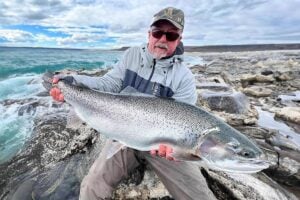
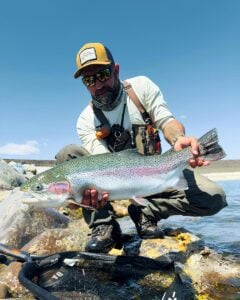
Santa Cruz lies in southern Patagonia — a stark, wind-swept province of wide valleys, rugged steppe, and glacier-fed waters. It holds two of the world’s most significant trout fisheries: Lago Strobel (Jurassic Lake), producing trophy rainbow trout in the 10 to 20-pound range, and the Río Gallegos, a sea-run brown trout river whose catch statistics run on par with the more famous Río Grande.
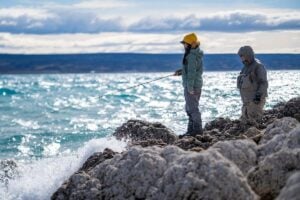
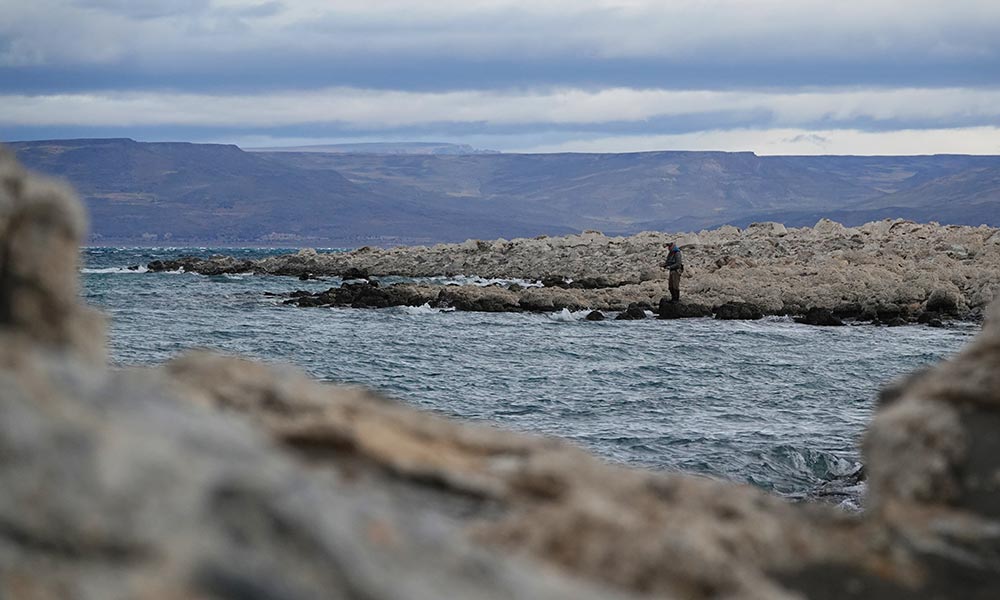
The two fisheries draw entirely different types of angler. Jurassic Lake rewards stillwater specialists prepared for sustained wind and long casting days on open shoreline. The Río Gallegos suits swing anglers — a shallow, wadeable river with clear pools, cut banks, and 300 kilometers of water managed through private estancia beats. Beyond these two headline destinations, Santa Cruz holds lesser-known spring creeks and lake systems with near-zero pressure.
For those comparing southern Patagonia lodge programs — from Jurassic Lake stillwater operations to Río Gallegos sea-run programs — see our Editorial Guide to Patagonia Argentina Fishing Lodges, which explains how these programs differ and how to choose the right fit.
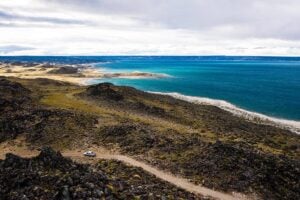
Located approximately five hours from El Calafate in the remote Santa Cruz steppe, Lago Strobel covers roughly 65 square kilometers and holds an extraordinary population of wild rainbow trout. Fish regularly run 10 to 20 lbs, sustained by dense scud populations and minimal angling pressure. Access is exclusively through private lodge programs on the lake’s shore.
The Barrancoso is the sole feeder river to Lago Strobel, drawing large migratory rainbows from the lake during the spring and fall spawning runs. Lodge programs at the river mouth provide access to some of the most concentrated trophy rainbow fishing available anywhere — and the upper river holds resident fish through the full season.
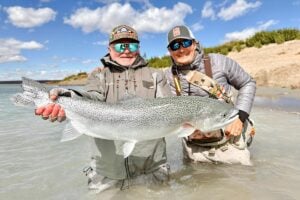
Running approximately 300 kilometers from the southern Andes to the Atlantic, the Río Gallegos is one of the world’s leading sea-run brown trout rivers. Sea-run fish average 9 to 10 lbs with 20 to 30-lb fish landed every season — catch statistics that run on par with the Río Grande. Established lodge operations manage private beats on both banks, with shallow, easy wading and strong guide infrastructure.
The private Estancia Laguna Verde provides access to a network of spring creeks, small lakes, and stream-fed systems surrounding Jurassic Lake, offering diversity for anglers who want more than stillwater fishing during a week’s program.
FishingExplora connects anglers with carefully selected lodges across Santa Cruz — from Jurassic Lake operations with private Barrancoso River access to Río Gallegos sea-run brown trout programs. You can contact hosts directly and plan your program from here.
For more lodge-based fishing across the region, explore our Patagonia Argentina fishing lodges.
FishingExplora’s editorial content draws on lodge input, guide experience, published field reports, and independent research to help anglers make informed decisions about premium fishing destinations.
Jurassic Lake — Lago Strobel — is a remote stillwater in the Santa Cruz steppe, approximately five hours from El Calafate. Rainbow trout were introduced into its feeder river in the early 1990s from a McCloud River California strain. The lake’s scud-rich, alkaline water and lack of natural predators allowed the fish to grow rapidly, producing a wild population that regularly runs 10 to 20 lbs. Access is exclusively through private lodge programs.
Rainbow trout in Jurassic Lake regularly run 10 to 20 lbs, with fish averaging 8 lbs or more across the full season. The river mouth beats during spring and fall runs concentrate the largest fish — double-digit fish are a daily expectation during peak periods, and 20-lb-plus trophies are landed most seasons.
Lago Strobel itself does not hold a resident brown trout population. The Barrancoso River, the lake’s only tributary, does hold browns — particularly in late summer and fall as pre-spawn fish move into the river. The surrounding spring creek and lake systems on Estancia Laguna Verde also hold resident browns.
By the numbers, yes — average fish size runs 9 to 10 lbs on both rivers and catch rates are comparable. The Gallegos is shallower and easier to wade, with more bank structure. It also sees fewer anglers than the more internationally prominent Río Grande, which suits those who have already fished Tierra del Fuego.
January through March is the most reliable window — stable weather, consistent fish on Jurassic Lake, and peak sea-run numbers on the Río Gallegos. November and December offer high catch rates on the Barrancoso River as fish stage at the lake inlet. April remains productive on the Río Gallegos with good numbers and the season’s largest fish.
Yes for both. Access to Jurassic Lake is exclusively through private lodge programs — there is no public access to the productive water. The Río Gallegos is managed through private estancia beats with established lodge operations controlling both banks. Independent fishing is not viable on either fishery.
For Jurassic Lake: a 6 to 8-weight with floating, intermediate, and sinking lines; strong fluorocarbon leaders of 0X to 2X. Wind is the primary challenge — accurate casting in sustained gusts is essential. For the Río Gallegos: an 8 or 9-weight with floating and sink-tip lines; the river wades easily and does not require heavy Spey setups. Windproof layering and polarized glasses are non-negotiable on both.
El Calafate Airport (FTE) is the primary gateway for Jurassic Lake — most lodges run a five-hour 4WD transfer or charter flight from there. Río Gallegos Airport (RGL), served by daily connections from Buenos Aires, is the closest hub for Río Gallegos sea-run programs, with most lodges within 45 minutes of the airport. Comodoro Rivadavia (CRD) serves some northern Santa Cruz operations.
We use cookies to improve your experience and enable key features on the platform. You can choose which cookies to allow. Some features may not work fully without consent.