Discover the best peacock bass fishing destinations, guided trips, and lodge-based experiences worldwide. Explore remote waters and world-class angling with expert local hosts.
Amazon Basin, Brazil
Peacock Bass, Surubi, Tararira (Wolf Fish)
Amazon Basin, Brazil
Matrinxã, Pacú, Peacock Bass
No results available
Native to the Amazon Basin, peacock bass are among the most explosive freshwater gamefish in the world. Known for their violent topwater takes, blistering runs, and sheer power, they thrive in tannin-stained lagoons, oxbow lakes, and jungle rivers. For fly anglers, they represent the ultimate visual freshwater predator.
Peacock bass are not true bass but cichlids—brilliantly colored, aggressive, and built for speed. Their habitat ranges from broad mainstem rivers to labyrinthine backwater lagoons where sight-casting and topwater action dominate. Anglers encounter multiple species, with the largest—Cichla temensis—capable of topping 20 pounds.
These fish are apex predators of the jungle, smashing big streamers, poppers, and even surface-dived flies with ferocity. While they can be taken on spin gear with jigs, plugs, and prop baits, the visual eats on fly are what make them legendary. For many, Amazon peacock bass sit alongside tarpon and dorado as the pinnacle of aggressive freshwater fly fishing.
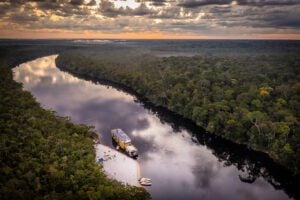
Brazil offers the best-known and most consistent fisheries, especially in the Rio Negro, Rio Marié, and tributaries of the Amazon. Floating lodges and liveaboards provide access to remote, low-pressure waters where giant temensis prowl.
Eastern Colombia’s river systems, including the Vichada and Bita, are rich in peacock bass habitat. The country has re-emerged as a prime destination for adventurous anglers seeking big fish in wild, lightly pressured settings.
Peruvian Amazon backwaters and oxbow lakes hold healthy populations of peacock bass, often in mixed-species fisheries alongside payara, arowana, and catfish. These trips tend to blend cultural immersion with exploratory fishing.
While Bolivia is better known for golden dorado, some tributaries of the Mamoré and upper Amazon also host peacock bass. These fisheries are rarely pressured and appeal to anglers seeking true wilderness exploration.
Venezuela was once the epicenter of trophy peacock bass angling, particularly in the Orinoco basin. While political instability has reduced traffic, the rivers still hold incredible numbers of fish and remain a historic benchmark for the species.
Peacock bass combine brilliant coloration with explosive feeding behavior. Their signature strike is a surface detonation—often on a popper or large streamer stripped aggressively. Once hooked, they bulldog into cover or launch blistering runs across lagoons. No other freshwater fish delivers such a consistent mix of visual eats, size, and power.
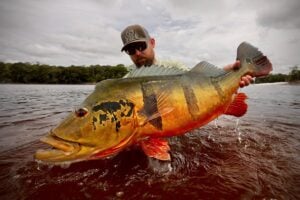
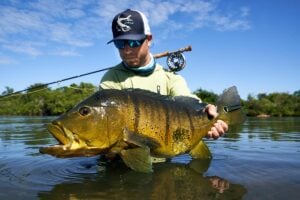
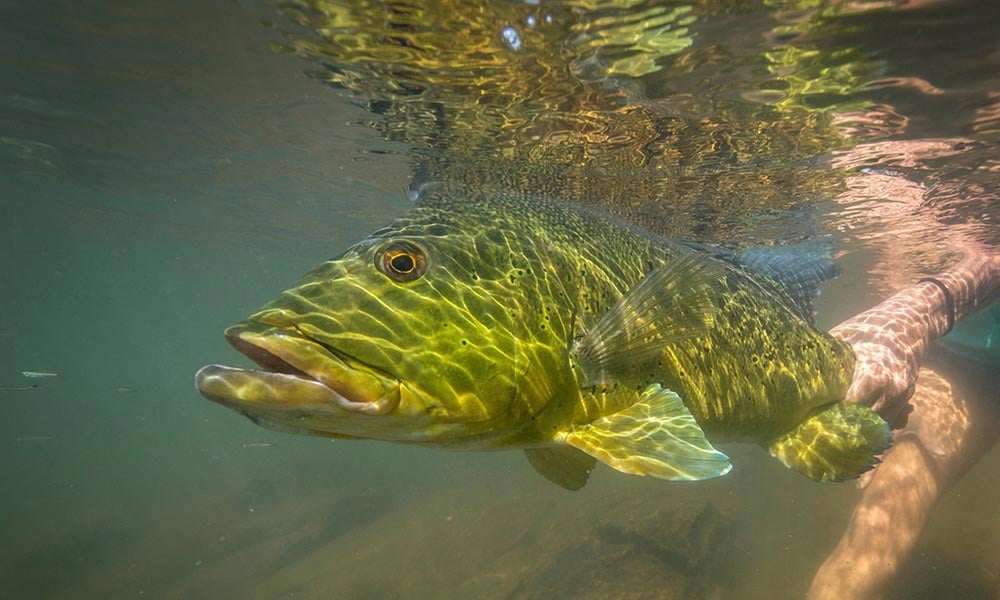
Peacock bass are strikingly marked, with golden bodies, dark vertical bars, emerald or orange flanks, and a namesake ocellus (eye spot) near the tail. The largest species, C. temensis, often develops a pronounced nuchal hump on males. Their coloration shifts between spawning and non-spawning phases, making them one of the most visually dramatic freshwater fish.
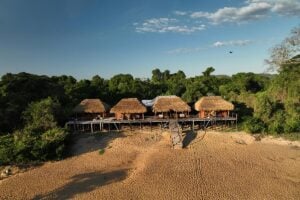
FishingExplora connects anglers with jungle lodges and floating operations across the Amazon Basin. Whether targeting giant temensis in Brazil, exploring Colombia’s Vichada, or fishing Peru’s oxbows, our partners provide expert guides, local access, and remote waters where peacock bass thrive. Explore our curated selection of peacock bass fishing trips worldwide.
Large streamers (Deceivers, EP baitfish, Andino Deceivers) and big surface flies like poppers or divers are highly effective. Bright colors and fast retrieves often draw the most aggresive strikes.
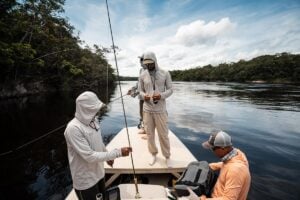
6–9 wt fly rods are ideal, with a strong reel and reliable drag. Heavier rods help deliver large flies, handle sudden runs, and pull fish from submerged timber and roots.
The largest species, Cichla temensis, can exceed 20 lbs, with most trophy fish in the 10–18 lb range. Smaller species (like C. orinocensis) typically run 2–8 lbs but provide nonstop action.
They are native to the Amazon and Orinoco basins but have been introduced to places like Florida and Panama. However, the true trophy fisheries remain in remote Amazon waters where they evolved.
Because they combine explosive topwater strikes, brilliant coloration, and raw power in a remote jungle setting. Few freshwater fish are as visual, aggressive, and rewarding to catch on the fly.
We use cookies to improve your experience and enable key features on the platform. You can choose which cookies to allow. Some features may not work fully without consent.