
Amazon Fly Fishing for Jungle Species at Kendjam
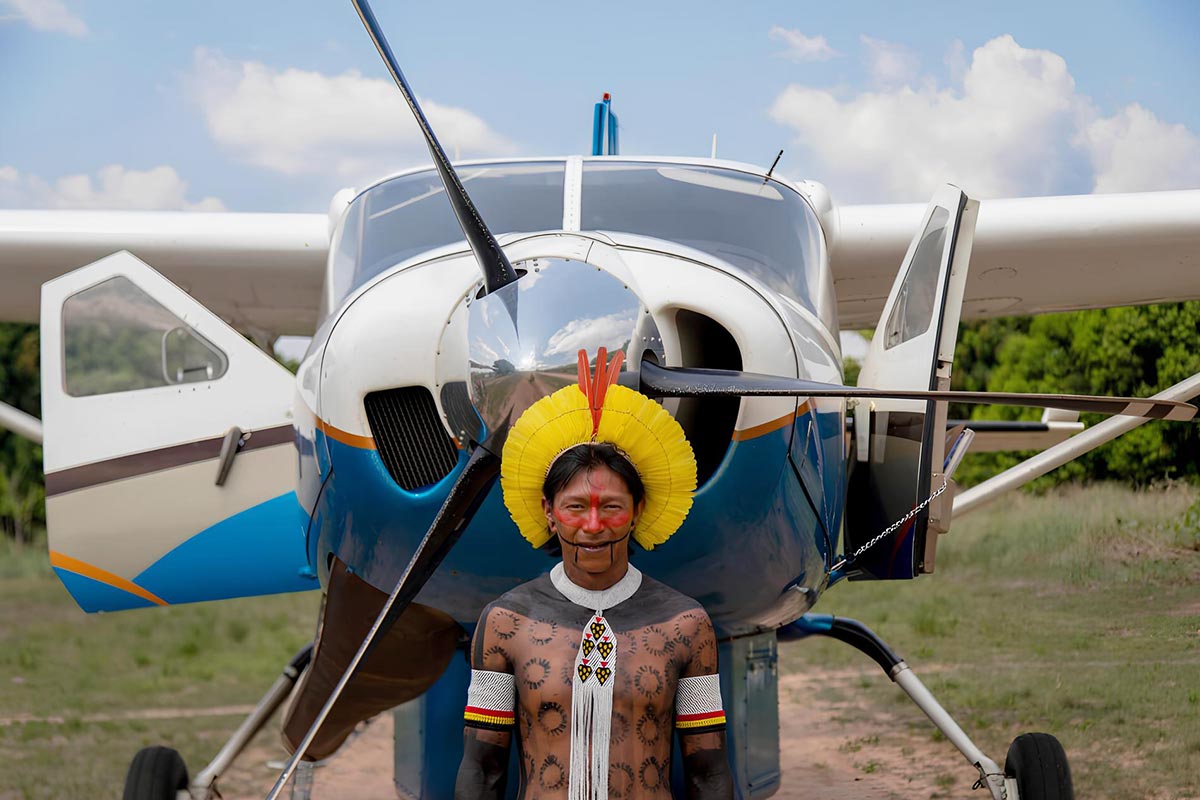
Located in Brazil’s southern Amazon within the Mekrãgnoti Indigenous Territory, Kendjam is reached by private charter flight from Manaus (around three hours) to a small community airstrip, followed by a downstream boat transfer to the lodge.
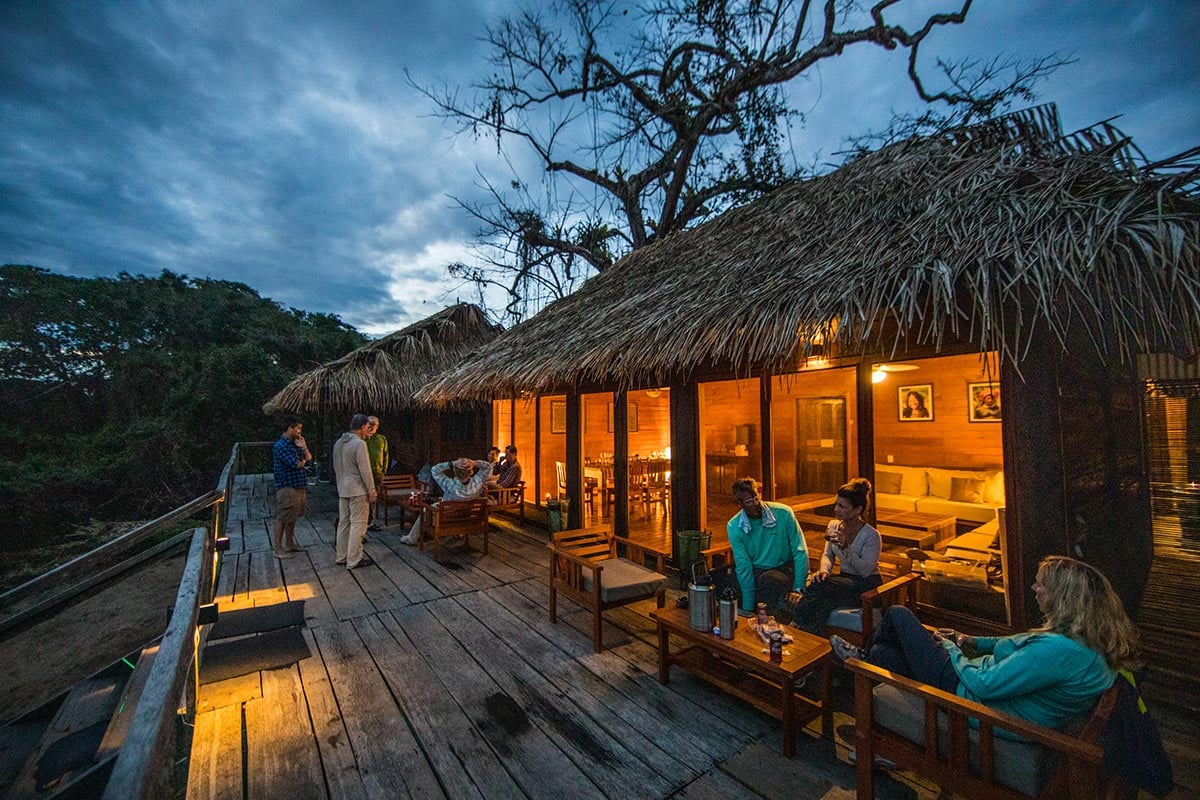
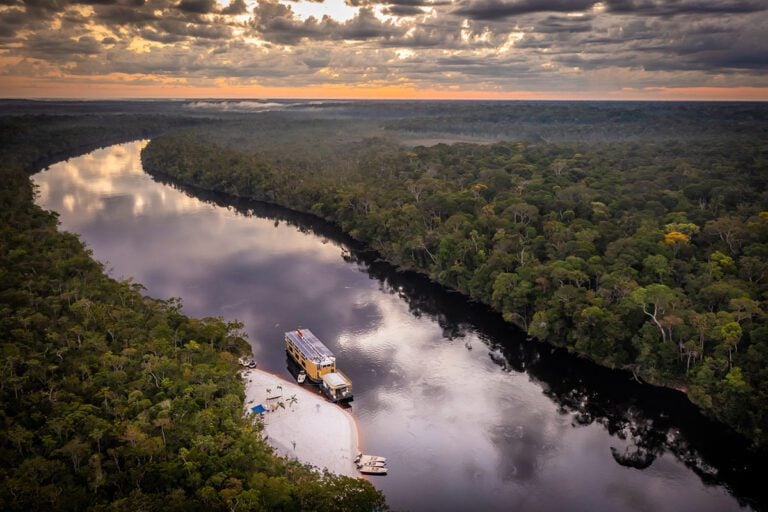
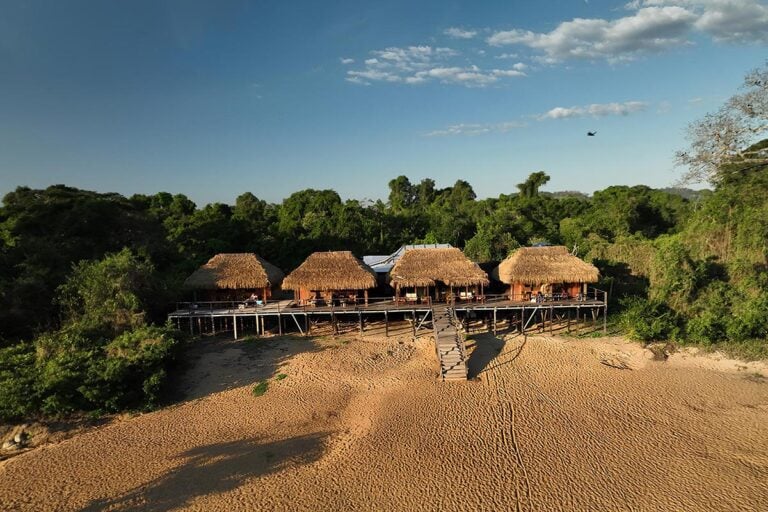
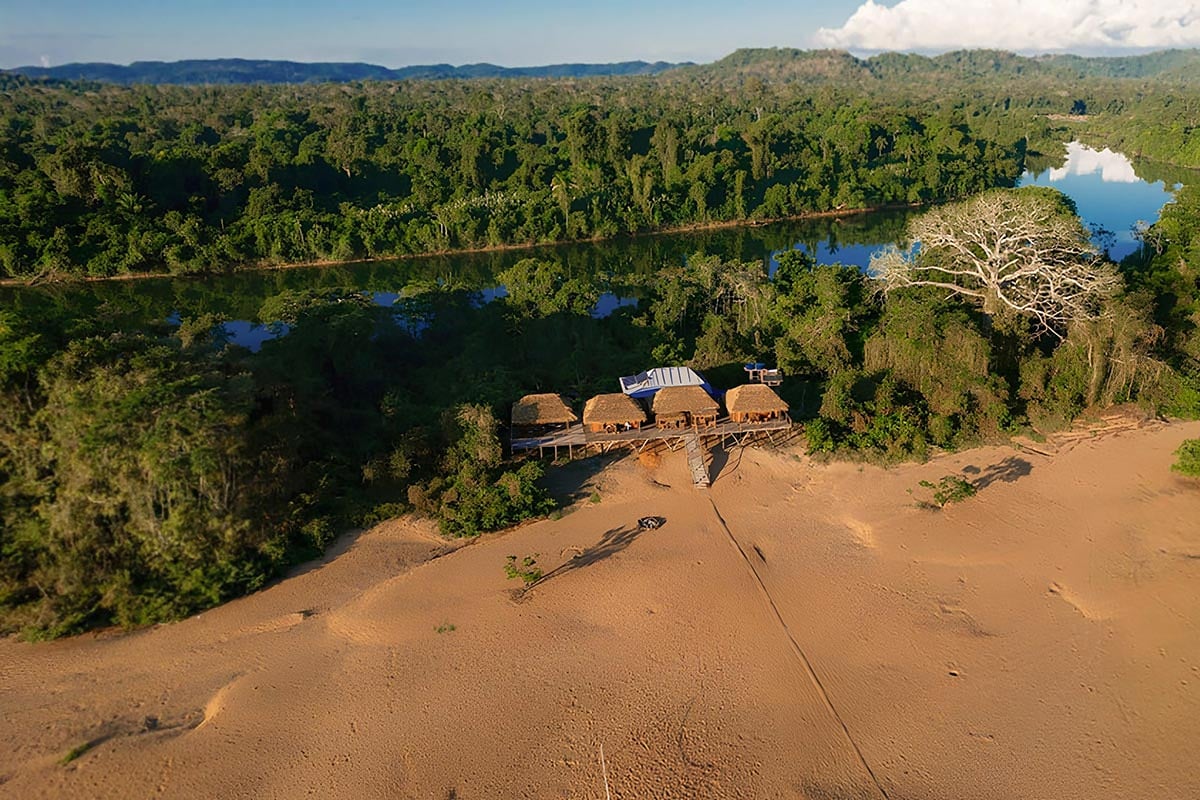
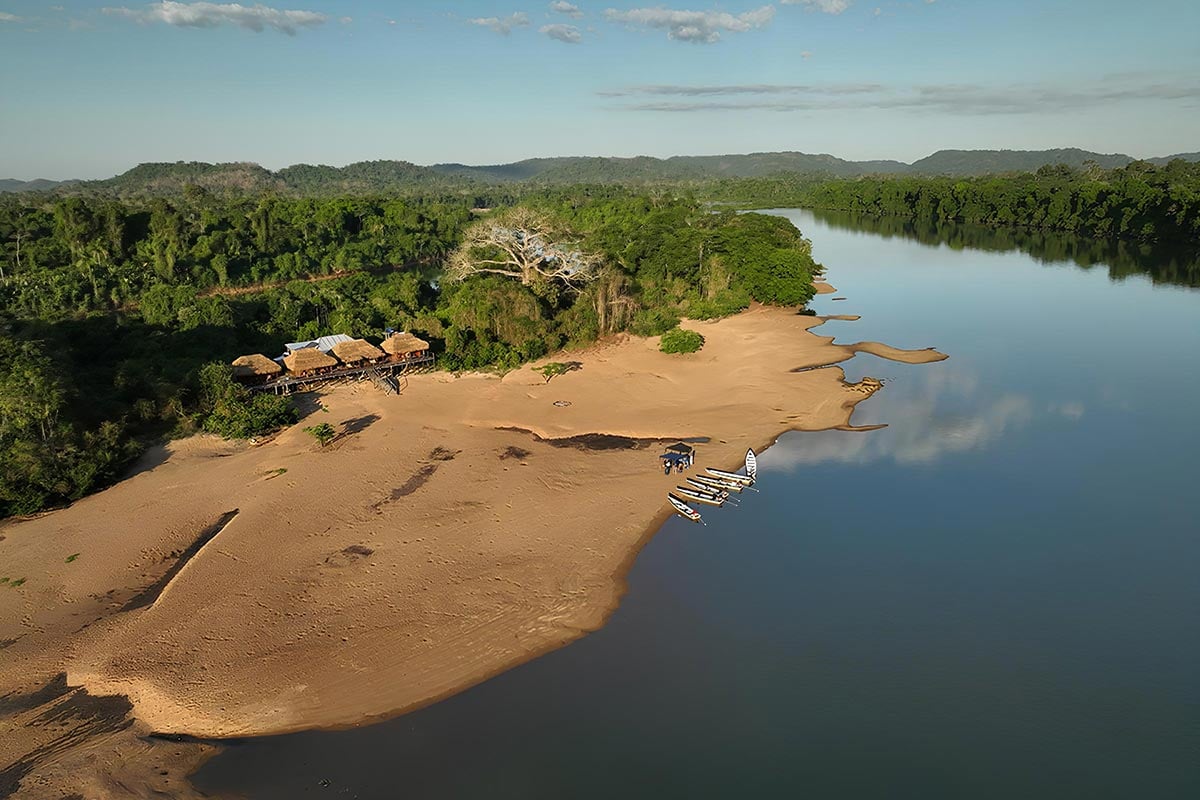
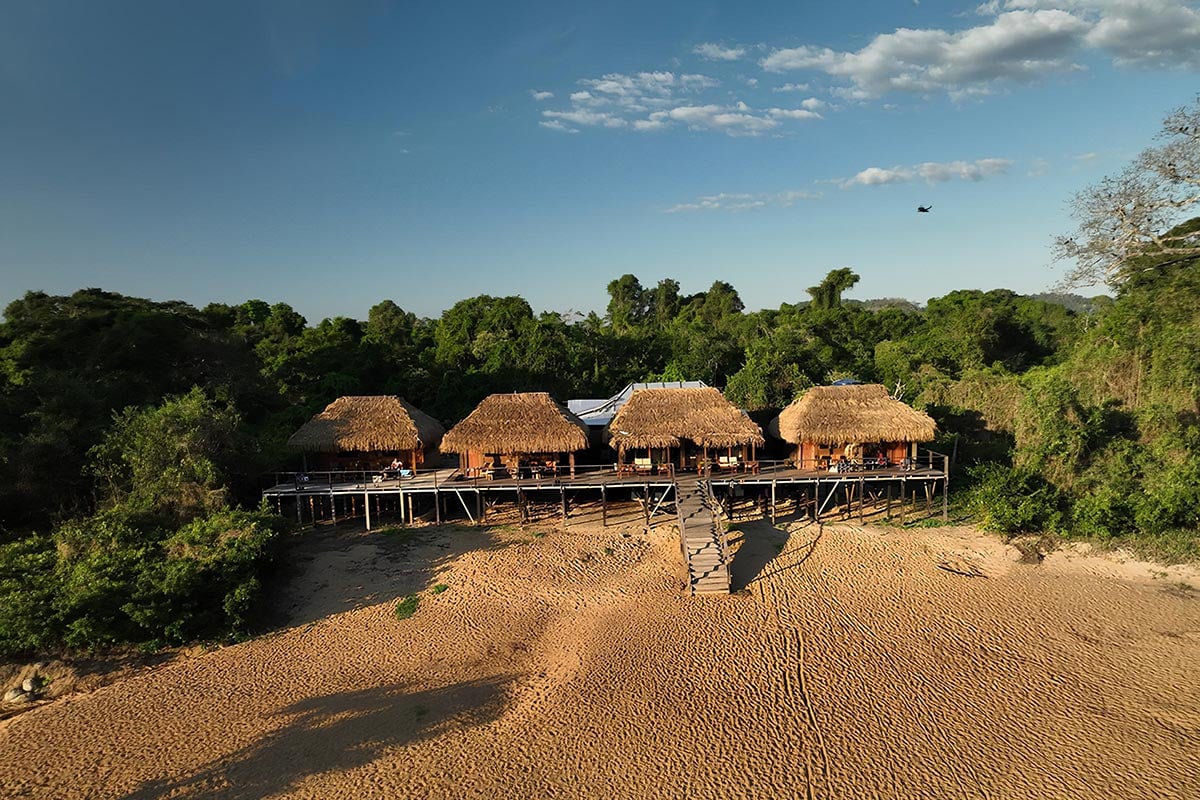
This fixed riverside base sits directly on a broad sandbar of the upper Iriri River, with boats pulled up along the bank and cabins set just above the waterline, far from road access and surrounded by protected indigenous land.
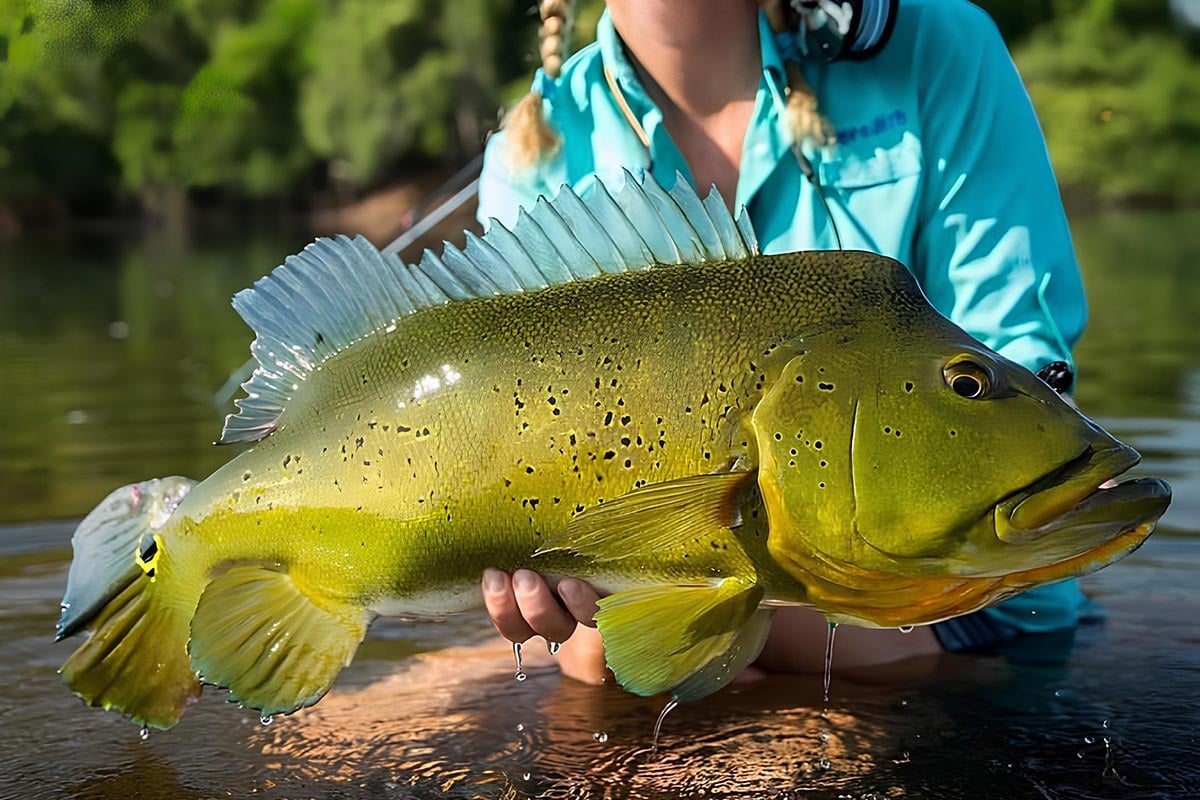
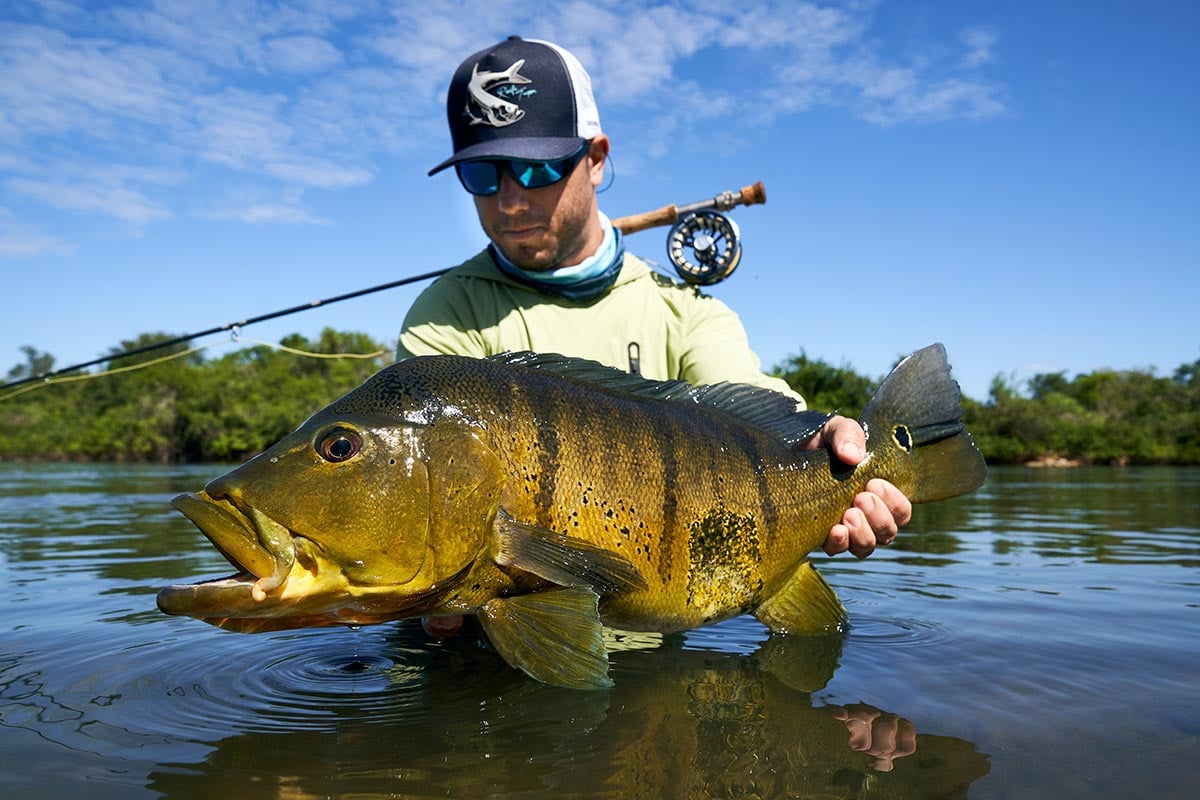
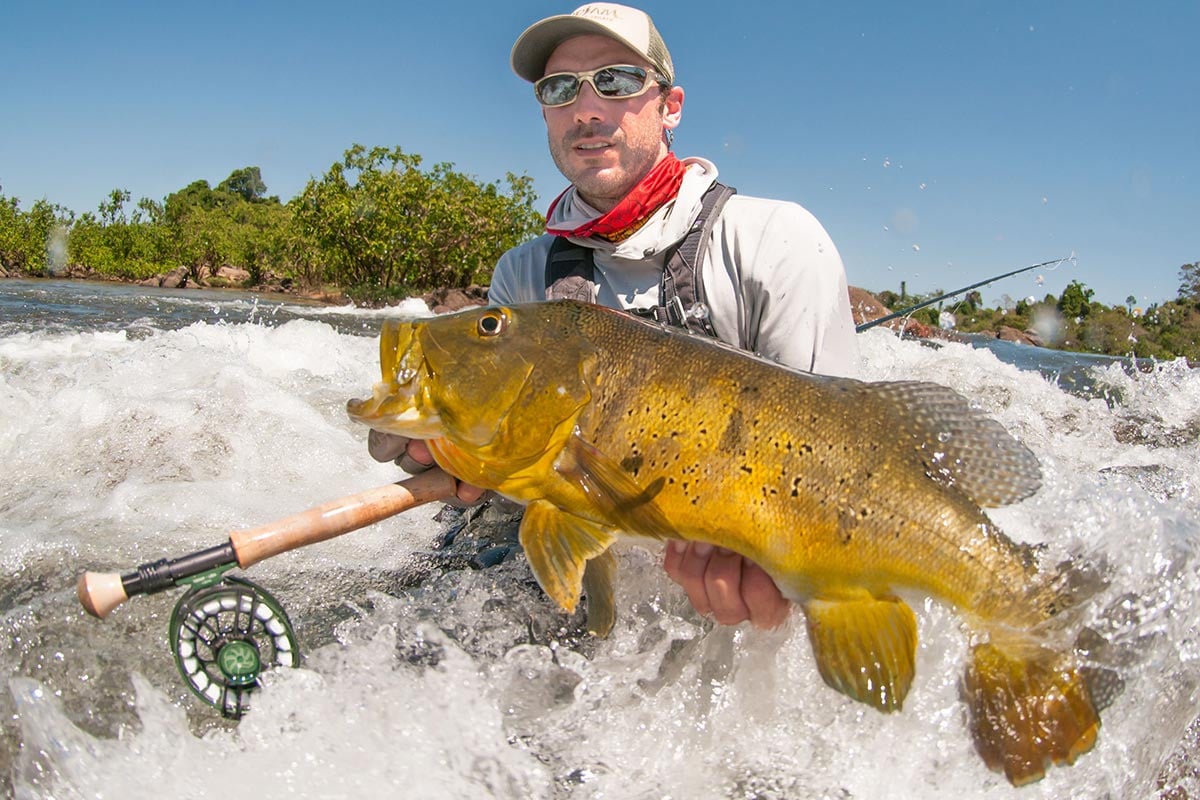
From this riverside base, Kendjam operates a limited 8-angler Amazon fly fishing program, anchored by peacock bass alongside a wider spread of jungle species that occupy fast-moving, clearwater headwaters rather than floodplain lagoons.
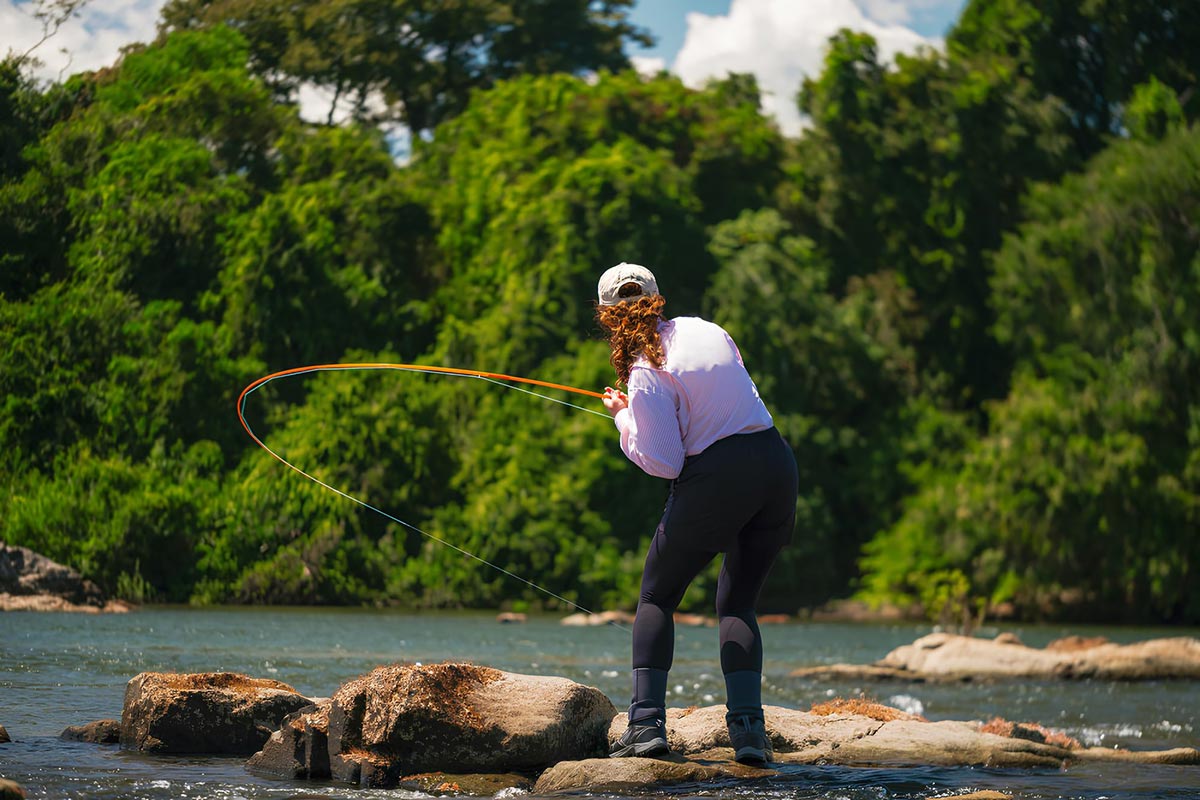
Fishing here is structured around walking banks, crossing shallow runs, and casting to visible movement in the water rather than blind casting from anchored boats. Strikes are often seen before they are felt, with fish turning or accelerating in clear water rather than appearing unexpectedly from depth.
The setting is the upper Iriri River system, a tributary of the Xingu Basin, where clarity and steady flow produce a format closer to technical river fishing than the stillwater or backwater style often associated with the Amazon.
Iriri River Headwaters and Granite Clearwater System
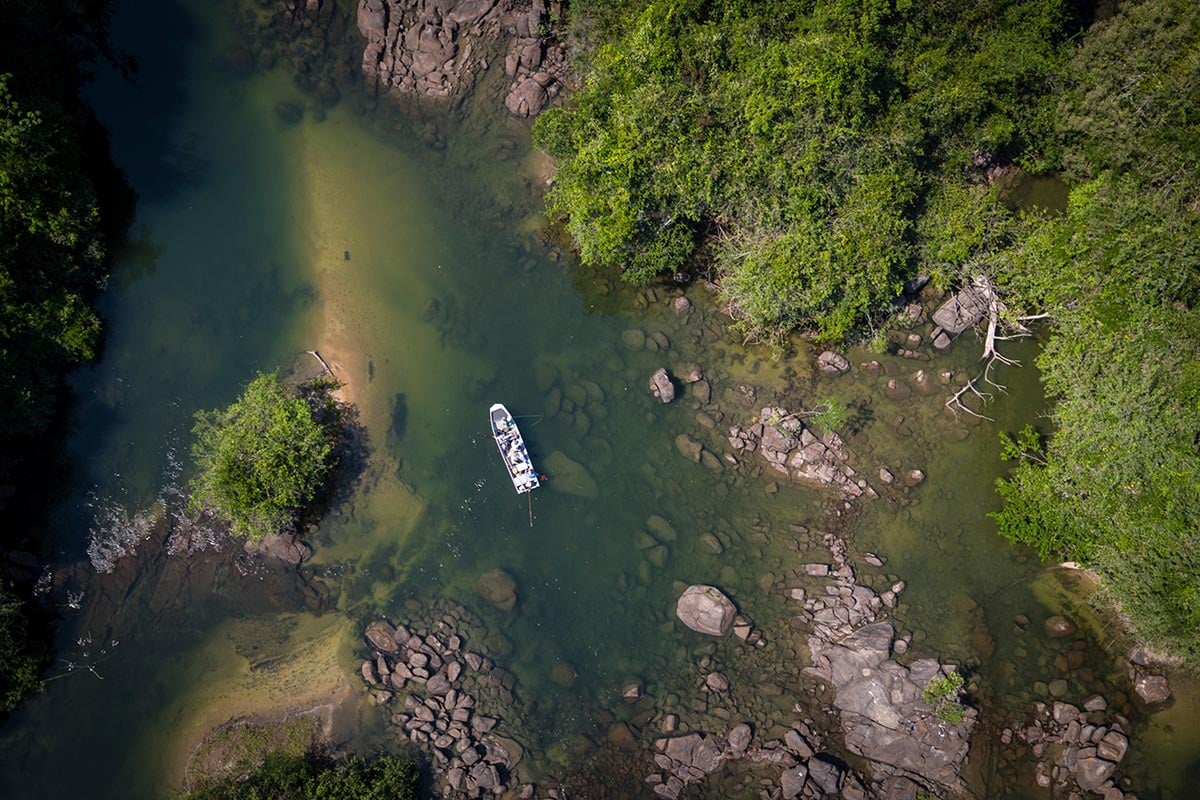
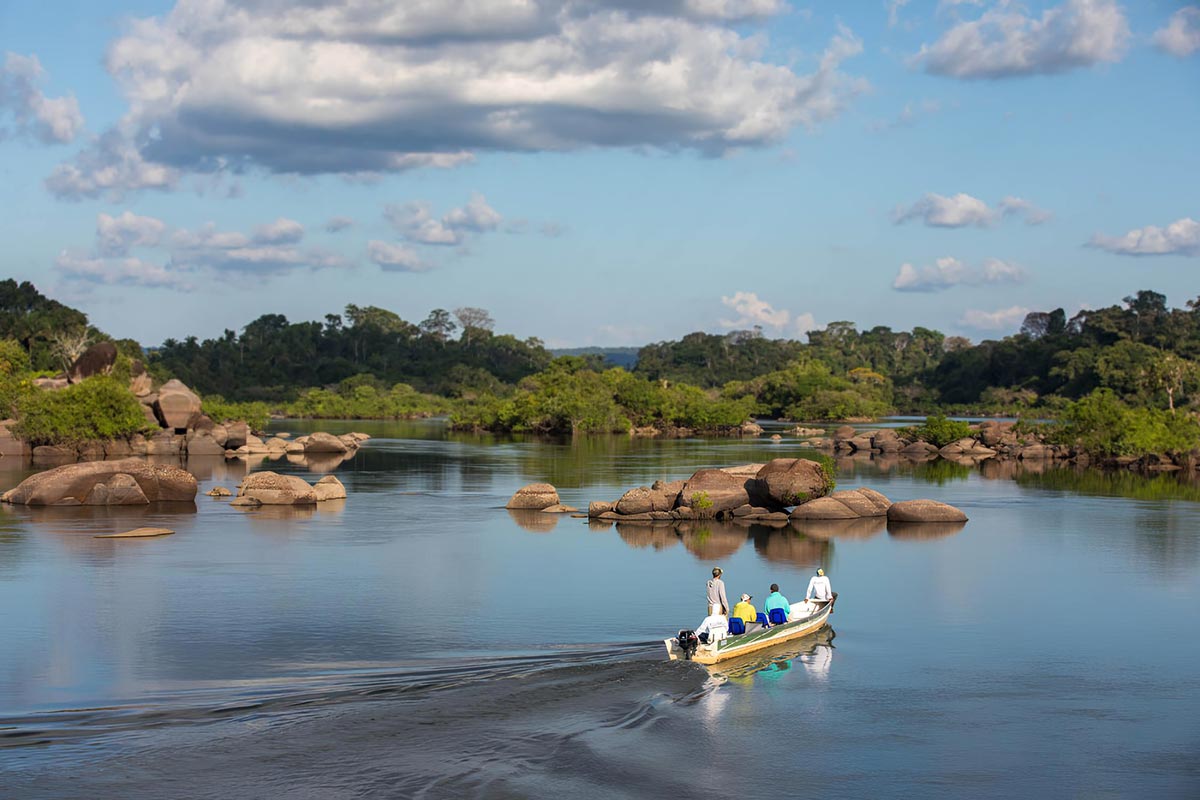
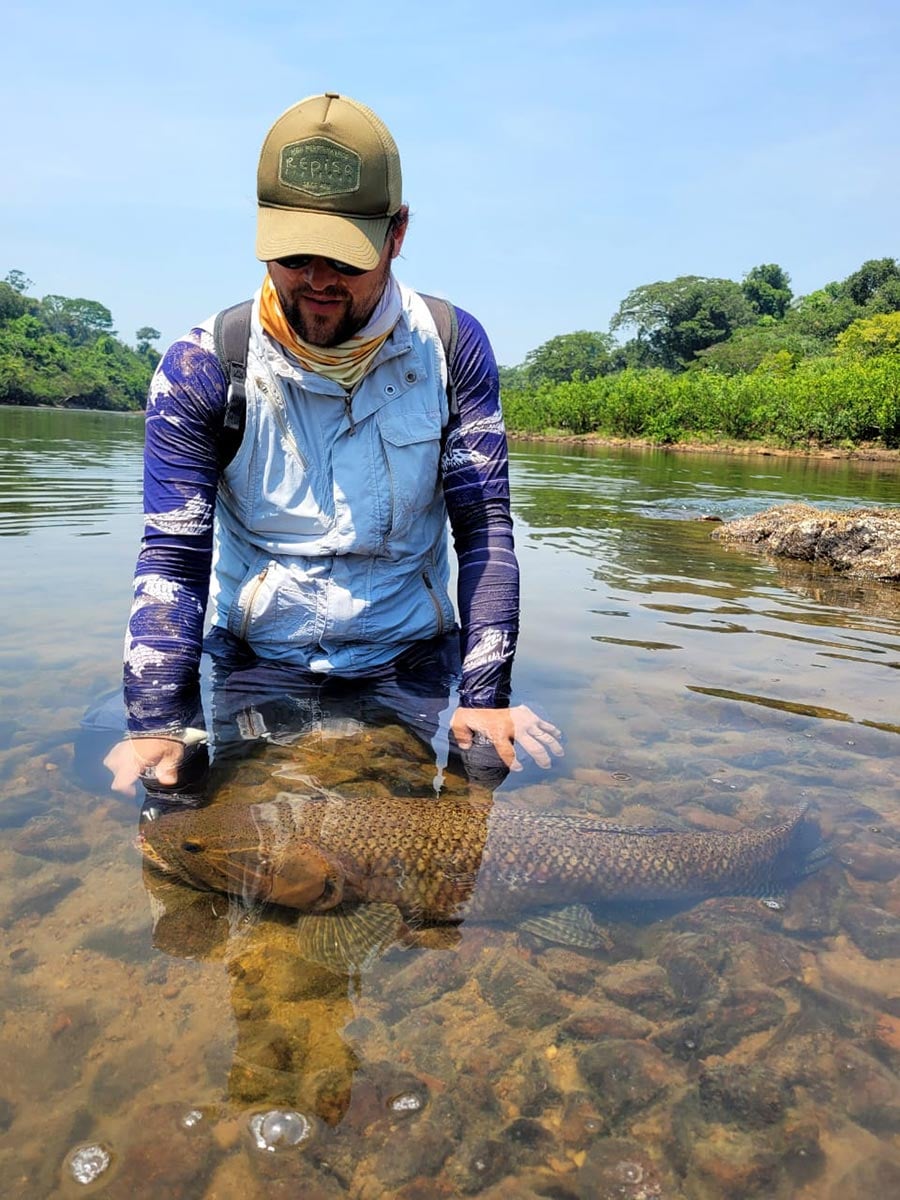
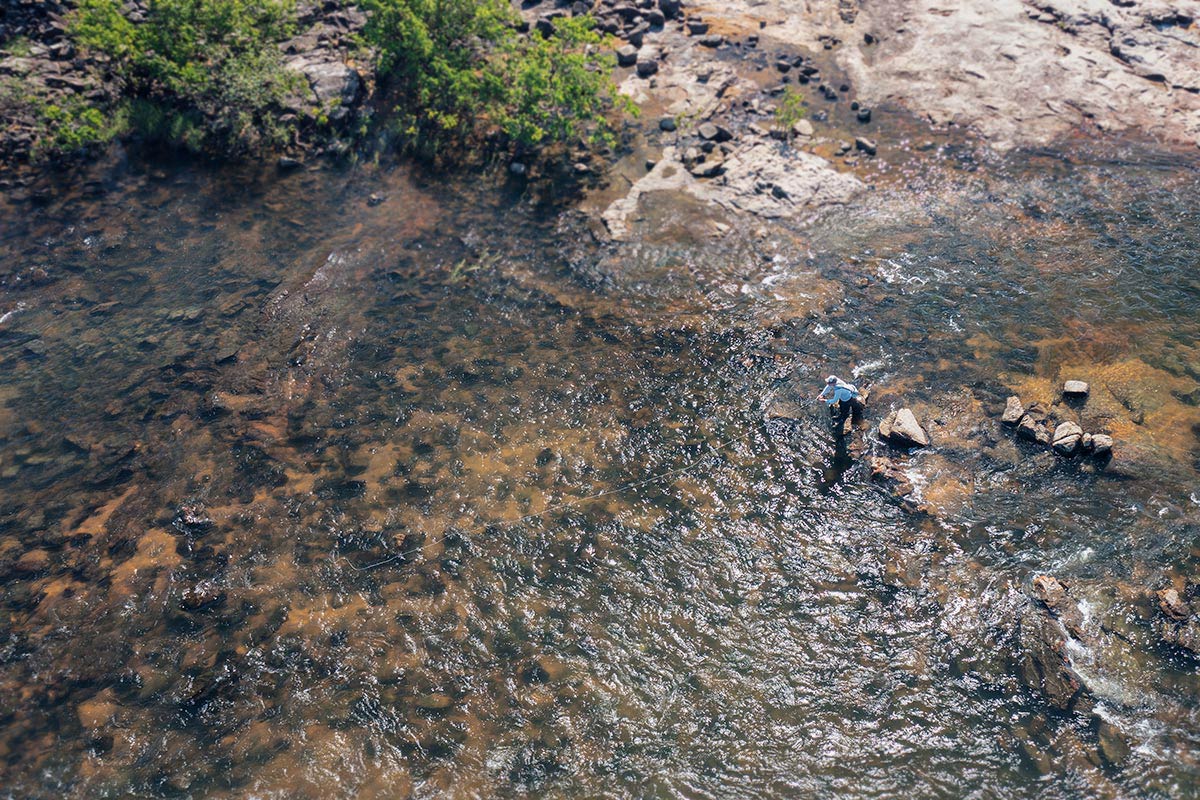
The Iriri at Kendjam flows over exposed granite bedrock, which limits sediment suspension and keeps water clarity high even after short periods of rain. Unlike many lowland Amazon tributaries that carry clay or organic stain, this headwater stretch runs transparent across rock shelves, split braids, and shallow pools where the riverbed remains visible from the bank, even without stepping into the water.
The result is a river where fish position can be seen rather than guessed, and where approach and angle matter as much as fly choice. This geological base is the primary reason the fishery supports consistent sight-fishing rather than seasonal windows of visibility.
Wading, Braids and Sight-Fishing Access
Much of the fishing at Kendjam is done on foot. Boats are used to move between sections of river, then pulled onto sand or rock while anglers wade along gravel edges, step across shallow crossings, and work narrow side braids splitting from the main flow. In many places, exposed granite shelves and knee- to thigh-deep water between mid-river islands make it possible to move directly through the river, often with rods held high while stepping between exposed slabs and tracking fish movement ahead.
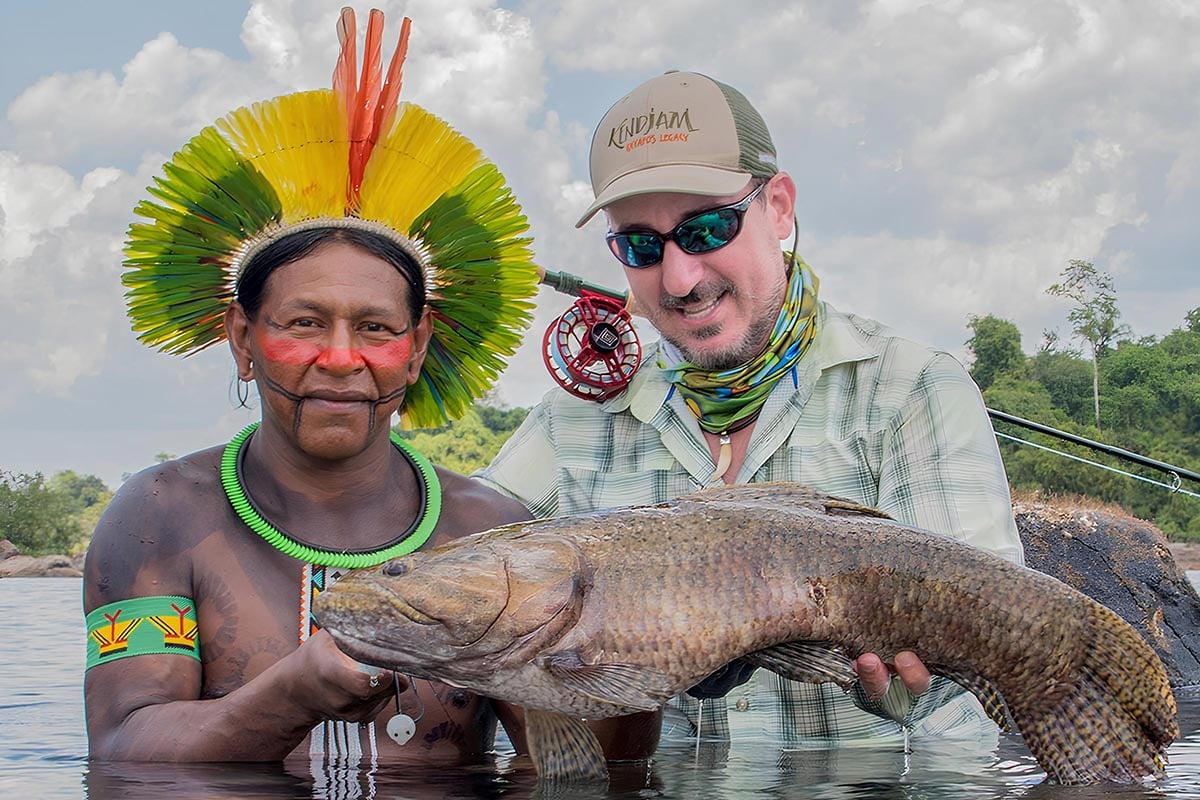
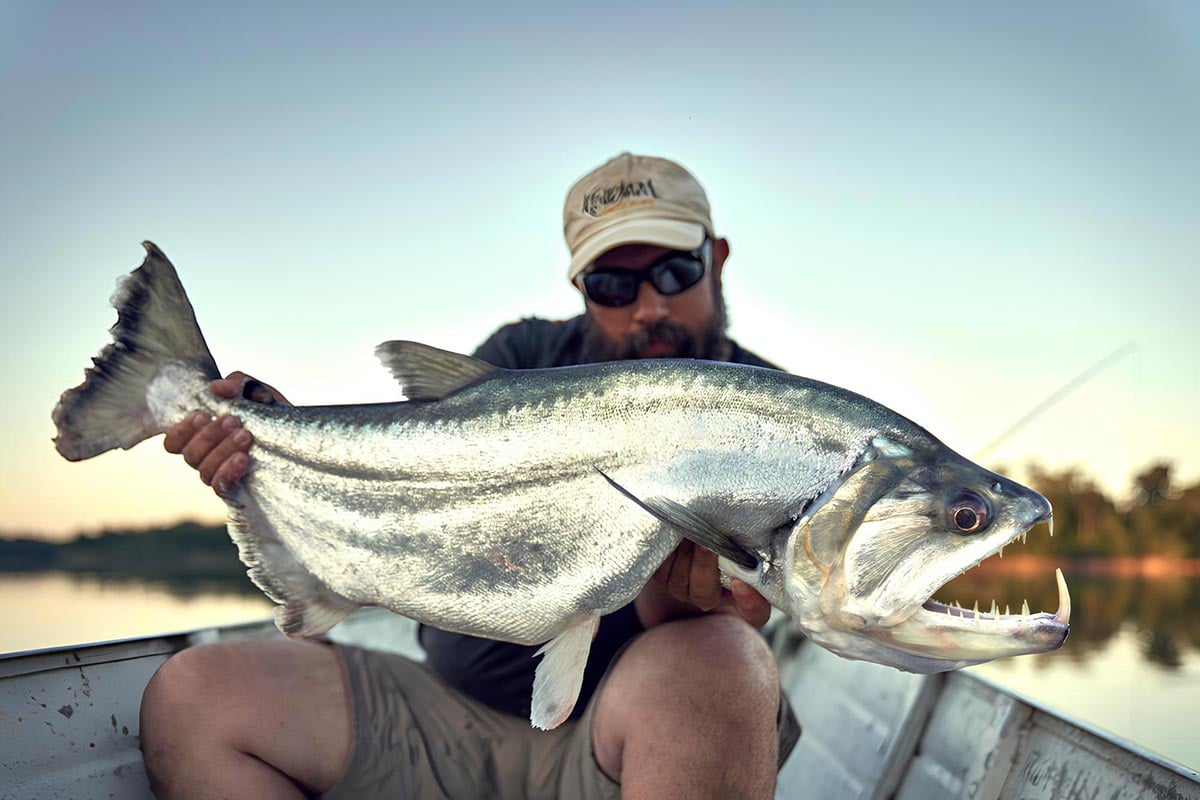
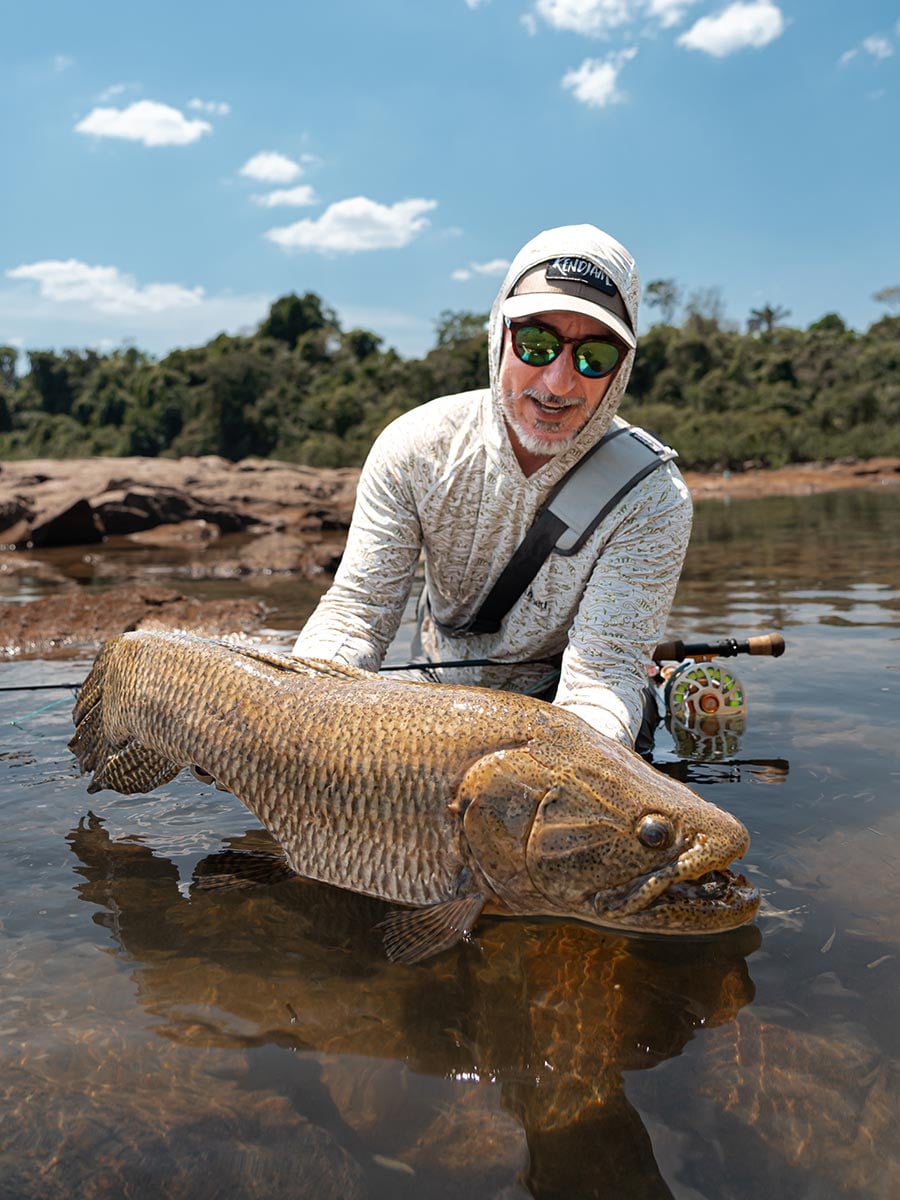
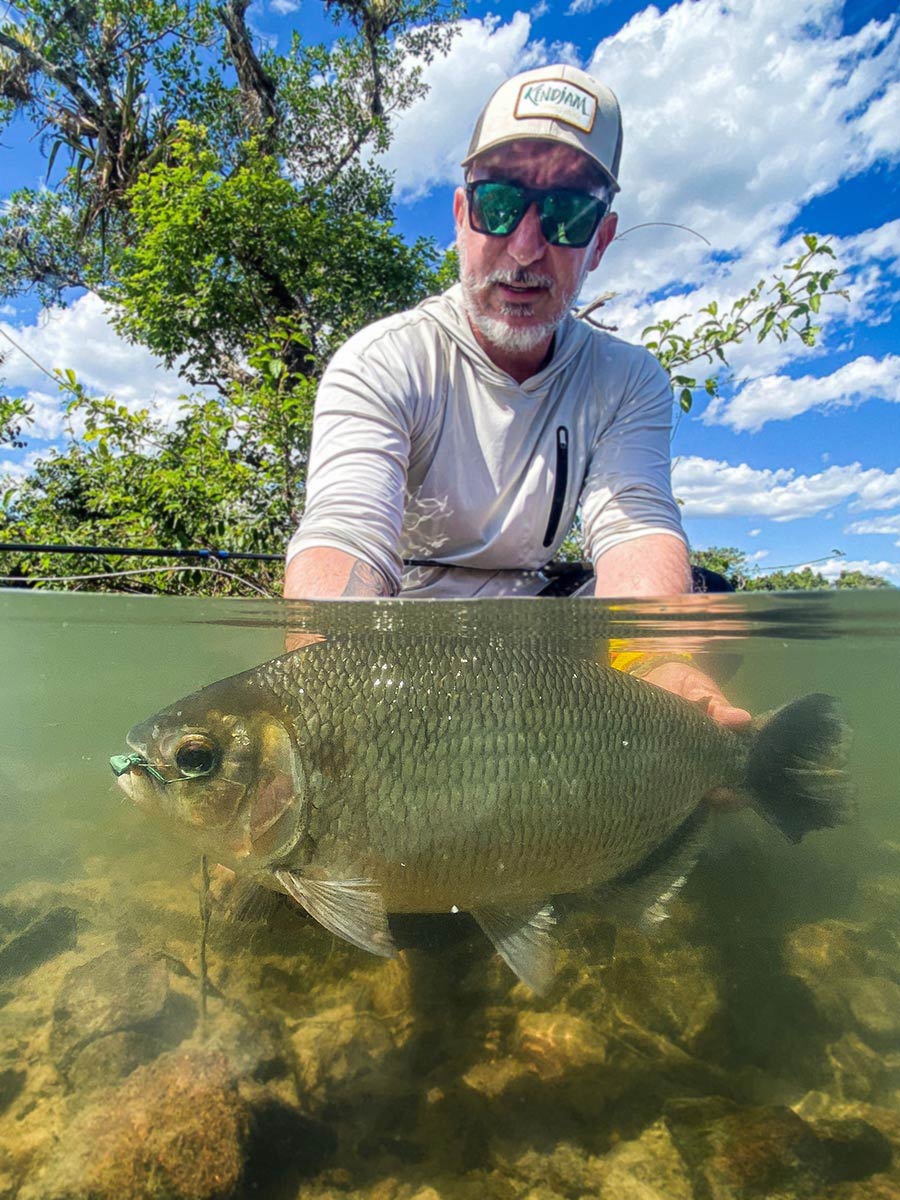
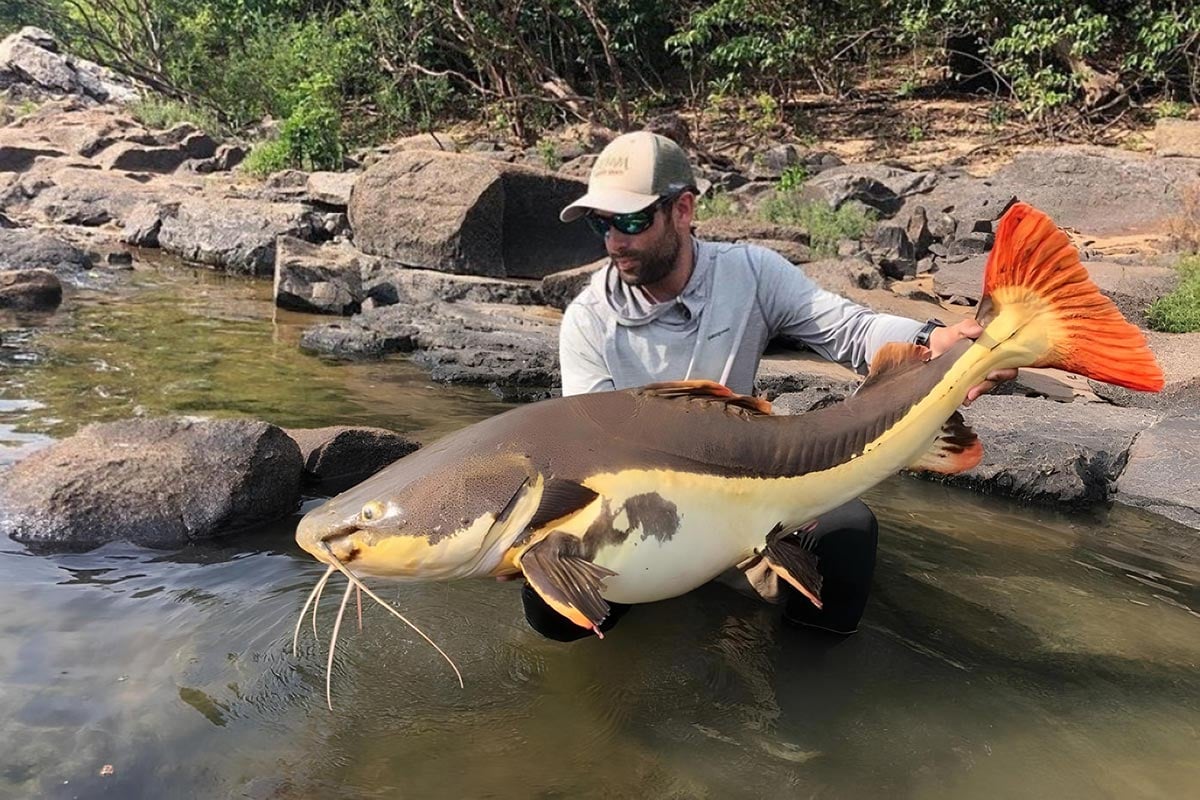
Parallel braids and tributary mouths divide and rejoin over short distances, requiring anglers to make frequent positioning decisions as they move downstream. In practice this means multiple species can appear within the same reach of river — from peacock bass and bicuda to pacu, matrinxã, wolf fish, and payara — with changes in target driven more by water depth and steady flow than by relocating to entirely new water.
Fishing Scale and Limited Angler Pressure
Only eight anglers fish the Kendjam sector each week across more than one hundred kilometres of accessible river and tributaries. This ratio spreads effort laterally rather than concentrating it on named pools or beats, covering independent stretches instead of rotating through the same holding water and reducing repeated foot traffic through the same shallow zones.
With access being distributed across separate river branches instead of rotated through a tight circuit, fish encounter fewer consecutive anglers in a single location, preserving natural holding patterns rather than pushing them into deeper or less visible water.
Seasonal Water Phases on the Iriri
The Kendjam season runs through the dry months when river levels drop steadily and side braids become increasingly wadeable. Early weeks see broader flows and more boat positioning, while mid-season brings extended stretches of exposed granite and easier crossings between splits.
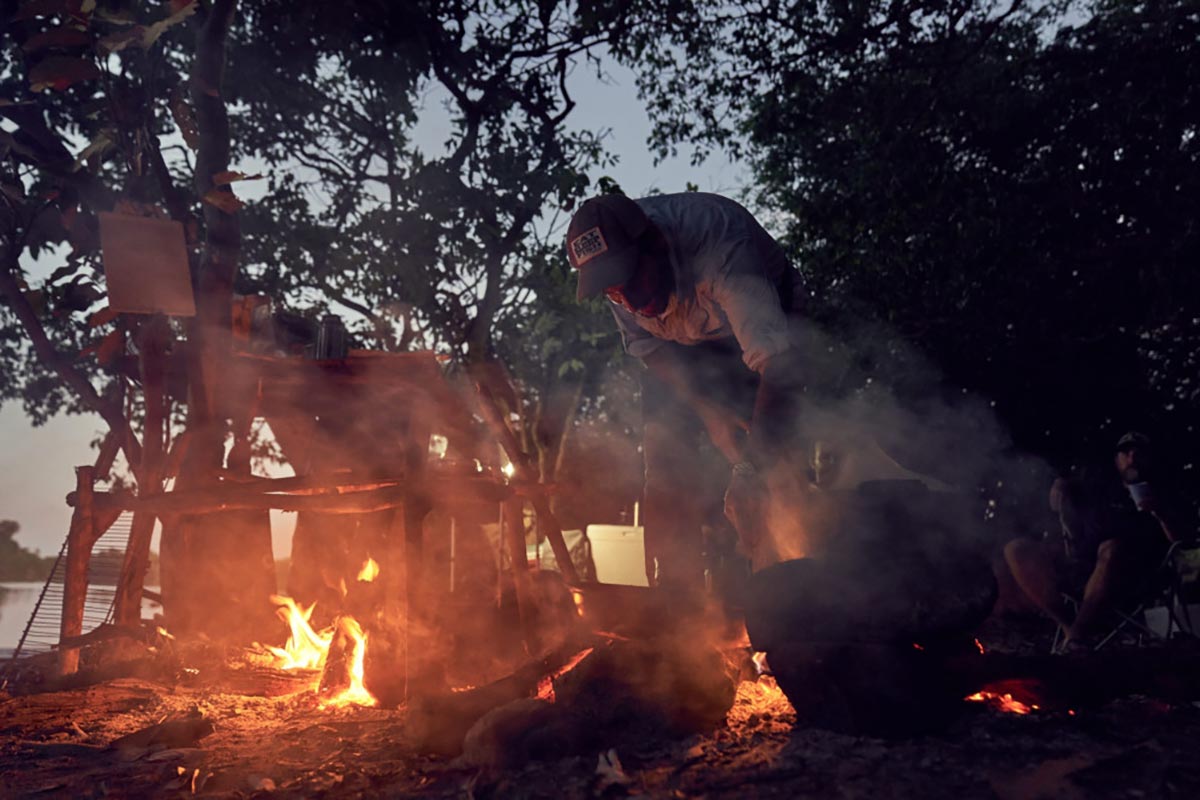
Late season concentrates fish along defined runs, deeper pockets, and shaded banks as the river reaches its lowest levels, with crossings shifting from waist-deep to knee-deep and narrowing into more predictable lanes of flow. Daily weather remains hot with cooler nights, typical of the southern Amazon dry season, when evenings cool quickly after sunset.
Multi-Species Jungle Fly Fishing Dynamics
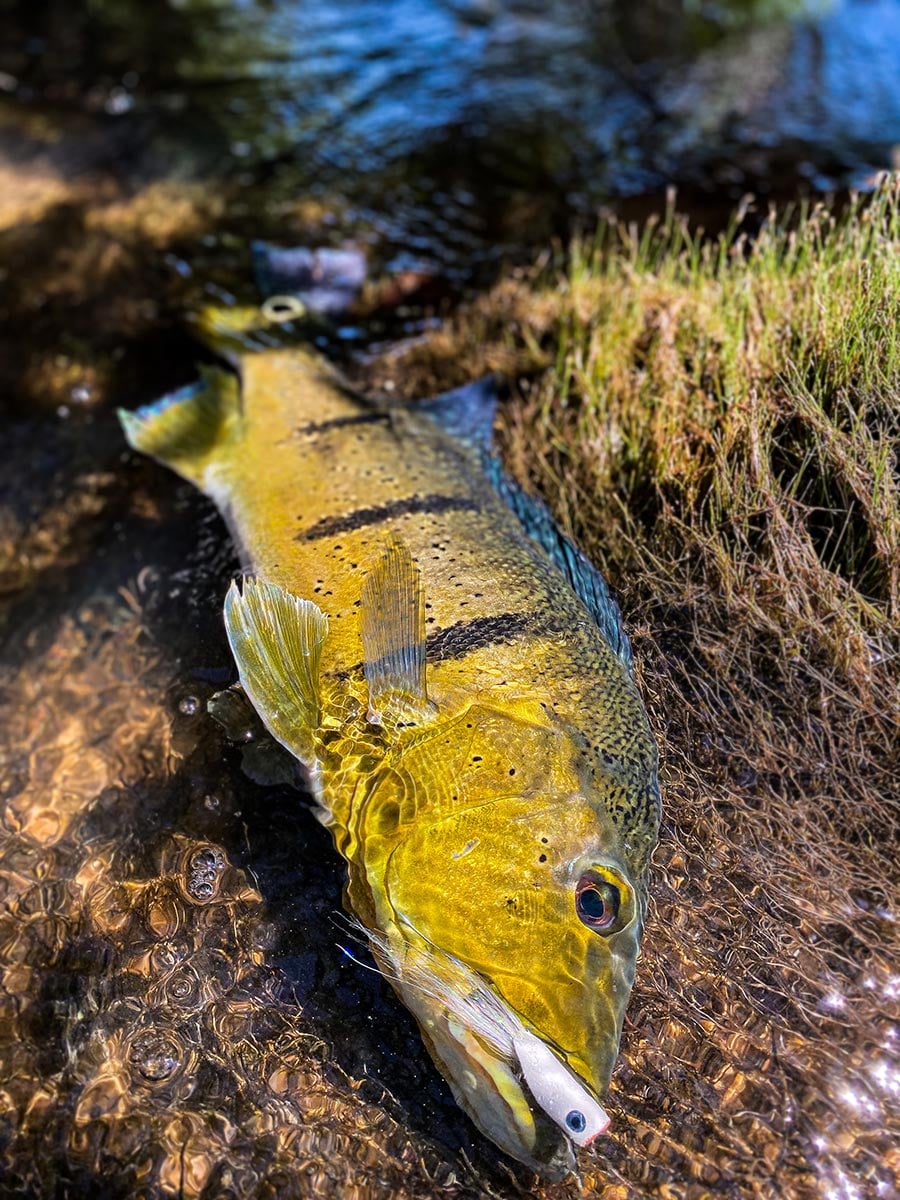
Species diversity at Kendjam is shaped by the river’s fast, clear headwater character. Freshwater predators such as yellow peacock bass and bicuda hold along rocky edges and faster seams where baitfish move through narrow runs. Pacu and matrinxã cruise shallower flats and softer pockets, often feeding near surface disturbance or fallen fruit lines along the bank. Wolf fish and payara occupy deeper runs and river junctions where oxygen and steady flow converge.
Encounters are often abrupt — a surface take along a rocky edge can be followed minutes later by a deeper pull from slower water without changing location. Because these species overlap within the same stretch of river, anglers often shift approach within a single session rather than relocating entirely.
Guiding Model and Daily Fishing Structure
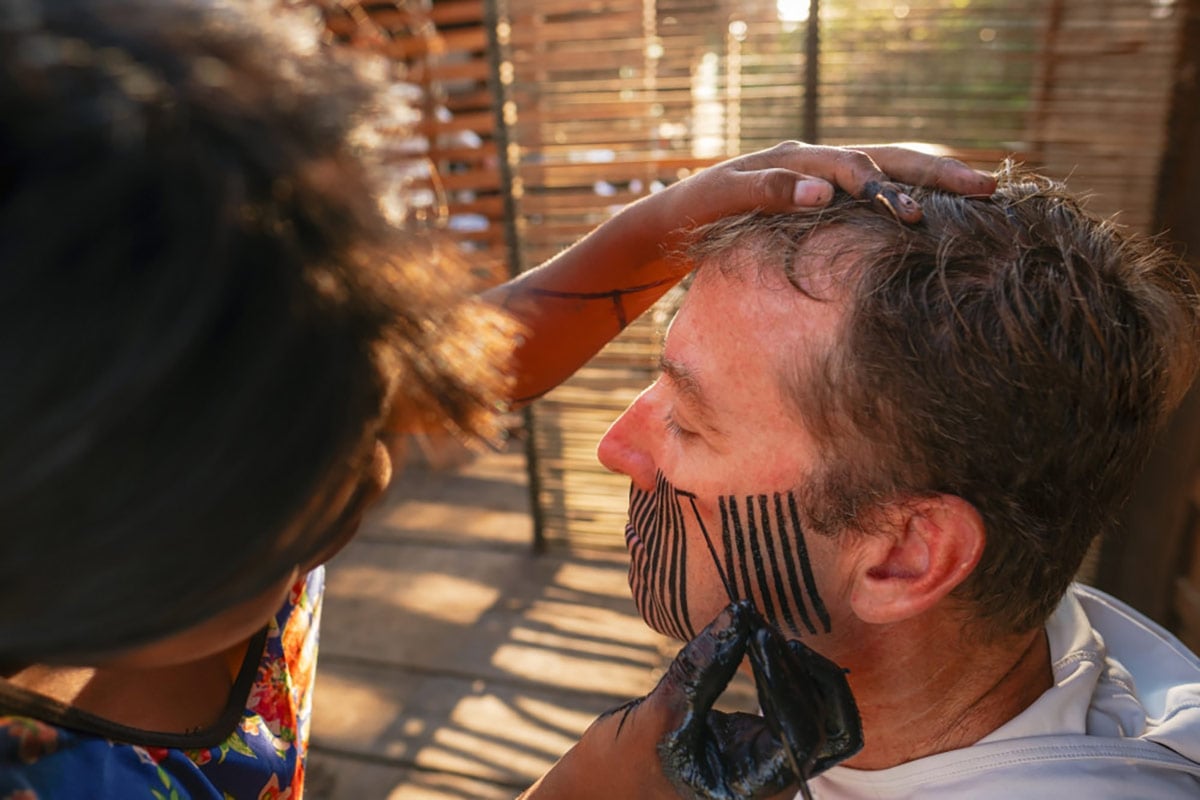
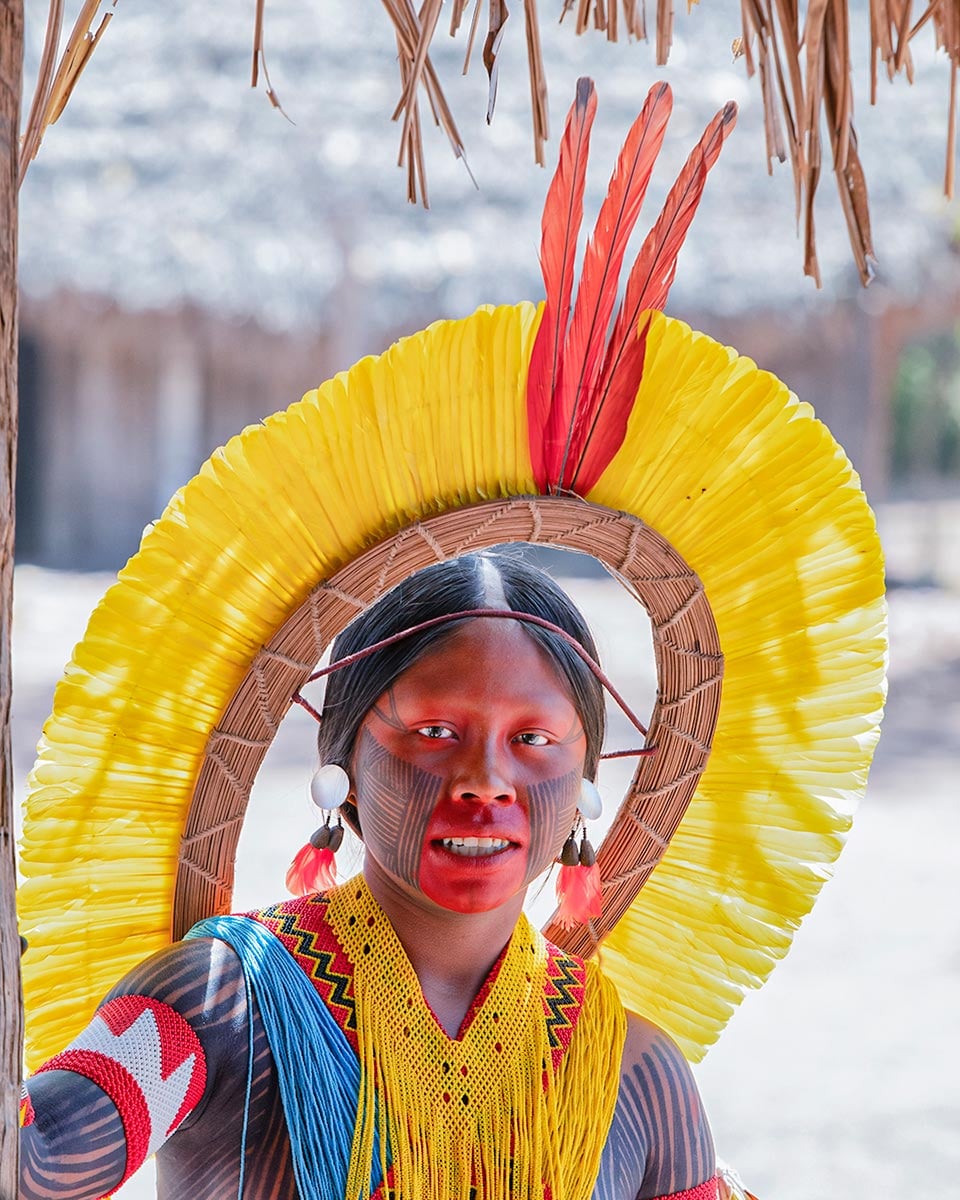
Fishing teams consist of two anglers paired with a professional fly-fishing guide and a Kayapó indigenous guide working together from a shared aluminium skiff loaded each morning with spare rods, fly boxes, and dry bags. The professional guide directs presentation and water coverage, while the indigenous guide provides local knowledge of seasonal river changes, fish movement, and safe crossing routes.
Days are structured around moving downstream through multiple access points rather than remaining within sight of the lodge, with lunch taken on sandbars or flat rock shelves before continuing into secondary water in the afternoon.
Remote Outcamps and Extended River Access
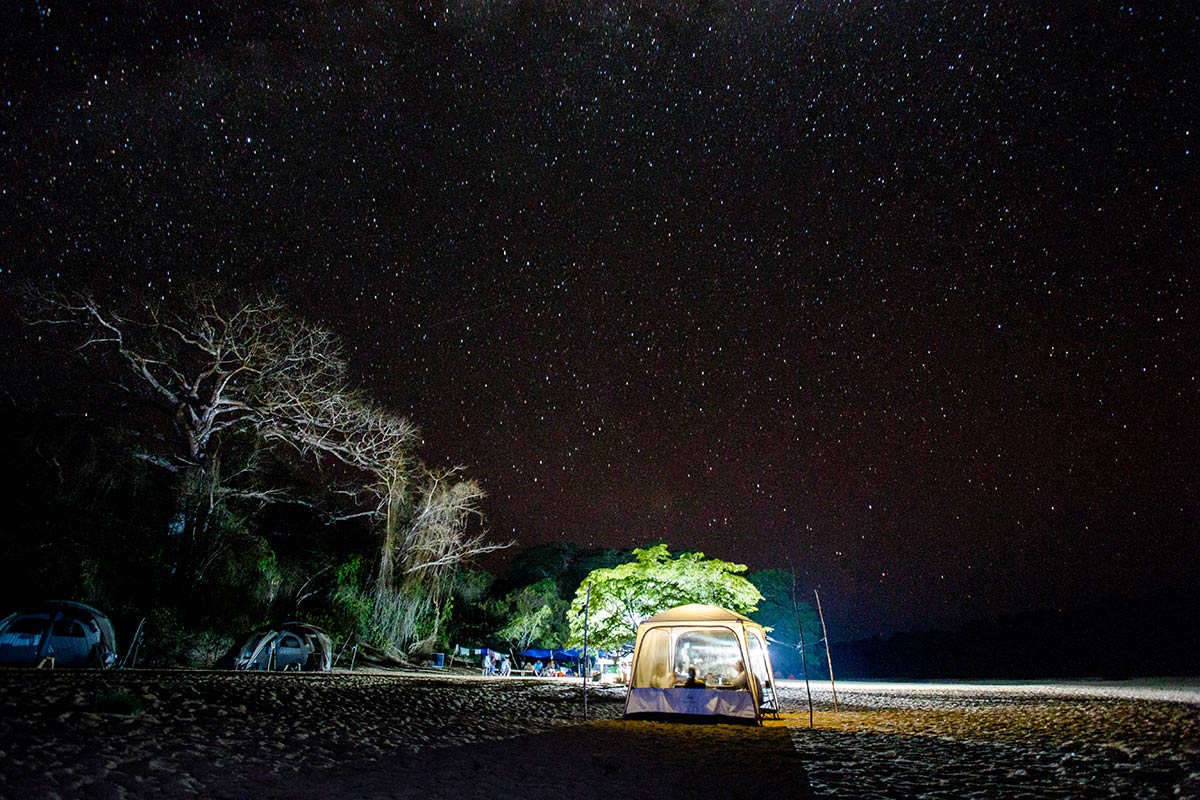
For anglers seeking additional reach, one- or two-night tented outcamps extend access upstream or downstream beyond the primary lodge sector. These mobile camps are used to reach stretches where daily boat travel alone would limit fishing time, allowing early starts directly on remote water and reducing transfer distance. The format remains simple, but it shifts the emphasis from lodge-radius coverage to deeper exploration of the Iriri’s outer branches.
Catch-and-Release and Indigenous Stewardship
All fishing at Kendjam follows mandatory catch-and-release with single barbless hooks, operating under permits and usage agreements established with the Kayapó community and Brazilian authorities. Angler numbers, access zones, and seasonal timing are set to maintain fish behaviour and water quality rather than maximise throughput, keeping the headwater system functional as both a fishery and a protected indigenous territory.
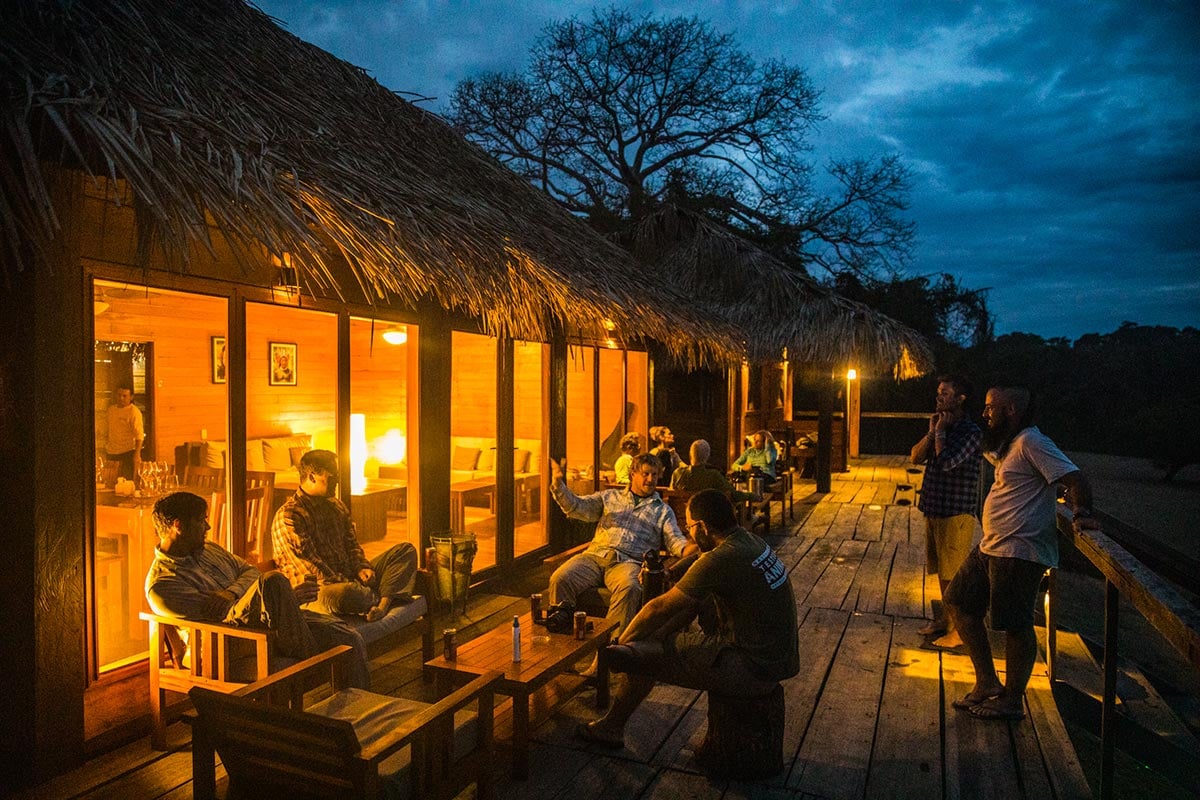
By combining fly fishing for multiple hard-fighting jungle species with a comfortable riverside lodge and close partnership with the local Kayapó community, Kendjam Lodge offers a distinctly immersive Amazon fishing program rarely found elsewhere.
To learn more about the fishing and express an interest, message Untamed Angling.