



Fishing the Rio Marié in the Brazilian Amazon
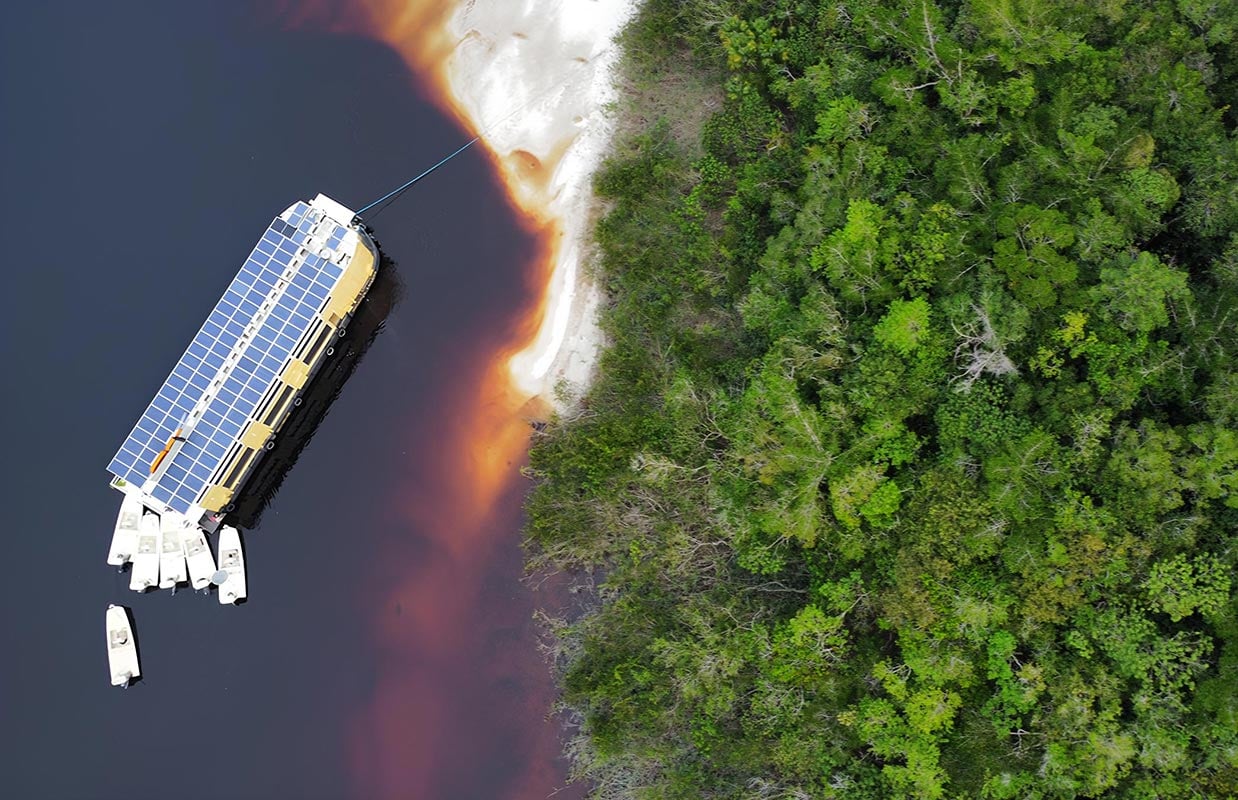
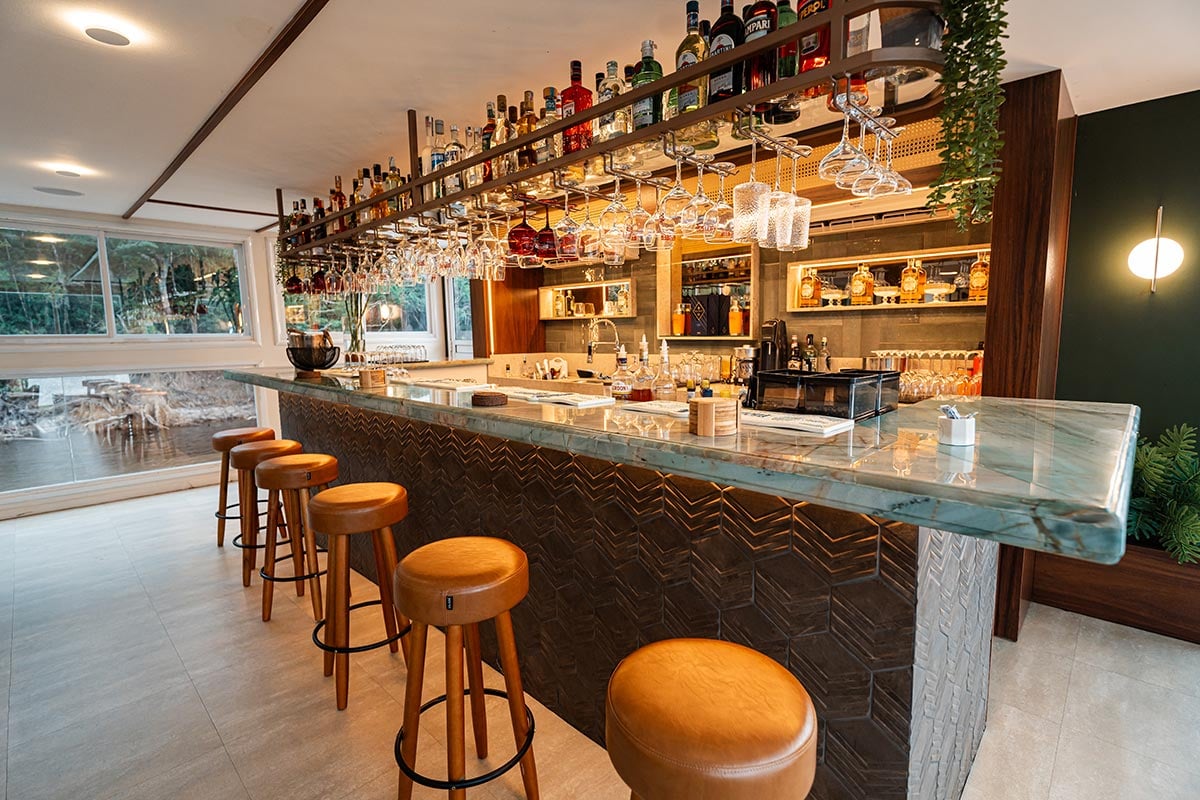
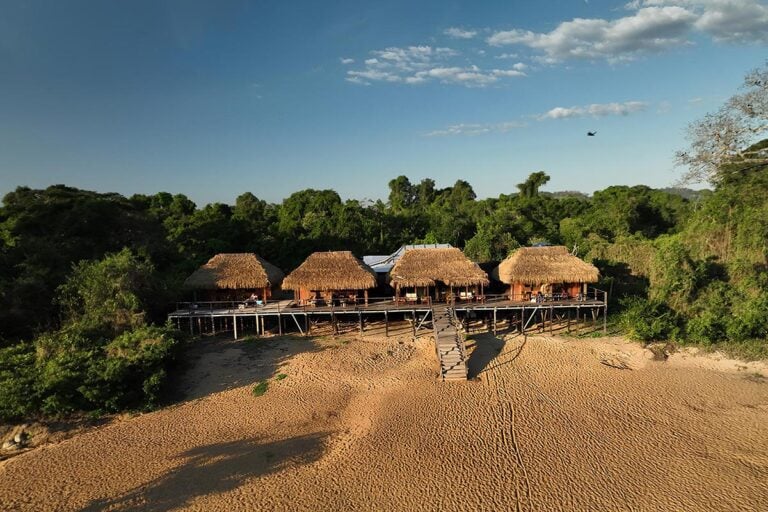
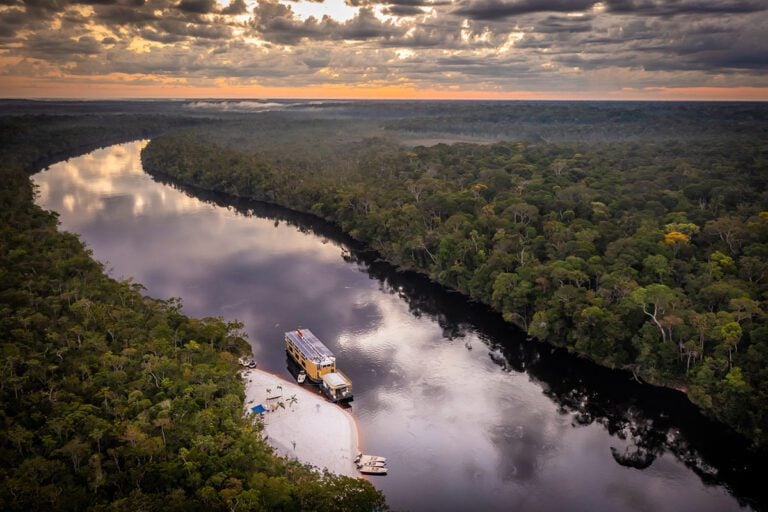
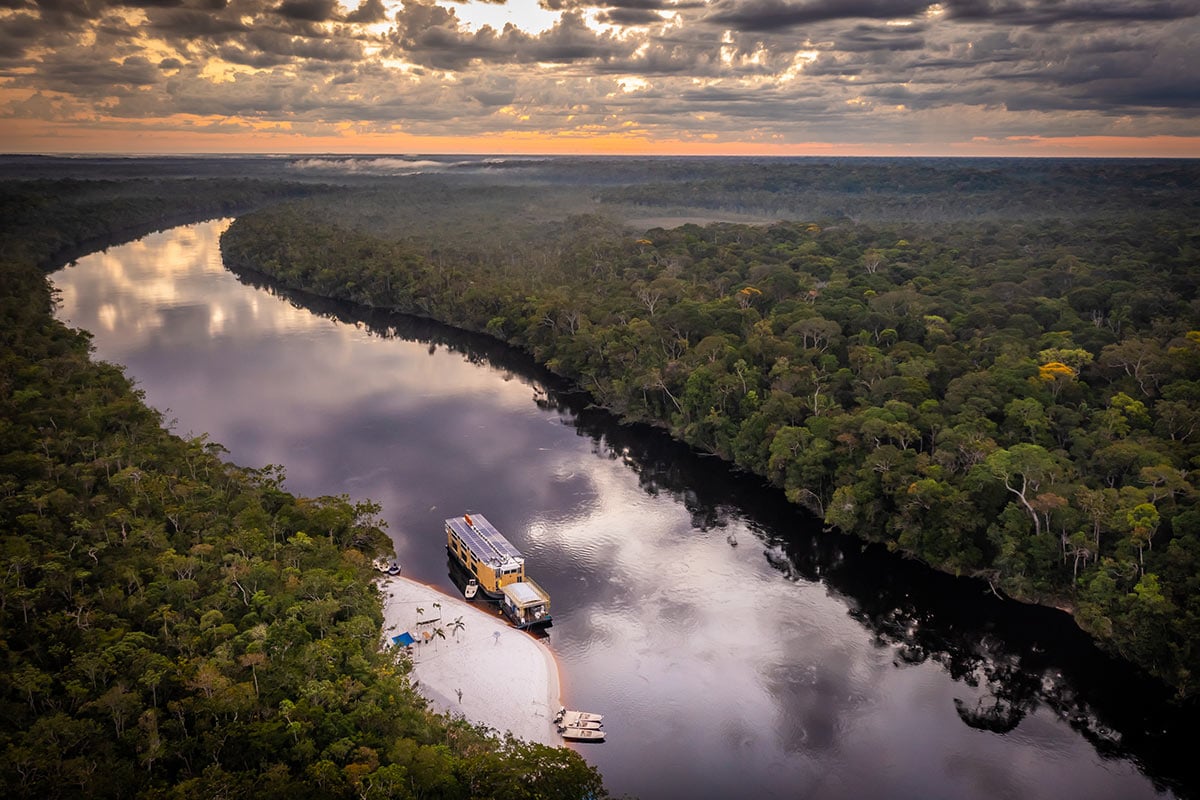
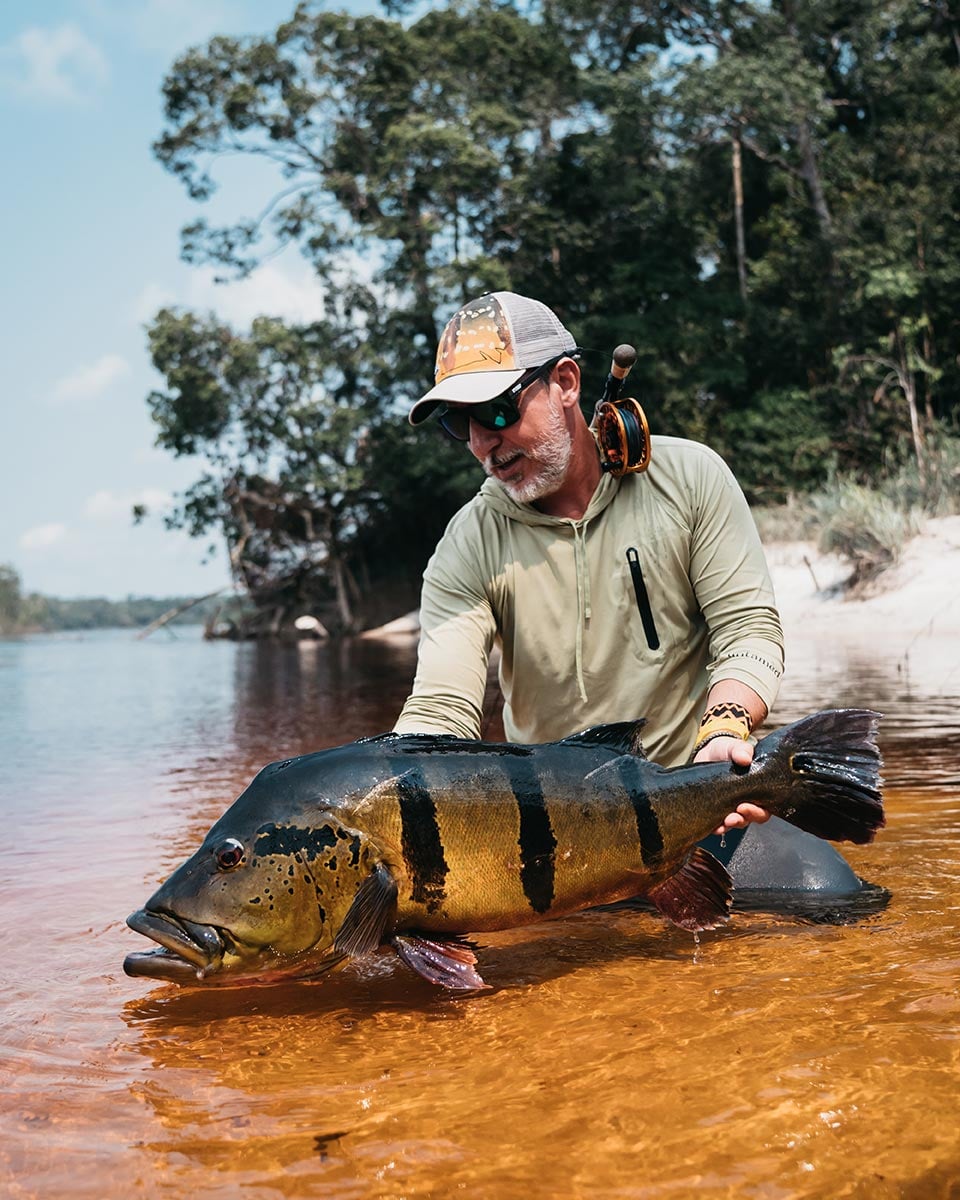
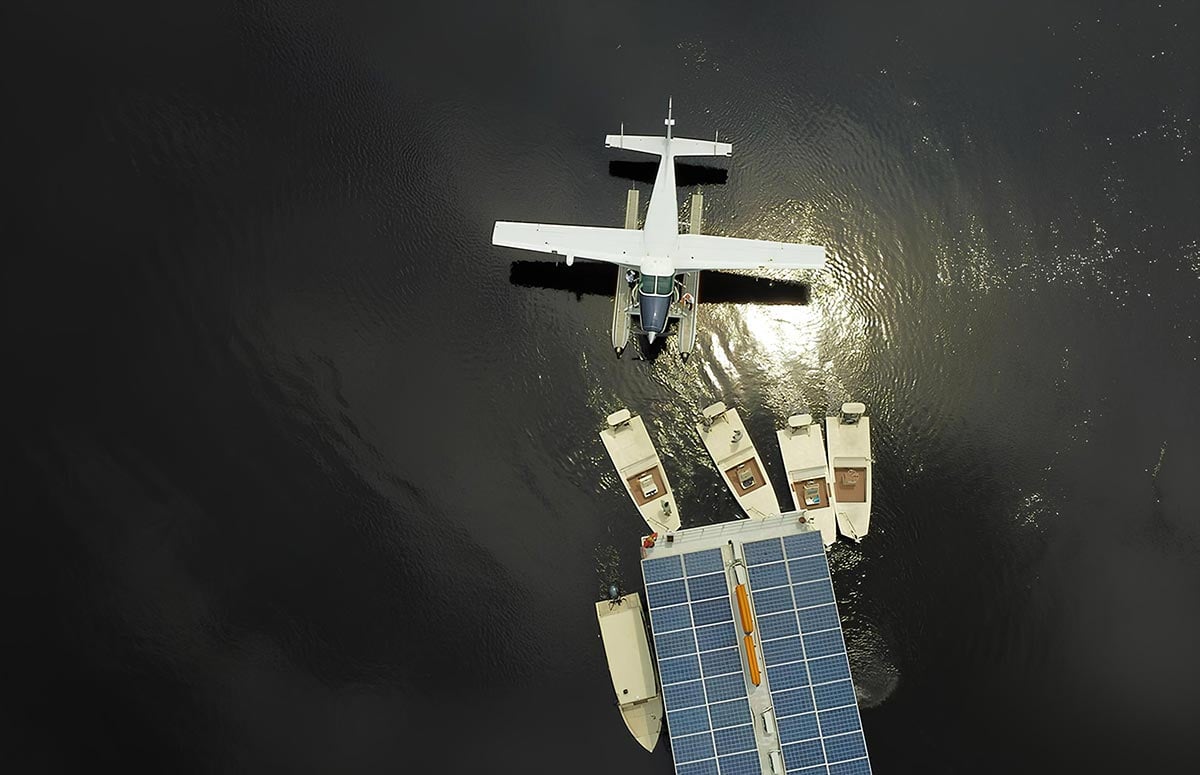
The Rio Marié fishing experience is defined by mobility, scale, and the pursuit of truly large peacock bass. Anglers base aboard the Untamed Amazon, a floating lodge that progresses through a protected headwaters system in Brazil’s upper Rio Negro, repositioning throughout the week to keep pressure low and reach new water. From modern skiffs, anglers spend the week fly fishing lagoons, jungle banks, and tributaries where the potential for double-digit fish is always present.
Unlike fixed-base lodge programs, the Rio Marié week is structured as a moving expedition rather than a return-to-the-same-beat routine. The combination of river progression, controlled angling numbers, and a strictly managed catch-and-release system creates a fishery defined less by volume and more by average size and consistency.
Trophy Peacock Bass in the Upper Rio Negro
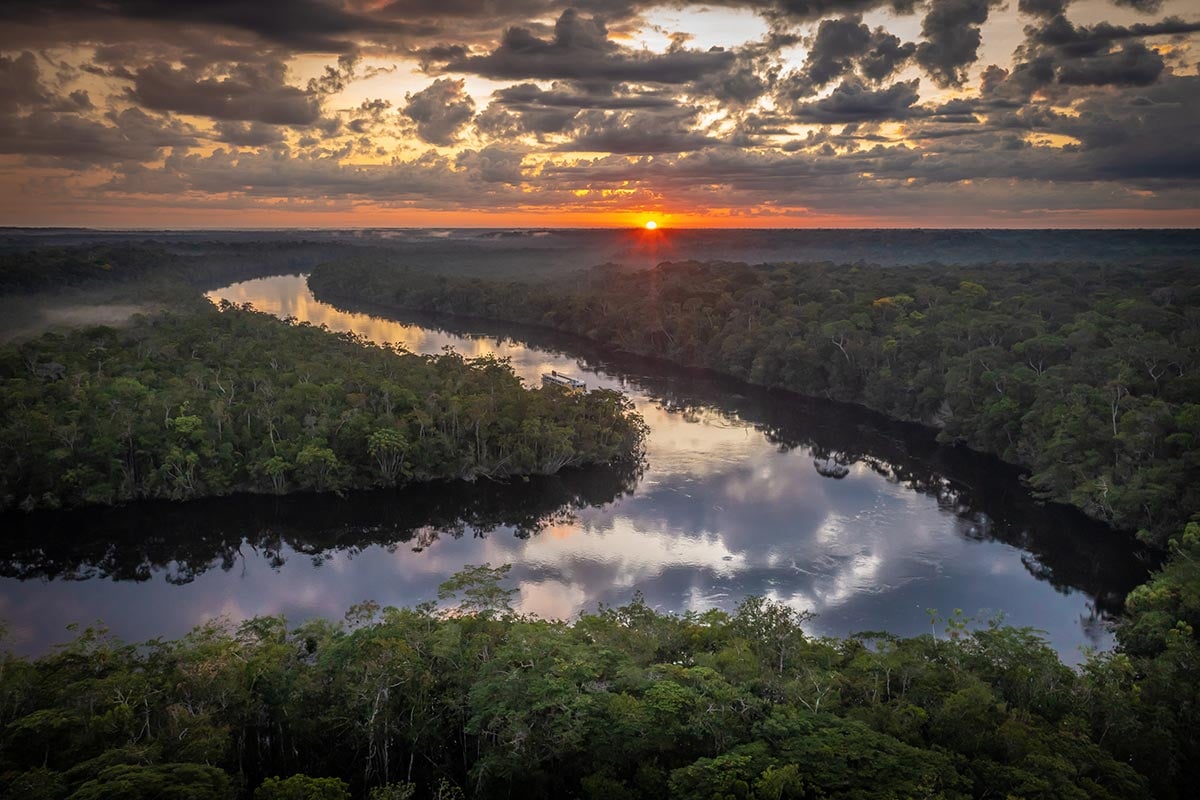
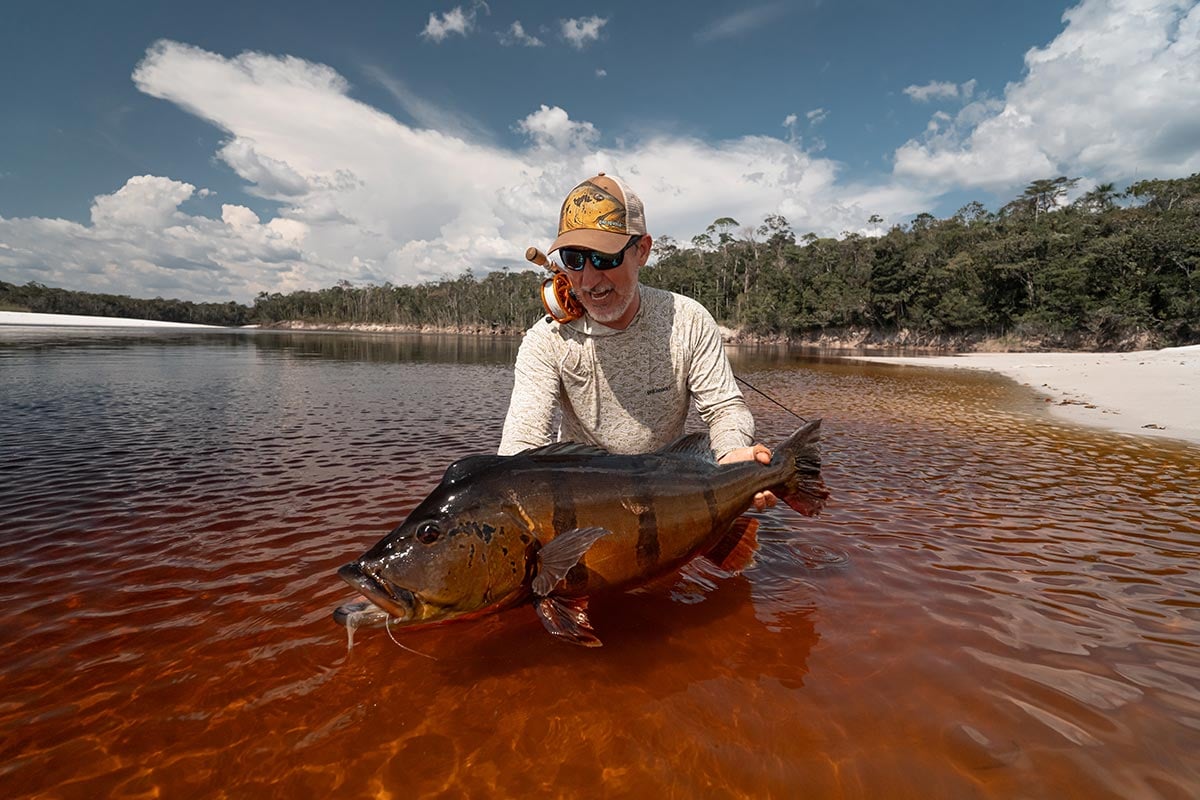
The Rio Marié lies in the blackwater headwaters of the upper Rio Negro basin, near the Colombian border, within a vast indigenous territory that has remained largely undeveloped. These tannin-stained waters flow through dense rainforest, forming long jungle banks, quiet back channels, and broad lagoons where peacock bass hold along submerged structure and shaded edges. The setting feels remote even by Amazon standards, with little evidence of settlements or river traffic beyond the occasional community canoe.
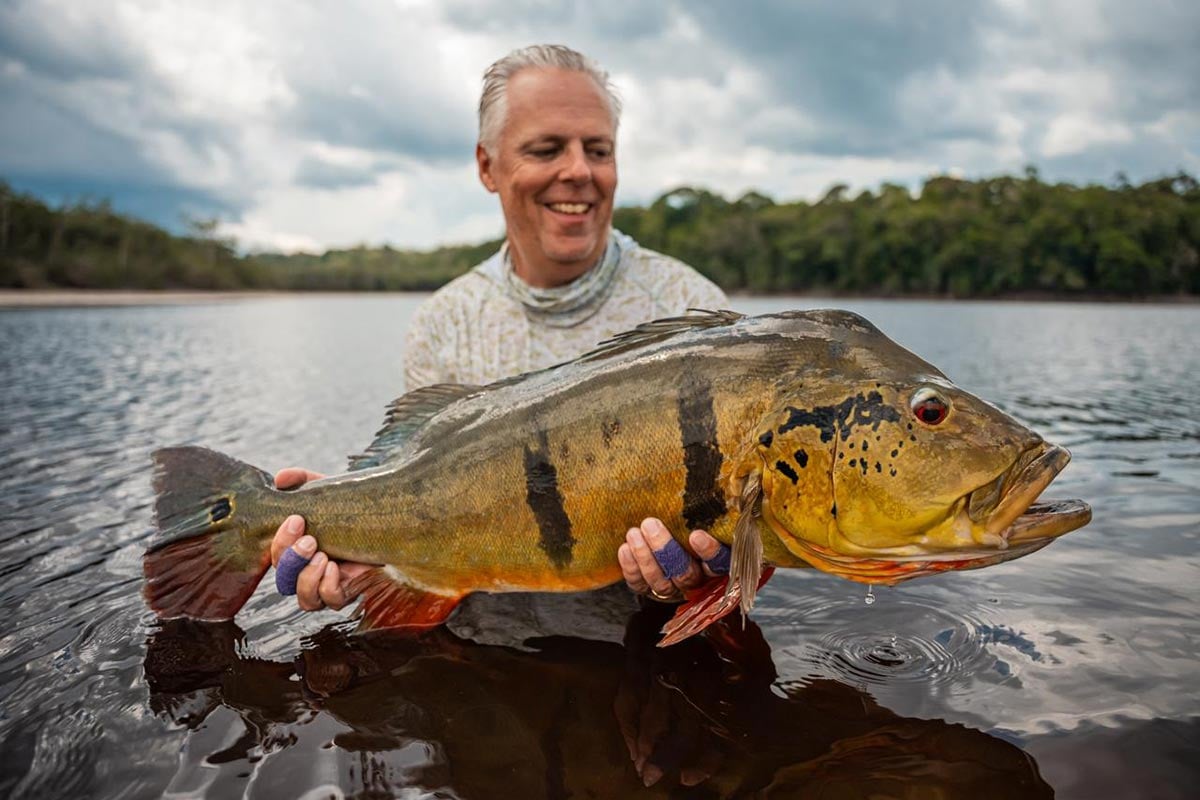
This is a fishery known primarily for the size of its speckled peacock bass, Cichla temensis. Rather than being promoted as a numbers destination, the Rio Marié has become recognised for producing consistent encounters with heavier-class fish. The emphasis is on patience, coverage of water, and the real possibility that any session can connect with a fish well into double-digit weights.
A Floating Lodge Program That Moves with the River
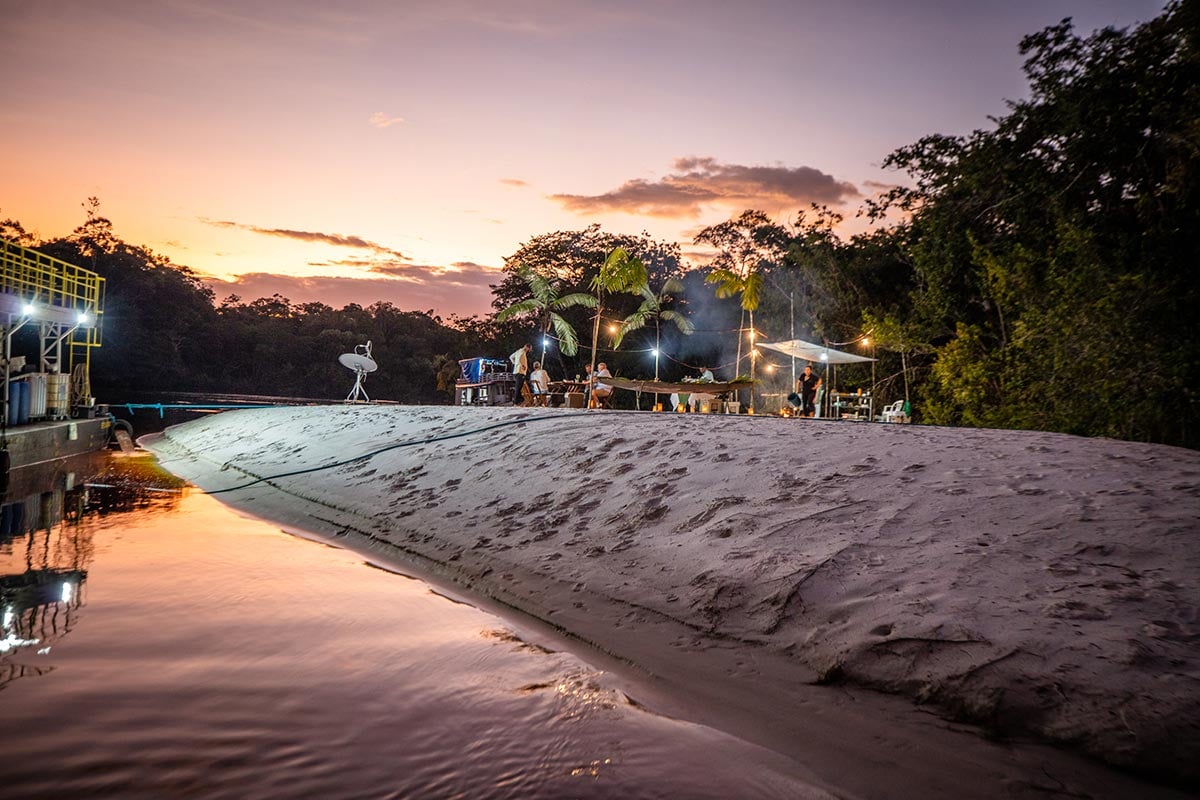
The defining feature of Rio Marié is that the lodge itself moves. The Untamed Amazon operates as a mothership, navigating upstream or downstream during the week and re-anchoring in different sectors of the reserve. This progression allows anglers to fish new stretches of river rather than revisiting the same areas day after day, reducing cumulative pressure and spreading activity across hundreds of kilometres of water.
Because the vessel is shallow-draft and purpose-built for the system, repositioning is part of the program rather than an exception. The result is a week that feels fluid rather than fixed, with scenery, water colour, and bank formations gradually changing as the mothership advances through the territory.
Skiff Days Across Lagoons and Jungle Banks
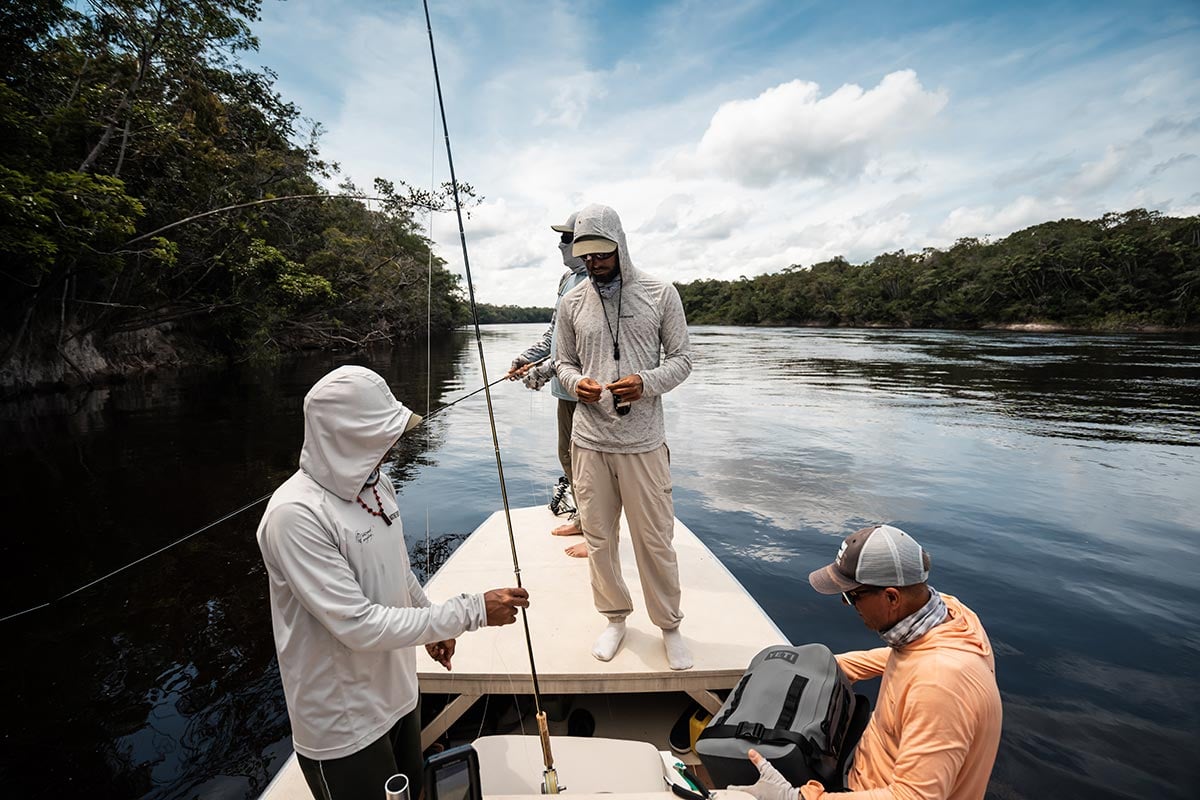
Daily fishing is conducted from wide, stable skiffs designed for casting larger flies and moving efficiently between spots. Two anglers share a boat, covering water along shaded jungle banks, into lagoon mouths, and through tributary junctions where baitfish gather. The rhythm of the day is shaped by movement — short runs between areas, periods of focused casting, then relocation when activity slows.
Lagoons often provide calmer water and clearer sight opportunities, while main-river edges and feeder creeks introduce stronger current seams and submerged timber. This variety keeps each day distinct, even within the same river sector, and allows guides to adjust location based on light, water level, and recent fish behaviour.
Why the Rio Marié Produces True Trophy Peacock Bass
Several factors combine to support the Rio Marié’s reputation for larger-average fish. The river’s headwaters location means relatively stable seasonal fluctuations compared with lower basin systems, allowing fish to hold in predictable structures as water levels fall. Controlled angler numbers and a strict catch-and-release framework limit harvest pressure, while the sheer scale of the protected territory spreads activity across a vast network of channels and lagoons.
Over time, this combination has created a fishery where average size tends to stand out more than catch volume. Anglers may not see constant action, but the class of fish encountered — particularly during low-water windows — is what defines the program’s appeal.
Documented Giants and IGFA Record Context
The Rio Marié has also become associated with several internationally recognised length and weight records for peacock bass on fly tackle. These records are not presented as guarantees, but as indicators of what the system is capable of producing under measured and documented conditions. On-board measuring devices and certified scales allow significant fish to be recorded accurately when they are encountered.
While record talk is often overstated in marketing material, at Rio Marié it serves more as historical context than promise. The emphasis remains on the opportunity to encounter unusually large fish rather than on chasing specific benchmarks.
Guide Pairing and On-Water Decision Making
Each skiff is operated by a professional fly-fishing guide working alongside a local indigenous guide who knows the river’s channels, seasonal holding areas, and navigation routes. This pairing blends technical angling judgement with lived regional knowledge, allowing decisions to be made quickly as light, wind, and fish response change through the day.
Boat positioning, safe fish handling, and efficient coverage of structure are all influenced by this two-guide system. Rather than rigid instruction, the approach tends to be collaborative, with adjustments made in real time to suit angler pace and water conditions.
Catch-and-Release Standards and Fishery Monitoring
All fishing on the Rio Marié operates under strict catch-and-release regulations, supported by ongoing biological monitoring and tagging initiatives. Fish are measured and released with minimal handling, and single-hook policies are enforced to reduce injury. These measures are coordinated in partnership with indigenous associations and Brazilian environmental authorities, forming part of a longer-term stewardship framework rather than a seasonal rule set.
The result is a program where conservation is integrated into daily practice rather than treated as an add-on. Anglers are participating in a managed system designed to maintain fish quality over time rather than maximise short-term catch rates.
Other Amazon Species and What They Add
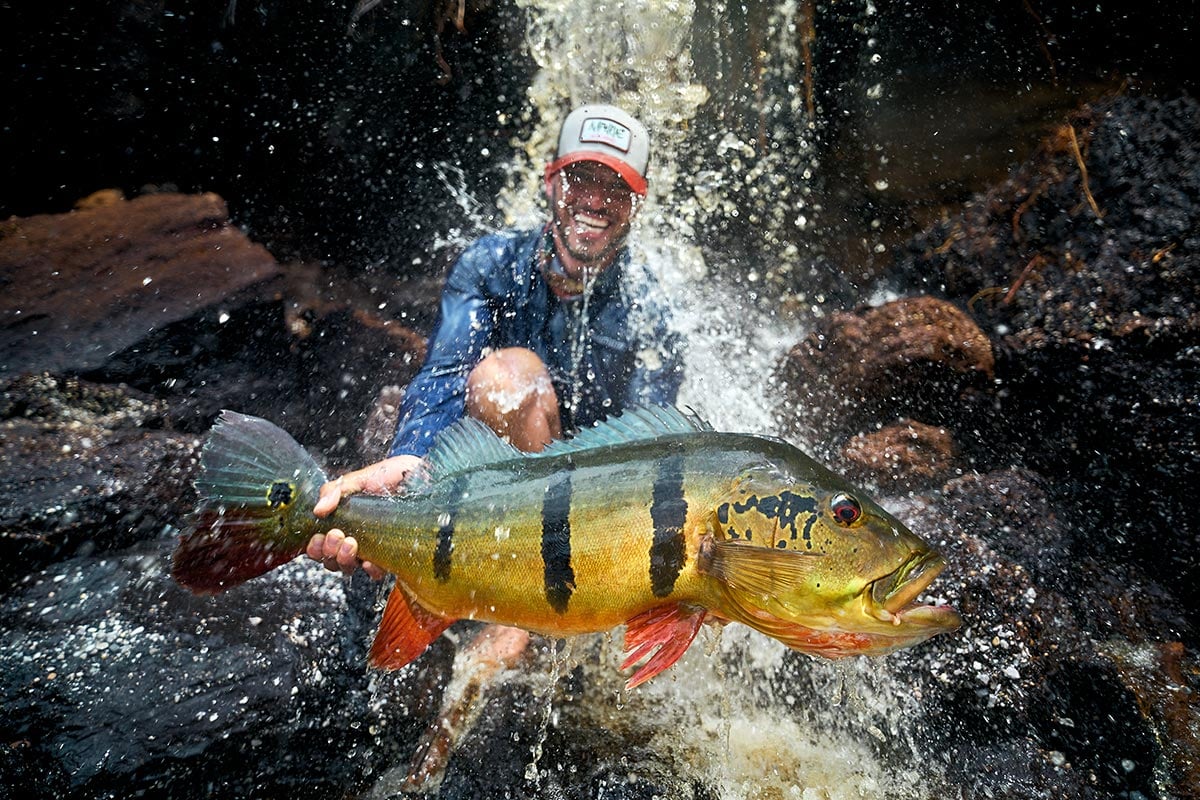
Although giant peacock bass are the primary focus, the river system holds a range of secondary species that occasionally intersect the week. Butterfly peacocks provide lighter-tackle action in certain lagoons, while encounters with black arowana, traira, or larger catfish species add variety between trophy pursuits. These fish are not the central objective, but they contribute to the sense of fishing a broad, living system rather than a single-species water.
What Sets Rio Marié Apart
What ultimately distinguishes Rio Marié is the combination of mobility, scale, and measured fish size within a legally protected territory. The floating lodge structure prevents the experience from becoming repetitive, while the catch-and-release framework and controlled access maintain fish quality across seasons. Rather than promising constant action, the program is built around coverage of water, patient pursuit, and the realistic possibility of connecting with a fish that stands out in both weight and memory.
For anglers drawn to expedition-style weeks where movement, remoteness, and average fish class matter more than numbers, Rio Marié operates less like a traditional lodge and more like a guided progression through one of the Amazon’s most carefully managed peacock bass systems.
To learn more about the fishing and express an interest, message Untamed Angling.