Discover the best surubi fishing destinations, guided trips, and lodge-based experiences worldwide. Explore remote waters and world-class angling with expert local hosts.
Santa Fe, Argentina
Golden Dorado, Pacú, Surubi
Buenos Aires, Argentina
Golden Dorado, Pacú, Pirá Pitá
Buenos Aires, Argentina
Golden Dorado, Surubi, Tararira (Wolf Fish)
Amazon Basin, Brazil
Peacock Bass, Surubi, Tararira (Wolf Fish)
Amazon Basin, Brazil
Matrinxã, Pacú, Peacock Bass
Corrientes, Argentina
Golden Dorado, Pacú, Pirá Pitá
No results available
Surubí are powerful, river-dwelling catfish native to South America, best known for their explosive runs, sharp turns, and elusive habits. Anglers target them in large rivers with mud bottoms and deep current seams, using live bait, plugs, or heavy lures fished tight to cover and along the bottom.
Surubí refers to several species within the Pseudoplatystoma genus, primarily the Pintado (striped) and Tigre Surubí (spotted). These long, muscular catfish are found across the Paraná and Uruguay river basins, including Argentina, Paraguay, Brazil, and Uruguay. They are highly respected by local and visiting anglers for their size, strength, and unpredictability.
Fishing is often done from anchored or drifting boats, using live eels, sabalo, or cut bait. When feeding actively, Surubí will strike large lures like deep-diving plugs or soft plastic swimbaits. Prime conditions include rising water, stained flow, and nightfall—when bigger fish become more active.
The Paraná River around Esquina and Goya is legendary for Surubí fishing. Deep channels, eddies, and submerged logs produce trophy fish—often during evening or overnight sessions with live bait.
Surubí are a key part of Santa Fe’s year-round freshwater offerings. Local guides focus on high-percentage structure along the Paraná and its side channels, often in tandem with dorado trips.
The delta and lower Paraná region offer reliable Surubí fishing without needing long travel. Trips typically target mid-sized fish with live bait near snags and deep holes.
The middle and upper Paraná and Paraguay rivers host giant Surubí. Brazilian and Paraguayan waters remain relatively wild, offering both numbers and true trophies in harder-to-reach areas.
Surubí are common in the lower Uruguay River and shared stretches with Argentina. These regions produce consistent action, especially for anglers using live bait around submerged timber and channel drops.
Surubí combine size, stealth, and strength. These catfish strike with surprising speed and often pull deep into cover after the hookset. Local culture reveres them, and night sessions or early morning tides often yield the best chances at a trophy. Their broad range and unique markings make them a favorite among South American river anglers.
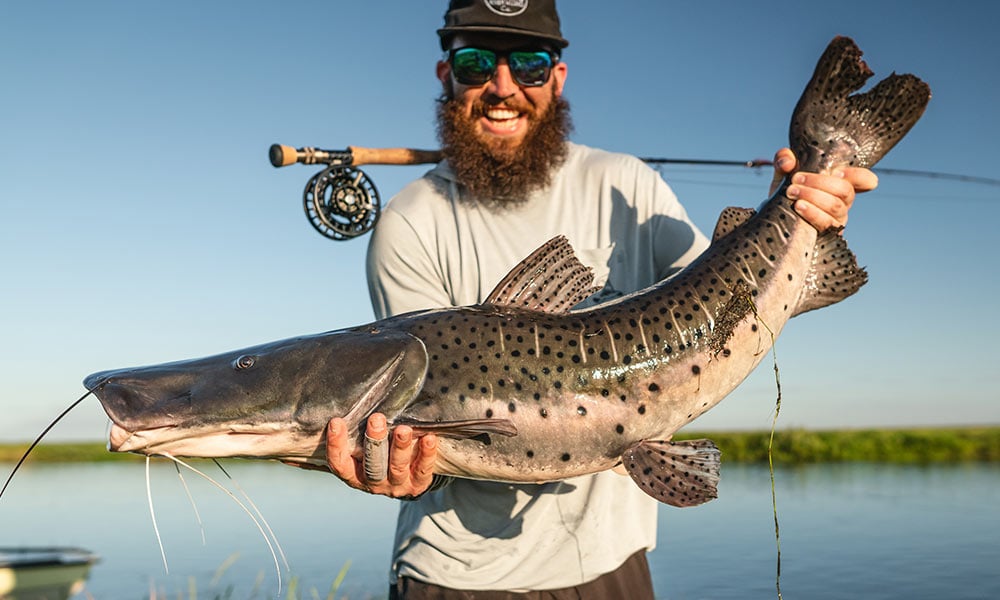
Surubí are long, muscular catfish with flattened heads, whiskered mouths, and intricately patterned bodies. The Pintado has dark vertical stripes, while the Tigre Surubí is more spotted. Their backs are dark gray to brown, fading into pale undersides. Mature fish can exceed 40 kg (90 lbs), with most catches ranging from 5 to 25 kg.
Water clarity, current speed, and moon phases all influence Surubí activity. Anglers often rely on local guide expertise and tidal patterns to time sessions for best results.
FishingExplora connects anglers with lodge-based Surubí trips in Corrientes, Santa Fe, and Buenos Aires, where expert guides focus on deep channels, snags, and productive nighttime patterns. These trips suit anglers looking for heavy freshwater gear, traditional South American river culture, and chances at powerful, elusive catfish with real size potential.
Live sabalo or small catfish are the top baits for Surubí. These oily, natural offerings match the species’ preferred forage and are effective when drifted near deep cover. Eels and large cut bait can also work, especially at night or in stained water.
Peak season for large Surubí is typically from February to May, especially after rainfall when water levels rise and baitfish are on the move. Night fishing during this period often produces the biggest fish.
Medium-heavy to heavy baitcasting rods, strong reels, and 50–80 lb braid or mono are recommended. Use abrasion-resistant leaders and circle hooks, especially when fishing around submerged timber or rocky riverbeds.
Yes—Surubí will strike deep-diving plugs and soft plastic swimbaits, especially at dusk or during stained water conditions. Many guides troll or cast lures during rising water or when baitfish schools are concentrated near current seams.
Experienced guides read current seams, depth changes, and debris lines to locate active fish. They also adjust based on water level trends, baitfish presence, and known holding spots. During high water, back-eddies and flooded banks often hold the best concentrations.
We use cookies to improve your experience and enable key features on the platform. You can choose which cookies to allow. Some features may not work fully without consent.