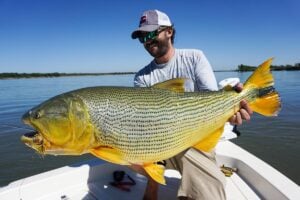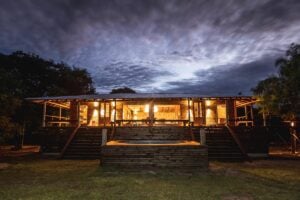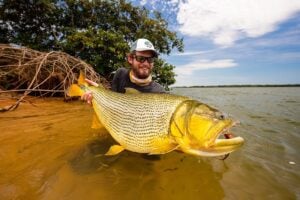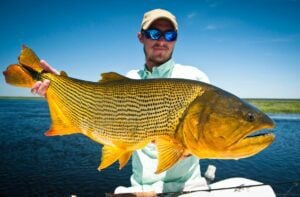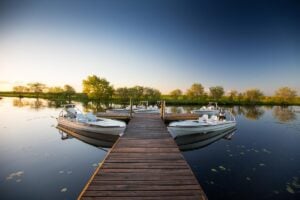
Explore fishing trips in Corrientes, staying at carefully selected lodges that combine expert guiding, remote wilderness settings, and exceptional angling.

No results available
Corrientes is a northeast province defined by two contrasting landscapes — the Iberá Wetlands, covering approximately 15,000 square kilometers and the second-largest freshwater wetland in South America, and the powerful Paraná River. This mix of clear-water channels, floodplains, and big-river structure makes it the continent’s most productive warmwater fishing region for golden dorado.
Corrientes combines visual fishing with aggressive predator behavior. The Iberá channels reward sight fishing and topwater presentations in shallow, clear water, while the Paraná offers deep runs, submerged timber, and heavy current for targeting larger dorado and surubí. The two systems fish differently enough that a week combining both gives anglers a genuinely varied program.
Lodge infrastructure is well established, with guided multi-day floats, remote camp setups, and operators who know how to navigate water levels, seasonal flows, and prime dorado holding zones.
For those comparing lodge programs across the region — from Iberá wetland camps to main-river Paraná operations — see our Editorial Guide to Argentina Fishing Lodges, which explains how these programs differ and how to choose the right fit.
Covering approximately 15,000 square kilometers — roughly one-third of Corrientes Province — the Iberá is the second-largest freshwater wetland in South America. Clear, tea-colored water and shallow channels make it ideal for poling skiffs and presenting topwater patterns to cruising fish. Fish average 8 to 15 pounds, with the emphasis firmly on visual fishing rather than size.
The Paraná is the second-longest river in South America and the primary corridor for dorado migrations through Corrientes. Deep structure, strong flows, and submerged timber hold some of the largest fish in the system — trophies in the 20 to 30-pound range are a realistic target for anglers willing to work harder water.
Draining the Iberá basin, the Corriente flows southwest before meeting the Paraná near Esquina. Lightly pressured compared to the main river, it offers consistent dorado fishing in quieter water with the classic low-country landscape of channels, banks, and overhanging vegetation.
FishingExplora connects anglers with carefully selected lodges across Corrientes — from Iberá backcountry camps to Paraná-side operations focused on big-fish structure work. You can contact hosts directly and plan your program from here.
For more lodge-based fishing across the country, explore all our Argentina fishing lodges.
FishingExplora’s editorial content draws on lodge input, guide experience, published field reports, and independent research to help anglers make informed decisions about premium fishing destinations.
October through April covers the full season, with January to March producing the most aggressive surface takes and the best sight-fishing conditions as floodwaters push dorado into shallow Iberá channels. October and March are consistently strong for numbers; the mid-season peak in February suits anglers targeting both wetlands and Paraná fish in the same week.
A fast-action 8 or 9-weight fly rod with floating, intermediate, and sink-tip lines covers both the Iberá and Paraná systems. Carry large streamers and poppers, and use a short wire trace — dorado teeth will cut through fluorocarbon quickly. Spin anglers should bring medium-heavy gear, topwater lures, and braided line with a wire leader. Wet wading in shorts and wading boots is standard; waders are not needed.
Yes. A provincial fishing license issued by Corrientes Province is required. Most lodge programs include the license as part of the weekly package or arrange it on your behalf — confirm at booking. The Iberá system sits within a protected reserve, and catch-and-release is standard practice on guided programs throughout the province.
Intermediate fly anglers adapt quickly, particularly in the Iberá where guides pole skiffs to fish and casting distances are moderate. The upper Paraná demands accurate casts to structure in strong current and is better suited to anglers with big-river experience. Most lodge programs rotate between both systems during the week, so skill requirements vary by day rather than by destination.
Surubí (two catfish species — pintado and surubí proper), pirá pitá, and tararira are regularly caught, particularly in backwaters and slower sections of the Iberá and Corriente River. Pacú are also present in the Paraná system and take flies and lures in warmer months.
Fly into Corrientes (CNQ), Resistencia (RES), or Posadas (PSS) on a domestic connection from Buenos Aires Ezeiza (EZE). Which airport depends on lodge location — CNQ serves most operations in the north and center of the province, while Resistencia suits lodges in the western Chaco border area. Most lodge programs include ground transfers from the arrival airport.
Hot and humid throughout the core season, with daytime temperatures regularly exceeding 90°F (32°C) from November through March. Afternoon storms are common and can move through quickly. Sun protection, long-sleeved shirts, and insect repellent are non-negotiable. Unlike Patagonia, wind is not a primary factor — the challenge here is heat management over a long fishing day.
We use cookies to improve your experience and enable key features on the platform. You can choose which cookies to allow. Some features may not work fully without consent.