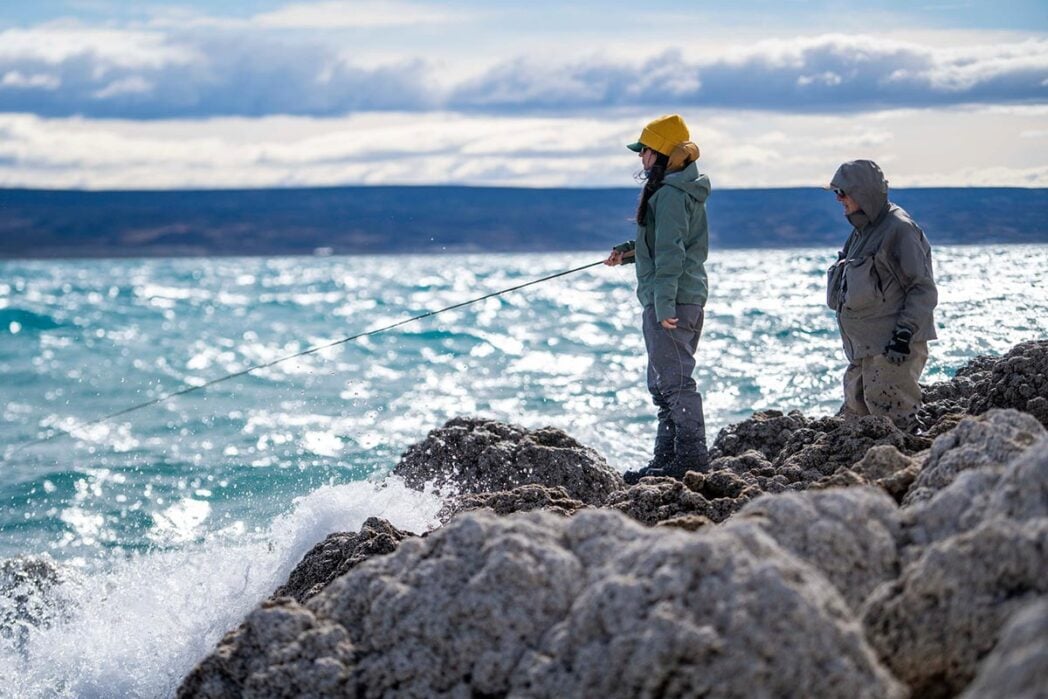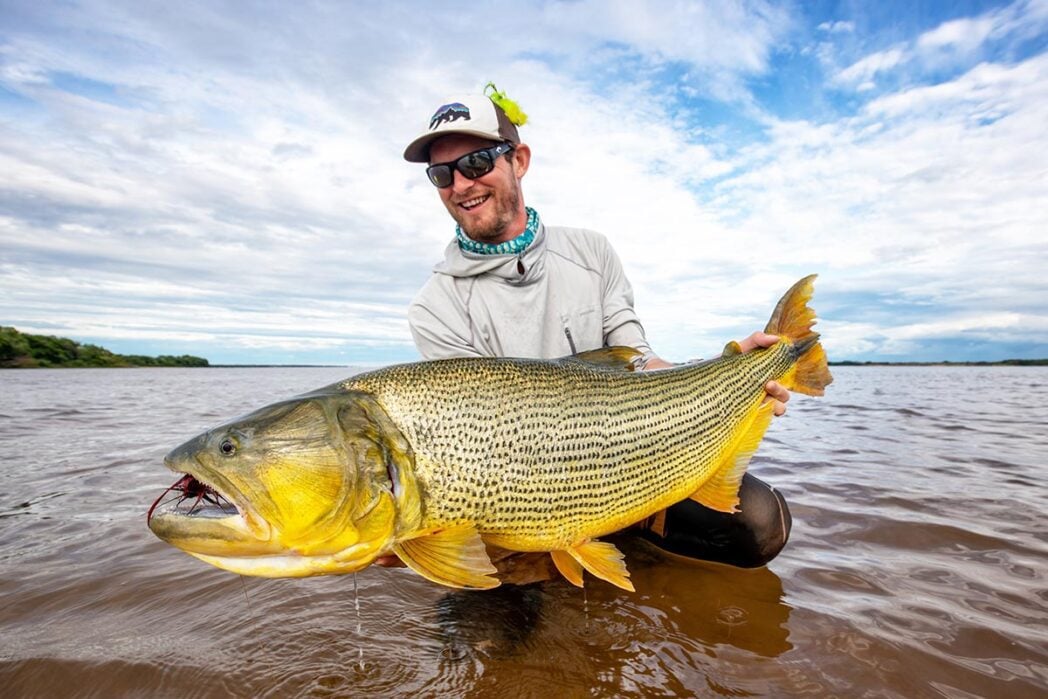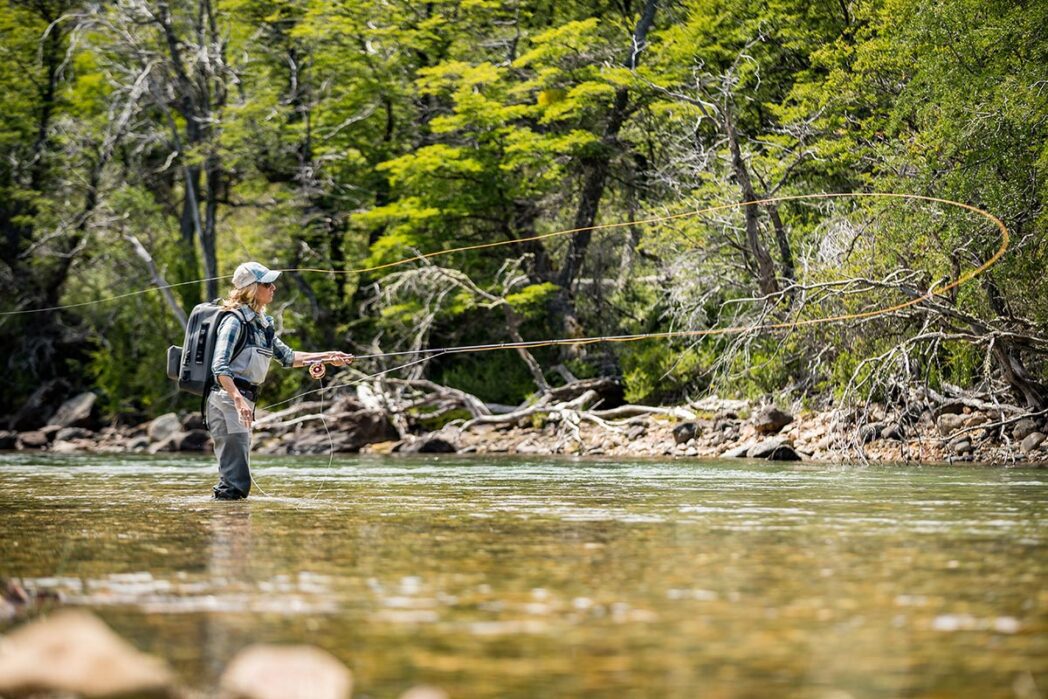
Argentina’s lodge fishing is split across distinct program types, from skiff-based dorado fisheries in the north to mobile trout programs in Patagonia and structured sea trout weeks in Tierra del Fuego. This guide compares how those weeks actually run, so anglers can choose the right fit.
Table of Contents
- How Argentina Fishing Lodges Actually Differ
- How We Curate Argentina Fishing Lodges
- Argentina Fishing Lodge Programs — Our Picks
- Delta Eco Lodge — Paraná Delta Dorado Program
- Suindá Lodge — Upper Paraná Dorado Program
- Karandá Lodge — Middle Paraná Dorado Program
- Pirá Lodge — Iberá Wetlands Dorado Program
- Río Bravo Lodge — Lower Paraná Dorado Program
- Golden Dorado River Cruiser — Paraná River Dorado Program
- Chime Lodge — Northern Patagonia Fixed-Base Trout Program
- Rio Manso Lodge — Northern Patagonia Lake District Trout Program
- Bravo Sur Lodge — Northern Patagonia Aluminé Trout Program
- Estancia Chochoy Mallín — Northern Patagonia Remote Estancia Trout Program
- PRG North — Northern Patagonia Multi-River Trout Program
- PRG Unplugged — Northern Patagonia Float Trout Program
- PRG South — Southern Patagonia Multi-River Trout Program
- Villa María Lodge — Río Grande Sea Trout Program
- Kau Tapen Lodge — Río Grande Sea Trout Program
- Estancia Laguna Verde — Jurassic Lake Trout Program
- Lago Strobel Lodge — Jurassic Lake Trophy Trout Program
- Choosing the Right Argentina Fishing Lodge
How Argentina Fishing Lodges Actually Differ
Argentina offers a wide range of lodge-based fishing, but most of the difference between trips comes down to how the week is structured rather than just the species or location. Within each region, programs can run in very different ways — and those differences matter more than most destination guides acknowledge.
In the north, heat shapes the fishing day. Dorado are most active in the early morning and late afternoon — midday sessions are quieter, and most programs are built around that rhythm. Nearly all the fishing is skiff-based, but the difference between programs is whether you stay on a defined section of water or range more widely through the system.
In Patagonia, cooler temperatures allow for longer days on the water, and the key decision is whether to stay on one river or move between them. Fixed-base programs offer a stable lodge and a defined network of nearby waters; mobile programs rotate lodging alongside rivers, committing fully to each system for a day or two before moving on. Both approaches target the same species — brown, rainbow, and brook trout — but deliver a very different weekly rhythm.
On the Río Grande in Tierra del Fuego, the format changes entirely. The river runs through open steppe, the target is sea-run brown trout migrating in from the South Atlantic, and fishing is entirely wade-based on a beat rotation. The meaningful distinction here is not how much you move, but where on the river you are positioned. Lower beats intercept fresh-run fish early in their migration; middle beats offer more stable conditions and consistent holding water as the season develops.
Travel logistics in Argentina are worth understanding before committing to a region. The northern dorado fisheries require a domestic connection to Corrientes or Resistencia. Patagonia programs typically route through Neuquén or Bariloche depending on which part of the lake district you are fishing. Tierra del Fuego requires a separate flight to Río Grande or Ushuaia. These are not minor considerations — each zone effectively requires its own trip, and combining two regions in a single visit rarely does justice to either.
How We Curate Argentina Fishing Lodges
FishingExplora’s Argentina coverage looks at how each lodge actually fishes day to day, rather than how it is described. We focus on where you fish, how you get there, how much water is covered in a week, and how conditions tend to shape the fishing through the season.
| Category | What We Look At |
|---|---|
| Program Structure | Whether the lodge stays on one fishery or moves between different waters, and how the week is planned day to day. |
| Seasonality & Fishery | What you are fishing for, when the lodge runs, and how conditions change through the season. |
| Logistics | How you reach the lodge and the water, and how much time is spent traveling versus fishing. |
| Water Access | The type of water fished during the week and how much ground is realistically covered. |
| Who this suits | The type of angler the program fits, based on pace, movement, and how the week is run. |
Argentina Fishing Lodge Programs - Our Picks
These are the Argentina lodges we would point people to because each one offers a distinct kind of week on the water. Some stay tightly focused on one fishery and do it properly, while others give guides room to move between rivers, lakes, marshes, or beats as conditions change.
The lodges below are ordered by region — northern Argentina dorado programs first, followed by Patagonia trout, Tierra del Fuego sea trout, and the Strobel Plateau trophy fisheries further south.
Delta Eco Lodge — Paraná Delta Dorado Program
Paraná Delta, Buenos Aires Province, Argentina
Program Structure
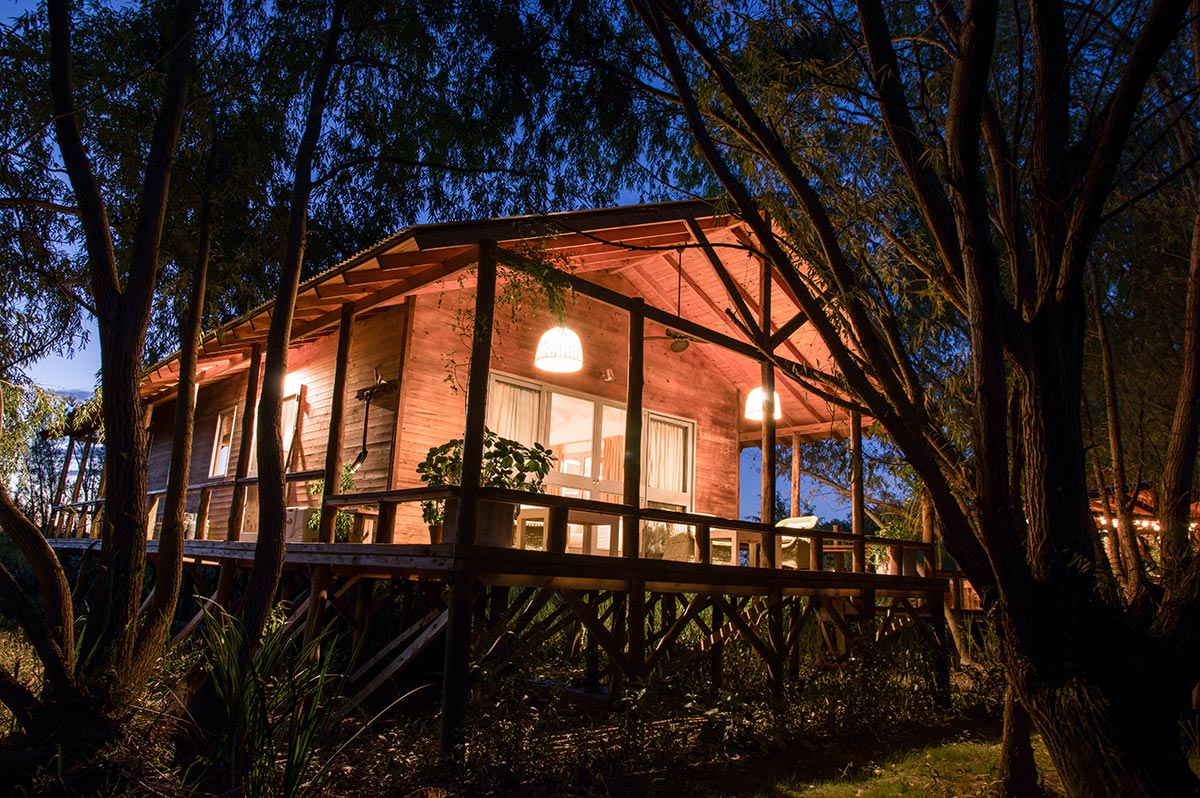
Set within the Paraná Delta less than an hour from Buenos Aires, this is a fixed-base program fishing a maze of channels, lagoons, and reed-lined banks by skiff. Days are built around short runs between spots, with guides adjusting constantly to clarity, light, and fish movement rather than committing to long runs or distant water.
Season & Fishery
The program runs through the warmer months, with golden dorado as the primary target alongside other delta species. Conditions shift quickly in this system, and fishing is shaped more by water clarity and bait movement than by fixed seasonal windows.
What Defines the Week
What separates Delta Eco is access. With productive water immediately around the lodge and no long travel days, nearly all time is spent fishing. It’s one of the few dorado programs that can be fished effectively as a short stay without losing quality.
Who this suits:
Traveling anglers passing through Buenos Aires who want a day trip or short-stay fishing extension within a wider Argentina itinerary, valuing quick boat access into the Paraná Delta to specifically target golden dorado.
Suindá Lodge — Upper Paraná Dorado Program
Corrientes Province, Argentina
Program Structure
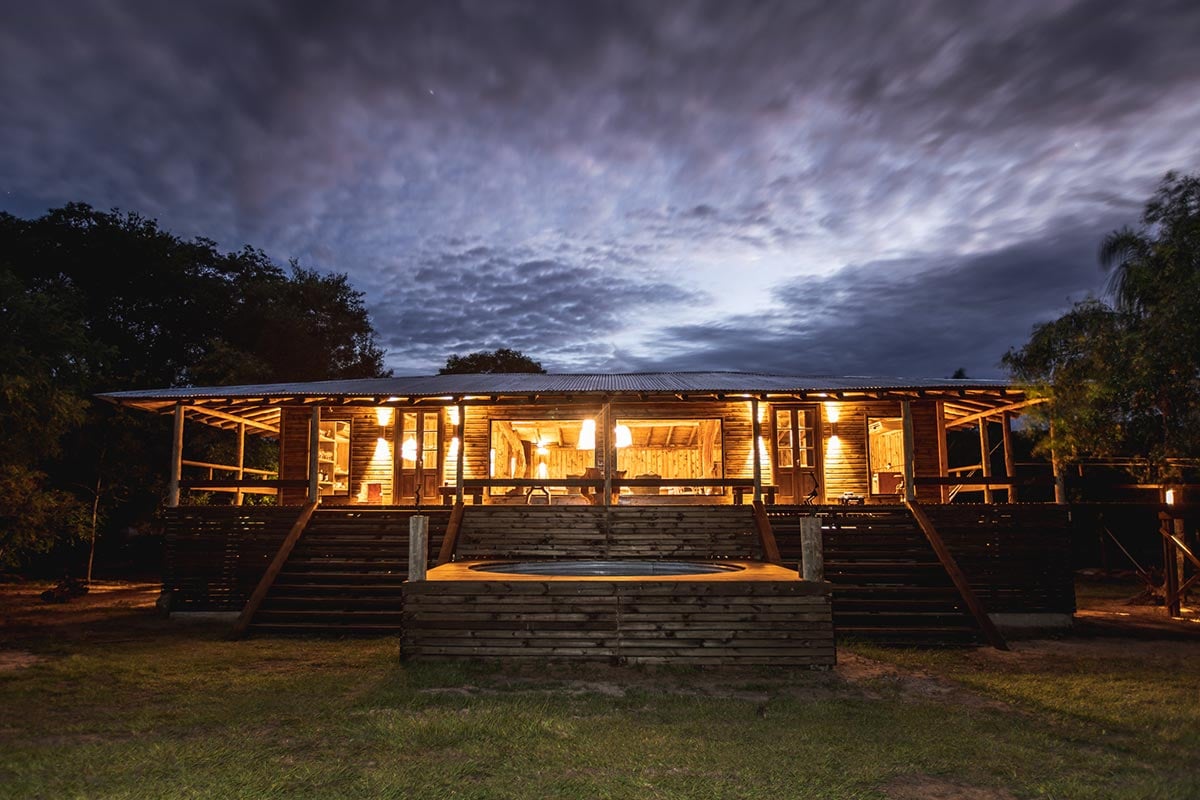
Based on a clear-water stretch of the Upper Paraná near Itatí, Suindá runs a fixed-base skiff program with direct access from the lodge. Fishing is centered on a more visual, river-based style than most Paraná dorado programs, with short runs and days split around morning and late afternoon sessions.
Season & Fishery
The program operates through the warmer months, targeting golden dorado in a clearer system than most Paraná fisheries, with additional species present depending on conditions.
What Defines the Week
Most Paraná dorado fishing is done into coloured water, where fish are located by structure and movement rather than sight. On this section of the Upper Paraná, clarity changes that equation — guides can read fish, anglers can track takes, and the fishing becomes more precise and more technical than most dorado programs in Argentina. For fly anglers who find blind-fishing a large stained river less satisfying than working visible fish, that distinction matters.
Who this suits:
Freshwater fly anglers traveling to northern Argentina primarily for golden dorado who prefer a smaller, higher-end lodge experience on a clear section of the Upper Paraná, built around a dedicated river-based fishing week.
Karandá Lodge — Middle Paraná Dorado Program
Corrientes Province, Argentina

Program Structure
Operating from Bella Vista, Karandá runs a skiff-based program across a broad section of the middle Paraná, covering sandbars, island margins, and side channels. Days are structured around moving between different areas rather than working a single stretch.
Season & Fishery
The program focuses on the cooler months when migrating baitfish concentrate dorado through this section of river, creating consistent opportunities for larger fish.
What Defines the Week
Most dorado programs fish resident populations year-round and accept that activity levels vary. Karandá’s cooler-month timing is built around a different premise — targeting migrating baitfish concentrations that pull larger dorado into this section of the middle Paraná and hold them there in a feeding state. The practical result is a program where fish are more consistently active and tend to run larger than resident-focused operations. Timing the trip correctly is what the program is built around, and it shows in the catch profile.
Who this suits:
Anglers planning a dedicated golden dorado trip to northern Argentina who prefer staying in a riverside hotel in Bella Vista, structuring their week around guided day trips onto the Middle Paraná while remaining based within a working river town rather than a remote wilderness lodge.
Pirá Lodge — Iberá Wetlands Dorado Program
Iberá Wetlands, Corrientes Province, Argentina
Program Structure
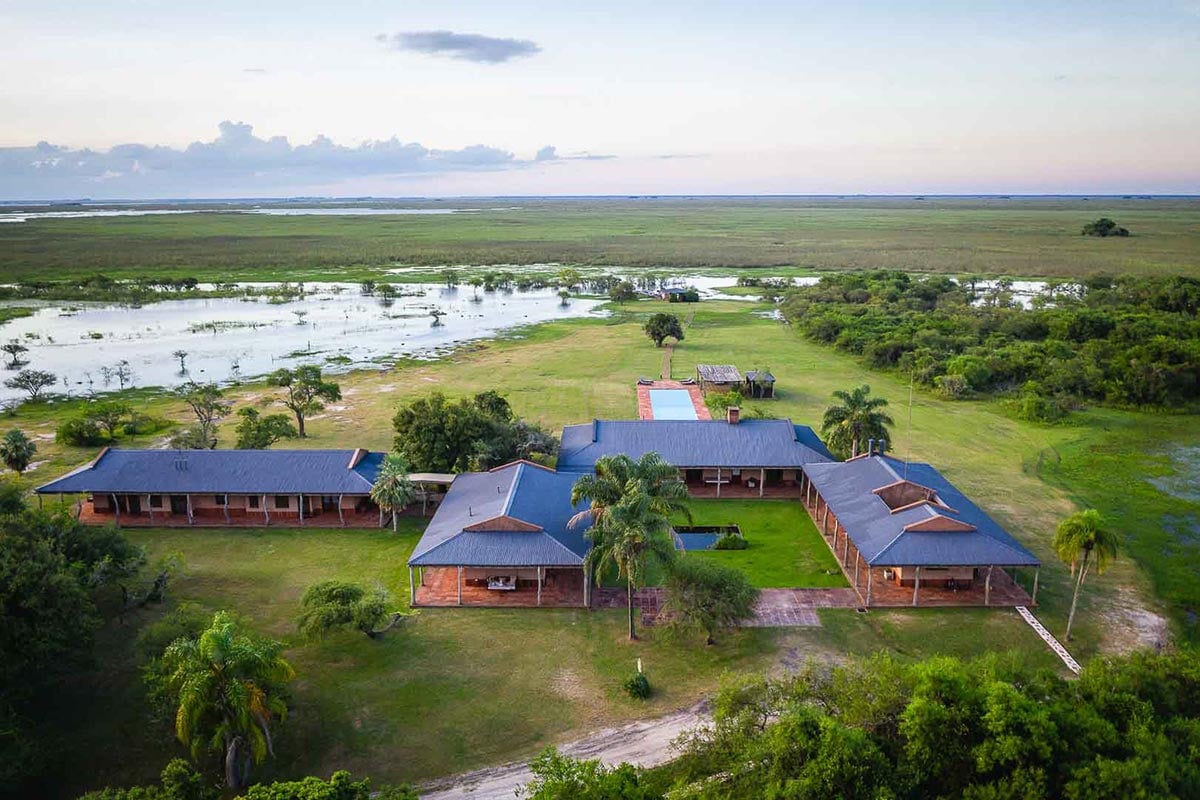
Set within the Iberá Wetlands, Pirá Lodge fishes both the shallow marsh and the Corriente River, with guides switching between the two depending on clarity and conditions. Fishing is skiff-based, with days split around the most productive periods.
Season & Fishery
The program runs through the main dorado season, with fish moving between marsh and river systems as conditions change.
What Defines the Week
The Iberá marsh and the Corriente River fish differently enough that having access to both is a genuine operational advantage rather than just a marketing point. When the marsh is running clear and bait is moving through the shallows, it produces a style of dorado fishing — visual, shallow, skiff-based — that the main river cannot replicate. When river conditions are better, guides move there without losing a day. For anglers who want the full range of what Iberá dorado fishing offers rather than committing the week to one system, Pirá is the most complete program in the region.
Who this suits:
Dorado-focused fly anglers traveling to northern Argentina who want to base themselves in a higher-end riverfront lodge with direct access to both the Iberá marsh and Corriente River, as part of a structured week built around the fishery.
Río Bravo Lodge — Lower Paraná Dorado Program
Santa Fe Province, Argentina
Program Structure
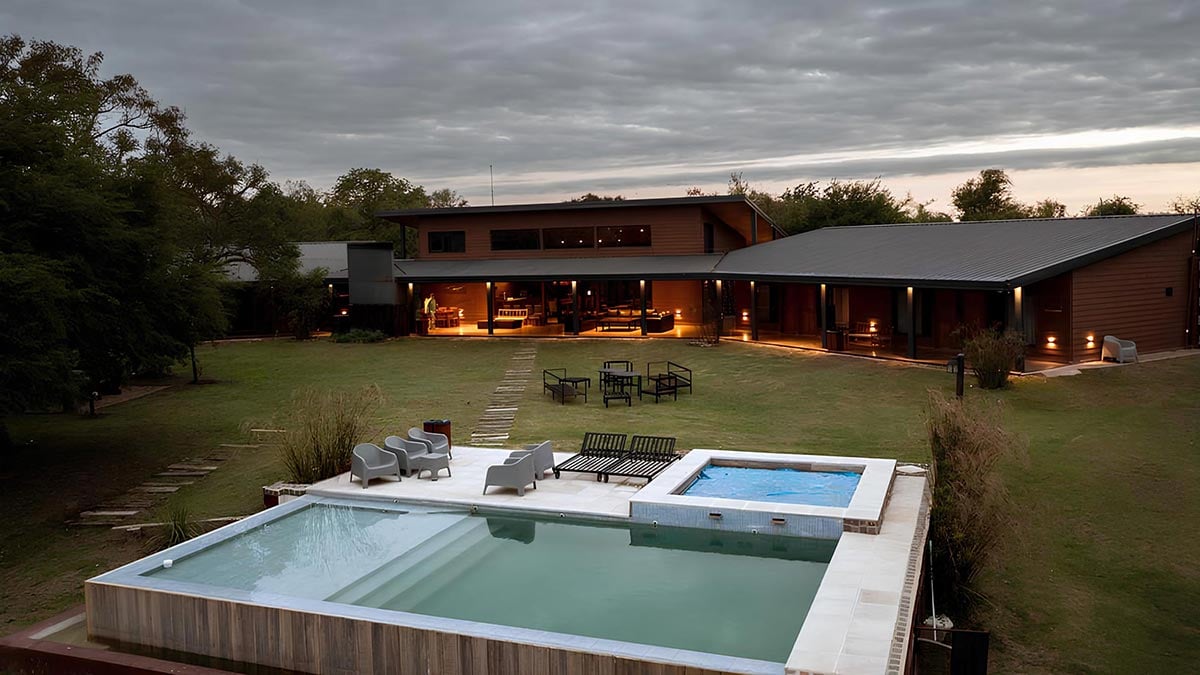
Río Bravo operates a fully boat-based program across a wide section of the lower Paraná, moving daily between main channels, tributaries, and flooded margins. Fishing is built around covering water rather than staying on one area.
Season & Fishery
The program runs through a long warm-water window, with dorado movement shaped by changing river levels across this lower section of the system.
What Defines the Week
The lower Paraná is a bigger, more exposed system than the northern dorado fisheries — wider channels, more variable flows, and a daily plan that depends on reading how the river has moved overnight. Río Bravo’s fully mobile, boat-based approach is the right answer to that kind of water: rather than committing to a beat or a section, guides range across main channels, flooded margins, and tributary mouths as conditions dictate. Anglers who are comfortable covering long stretches from a skiff and adjusting quickly to changing structure will find this program consistently productive. Those who prefer a more defined, intimate fishery will not.
Who this suits:
Freshwater anglers seeking a fully guided, boat-based Paraná River program targeting golden dorado, comfortable fishing long days from skiffs and covering water across the lower river’s wide, constantly shifting system.
Golden Dorado River Cruiser — Paraná River Dorado Program
Santa Fe Province, Argentina

Program Structure
This is a liveaboard program on the Paraná rather than a fixed lodge stay. Guests stay aboard the mothership while daily fishing is done from skiffs, with the boat repositioning through the week to stay aligned with water levels, bait movement, and dorado activity.
Season & Fishery
The program runs year-round, with peak surface activity typically in the warmer months. Golden dorado are the primary target, with fishing shaped by changing river conditions rather than a fixed section of water.
What Defines the Week
A liveaboard dorado program is a fundamentally different proposition to a fixed lodge stay, and not just because of the accommodation. The River Cruiser can reposition overnight to stay aligned with where dorado are actively feeding across the system — something no fixed-base operation can replicate. On a large, constantly shifting river like the lower Paraná, where water levels, bait concentrations, and fish movement change week to week, that flexibility is a genuine fishing advantage rather than a novelty.
Who this suits:
Committed dorado anglers drawn to a liveaboard week in Argentina, where a mothership program follows productive water rather than committing to a single stretch, with all fishing accessed exclusively by skiff.
Chime Lodge — Northern Patagonia Fixed-Base Trout Program
Neuquén Province, Patagonia, Argentina
Program Structure
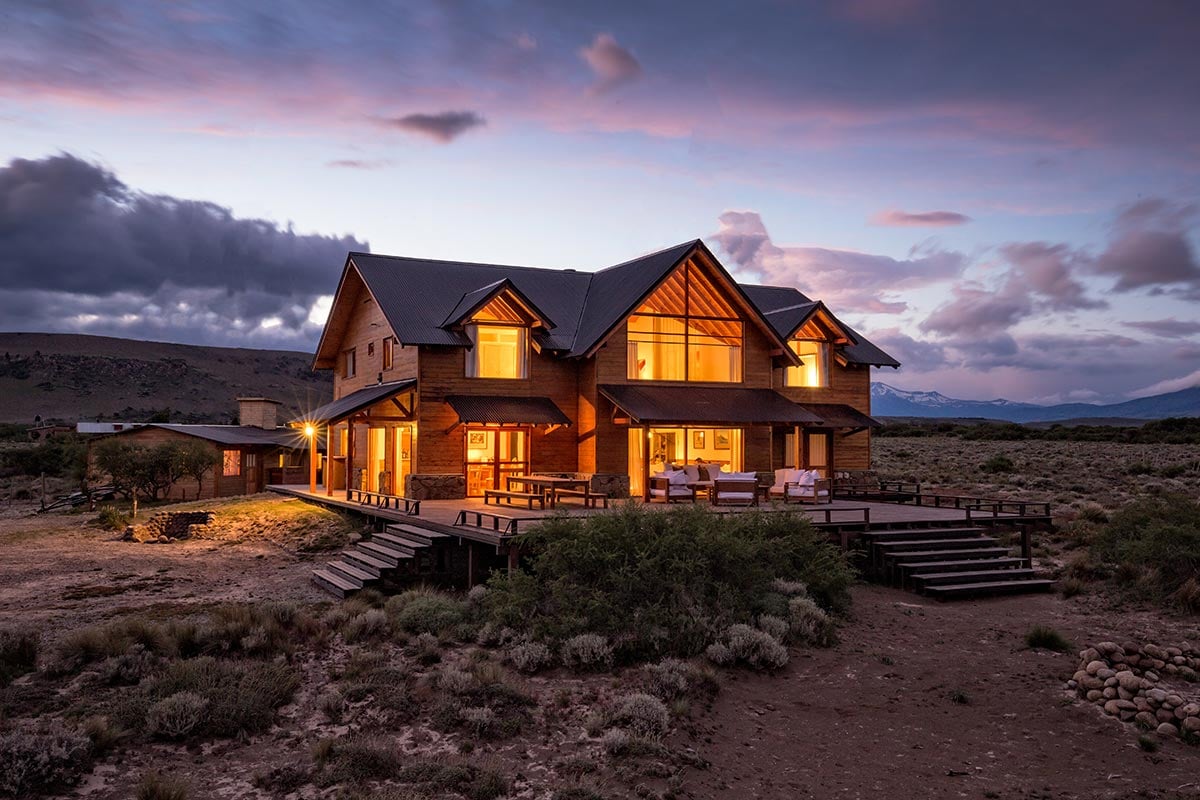
Set near Junín de los Andes, Chime Lodge operates as a lodge-based program with access to a range of rivers and lakes across northern Patagonia. Guided by Patagonia River Guides, days combine floating larger rivers with time on foot, with plans shifting daily based on conditions.
Season & Fishery
The program runs through Patagonia’s core trout season, targeting brown, rainbow, and brook trout across several of the region’s main river systems and surrounding waters.
What Defines the Week
For an angler planning their first serious Patagonia trout trip, Chime Lodge sits in a particularly useful position within Argentina’s lodge options: it offers access to several of the region’s most recognised rivers — the Chimehuín, Malleo, Collón Curá — without requiring the logistical commitment of a fully mobile program. The Patagonia River Guides operation running the program has the estancia relationships and river permits that take years to build. Guests benefit from that infrastructure without having to navigate it themselves.
Who this suits:
Those drawn to a Patagonia fly-fishing program built around raft-based floats and rotating rivers, shaped by a well-developed guiding program, optional river camps, and a refined lodge base that keeps logistics simple while maximizing time on varied trout water.
Rio Manso Lodge — Northern Patagonia Lake District Trout Program
Río Negro Province, Patagonia, Argentina

Program Structure
Set near the Chilean border, Rio Manso operates from a fixed lodge base with access to a compact network of lakes, creeks, and short river sections within Nahuel Huapi National Park. Most fishing is reached within short drives, allowing guides to shift water through the day without committing to long transfers.
Season & Fishery
The season runs from spring through late autumn, targeting brown and rainbow trout across both stillwater and connected systems. Fishing changes through the season, with early weeks often more subsurface and mid- to late-season bringing more consistent dry-fly opportunities.
What Defines the Week
Within Argentina’s Patagonia lodge options, Rio Manso occupies a specific niche: a fixed-base program where the variety of water available within a short radius is genuinely competitive with what mobile programs access through daily transfers. The Nahuel Huapi National Park setting means much of the surrounding water is lightly pressured, and the mix of lake outlets, creek mouths, and short river sections rewards technical fishing rather than covering large water. For anglers who want a lodge-based week without the single-river limitation that often comes with it, the program is more flexible than its fixed-base structure suggests.
Who this suits:
Fly anglers who value a lodge-based Patagonia stay with short daily transfers, guided access to lakes and creeks, and the flexibility to add remote river camps without committing to a fully mobile or expedition-style program.
Bravo Sur Lodge — Northern Patagonia Aluminé Trout Program
Neuquén Province, Patagonia, Argentina
Program Structure
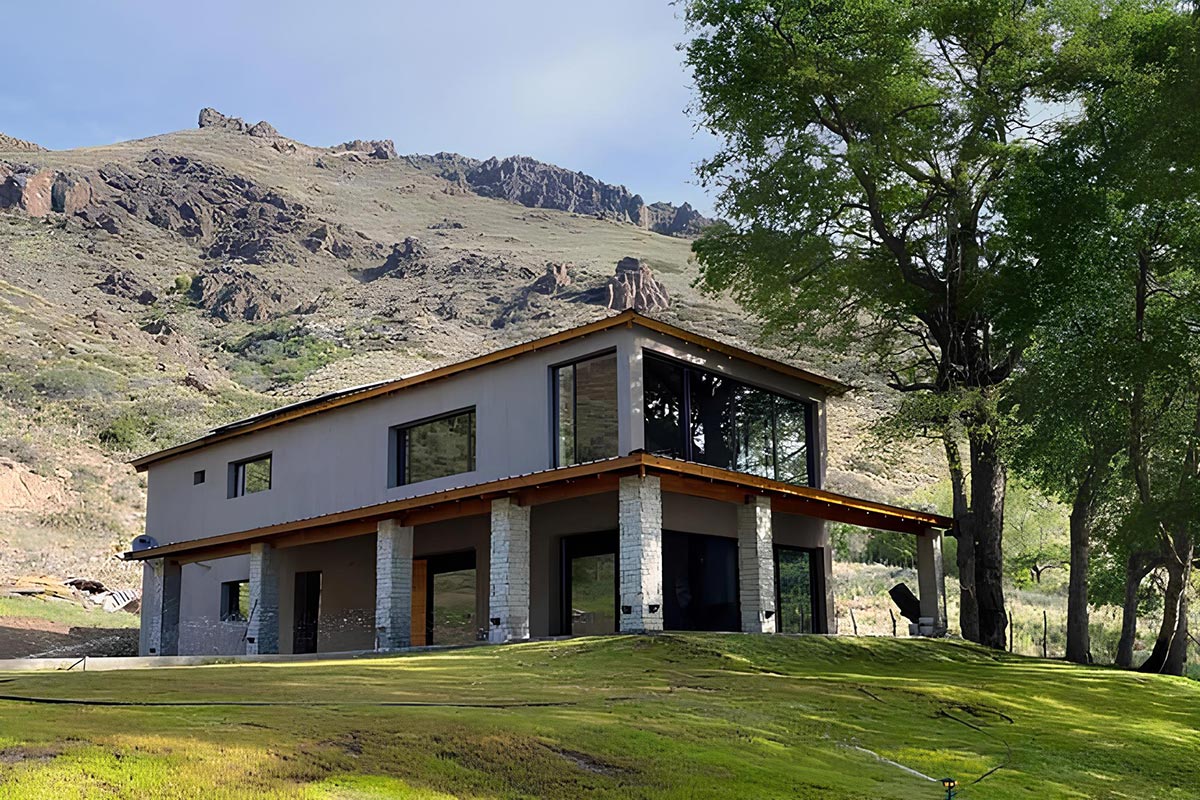
Based in Aluminé, Bravo Sur runs a lodge-based program centered on drift boat fishing the Aluminé River, with the week structured around floating different sections rather than repeating the same water. A stillwater day is typically included to break up the river rotation.
Season & Fishery
The program runs through the full Patagonia trout season, targeting brown and rainbow trout on a clear Andean river system, with fishing changing through the season.
What Defines the Week
Within Argentina’s Patagonia trout options, Bravo Sur offers something that multi-river mobile programs trade away: genuine depth on a single river. Floating different sections of the Aluminé through the week means guides accumulate a detailed picture of where fish are holding and how they are feeding — knowledge that has limited value when moving between rivers daily. The Aluminé sees less guiding traffic than the Chimehuín or Malleo, and that lower pressure is reflected in how fish respond. For anglers who find satisfaction in understanding a river rather than sampling several, that focus is the point.
Who this suits:
Fly anglers seeking a lodge-based Patagonia trout week built around long drift-boat floats on a clear Andean river, occasional lake days, and short daily transfers, paired with a modern, private riverfront lodge and guided day planning within a fully hosted travel setup.
Estancia Chochoy Mallín — Northern Patagonia Remote Estancia Trout Program
Neuquén Province, Patagonia, Argentina

Program Structure
Set within a large private estancia in the Cordillera del Viento, this is a fixed-base program built around access to multiple rivers and spring creeks on the property. Fishing is primarily on foot, with guides moving between different waters rather than staying on one stretch.
Season & Fishery
The program runs through Patagonia’s core trout season, targeting brown, rainbow, and brook trout across a mix of freestone rivers and smaller spring-fed systems.
What Defines the Week
Most of Patagonia’s well-known trout rivers are public and guided heavily through the season. Chochoy Mallín’s rivers and spring creeks exist entirely outside that system — no rotations, no other guides on the water, no fish that have seen the same patterns from multiple visiting parties. The spring creeks in particular fish with a technical precision that public freestone rivers rarely produce: selective fish in clear, slower water that rewards accurate presentation over distance casting. Within Argentina’s lodge options, this is the program for anglers who have fished the classic rivers and want a quieter, more demanding alternative.
Who this suits:
Fly anglers traveling to northern Patagonia for a remote lodge-based week structured around private rivers and spring creeks, who value secluded fishing, guided access, and rotating through a large, lightly fished landscape.
PRG North — Northern Patagonia Multi-River Trout Program
Neuquén Province, Patagonia, Argentina
Program Structure
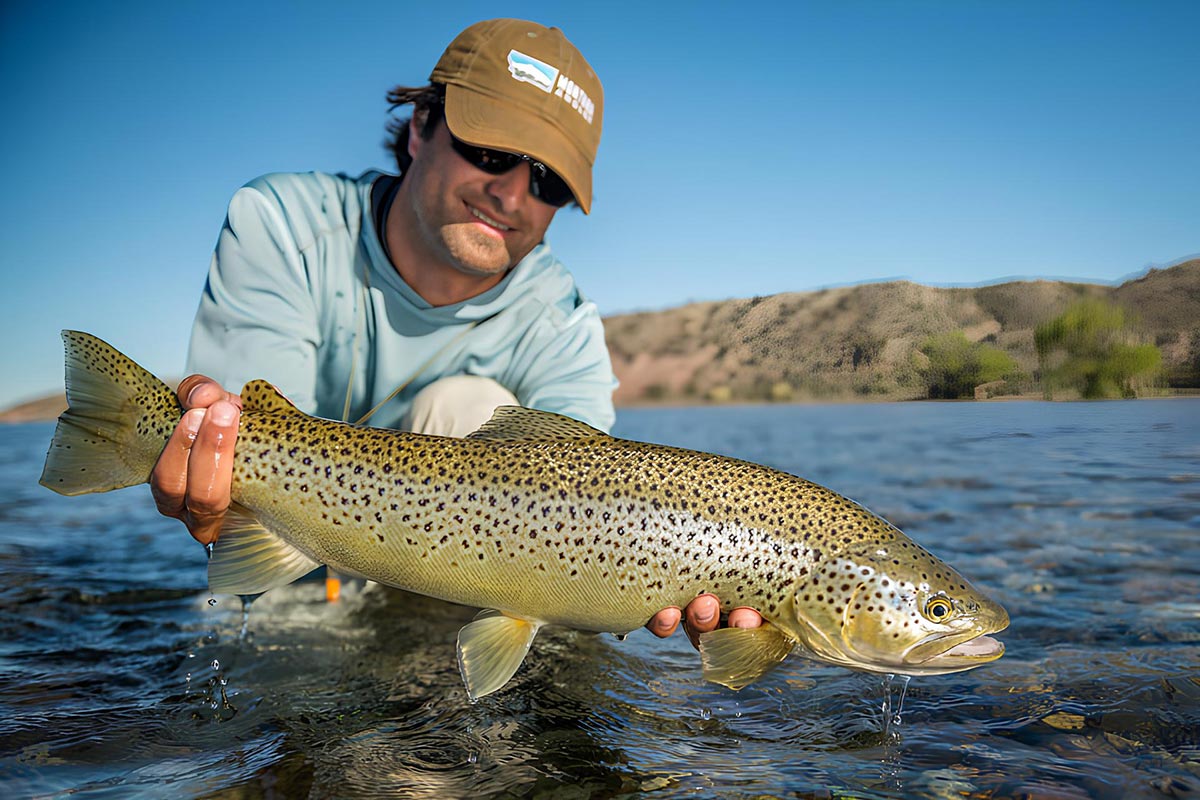
PRG North is built as a mobile program rather than a fixed lodge stay, rotating between a small group of estancias across the San Martín and Junín de los Andes region. Each day is planned around current river conditions, mixing drift boat fishing on larger systems with time on foot on smaller rivers.
Season & Fishery
The program runs through Patagonia’s core trout season, targeting brown and rainbow trout across several of the region’s main rivers. Fishing changes through the season, but the key difference is the ability to shift rivers rather than adapt to one.
What Defines the Week
PRG North is the most direct answer Argentina offers to the question of how to fish as much of northern Patagonia as possible in a single week. The Malleo, Chimehuín, Quilquihue, and Collón Curá are each worth a dedicated trip — rotating between them means no single system dominates, and guides can commit fully to each river rather than treating it as a day trip from a fixed base. The estancia relationships underpinning the program have been built over many years and are not easily replicated. For anglers comparing this against a fixed-base Patagonia program, the trade-off is consistency of lodge comfort against breadth of river access — PRG North is unambiguously the better answer if variety is the priority.
Who this suits:
Those drawn to Patagonia’s classic trout rivers who want to fish multiple watersheds in one trip, combining drift boat and walk-and-wade fishing within a flexible guided program moving between estancia lodges over the course of a week.
PRG Unplugged — Northern Patagonia Float Trout Program
Neuquén Province, Patagonia, Argentina
Program Structure
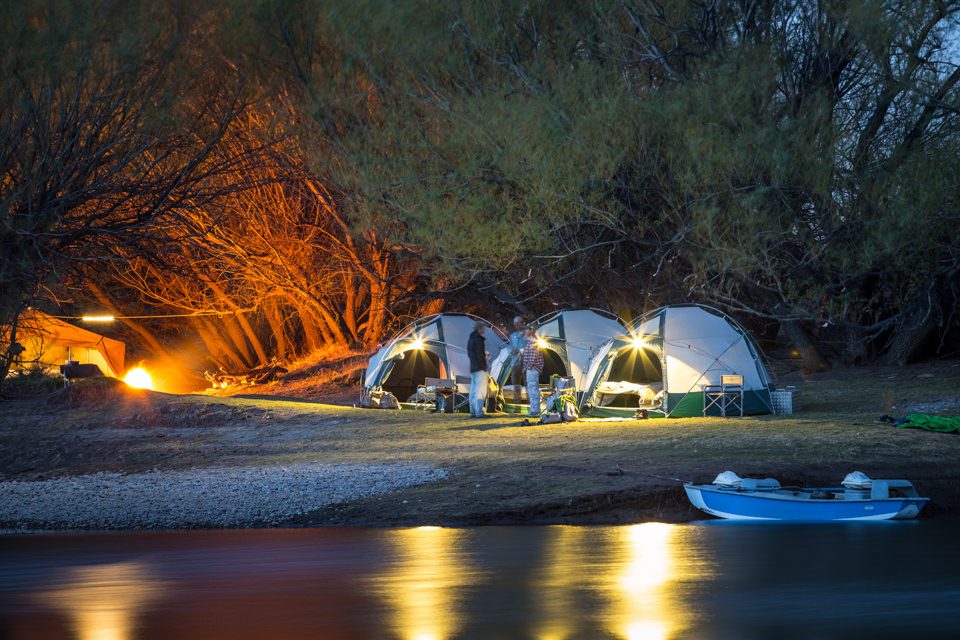
PRG Unplugged is a multi-day float program on the Limay and Aluminé rivers, with no fixed lodge base. Each day moves downstream, with camp set up along the river and broken down the following morning, keeping the entire week on the water.
Season & Fishery
The program runs through Patagonia’s main trout season, targeting wild brown and rainbow trout on large freestone rivers, with fishing shaped by flows, weather, and seasonal conditions.
What Defines the Week
PRG Unplugged is structurally different from every other program on this page — it is not a lodge stay with a fishing program attached, it is a river journey with camp as the base. The sections of the Limay and Aluminé covered during a float are largely inaccessible from the road, which means fish that have not been rotated through by lodge guides all season. The trade-off is real and should not be understated: no lodge comfort, no hot showers, no choice about where you sleep. What the program delivers in return is uninterrupted time on water that most visiting anglers never reach. Within Argentina’s lodge options, it sits in a category of its own.
Who this suits:
Fly anglers drawn to multi-day float trips and staying in well-run riverside camps, who value covering water and fishing through remote sections rather than returning to a fixed lodge each day, and who are comfortable with a mobile, river-based week.
PRG South — Southern Patagonia Multi-River Trout Program
Chubut Province, Patagonia, Argentina

Program Structure
PRG South operates as a mobile program based around Trevelin and Esquel, drawing from a network of rivers, creeks, and lakes rather than a single lodge beat. Each day is planned on current conditions, with guides choosing where to fish across multiple nearby watersheds, combining drift boat fishing with time on foot.
Season & Fishery
The program runs through Patagonia’s core trout season, targeting brown and rainbow trout across a mix of freestone rivers, spring creeks, and lake systems, with the approach shifting as conditions change.
What Defines the Week
The Trevelin and Esquel area receives a fraction of the guiding traffic that flows through the San Martín and Junín de los Andes region to the north. The spring creeks and smaller tributaries around this part of Chubut Province are well known to local guides but rarely mentioned in international fishing coverage, and the fishing reflects that. For anglers who have done the classic northern Patagonia circuit and want a different angle — quieter water, more varied water types, a less familiar landscape — PRG South is the most credible Argentina-based alternative within the same guiding operation.
Who this suits:
Trout anglers comfortable fishing a range of waters—including freestone rivers, spring creeks, and lakes—who prefer a guided Patagonia program where days are shaped by conditions and time is spent fishing the best available water rather than staying on a single system.
Villa María Lodge — Río Grande Sea Trout Program
Tierra del Fuego, Argentina
Program Structure
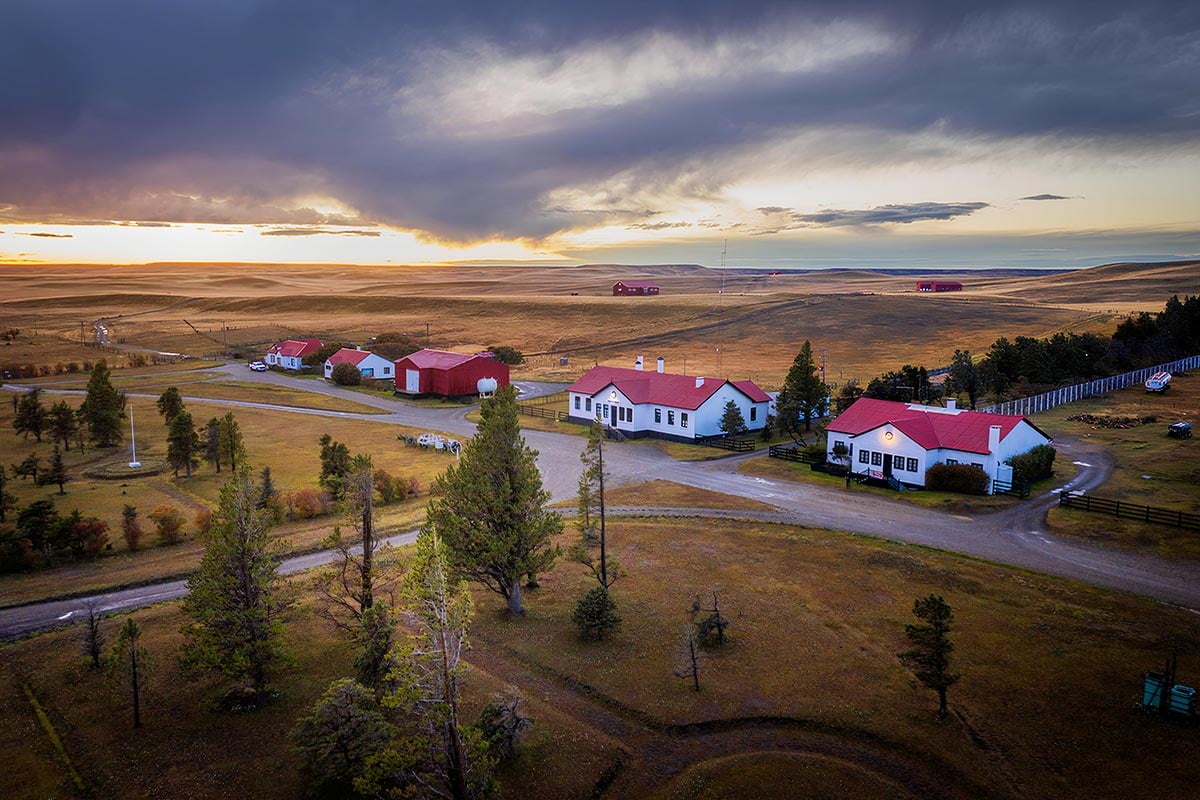
Set on the lower Río Grande, Villa María operates a structured beat system with access to a long stretch of private water. Anglers rotate through assigned pools with a guide, fishing morning and evening sessions, with most water reached within short drives from the lodge.
Season & Fishery
The season runs through the peak sea trout window, targeting large sea-run brown trout as they enter and move through the lower river. Fish are typically fresh from the ocean early in the season, with numbers building as runs progress.
What Defines the Week
The Río Grande’s sea trout fishery runs on a simple principle: fish enter from the ocean and move upstream. Where a lodge sits on that journey determines what kind of fish it sees. Villa María’s lower-river position means consistently intercepting fresh-run fish — aggressive, ocean-bright, and unworked by the rotation of beats further up the system. The trade-off is exposure: the lower river is broader, more wind-affected, and demands longer casting than the more sheltered middle beats. This is the right program for anglers who understand Fuegian conditions and want the best chance at genuinely fresh fish over a full season.
Who this suits:
Those traveling to Patagonia specifically for large sea-run brown trout who want a foundational week from a classic lodge base in the heart of Tierra del Fuego, drawn to extensive rotating private beats on the lower river where fresh fish enter from the ocean.
Kau Tapen Lodge — Río Grande Sea Trout Program
Tierra del Fuego, Argentina
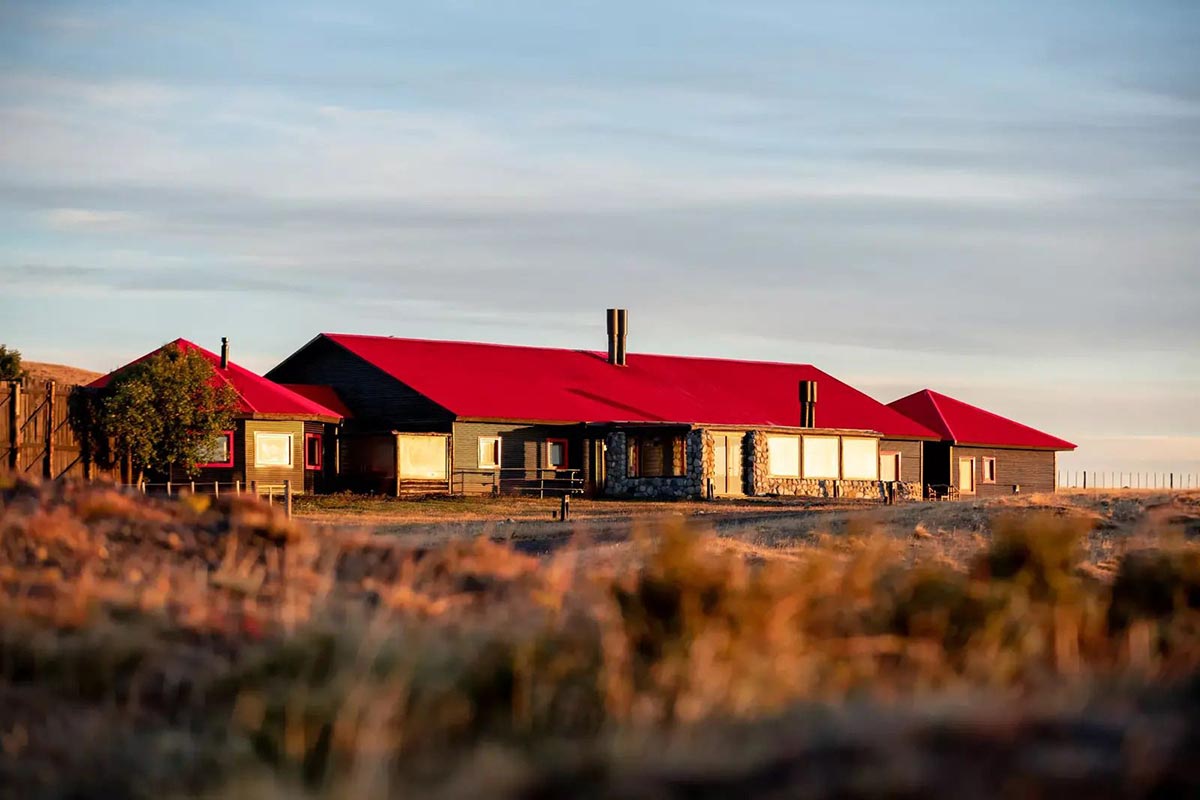
Program Structure
Located on the middle section of the Río Grande, Kau Tapen runs a traditional beat-based program with access to both banks of the river and the Menéndez tributary. Fishing is entirely wade-based, with two anglers per guide rotating through established pools morning and evening.
Season & Fishery
The season spans the full sea trout run, with large brown trout holding through the system as the season progresses. Conditions tend to remain stable, with consistent flows and reliable holding water.
What Defines the Week
Kau Tapen’s combination of middle-river position, exclusive access to both banks, and the Menéndez tributary makes it the most complete single-program option on the Río Grande. Middle-river fish are holding rather than running, which produces more predictable beat occupancy and a fishing style built around precise presentation to known lies rather than intercepting arrivals. The Menéndez adds a genuinely different piece of water — smaller, more intimate, and a reliable alternative when the main stem is running off-color or under wind. Few lodges on the river can offer that within the same week’s program.
Who this suits:
Fly anglers heading to Tierra del Fuego for large sea-run brown trout who prioritize high-end lodge accommodation, extensive private water access, and a structured week built around classic beat rotation on the middle Río Grande.
Estancia Laguna Verde — Jurassic Lake Trout Program
Santa Cruz Province, Patagonia, Argentina
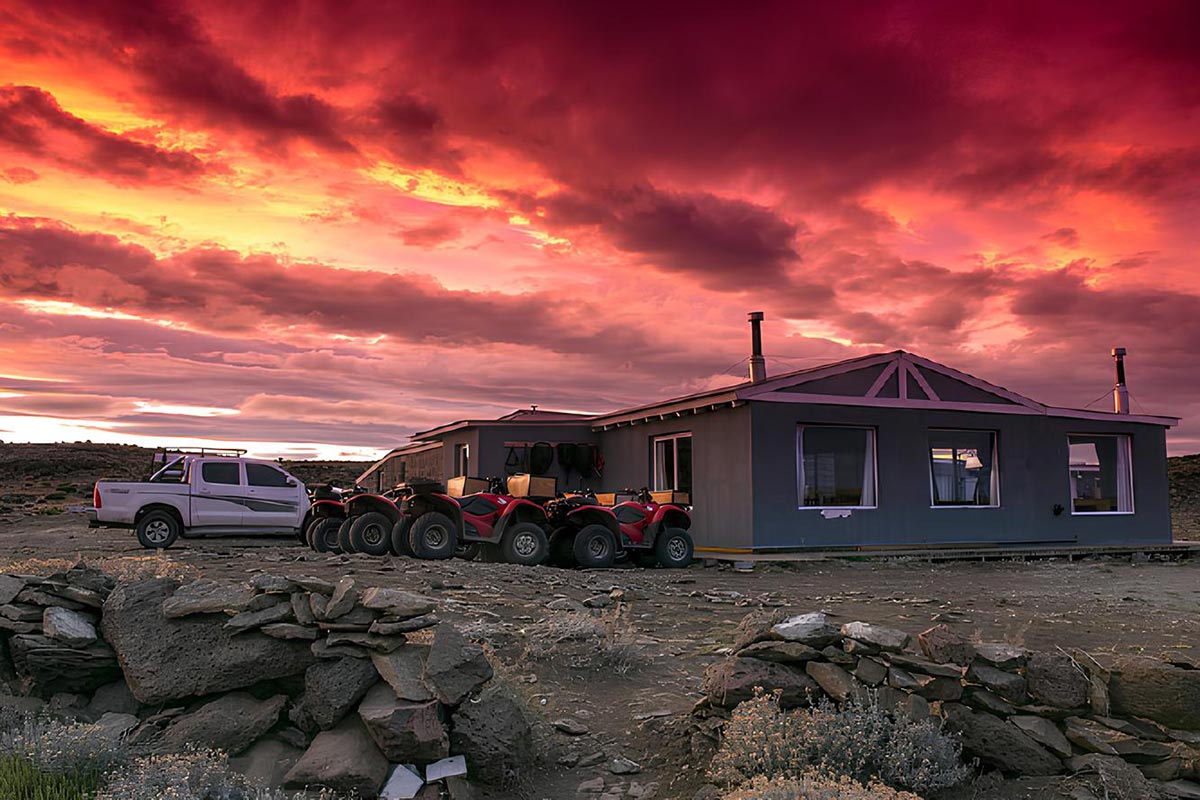
Program Structure
Based on a large private estancia on the Strobel Plateau, the program fishes Jurassic Lake alongside the Barrancoso River and smaller surrounding waters. Days are spent on foot or moving short distances by vehicle between different sections depending on conditions.
Season & Fishery
The season runs from spring through autumn, targeting large resident rainbow trout. Fish move between the lake, river, and smaller systems through the season, shaping how the week is fished.
What Defines the Week
Jurassic Lake’s reputation draws anglers to the Strobel Plateau for one reason: the size of its rainbow trout. Laguna Verde accesses that fishery while adding the Barrancoso River and surrounding waters as genuine alternatives rather than fallback options. On a plateau where wind can lock down lake fishing with little warning, the ability to move to protected river water without losing the day is a practical advantage that single-lake programs cannot offer. For anglers drawn to Jurassic Lake’s trophy potential but cautious about committing a full week to exposed stillwater fishing, this program reduces that risk without compromising access to the lake itself.
Who this suits:
Fly anglers planning a remote lodge-based week in Patagonia who prioritize large resident trout, are comfortable covering water on foot, and prefer a varied itinerary across independent lakes and rivers rather than focusing on a single system.
Lago Strobel Lodge — Jurassic Lake Trophy Trout Program
Santa Cruz Province, Patagonia, Argentina

Program Structure
This is a fixed-base program focused primarily on Jurassic Lake, with access to long stretches of private shoreline. Fishing is done on foot, moving between bays, points, and wind-protected areas, with occasional time on the Barrancoso River.
Season & Fishery
The program runs through the main Patagonia season, targeting large resident rainbow trout. Fishing remains centered on the lake, with conditions—especially wind—playing a major role in how each day is approached.
What Defines the Week
Lago Strobel Lodge commits to Jurassic Lake more fully than any other program on the plateau, and the fishing reflects that focus. Guides know the lake’s bays, points, and wind-protected margins in detail — where fish move at different times of day, how presentations need to adjust as conditions shift, which sections hold fish when the main shoreline is blown out. The program is built for anglers who want total immersion in one of Patagonia’s most productive trophy trout fisheries and are prepared for the physical demands of covering exposed shoreline on foot. It is not suited to anglers who need variety to stay engaged, and it makes no attempt to be.
Who this suits:
Independent fly anglers drawn to a full week on an iconic Patagonian stillwater who prioritize exceptionally large resident rainbow trout, are comfortable walking and covering water on foot, and prefer immersion in a single lake system over rotating across multiple fisheries.
Choosing the Right Argentina Fishing Lodge
Planning a fishing trip to Argentina starts with choosing the fishery. For most anglers, that means deciding between dorado in the north or trout in Patagonia. From there, the real differences are in how the week is set up—whether you stay on one piece of water or move between several, and how much ground you cover day to day.
Travel is part of that decision too. The northern dorado fisheries, Patagonia’s lake district, Tierra del Fuego, and the Strobel Plateau each require a separate domestic connection and effectively a separate trip. The right lodge is not just the one that matches the species you want to target — it is the one whose region, logistics, and weekly structure align with how you actually want to spend the time.
About This Guide: FishingExplora’s editorial guides are written by our in-house team, drawing on direct lodge input, guide experience, published field reports, and independent research to help anglers make informed decisions about premium fishing destinations.