Discover the best permit fishing destinations, guided trips, and lodge-based experiences worldwide. Explore remote waters and world-class angling with expert local hosts.

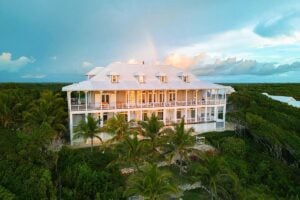
Abaco, The Bahamas
Barracuda, Bonefish, Grouper
Abaco, The Bahamas
Amberjack, Barracuda, Bonefish
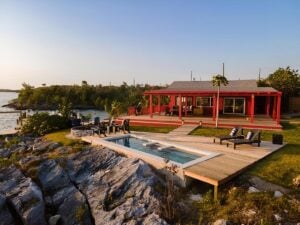
South Andros, The Bahamas
Bonefish, Permit, Tarpon
Outer Islands, Seychelles
Barracuda, Bonefish, Giant Trevally (GT)
Yucatan Peninsula, Mexico
Barracuda, Bonefish, Grouper
No results available
Permit are the ultimate saltwater fly fishing challenge — wary, fast, and maddeningly unpredictable. From Mexico’s Yucatán to the remote atolls of the Seychelles, sight-fishing for permit demands stealth, accurate casting, and the ability to stay composed when everything is on the line.
Permit (Trachinotus falcatus) hold near-mythical status among saltwater fly anglers. They feed in skinny water, often tailing on flats or moving near deeper channels, but are notorious for ignoring perfectly placed flies. A single fish landed can define an entire trip.
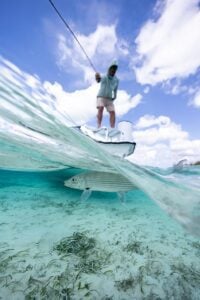
While typically targeted with crab patterns on foot or from skiffs, permit are also caught on spinning gear with small jigs or live crabs. It is the visual fly game — long casts to moving fish in shallow water — that defines the experience for most serious anglers.
Home to Ascension Bay, Espiritu Santo, and Chetumal Bay, the Yucatán offers consistent access to permit on shallow flats fishing water, often near mixed-species schools. It ranks among the best regions in the world for an angler to see — and potentially land — a first permit on fly.
While best known for bonefish, the Bahamas holds solid permit populations — particularly around deeper flats and channel edges on Andros and Abaco. Fish here are selective and challenging, best suited to experienced fly anglers.
Cosmoledo, Farquhar, and Alphonse offer permit encounters on some of the most remote flats in the world. The species here is the Indo-Pacific permit (Trachinotus blochii), distinct from its Atlantic cousin — fish tail over turtle grass and coral rubble alongside GTs and triggerfish. Tides and timing are critical.
With expansive flats and deep cuts, Belize is widely regarded as the best permit fishery in the world. From Turneffe Atoll to Placencia and Punta Gorda, anglers encounter both numbers and size during dedicated permit programs at specialized lodges. Average fish run 6–10 lbs, with larger individuals common.
The Florida Keys produce some of the largest permit anywhere, with fish commonly exceeding 20 lbs. Permit feed over wrecks and oceanside flats — a true technical test suited to advanced fly anglers, particularly in spring and early summer.
Cuba’s remote archipelagos, including Jardines de la Reina, offer solid permit action with less pressure than more developed Caribbean fisheries. Shots can be excellent when tides and light align.
Permit are famously difficult to catch. Sharp vision, selective feeding, and unpredictable behavior make them one of the most frustrating — and addictive — targets in saltwater fly fishing. They require stealth, accuracy, and patience. It is the one species many seasoned anglers will chase for years before breaking through.
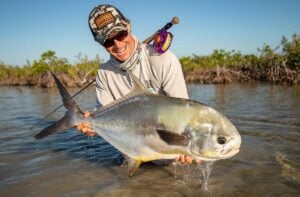
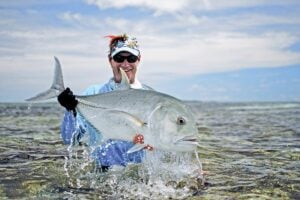
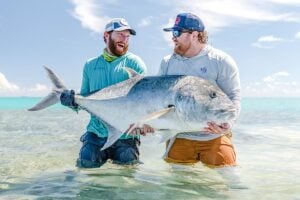
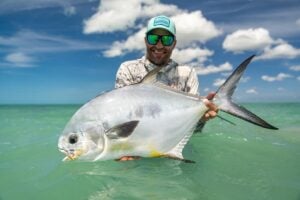
Permit are broad, laterally compressed fish — tall and thin when viewed head-on — with a deeply forked tail and long, sickle-shaped anterior dorsal and anal fins that give the species its Latin name, falcatus. The body is silver with a bluish-green to gray-brown back and dark gray to black fins. A distinctive orange-yellow patch near the belly and anal fin is the key field mark separating permit from the similar pompano. Their blunt head and hard, granular-toothed mouth are built for crushing crabs and mollusks off the bottom. Most flats fish run 10–20 lbs; 30+ lb fish are a genuine trophy at any destination.
Permit fishing depends heavily on light and tide. Low wind, high sun, and mid-tide movement offer the best conditions for spotting fish and controlling presentation.
FishingExplora features lodges and guided trips in the Yucatán Peninsula, Bahamas, and Seychelles — regions offering some of the most consistent permit action in the world. These programs are built for serious saltwater fly anglers who value technical fishing, experienced guides, and unpressured water. Contact lodges directly to discuss availability and program structure.
FishingExplora’s editorial content draws on lodge input, guide experience, published field reports, and independent research to help anglers make informed decisions about premium fishing destinations.
Permit have exceptional vision and feed selectively — often following a fly closely before refusing it at the last moment. They spook at noise, shadow, and poor presentation. Unlike bonefish, which can be coaxed with a well-placed fly, permit demand a specific combination of fly weight, sink rate, and position that changes fish to fish and flat to flat. Every hookup is hard-earned.
A 9-weight fast-action fly rod is the guide consensus standard — powerful enough for heavy crab flies in wind, without overpowering smaller fish. Use a floating tropical line, a large-arbor reel with a strong drag, and a 9–12 ft fluorocarbon leader in the 16–20 lb range. Weighted crab patterns are essential; carry a range of sink rates to match water depth and fish behavior.
Belize is widely considered the permit capital of the world, with the highest density of fish and the most shots per day at dedicated permit lodges. The Yucatán — particularly Ascension Bay — offers consistent numbers with fish to 20+ lbs. The Florida Keys produce the largest average-size fish. The Seychelles offers a genuinely different experience targeting Indo-Pacific permit on remote Indian Ocean atolls.
March through June covers the prime window across most destinations — stable weather, good visibility, and active fish. The Bahamas and Belize also fish well in October and November as water temperatures drop back into the mid-70s°F. The Seychelles runs October through May. Avoid peak summer in the Bahamas — heat pushes permit off the shallow flats.
Yes. In most flats regions, permit share habitat with bonefish and tarpon, making mixed-species days common in Mexico, Belize, and the Bahamas. In the Seychelles, triggerfish and giant trevally are frequent additional targets on the same flats, often on the same day.
We use cookies to improve your experience and enable key features on the platform. You can choose which cookies to allow. Some features may not work fully without consent.