Fishing for Brown Trout
Brown trout are prized for their selectivity, strength, and the diverse waters they inhabit — from spring creeks in New Zealand to glacial rivers in Patagonia and ancient lochs in Scotland. Their elusive nature and sharp instincts make them a benchmark species for technical trout fishing worldwide.
Brown trout (Salmo trutta) are one of the most widely distributed and adaptable trout species on Earth. Native to Europe, western Asia, and North Africa, they have been introduced across North and South America, New Zealand, and parts of Africa. Browns thrive in both rivers and lakes, from small alpine streams to large, meandering tailwaters.
Unlike rainbow trout fishing targets, browns are often more reclusive and can be incredibly wary. They feed selectively and are known for holding under structure — making precise casts and stealthy approaches essential. Their tendency to rise subtly yet fight hard makes them a favorite among experienced fly anglers and light-tackle enthusiasts.
Where to Find Brown Trout
New Zealand – Sight-fishing to trophy browns in crystal-clear rivers
Introduced from British stock in 1867, New Zealand’s brown trout have thrived in the South Island’s cold, clear rivers to produce one of the world’s most celebrated sight fisheries. The average fish runs 3–6 lbs, with 7–8 lb fish considered above average — large by any international standard for wild river browns. These fish demand long leaders, accurate casts, and subtle presentations in ultra-clear water.
Argentina – Big water and migratory trout in remote southern rivers
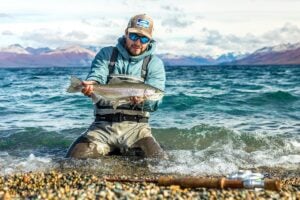
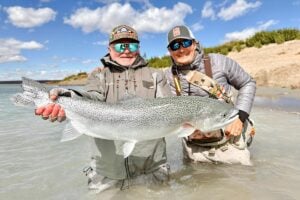
Argentina offers some of the most iconic brown trout fishing in the world. Resident browns in Patagonia’s lakes and rivers typically averaging 16–22 inches in river systems, with larger fish in lake-connected water. The sea-run browns of Tierra del Fuego are a different proposition entirely — for those, see our sea-run brown trout fishing page.
Chile – Clear rivers, spring creeks, and lake systems with wild browns
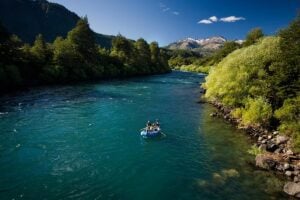
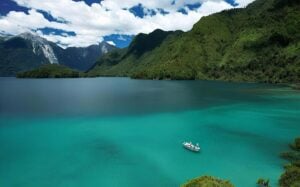
Chile’s southern regions provide excellent opportunities for wild brown trout in remote, glacier-fed rivers and deep lakes. These waters see little pressure and support healthy populations of resident browns willing to take dries or streamers.
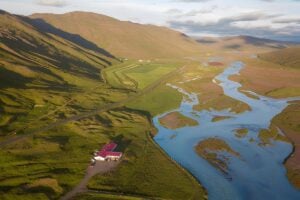
Iceland – Wild browns in lava-field rivers and highland lakes
Iceland holds resilient wild brown trout populations across its river and lake systems. Fish are typically modest in size but strong fighters, and the combination of midnight sun and uncrowded water makes for a distinctive fishing experience.
Europe – Native browns in alpine streams and storied rivers
From Scotland to Slovenia, brown trout are part of Europe’s fly fishing heritage. Classic dry fly waters like the Test and Itchen in England and alpine streams in the Julian Alps provide historic and technically demanding angling.
United States – Technical fishing in spring creeks and tailwaters
Brown trout are widespread across the US, particularly in the West and Upper Midwest. Spring creeks in Montana, tailwaters in the Rockies, and Great Lakes tributaries all hold wild and trophy-class fish.
What Makes Brown Trout Special?
Brown trout challenge anglers in ways few other freshwater fish can. Their selective feeding and strong spatial awareness mean that success often depends on perfect presentation, drag-free drifts, and careful approaches. They are notorious for holding tight to cover — whether undercut banks, submerged logs, or deep pools — requiring both skill and patience to catch.
They also adapt to an extraordinary range of environments, from small forested creeks to sprawling lake systems. This versatility, combined with their wariness and fighting ability, has made them the benchmark species for technical trout fishing across six continents.
What Do Brown Trout Look Like?
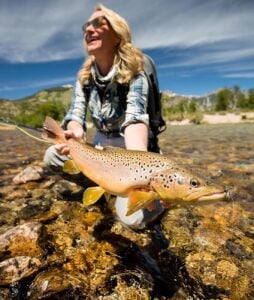
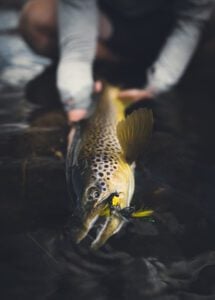
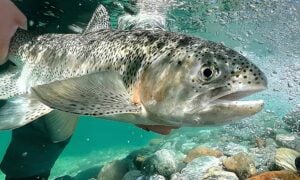
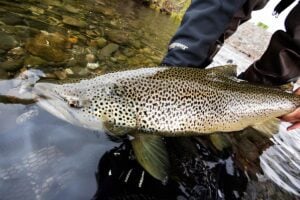
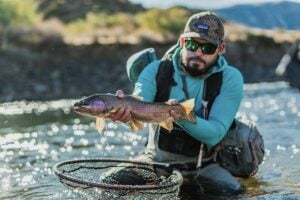
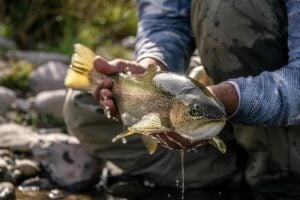
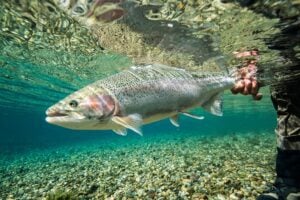
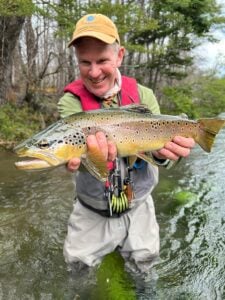
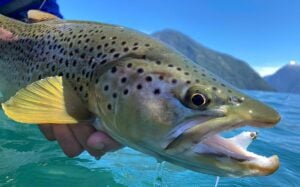
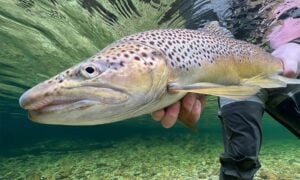
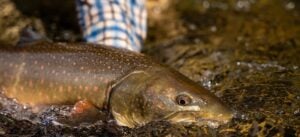
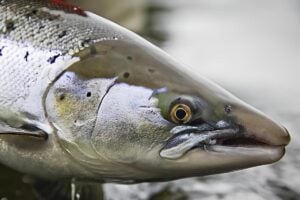
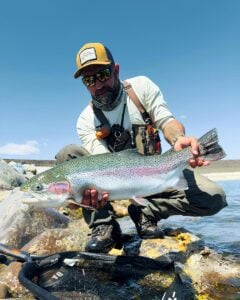
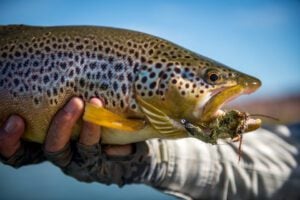
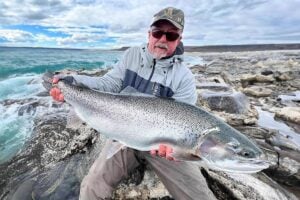
Brown trout have golden-brown bodies with buttery yellow or cream bellies and coppery flanks. Their most distinctive feature is their spot pattern: dark brown or black spots scattered across the body and dorsal fin, often surrounded by pale halos, along with rusty red spots on the sides — particularly vivid on river fish. Unlike rainbows, browns lack a pink lateral stripe. The tail is square rather than forked, and the adipose fin often carries a reddish tinge. Wild fish take on coloration that reflects the character of the water they inhabit — river fish tend toward rich gold and amber tones, lake fish toward silver.
Brown Trout Fishing Techniques
- Dry Fly Fishing – Ideal in slow, clear water or during hatches. Browns often sip dries with minimal surface disturbance, so timing and a precise drift matter more than pattern.
- Nymphing – Weighted rigs or Euro nymphing are highly effective, especially in tailouts and alongside undercut banks where fish hold off the main current.
- Streamer Fishing – Browns are aggressive toward baitfish and sculpin patterns, particularly in low light or off-color water. Large articulated flies fished near structure can move the biggest fish.
- Terrestrial Patterns – In summer, ants, beetles, and hoppers drifted tight to cover produce reliably, especially on rivers with overhanging vegetation.
- Lake Fishing – Browns in large lakes respond to trolling or casting near drop-offs and shallow margins with spoons, crankbaits, or large streamers.
Best Time to Fish for Brown Trout
- New Zealand – November through April, with peak sight-fishing in the South Island from December through March. Early season often produces more aggressive takes on larger flies.
- Patagonia (Argentina and Chile) – November through April. Late season brings larger fish into shallower systems as water temperatures drop pre-spawn.
- Iceland – June through September. The midnight sun extends fishing hours and water temperatures remain cool through summer.
- Europe – April through October depending on the country and system. Spring and fall favor both dry fly and nymphing action.
- United States – Late spring through fall on rivers and creeks. Tailwaters often fish well year-round depending on flows and generation schedules.
Brown Trout Fishing Lodges and Guided Trips
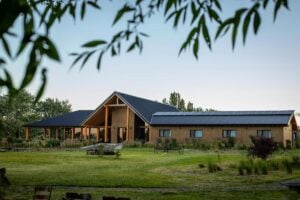
FishingExplora’s current lodge relationships cover New Zealand, Argentina, Chile, and Iceland. Lodge cards for each destination are listed below.
FishingExplora’s editorial content draws on lodge input, guide experience, published field reports, and independent research to help anglers make informed decisions about premium fishing destinations.
Frequently Asked Questions
Where are the best places in the world to catch trophy brown trout?
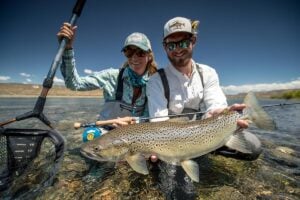
New Zealand, Patagonia, and Iceland consistently produce large, wild fish — low fishing pressure, abundant food, and cold, clear water combine to grow browns well beyond river averages. The US also holds genuine trophies, particularly in tailwaters and Great Lakes tributaries where fish have access to rich forage and space to grow.
What makes brown trout harder to catch than rainbows?
Browns are more cautious and structure-oriented than rainbows. They hold in tight lies, feed selectively, and are less likely to chase a poorly presented fly or lure. In clear, low water they can become almost impossible to move — requiring a careful approach, a precise drift, and often a smaller or more imitative pattern than most anglers expect.
Can you catch brown trout on streamers during the day?
Yes, especially in cloudy or off-color water. Browns are aggressive ambush feeders and will strike baitfish or sculpin patterns during low light or when holding near structure. A fast strip near undercuts or drop-offs can trigger decisive takes, particularly early and late in the day when larger fish move from their lies to feed.
Do brown trout behave differently in lakes versus rivers?
Yes. In rivers, browns hold tight to cover and feed on drifting insects and small fish — their position in the current is everything. In lakes, they cruise drop-offs and shallow margins, feeding more opportunistically across a wider range of depths. Techniques shift accordingly: nymphing and dry fly for rivers, streamer or trolling rigs for lake fish working deeper structure.