Fishing for Rainbow Trout
Rainbow trout are one of the most widely targeted and versatile gamefish in the world. From glacier-fed rivers in Alaska to backcountry streams in New Zealand, they reward precise presentation, offer strong fights, and thrive in some of the most scenic waters on Earth.
Rainbow trout (Oncorhynchus mykiss) are native to cold-water tributaries of the Pacific in North America and Asia, and have been introduced to coldwater rivers and lakes across six continents. Wild populations now exist across Canada, the western United States, Chile, Argentina, and New Zealand — each with distinct behavior, diet, and size potential.
Rainbows are aggressive feeders and highly responsive to fly and spin techniques. Their willingness to rise for dries, chase streamers, or take drifting nymphs makes them adaptable targets across a wide range of water types. Wild rainbows in remote, lightly fished rivers are a different proposition from stocked fish — faster, warier, and considerably harder to move on a poorly presented fly.
Where to Find Rainbow Trout
Alaska – Wild rainbows in salmon-rich river systems
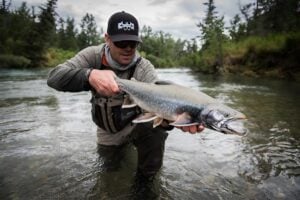
Alaska is home to some of the world’s most robust wild rainbow trout fisheries. Bristol Bay systems including the Naknek, Kvichak, and Alagnak hold fish that grow large feeding on salmon eggs, flesh, and insects — and fight hard in fast current. The Kvichak and Lake Iliamna system carries an ADF&G Trophy Rainbow Trout designation. The Katmai National Park streams — among them the Nonvianuk, Alagnak, and Moraine Creek — offer some of the most productive and remote rainbow trout fishing in the state.
Canada – Remote rivers, alpine lakes, and drift fishing classics
British Columbia and the Yukon offer strong wild rainbow populations, particularly in wilderness lakes and rivers with seasonal insect hatches. Some fisheries are accessed by floatplane or jet boat fishing operations running out of remote lodges.
Argentina – Patagonian rainbows in remote, wind-swept rivers
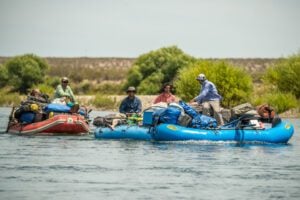
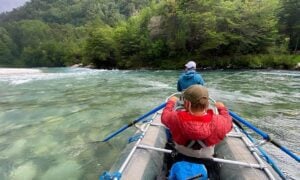
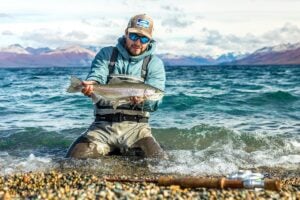
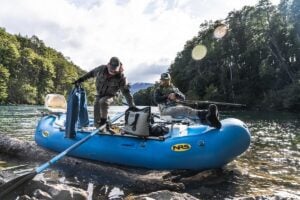
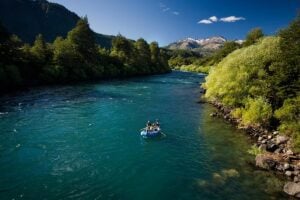
Argentina’s southern rivers hold wild rainbows that respond well to dries, streamers, and mouse patterns. Many systems are fished from estancias with walk-and-wade access or inflatable rafts, with river fish typically averaging 16–20 inches and larger lake-run specimens available on connected systems.
Chile – Clear freestone rivers and lake systems with aggressive rainbows
Chile offers a mix of lake-run and resident rainbow trout in cold, low-pressure rivers. Anglers can drift, wade, or fish from shore with large terrestrial flies and streamer rigs across systems that see a fraction of the pressure of comparable water in North America.
New Zealand – Sight-fishing to wild rainbows in crystal-clear streams
Introduced from Californian steelhead stock in the early 1880s, New Zealand’s rainbows have established self-sustaining populations across both islands. The North and South Islands are known for technical sight fishing to large, wild fish in backcountry rivers — long leaders, accurate casts, and subtle presentation are essential.
What Makes Rainbow Trout Special?
Rainbow trout offer a balance of power, accessibility, and variety. They are hard fighters — known for jumping and running in fast water — and they respond well to both finesse and aggressive techniques, making them a productive target across a wider range of conditions than most trout species.
Their global distribution and adaptability are unmatched. Wild rainbows are found in high-elevation creeks, glacial rivers, fertile spring creeks, and volcanic lakes. The challenge shifts with the water: sight fishing to educated fish in a New Zealand spring creek demands a different approach from swinging mouse patterns at dusk on an Alaskan sockeye river.
What Do Rainbow Trout Look Like?
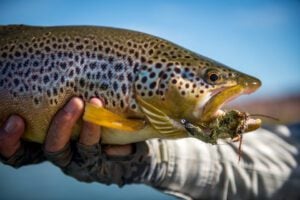
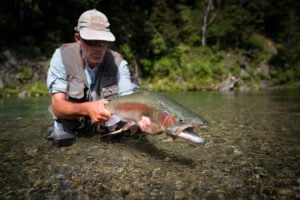
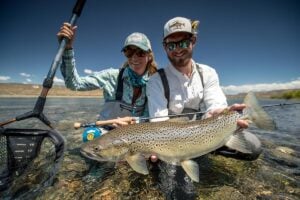
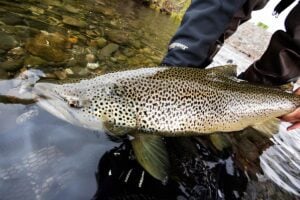
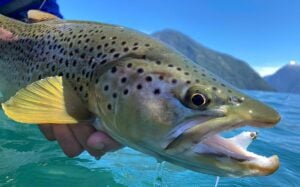
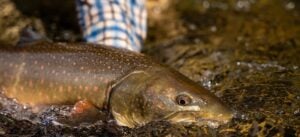
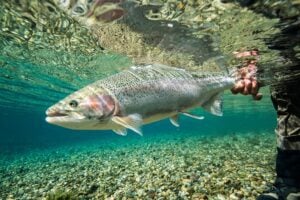
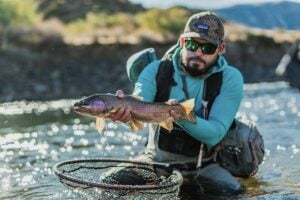
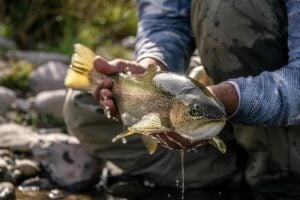
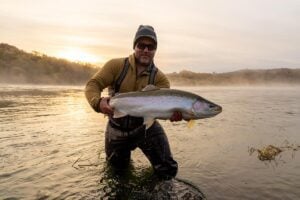
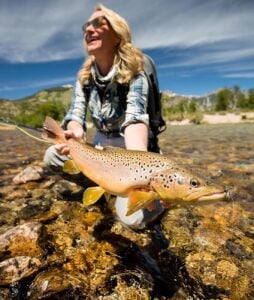
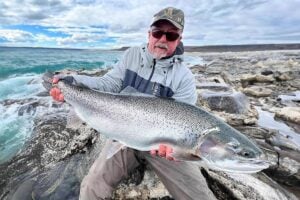
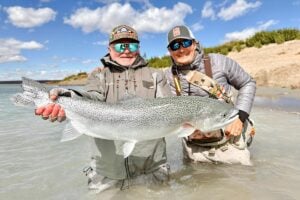
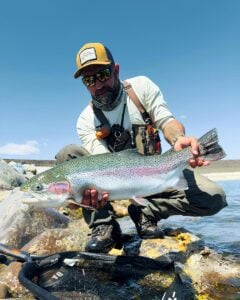
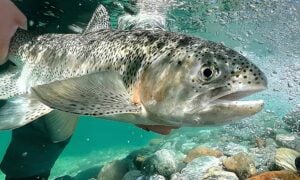
Rainbow trout have silvery sides, olive to green backs, and a broad pink to reddish stripe along the lateral line — most vivid in spawning males and in river-dwelling fish. Their bodies carry small black spots that extend onto the dorsal fin and tail. Lake-dwelling and sea-run fish are typically more silvery, with the lateral stripe reduced or almost absent.
Juveniles display prominent parr marks — dark vertical bars along the flanks — typical of most salmonid juveniles. During spawning, adult males develop darker backs and deeper red or magenta coloration along the gill plates and flanks.
Rainbow Trout Fishing Techniques
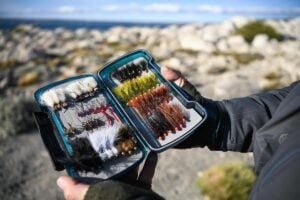
- Dry Fly Fishing – Rainbows rise readily to caddis, mayflies, and terrestrials in both freestone and spring creek environments. One of the most reliable surface-feeding trout on a well-presented dry.
- Nymphing – Beadhead nymphs, stonefly imitations, and small emergers are effective in seams, riffles, and drop-offs. Euro nymphing has become the standard approach on many technical fisheries.
- Streamer Fishing – Larger rainbows chase baitfish and sculpin patterns in deeper water or off-color conditions, particularly in lake-run systems and on big Alaskan rivers.
- Mouse Patterns – Effective in Alaska, Argentina, and Chile where rainbows respond to surface disturbance at dawn and dusk, particularly in late summer.
- Spin Fishing with Spoons or Spinners – Productive in medium to large rivers near current breaks and structure, and in lake systems where casting distance matters.
Best Time to Fish for Rainbow Trout
- Alaska – June through October. Peak activity follows the salmon season — insect hatches drive good dry fly fishing in June and early July, before egg and flesh patterns take over as salmon runs build through mid-July. The best trophy rainbow trout fishing is typically September and October, when fish have been feeding on salmon eggs and flesh all summer and are at peak weight.
- Canada – June through August in mountain rivers; July through September in northern lakes and outflows.
- Argentina – November through April. Mid-season offers consistent flows and strong dry fly windows, with mouse fishing most productive from January onward.
- Chile – November through March. Rainbows are active all season, with sight fishing possible in low, clear summer water.
- New Zealand – November through April. Summer hatches bring fish to the surface in technical, clear rivers, with the best backcountry conditions from December through February.
Rainbow Trout Fishing Lodges and Guided Trips
FishingExplora’s current lodge relationships cover Alaska, Canada, Argentina, Chile, and New Zealand. Lodge cards for each destination are listed below.
FishingExplora’s editorial content draws on lodge input, guide experience, published field reports, and independent research to help anglers make informed decisions about premium fishing destinations.
Frequently Asked Questions
Where can I find the largest wild rainbow trout?
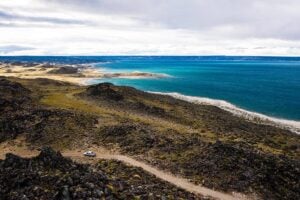
Alaska’s Bristol Bay river systems — particularly the Kvichak and Naknek — rank among the world’s best destinations for wild trophy rainbow trout, with fish averaging 3–7 lbs and genuine 30″+ specimens caught each season. Argentina’s Jurassic Lake (Lago Strobel) produces rainbows of exceptional average size on scud-rich waters, and New Zealand’s backcountry rivers offer large fish in low-pressure environments.
Do rainbow trout live in both rivers and lakes?
Yes — rainbow trout adapt well to both. In lakes, they typically cruise drop-offs, shallow flats, and inlet margins; in rivers, they hold in riffles, current seams, and undercut banks depending on food availability and water temperature. Lake-dwelling fish tend to be more silvery and grow larger where forage is rich.
What makes rainbows different from browns or brookies?
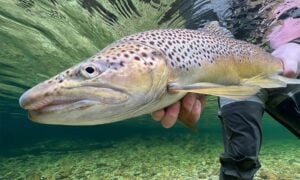
Rainbows are typically more surface-oriented and aggressive than browns — they jump more frequently when hooked and are less likely to lock onto a single lie. Compared to brook trout, rainbows prefer faster, colder water and are considerably more adaptable across varied habitats and fishing techniques. Browns are generally considered the more technically demanding target.
Can you sight fish for rainbow trout?
Yes — particularly in New Zealand, Patagonia, and spring creeks across North America. Clear water, bright sun, and low summer flows make it possible to spot and cast to individual fish. It is one of the most technically demanding forms of trout fishing, requiring a careful approach, precise casting, and a drag-free drift.
What’s the best fly setup for rainbow trout?
A 9-foot 5-weight rod with floating line covers most rainbow trout scenarios. For streamer fishing or larger water, a 6-weight with sink-tip line gives more reach and depth. Match tippet size to water clarity and fly size — typically 4X to 6X for dries and nymphs, heavier for streamers in fast or stained water.
Are steelhead and rainbow trout the same species?
Genetically, yes — steelhead are the anadromous form of Oncorhynchus mykiss. Behaviorally, they differ significantly. Steelhead migrate to the ocean and return to spawn, resulting in larger size, greater endurance, and ocean-influenced feeding habits. Resident rainbows stay in freshwater and show more localized variation in size and behavior depending on the system they inhabit.
What is the biggest wild rainbow trout ever caught?
The IGFA all-tackle world record rainbow trout weighed 48 lbs, caught by Sean Konrad on Lake Diefenbaker, Saskatchewan, Canada in 2009. However, those fish are widely understood to be descendants of genetically engineered triploid rainbows that escaped a fish farm, making the “wild” classification contested.