Explore fishing trips in Río Negro, staying at carefully selected lodges that combine expert guiding, remote wilderness settings, and exceptional angling.

Río Negro, Argentina
Brook Trout, Brown Trout, Rainbow Trout
No results available
Río Negro spans from the high Andean headwaters near Bariloche to the arid steppe and lowland plains of central Patagonia. The region’s fisheries include iconic lakes, productive freestone rivers, and overlooked spring-fed tributaries — offering a well-rounded mix of trout fishing in striking landscapes with excellent lodge access.
From the clear waters of Nahuel Huapi — 544 square kilometers, 438 meters deep, and the centerpiece of Argentina’s oldest national park — to the lower Limay River flowing northeast through the Río Negro steppe, and the lesser-known spring-fed creeks near El Bolsón, the province covers markedly different fishing terrain within a compact area.
Bariloche Airport (BRC) has daily connections from Buenos Aires, making Río Negro one of the easiest Patagonian provinces to reach, with a long-established network of guides and outfitters serving the surrounding fisheries.
For those comparing Patagonia lodge programs — from Limay float trips to lakefront Bariloche operations — see our Editorial Guide to Patagonia Argentina Fishing Lodges, which explains how these programs differ and how to choose the right fit.
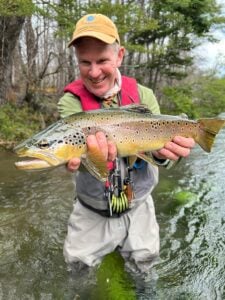
The lower Limay flows through Río Negro Province below the Chocón dam, running northeast across open steppe terrain before meeting the Neuquén River at the city of Neuquén. This section is known for migratory brown trout averaging 4 to 7 lbs moving up from the reservoir in fall, with double-digit fish landed regularly on multi-day float programs.
Nahuel Huapi covers 544 square kilometers with a maximum depth of 438 meters, sitting within Nahuel Huapi National Park — established in 1934, Argentina’s oldest. Lago Mascardi lies immediately south, smaller and less pressured. Both lakes hold rainbow and brown trout best targeted by boat with streamers on sinking lines along drop-offs and inflowing rivers.
Located 120 kilometers south of Bariloche, El Bolsón sits in a sheltered valley with access to spring-fed tributaries and smaller rivers offering technical dry fly fishing in a more relaxed setting. The area sees considerably less angling pressure than waters closer to Bariloche.
Smaller streams and mountain-fed creeks within Nahuel Huapi National Park provide clear water fishing for wild trout with genuine solitude. Regulations within the park are stricter than provincial waters — confirm current rules before fishing.
FishingExplora connects anglers with carefully selected lodge operations across Río Negro — from riverside estancias on the lower Limay to lakefront lodges near Bariloche. You can contact hosts directly and plan your program from here.
For more lodge-based fishing across the region, explore our Patagonia Argentina fishing lodges.
FishingExplora’s editorial content draws on lodge input, guide experience, published field reports, and independent research to help anglers make informed decisions about premium fishing destinations.
December through February is prime for dry fly fishing — consistent hatches, clear water, and active fish across the Limay and regional spring creeks. March and April shift the focus to streamer fishing as water cools and the lower Limay’s migratory brown trout run from the Chocón reservoir peaks. Lake fishing on Nahuel Huapi and Mascardi is productive throughout the season, particularly early and late when fish are shallower.
A 5 or 6-weight with floating line covers most river and spring creek fishing. For the lower Limay’s migratory browns and lake fishing on Nahuel Huapi, step up to a 7-weight with sink-tip or full-sinking lines for targeting depth transitions and streamer work. Long leaders of 12 feet or more help on calm lake days and when sight-fishing smaller creeks near the Andes.
Yes — Bariloche is the main hub for western Río Negro fishing. Chapelco Airport (CPC) in San Martín de los Andes and Bariloche Airport (BRC) both serve the region with daily domestic connections from Buenos Aires; which you use depends on your lodge location. From Bariloche, the lower Limay, Nahuel Huapi, Mascardi, and El Bolsón creeks are all within reasonable driving distance.
Yes. A provincial fishing license issued by Río Negro Province is required. Waters within Nahuel Huapi National Park carry additional national park regulations and some areas have seasonal closures — your guide or lodge will advise on the specific rules for each system. Most lodge programs include the license or arrange it in advance; confirm at booking.
It varies by location. Waters close to Bariloche — particularly Nahuel Huapi shorelines and accessible Limay beats — see day traffic from local anglers and tourists. Lodge-access water on the lower Limay and the spring-fed creeks around El Bolsón are considerably quieter. The most remote Andean tributaries within Nahuel Huapi National Park see very few anglers outside of guided programs.
The Andean valleys around Bariloche and El Bolsón are more temperate than southern Patagonia — dry, sunny days with highs between 65°F and 85°F (18°C to 29°C) through the core season. Wind is common on open lake stretches and exposed river sections. Afternoon weather changes quickly at higher elevations; layers and a windproof shell are practical on any day. The steppe sections of the lower Limay run hotter and drier than the lake district.
We use cookies to improve your experience and enable key features on the platform. You can choose which cookies to allow. Some features may not work fully without consent.