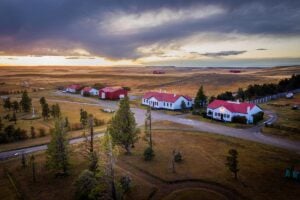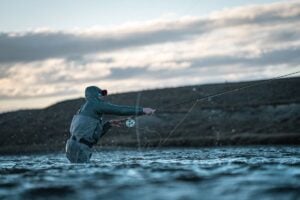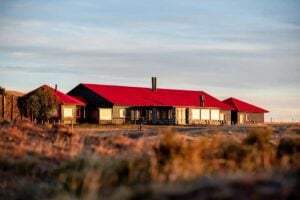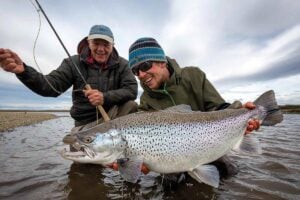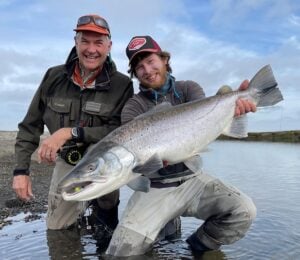
Explore fishing trips in Tierra del Fuego, staying at carefully selected lodges that combine expert guiding, remote wilderness settings, and exceptional angling.
Tierra del Fuego, Argentina
Sea Trout, Sea-Run Brown Trout
Tierra del Fuego, Argentina
Sea Trout, Sea-Run Brown Trout
No results available
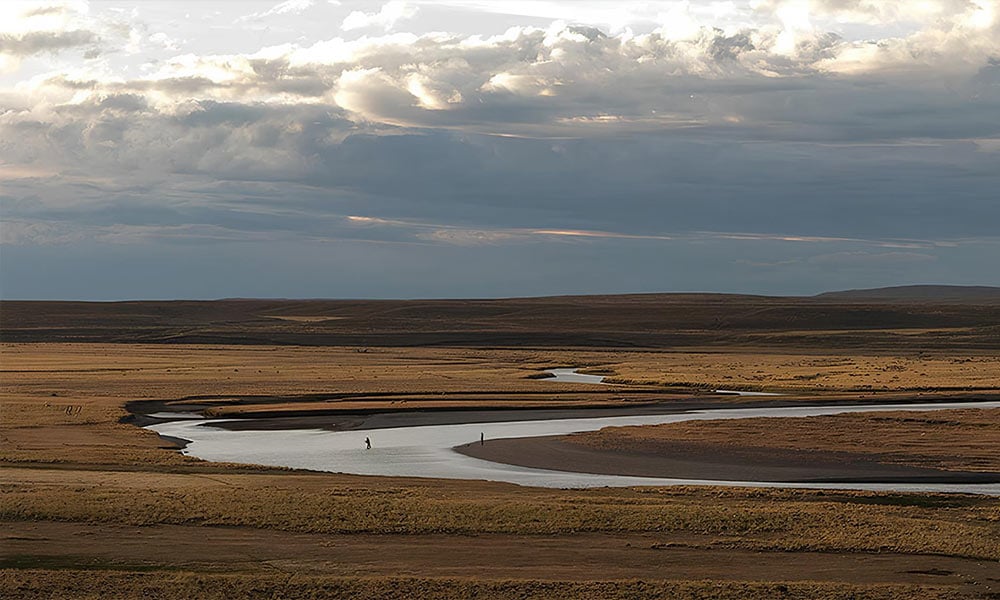
At the southern tip of South America, Tierra del Fuego is defined by open steppe, glacial valleys, and broad river systems that hold sea-run brown trout commonly reaching 20 pounds or more. With cold, clear water and access limited to private lodge beats, it offers fly anglers genuine solitude and swing-focused fishing in raw, windswept terrain.
Tierra del Fuego’s signature river, the Río Grande, draws anglers from across the globe for its consistent returns of double-digit sea-run brown trout. Paired with smaller technical rivers like the Irigoyen and remote stillwaters such as Lago Fagnano, the region balances trophy potential with intimate fishing experiences.
Strict regulations, private beats, and a strong guiding culture help protect the resource and deliver high-quality fishing year after year.
For those comparing sea-run brown trout lodge programs on the Río Grande and surrounding rivers, see our Editorial Guide to Patagonia Argentina Fishing Lodges, which explains how these programs differ and how to choose the right fit.
The Río Grande runs 150 miles across the island before emptying into the Atlantic, returning an estimated 50,000 or more wild sea-run brown trout annually. Fishing is managed through private lodge beats, with fish in the 10 to 20-pound range a reliable expectation through the core season. For a detailed look at how the program works, see our guide to sea-run brown trout fishing on the Río Grande.
Located 180 kilometers south of Río Grande on the Atlantic coast, the Irigoyen is a forested, single-hand river offering 24 kilometers of fishable beats in sheltered conditions. Its tree-lined banks protect against the steppe winds and demand accurate casting over logs, cut banks, and tight pools rather than the long swings of the main river.
A tributary of the Río Grande flowing through lighter pressure water, the Menéndez offers quality swing water alongside resident fish on narrower, more technical beats. Guides on the main river often include Menéndez sessions as part of weekly rotations, particularly for nymphing in lower water conditions.
Stretching 98 kilometers east-west across the center of the island and covering 645 square kilometers, Lago Fagnano is the largest stillwater on Tierra del Fuego. It holds browns, rainbows, and brook trout, best approached with streamers during calm weather windows when surface conditions allow effective coverage.
Draining from the western end of Lago Fagnano toward the Almirantazgo Fjord, the Azopardo is one of the least-pressured river options on the island. It rewards anglers prepared for remote access with genuine solitude and a mix of resident and migratory fish in striking southern beech forest scenery.
FishingExplora connects anglers with carefully selected lodges across Tierra del Fuego. Whether you’re focused on sea-run brown trout, exploring lesser-known stillwaters, or planning a multi-river trip, you can contact hosts directly and plan your program from here.
For more lodge-based fishing across the region, explore our Patagonia Argentina fishing lodges.
FishingExplora’s editorial content draws on lodge input, guide experience, published field reports, and independent research to help anglers make informed decisions about premium fishing destinations.
The peak season runs from January through March. January produces the freshest, most aggressive fish of the year — chrome bright and straight from the Atlantic — though overall numbers are lower than later in the season. February is the most coveted period, with fish numbers at their highest and catch rates reflecting it. March delivers the most consistent fishing of the season as water temperatures drop and fish settle into predictable lies. December and April are shoulder months: fishable, but with variable conditions and fish moving toward or away from peak form.
The Río Grande suits intermediate to experienced fly anglers. The river itself wades well on an even gravel bottom, and the beat system means guides put you on fish rather than requiring you to read unfamiliar water independently. The challenge is conditions — sustained southwest winds require the ability to cast effectively under pressure, mend line accurately, and adapt presentations as water levels and fish behavior change through the week. First-time visitors who have fished large rivers with a guide will adapt quickly. Complete beginners are better served starting on smaller rivers or stillwaters before committing to a Río Grande week.
Spey casting is a significant advantage on the Río Grande but not a strict requirement. Two-handed rods make casting into and across the prevailing southwest wind considerably easier, and the ability to Spey cast eliminates the need for a backcast when wind direction works against you. That said, the river wades well and an experienced single-hand angler who can drive a cast into a crosswind and mend effectively will cover the water and catch fish. If you plan to fish a two-handed rod and are new to Spey casting, lodge guides on the Río Grande are experienced instructors and can get most anglers functional within a session.
For sea-run browns on the Río Grande: a 7 to 9-weight two-handed rod, 12 to 15 feet, is the standard setup. The 8 or 9-weight is the practical working weight for most conditions — sufficient for fish in the 15 to 25-pound range and capable of handling sustained wind. Carry at least three line setups: floating, intermediate, and fast-sinking tips to cover varying water levels. For resident trout and smaller streams like the Irigoyen: a 5 to 6-weight single-hand rod with dries and streamers. Windproof and waterproof layering is essential — conditions on the steppe change quickly and cold fronts arrive without warning.
No. The productive fishing water on the Río Grande and most other major systems in Tierra del Fuego is held exclusively through private estancia and lodge allocations. There are no public beats on the river’s fishing sections. Access without a lodge booking is not possible, and attempting to fish private water without permission is both illegal and pointless — the beats are actively managed and patrolled. For anglers looking for independent fishing, a small number of public access points exist on lesser-known rivers, but these offer a fraction of the fish density and none of the infrastructure of the lodge-managed systems.
Yes. A provincial fishing license issued by the Tierra del Fuego provincial government is mandatory for all fishing, covering both resident and sea-run trout on regulated rivers. Lodge programs typically include the license as part of the weekly package or arrange it in advance on your behalf — confirm this at booking. Fishing without a valid license on regulated water like the Río Grande carries fines and the risk of losing your fishing privileges for the week. Licenses are species and system specific in some cases, so ensure yours covers the rivers and species you intend to target.
Fly from Buenos Aires Ezeiza international airport (EZE) to either Río Grande (RGA) or Ushuaia (USH) on a domestic connection of approximately three hours. Which airport you use depends on your lodge — lodges on the Río Grande system typically use Río Grande airport, which puts you 20 to 45 minutes from the water. Ushuaia is the larger hub with more frequent flights and serves lodges in the south and west of the island. Most lodge programs include ground transfers from the arrival airport as part of the weekly package. Domestic connections from Buenos Aires run daily on Aerolíneas Argentinas and LADE.
Tierra del Fuego’s fishing season runs through the Southern Hemisphere summer, but conditions bear little resemblance to a typical summer fishery. Temperatures during December through April range from around 40°F to 60°F (5°C to 16°C), with rapid changes common within a single day. The defining feature is wind — sustained southwest winds off the Patagonian steppe are the norm, with gusts regularly exceeding 40 miles per hour. Flat calm days do occur and fish well, but anglers should plan for wind as the default rather than the exception. Waterproof and windproof layering, quality waders, and polarized glasses rated for bright steppe light are non-negotiable.
We use cookies to improve your experience and enable key features on the platform. You can choose which cookies to allow. Some features may not work fully without consent.