The Río Grande in Tierra del Fuego at the southern tip of Argentina runs on a private beat system that has been refined over four decades. Understanding how that system works — how fish move through the river across the season, what each month delivers, and what the fishing actually demands — is what separates a well-planned week from an expensive lesson.
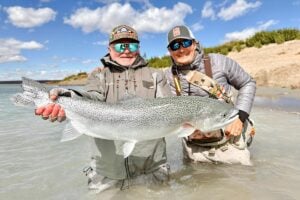
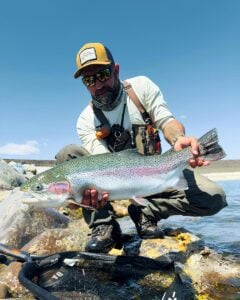
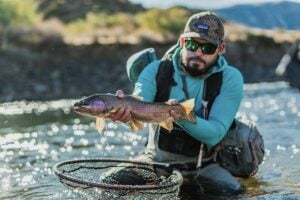
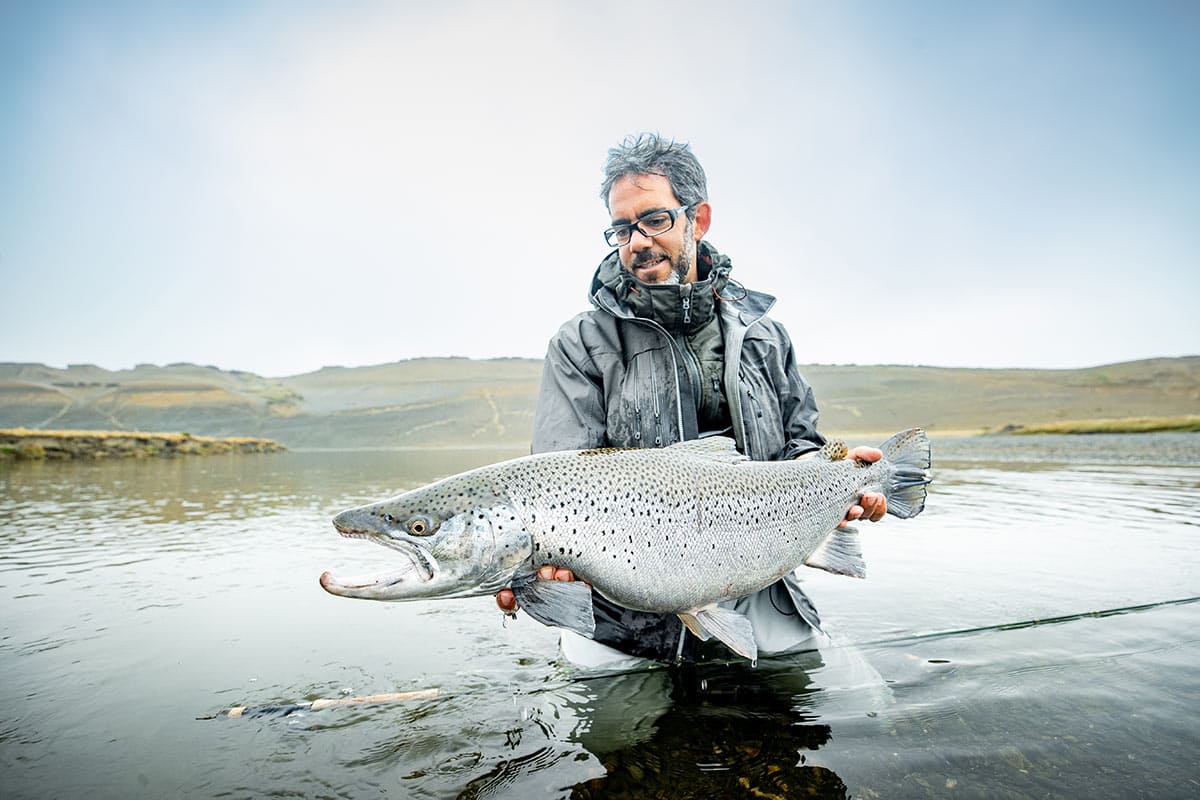
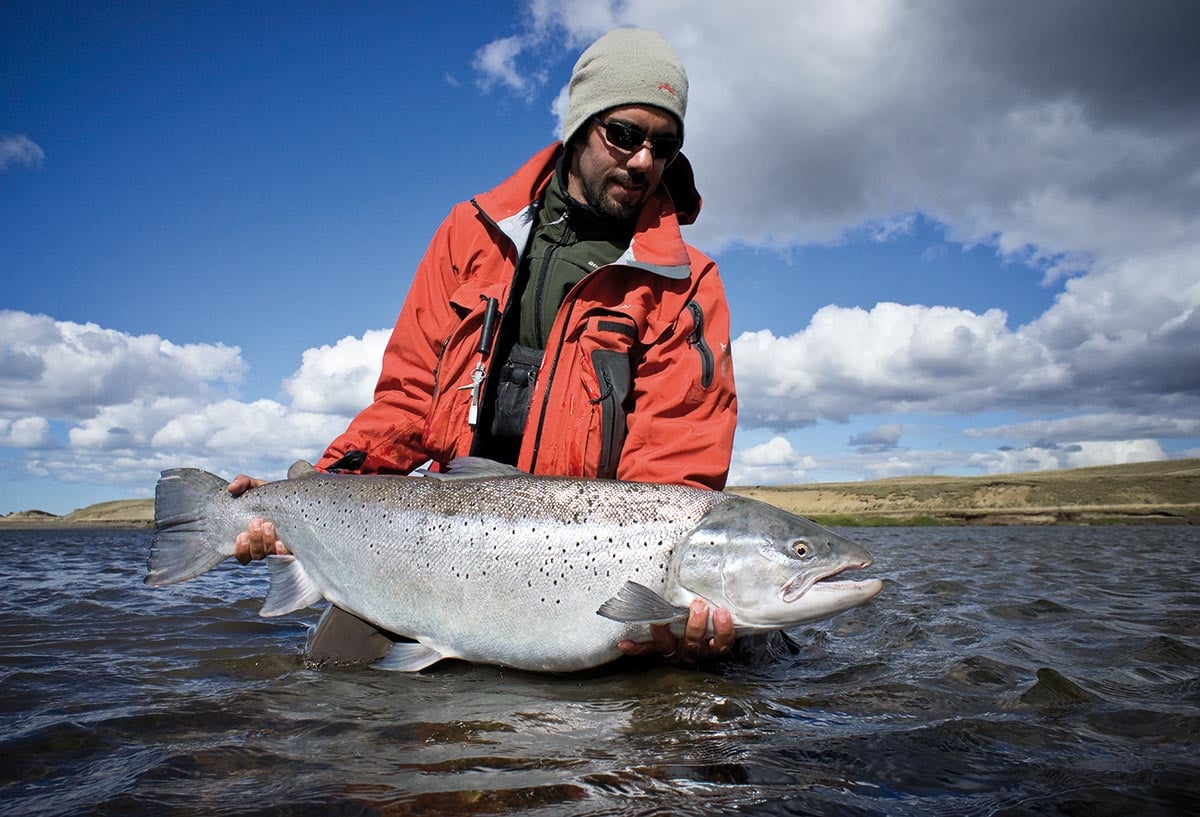
Sea-run brown trout in Argentina reach sizes that most anglers will never encounter anywhere else. The Río Grande, running east across the Isla Grande of Tierra del Fuego before emptying into the South Atlantic, produces fish averaging in the teens with legitimate shots at 20 pounds or better most weeks of the season. The river holds more world records for sea-run brown trout than any other system on the planet — a fact that reflects not just the size of the fish but the consistency of the program that has grown around them.
This is not a casual destination. The lower reach of the Río Grande demands two-handed casting into sustained wind, physical days wading cold water flows, and the patience to fish hard through long sessions. Anglers who arrive prepared come away with fishing they will spend years trying to repeat. Those who underestimate it spend their week adjusting. Understanding how the river operates before you book is the first competence this fishery requires.
For anglers comparing programs across the country, the Argentina fishing lodges guide covers how lodge access and river types differ across the full Argentina roster. This article focuses on the Río Grande specifically — how its rotating beat system works, what the season delivers week by week, and what anglers of all skill levels need to know before they arrive.
Río Grande, Tierra del Fuego – How the Beat System Works
The Río Grande is managed through a private beat system. Lodge operators hold exclusive rights to defined stretches of river, divided into named pools that anglers rotate through across the week. This structure is fundamental to both the quality and the logistics of fishing the river.
Most lodge programs pair two anglers with a dedicated guide and assign a beat for each session — each beat comprising multiple named pools, typically anywhere between three to eight, that guides move pairs through actively. The afternoon runs a different beat, often on a separate section of the river entirely. Across a six-day week this rotation covers a substantial portion of each lodge’s water allocation, though programs with access to the Menéndez tributary carry more water than a single week can fully cover.
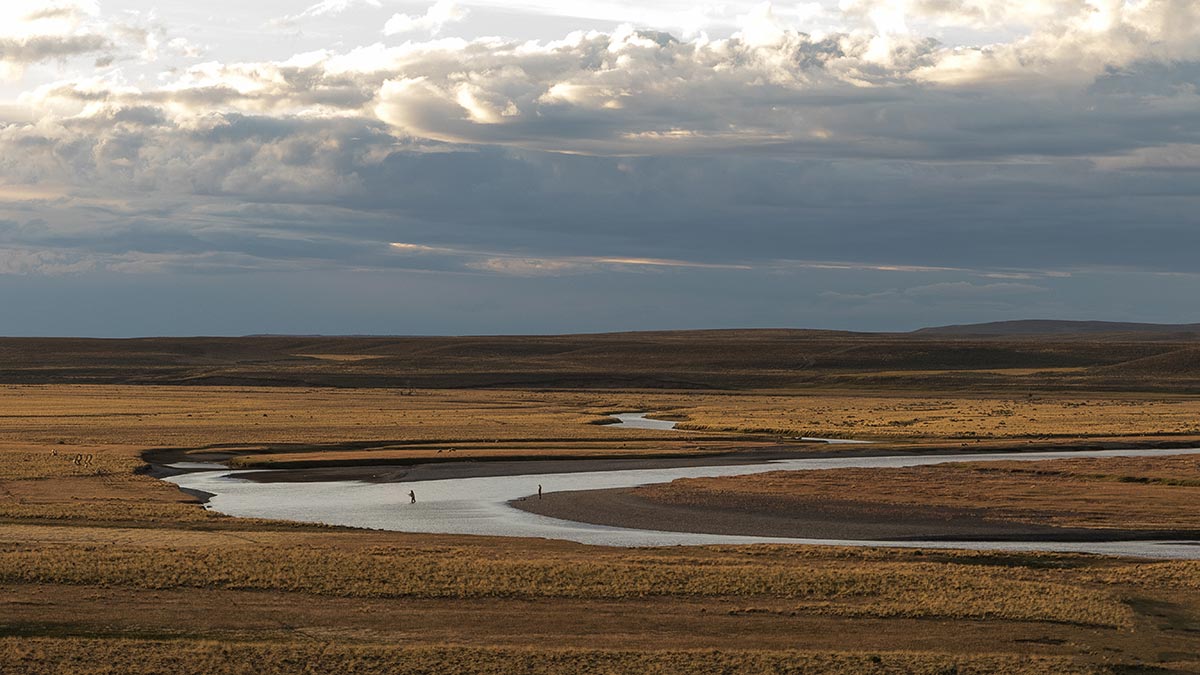
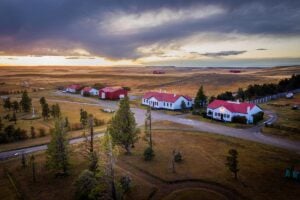
Midday is typically built into the program as a rest window. Sea-run browns tend to drop deeper into pools and become less willing to move to a swinging fly in bright, calm conditions, and most lodges structure the day around this. Villa Maria, for instance, runs a dedicated riverside day lodge on a bluff above the lower river — anglers stop there for lunch and siesta rather than driving back to the main lodge, keeping more time on the water. Programs vary in how they handle the midday break depending on how far beats sit from the lodge.
A typical day: leave the lodge around 9am, fish through to 1pm, stop for lunch and a midday rest, then back on the water in the late afternoon through to last light. Fishing hours shift slightly depending on the time of year and available light.
The rotation serves two purposes. It ensures that no single pool is hammered by the same angler all week, which protects the fishing. It also means that a slow morning can be followed by an afternoon on productive water — the beat system creates natural variance in conditions rather than grinding the same stretch day after day.
Several lodge operations hold private beats across the river’s length, from the tidal lower reaches to the upper-middle section. For example, Kau Tapen, on the middle river, runs 10 beats across 18 private miles of the Río Grande with additional water on the Menéndez tributary. Water allocations across the river’s lodge operations range from around 9km at the smaller programs to over 50km of combined river and tributary access at the largest — a difference that affects beat variety and how much of the river a single week can realistically cover.
What Shapes a Week on the Water
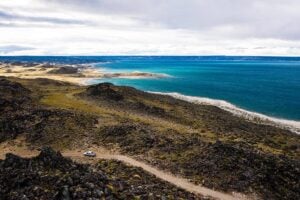
The Río Grande flows 150 miles from its headwaters near Lago Blanco in Chile, east across the archipelago before reaching the Atlantic. The fishing water — the private lodge beats — sits across the lower, middle, and upper-middle sections of this run. Within that water, conditions shift constantly and rarely repeat themselves week to week.
Three variables drive the fishing more than anything else:
- Water levels. Levels can change significantly between weeks and generally drop as the season advances. High water early in the season pushes fish through quickly and demands heavy sink tips to get flies into the zone. As summer progresses and flows drop, fish hold longer in established pools but become more selective — approaches that worked in January need to be recalibrated by March.
- Tides. Fresh fish enter the lower river on incoming tides, and the daily tidal rhythm affects whether fish are actively moving upriver or settled in holding lies. Guides on the lower beats time sessions around this — morning pressure on moving fish, tactics shifting as fish settle through the middle of the day.
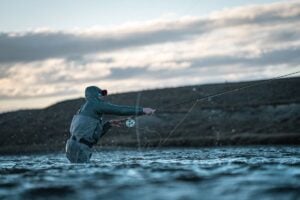
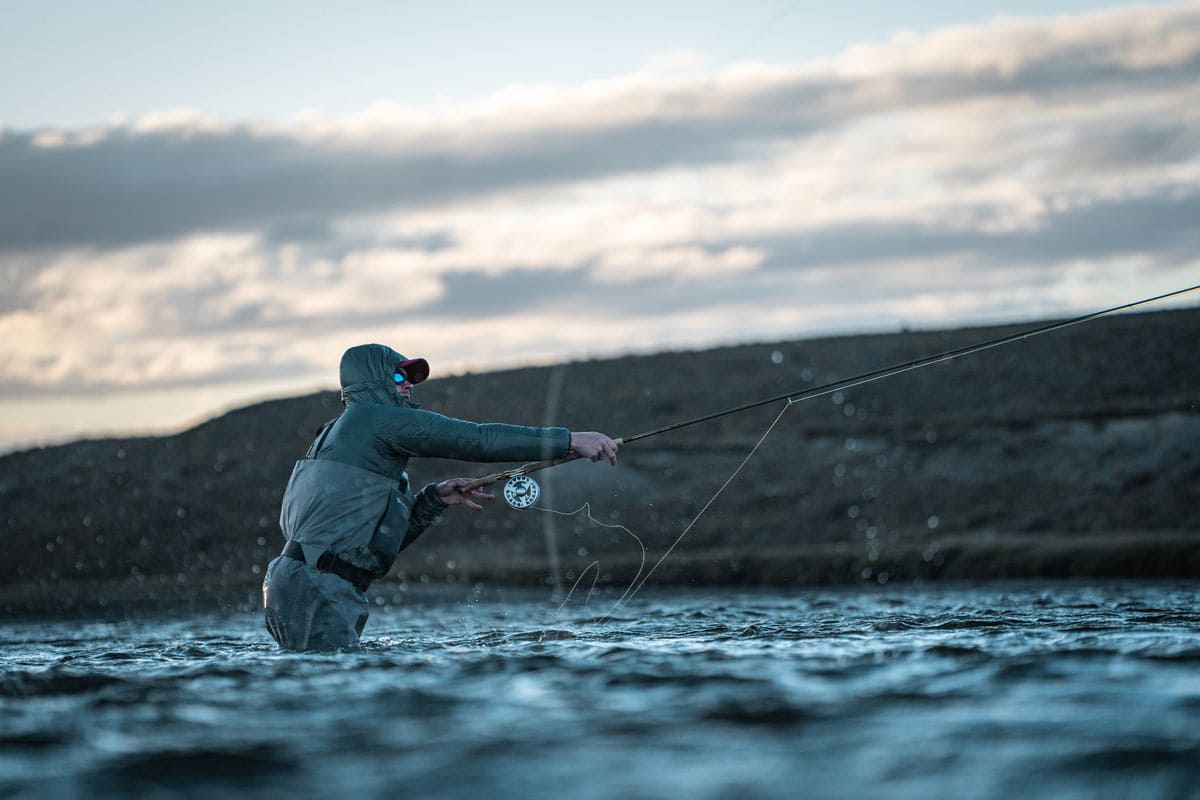
- Wind. The Tierra del Fuego steppe generates sustained southwest winds that define every session on the water. Conditions shift from dead calm to 40-plus miles per hour with little warning. Experienced anglers learn to turn it to their advantage — a downstream wind loads a two-handed rod efficiently, and casting with it rather than across it covers the water without introducing fly presentation problems. The broken surface that heavy gusts produce also works in the angler’s favor — fish that shut down in flat, bright conditions will hold shallower and move more freely when the surface is disturbed.
Upper River vs. Lower River: Choosing Your Position
Where you fish on the Río Grande matters, and the timing of your week determines which position makes the most sense. Fish distribution shifts as the season progresses, and understanding that movement is the core of any meaningful lodge comparison.
Early in the season the lower beats hold the most chrome, aggressive fish — sea-run browns straight from the Atlantic ocean. The fish on the lowest beats that haven’t yet spent weeks in freshwater are often still carrying sea lice, and that proximity to salt is what defines the character of lower river fishing in January.
As the season advances fish push upriver and the middle sections fill. The middle river offers more defined pool structure — established swing runs, cut banks, and reliable holding water where fish settle for extended periods rather than passing through. This is where the core of the season plays out, and lodges positioned here build their programs around water that holds fish consistently from late January through March.
The upper river runs narrower and shallower, with fish more concentrated once they reach it. It is late-season water by nature — fish arrive there after running through the lower and middle beats first — and suits anglers comfortable with precise presentation in tighter conditions. Fish pushing toward spawning in March can be aggressive, but this is not the core of the fishery and shouldn’t be the primary basis for booking decisions.
The practical framework for choosing your position:
- Lower river, early season — freshest fish, most aggressive takes, tidal influence strongest
- Middle river, peak season — highest fish numbers, established program depth, most consistent catch rates
- Upper river, late season — concentrated fish, precise presentation, narrower and shallower water
January Through April: What Each Month Delivers
The Río Grande’s season runs from late December through mid-April, with most lodge programs built around a 13 to 14-week window from the first week of January. Season end dates vary by lodge — some close in late March, others run to mid-April — and specific dates should be confirmed at booking.
Each period has a different character, and booking the right week requires understanding what that window actually delivers. For a full comparison of seasonal timing across all Argentina fisheries, see the best time to fish in Argentina guide.
January Fishing on the Río Grande
January opens with the freshest fish of the year. Numbers are lower than peak season, but the fish encountered are the most aggressive — chrome bright, straight from the Atlantic, and willing to move to larger flies in a range of conditions. Water levels are variable depending on snowpack and weather events, and the long summer days extend the fishing window well into the evening, with last light not arriving until after 10pm in January. Guides on the Río Grande consistently report that January fish fight harder than anything that follows.
February Fishing on the Río Grande
February is the most coveted period on the river and the hardest to book. Catch rates increase as fish numbers build across the system, and the combination of fresh arrivals and settled fish holding in established pools gives anglers the best overall odds of the season. Repeat guests lock in February weeks years in advance. In drought years, lower water requires lighter presentations and finer reading of holding lies — the fishing remains good but demands more from the angler.
March Fishing on the Río Grande
March delivers some of the most reliable fishing of the season. The bulk of the run has entered the river, fish have distributed through the system, and dropping water temperatures make sea-run browns more predictable in their holding positions. Guides mention that the largest fish of the year — males growing aggressive as spawning approaches — are as likely to show in March as in any other month, and some seasons produce their biggest fish in these final weeks. The steppe light in March is unlike anything earlier in the season, and for many experienced anglers it is the most atmospheric time to be on the water.
April Fishing on the Río Grande
April closes the window. Fresh arrivals from the ocean slow, fish push toward spawning condition, and the chrome finish that defines the Río Grande’s fish begins to fade. Early April can still produce aggressive fish on the lower beats where late-season runners continue to enter the system, but the window is narrowing and booking this period requires flexibility on expectations.
Gear and Casting: What the Río Grande Actually Requires
The Río Grande is a substantial wading river — wide enough that covering it effectively demands two-handed tackle, deep enough in the main pools to require sink tips to reach the holding zone. Arriving with the wrong setup costs fishing time — not just comfort.
Rods
- Two-handed Spey rods, 8 to 9-weight, 12 to 15 feet — the standard setup on the Río Grande. The 8 or 9-weight is the practical choice for most conditions — sufficient to handle fish in the 15 to 25-pound range and capable of driving a line across the sustained southwest wind.
- Switch rods — increasingly popular across a range of conditions — lighter to cast than a full Spey setup and easier to load in variable wind. A good middle-ground option for anglers who want versatility without committing to a full Spey setup.
- Single-hand rods, 7 to 9-weight — a genuine option on the main river, particularly when casting downstream with the wind, and the right choice for technical nymphing on the Menendez tributary. Single-hand rods are not a handicap on the Río Grande. The river wades well on an even gravel bottom, and an experienced angler who can punch a cast into a crosswind and mend effectively will cover the water and catch fish. The advantage of two-handed tackle is reach, line control, and the ability to Spey cast without a backcast — particularly useful when the southwest wind is directly behind you.

Lines
- Carry at least three line setups to cover varying water levels and conditions
- Skagit heads in 400 and 700 grain cover the full range — floating for low-water surface activity, fast-sinking tips for deeper pools mid-season
- The RIO MOW tip system allows sink rate adjustment between pools without changing the full head — a practical advantage on a river where depth requirements shift beat to beat
- Weight-forward floating lines for early morning and evening surface activity in low water
Leaders and tippet
- 10 to 15-pound monofilament covers the full range — Río Grande sea-run browns are not leader-shy
- The priority is monofilament strong enough to turn over larger flies in wind, not finesse presentation
- Check leaders for wind knots before every new pool session — losing a 20-pound fish to one is the kind of story that follows an angler home
- For floating lines, knotless tapered leaders from 9 to 12 feet with 0X tippets; for sinking lines, a few feet of straight monofilament does the job
Fly Selection on the Río Grande, Tierra del Fuego
The Río Grande fly box has to cover a wider range than most visitors prepare for, and the two variables driving selection operate simultaneously: size and profile on one axis, depth on the other. Early-season fish in high, colored water respond to large, mobile patterns — tube flies and heavy streamers with significant presence in the water. As flows drop through February and into March, the same profiles regularly fail. Settled fish in slower, clearer water demand smaller, more compact offerings, and the shift to lighter patterns is routine rather than a last resort.
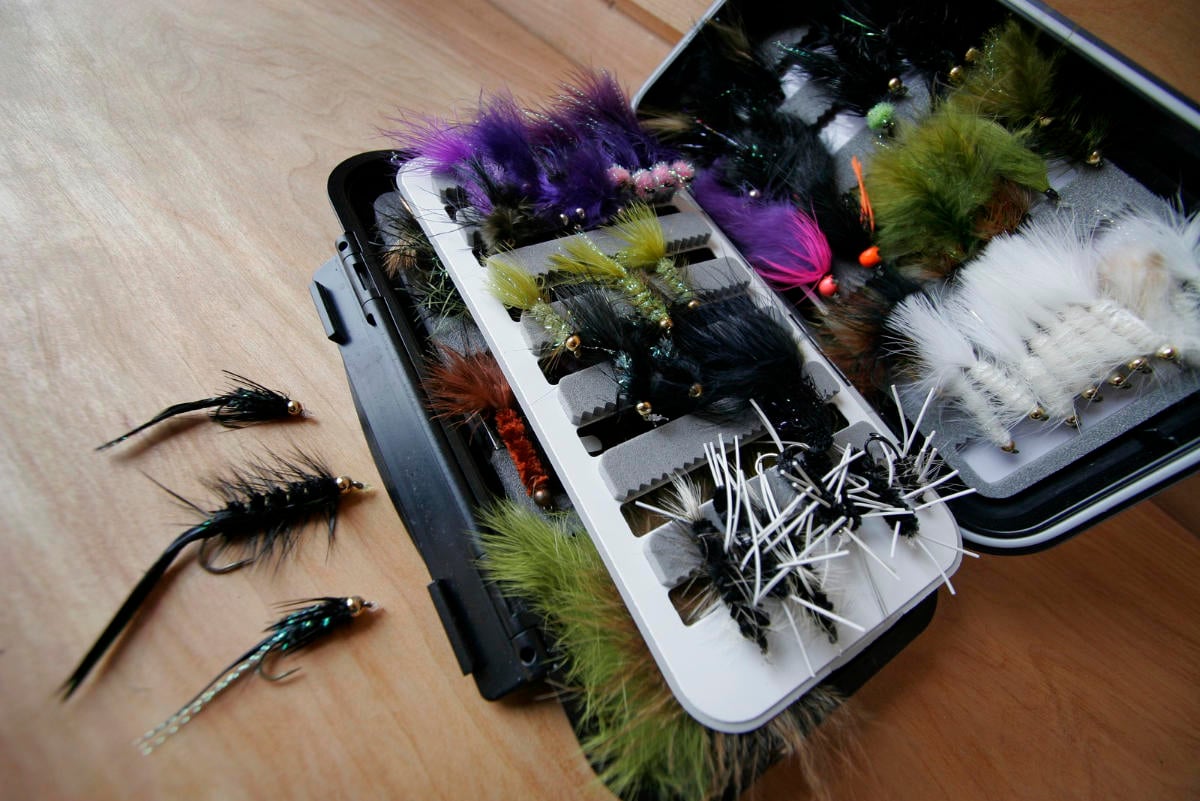
Depth operates independently of size. Río Grande pools run deeper than they look, and getting the fly into the holding zone matters more than pattern precision. Weighted and conehead variants of standard patterns — rubber-leg nymphs, bugger-style flies, leeches — exist for exactly this reason, allowing the same basic profile to be fished at different depths without changing the whole approach. A reasonable fly at the right depth consistently beats the correct pattern fished too shallow.
Rubber legs cut across both axes and both seasons. They produce in high water and low, on large patterns and small, and their movement in the water column generates takes when more static profiles fail. Dark colors (especially black) dominate the larger end of the box; bright hot-spot elements — orange, chartreuse, gold beads — appear in the heavier weighted nymphs used in deeper pools. The guide will direct selection on the day. What matters is arriving with enough range that the right tool is available.
How the Río Grande Differs From Every Other Argentina Program
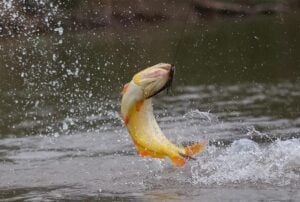
Argentina’s other major fisheries operate in fundamentally different environments. Warmwater programs on the Parana and Corriente target golden dorado in river systems using active retrieve methods — covered in full in the golden dorado fishing in Argentina guide. Patagonian lake and river trout programs involve sight fishing, dry fly work, and presentations that bear no resemblance to the techniques used to target sea-run browns on the Río Grande.
The Río Grande is a swing fishery in open, windswept terrain, built around two-handed casting, structured beat rotation, and sustained exposure to conditions that most fishing destinations don’t ask of their guests. Tens of thousands of wild sea-run brown trout return to the system annually — a run density no other Argentina river approaches and one that took decades of strict catch-and-release management and private access control to maintain.
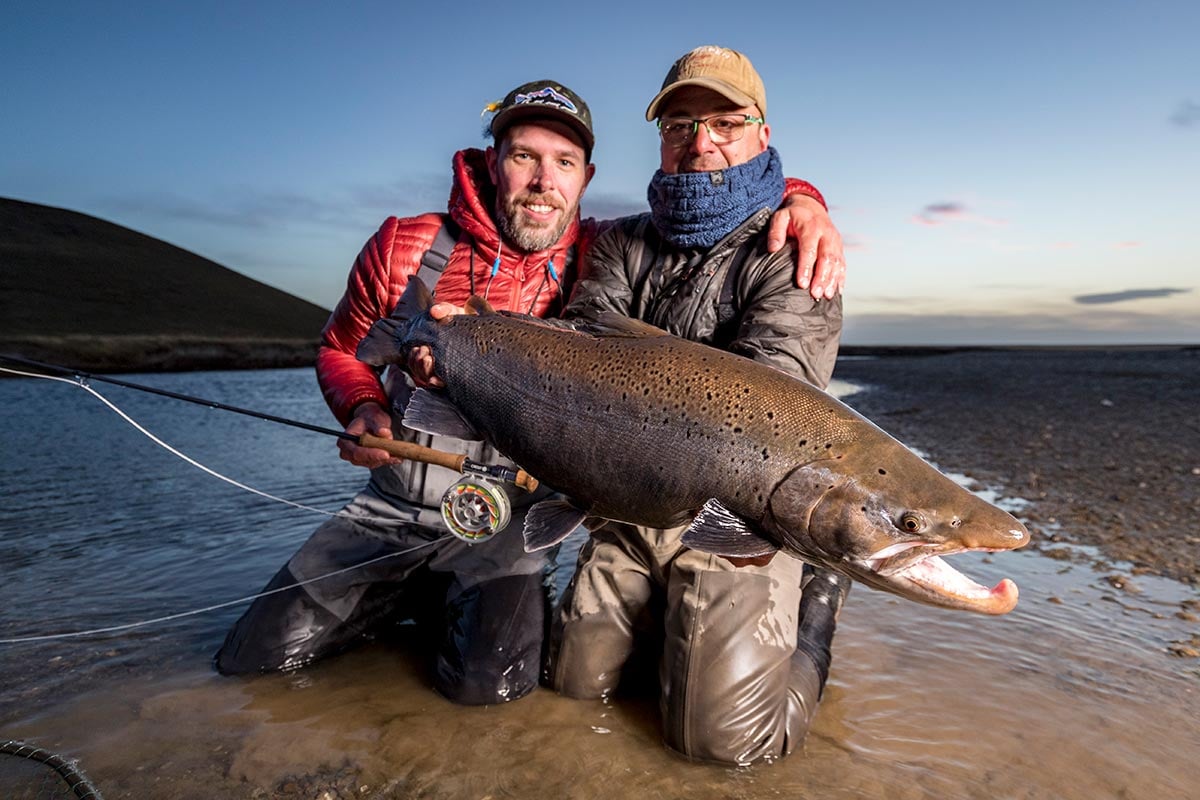
The program infrastructure reflects that history. The beat system, private estancia access, and lodge-guided rotation model has been refined since the early 1980s. The guiding knowledge accumulated on the Río Grande in Tierra del Fuego — which pools fish at which water levels, how tides move fish through specific beats, where the big fish hold in late March — exists at a depth that simply isn’t replicated on newer or less-pressured systems.
For anglers interested in a related but distinctly different experience, the Río Gallegos in Santa Cruz province runs through rockier, more structured terrain than the open steppe of the Río Grande — high bluffs, boulders, and willows replace the bare gravel banks, and the shallower water demands lighter lines, longer leaders, and a more deliberate presentation. Catch rates and average fish size are broadly comparable to the Río Grande, but the technical character of the fishing and the dramatic Andean scenery attract a different kind of angler.
Lodge programs on the Río Grande differ in river position, guest capacity, and beat allocation. Those details matter most once the fishery itself is understood — and the fishery is what this river will test first.
How Booking on the Río Grande Actually Works
The Río Grande in Tierra del Fuego operates on a booking model that most visiting anglers have never encountered before, and misunderstanding it costs people access to the weeks they actually want.
Every major lodge runs on a first-right-of-refusal system. At the end of each season, returning guests are offered their same week for the following year before any space is released to new inquiries. Return rates across the river’s lodges consistently run above 80 percent — at some operations, closer to 90. What this means in practice is that the calendar for a given season is largely settled by May of the previous year, before most new anglers have begun planning.
February weeks — the most coveted on the river — are effectively closed to first-timers at most lodges in most years. January and late March weeks carry more realistic availability for new inquiries. April, now increasingly recognized as an underrated period with concentrated fish and diminished wind, sometimes offers openings that mid-season hunters overlook.
The practical implication: the window to secure prime dates opens the moment the current season ends. Contacting lodges in April or May for the following December season is not early — for February weeks at the most sought-after operations, it is the realistic minimum. The right approach is to identify which lodge and river position suits your timing and make contact directly as soon as the current season ends — lodge operators on FishingExplora can be contacted directly, allowing you to discuss availability, river position and timing with the operation in person. Be clear that you are looking to establish a relationship rather than fill a single slot. A first season in January or late March is often the route to securing a February week in year two.
Fishing license costs vary by lodge and — some include them in the weekly rate, others charge separately. Confirm this at the point of inquiry and factor it into your trip budget accordingly. Weekly license costs for foreign anglers typically start around US$300 and reach US$550 or more depending on the operation.