The Bahamas bonefishing season runs October through June — but the fishing changes character significantly across that window. The largest fish show in winter; the most consistent conditions arrive in spring; October is more productive than most anglers expect. Trade winds shape all of it more than any other variable — and they affect Andros and Abaco differently enough that the distinction is worth understanding before you pick a date.
Most anglers book their Bahamas fishing trip in March or April — stable conditions, active fish across both islands, and the permit window opening from late April. But the Bahamas bonefishing season is longer and more varied than those two months suggest, and depending on what you are actually after, it may not be the best window.
The trophy window for big bonefish runs December through February. The widest multi-species opportunity — bonefish, permit, and tarpon in the same week — sits in May and June. October is the most underrated month in the calendar. Each of those windows has a different character, and choosing between them is the first real planning decision a Bahamas trip requires.
For anglers who have already decided on their travel dates and want to compare lodge programs across Andros and Abaco, our Editorial Guide to Bahamas Fishing Lodge Programs covers how each program is structured day to day.
Bahamas Bonefishing Season: How the Fishing Calendar Works
Before looking at each month in detail, one point is worth stating clearly: there is no single Bahamas bonefish season. The two main bonefishing islands — Andros and Abaco — fish differently enough that the best timing for one is not always the best timing for the other, and the calendar has overlapping windows for different fish sizes and different fishing conditions across both. An angler planning around trophy bonefish should be looking at different months than one whose priority is consistent numbers and calm weather. The permit and tarpon windows that open through spring and early summer are a genuine bonus on top of the bonefishing — useful context for planning, but the bonefish calendar is the foundation.
What follows is how those windows actually stack up.
October and November — The Underrated Start of Bonefishing Season
October marks the start of the lodge season and is more productive than its reputation suggests. Three things make it worth considering seriously:
- Abaco Marls Pre-Spawning Schools — October brings pre-spawning bonefish aggregations along the western edge of the Marls — schools that stretch as far as the eye can see across the flat, and one of the most remarkable sights in Caribbean bonefishing. It’s also one most visiting anglers never see because they book in spring.
- Andros Bights low pressure, high numbers — Fish have spent the summer largely undisturbed and are on the flats in numbers from the first tides of October. Lodge pressure is well below the spring peak.
- Lighter trade winds — October and November sit before the consistent northeast trade wind period, meaning guides have more flexibility to fish the full range of each island’s water without weather-driven constraints.
Weather patterns are variable — some calm and bright days, some fronts moving through. Guides on both islands manage this comfortably; the sheltered creek systems and Bights interior give Andros-based programs a particular buffer when conditions deteriorate.
November and December also see tarpon resident in the deeper creek systems on the west side of Andros — not the migratory run, but fish holding in the channels through the cooler months and willing to eat on the right presentation.
December through February — Trophy Bonefish and the Wind Compromise
This is the trophy window for bonefish. Cooler water temperatures — typically in the low-to-mid 70s°F — concentrate larger fish on the flats during warm tidal pushes, and the specimens that move in the winter months on Andros and Abaco consistently run larger than the seasonal average.
- Andros West Side — Double-digit fish are encountered most reliably through the winter period. The combination of cooler water and light pressure on the West Side channels produces the most consistent shots at fish above 10 lbs of any window in the year.
- Abaco Cherokee Sound — January and February produce the most consistent shots at fish in the 5–8 lb range on the east-side ocean flats, with double-digit fish a realistic target on the cleaner ground. Hard white sand, wading, and fish that are considerably more demanding than their Marls counterparts.
The challenge can be wind. The Bahamas fishing calendar through winter is shaped more by trade winds than by any other variable, and they affect Andros and Abaco differently. For a full picture of how the two islands compare as bonefishing destinations beyond the seasonal context, see our guide to bonefishing in the Bahamas.
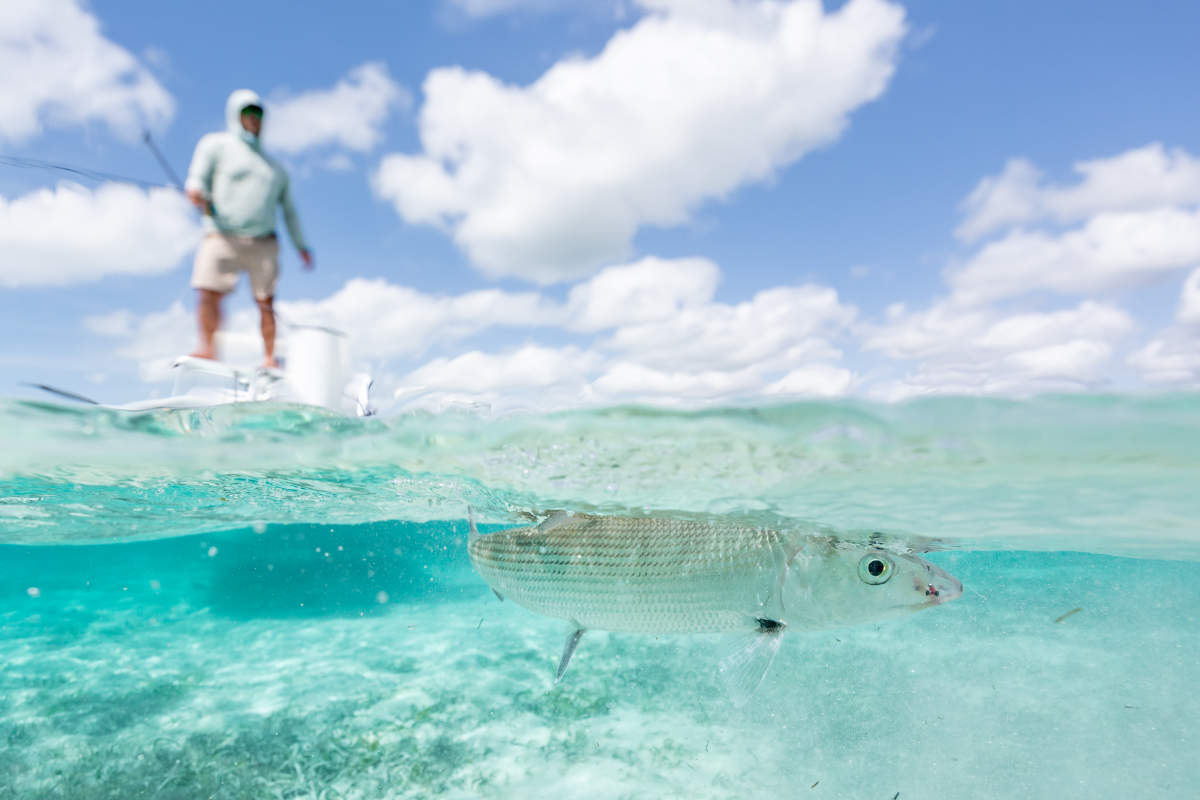
On Andros, where the east and west sides run on opposing tidal cycles, a blown-out day on the Atlantic side becomes a creek day in the Middle and South Bight channel systems — the fishing changes character but does not stop.
On Abaco, the Marls provide the equivalent buffer on the west side, though Cherokee Sound and the east-side ocean flats become genuinely demanding in a strong northeast wind. Anglers should arrive prepared to cast in real conditions, not expecting the calm days that define the spring peak.
March through May — Peak Bonefishing Season
Spring is the most sought-after window in the Bahamas, and the bonefishing case for it is straightforward: cold fronts have largely eased, water temperatures stabilize, and fish are active across the full range of each island’s fishery. Large tailing schools are a daily sight on the Marls. The Bights of Andros are fully accessible once winter trade winds ease, and guides can run the full rotation including West Side days without the weather constraints that limit winter options.
Prime weeks at the best-known lodges book a year or more in advance for March and April — and for good reason. From late April, mutton snapper move onto the flats and into the blue holes around Cherokee Sound on Abaco — a highly specific spring signal that experienced anglers plan around, and one of the clearest indicators that the season has properly turned.
What makes spring particularly valuable beyond the bonefishing is that two further species windows open through this period:
- Permit — A serious prospect from late April as water temperatures climb. On Abaco, the southern flats around Sandy Point, Mores Island, and Gorda Cay are among the most consistent permit fishing grounds in the Bahamas through spring. On Andros, the West Side and Joulters flats hold permit in schools from May onward — fish to 30 lbs in numbers that make dedicated permit days a realistic program rather than an opportunistic add-on.
- Tarpon — The tarpon calendar window opens on Andros in May. Migratory adult fish — typically 40–100 lbs — begin moving through the backchannel and creek systems as water temperatures climb through the month, building to the June peak.
June and July — Tarpon Peak, Calmer Conditions
June and July are the peak tarpon months across the Bahamas, though the window runs at slightly different times on Andros and Abaco.
On Andros, adult tarpon are moving through the deeper creek systems and West Side channels from May, with June the most consistently productive month for encounters with larger fish. Guides on the Bights describe the June window specifically as when the bigger migratory fish — those above 60 lbs — are most reliably present in the backchannel systems before beginning to thin through July.
On Abaco, the window runs slightly later — June and July are the most productive months for larger fish in the sheltered backchannel systems. The calmer summer winds that typically settle in by June also give guides more flexibility to reach the outer ocean flats and the run to Moore’s Island, where shots at oversized permit and larger singles are available on days when conditions allow.
Bonefishing remains strong through June on both islands. July is productive but comes with midday heat that slows activity on the shallowest flats — guides respond by concentrating sessions around the morning and late afternoon tidal windows when fish are most active and the light is right for spotting.
August and September — Hurricane Season
Most Bahamas lodge programs close August and September. Peak hurricane risk runs through this window, and the combination of tropical storm uncertainty and intense summer heat makes it the period most serious anglers avoid. July sits at the edge of the planning envelope for most programs and still carries some weather risk — lodges that operate through July do so knowing the season can be interrupted, and anglers who book it should factor that into their planning.
How Trade Winds Shape the Bonefish Season Island to Island
Trade winds deserve their own section because they are the variable that most frequently reshapes a Bahamas week, and the way they play out on Andros versus Abaco is different enough to affect how each island fishes through the winter months specifically.
- Andros — The opposing tidal system — east and west sides of the island running on different cycles — gives guides a structural answer to wind. A northeast blow that makes the exposed eastern flats unfishable pushes guides toward the sheltered Bights and creek interiors, which continue to produce through conditions that would close out a single-sided fishery entirely. The practical result: a central Andros program rarely loses an entire day to wind. The character of the fishing changes; the fishing itself does not stop.
- Abaco — The Marls provide the equivalent buffer for winter trade wind days on the west side. The difference shows most clearly in programs that include Cherokee Sound and the east-side ocean flats — that fishery is genuinely more weather-dependent than the Marls, and the winter months are when the gap between a blown-out east-side day and a productive Marls session is most pronounced.
The planning implication: anglers who want the full range of each island’s fishery — West Side on Andros, ocean flats and Cherokee Sound on Abaco — are better served by spring than by the trophy-fish winter window, even though winter offers the largest fish. Neither approach is wrong. The choice is a genuine trade-off, and it is worth making consciously.
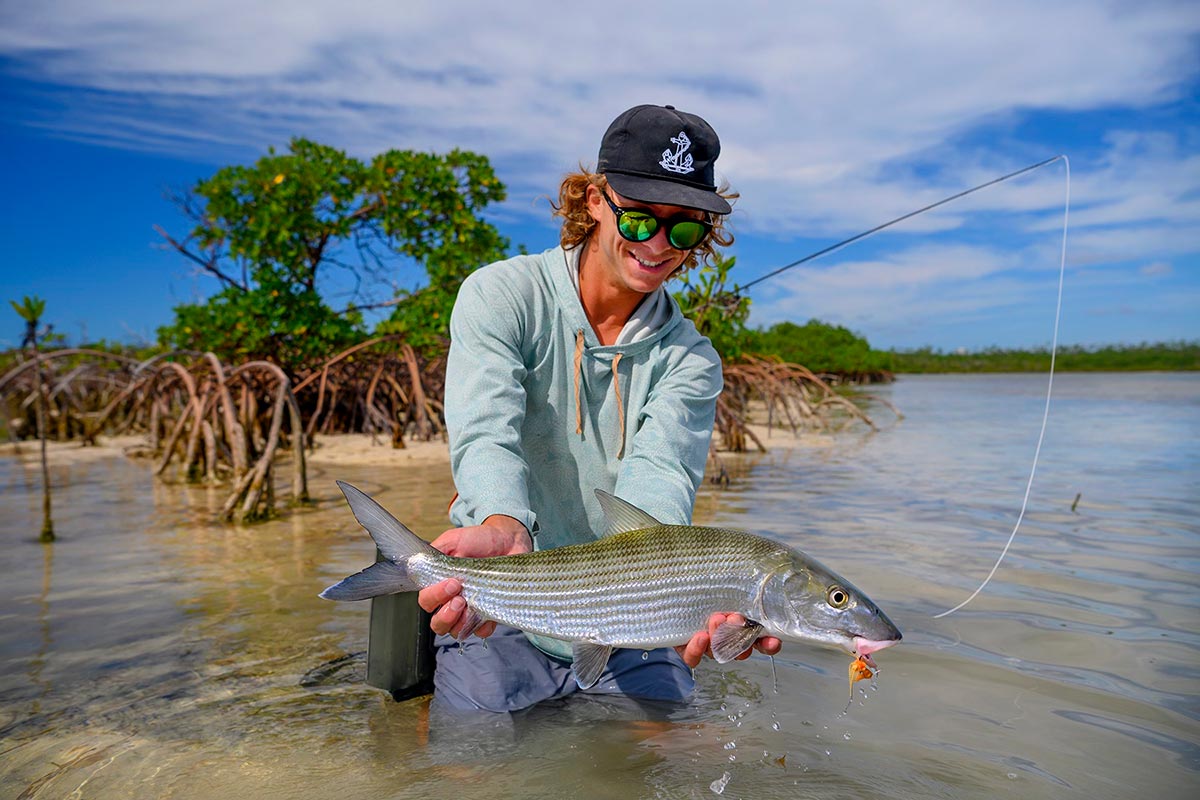
When to Fish the Bahamas: Bonefish, Tarpon, and Permit by Month
Fishing windows vary between Andros and Abaco — notes in the bonefish column indicate where island-specific differences are most significant.
| Month | Bonefish | Tarpon | Permit |
|---|---|---|---|
| October | Strong — pre-spawning schools on Abaco Marls; Bights active on Andros. | Residents in deeper creeks (Andros west side) | Sporadic |
| Nov–Dec | Good — larger fish beginning to show; trade winds building | Resident fish in deeper creek systems | Sporadic — increasing late Nov |
| Jan–Feb | Trophy window — largest fish; consistent trade winds | Resident fish only | Limited |
| Mar–Apr | Peak — numbers and quality; calmer conditions | Beginning to show on Andros (Apr) | Building — good from late April |
| May–Jun | Strong — active fish; calmer winds | Peak on Andros (May–Jun); building on Abaco (Jun) | Prime — Abaco southern flats and Andros West Side |
| July | Good morning and evening; midday heat slows shallowest flats | Peak on Abaco; thinning on Andros | Still active on southern flats |
| Aug–Sep | Hurricane season — most lodges closed | ||
The Bahamas fishing seasons for bonefish are long — October through June — and the fishing is genuinely strong throughout. The planning question is which version of the bonefishing you are after: the largest fish in winter, the most consistent conditions in spring, the freshest flats in October. May and June stand out as the one window where serious bonefishing sits alongside a peak tarpon run and prime permit opportunity simultaneously — for anglers whose week has room for more than one species, that overlap is worth knowing about.
For sub-regional detail on Andros, see our Mangrove Cay regional page and South Andros regional page. For Abaco, see our Abaco regional page.