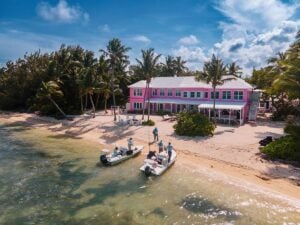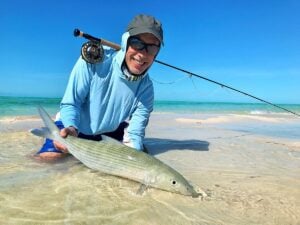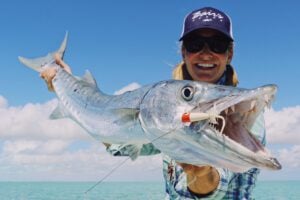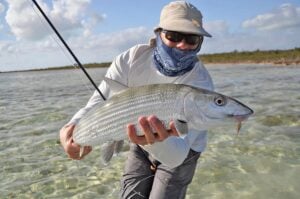
The Bahamas holds more bonefishing infrastructure than anywhere else — but the real planning decision happens before you book a lodge. Andros and Abaco are both serious destinations with experienced guides and productive flats. They are not, however, the same trip. Andros is where the trophy hunters end up; Abaco is where variety, accessibility, and the best permit fishing in the island chain come together. Understanding what each island actually offers is how a good Bahamas week becomes the right one.
Andros and Abaco are both iconic bonefishing destinations — experienced guides, productive flats, and lodge programs built entirely around the fishing. The distinction is in what each island actually delivers.
For anglers who have already made the island decision and want to compare lodge programs directly, our Editorial Guide to Bahamas Fishing Lodge Programs covers how each program is structured day to day.
Why Bonefishing in the Bahamas Sets the Standard
Bonefishing in the Bahamas is the benchmark against which every other destination is measured — and the scale of the fishery is the reason. Andros alone holds more fishable flats than any other area in the Caribbean, and the West Side National Park covers 1.5 million acres of protected tidal flats and mangrove creeks where no development is permitted.
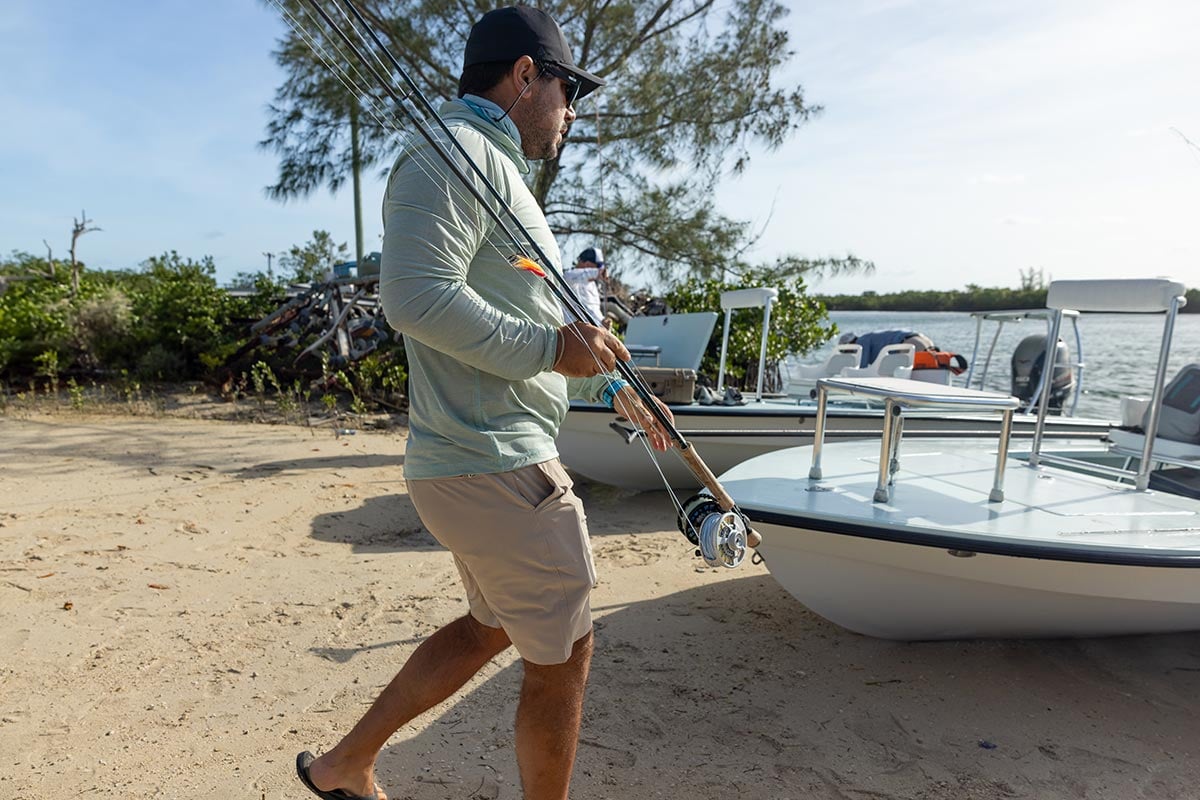
The guiding culture runs deeper here than anywhere else in Atlantic bonefishing. On Andros, most guides grew up fishing, diving, and sponging these same flats — then spent careers learning them as guides. On South Andros, many work as commercial lobster and conch fishermen in the off-season, returning to the same water they guide all season long. That accumulated, water-specific knowledge — which flat activates on a northwest wind, which channels hold fish when the tide drops — is what separates a productive day from a difficult one. It is built into the guiding culture here in a way that takes generations to develop.
At a glance, what the Bahamas offers that other destinations don’t:
- Scale of the Bahamas — more fishable flats acreage than anywhere else in the Caribbean
- Guiding depth — guide families on both Andros and Abaco with lifetimes of water-specific knowledge built well before they ever poled a skiff professionally
- Fishing-first programs — lodge weeks built entirely around tides and conditions, not resort schedules
- Species range — bonefish as the primary target, with permit, tarpon, and barracuda available depending on island and season
The question is not whether to fish the Bahamas. It is which island and what kind of week you are after.
Andros Bonefishing: Why It Earns the Bonefish Capital Title
Andros is the largest island in the Bahamas at 2,300 square miles — more land than all other Bahamian cays combined — and one of the most sparsely populated in the Atlantic. It is known as the Bonefish Capital of the World, and the claim is defensible on the numbers alone.
The Bights: Consistency and Volume
The island’s operational advantage for guided fishing is its opposing tidal system. The east and west sides of Andros run on different tidal cycles — when the Bights on the east side are pulling fish one direction, the ocean flats on the west side are running the other. Guides based at central Andros use this constantly: there is almost always productive water within reach of the dock regardless of wind direction, a practical benefit that guides on the Bights describe as the defining operational feature of a central Andros base.
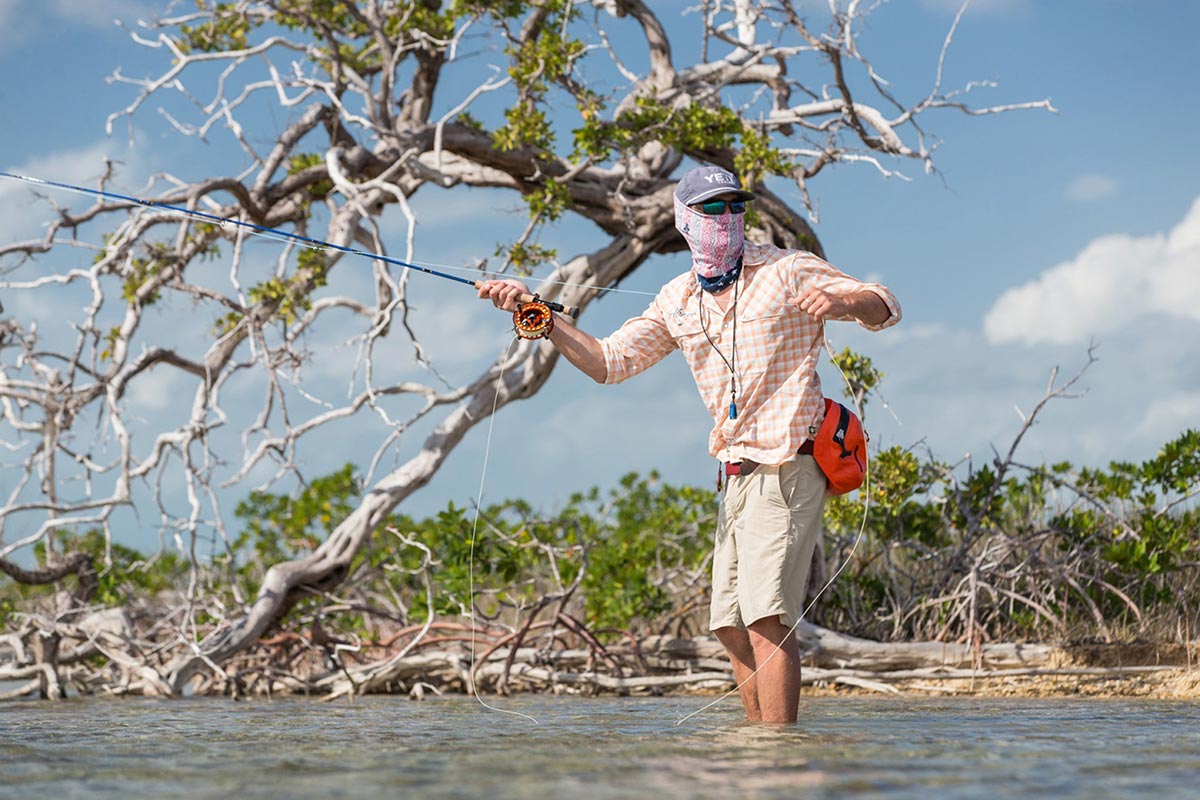
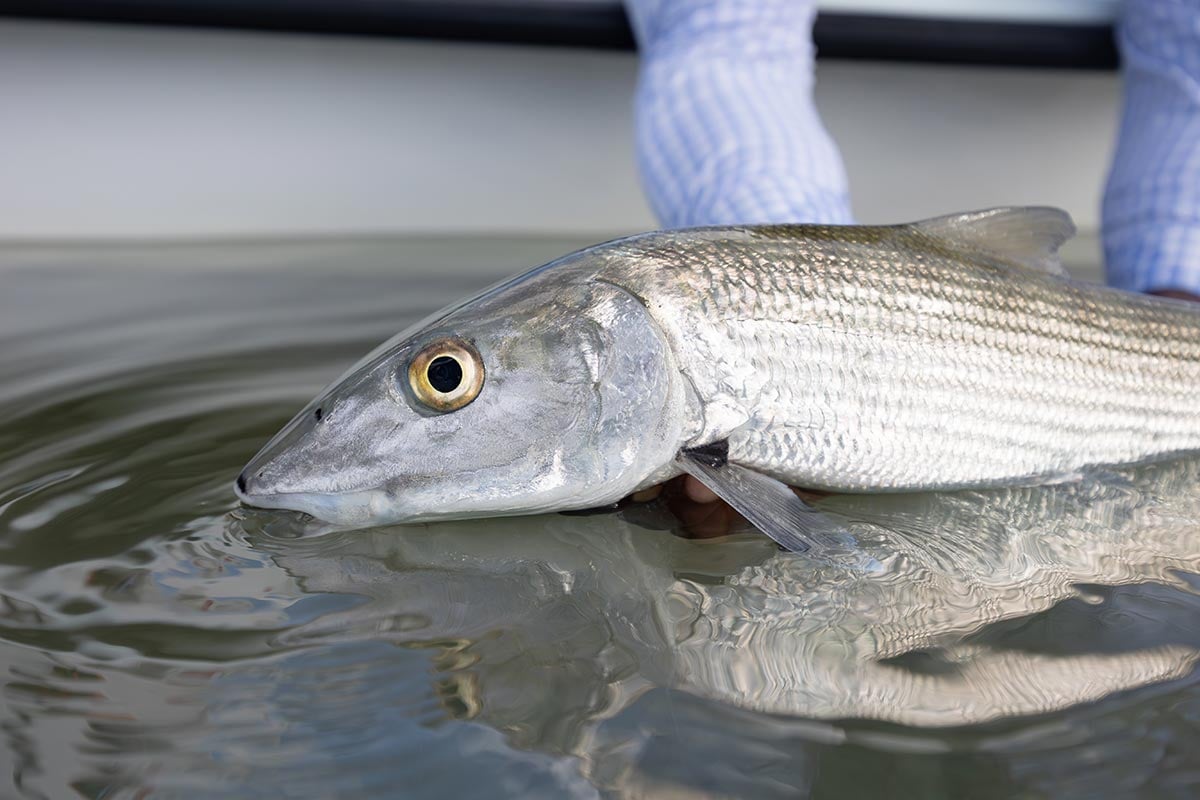
The Bights — North, Middle, and South — are the productive heart of central Andros. These are sprawling networks of tidal flats, mangrove-edged channels, and shallow creeks that concentrate bonefish in numbers rarely matched elsewhere. The bonefish Bahamas anglers targeting the Bights system find fish averaging 3–5 lbs, with consistent action through the tidal cycle and regular encounters with larger specimens on the deeper channel edges.
The West Side: Trophy Bonefish Water
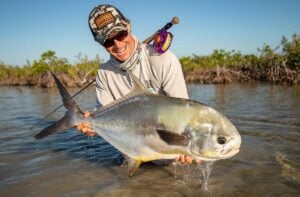
Known among serious bonefish anglers as the Land of the Giants, the remote ocean-facing flats and channel systems on the western shore of Andros see minimal guided pressure — and fish sizes reflect years of light traffic. Guides working the West Side regularly encounter singles and pairs in the 11–13 lb range. Double-digit bonefish are a realistic seasonal expectation, not a lucky outlier. It is the most consistently productive trophy bonefish water in the Bahamas.
Access to the West Side depends on where you are based:
- Mangrove Cay (central Andros) — can reach the West Side on any calm morning without a long exposed run. The central position makes it a genuine option on most suitable weather days, not an occasional trip. See our Mangrove Cay regional page.
- South Andros — guides use a route through Little Creek to reach the southwest flats, cutting what was a long exposed run around Cistern Point to around 45 minutes. See our South Andros regional page.
Both deliver West Side days regularly. Central Andros reaches it more consistently across a full week.
South Andros: The Southern Cay Flats
South Andros adds a further dimension: the hard white-sand flats extending toward the Water Cays and Curley Cut Cays. Guides target these specifically for fish in the 7–10 lb class. The southern cay systems require a longer skiff run from any South Andros base — far enough that casual guided traffic rarely makes it, and these flats carry some of the lowest pressure on the island as a result.
For a full breakdown of how an Andros week is structured — the Bights rotation, West Side access, and the guide culture behind it — see our guide to Andros island bonefishing.
Abaco Bonefishing: A Two-Sided Fishery From One Base
Abaco is the most accessible bonefishing destination in the Bahamas for US East Coast anglers. Direct commercial flights from Miami, Fort Lauderdale, and Atlanta reach Marsh Harbour without a Nassau connection — straightforward enough to be a genuine first-visit advantage, and practical for trips where a non-fishing companion is part of the picture.
The fishing case is more interesting than the logistics. Abaco offers two genuinely distinct fisheries accessible within a single week — a combination few destinations in the Caribbean can match.
The Marls: Volume, Consistency, and Protected Water
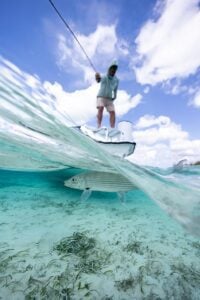
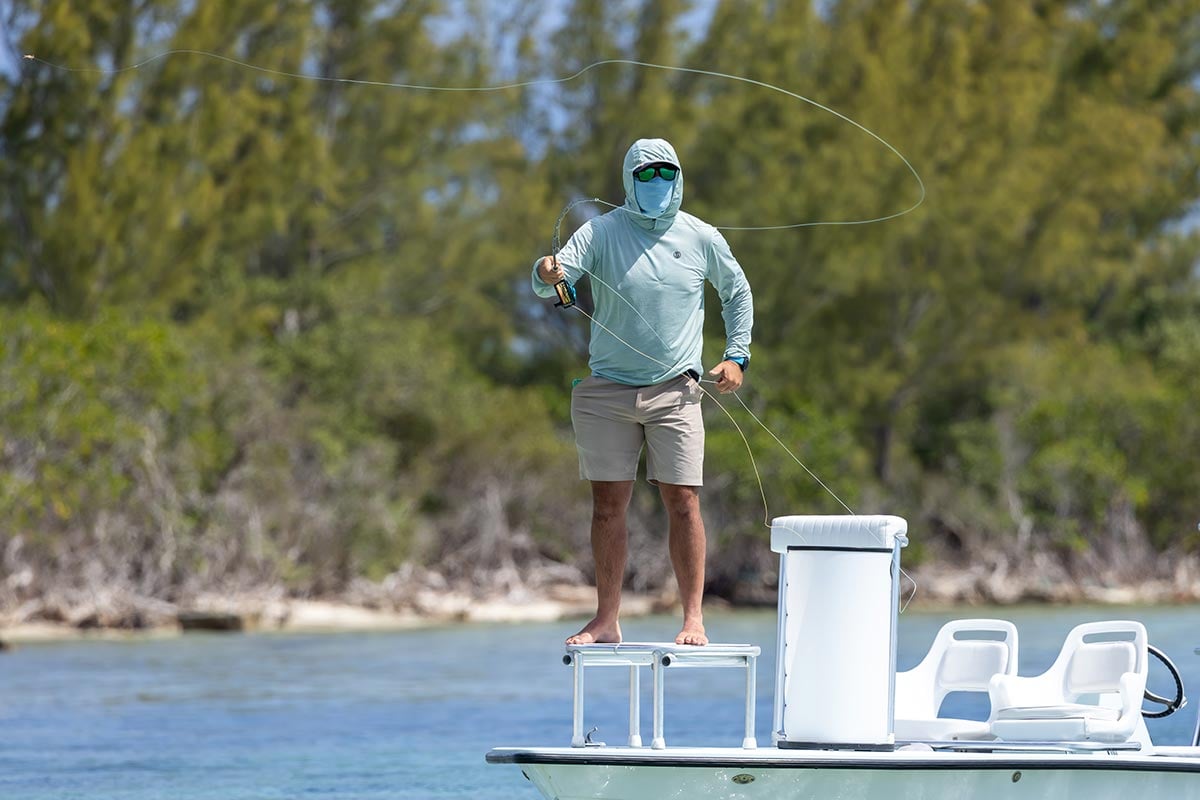
The west side is defined by the Marls: 300 square miles of shallow, mangrove-edged flats running the length of Great Abaco’s western shore, designated as a National Park. The soft marl bottom means most fishing is done from a poled skiff rather than on foot, and fish average 2–4 lbs across the system, with larger fish in the 5–8 lb class present in good numbers on the outer edges and channel mouths. Guides on the Marls report large tailing schools as a daily sight through most of the season, and October brings bonefish pre-spawning aggregations along the western edge of the Marls — schools that stretch as far as the eye can see across the flat.
For shot volume — the number of casting opportunities in a day — the Marls are among the most productive flats in the Bahamas. One lodge operates with direct front-door access to the Marls, meaning guests step from the dock onto their skiffs without transfers or trailering — a practical distinction worth understanding when comparing Abaco programs.
Cherokee Sound: Technical Fishing, Bigger Fish
Cherokee Sound and the east-side ocean flats fish differently. Fewer fish, but considerably larger — averaging 3–5 lbs, with shots at fish approaching double digits a regular occurrence. The water is gin-clear, the bottom is firm white sand ideal for wading, and these fish are wary in ways Marls fish typically aren’t. Experienced anglers who travel specifically for the technical challenge and bigger specimens put Cherokee Sound near the top of any Bahamas shortlist.
In winter — December through February — when cooler water concentrates the largest fish on the east-side ocean flats, Cherokee Sound produces its most consistent shots at double-digit fish. For anglers timing a trip specifically around size, the east side of Abaco in the cooler months is one of the most overlooked windows in the Bahamas.
Permit Fishing on Abaco
The permit fishing on Abaco deserves specific mention. The southern flats around Sandy Point, Mores Island, and Gorda Cay hold permit in numbers uncommon across most of the island chain. The Marls’ ocean edge also produces permit shots on calm days, particularly on the backs of stingrays. For anglers with permit as a primary target rather than an incidental bonus, southern Abaco is the clearest answer the Bahamas offers.
For a deeper look at the Abaco fishery — the Marls and Cherokee Sound — see our Abaco bonefishing guide.
How a Guided Week Works on Both Islands
If you’re planning a bonefishing Bahamas trip, two things shape the week more than anything else: which island you choose and when you go. A Bahamas bonefishing week runs on the same logic regardless of island: tides first, conditions second, everything else follows.
Guides build each day around the tidal push. Sessions begin at first light and track fish movement as water rises onto feeding flats, through the mid-tide tailing window, and back off as the flat empties. The guide’s job is to anticipate where fish will be twenty minutes from now and be there ahead of them. On Andros, that means knowing which specific Bight flat activates on which stage of a northwest wind. On the Marls, it means knowing which channels still hold fish when the tide drops below a fishable depth.
That granular, system-specific knowledge — built over lifetimes on the same water — is what makes the Bahamas different from every other bonefishing destination.
Timing matters too, and it affects the island choice. On Andros, October and November see fish fresh back on the Bights in numbers after summer, with lower pressure than the spring peak — genuinely underrated months. December through March brings the largest fish, particularly on the West Side and the Bights’ deeper channel edges, as cooler water pushes bigger bones onto the flats during warm tidal pushes.
On Abaco, October brings pre-spawning bonefish aggregations to the Marls — one of the most remarkable sights in Caribbean bonefishing — while March through May delivers the strongest combination of numbers, size, and calm weather across both sides of the island.
Tarpon enter the picture from late spring on both islands. Adult fish — typically 40–100 lbs — move through the backchannel systems of Andros from May onward, with May through July the most productive window. On Abaco, June and July offer the most consistent adult tarpon shots in the sheltered creek systems.
For a full month-by-month breakdown of the best time to target bonefish, tarpon, and permit windows across both islands, see our Bahamas bonefishing season guide.
Bahamas Bonefishing: Andros or Abaco?
| Andros, Bahamas | Abaco, Bahamas | |
|---|---|---|
| Primary draw | Trophy bonefish; West Side double-digits | Two-sided fishery; numbers and technical challenge |
| Best for | Experienced anglers targeting size | First visits; permit focus; variety seekers |
| Fish size | 3–5 lbs Bights; 7–12 lbs West Side | 2–4 lbs Marls; 3–5 lbs Cherokee Sound |
| Best timing | Dec–Mar for size; Oct–Nov underrated | Oct spawning aggregations; Mar–May for volume and size |
| Access | Nassau connection + domestic hop | Direct US flights to Marsh Harbour |
| Setting | Remote; sparse infrastructure | More accessible; stronger amenities |
If a double-digit bonefish is a serious objective, Andros is the answer. The West Side and South Andros’s southern cay flats are the most consistent trophy bonefish water in the Caribbean, backed by guiding families who have worked this specific water their entire lives.
If variety across a week is the priority — the numbers and consistency of the Marls alongside the technical challenge and larger fish of Cherokee Sound — Abaco delivers both within a single week, with simpler travel logistics. For permit as a dedicated target, Abaco’s southern flats are the clearest choice in the Bahamas.
For first-time visitors, access is often the deciding factor. Abaco’s direct US flights to Marsh Harbour remove a logistical step that Andros — requiring a Nassau connection for most visitors — cannot.
The difference between a good Bahamas week and an exceptional one is rarely the fishing itself. It is the fit between what the program offers and what the angler came to do. For a detailed breakdown of how each lodge program is structured and which type of angler each genuinely suits, see the Editorial Guide to Bahamas Fishing Lodge Programs.