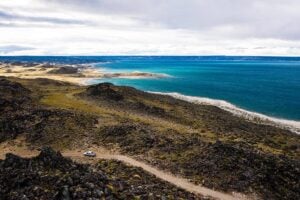
Patagonia Argentina’s fly fishing season runs November through April, but that six-month window does not fish the same way start to finish. Snowmelt shapes the early weeks, stable summer conditions define the middle, and cooling temperatures change how fish feed and where they hold by late season. Jurassic Lake runs on its own rhythm. Tierra del Fuego opens in January on a fixed calendar tied to fish runs rather than river conditions. Understanding how each period differs — and what kind of trip each one allows you to build — is where planning a Patagonia fly fishing trip actually starts.
The Patagonia Argentina Fishing Season
Patagonia Argentina is not one fishery operating on one schedule. For anglers planning on fly fishing in Patagonia, understanding the difference is where a well-matched trip begins. The trout rivers of northern and central Patagonia, the trophy stillwater of the Strobel Plateau, and the sea-run brown trout beats of Tierra del Fuego each follow their own seasonal logic — and understanding the differences between them is more useful than knowing the broad season dates.
The trout rivers and lake systems of Neuquén, Río Negro, and Chubut run from November through April. Within that window the fishing changes significantly — early season is variable and water-dependent, midsummer is the most consistent and accessible period, and late season rewards patience with the best chance at larger fish. Most Patagonia Argentina lodge programs are built around this arc.
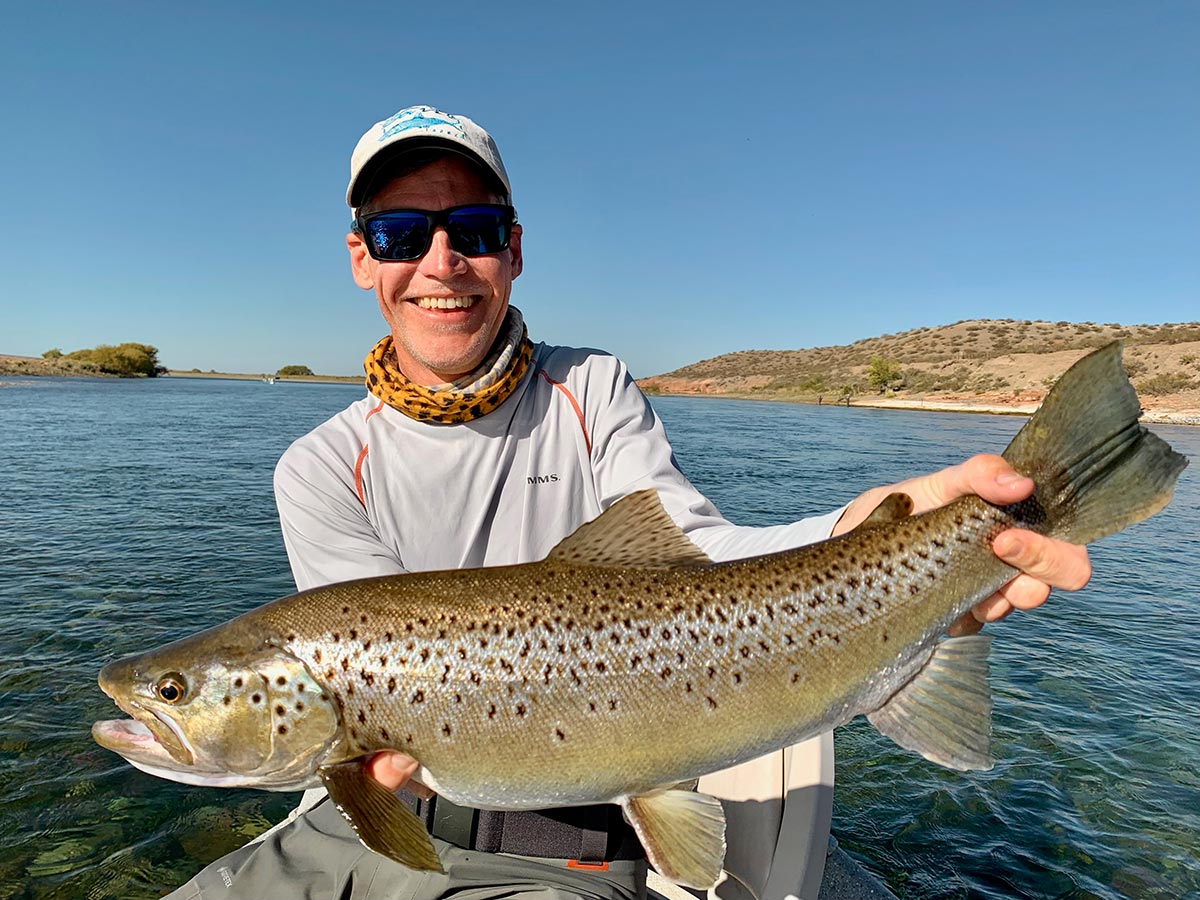
Lago Strobel — Jurassic Lake — runs from October through April or May, but on a different rhythm to the mainland rivers. The early season (October to mid-January) sees the highest fish concentrations as trout pack into the Barrancoso River for their spring spawning run. Midsummer (mid-January to mid-March) sees fish disperse into the lake. The late season (mid-March through April or May) brings a second prime window as autumn rains recharge the river and fish return in aggressive condition.
Tierra del Fuego’s Río Grande opens in January. The season runs through April — longer than commonly assumed — and each month within it has a distinct character. This is not a fishery you time around conditions — it is a fishery you book a specific week on, and that week determines what you find.
November to December: Early Season Fly Fishing in Patagonia
November marks the opening of the Patagonian trout season, and it is the most variable period of the year. What you find depends heavily on elevation, snowpack, and how warm the preceding weeks have been.
In northern Patagonia, rivers like the Chimehuín and Aluminé emerge from winter in varying shape. Some years the snowmelt has largely passed by early November and rivers are running clear and fishable within days of opening. Other years, particularly after heavy winter snowfall in the Andes, flows are still high and colored well into December, limiting which water is practical.
For a full picture of Patagonia Argentina — its sub-regions, species, and lodge options — see the Patagonia Argentina regional overview.

The Malleo and Traful: Reliable Early-Season Rivers
The Malleo, fed by Lago Tromen below Volcán Lanín, tends to settle earlier than freestone rivers because the lake acts as a buffer on flow variation. Guides consistently use the Malleo as a reliable early-season option when larger freestone rivers are still transitional. The Traful — short, cold, and spring-fed — is another system that comes into shape quickly and offers clear-water sight fishing for selective browns in November when larger rivers are still running off.
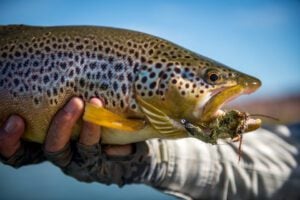
What the early season gives you that midsummer does not is fish that are genuinely hungry. Trout emerging from winter are aggressive and less pressured than at the height of the season. A well-placed terrestrial or streamer on a clear early-season morning can produce takes that feel startlingly easy by January standards.
The December Dragonfly Hatch: A Lake Dry Fly Spectacle
By December, most river systems in northern Patagonia have stabilized, and the season begins to find its rhythm. Water levels drop toward summer flows, clarity improves across the freestone rivers, and the season begins to find its rhythm. This is when lodge programs start running more predictable daily schedules and the full range of water becomes accessible.
It’s also the time of year many visiting anglers plan their Patagonia fishing trip around. On the lakes of the district — Tromen, Lolog, Lacar — December brings the dragonfly hatch, one of the most celebrated events in Patagonian fly fishing.
Dragonfly nymphs begin emerging in late November, with the hatch peaking through mid-December and running into early January. Large trout that spend most of the year well below the surface move into the shallows and feed aggressively on adult dragonfly and nymphs throughout the day — not just in morning and evening windows. For anglers willing to absorb some river variability in exchange for this specific lake spectacle, a mid-December week is one of the most underrated timing choices in the season.
Planning Around Early-Season Variability
The practical limitation of early season, especially November, is unpredictability on the rivers. Guides plan day-to-day rather than week-to-week, moving between river types as conditions and water flows dictate. First-time visitors sometimes find this frustrating; anglers who have been before know to treat it as part of the deal rather than a failure of planning. What the early season offers in return is fish that are genuinely hungry, less pressured, and — in December — lake fisheries hosting one of the most spectacular dry fly events of the season.
Understanding how guides make daily decisions around variable conditions — and why program flexibility matters more in early season than at any other time — is covered in our guide to how Patagonia fly fishing lodge programs work.
January to February: Peak Season Fly Fishing in Patagonia Argentina
January and February are the benchmark months for fly fishing in Patagonia Argentina. Conditions are as stable as they get, the full range of rivers, spring creeks, and lakes is accessible, and the hatch activity is at its height.
Caddis and Mayfly Season: Peak Dry Fly Fishing on Rivers
The Malleo through its meadow sections is at its best in January and February. Prolific caddis and mayfly hatches produce consistent surface activity, and the spring creek character of the lower beats — slow currents, selective fish, clear water — rewards careful presentation. Lodge operators describe these weeks as the most technically demanding and most rewarding of the season on technical water.
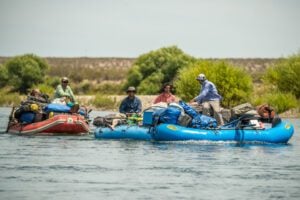
On the larger freestone rivers — the Chimehuín, Collón Curá, Aluminé — January and February bring strong terrestrial fishing along grassy banks. Beetles, hoppers, and ants become the primary dry fly patterns, and drift boat fishing covers water efficiently across long summer days. Browns in the Limay and Chimehuín feed heavily through midsummer, and the combination of long daylight hours and stable flows makes this the most productive period for consistent numbers.
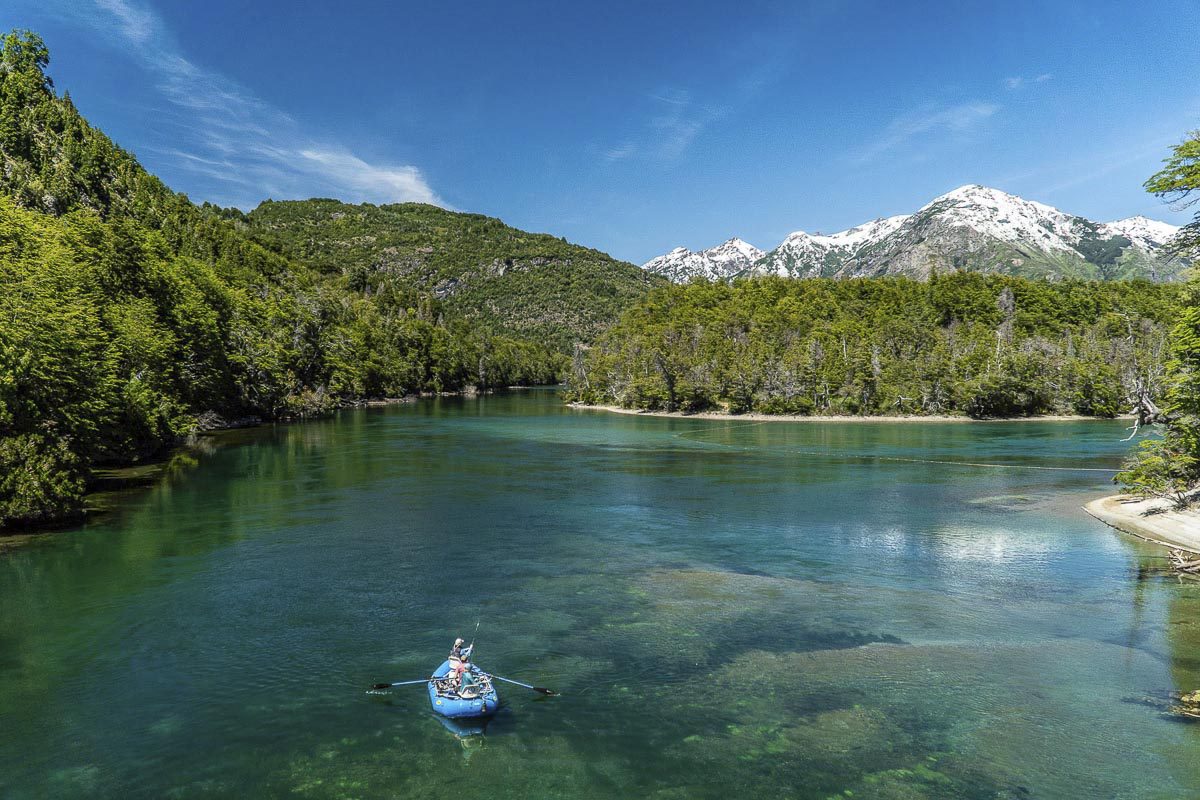
Wind is the variable that disrupts peak summer plans more than anything else. Patagonia’s prevailing southwest winds are a permanent feature of the landscape, but the intensity varies day to day and between river valleys. Experienced guides adapt — moving from open steppe rivers to sheltered valley systems when conditions demand, or switching from dry fly presentations to streamers when surface fishing becomes impractical. A ripple on the water, counterintuitively, often extends the productive window for dry flies by giving fish a sense of cover.
Jurassic Lake in Midsummer
For Jurassic Lake, January and February are the midsummer window — fish have dispersed from the spring spawning run into the wider lake, and catch rates drop relative to early season. What replaces numbers is a more demanding kind of fishing: sight casting to individual cruising fish along exposed shoreline, reading their line and speed, presenting at distance into crosswind. Fish continue moving in and out of the lower Barrancoso to feed rather than spawn, and guides work both the river mouth and the shoreline depending on where fish are showing. Lodge operators describe anglers who can read still water finding this period more satisfying than early season, precisely because each fish has to be earned. Morning conditions are typically the most fishable window of the day before the plateau wind builds.
Tierra del Fuego Opens in January
Tierra del Fuego opens in January. The first weeks of the season produce the freshest, most aggressive sea-run brown trout of the year — chrome bright fish straight from the South Atlantic, arriving on incoming tides to the lower Río Grande. January fish are present in lower numbers than February but tend to be the most willing to move to a fly. Guides on the lower beats report that these early-season fish fight harder than anything that follows.
March to April: Late Season Trout Fishing in Patagonia
March and April are the most underrated part of the Patagonian trout season — and consistently the preferred period for experienced anglers who have made the trip before.
Water levels have dropped to their lowest point of the year. Rivers run clear across the region, and that clarity changes how fish hold and how they need to be approached. The productive windows through the middle of the day that characterize January and February compress slightly in March, with the best fishing concentrated in the cooler morning and late afternoon periods. But what those windows produce changes.
Late-Season Brown Trout on the Limay and Collón Curá
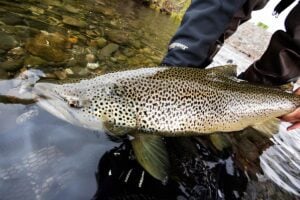
As water temperatures drop from late February onward, large brown trout in connected lake systems begin feeding aggressively ahead of their autumn spawning migration. On rivers like the Limay and Collón Curá — systems with direct lake connections — this pre-spawn movement brings the largest fish of the season into accessible water. Streamer fishing with patterns that mimic pancora crabs and baitfish becomes the dominant approach, and fish that were difficult to move in the high sun of January become unpredictable and violent in their feeding.
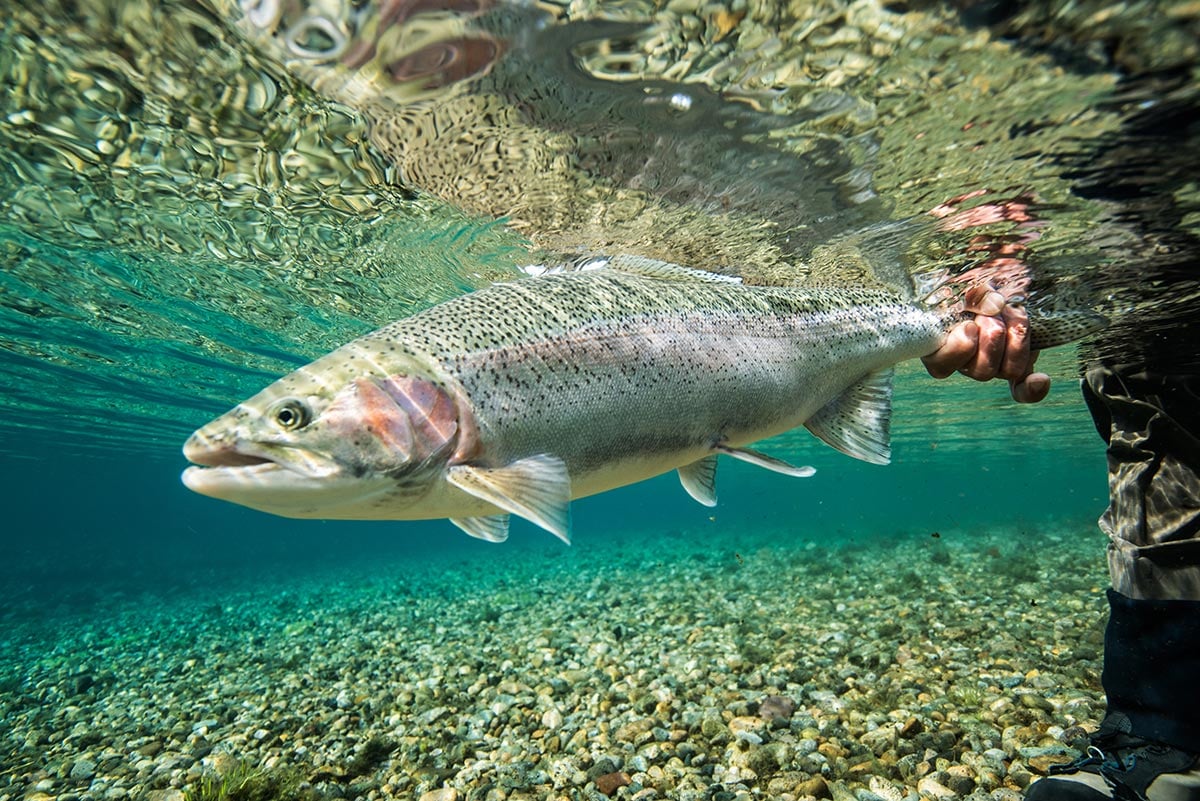
In the spring creeks and smaller tributaries, late season produces more deliberate fishing. Fish are feeding selectively in low, clear flows, and the presentations that worked in January — heavily hackled dries, larger terrestrials — need to be scaled back. This is technically demanding water, but guides with long experience on these systems read the late-season shift well.
Jurassic Lake’s Second Prime Window
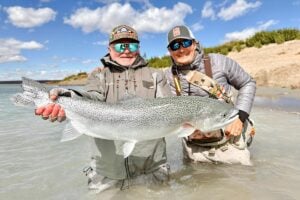
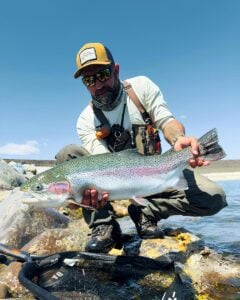
For Jurassic Lake, mid-March through April or May is the second prime window of the season — and many regulars consider it their preferred time to fish. Autumn rains recharge the Barrancoso after the dry summer, triggering a late run of fish back into the river. These are large rainbows that have spent the summer feeding on the lake’s dense shrimp populations and are at their peak weight. Numbers are lower than early season but the quality of fish is exceptional.
March and April on the Río Grande
On the Río Grande in Tierra del Fuego, March delivers the most consistent catch rates of the season. Fish that entered in January have distributed through the system, establishing holding lies across middle and upper beats. Water temperatures are dropping, and sea-run browns become more predictable in their position — guides know where specific fish are holding and can plan presentations accordingly. Fish in the 20-pound-plus range are as likely in March as in any other month.
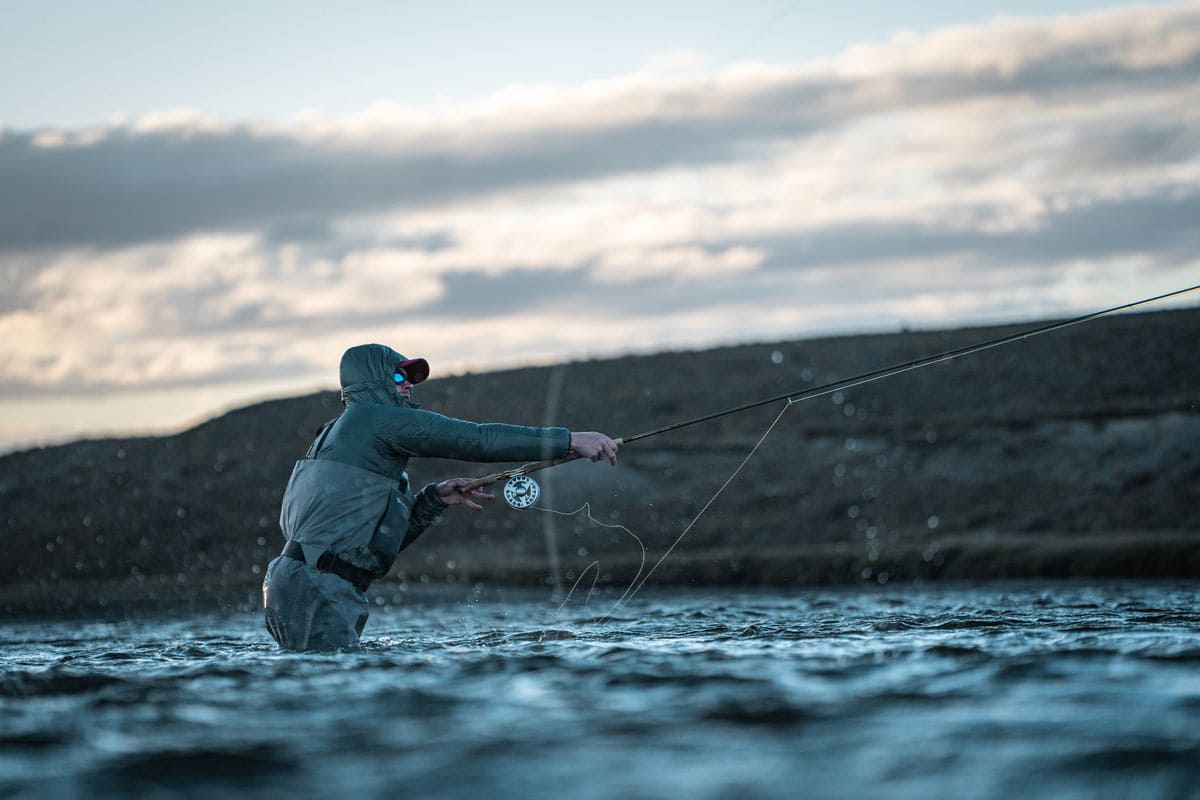
April on the Río Grande is consistently underestimated. The fish that entered all season are now in the river, concentrated in known pools, at their heaviest weight. Water levels are at their lowest, making wading more approachable, and the Tierra del Fuego winds that define the season are noticeably diminished by April. Fresh arrivals from the ocean continue into late March and April on the lower beats. It is a genuine fishing month, not simply a closing note — anglers who target April specifically often find it rivals February for catch rates. The Río Gallegos in Santa Cruz province, a peer fishery to the Río Grande running a similar season, also fishes particularly well through March and April as the late run concentrates fish across its shallower, more wadeable pools.
Jurassic Lake Fishing: Its Own Seasonal Calendar
Lago Strobel deserves separate treatment because it operates on a three-season rhythm that bears no resemblance to Patagonia’s river programs.
Early Season: October to Mid-January
The early season is historically the most popular and produces the highest catch rates. As snowmelt charges the Barrancoso River — the lake’s only tributary — rainbow trout pack into its pools and runs for their spring spawning migration. The concentration of fish at this time can be extraordinary. Lodge guests describe this as the period that made the lake’s reputation, and it is the hardest window to book for that reason.
Midsummer: Mid-January to Mid-March
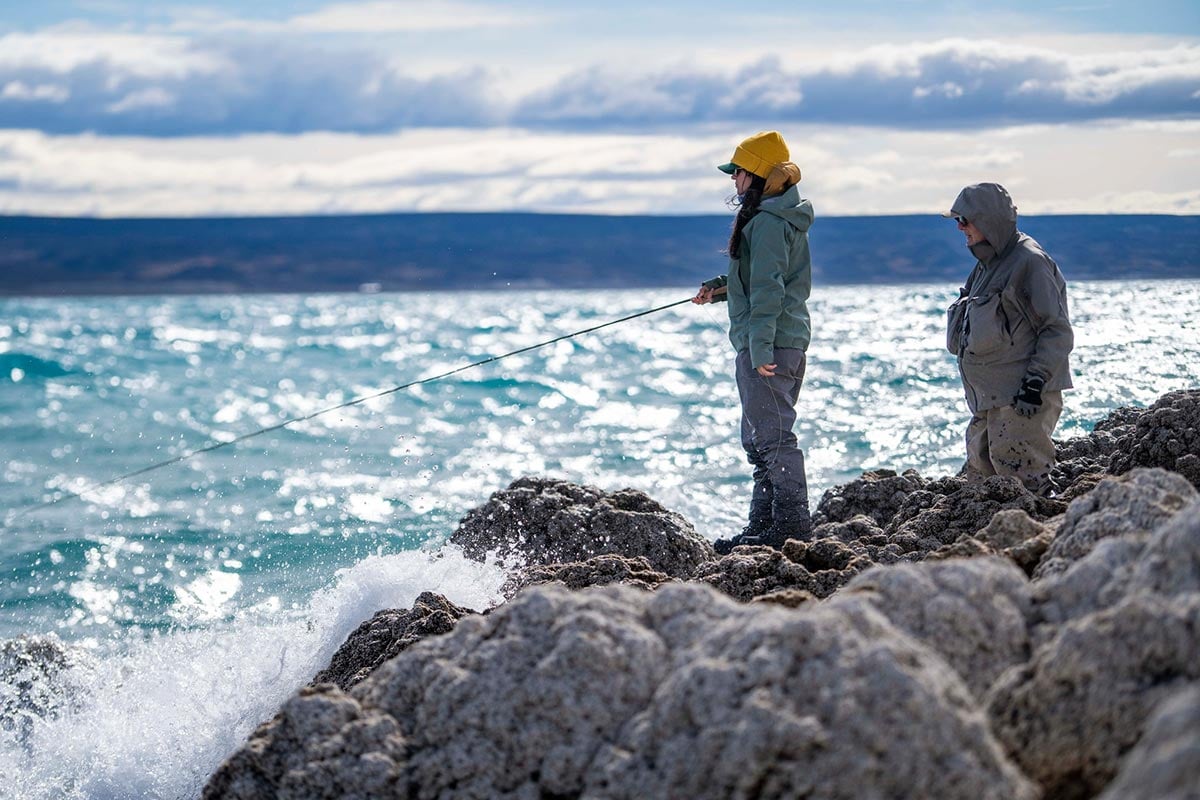
Midsummer sees fish disperse into the lake as river levels drop. Catch rates fall relative to early season, but the fishing remains exceptional by any other measure. The approach shifts from river fishing to shoreline work — sight casting to cruising fish along points, drop-offs, and wind-protected bays. Careful presentations and slower retrieves produce takes from fish that have grown large on the lake’s dense shrimp populations. Many anglers who have experienced both periods prefer midsummer for its technical demands and the satisfaction of earning each fish.
Late Season: Mid-March Through April or May
The late season is the second prime window. Autumn rains recharge the Barrancoso, triggering a late run of fish back into the river. These are rainbows at their peak weight and condition — strong, aggressive, and in the river in good numbers. Many experienced Jurassic Lake regulars hold late-season weeks years in advance for exactly this reason.
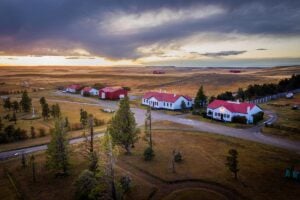
What makes Jurassic Lake’s timing distinct from river planning throughout all three periods is the overriding role of wind. A sustained weather system can make the exposed Strobel Plateau unfishable for days at a time regardless of where the season sits. Programs that access the Barrancoso River and surrounding satellite lakes alongside the main lake have a genuine operational advantage — the ability to move to protected water rather than waiting out conditions. Lago Strobel sits within Santa Cruz province in southern Patagonia — the most remote of the Patagonian trout regions and one that warrants separate planning from the northern lake district.
How to Match Your Dates to the Right Patagonia Fishery
The most common planning mistake in Patagonia is choosing a famous destination and then checking whether the timing works, rather than starting from the timing and choosing the fishery that fits.
If your available dates fall in November or early December, northern Patagonia river programs offer the best match — early-season aggression, flexible guide planning across multiple water types, and the Malleo and Traful as reliable systems even when larger rivers are still transitional.
January and February suit any Patagonia river program well, but are particularly valuable for first-time visitors who want predictable conditions, consistent dry fly opportunities, and programs running at full pace. On the Río Grande, this is when fish numbers are highest and the season is in full swing. At Jurassic Lake, this is the midsummer window — technically demanding shoreline fishing with dispersed fish, excellent for anglers who want a challenge rather than numbers.
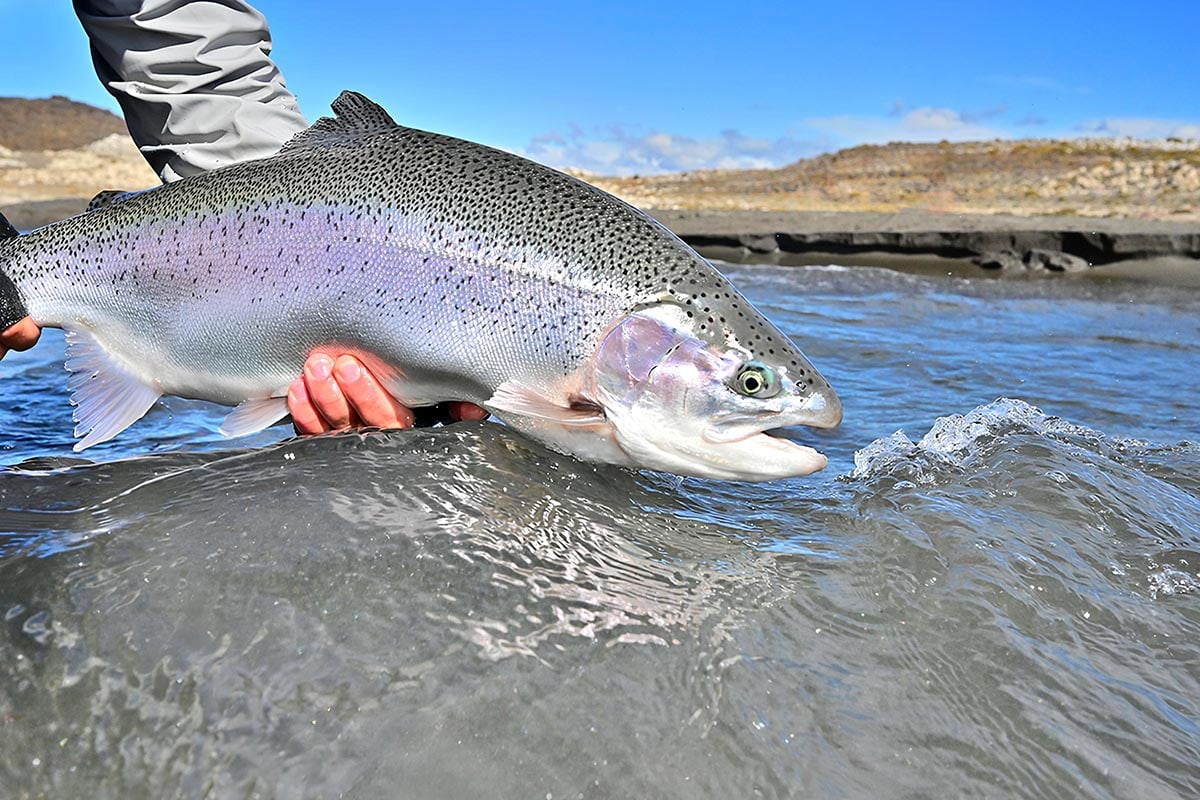
March suits experienced anglers more than first-timers. The late-season character of Patagonian rivers — selective fish, compressed windows, streamer fishing for large browns — rewards anglers who know how to adjust. It is also the most consistent period on the Río Grande and the start of Jurassic Lake’s second prime window.
April remains viable and is often underestimated. Most northern Patagonia lodge programs close by mid-April, but the Río Grande fishes well through April — lower water, more approachable wading, diminished wind, and fish at their heaviest. Jurassic Lake’s late season extends through April and into May. An April week timed to the right fishery can be as productive as peak season.
If your dates are fixed and don’t align perfectly with one fishery’s best window, the honest planning decision is to choose the program that fits those dates rather than forcing a destination into a timing that doesn’t suit it. A well-managed lodge program in any month of the core season will outperform a poorly-timed visit to the most famous water in Patagonia.
Our Patagonia trout fishing guide goes deeper on how each fishery actually works — the river programs, Jurassic Lake, and the Río Grande — and how to choose the right one for your trip.
For a full comparison of how programs are structured and which lodge suits different angling goals, see our guide to Patagonia Argentina fishing lodges.