The mistake most anglers make when planning an Alaska salmon trip isn’t the destination — it’s the timing. Arriving on the Kenai a week after the late king run peaks, or in Bristol Bay a week after the sockeye have pushed through, produces a very different week than the one that was planned.
Alaska’s salmon fisheries are genuinely complex — to start with, there are five salmon species. Each peaks in a different month. And each peaks in different rivers, in different regions, at different points in a May-through-September season that moves faster than most visiting anglers expect.
This guide breaks down the Alaska salmon season anglers are actually planning around — month by month, by species, and by region — so you can match your travel dates to the right run rather than arriving at the right place at the wrong time. You’ll find a species-by-species Quick Reference near the bottom if you want to jump straight to your target.
If you already know when you want to travel, our Alaska fishing lodges guide explains how different lodge programs are structured and which type of angler each one suits.
Is There One Best Month for Salmon Fishing in Alaska?
No — and the mistake anglers sometimes make is treating Alaska’s salmon season as a single block. When is salmon season in Alaska? Technically May through September. But all five Pacific salmon species run across that window, their peaks staggered in ways that shift by drainage, region, and year. A week that’s perfect for sockeye in Bristol Bay can be too early for coho in Southeast Alaska. A king salmon run on the Kenai can peak and taper before anglers arriving two weeks later see any meaningful action.

Alaska’s salmon run timing is actively monitored by ADF&G using sonar stations on major river systems that count migrating fish in real time — king salmon sport fisheries in particular can be subject to in-season emergency orders that can close access at short notice, and regulations across all species can shift based on real-time escapement counts (how many salmon evade commercial fishing and are successfully passing through a fishery to reach their spawning grounds). That adds a layer of planning complexity that most other fishing destinations simply don’t have.
If you’re flexible about what you catch, then July is a safe month to be on the water in Alaska — multiple species are running, conditions are reliable, and most lodge and guided programs are operating at full capacity. This guide is for anglers who want to go further than that: those targeting a specific species, fishing a short window, or trying to avoid the peak-pressure fisheries.
Planning Around Your Target Species
For most Alaska salmon trips, the species you’re targeting determines the month more than the other way around. Kings pull you toward June, sockeye toward early July, coho toward August — and trying to reverse that logic is how anglers end up on the right river at the wrong time.
King salmon (Chinook) require the most precise timing of any species in Alaska. Runs across many systems have declined over recent decades, windows have compressed, and in-season closures are more common than they once were. Sockeye (also called reds) are more forgiving because strong runs exist across multiple drainages and are well-documented through daily sonar counts. Coho reward anglers willing to fish later in the season, when pressure drops and fish are fresh and aggressive.
Peak Runs, Crowds, and the Real Planning Tradeoff
Peak salmon fishing and peak pressure arrive together on Alaska’s road-accessible rivers. The Kenai during the late king run, the Russian River during the sockeye push, the Naknek at the height of the Bristol Bay season — these fisheries are genuinely excellent but also very busy during their best windows.
The tradeoff is honest: fish the peak and accept the company, or shift to a shoulder window or a less-known drainage and trade some certainty for more space. Remote lodge-based fishing and fly-out programs naturally hold an advantage over self-guided trips, allowing anglers to move between rivers and reach water that doesn’t show up in a road atlas.
Alaska Fishing June: Prime Time for King Salmon
June is king salmon month. If that’s your target species — or if you want productive water before July’s pressure fully arrives — June is where to be. The king salmon season in Alaska opens properly in June, and it is also one of the most underestimated months on the Alaska fishing calendar — particularly on remote systems, where rivers can be less crowded than July and fish haven’t yet seen much angling pressure.

King Salmon Season: Kenai and Nushagak
The Kenai River runs two independent king salmon runs. The early run arrives from mid-May and is typically at its strongest through the first half of June — less crowded than the late run, and historically responsible for some of the largest individual fish of the season. The world record king of 97 pounds was caught on the Kenai’s early run.
On the Nushagak River in Bristol Bay — Alaska’s largest wild king salmon run — kings are running through June and into mid-July, with the most concentrated fishing typically falling in the latter half of June. Lodge operators on the Nushagak consistently describe the king window here as one of the most time-sensitive opportunities in Alaska: the run builds fast, peaks hard, and moves on. Being a week early is manageable. Being a week late is a different trip entirely.
Across Bristol Bay, ADF&G confirms the king salmon season in Alaska runs from mid-June through late July across the Alagnak, Nushagak, Naknek, and Togiak rivers — with the entire region closing to king salmon sport fishing on July 31 by regulation.
Before the salmon runs dominate, June rivers fish differently. Rainbow trout, Arctic grayling, and Dolly Varden are active and less pressured across the more accessible areas of Bristol Bay and Western Alaska — the rivers quieter, the fish less wary, the days long. Guides who run early-season programs consistently note that June offers some of their best dry fly fishing of the year, with resident species feeding actively in cleaner, quieter water before the salmon runs change the character of the rivers.
June Planning: What to Know Before You Book
King salmon run timing can shift by a week or more depending on ocean conditions and water temperatures, and being wrong in June costs you the whole trip. Guides who track daily sonar counts and have fished the same rivers for years are the most reliable way to be on productive water during a short peak window — this is the month where local operational knowledge matters more than any other.
Some remote lodge programs are still ramping into their full rhythm in early June. Ask specifically about opening-week logistics and historical run timing for your target river before committing to the first week of any program.
Alaska Fishing July: Peak Salmon Runs Across Alaska
July is sockeye month — and the month where the most species overlap. It is the month most people picture when they imagine salmon fishing Alaska, and the reality largely matches that reputation. It delivers the widest species mix across the Alaska salmon season, the most reliable conditions, and the best combination of long daylight hours and fish availability — at the cost of the highest demand and the most competition for water.

Bristol Bay Sockeye: The Core of the July Salmon Run
Bristol Bay hosts the largest wild sockeye salmon run in the world, and its peak is reliably concentrated into the first half of July. Sonar data confirms sockeye are running in strong numbers in the Naknek, Nushagak, Kvichak, and Wood rivers by early July, with most systems past peak by month’s end. The Nushagak run in particular moves through in a compressed window — lodge operators on the river describe the peak days as extraordinary fishing followed quickly by a sharp tapering. Miss the timing and the numbers drop off fast.

The Kenai has a late king run that builds through July and overlaps with the sockeye fishery, making July the one month where kings and sockeye are both at peak somewhere in Alaska simultaneously. Chum salmon — available on the Nushagak, Alagnak, and Togiak rivers through mid-July — are underrated on a fly rod and far less pressured than the sockeye fishery running alongside them
July Planning: Booking Early and Accessing Better Water
July’s popularity creates real planning constraints. Prime lodge weeks in Bristol Bay book earliest. Road-access rivers — the Kenai and Russian River especially — see their heaviest pressure during peak sockeye and king windows. Charter flights into remote drainages run at full capacity.
The solution, if July is your only viable window, is earlier booking and a deliberate access strategy. Even a lodge on a well-known river system can deliver excellent fishing in July if it has genuine fly-out capability — the ability to move you off pressured public water and onto less-visited drainages when conditions call for it. July is also the month where the investment in a structured, guided program pays off most clearly — the gap between a well-run lodge week and a poorly timed self-guided trip is widest when every fishery is operating at peak simultaneously.
Alaska Fishing August: Prime Time for Coho Salmon
August is coho month. Known to many anglers as silver salmon, coho start arriving across multiple systems as the sockeye season winds down — and the fishing can be exceptional for those who plan specifically around them rather than treating August as a fallback from July.

Silver Salmon Season: Bristol Bay, Western Alaska, and Southeast
In Bristol Bay, the first coho typically arrive in early August across the major drainages, with most runs close to peak by mid-month. Some systems produce a second pulse of fish in late August — worth asking any Bristol Bay lodge specifically about their timing, as it varies by river.
In Western Alaska, the Kanektok River — a near 100-mile clearwater system draining to Kuskokwim Bay within the Togiak National Wildlife Refuge — is regarded by guides who fish it regularly as one of Alaska’s most consistent and aggressive coho fisheries. The silver salmon season on the Kanektok runs from late July through September, with peak fishing from mid-August into early September. The river fishes best in its lower reaches, where the braided channels and tidal influence concentrate fish before they push upstream. The Goodnews River, which shares similar character and timing, produces comparable fishing with even lower rod pressure.
Southeast Alaska is a strong August destination for anglers who want flexibility across a single week. Saltwater coho are available off Ketchikan and Prince of Wales Island from late July, transitioning to river and creek fishing as August progresses. For groups who want the option to fish tidal water one day and a clearwater stream the next, Southeast in August is the most versatile arrangement the state offers.
Late sockeye overlap is possible on select Bristol Bay tributaries in early August — occasionally producing mixed-bag days before the sockeye season fully closes out.
August Planning: Choosing the Right Coho Program
August is quieter on Bristol Bay systems once the sockeye runs taper — but that doesn’t mean every lodge program delivers equally well at this time of year. Some remote operations run reduced August capacity, weather variability increases in coastal regions, and not every program is built around late-season coho. Choosing deliberately matters more in August than in July.
The distinction that matters: choose a program built specifically around August coho fishing, not one that happens to still be operating in August. A lodge that fishes silvers intentionally will have named rivers, typical run timing, and a track record. Ask for it directly.
Alaska Fishing September: Late-Season Salmon Fishing
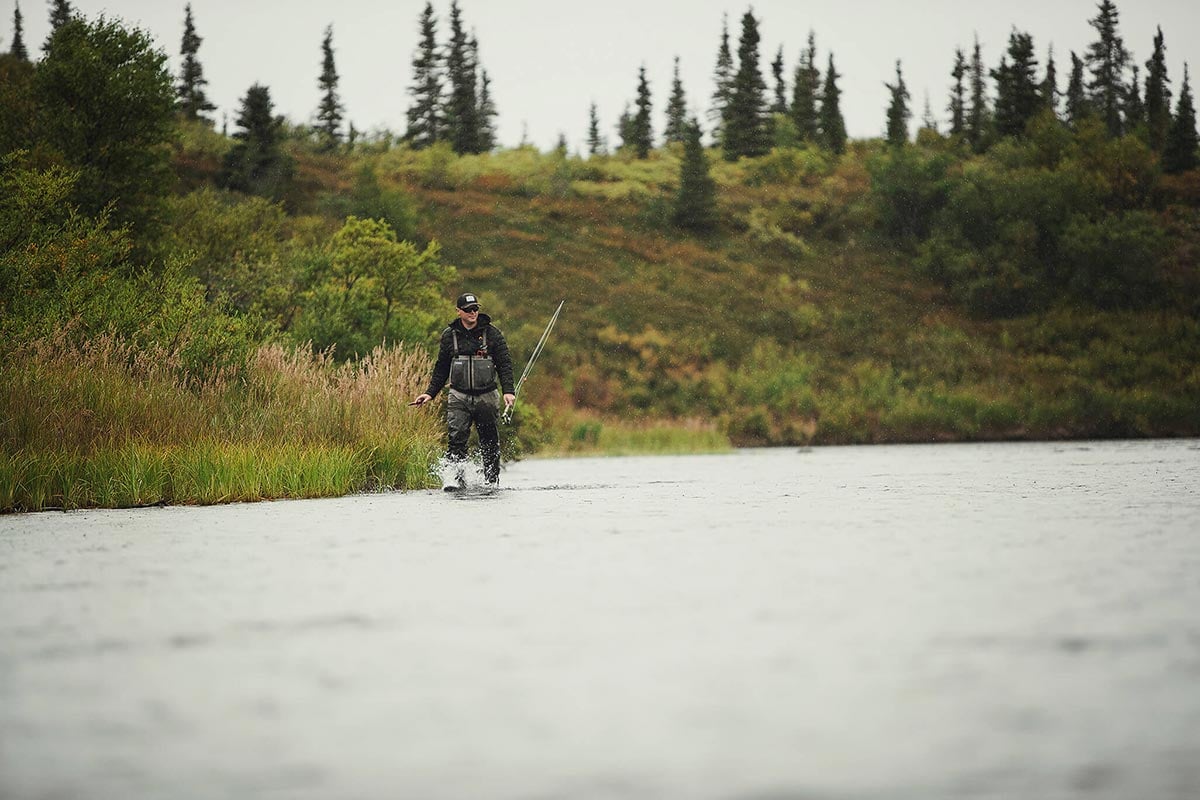
September is for late coho and chum — and for a version of Alaska that most visiting anglers never see. The peak-season pressure has gone, the tundra is turning, and brown bears are working the lower river banks in numbers that remind you this was never really your river to begin with. For anglers who don’t need the reassurance of a fully operational peak-season program, it can be one of the most rewarding months of the season.
Late Coho and Chum: What’s Still Running
Coho fishing extends well into September across several regions. On the Kenai, silvers continue arriving through September and into October. In Southeast Alaska, fall coho return to Ketchikan-area systems in full force through September, with rivers around Sitka and Juneau fishing well for silvers into mid-month in a typical year.
Chum salmon offer a September opportunity that most visiting anglers walk straight past. Available in coastal drainages across Southwest and Southeast Alaska, late-season chums are powerful, hard-fighting fish on a fly rod — the kind that test tackle and technique in ways that sockeye don’t — and they encounter almost no angling pressure. Guides who fish them regularly treat them seriously. Most visiting anglers never think to ask.
September Planning: Choosing the Right Operator
September requires more careful program selection than any other month. Some remote lodges close by mid-September. Floatplane access becomes more weather-dependent as fall systems push through. The operations that specifically fish September — particularly in Southeast Alaska and on the Kenai — build their programs around these realities. Booking a summer-focused operation in hope of September fishing is a different and riskier proposition.
Before committing to any September trip, confirm season end dates, which rivers the lodge is fishing for coho at that time of year, and what the contingency looks like if weather moves access.
Alaska Salmon Season by Species: Quick Reference
A fast summary of when each species is reliably in season across Alaska’s main fisheries.
King salmon (Chinook): June is the most reliable month for king salmon season Alaska-wide — Kenai early run through the first half of June, Nushagak peak in the latter half of June. The Bristol Bay king season runs mid-June through late July across the Alagnak, Naknek, Nushagak, and Togiak, closing statewide on July 31 by regulation.
Sockeye (red salmon): Early-to-mid July across Bristol Bay’s major drainages — Naknek, Kvichak, Nushagak, Wood. The Kenai runs slightly later, peaking from mid-July through mid-August.
Coho (silver salmon): Late July is the earliest reliable start. August is the primary month across Bristol Bay and Western Alaska. Southeast Alaska fishes well for silvers through September.
Chum (dog salmon): Mid-July through early August in Bristol Bay. Coastal opportunities run later into September.
If you are deciding between sockeye and coho, the calendar settles it: early-to-mid July points toward sockeye; August points toward coho. The two windows don’t overlap cleanly enough to target both in a single trip without making a clear primary choice.
Best Month for Salmon Fishing by Region
Species and month are only part of the picture. Where you fish shapes the kind of trip you’re booking — the logistics, the access model, and how much of the Alaska salmon season is realistically available to you. For a full breakdown of which regions suit which species, our guide to the best salmon fishing in Alaska covers the regional picture in detail.

Bristol Bay and Western Alaska
Bristol Bay runs a compressed summer calendar across June, July, and August — kings, then sockeye, then coho, in that order, across the same drainages. A well-timed July week can cover two species in the same trip. The tradeoff is that there is no road access to the fishing water — every trip requires a flight to a regional hub, and reaching the best rivers means floatplanes, lodge logistics, and structured planning. This is where the investment in a lodge program pays off most directly, because the timing windows are short and the gap between a well-planned week and a poorly timed one is significant.
Western Alaska’s clearwater rivers — the Kanektok and Goodnews — operate on a similar calendar but are defined almost entirely by their August and September coho fishing. These are wilderness systems with minimal infrastructure, offering some of the least pressured coho fishing in the state for anglers who plan specifically around them.
For a full picture of Bristol Bay as a destination — the species, the access model, and what to know before booking — see our Bristol Bay fishing guide.
Kenai Peninsula and Southeast Alaska
The Kenai Peninsula is Alaska’s most accessible fishing region and runs the widest seasonal calendar — kings from mid-May, sockeye through mid-August, coho through October. Road access makes it the easiest entry point for first-time visitors to Alaska’s fishing regions, though peak windows on the most famous stretches carry real crowd pressure.
Southeast Alaska is the right choice for anglers who want to mix saltwater and freshwater fishing in the same week — kings, coho, halibut, lingcod — across a season that runs from late May through fall. The infrastructure is strong, the species variety is the widest of any Alaska region, and the calendar is long enough to accommodate later travel dates without sacrificing quality.
How Guided Access Changes the Outcome
Alaska’s salmon fisheries are actively managed in real time — guided and lodge-based programs operate inside that environment in a way that self-guided trips cannot easily replicate. Guides track daily sonar counts, know which rivers are open, and can move to productive water when a fishery closes or conditions shift. On a self-guided trip, gathering and acting on the same information takes time you may not have.
That real-time intelligence matters most in June for king salmon, in early July when Bristol Bay sockeye runs can peak and taper within the same week, and in August when coho run timing varies considerably between drainages. If you only have one week, the difference between a guided program and a self-guided plan is often the difference between hitting the run and missing it. For anyone planning salmon fishing in Alaska, that local knowledge is difficult to replicate independently.
FishingExplora curates Alaska lodge programs operating across different regions, species, and seasonal windows — contact lodge owners directly to discuss your target species and travel dates, and find the right Alaska fishing lodge program for your specific window.