Discover the best coho (silver) salmon fishing destinations, guided trips, and lodge-based experiences worldwide. Explore remote waters and world-class angling with expert local hosts.
Bristol Bay, Alaska
Arctic Char, Chinook (King) Salmon, Chum (Keta) Salmon
Southeast Alaska
Chinook (King) Salmon, Coho (Silver) Salmon, Halibut
Bristol Bay, Alaska
Chum (Keta) Salmon, Coho (Silver) Salmon, Dolly Varden
Bristol Bay, Alaska
Arctic Char, Chinook (King) Salmon, Chum (Keta) Salmon
British Columbia, Canada
Chinook (King) Salmon, Coho (Silver) Salmon, Steelhead
Alaska, United States
Chinook (King) Salmon, Chum (Keta) Salmon, Coho (Silver) Salmon
British Columbia, Canada
Chinook (King) Salmon, Coho (Silver) Salmon, Halibut
Bristol Bay, Alaska
Arctic Char, Chinook (King) Salmon, Chum (Keta) Salmon
Southeast Alaska
Chinook (King) Salmon, Coho (Silver) Salmon, Halibut
Bristol Bay, Alaska
Arctic Char, Chinook (King) Salmon, Chum (Keta) Salmon
No results available
Silver salmon — also called coho — are prized for their speed, aerial fights, and willingness to chase flies, poppers, and spinners in both salt and freshwater. Aggressive, hard-fighting, and responsive to a wide range of techniques, they are one of the most rewarding Pacific salmon species for fly and light tackle anglers.
Coho salmon migrate from the Pacific Ocean into rivers every fall, with strong runs across Alaska, British Columbia, and the Pacific Northwest. Known for explosive strikes and frequent leaps, they are a prime target on foot or by drift boat across a wide range of systems — from large Bristol Bay rivers to intimate coastal streams. Their versatility across gear types — and their excellent eating quality — make them a favorite for both sport and harvest.
Alaska offers some of the most prolific silver salmon fisheries on Earth. Bristol Bay systems including the Alagnak, Kanektok, and Naknek see fish from late July through September, with peak runs typically mid-August through early September. High-volume fly-out programs in Southwest Alaska are specifically built around coho timing.
The Skeena system — including the Kitimat and Kalum rivers — produces some of the largest coho in the Pacific Northwest, with northern fish arriving from August through October regularly pushing 15 to 20 lbs. These are among the most sought-after coho in the world, accessible by drift boat or wade fishing on classic fly water.
Silvers return in good numbers to rivers like the Columbia, coastal estuaries, and Olympic Peninsula streams. They are a popular target throughout fall in both salt and freshwater.
Rivers like the Klamath and Sacramento receive fall coho runs, though returns fluctuate yearly. These are productive systems during peak timing and favorable conditions.
Kamchatka hosts strong wild silver runs from July through September. These rivers offer unpressured fishing with surface takes and strong fights, accessed by heli or floatplane.
Silvers stand out for their tenacity and explosiveness. They are one of the few salmon that stay aggressive far upstream, often slamming streamers, topwater flies, or spinners well after entering freshwater. Fresh-run fish — known as chromers — are particularly ferocious, and the popper fishing that coho will provide in tidal and estuary water is among the most visual and exciting in salmon fishing. They also handle a wide variety of techniques and water types, making them ideal for anglers exploring new systems.
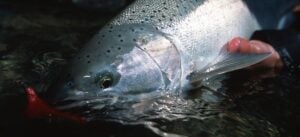
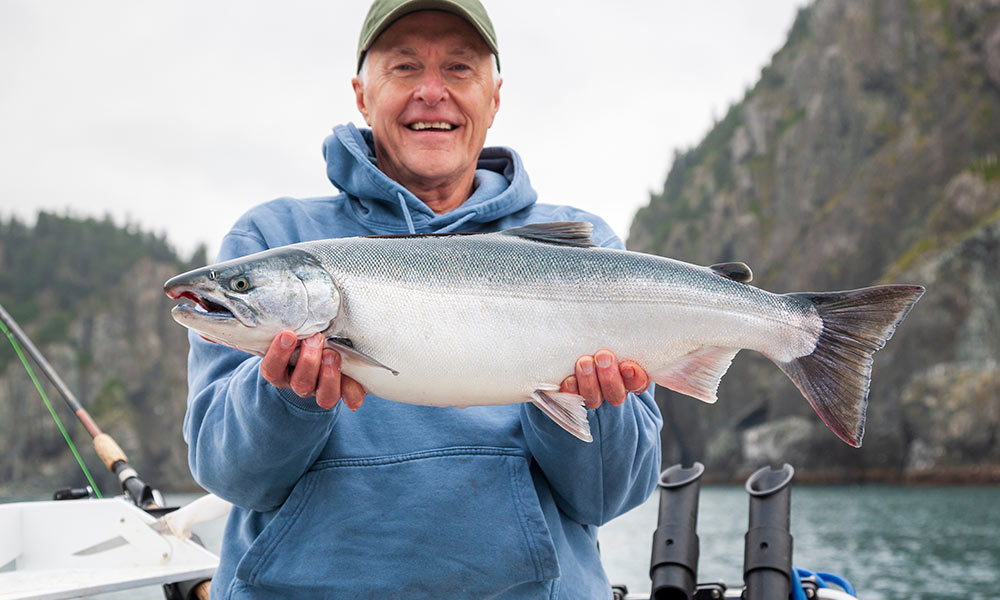
In the ocean, coho have a bright silver body with dark backs and small black spots on the back and upper lobe of the tail only — spots on the upper lobe only distinguishes them from Chinook, which are spotted on both lobes. The most reliable identifier is the combination of a dark mouth with a white gum line, in contrast to Chinook’s entirely black gum. As fish enter freshwater to spawn, coloring shifts to dark backs and heads with reddish-maroon sides. Males develop a pronounced hooked jaw; females retain a more torpedo-shaped profile with a blunter nose.
Timing matters — early-run fish are aggressive and chrome-bright, while later arrivals may require more refined presentation and stealth.
FishingExplora lists coho salmon lodges across Alaska. Each listing covers program structure, access, season dates, and direct contact with the lodge.
FishingExplora’s editorial content draws on lodge input, guide experience, published field reports, and independent research to help anglers make informed decisions about premium fishing destinations.
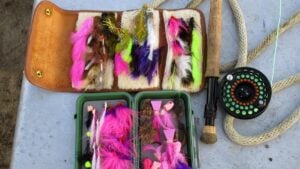
Bright, flashy streamers are the standard — Egg Sucking Leeches, Clouser Minnows, and pink or chartreuse bunny leeches are consistent producers. Most effective patterns combine flash with movement in hot pink, chartreuse, purple, or orange. Fresh-run fish close to tidewater are generally the most aggressive and willing to move to a fly stripped at speed.
Yes — coho are one of the few salmon species that reliably take surface flies, and the fishing can be exceptional. Deer hair poppers and patterns like the Pollywog work best in tidal reaches and estuary mouths where fresh fish are staging. The topwater take is highly visual and one of the most exciting strikes in Pacific salmon fishing.
Peak coho runs in Alaska typically occur from late August through September, though some Bristol Bay rivers see fish as early as mid-July. Timing varies by system — coastal rivers and tidal streams often run earlier than interior watersheds. Checking local reports in the weeks before a trip is the most reliable way to hit peak conditions.
Coho are widely regarded as excellent table fish, with firm, orange-pink flesh that holds up well fresh or frozen. Retention rules vary considerably by region and system — some Alaska rivers allow generous bag limits while others are catch-and-release only for wild fish. Always check current regulations before keeping fish.
Yes — coho are one of the better Pacific salmon for anglers new to salmon fly fishing. Their aggression means they will move to a fly stripped at pace, and the takes are decisive and visual. Tidal and estuary reaches, where fish are freshest and most active, are the most productive water for beginners targeting silvers on the fly.
We use cookies to improve your experience and enable key features on the platform. You can choose which cookies to allow. Some features may not work fully without consent.