Andros Island bonefishing is built on a geographic feature that most visiting anglers never fully appreciate: the island runs on two tidal systems simultaneously. The east side and the west side are always on opposite cycles — and guides who have spent their careers on this water use that fact every single day. It is the reason a well-guided week on Andros almost never loses a session to conditions. It is also the reason the fishing here is more consistently productive than anywhere else in the Caribbean.
Andros bonefishing earns its reputation on the strength of scale — it has more fishable flats than any other island in the Caribbean, and a guiding culture that runs generations deep. The practical question for any visiting angler is not whether to fish Andros, but which part of the island suits their objectives and when to go.
For anglers who have already decided on Andros and want to compare lodge programs directly, our Editorial Guide to Bahamas Fishing Lodge Programs covers the full range of programs FishingExplora lists across the island.
Why Andros Island Bonefishing Sets the Standard
Andros covers 2,300 square miles and is one of the least populated landmasses in the western hemisphere — larger than any other island in the Bahamas, and almost none of it developed. The West Side National Park alone covers 1.5 million acres of protected tidal flats and mangrove systems — established in 2002 and closed to development entirely. That protection is not incidental to the fishing; it is the reason the fish behave the way they do.
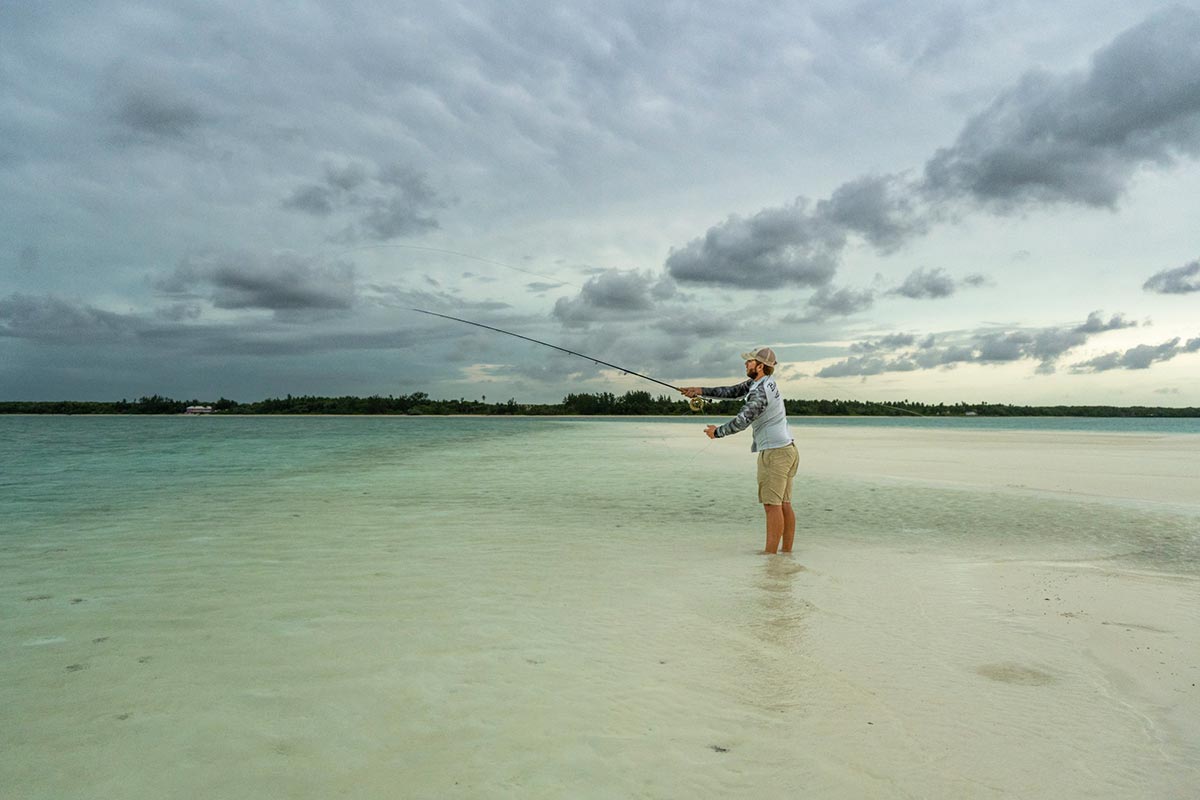
Bonefishing on Andros is built on two distinct systems — the Bights on the east side and the West Side ocean flats — that fish so differently they almost constitute separate destinations. What links them operationally is the tidal geography: Andros runs on opposing tidal cycles on its two shores, and guides who understand that system can keep anglers on productive water through difficult conditions that would close out any single-sided fishery.
The guiding culture is the other defining advantage. Most guides on the Bights grew up fishing, diving, and sponging these same flats before they ever poled a skiff professionally. On South Andros, many work as commercial lobster and conch fishermen through the off-season, returning each season to water they have been reading their entire lives. Scale, tidal flexibility, and that depth of accumulated local knowledge operating together is what makes Andros a different proposition from every other bonefishing destination in the Atlantic.
The Bights: Consistency, Volume, and the Tidal Advantage
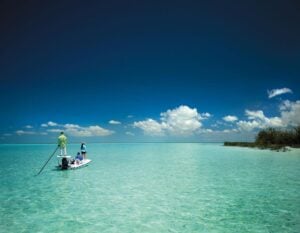
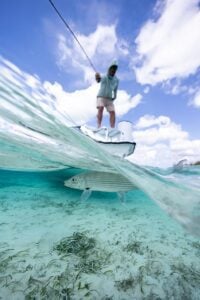
The Bights of Andros — North, Middle, and South — form the productive heart of the island’s bonefishing fishery. These are sprawling tidal networks of shallow flats, mangrove-edged channels, and creek systems that concentrate bonefish in numbers matched by few places on the planet.
How Guides Use the Opposing Tides
The operational advantage of a central Andros base is not just proximity to the Bights — it is the tidal flexibility that a central position unlocks. When a northeast wind makes the exposed eastern flats difficult, the Bights and creek interiors continue to produce. When the Bights are dropping and fish move off the flat, guides rotate to the ocean-side flats on the west while that system is pushing. The fishing changes character; it does not stop.
Guides on the Bights describe this as the single most important feature of a central Andros program: there is almost always fishable water within reach of the dock, regardless of wind direction or stage of tide. It is a structural advantage that only comes with deep knowledge of both systems — and that knowledge is what the multi-generational guide families of central Andros have built over decades.
The North, Middle, and South Bights
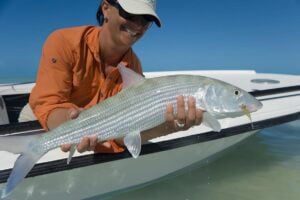
Andros island bonefish average 3–5 lbs across the Bights system, with regular encounters in the 6–10 lb range on the deeper channel edges and tidal creek mouths — and each Bight fishes differently enough that a week’s rotation covers genuinely distinct water. The North Bight tends toward broader, more open flats suited to skiff-based sight fishing — good for covering ground and locating tailing schools on a moving tide. The Middle and South Bights run tighter, with creek systems and channel edges that concentrate fish during tidal transitions and provide sheltered water when conditions on the open flats deteriorate.
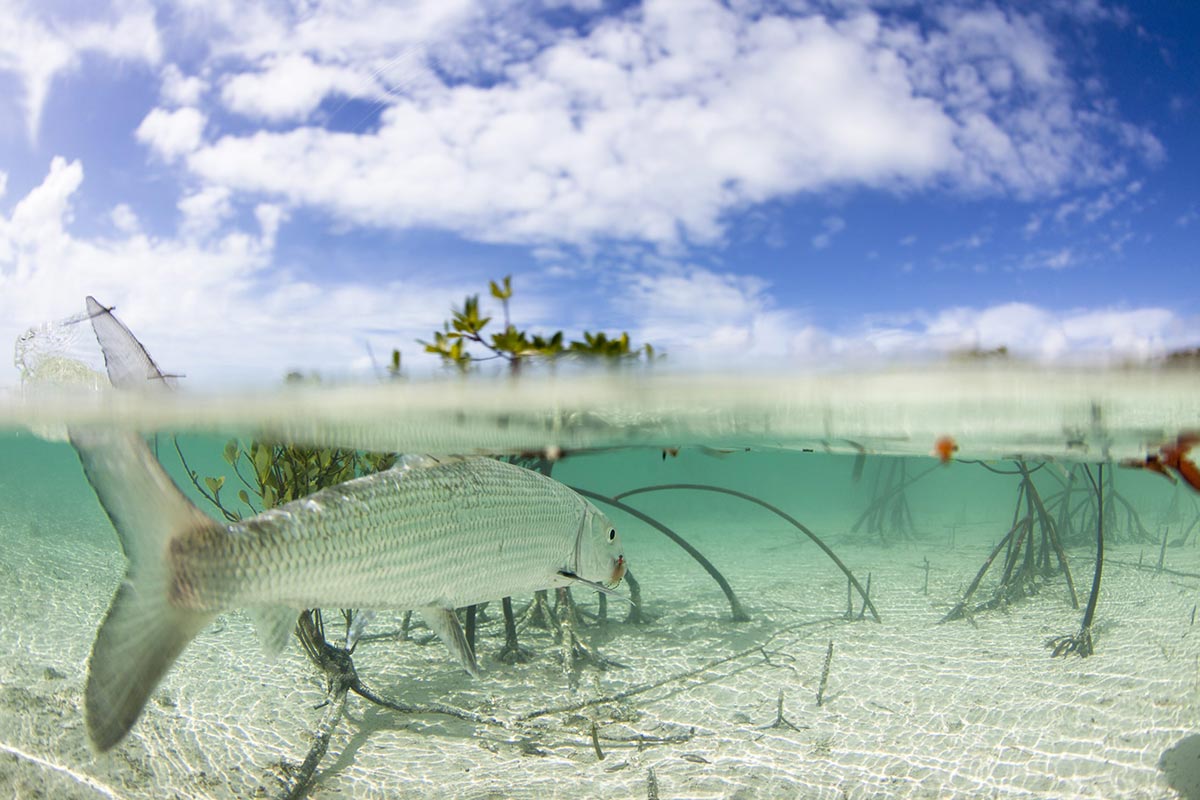
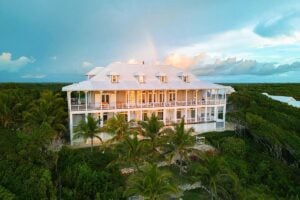
Lodges based at central Andros — Mangrove Cay specifically — can reach all three within a short skiff run, rotating through the day as the fish and tide dictate. Some of the most productive flats on the Bights system are found around Big Wood Cay and Moxey Creek — water that sits within immediate reach of a central Andros base.
The West Side: Trophy Bonefishing on Andros
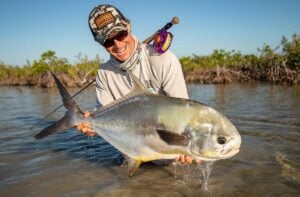
Known among dedicated bonefishing anglers as the Land of the Giants, the West Side of Andros Island, Bahamas is the ocean-facing flats and channel system located along the uninhabited western shore. It sees minimal guided traffic — and fish sizes reflect years of light pressure. Singles and pairs pushing 10–13 lbs are encountered regularly on the West Side channels. Double-digit fish are a realistic seasonal expectation, not a lucky outlier. It is the most consistent trophy bonefishing water in the Bahamas.
The West Side is more exposed than the sheltered Bights. Guides make the call based on wind and swell — when conditions allow, it is the destination within a destination that defines what bonefishing on Andros Island, Bahamas can actually deliver at its highest level.
West Side Access: Mangrove Cay vs. South Andros
Access to the West Side is one of the clearest practical differences between the two main Andros fishing bases, and it is worth understanding before choosing a lodge.
- Mangrove Cay (central Andros) — The central position puts the West Side within reach on any calm morning without a long exposed run. Guides here make the West Side a genuine option across a full week rather than a weather-dependent rarity. See our Mangrove Cay regional page for detail on the full range of water accessible from this base.
- South Andros — Guides reach the West Side through Little Creek — a route that cuts what was once a long exposed run around Cistern Point to a manageable skiff journey through the island’s interior. The southern cay flats between a South Andros base and the West Side also produce trophy-class fish on their own terms. See our South Andros regional page for a full picture of what that base offers.
Both Mangrove Cay and South Andros deliver West Side days on the right conditions. Central Andros reaches it more consistently across a full week; South Andros has the southern cay flats as a parallel trophy option that does not depend on the same weather window.
South Andros: The Southern Cay Flats and the Wading Fishery
South Andros adds a dimension that central Andros cannot match: hard white-sand flats and turtle grass banks stretching south toward the Water Cays, Jack Fish Cays, and Curley Cut Cays, where guides specifically target fish in the 7–10 lb class. The turtle grass holds larger cruising singles that behave differently from the tailing schools of the open sand — slower to spook, more deliberate in their feeding, and more reliably present through the middle of the tide. The southern cay systems require a longer skiff run from any South Andros base — far enough that casual guided traffic rarely makes it, and close enough to make it a regular part of a week’s program.
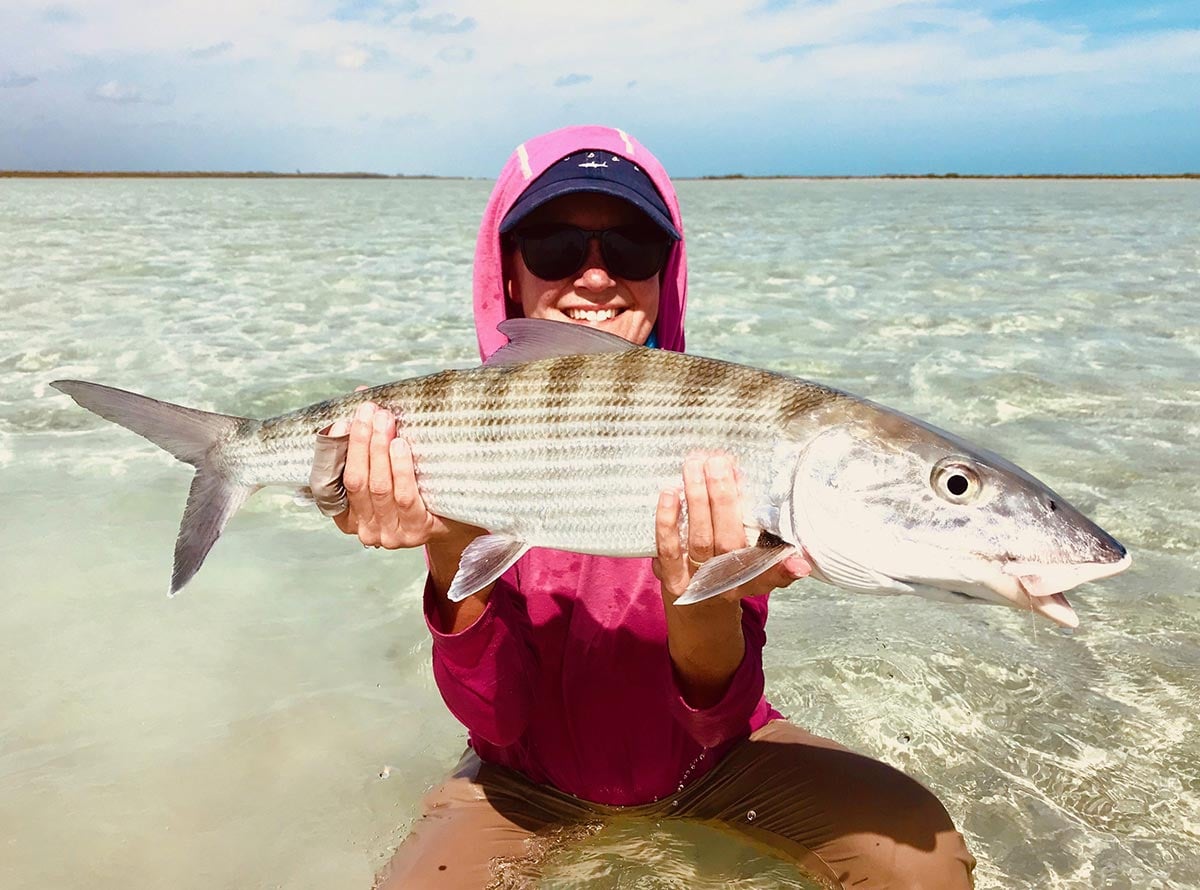
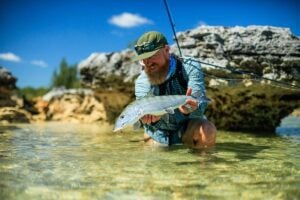
These are wading flats in the truest sense. The firm white sand is ideal for fishing on foot, the fish are large and unhurried, and the southern cay systems see some of the lowest guided pressure on the island. Grassy Creek and Hawksnest Creek further south are both lightly fished and consistently productive on calm mornings when guides can make the run. For anglers who plan their weeks around time out of the skiff — stalking singles on hard-sand flats rather than taking shots from the poling platform — the southern flats of South Andros are the clearest answer Andros has to that brief.
The creek systems of South Andros — Deep Creek and Little Creek — add further range. Together they open into more than 120 square miles of connected bays, small cays, and flats. They provide reliable shelter when trade winds make the exposed southern and western flats difficult, and they serve as the corridor to the West Side via the Little Creek route guides developed specifically to avoid the long open-water run around the island’s southern tip. From late spring onward, permit become a realistic secondary target on the southern and southwest flats — unpressured fish that reward anglers prepared to be rigged for them.
The Guide Culture That Defines Andros Bonefishing
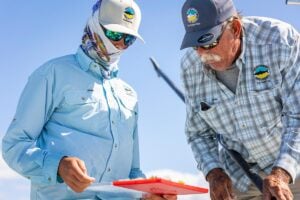
The guide families of Andros are not a marketing point — they are a genuine operational difference that shows up in the fishing. Most Bights guides grew up in the same communities where they now work: fishing, free-diving, sponging, and building water-specific knowledge well before they ever poled a skiff for a paying angler. On South Andros, the off-season overlap between guiding and commercial lobster and conch fishing means guides return each October to the same creek systems and channel edges they have worked commercially all summer. Individual guides on the South Andros flats with 25 to 30 years on this specific water are not unusual — that tenure is the norm among the senior guides, not the exception.
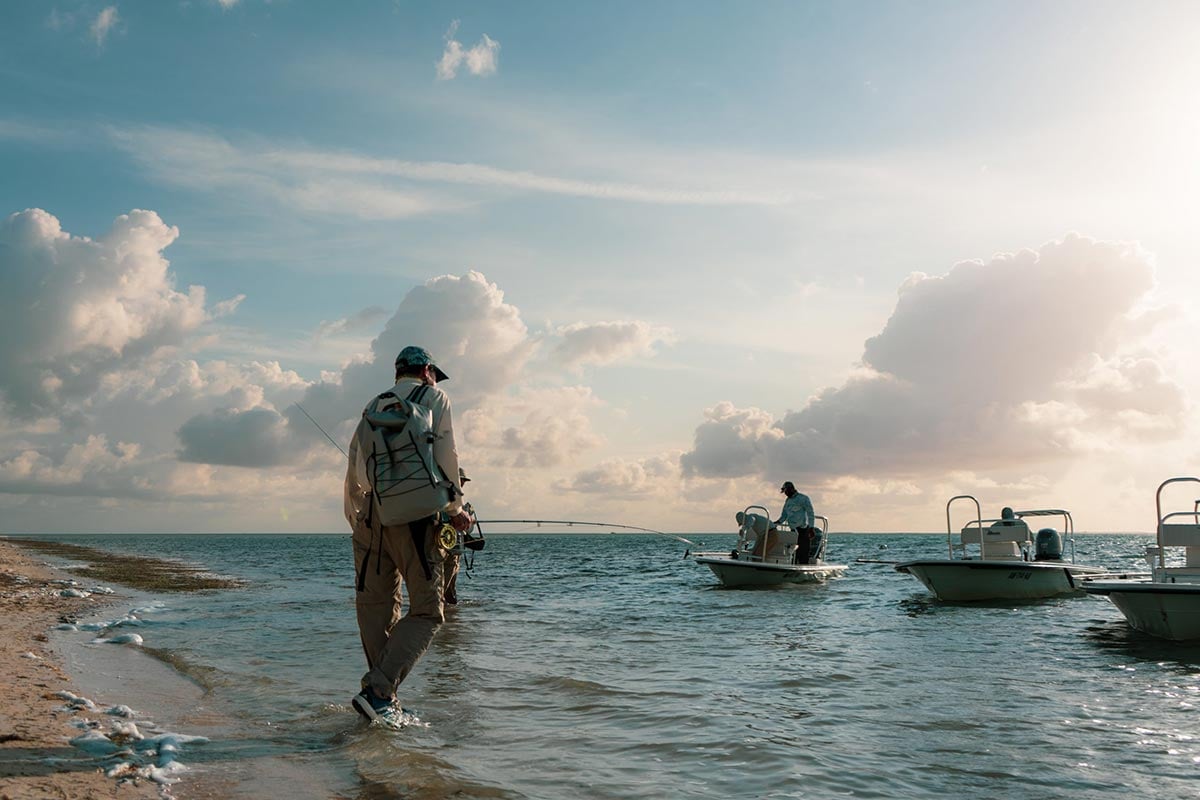
What that produces in practice is the kind of granular, system-specific knowledge that no amount of satellite imagery or fish-finding technology can replicate. Which specific flat along the south Bight produces tailers on a falling northwest wind at mid-tide in November. Which channel mouth in the Little Creek system concentrates larger singles when the tide drops below a fishable depth on the open flat. On the Bights, guides communicate by VHF radio throughout the day — sharing real-time fish locations across the fleet as conditions shift — a layer of collective intelligence that compounds the individual knowledge each guide brings. Lodge operators across Andros consistently note that the detail separating a productive day from a difficult one almost always comes down to guide knowledge of that specific flat on that specific tide — not the fish counts or the weather forecast.
The guides who have that knowledge — and there are generations of them on Andros — are the reason a well-guided week here consistently outperforms first-time anglers’ expectations.
Tides, Rotation, and How Guides Plan an Andros Week
A week on Andros is built around tides, not schedules. Guides plan each day around the tidal push — which flat activates on the incoming, where fish move as the water peaks, which channel edges hold them as the tide drops. Sessions begin at first light and track fish movement through the tidal cycle. The guide’s job is to anticipate where fish will be twenty minutes from now and be there before them.
Central Andros vs. South Andros: How Each Fishes Day to Day
The practical shape of an Andros week is determined by which base you are fishing from and what the conditions serve up. On a calm week from central Andros, a guide might run the North Bight on the morning push, rotate to the Middle Bight through mid-tide, and take the West Side run on any afternoon that the wind allows. On a windy week, the creek interiors and South Bight channels provide continuous fishing without ever needing the exposed water. The rotation changes; the day does not collapse.
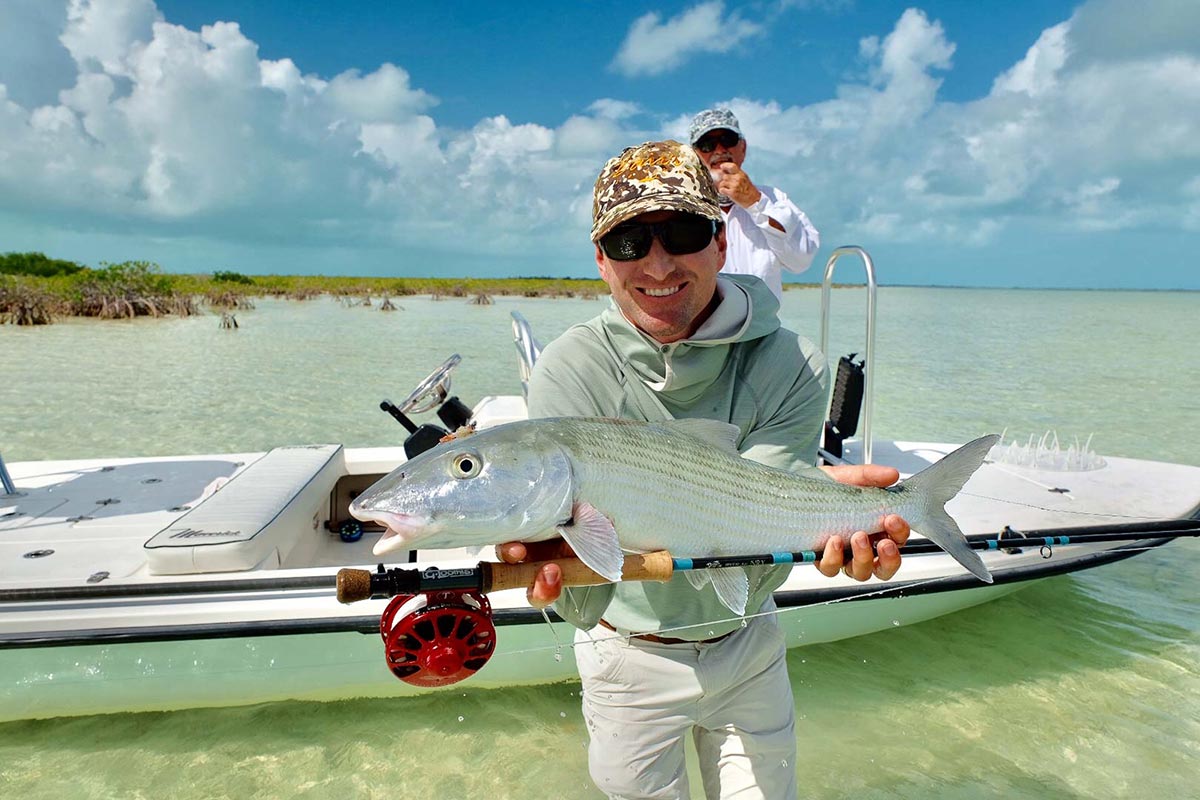
South Andros guides work a similar logic from a different set of options: the creek systems as the weather buffer, the southern cay flats for trophy hunting when conditions allow the run, and the West Side via Little Creek on the calmer days that open that water up. For anglers deciding between the two destinations, the clearest framing is this: central Andros maximizes tidal range and West Side access across a full week; South Andros maximizes average fish size and time on foot on hard-sand flats. For a full comparison of how Andros differs from Abaco as a bonefishing destination, see our guide to bonefishing in the Bahamas.
When to Fish Andros: Trophy Fish, Peak Season, and Shoulder Months
Andros fishes across a long season — October through June — and each window has a different character. For a full month-by-month breakdown of species windows, trade wind patterns, and how timing varies island to island, see our Bahamas bonefishing season guide.
In brief: October and November are underrated — fish are fresh back on the Bights in numbers after summer and pressure is well below the spring peak. December through February is the trophy window, with the largest fish most consistently encountered on the West Side and deeper channel edges of the Bights during warm tidal pushes. March through May is peak season: cold fronts have eased, water temperatures stabilize, and guides can run the full rotation including West Side days without the weather constraints that limit winter options. Tarpon enter the picture from April onward, with May and June the most productive window for adult migratory fish moving through the backchannel and creek systems.
Planning a Fishing Week on Andros: Where to Start
The planning decision for Andros comes down to two questions: which part of the island suits your fishing objectives, and which window of the season matches what you are after. Central Andros for the full Bights program and consistent West Side access; South Andros for trophy-class fish on hard-sand wading flats and a fishery built around larger average size. The trophy window in winter for the biggest fish; spring for the broadest combination of conditions, numbers, and species opportunity. Get those two decisions right and the week tends to take care of itself.
For a full breakdown of how each Andros lodge program is structured — and how to match the right program to the right type of week — see our Editorial Guide to Bahamas Fishing Lodge Programs.