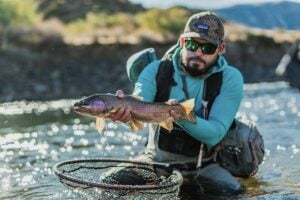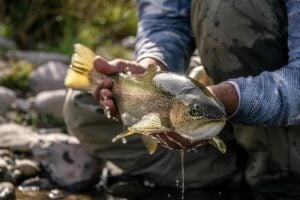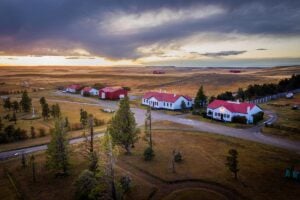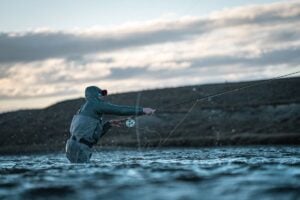
Argentina’s trout fishing divides into three experiences with almost nothing in common, each demanding a separate trip. Northern and central Patagonia offer wild browns and rainbows across Andean rivers, glacial lakes, and remote spring creeks — varied programs that rarely fish the same way twice. In the remote steppe of Santa Cruz, a trophy stillwater fishery produces wild rainbow trout of a size found nowhere else on earth. And in Tierra del Fuego, sea-run brown trout returning from the South Atlantic have made the Río Grande the most decorated sea-trout river on the planet. All three fisheries attract very different anglers, and understanding which one fits your fishing best is where planning begins.
Fly fishing for trout draws more visiting anglers to Argentina than any other freshwater pursuit. The country’s reputation was built on Patagonia — wild Andean rivers, remote estancias, and self-sustaining populations of brown trout and rainbow trout that have thrived in southern Argentina for more than a century.
But Argentina is not a single trout fishery. A week drifting the larger rivers around Junín de los Andes or Bariloche fishes very differently from walking spring creeks in Chubut, casting from the exposed shoreline at Jurassic Lake, or swinging flies through Río Grande pools in Tierra del Fuego. The techniques, gear, lodge structure, and seasonal timing differ enough across these regions that choosing the right fishery — or combining them on a longer trip — requires understanding what each actually delivers on the water.

Argentina’s Trout Fisheries — Geography and Context
Argentina’s trout fishing stretches from Neuquén province at around 39°S latitude down to Tierra del Fuego at 55°S — a sweep of roughly 1,000 miles along the eastern slope of the Andes and beyond.
What makes Argentina genuinely distinctive among the world’s trout fishing destinations is not any single fishery but the combination: wild, self-sustaining populations of resident brown and rainbow trout across Patagonia’s rivers and lakes; a trophy stillwater rainbow fishery in Santa Cruz producing fish of a size that few wild fisheries anywhere can match; and a sea-run brown trout river in Tierra del Fuego that holds more world records than any other system on the planet.
All three exist within a single country, on overlapping seasonal windows, supported by decades of catch-and-release culture and private water management that has allowed those populations to flourish. No other country offers that range within one travel itinerary.
Trout are not native to Argentina. Brown trout, rainbow trout, and brook trout were all introduced during the early twentieth century and have since established entirely self-sustaining wild populations across the region’s cold, food-rich river and lake systems. Understanding the three separate introduction events helps explain why each fishery has its own distinct character.

Rainbow trout arrived first, through government-led stocking programs beginning in 1904, when the first viable shipments of eggs reached Argentina from the United States. Sea-run brown trout came separately and later: in 1935, British settler John Goodall shipped 60,000 brown trout eggs from Puerto Montt, Chile, and planted them in two tributaries of the Río Grande in Tierra del Fuego — a private initiative that created what is now one of the most significant migratory trout fisheries in the world.
Jurassic Lake’s fishery developed later still: in 1989, local landowner Julio Citadini stocked McCloud-strain rainbow fingerlings into the Barrancoso River, the lake’s only significant tributary, and assumed the effort had failed — until thriving fish began appearing in both the river and the lake years later.
The result across all three introductions is wild, self-sustaining populations that have reproduced without meaningful human interference for decades — fish that are genetically distinct from stocked populations elsewhere, and in the case of Jurassic Lake in Santa Cruz, producing wild rainbow trout of a size that stocked fisheries elsewhere can approach but genuinely wild ones cannot match.
For a full comparison of how individual lodge programs are structured across Patagonia Argentina’s trout fisheries — and how to choose the right fit — see our Patagonia Argentina fishing lodges guide.
Northern Patagonia — Neuquén and Río Negro
Northern Patagonia is where Argentina’s trout fishing reputation was built, and where the majority of visiting anglers still come to fish. Centered on Junín de los Andes and San Martín de los Andes in Neuquén province and extending south through Río Negro to Bariloche — the main gateway city for the region — this is the most varied and logistically accessible part of the country’s trout fishery.
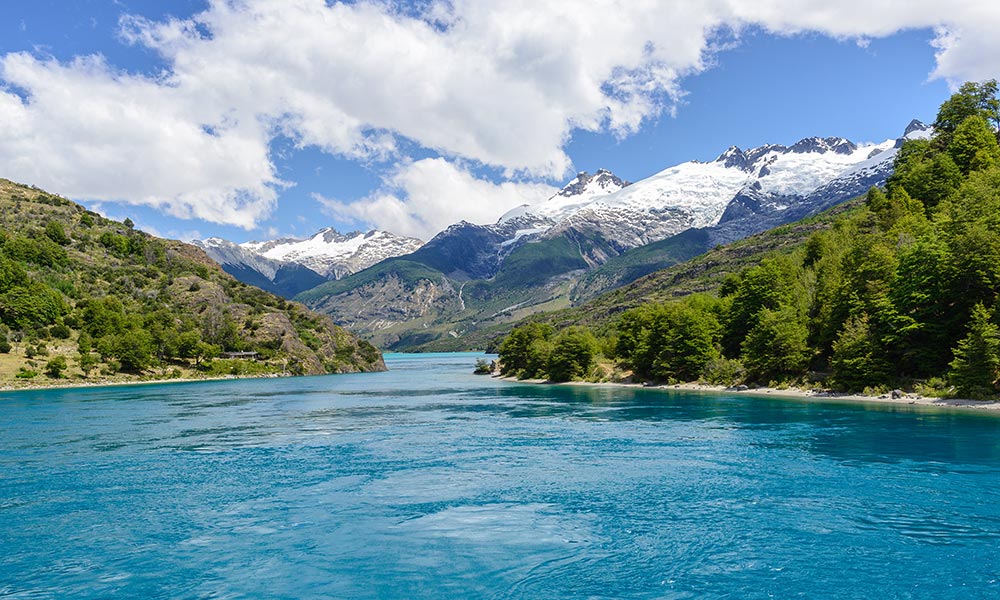
The landscape ranges considerably depending on where you are. Close to the Andes, rivers emerge from forested mountain valleys — lenga beech forest, volcanic peaks, large glacial lakes — in a setting that has drawn visiting anglers since the mid-twentieth century. Further east, those same rivers flow through broader, more open valleys reminiscent of the American West. The Chimehuín, Collón Curá, Limay, Malleo, and Aluminé all run through this zone, each with its own character: some are large freestone rivers well suited to drift boats, others are technical wade-only streams with prolific hatches and selective fish.
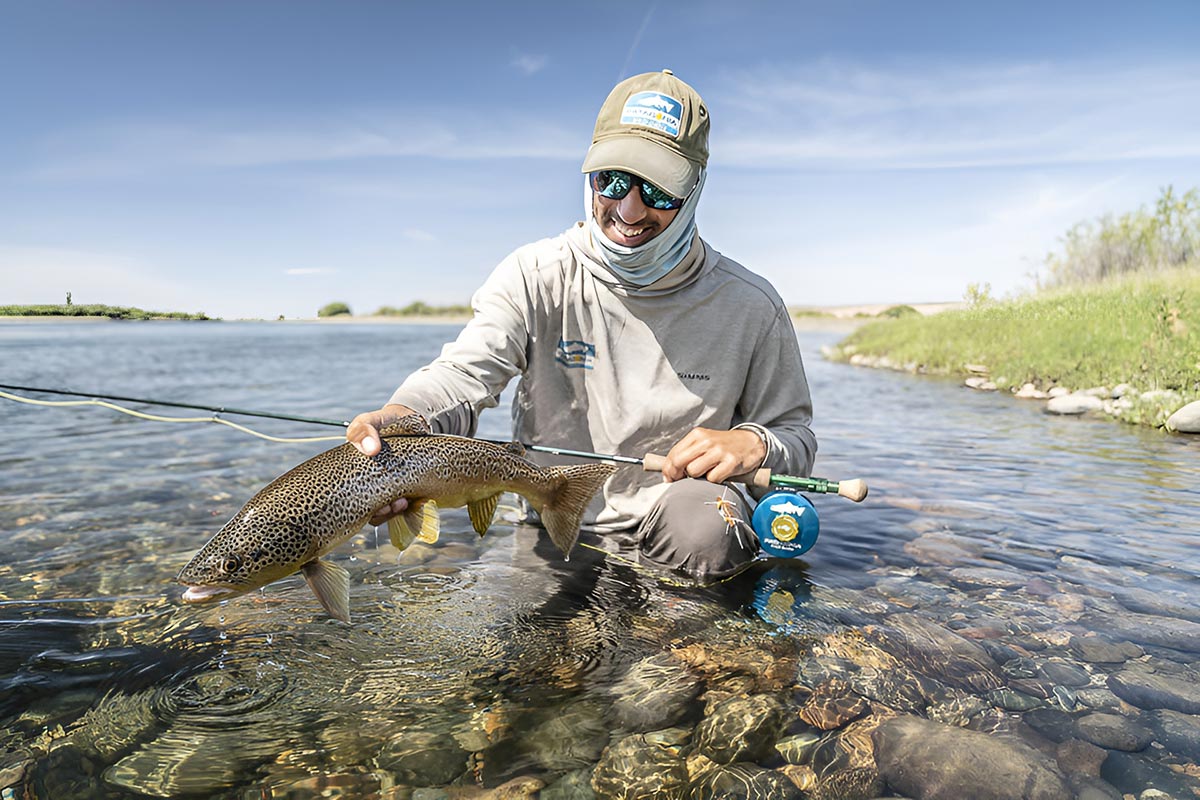
Both brown trout and rainbow trout are widespread throughout northern Patagonia. Most lodge programs combine drift-boat fishing on larger rivers with smaller tributaries, spring creeks, and lakes depending on conditions and season — no two days fish the same way on a well-designed program here.
The season runs November through April. Early season is shaped by snowmelt, with flows varying considerably between systems. January and February bring the most stable weather and the strongest terrestrial fishing of the year — beetles, hoppers, and ants falling from streamside vegetation onto rivers that see relatively few flies through a season. By March and April, cooler temperatures and pre-spawn behavior often produce the best fishing for larger brown trout.
Anglers who have fished the classic rivers of the American West — the Madison, the Green, the Gallatin — will find northern Patagonia familiar in character but wilder in scale, with significantly less fishing pressure and fish that have seen considerably fewer flies.
Central Patagonia — Chubut and Río Pico
Further south into Chubut province, the landscape transitions. Around Esquel, Trevelin, and Los Alerces National Park the country is still partly forested — notably the rare Patagonian cypress forests of Los Alerces — but opens progressively as you move south and east toward Río Pico, where open steppe and spring-creek valleys replace the Andean forest entirely. This is the least internationally marketed trout fishing region in Argentina, and some rivers here receive very little pressure outside of lodge programs.
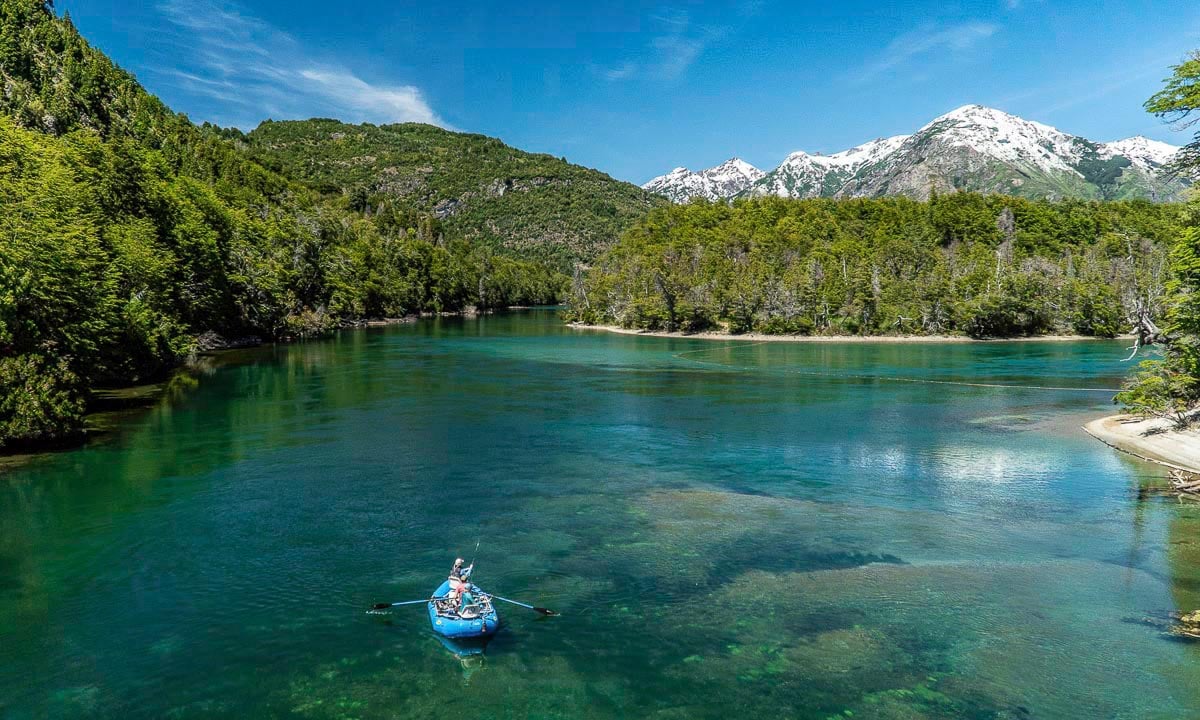
The fishing character changes considerably from the north. Rivers like the Rivadavia in Los Alerces National Park and the spring creeks of the Arroyo Pescado reward precise presentation to selective fish in low, clear water. Further south, the Río Pico and Corcovado offer larger, wilder freestone fishing in a landscape that sees a handful of visiting rods per season. Walk-and-wade fishing dominates throughout. Brook trout appear more regularly in the colder, higher-elevation systems — particularly in Los Alerces and the smaller alpine lakes of the Río Pico area — though brown and rainbow trout remain the primary target throughout the region.
Central Patagonia suits anglers who genuinely enjoy smaller, more technical water and don’t mind trading some of the infrastructure of the north for lower rod pressure and a more exploratory experience.
Southern Patagonia — Jurassic Lake and the Santa Cruz Steppe
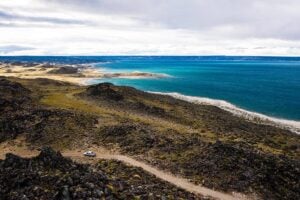
South of Chubut, the landscape changes fundamentally. Santa Cruz province is open, treeless basaltic landscapes — elevated plateau country, vast and windswept, with none of the forested Andean drama of the north. It is in this environment that Lago Strobel sits, at the end of a five-hour road transfer from El Calafate: a remote, 65-square-kilometer endorheic lake known internationally as Jurassic Lake, and widely regarded as the finest wild rainbow trout stillwater fishery in the world.
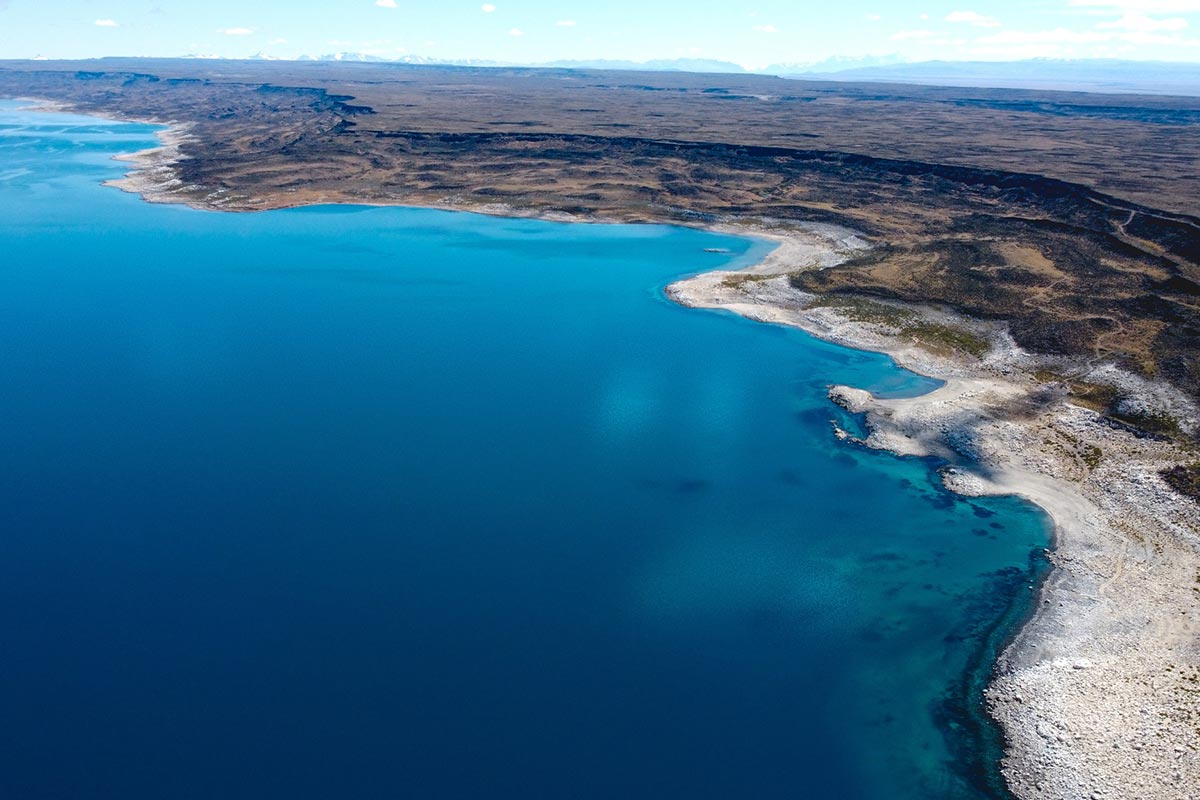
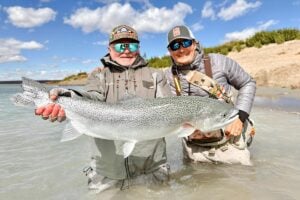
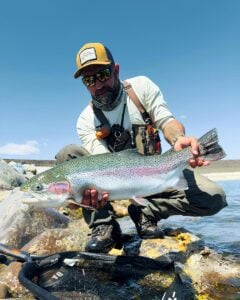
The fishery bears no resemblance to Patagonia’s river programs. There are no drift boats, no hatches to match, and little shelter from the weather. Most fishing is done on foot along exposed shoreline or on the Barrancoso River — the lake’s only significant tributary — which fishes particularly well early and late in the season when trout concentrate in its pools and runs. Rainbow trout here average 6 to 8 pounds, with double-figure fish routine and specimens over 20 pounds taken each season. These are entirely wild, self-sustaining fish — fed on dense freshwater shrimp populations (scuds) with virtually no predation pressure — fish that have grown to sizes that no comparable wild stillwater can come close to.
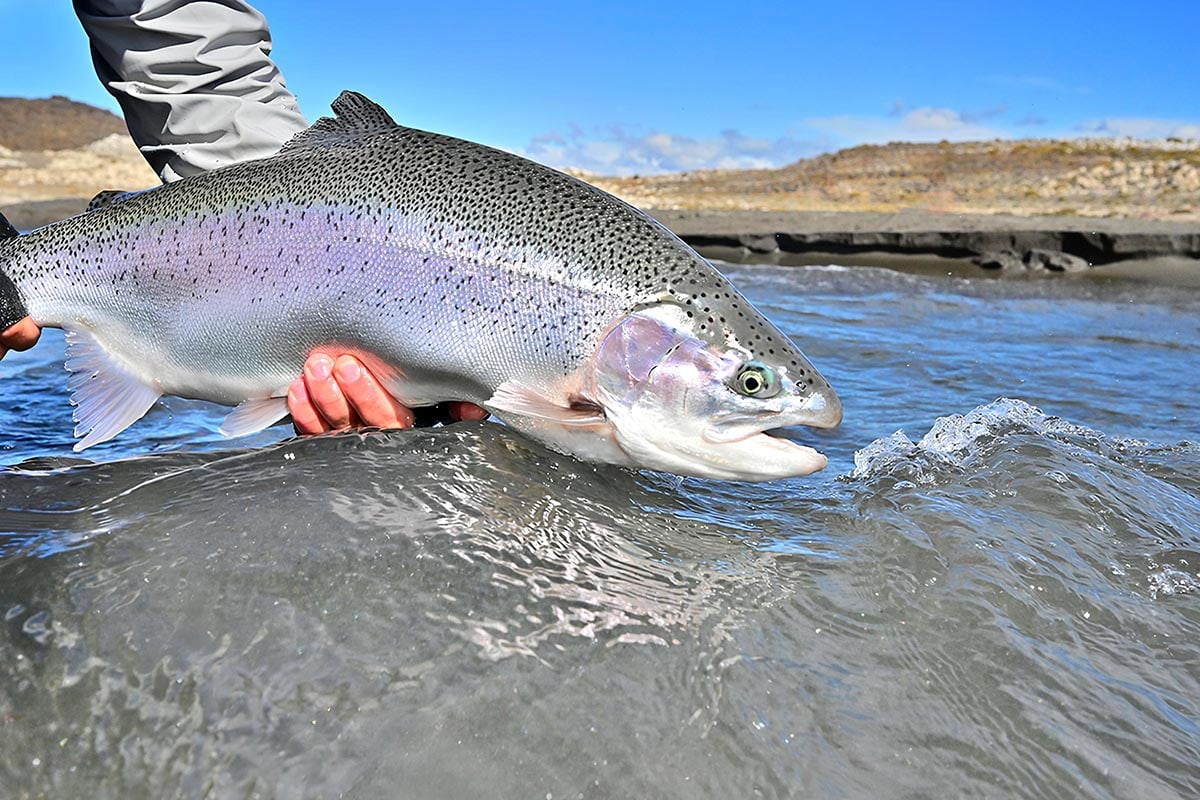
The season runs October through April, with peak fishing from December through March. The place suits anglers specifically motivated by the prospect of large wild rainbows in a demanding environment. Long hours walking shoreline, casting into sustained wind, and stripping flies continuously through shallow lake margins is the reality of a week here. Anglers seeking the variety of experience that northern Patagonia offers will find it limited — this is one pursuit, pursued with full commitment.
For a dedicated guide to trout fishing across northern, central, and southern Patagonia — including how to choose between programs and what each region delivers on the water — see our <a href=“https://fishingexplora.com/journal/patagonia-trout-fishing/“> Patagonia trout fishing guide</a>.
Sea-Run Brown Trout — Tierra del Fuego and the Río Grande
Tierra del Fuego lies across the Straits of Magellan from the Patagonian mainland — a largely treeless, windswept archipelago at the southern tip of South America, shared between Argentina and Chile. The landscape is open steppe, subantarctic in character, colder and more exposed than Santa Cruz. For trout anglers it means one thing: the Río Grande, and the sea-run brown trout that return to it each summer from the South Atlantic.
These fish trace back to the 1935 Goodall introduction. In the cold, food-rich waters of the South Atlantic, those original brown trout adapted into a migratory strain that now produces some of the largest sea-run brown trout in the world — fish that average into the teens, with legitimate shots at 20 pounds or better most weeks of the season. The Río Grande holds more world records for sea-run brown trout than any other river system on the planet.
The Río Gallegos on the Patagonian mainland — running to the Atlantic north of the Straits of Magellan — is a peer sea-run fishery worth knowing: comparable fish, a similar season, and considerably less competition for space than the Río Grande’s most sought-after beats.
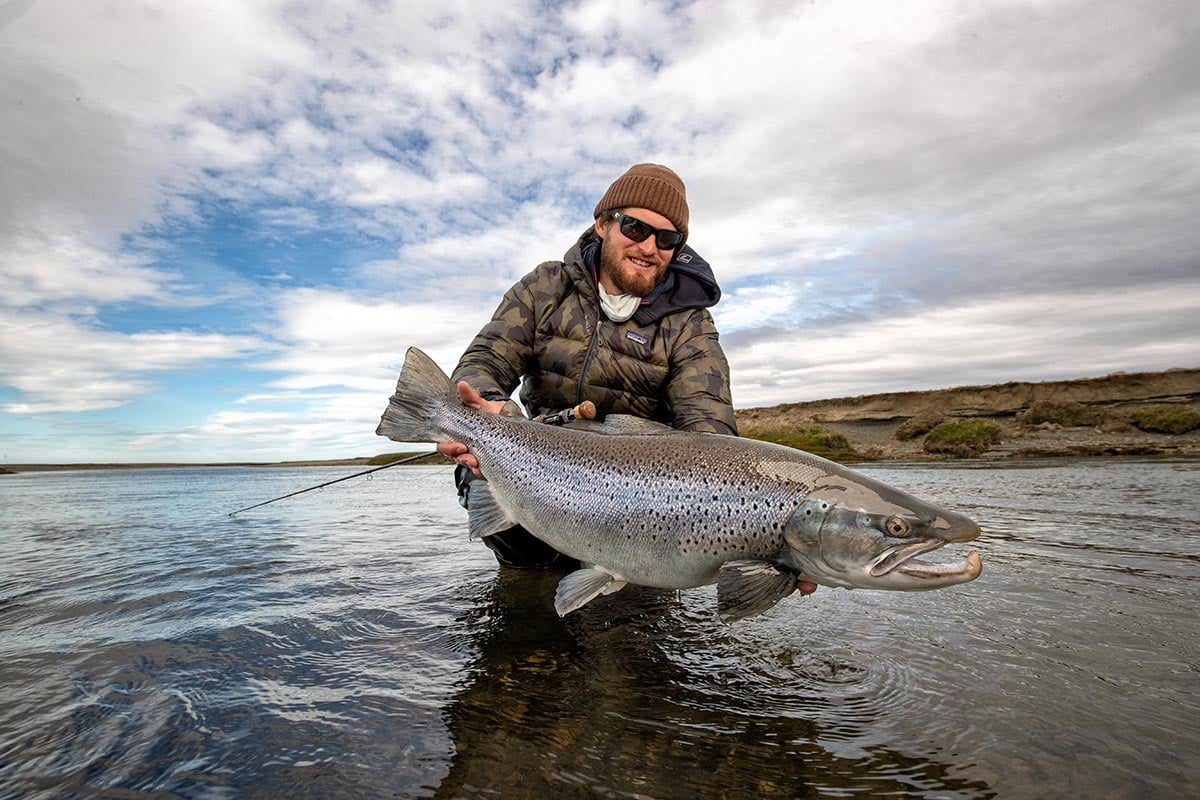
The fishing is built around a private beat system, with lodge guests rotating through defined pools with a dedicated guide. On wider lower beats, double-handed Spey rods are the practical standard — the river has long pools, the southwest wind is constant, and covering water effectively demands the reach and line control that single-hand rods cannot consistently provide. Fresh fish push into the lower system through January and February; March often produces the most settled fish holding consistently through the pools.
This is a specialist pursuit. The best lodges and beats book years in advance, the wind can be unforgiving, and the fishing can be slow. Anglers who arrive with realistic expectations and solid Spey casting experience consistently fish it better than those expecting high-volume action.
For a full breakdown of how the beat system works, what each month delivers, and what the Río Grande requires in terms of gear and preparation, see our guide to sea-run brown trout fishing in Argentina.
When to Fish for Trout in Argentina
Argentina’s main trout season runs November through April across Patagonia, with Tierra del Fuego operating on a tighter January through April window.
In northern Patagonia, November and December are shaped by snowmelt — flows vary considerably between systems and some rivers stabilize more quickly than others. January and February bring the most consistent weather and the strongest terrestrial fishing. March and April cool noticeably and often produce the best opportunities for larger brown trout as fish feed aggressively ahead of winter.
Central Patagonia follows a broadly similar rhythm, with the glacial headwaters of many Chubut rivers providing more stable flows through the season than the snowmelt-dependent systems further north.
Jurassic Lake follows its own pattern. The main lake fishes most consistently December through March. The Barrancoso River produces particularly well early and late in the season — October through November and again through April — when fish concentrate in the river system rather than dispersing across the lake.
In Tierra del Fuego, January sees the first significant runs of fresh sea-run fish entering the Río Grande. February is generally the prime month, balancing fish numbers with fresh arrivals. March produces the most settled conditions as fish distribute through the system.
For a full breakdown of how each period fishes across Argentina’s trout fisheries, see our best time to fish in Argentina guide.
Planning Your Argentina Trout Fishing Trip
Argentina’s depth as a trout fishing destination comes from variety rather than a single famous river. The country offers the full spectrum of what trout fishing can be — classic river and lake fishing for wild resident fish, trophy stillwater, and migratory sea-run fishing — all within a single country and all underpinned by wild populations that have been self-sustaining for decades. The planning decision is simply which part of that spectrum to fish first.
Northern Patagonia suits anglers who want variety: different water types, different techniques, and the flexibility to adapt across rivers, lakes, and spring creeks through a single week. The region’s large private estancias — accessible through a well-developed network of outfitter programs — give guests access to beats that see a fraction of the pressure of the well-known public circuits. The lodge infrastructure is well developed, the season is long, and a good program rarely fishes the same way twice.
Central Patagonia around Chubut and Río Pico suits anglers looking for a rawer, more expedition-style experience — backcountry rivers and national park systems that even the best-connected northern lodge programs cannot access, in a landscape that sees very few visiting rods. The trade-off is less lodge infrastructure and more demanding logistics — for the right angler neither is a deterrent.
Jurassic Lake is for anglers specifically motivated by the prospect of large wild rainbow trout in a remote, physically demanding stillwater environment. It is one fishery, one technique, and one very specific kind of commitment. The reward for the right angler is unmatched anywhere in the Southern Hemisphere.
The Río Grande in Tierra del Fuego is for trophy sea-run brown focused anglers, rewarding those who are comfortable spey casting and fishing patiently through wind and changing light. The best beats are reserved years in advance — that booking typically anchors the rest of the itinerary around it.
Multi-region trips work well within Argentina’s geography. Jurassic Lake and Tierra del Fuego combine naturally — both operate within a similar seasonal window and connect reasonably easily through El Calafate. A possible itinerary pairs a week at each. Adding northern Patagonia requires more travel but is manageable within a two to three week itinerary. If your dates are fixed, choose the fishery that best matches those conditions rather than forcing a destination into the wrong seasonal window.
Trips costs: In practical terms, all of these programs sit at the premium end of destination fly fishing globally. Patagonian river and lake programs typically run in the $4,000–$7,000 per week range all-inclusive depending on lodge and water access; Jurassic Lake programs sit in a similar bracket. Río Grande weeks on the top beats are generally the most expensive category, reflecting both the cost of beat access and the scarcity of prime slots.
Most programs are fully inclusive of guiding, accommodation, meals, and in-country transfers — fishing licenses are typically included or arranged on arrival. Pricing in this category moves annually; for current rates and to compare specific lodge programs, visit our Argentina fishing lodges guide, from where you can view lodge pages and contact owners directly.
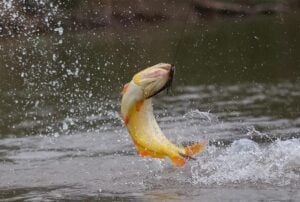
For anglers whose interest extends beyond trout to Argentina’s northern dorado fisheries, the same guide covers lodge options across the full country. If Argentina has opened the door to fishing travel at this level, our guide to luxury fishing lodges and exclusive retreats worldwide covers the full spectrum of what’s possible for the traveling angler.