Bristol Bay runs on aircraft, sonar data, and precise timing. Virtually no road access. Floatplanes only. Forty thousand square miles of tundra, braided rivers, and interconnected lake systems holding wild fish that have never seen a hatchery. The planning decisions that shape a Bristol Bay trip carry real consequences — get the timing, the drainage, or the access model wrong and the week reflects it.
No other fishing region in Alaska operates at the scale of Bristol Bay. The watershed spans southwestern Alaska from the Alaska Range to the Bering Sea coast, encompassing nine major river systems and hundreds of lakes. A coastal margin adds saltwater options to what is already the most productive freshwater fishery in the state.
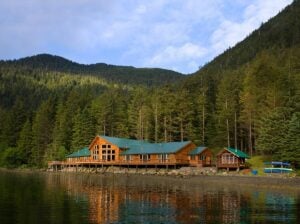
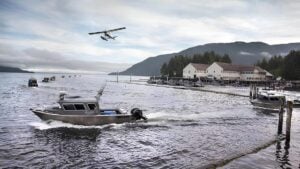
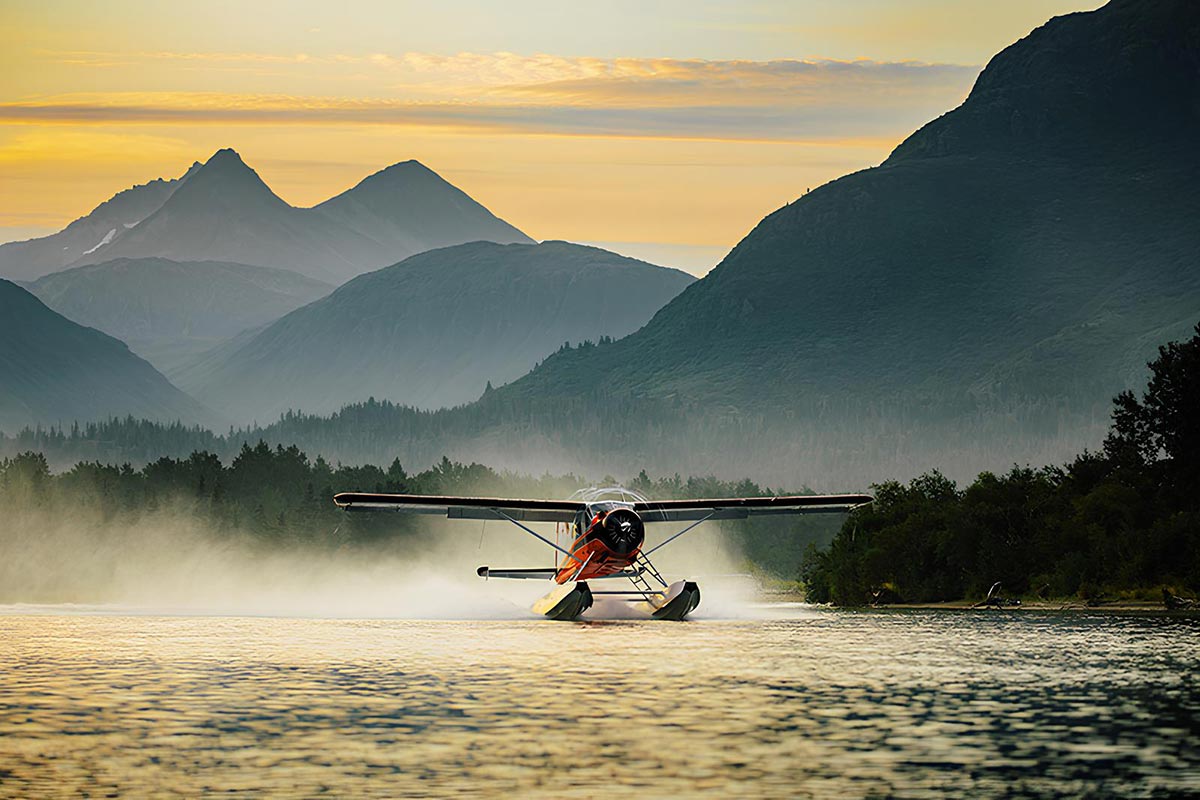
The vast majority of Bristol Bay lodges are floatplane-access only, due to the region being mostly roadless. Some operations on the lower Naknek River and nearby coastal areas are accessible by road or boat from King Salmon, but the fishing water that defines Bristol Bay is essentially aircraft-dependent. That dependence on aircraft shapes everything about how a Bristol Bay week is built — which rivers you can reach, how guides respond when conditions change, and why the lodge you choose matters as much as the destination itself.
This guide covers the basics of how fishing in Bristol Bay works — the species in the rivers and lake systems, when you can target them, and what the fly-out access model means for a week on the water. For lodge program comparisons and which type of angler each Bristol Bay operation genuinely suits, our Editorial Guide to Alaska Fishing Lodge Programs covers that in more detail.
How Bristol Bay Fishing Actually Works
Unless you go down the self-guided DIY Alaska fishing path, the practical reality of fishing Bristol Bay is that you are not choosing a river — you are choosing a lodge program. That lodge program then determines which rivers you can reach. Almost every worthwhile water in the region is accessible only by floatplane or bush aircraft. A lodge with limited permits fishes a fundamentally different week than one with concessions across national park, refuge, and state park drainages. In addition, the guides who have spent years learning which of those waters fish well on any given day are what turns permit access into productive fishing.
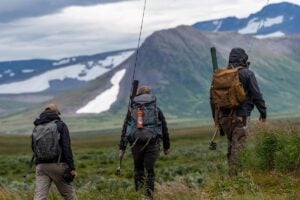
The fly-out fishing model is what makes fly fishing Bristol Bay what it is. Guides make daily destination decisions based on overnight ADF&G sonar counts, water conditions, weather windows, and which drainages are showing the most active fish movement. On many Alaska lodge programs, no two days fish the same water — the week builds variety across the watershed rather than repeating the same beats on a single river. That rotation matters practically. Salmon runs move fast, conditions shift, and a guide who can redirect to an alternative drainage when Plan A doesn’t cooperate will usually outperform one committed to a fixed home river.
Weather is the variable no program eliminates. Low cloud, wind, and coastal fog can ground aircraft for a full day in any month of the season. Programs with larger flight ranges and more backup drainages handle weather days better than those built around one or two rivers. Before booking, ask any operator directly which waters they can access — it’s often the most revealing question you can put to them.
River Fishing in Bristol Bay
The rivers are what most anglers picture when they think about Bristol Bay fly fishing — braided gravel-bar systems, tundra banks, and water clear enough to see fish holding in the current before presenting a fly to them. The major drainages each have their own character and their own run timing — and the species that define each window are what shape the week.
Bristol Bay Salmon Fishing: Five Species in Sequence
Five Pacific salmon species run through Bristol Bay across a June-through-September season, each peaking in different water systems at different times. The salmon fishing Bristol Bay offers varies dramatically by month — get the sequence right and the week delivers. Arrive at the wrong point in the run and the same river tells a different story entirely.
King Salmon (Chinook)
King salmon are the most time-sensitive target in the region, due both to their short migration run and state regulations. The Nushagak River carries the largest wild king salmon run in Alaska, with fish typically building through June and concentrating hard in the latter half of the month. Guides who fish the Nushagak describe the peak as one of the most compressed opportunities in Bristol Bay: the run arrives fast and moves through quickly. If you are after kings, you need to be there at the right time on the right stretch of river. Miss it by a few days and you may have lost the opportunity of hooking into a king salmon for your entire trip.
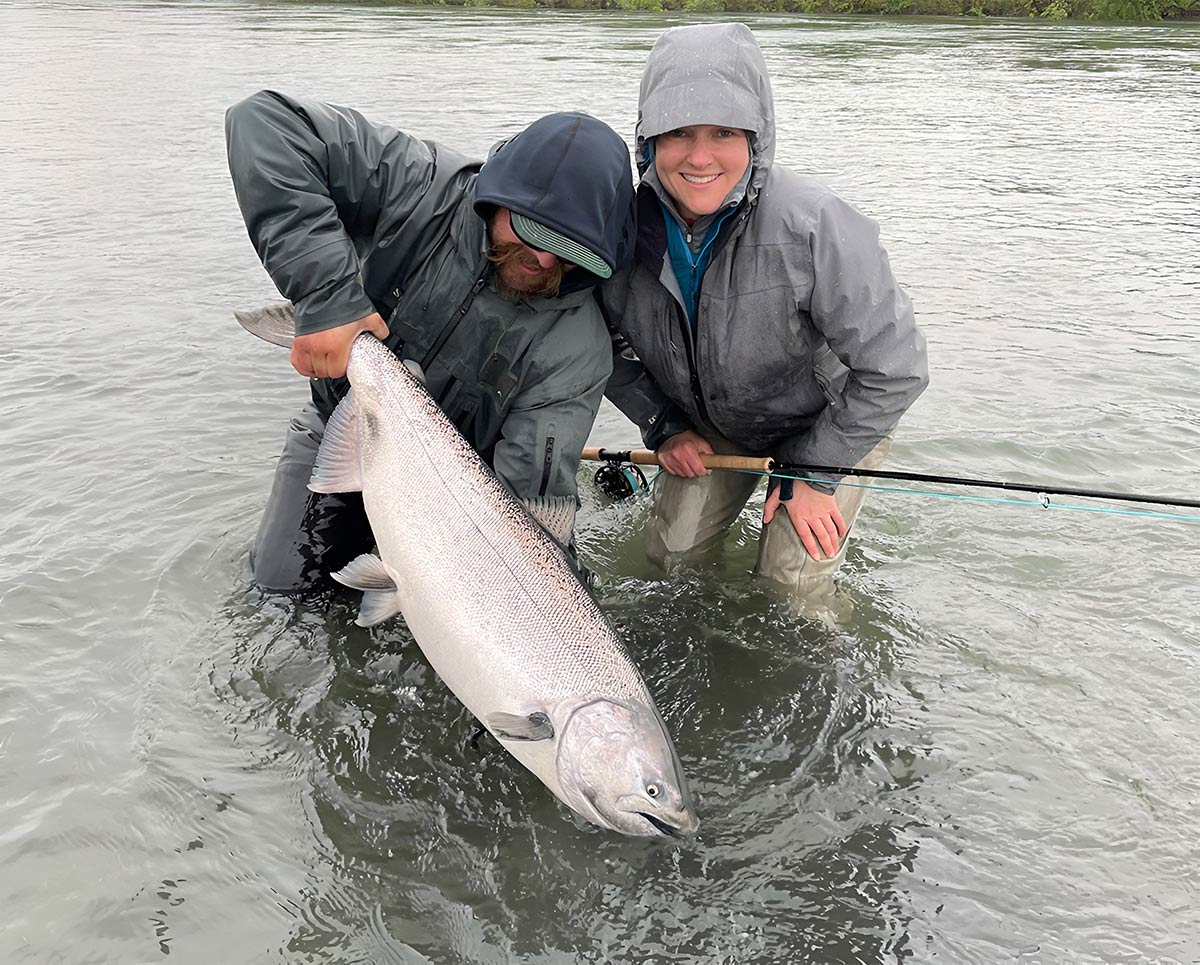
The Bristol Bay king salmon season runs across the Naknek, Alagnak, Nushagak, and Togiak systems from mid-June through late July, closing statewide by regulation on July 31.
Sockeye Salmon (Red)
Hard-fighting sockeye are the engine of the Bristol Bay season and the reason early July is the most sought-after window on the calendar. The watershed hosts the largest wild sockeye run on earth. ADF&G sonar data confirms peak counts across most major systems in the first half of July in a typical year, with the Kvichak drainage carrying the single largest single-river return. The Wood River and Naknek drainages add substantial volume through the same window.
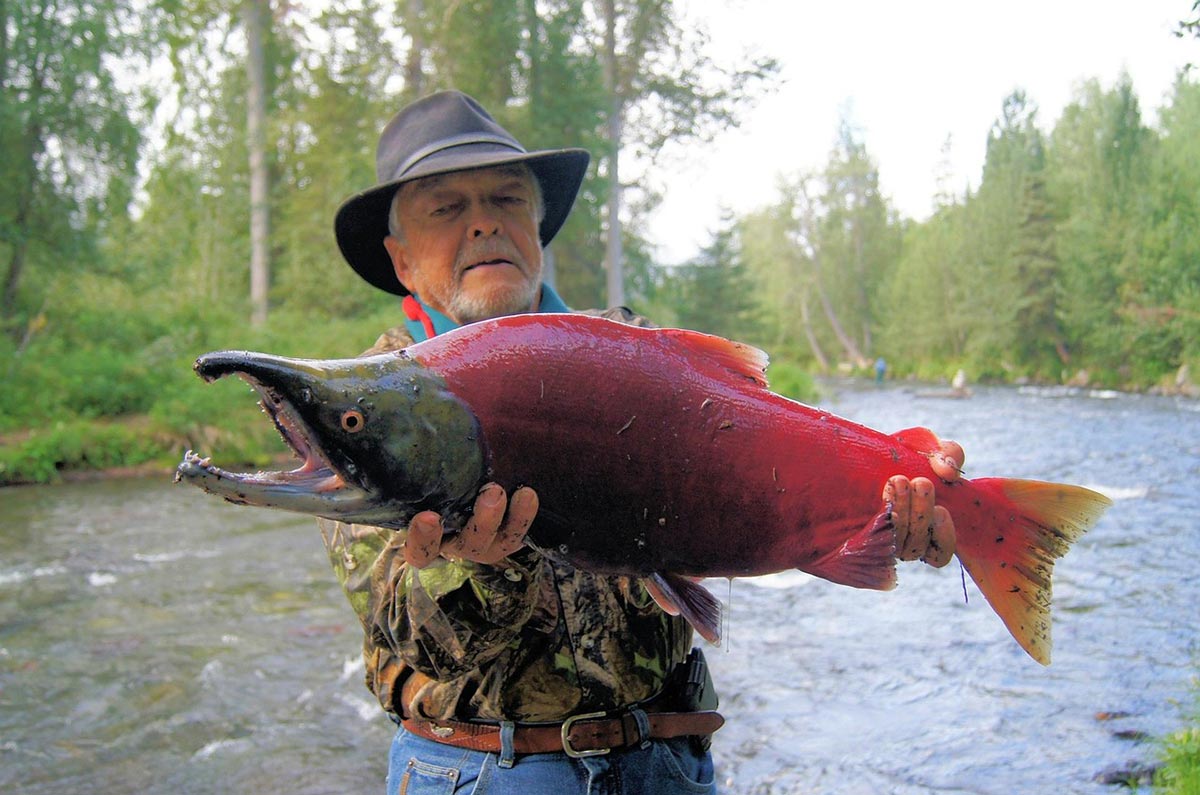
Sockeye on the fly requires specific technique — the fish are not actively feeding in fresh water, and presentations need to intercept fish at the right angle and depth. On days when the guide has it dialed, fish after fish rolls off the same lie. On days when the angle is slightly wrong, the same run produces nothing. That gap is why local knowledge matters more on sockeye than on any other salmon in the region.
Coho Salmon (Silver)
Coho arrive chrome-bright from early August, and the western drainages — the Kanektok, Goodnews, and Alagnak — are consistently the strongest coho salmon rivers in the region. The Kanektok, a clearwater system of close to 100 miles draining to Kuskokwim Bay within the Togiak National Wildlife Refuge, is one of the most reliable and least-pressured coho fisheries in Alaska — guides who have fished it for years say the same thing. The Goodnews runs a similar pattern with even lower rod pressure.
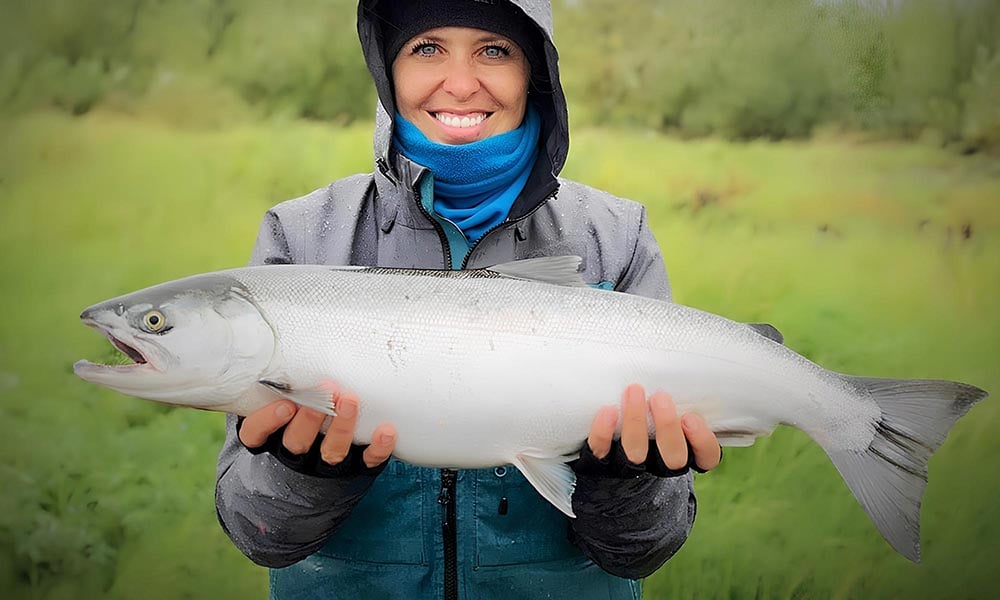
Coho are the most willing salmon on a fly rod, and a primary target species: aggressive fish that take streamers hard and hold in visible lies that reward a deliberate presentation.
Chum Salmon (Dog)
Chum salmon are consistently underrated across Bristol Bay — running alongside kings through June and into mid-July on the Nushagak, Alagnak, and Togiak systems, averaging 8 to 12 pounds, and taking large bright streamers aggressively. Most visiting anglers walk straight past them in pursuit of sockeye. On an 8-weight with a sink-tip they are a strong, satisfying fish in their own right and encounter almost no deliberate angling pressure.
Pink Salmon (Humpy)
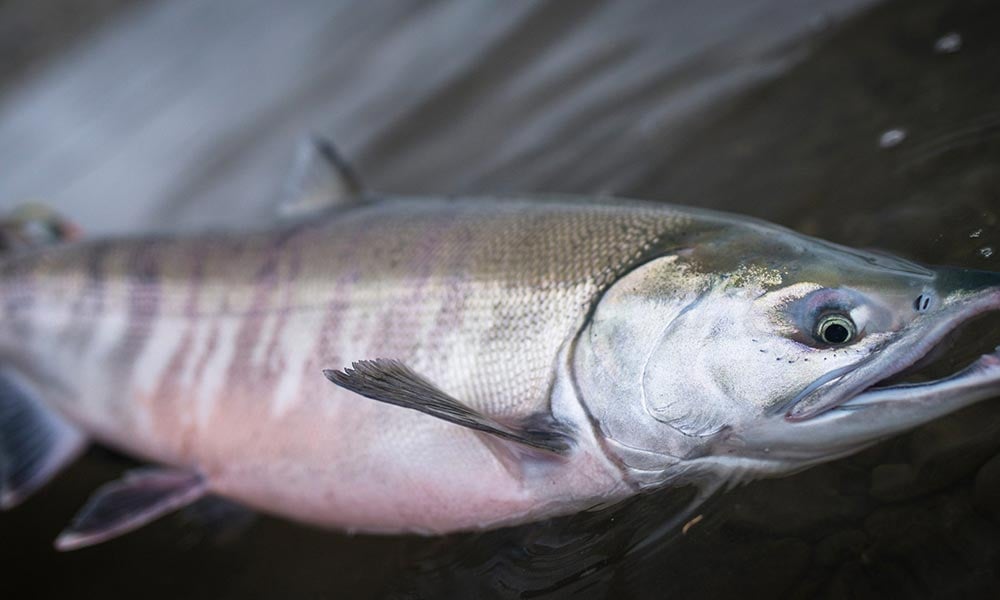
Pink salmon run through Bristol Bay in alternate years, arriving mid-July through August and overlapping with the tail end of the sockeye run. On appropriate light tackle or a 5-weight fly rod they are willing, fast fish — great for novice anglers due to their sheer numbers which can provide non-stop action. Although not a primary target for most fly-out programs, they are a genuine bonus species that adds variety to mid-season days.

For a full month-by-month breakdown of how each salmon species runs across Alaska’s drainages, our Alaska salmon season guide covers the timing in detail.
Bristol Bay Rainbow Trout: What the Salmon Runs Unlock
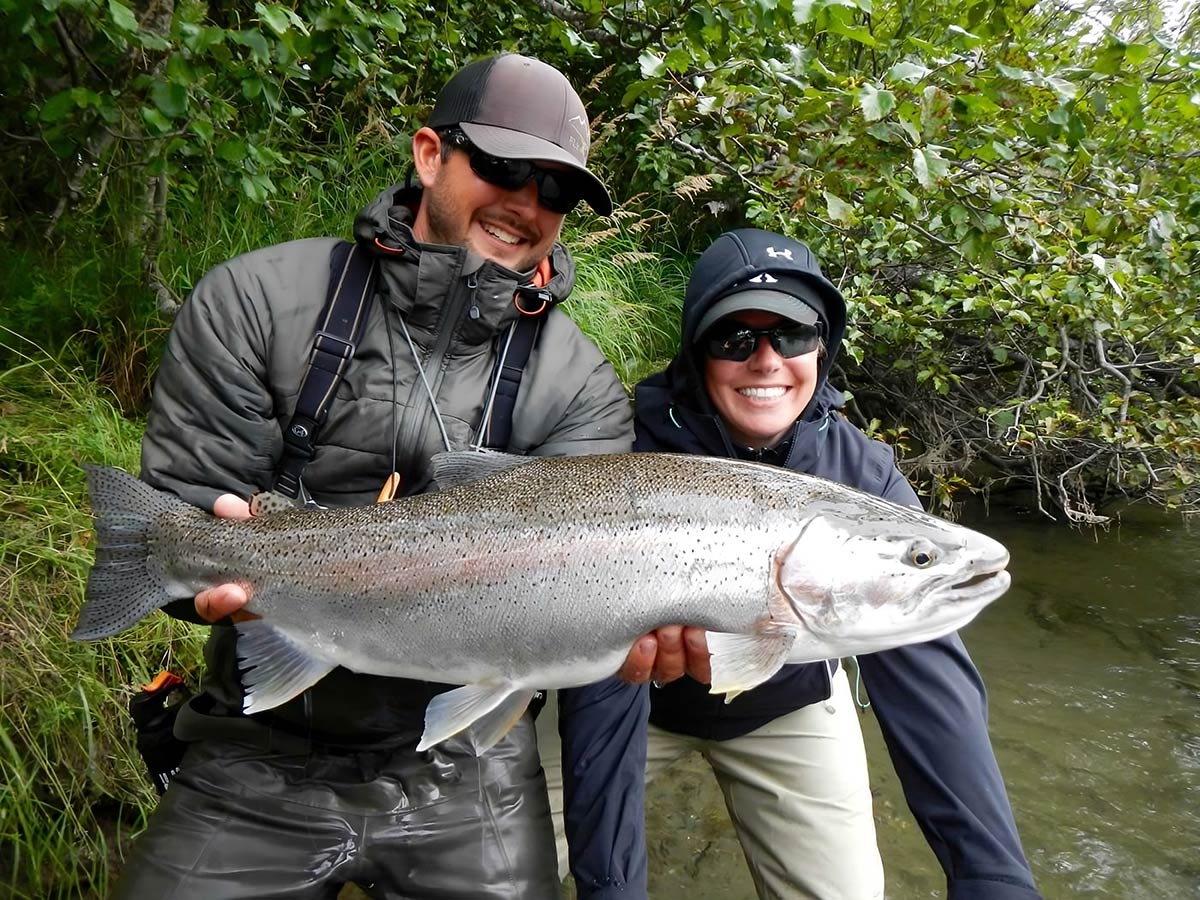
The rainbow trout fishing in Bristol Bay is closely tied to the salmon runs, which is why the best trout fishing happens well into the season rather than at its opening. ADF&G has designated the Kvichak and Lake Iliamna systems as Trophy Rainbow Trout areas — a formal recognition of fish quality sustained by decades of salmon-egg feeding. The rainbows here are not the same fish you catch elsewhere: deep-shouldered, heavily spotted fish with the kind of weight and power that comes from years of feasting on one of the richest food sources in freshwater. Fish regularly exceeding 30 inches are caught on the larger lake-headed rivers. The Naknek and Katmai streams hold some of the most celebrated leopard-spotted rainbows in Alaska.

The Kvichak and Naknek are both subject to seasonal closures in spring to protect spawning rainbows, typically reopening in early June. Specific dates should be verified against the latest ADF&G Bristol Bay sport fishing regulations — they can change year to year. Anglers fishing the month of June will often find trout feeding actively before the salmon arrive. Guide reports from several Bristol Bay operations rate June as among the best dry fly opportunities of the year — resident fish in clear water before the salmon runs change the river’s character entirely.
By September the trophy season is fully underway. Adfluvial rainbows — trout that spend much of their lives in large lakes before moving into connected rivers and tributaries seasonally — begin pushing out of the lake systems to join resident fish already in the rivers, stacking below spawning salmon and feeding aggressively on eggs and flesh. Large attractor patterns and streamers that would produce nothing in June become the go-to presentation, and it is the primary reason serious trout anglers plan specifically around the late season.
For anglers planning a trip specifically around Bristol Bay’s rainbow trout fishery, our guide to Alaska rainbow trout fishing covers the seasonal windows, the key rivers, and why October produces the heaviest fish of the year.
Dolly Varden, Arctic Char, and Grayling
Three commonly encountered species across much of Bristol Bay are worth understanding clearly — two of them are routinely confused by visiting anglers, and occasionally even in outfitter materials.
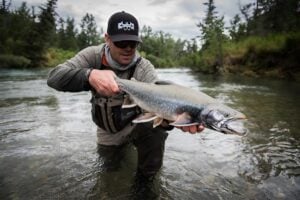
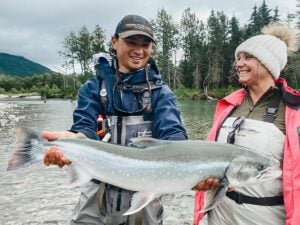
Dolly Varden are the char most anglers encounter on wade days. In Alaska both sea-run and freshwater-resident forms exist — the fish you encounter in Bristol Bay’s main rivers are predominantly the larger sea-run form, running in from saltwater to follow the salmon upstream. They hold below redds (gravel nests), feeding heavily on loose eggs through late summer into fall. Averaging 16 to 22 inches across most Bristol Bay systems, they are a serious fly-rod fish on a 6-weight — not a consolation prize when the salmon aren’t cooperating.
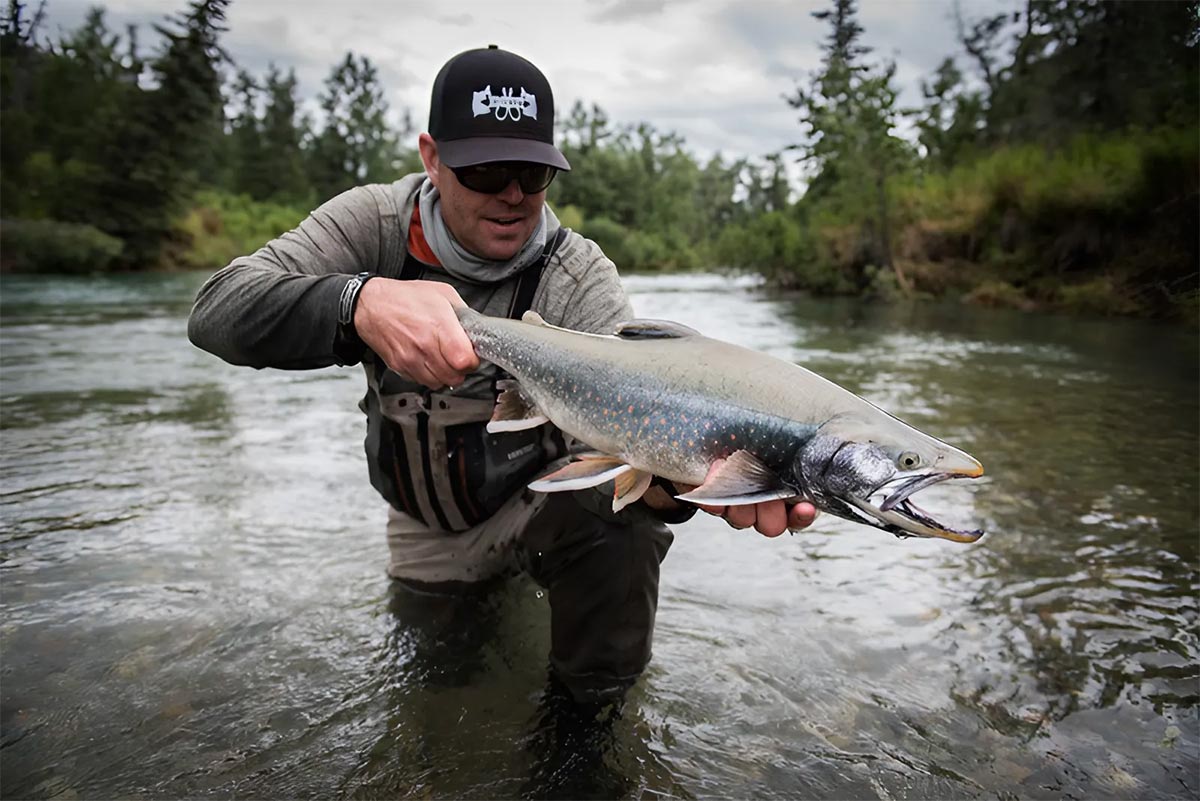
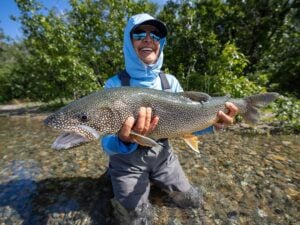
Arctic char are closely related to Dolly Varden and are caught in many of the same Bristol Bay rivers. On productive systems connected to large lakes, both species can turn up in the same sessions and sometimes even the same pools. The distinction that matters is one of tendency rather than strict separation: Dolly Varden are the more river-oriented fish, found throughout salmon systems during the spawning season, while Arctic char are lake-associated — concentrating near outlets, inlets, and lake-connected sections. On many Bristol Bay rivers, the answer to “which char species are here?” is simply “both.”
Arctic grayling round out the picture, particularly in cleaner upper tributaries and side channels away from the heaviest salmon traffic. Guides who know where they hold will often build a half-day of grayling fishing into a week for anglers looking for a change of pace from the main salmon program.
Lake Fishing in Bristol Bay
Bristol Bay’s lake systems offer a different character of fishing from the rivers — slower paced, more methodical, and holding species the river days don’t consistently deliver. There are literally hundreds of lakes, but two of the most well-known lake systems for lodge-based fishing are the Wood-Tikchik complex north of Dillingham and the Iliamna watershed to the east.
Wood-Tikchik and the Wood River Lakes
Wood-Tikchik State Park covers 1.6 million acres — the largest state park in the United States — and encompasses two interconnected systems of deep glacial lakes draining into the Nushagak via the Wood River. The Agulowak and Agulukpak rivers, which connect the Wood River lake chain, hold rainbow trout, Arctic char, grayling, and all five salmon species. Lodges based on the Wood River lake system access some of Bristol Bay’s most diverse and least-pressured water. The combination of lake and river fishing within short floatplane range gives guides genuine flexibility to match each day’s program to conditions and run timing.
Northern pike are present in the shallower lake margins, sloughs, and backwater channels of the Wood-Tikchik system. Not every Bristol Bay program targets pike deliberately, but the right lodge can include a dedicated pike day for anglers who want it. Pike in these systems average 28 to 36 inches and can be targeted alongside trout and salmon on mixed-species fly-outs.
Lake Clark National Park and Preserve borders the Bristol Bay watershed, covering roughly four million acres of wilderness that several fly-out programs reach on longer-range days. Lake Clark Alaska fishing centers on rainbow trout, char, and grayling in clear-water systems that see very few rods outside of structured lodge programs. The distance from regional hubs keeps almost all casual fishing pressure out entirely.
Lake Iliamna and the Kvichak System
Lake Iliamna — roughly 77 miles long — drains into Bristol Bay via the Kvichak River and is the core of the ADF&G Trophy Rainbow Trout designation. Many of the largest trout in the system are adfluvial fish moving out of the lake in late season. Large, deep-bodied, and heavily spotted — the look many anglers associate with “leopard rainbows” — they stack at river mouths feeding hard before winter and rank among Alaska’s most impressive freshwater targets.
Arctic char in the Iliamna system, like elsewhere in Bristol Bay, are primarily lake-resident and do not run to the ocean, completing their entire life cycle in freshwater. They concentrate near lake outlets, inlets, and tributary mouths, and are regularly caught alongside Dolly Varden in connecting river sections. Bristol Bay’s large productive lake systems support some of the largest Arctic char in Alaska, with some of the biggest fish found in this region. In late May through early July, char can congregate at lake outlets to feed on salmon smolts, creating one of the more reliable windows to target them deliberately.
Lake fishing on Iliamna is entirely season-dependent — early summer char fishing follows smolt movement at lake outlets, while from late summer onward adfluvial rainbows concentrate near river mouths and lake margins as they transition to deeper holding water. A lake this size demands a guide who knows where the fish are.
Coastal and Saltwater Fishing in Bristol Bay
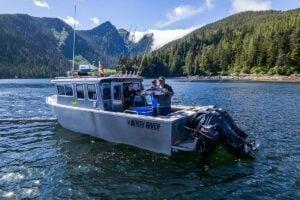
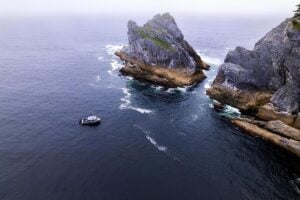
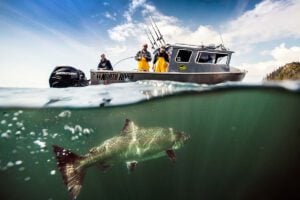
Bristol Bay is a freshwater destination first. Lodges positioned near the Alaska Peninsula coast — primarily those based on the lower Naknek River near King Salmon — offer halibut boat-fishing days as an add-on to the river program. A half-day on coastal grounds provides a completely different style of fishing from anything on the standard river schedule, and for anglers who want variety across a week it is worth asking about specifically at the lodge level. Flight range and coastal access vary considerably between operations, and not every program can make it work.
Planning a Bristol Bay Fishing Trip
Most anglers start planning by looking for a lodge — and that’s a perfectly reasonable way into a Bristol Bay trip. But understanding how species timing and lodge access connect before you commit to dates makes a meaningful difference. The lodge you choose determines which drainages you can reach. The dates you choose determine which species are running. That’s where the conversation with any Bristol Bay operator should start.
For anyone planning salmon fishing in Bristol Bay, the species you prioritize should determine your dates — not the other way around. Kings pull the window toward late June. Sockeye toward early July. Coho toward August. Trophy trout toward September.
July books earliest — prime weeks on established programs sell well in advance. August and September typically have more availability, which is part of why serious coho and trophy trout anglers find the later season attractive.
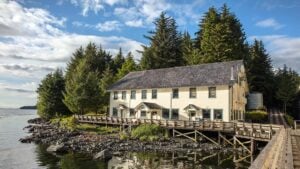
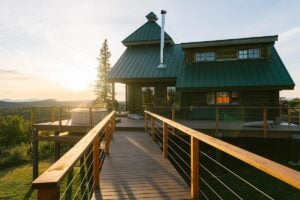
At the premier end of Bristol Bay fishing, lodge selection means evaluating the full package. These are full-service wilderness lodges where the experience on and off the water both matter. For anglers who want to explore how different high-end lodge fishing compares elsewhere in the world, our luxury fishing lodges page covers destinations beyond Alaska.
For a full picture of how Bristol Bay sits within Alaska’s broader fishing landscape, our Alaska fishing regions page gives a general overview of what the state offers. For anglers specifically comparing salmon fishing across regions — the Kenai Peninsula, Southeast Alaska, and Western Alaska — our guide to the best salmon fishing in Alaska covers access models, species availability, and what each region actually delivers for a visiting angler.
FishingExplora lists Bristol Bay lodge programs across the watershed’s main drainages. Our Alaska fishing lodges guide explains how each program is structured and which angler each one genuinely suits — the starting point for anyone planning a Bristol Bay trip.