Discover the best chinook (king) salmon fishing destinations, guided trips, and lodge-based experiences worldwide. Explore remote waters and world-class angling with expert local hosts.
Bristol Bay, Alaska
Arctic Char, Chinook (King) Salmon, Chum (Keta) Salmon
Southeast Alaska
Chinook (King) Salmon, Coho (Silver) Salmon, Halibut
British Columbia, Canada
Chinook (King) Salmon, Coho (Silver) Salmon, Halibut
Bristol Bay, Alaska
Arctic Char, Chinook (King) Salmon, Chum (Keta) Salmon
British Columbia, Canada
Chinook (King) Salmon, Coho (Silver) Salmon, Steelhead
Alaska, United States
Chinook (King) Salmon, Chum (Keta) Salmon, Coho (Silver) Salmon
Bristol Bay, Alaska
Arctic Char, Chinook (King) Salmon, Chum (Keta) Salmon
Southeast Alaska
Chinook (King) Salmon, Coho (Silver) Salmon, Halibut
Bristol Bay, Alaska
Arctic Char, Chinook (King) Salmon, Chum (Keta) Salmon
No results available
Chinook salmon are the largest and most powerful Pacific salmon. Found in rivers and saltwater from Alaska to New Zealand, they offer a true big-game challenge — demanding strength, endurance, and serious tactics to land.
For experienced anglers, king salmon fishing represents the peak of heavy-tackle salmon fishing. These anadromous fish return from the Pacific to spawn in large, often remote river systems across North America and beyond. From the Kenai and Nushagak in Alaska to coastal rivers in British Columbia and the Canterbury region of New Zealand, Chinook push deep upriver, often holding in strong flows and deep pools.
Fly fishing for Chinook salmon is demanding, typically requiring large two-handed rods, heavy sink tips, and oversized streamers to reach fish holding near the bottom. In saltwater or on big rivers, trolling and gear fishing are also effective — using flashers, plugs, or bait to trigger strikes from deep-running kings. Regardless of method, timing and presentation are critical to success.
Alaska offers the most iconic king salmon rivers on Earth, including the Kenai, Nushagak, and Yukon. Runs peak from May through July, with both fly and gear fishing opportunities in remote, scenic settings.
BC rivers like the Fraser, Skeena, and Dean produce trophy kings. Anglers troll estuaries, cast gear, or swing flies for ocean-bright fish entering complex river systems.
The Columbia River and its tributaries offer major Chinook runs, along with the Olympic Peninsula and Puget Sound systems. These states combine tidal fisheries and river-based access.
The Sacramento and Klamath rivers host dependable Chinook runs in late summer and fall, offering boat and shore-based opportunities in a warmer climate.
South Island’s Canterbury and Otago rivers — including the Rakaia, Waimakariri, and Rangitata — hold the only self-sustaining ocean-going Chinook population established outside North America. Fish run from December through April, peaking around mid-March.
Kamchatka’s coastal rivers see runs of king salmon alongside other Pacific species. These are pristine, fly-in fisheries with minimal pressure and strong fish density from July through September.
King salmon are the largest of all Pacific salmon. The IGFA rod-caught world record — 97 lbs 4 oz, taken from the Kenai River in 1985 — remains the benchmark, though commercially netted fish have reached 126 lbs. Their sheer power, deep runs, and endurance make them a true big-game species, especially on the fly. Anglers must be prepared for long battles, strong current, and technical presentations at depth.
They are also valued for their dense, oily flesh, which makes them one of the most coveted salmon for both sport and harvest. For many anglers though, it is less about the table and more about the challenge — fighting a true heavyweight in remote, current-rich water is what defines the Chinook experience.
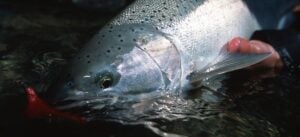
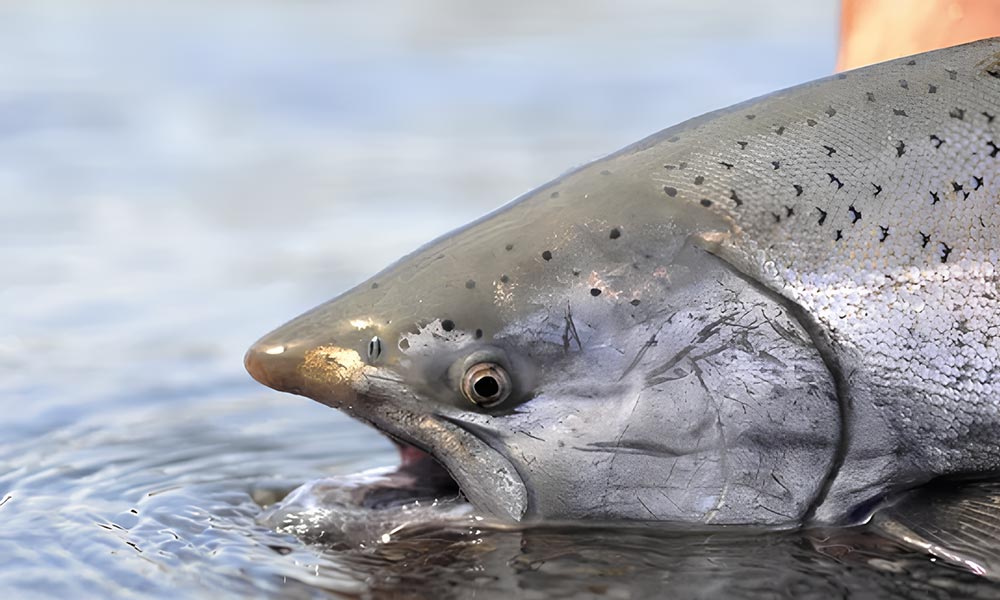
Chinook have a thick, torpedo-shaped body with a blue-green back fading to silvery sides and a white belly. The most reliable identifier is the black gum line — present in both salt and fresh water — which gives the species its nickname “blackmouth.” Black irregular spots appear on the back, dorsal fins, and both lobes of the tail fin; this two-lobe spotting distinguishes Chinook from Coho, which are spotted only on the upper tail lobe.
As fish enter freshwater to spawn, coloring shifts to olive brown, red, or purplish depending on location and maturity. Males develop a pronounced hooked jaw and deeper body; females retain a more torpedo-shaped profile with a blunter nose.
Timing is everything with kings — early fish tend to be bigger but fewer, while mid-season pushes bring stronger numbers. Water clarity, flow rates, and temperature all affect technique and success.
FishingExplora lists Chinook salmon lodges across Alaska and British Columbia. Each listing covers program structure, access, season dates, and direct contact with the lodge.
FishingExplora’s editorial content draws on lodge input, guide experience, published field reports, and independent research to help anglers make informed decisions about premium fishing destinations.
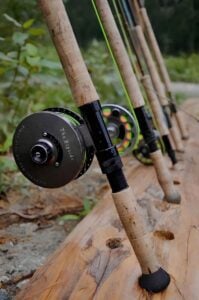
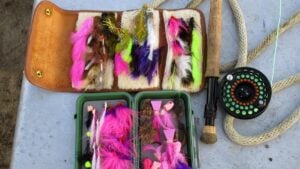
Fly anglers targeting king salmon typically use 9–10 wt rods with Skagit heads, heavy sink tips, and large intruder-style or streamer flies. Leaders should be short — 18 to 30 inches of 15–20 lb fluorocarbon is standard. This setup reaches fish holding deep in fast current and handles their long, powerful runs.
Peak king salmon runs in Alaska occur from mid-May through July, depending on the river. The Kenai early run typically begins mid-May; the Nushagak peaks in late June and July. Both rivers offer high catch potential for fly and gear anglers during periods of stable flow, with the largest fish generally arriving earliest in the season.
Yes — Chinook stop feeding once they enter freshwater, so takes are triggered by aggression or instinct rather than hunger. They hold deep in strong current, requiring precise presentation and heavy gear to reach them. Their size and endurance make them one of the most physically demanding Pacific salmon to land, particularly on the fly.
Yes. Trolling with flashers and bait — usually herring or anchovy — is the standard approach in coastal waters before kings enter rivers. Productive areas include Southeast Alaska, Haida Gwaii, and Puget Sound. Matching tide timing and fishing at the right depth are key variables for consistent results.
New Zealand’s South Island east coast rivers — including the Rakaia, Waimakariri, Rangitata, and Waitaki — hold wild, self-sustaining Chinook populations. Locally known as quinnat salmon, these fish run from December through April, peaking around mid-March. Bag limits apply and a special sea-run salmon licence is required.
Catch and release is increasingly standard for Chinook, particularly in fly fisheries and rivers where wild fish are under pressure. Rivers like the Dean in BC and many Alaskan systems encourage careful handling and release, especially for large multi-sea-winter fish. Using heavy enough gear to land fish quickly improves post-release survival significantly.
We use cookies to improve your experience and enable key features on the platform. You can choose which cookies to allow. Some features may not work fully without consent.