Discover the best dolly varden fishing destinations, guided trips, and lodge-based experiences worldwide. Explore remote waters and world-class angling with expert local hosts.
Bristol Bay, Alaska
Arctic Char, Chinook (King) Salmon, Chum (Keta) Salmon
Bristol Bay, Alaska
Arctic Char, Chinook (King) Salmon, Chum (Keta) Salmon
Bristol Bay, Alaska
Arctic Char, Chinook (King) Salmon, Chum (Keta) Salmon
Bristol Bay, Alaska
Chum (Keta) Salmon, Coho (Silver) Salmon, Dolly Varden
Alaska, United States
Chinook (King) Salmon, Chum (Keta) Salmon, Coho (Silver) Salmon
No results available
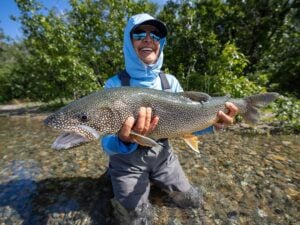
Dolly Varden thrive in cold northern rivers and lakes across Alaska, Canada, and parts of Russia. Known for their vivid spawning colors and aggressive takes, they offer both visual appeal and strong fights — especially in remote, wilderness settings where few other anglers go.
Dolly Varden (Salvelinus malma) are a member of the Salvelinus genus — the true char — alongside Arctic char, brook trout, lake trout, and bull trout. Bull trout were classified as the same species as Dolly Varden until 1978, which gives a sense of how closely the genus clusters. They inhabit both freshwater and anadromous environments, migrating between coastal waters and inland rivers in search of food and spawning grounds.
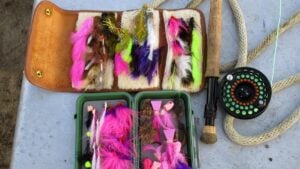
Often confused with Arctic char, Dolly Varden — or “dollies” — tend to favor flowing water over lakes and are highly opportunistic feeders. They follow salmon upstream and feed aggressively on eggs, fry, and baitfish, making them a prime target for anglers working streamers, egg imitations, and mouse patterns in salmon-rich northern rivers.
Alaska offers some of the best Dolly Varden fishing on the planet and is home to two distinct forms divided by the Alaska Peninsula. Northern-form Dolly Varden — found from the north side of the Peninsula to the Mackenzie River in Canada — are significantly larger, reaching 20 lbs or more. Southern-form fish, distributed across the Gulf of Alaska coast, top out around 10 lbs. For trophy fish, the rivers of the Kotzebue area and North Slope are the benchmark.
Canada’s western and northern regions support both resident and anadromous Dolly Varden, often found alongside Arctic grayling and char in remote rivers with little angling pressure and seasonal salmon runs.
Russia’s Far East holds healthy Dolly Varden populations in pristine rivers that see minimal human impact. These fisheries reward anglers willing to travel with solitude and strong, wild fish.
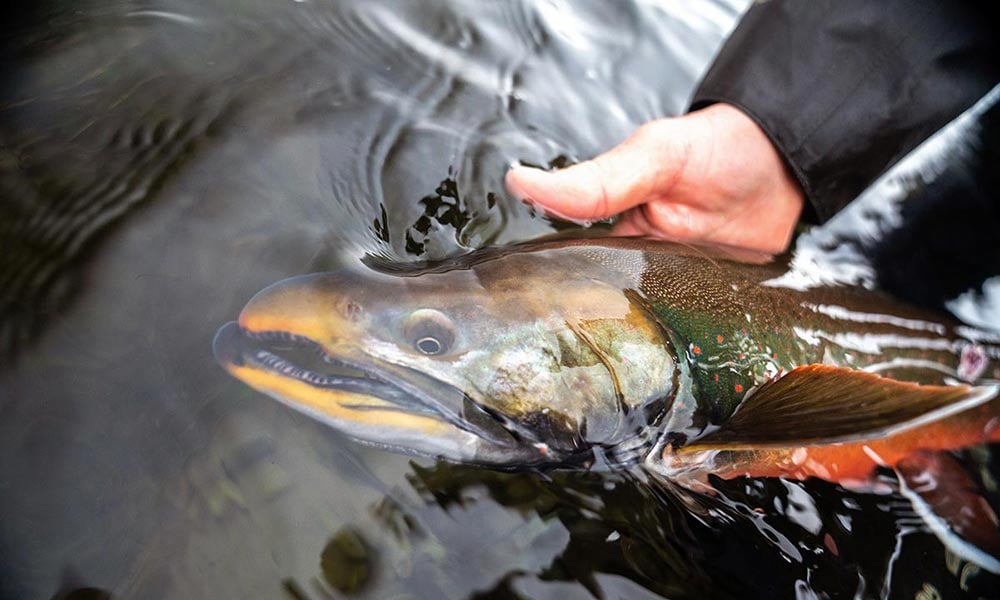
Dolly Varden are highly visual fish, known for vivid coloration and aggressive feeding behavior. During the spawn, males develop electric orange or red bellies, bright orange-to-red spots, and fins trimmed with bold white and black edges — one of the most striking color schemes in northern freshwater fishing. They are eager to strike and will follow flies for long distances, making the chase as exciting as the take.
Their connection to salmon systems is central to their appeal. As Pacific salmon spawn, Dolly Varden move in behind them, gorging on eggs and creating some of the most consistent and prolific freshwater fishing in Alaska.
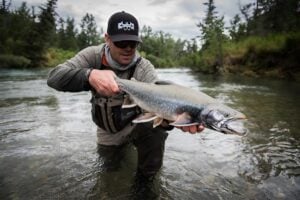
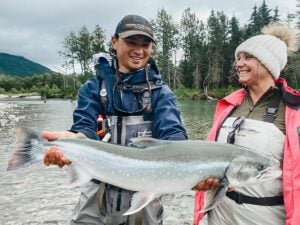
Dolly Varden have a greenish to olive body with light spots — orange to red in freshwater fish, lighter orange on sea-run fish — that are numerous and smaller than the pupil of the eye. This is the key field mark distinguishing them from Arctic char, whose spots are fewer, larger than the pupil, and cream to orange in color. The tail is slightly forked and the caudal peduncle (the area before the tail) is relatively thick.
In spawning males, the belly turns vivid red or orange, the gill covers darken to black, and the lower fins develop prominent white leading edges. Like all char, they carry light spots on a dark background — the reverse of trout.
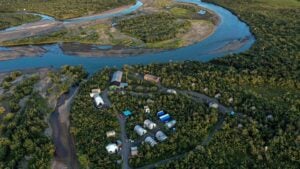
FishingExplora lists Dolly Varden lodges across Alaska. Each listing covers program structure, run timing, access, and direct contact with the lodge.
FishingExplora’s editorial content draws on lodge input, guide experience, published field reports, and independent research to help anglers make informed decisions about premium fishing destinations.
The key field marks: Dolly Varden have numerous spots smaller than the pupil, a slightly forked tail, and a thicker caudal peduncle. Arctic char have fewer but larger spots (larger than the pupil), a more deeply forked tail, and a narrower caudal peduncle. Spawning male Dollies develop a prominent kype; Arctic char males have a much smaller or absent one. Even experienced biologists misidentify them in the field.
Peak coloration in males develops from late August through October as fish approach spawning. Sea-run fish enter rivers chrome-bright with faint orange spots, then transition rapidly to olive-green sides with vivid orange-red spots, red or orange bellies, black gill covers, and white-edged fins. The timing varies by system — fish on rivers with late salmon runs often display the most vivid colors well into September.
Yes — Dolly Varden are highly opportunistic feeders and among the more willing char on the fly. During active salmon runs they feed aggressively on eggs and will chase streamers and surface patterns with committed, visual strikes. On systems with active mouse fishing, their surface takes are explosive. Aggression increases significantly when fish are fresh from the ocean and near tidewater.
Yes — Dolly Varden are highly opportunistic and will take mice, voles, and other surface prey in the right conditions. Mouse patterns are most effective in midsummer on northern rivers with undercut banks and active mammal populations. Takes are explosive and visual. Not every system produces reliable mouse fishing — local guide knowledge is the best indicator of whether conditions are right.
Dry fly takes do occur, particularly in shallow back eddies or calm riffles early in the season before salmon arrive. They are less common than takes on streamers, egg patterns, or mouse flies, and less predictable. Small attractor patterns and emergers can work during insect hatches on clear systems — worth having a few in the box but not the primary approach for most Dolly Varden rivers.
For trophy northern-form fish, the Wulik River near Kotzebue is the benchmark — it produced the Alaska state record. The Noatak, Kongakut, and Goodnews also hold excellent populations. Bristol Bay systems offer consistent action on larger fish during salmon runs. Most remote Alaska fly-out programs targeting salmon will encounter Dolly Varden as a major bonus species throughout the season.
We use cookies to improve your experience and enable key features on the platform. You can choose which cookies to allow. Some features may not work fully without consent.