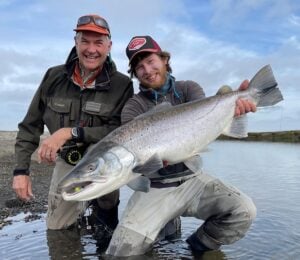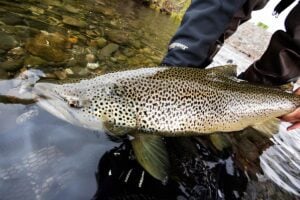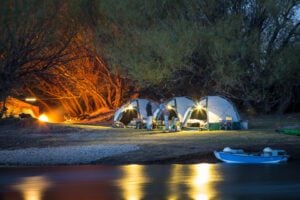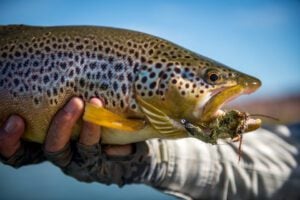
Most anglers arrive in Patagonia Argentina under-prepared in at least one respect. The distances are greater than expected, the wind — particularly in the south — more demanding than most anticipate, the best weeks booked further ahead than they realized, and the gear requirements vary more between fisheries than most anglers appreciate before booking. This article addresses all of it.
If you are considering or actively planning a Patagonia Argentina fly fishing trip, there are three primary choices to work through: what type of fishing you are after, where in Patagonia you want to fish, and when you will go. These choices are tightly entwined — each one directly shapes the kind of week you end up with.
Patagonia Argentina offers a wide variety of trout fishing, and our guide to Patagonia trout fishing covers the main fisheries and how to choose between them. Understanding when each fishery is at its best is equally important — our Patagonia Argentina seasonal guide covers the month-by-month calendar in detail. If you are planning to stay at a fishing lodge, our guide to Patagonia fly fishing lodge programs explains how programs are structured and what separates them.
This article focuses on what comes after those decisions — the practical considerations when traveling to Patagonia Argentina that many anglers wish they had thought about before departure.
Understanding the Scale of Patagonia Argentina
One of the most common misconceptions among first-time visitors is that Patagonia Argentina is a compact, self-contained destination. It is not. The fishing regions that define a Patagonia fly fishing trip span roughly 1,200 miles (1,900 km) from the northern Andean lake district of Neuquén to Tierra del Fuego at the southern tip of the continent — a distance comparable to driving from New York to Miami, or from London to the southern tip of Italy.
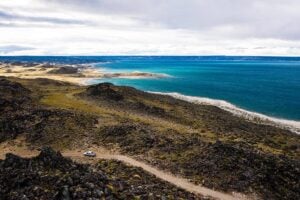
San Martín de los Andes in northern Patagonia and Río Grande in Tierra del Fuego are nearly 1,000 miles (1,600 km) apart, and that’s as the crow flies. Jurassic Lake on the Strobel Plateau in Santa Cruz province sits in the southern portion of that range — roughly two-thirds of the way from the northern lake district to Tierra del Fuego — and like most other Patagonia fishing destinations requires its own separate domestic connection from Buenos Aires, its own logistics, and usually its own dedicated trip.
If staying at a lodge, the operator typically handles all travel detail from the relevant domestic airport. The key planning decision is which part of Patagonia you are heading to and ensuring your international routing into Buenos Aires gives you enough connection time for the domestic leg. Even then, travel is not over at the domestic airport. Road transfers from the nearest airport to the lodge can add anywhere from one hour in northern Patagonia to five or six hours on backcountry roads for remote central and southern Patagonia programs. Depending on where you are traveling from, factor a full travel day — sometimes two — into the itinerary before you expect to be on the water.
Physical Demands of a Patagonia Fly Fishing Trip
Most Patagonia river programs combine drift boat days — where the physical demand is modest — with walk-and-wade fishing that involves periods on foot over uneven or boulder-strewn ground. This applies across northern and central Patagonia equally. Anglers with knee or hip limitations should ask specifically about the wading character of any program before booking, as the difference between a primarily drift-boat operation and a walk-and-wade spring creek program is significant in physical terms.
Patagonia attracts a high proportion of experienced anglers in their 50s, 60s, and older — these are not destinations that require exceptional fitness. What they do require is honest preparation for specific conditions.
Fishing in Patagonia’s Wind
Jurassic Lake fishing involves moving between lake areas by vehicle, with periods of wading and bank fishing on exposed plateau shoreline. The primary physical demand is not distance on foot but sustained casting into persistent wind for a full day. An underpowered cast that falls short of cruising fish is a wasted opportunity — and repeating it for eight hours is genuinely tiring. Arriving having practiced distance casting with an 8-weight in wind is better preparation than any amount of walking.
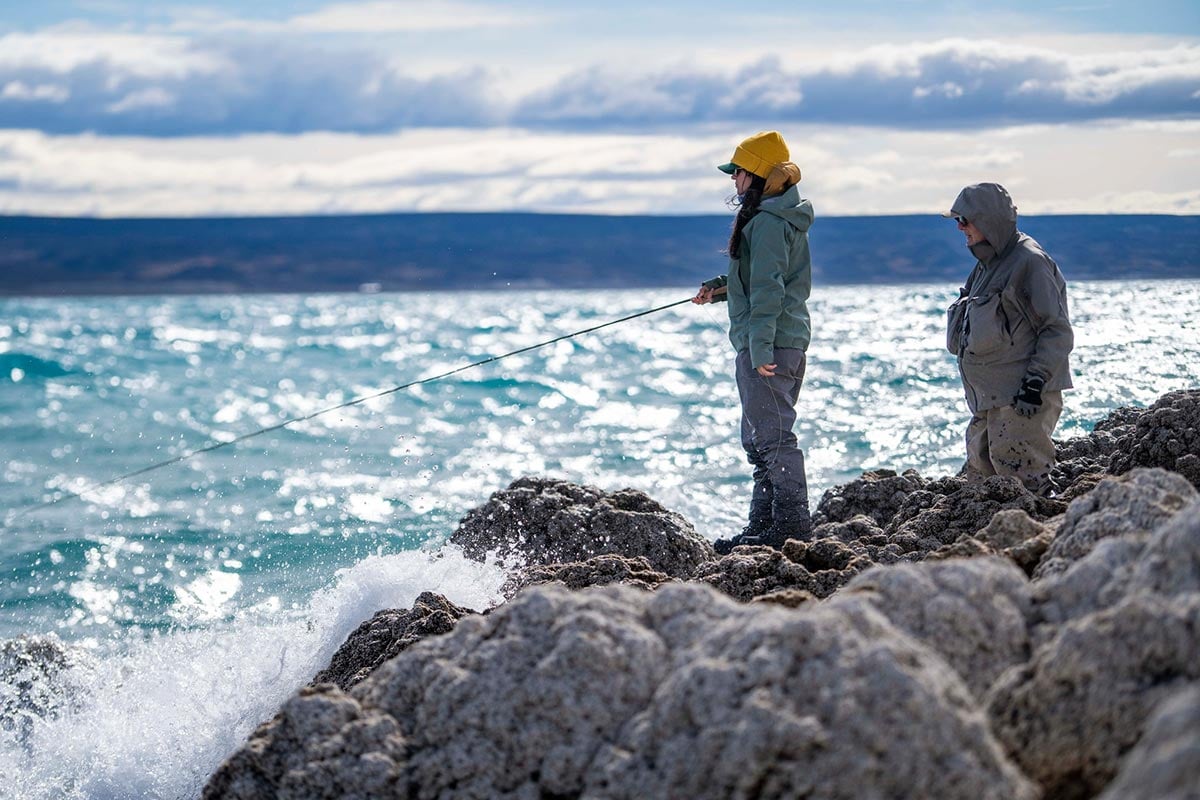
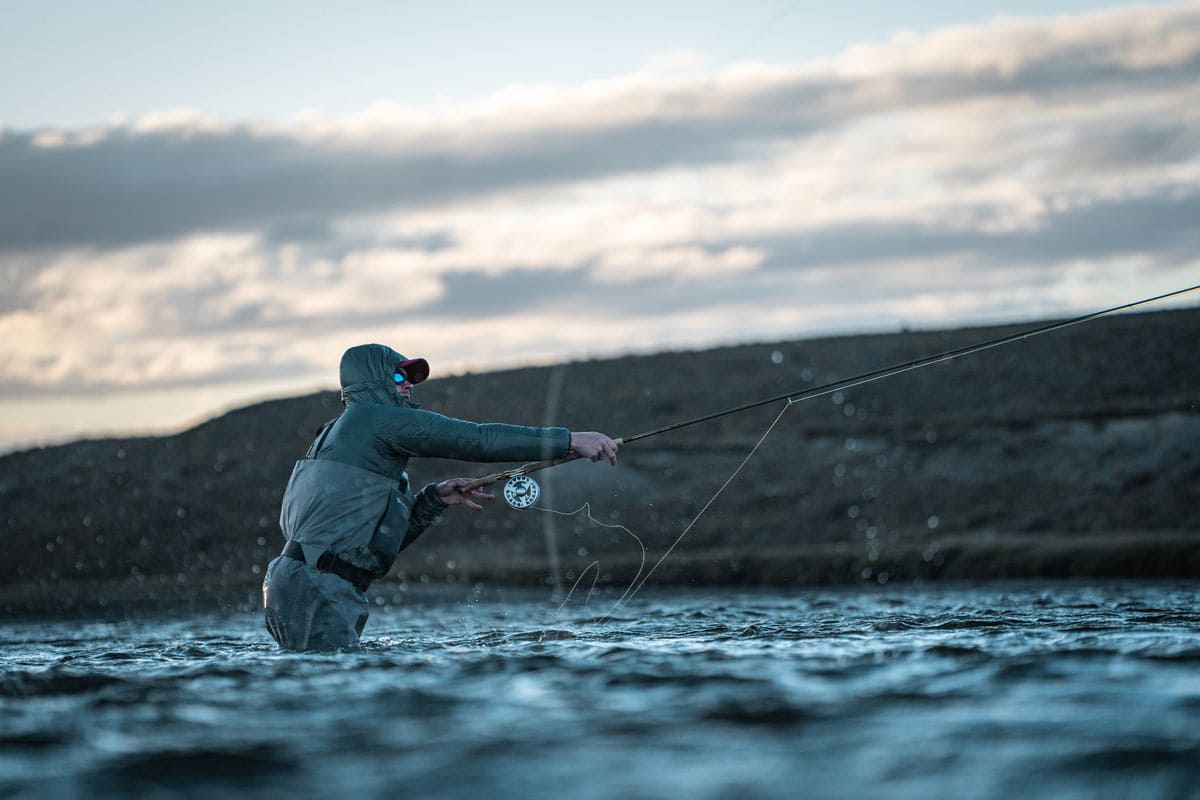
The Río Grande in Tierra del Fuego is widely described by lodges and returning anglers as a wade-friendly river — even gravel bottom, manageable flow, accessible pools. What it asks physically is tolerance for relentless southwest wind across open steppe, and the casting stamina to cover pools effectively across a full morning session. Two-handed Spey casting is a physical advantage here — covering the wider beats with a single-hand rod in a crosswind is harder work than it needs to be.
UV and Sun Exposure in Patagonia Argentina
This is one of the most consistently underestimated risks for visiting anglers, specific to Patagonia in ways worth understanding before departure.
The Antarctic ozone hole periodically extends over southern Patagonia — particularly Tierra del Fuego and Santa Cruz province — significantly amplifying UV-B radiation at ground level. UV index readings across the Patagonian fishing zone during the summer season (November through April) regularly reach 8 to 11, with higher spikes in southern zones when the ozone hole is in position. Ushuaia and Río Grande in Tierra del Fuego are among the southernmost populated areas on earth regularly sitting beneath the ozone hole. The Strobel Plateau in Santa Cruz province sits in the same risk zone.
The compounding factor is that cool Patagonian temperatures suppress the physical sensation of burning. An angler spending eight hours on an exposed lake shoreline or river bank in what feels like mild weather can sustain serious sunburn without noticing until the evening. Wind exacerbates this — windburn and UV exposure combine in ways that accelerate skin damage significantly.
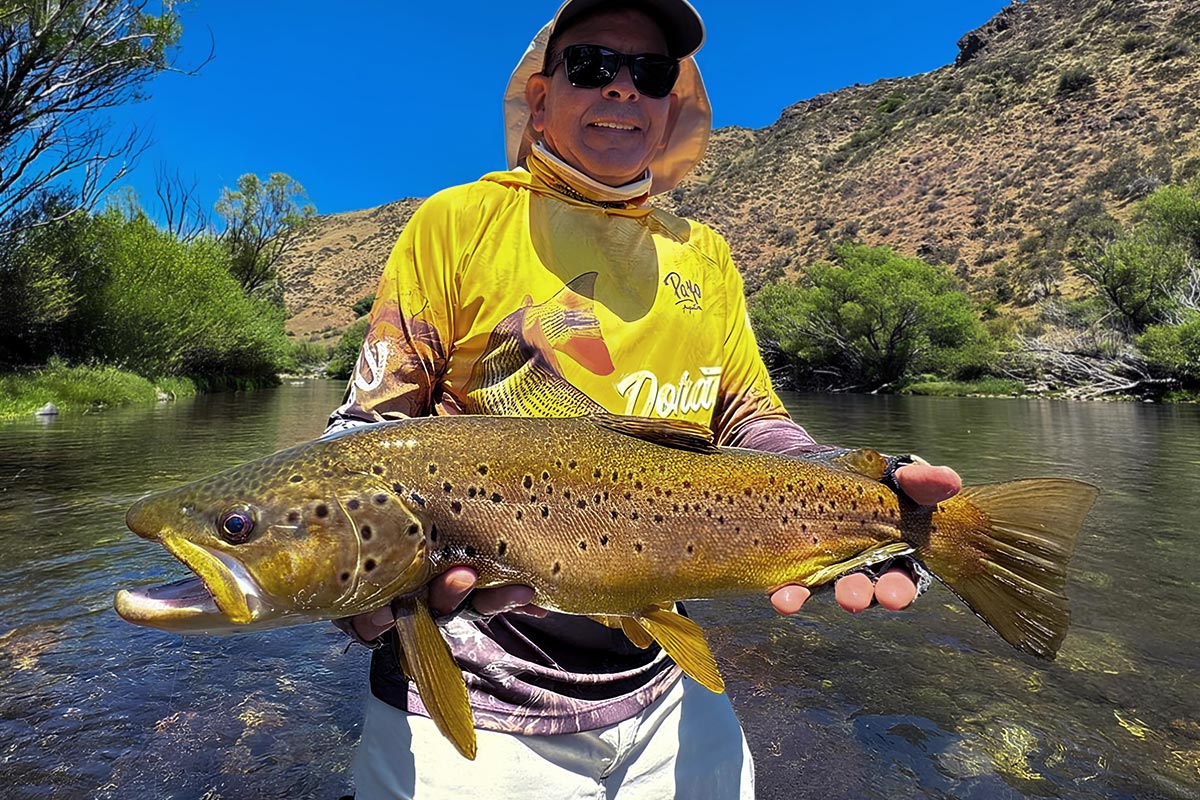
Practical preparation: high-SPF sunscreen applied consistently through the day, UPF-rated long-sleeve shirts, a full-brim hat, and polarized glasses that provide UV-B protection rather than just glare reduction. Cheap sunglasses that block visible light but not UV-B can cause more damage than no glasses at all by causing the pupil to dilate while UV-B passes through.
Quality optics are not optional on a week-long Patagonian program. Northern and central Patagonia carry lower ozone hole risk at their latitude, but UV indices through the summer months are still well above what most northern hemisphere anglers are used to.
Average Daytime Patagonia Temperatures by Region
Patagonia Argentina spans a significant latitude range and temperatures vary considerably — both between regions and between spring, summer, and autumn. Layers are the universal answer, but understanding the actual range helps anglers pack correctly rather than guessing.
Northern and central Patagonia:
- Spring season (November/December): 57–61°F (14–16°C)
- Summer season (January/February): 64–75°F (18–24°C), with summer peaks above 77–80°F (25–26°C)
- Autumn season (March/April): 54–59°F (12–15°C)
Tierra del Fuego:
- Summer season (January/February): 57–61°F (14–16°C) and rarely exceeds this range
- Autumn season (March/April): 52–55°F (11–13°C)
Fly Fishing Gear for Patagonia Argentina: What to Bring
Rod Weights by Fishery
Rod requirements vary significantly across Patagonia’s fishing destinations, and arriving with the wrong outfit is an avoidable problem:
- Northern and central Patagonia trout rivers, lakes, and spring creeks: 5 to 6-weight single-hand rod covers most situations, with a 9ft being standard across spring creeks and smaller rivers. A 9.5 to 10ft 6 or 7-weight is worth bringing for larger freestone systems — the Chimehuín, Collón Curá, Limay — where distance casting in wind and streamer fishing in higher flows demand more rod. Traveling with two single-hand outfits covering both ends of this range is the practical approach for a full week.
- Jurassic Lake: 8-weight minimum, with the ability to cast distance accurately into sustained crosswind for extended periods. This is not a fishery where an underpowered outfit produces results — the casting demand is real and consistent across a full day.
- Río Grande, Tierra del Fuego: On the lower beats, a two-handed Spey rod, 12 to 14 feet rated 7 to 9-weight, is the primary tool — better line control, easier mending, and the ability to cover wider pools in sustained crosswind. Most anglers bring an additional 9 to 10-foot single-handed rod in 8 to 9-weight as a second outfit — effective for downstream casts when the wind is behind you, low-water conditions, and technical nymphing on tributary water.
Fly selection and line choice for Patagonia fly fishing are deliberately not covered here — both are highly specific to the fishery, the conditions, and the time of season. Every established lodge program provides a detailed pre-trip packing list covering recommended flies and line setups for their specific water. Follow the lodge’s guidance rather than a generic list.
Your Own Gear vs Lodge-Supplied Equipment
Most established Patagonia lodge programs have loaner rods and sometimes wading gear available, but quality and fit varies — and fishing your own outfit on water you have invested significant time and money to reach makes a lot of sense. For northern Patagonia trout programs the stakes are lower, but for Jurassic Lake — where casting accurately into crosswind for hours defines the week — and for the lower Río Grande — where two-handed Spey casting is the primary tool — arriving with a rod you know and have cast extensively makes a material difference.
If you want to travel light, confirm loaner rod / wading gear availability prior to making a reservation.
Fishing Regulations in Patagonia Argentina
Wading Equipment Rules
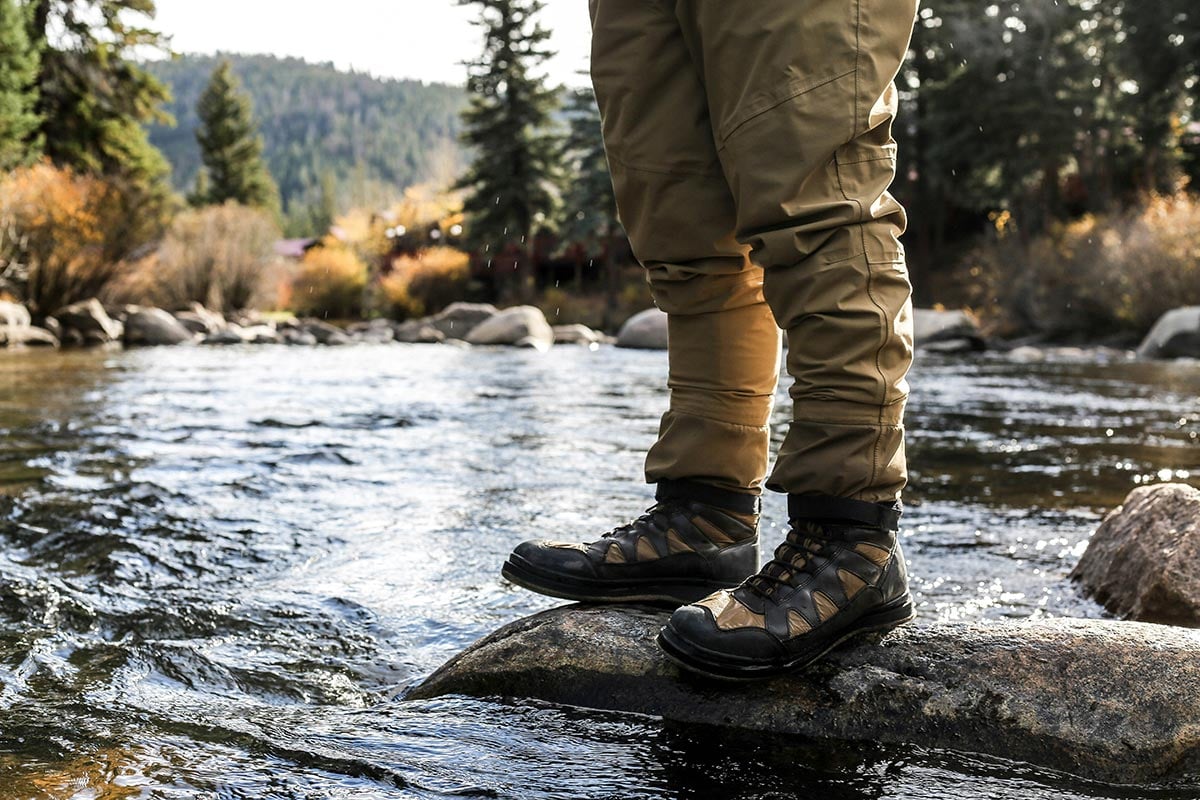
Felt-soled wading boots are banned under Argentine Patagonia provincial regulations across all fisheries. The ban exists to prevent the spread of didymo and other aquatic invasive species between river systems. Enforcement varies by province and season, but rubber-soled boots are the right choice regardless. The general rule of thumb is to arrive with clean, dry gear and follow the check-clean-dry protocol when moving between river systems during the week — which most programs do.
In Argentina, the check-clean-dry protocol applies between every river system. In Patagonia’s climate, gear rarely dries sufficiently in 48 hours if not kept in a dry room — a 2% bleach solution (lavandina in Argentina) applied to boots, waders, and nets before moving between rivers is the practical work-around. Most lodges have cleaning equipment available.
Fishing Licenses
Fishing licenses are issued provincially in Argentine Patagonia, with non-resident fees varying by province. Most established lodge programs arrange licenses on behalf of guests and include the cost in the package or handle it on arrival. Confirm this at booking — arriving without a valid provincial license is not a minor oversight.
How Far Ahead to Book a Patagonia Fly Fishing Lodge
Availability on the best programs does not exist at short notice. The most sought-after Río Grande weeks book one to two years ahead, with repeat guests often holding the same week year after year. At Jurassic Lake, the prime spring window — October through December, when fish concentrate in the Barrancoso River — fills well ahead at the established lodges, though availability varies considerably between programs and last-minute spaces do occasionally appear in mid and late season.
Northern and central Patagonia trout programs offer more flexibility, but weeks around the peak dry fly season — late December through January, when dragonfly, caddis, and mayfly hatches bring trout to the surface across rivers and lakes simultaneously — typically require six to twelve months lead time at established lodges. For many visiting anglers, this hatch period is the primary reason for the trip — a genuine spectacle that defines what Patagonian dry fly fishing is. For any first trip with a preferred timing window, planning well in advance is the right approach.
Combining Two Patagonia Fishing Destinations
Some anglers — particularly those returning to Patagonia rather than visiting for the first time — combine two destinations in a single trip. The most practical pairing is a Río Grande sea trout week with Jurassic Lake — both operate within the January through April window, and several Jurassic Lake programs actively offer shorter packages timed for anglers extending a sea trout trip.
The two fisheries are distinct enough that combining them makes genuine sense. Book the Río Grande week first — beat availability is the binding constraint — then build the Jurassic Lake week around it. Worth noting: a February Río Grande week places you at Jurassic Lake in the midsummer window rather than the prime spring Barrancoso period — still exceptional fishing, but set expectations accordingly.
Combining northern Patagonia with central Patagonia — Chubut, Esquel, the Río Pico area — is a well-established itinerary, actively offered by several multi-lodge operators as a single trip. Both target the same species, but the contrast in fishing character and rod pressure between the two regions is significant enough to make the combination genuinely worthwhile rather than repetitive.
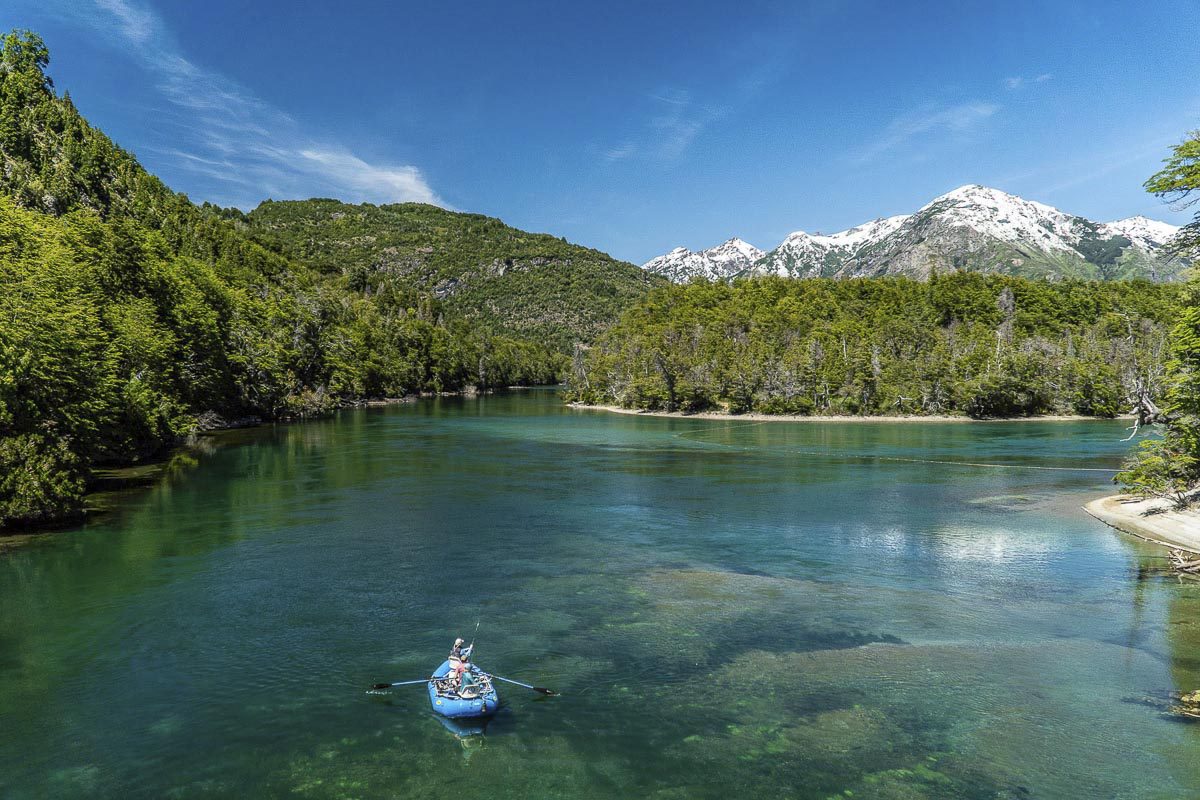
The roughly five-hour road distance between Bariloche and Esquel makes the transfer manageable. It suits anglers who want both the variety of the northern lake district and the low-pressure, remote character of central Patagonia within a single two-week trip.
What Drives the Cost of a Patagonia Fly Fishing Trip
Patagonia Argentina lodge programs sit at the premium end of destination fly fishing globally. Fishing programs typically start at around $6,000 USD per person for a full week of guided fishing, all-inclusive from the domestic airport. For prestigious lodge programs offering a more varied itinerary, and higher lodge comfort, prices can quickly climb up to $10,000 USD for the week. International travel is additional. What drives the range between programs is worth understanding before comparing specific options.
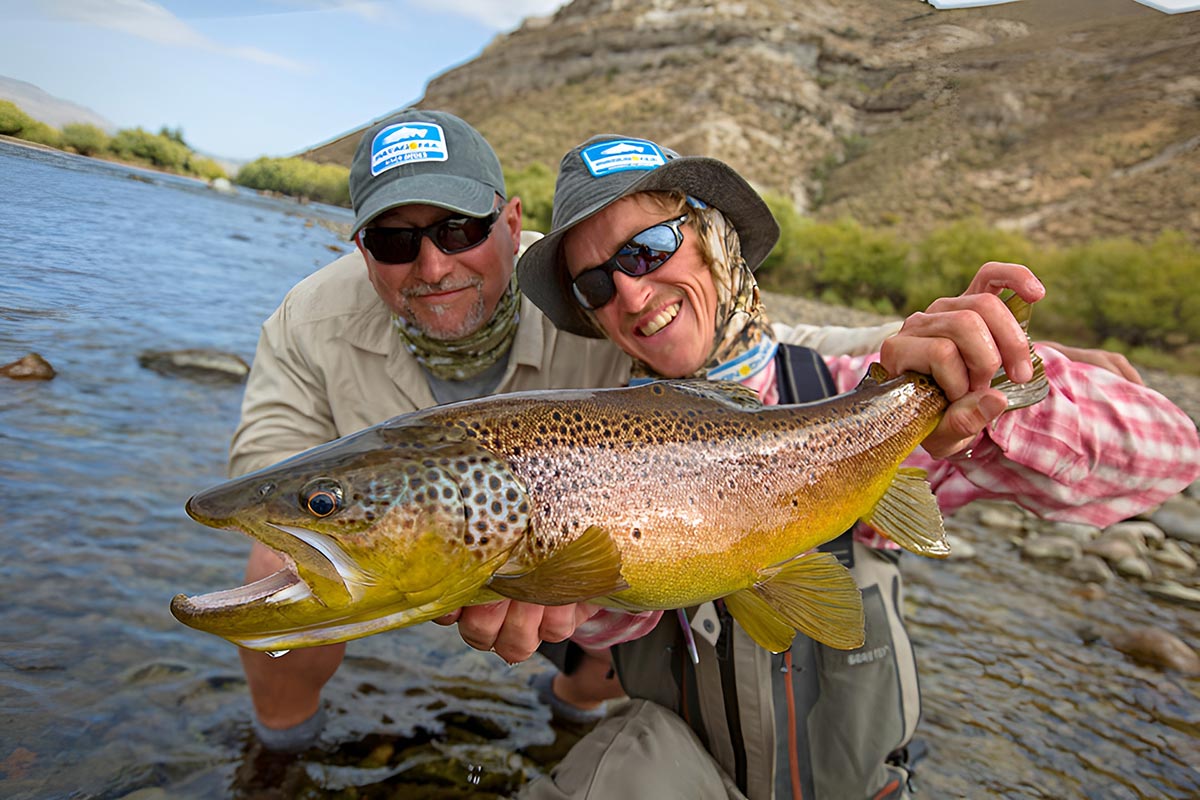
Private water access is the primary driver. Maintaining long-standing estancia relationships — often involving annual fees, infrastructure investment, and exclusive access agreements — is expensive, and that cost is built into every quality lodge program. An angler paying for access to water that sees ten rod-days per season is paying for something categorically different from a program fishing public sections of the same named river.
Guide depth is the second driver. Experienced Patagonian guides — those who know which spring creek fishes well in a southwest wind, which lake outlet holds fish in November, and where to find large browns on the Limay in late March — are the product as much as the water itself. Guide knowledge of specific beats is not replicable and not cheap.
Remote access adds cost in proportion to remoteness. Fishing programs that use charter aircraft to reach plateau estancias are passing on real logistics costs. Long road transfers alone are a significant operational commitment on every program week.
Lodge infrastructure is the fourth variable. Purpose-built estancia lodges with high-end catering, private rooms, and full service charge accordingly — at the premium end of the market, accommodation standard is a genuine and legitimate part of the price.
The practical implication: price reflects all four variables in combination. Anglers who focus only on lodge photographs risk missing what actually determines the quality of the fishing week.
What Patagonia Fly Fishing Lodge Packages Include
Lodge packages across Patagonia Argentina are almost universally all-inclusive in their core structure — accommodation, meals, guiding, and daily transfers are standard. What varies between programs is the detail beyond that. Key variables to confirm at booking:
- Airport transfers: Included as standard in most established programs — the lodge collects guests from the relevant domestic airport and returns them at the end of the week. Confirm which airport the transfer covers before booking domestic flights, as northern Patagonia programs vary between Bariloche and Chapelco/San Martín de los Andes. For programs involving a several-hour road transfer to a remote lodge, charter flight options may be available at additional cost.
- Fishing licenses: Most established programs arrange licenses on behalf of guests and include the cost or handle it on arrival. Confirm at booking.
- Flies: Some lodges supply flies as part of the package; others expect guests to arrive with their own selection; a few sell flies on-site. Confirm before packing — arriving light on flies and finding no lodge supply on a remote estancia is an avoidable problem.
- Gratuities: Not typically included and a genuine part of guide income. The standard expectation is 10 to 15% of the total program fee distributed between the guide team (and staff) at the end of the week. Ask the lodge how it is handled — most give clear guidance at booking.
- Alcohol: Policy varies considerably — some programs include wine, beer and spirits throughout, others charge separately. Worth clarifying upfront.
- Non-fishing activities: Accommodated by many lodge programs, particularly fixed-base northern and central Patagonia operations, and on larger estancias with horseback riding, hiking, and other activities available. The more fishig intensive mobile programs and remote plateau lodges have limited scope for non-fishing activity. Confirm options and costs before booking if traveling with a non-angler.
Can You Self-Guide in Patagonia Without a Lodge?
Yes — but with honest caveats that matter more here than in most destinations.
Public water exists across northern Patagonia. The road-accessible sections of rivers like the Chimehuín and Limay can be fished independently, and a self-guided angler with transport and local knowledge can have a productive week without lodge involvement. Day guide operations out of towns like San Martín de los Andes and Junín de los Andes are available and legitimate.
What a lodge primarily provides in Patagonia is not accommodation — it is access. The estancia relationships that give lodge programs entry to private beats, lightly fished spring creeks, and exclusive sections of productive water are not independently available. An angler fishing public sections of the Chimehuín during peak season is sharing that water with everyone else on the river. An angler fishing a private spring creek through a well-connected lodge program may be the only rod on that water all week.
The Río Grande in Tierra del Fuego is not a DIY proposition at all. The fishery is entirely private-beat based — there is no meaningful public access to the managed sections that define the fishery’s reputation. Without a lodge program, there is no Río Grande sea-run brown trout fishing in any practical sense.
When you are ready to compare specific programs across Patagonia Argentina, our Patagonia Argentina fishing lodges guide explains which lodge programs are suitable for which anglers.