The fish that make Alaska’s rainbow trout rivers famous aren’t there by accident. They’re there because of salmon — millions of them. That single fact shapes everything: which rivers produce the biggest fish, which month to be there, and what a well-timed Alaska rainbow trout trip actually looks like.
Alaska’s rainbow trout fisheries run from June through October across some of the most productive river systems in North America. The Bristol Bay drainages — the Naknek, the Kvichak, the Alagnak — and the remote streams of Katmai National Park hold wild rainbows that grow large not because of stocking programs or managed habitat, but because of one of the most reliable food chains in freshwater fishing. The rivers that carry the world’s largest sockeye salmon runs also produce the trophy-class rainbow trout that draw fly anglers from around the world.
This is a fishery worth understanding before you book. The seasonal windows are specific, the access model is different from most trout fishing in the lower 48, and the month you choose to travel determines the kind of fishing you’ll actually have.
If you already know when you want to travel, our Alaska fishing lodges guide covers the lodge programs built around this fishery.
What Makes Rainbow Trout Fishing in Alaska Different
Alaska rainbow trout fishing is built on a biological foundation that sets it apart from almost every other trout fishery in the world. Bristol Bay hosts the largest wild sockeye salmon run on Earth — tens of millions of fish in strong years — and the food those salmon deliver to the river ecosystem drives the growth of wild rainbows to a size most anglers never encounter elsewhere.
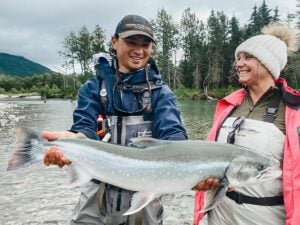
The fish that define the trophy end of this fishery are predominantly adfluvial rainbow trout — wild fish that spend the majority of their lives feeding in large, nutrient-rich lakes like Naknek Lake and Lake Iliamna, moving into connecting rivers to spawn in spring and returning through mid-summer and fall to follow the salmon food chain. In the lakes, they feed on benthic invertebrates, leeches, and salmon smolts through the winter months. In the rivers, they feed on eggs, loose drift, and spent salmon flesh as the season progresses. It is this combination — deep-lake conditioning and seasonal access to the salmon runs — that produces the highest density of genuinely large fish on rivers like the Naknek and Kvichak.
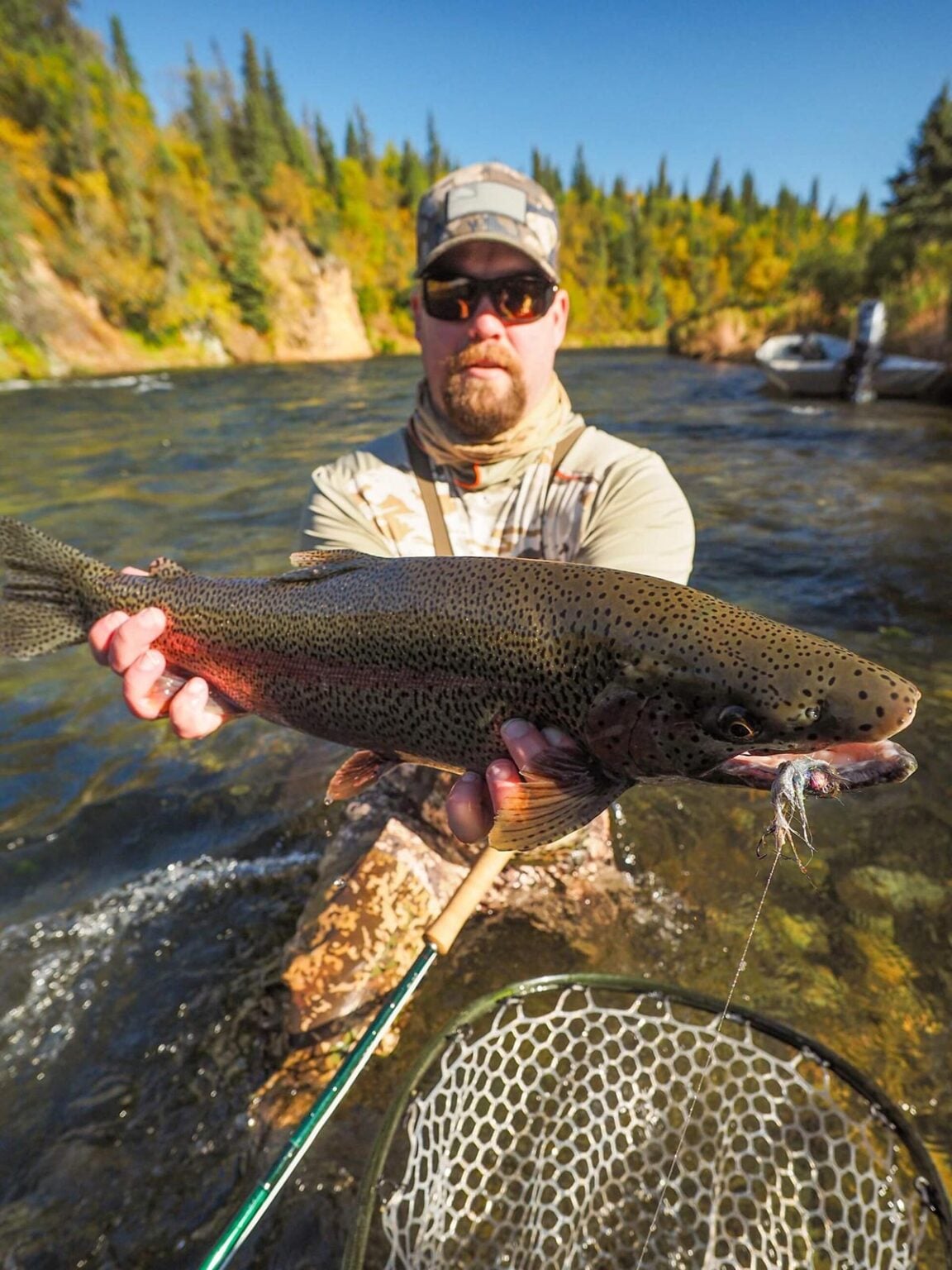
Not every trophy Bristol Bay rainbow is a lake fish. Resident river rainbows in salmon-rich drainages like the Alagnak also reach trophy dimensions, fed by the same food chain. But the adfluvial fish are what make the Naknek and Kvichak exceptional — and it is these fish, dropping into the main river from September onwards and carrying the weight of a summer’s feeding, that define what Alaska rainbow trout fishing produces at its peak.
Bristol Bay and Katmai — Alaska’s Trophy Rainbow Trout Fishery
The Kvichak River, flowing 50 miles from Lake Iliamna to Bristol Bay, and the Naknek River, fed by Naknek Lake and running through the heart of the King Salmon area, sit at the center of Alaska’s only ADF&G-designated Trophy Rainbow Trout watershed — a recognition that sets Bristol Bay fishing apart from every other fishery in the state. The Naknek is widely regarded as the region’s benchmark trophy river; the Kvichak, draining the world’s largest sockeye system, offers arguably the highest ceiling for individual fish size.
Although the Naknek and Kvichak are the headline rivers, the trophy fishery extends across the broader Bristol Bay and Katmai watershed — into smaller wilderness streams accessible by floatplane that offer a different character of fishing: more intimate, high fish numbers, and some of the best early season dry fly opportunities in the region.
The rainbow trout in Alaska are not placid tailwater fish. In early season, anglers can catch a glimpse of packs of them hunting out-migrating salmon smolts on the surface — crashing into shoals of small fish in a way that looks more like a saltwater blitz. It is unlike anything most freshwater anglers have seen.
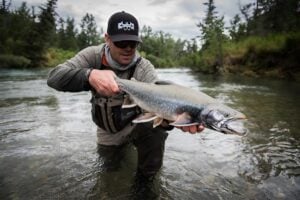
By fall, the same rivers hold a different proposition entirely — deep-bodied, heavy fish that have spent a summer feeding on the salmon runs, powerful enough in fast current to test even experienced anglers. Once hooked, they use every foot of the river — explosive runs, aerial jumps, and a stubbornness that has to be felt to be understood.
Rainbow Trout Fishing in Alaska — How the Season Works
June — Dry Flies and Streamer Fishing for Alaska Rainbow Trout
From the second week of June, Bristol Bay and Katmai rivers open for the season and rainbow trout that have just finished spawning are back on the feed — hungry, aggressive, and moving through water still clean and clear before the salmon runs arrive in force. It is also one of the most underappreciated times for streamer fishing.
River systems with heavy sockeye returns produce near-surface streamer action as trout intercept the annual fry and smolt migration — packs of fish moving actively through open water, feeding hard after a winter under the ice. Sculpin, leech, and baitfish patterns all produce well.
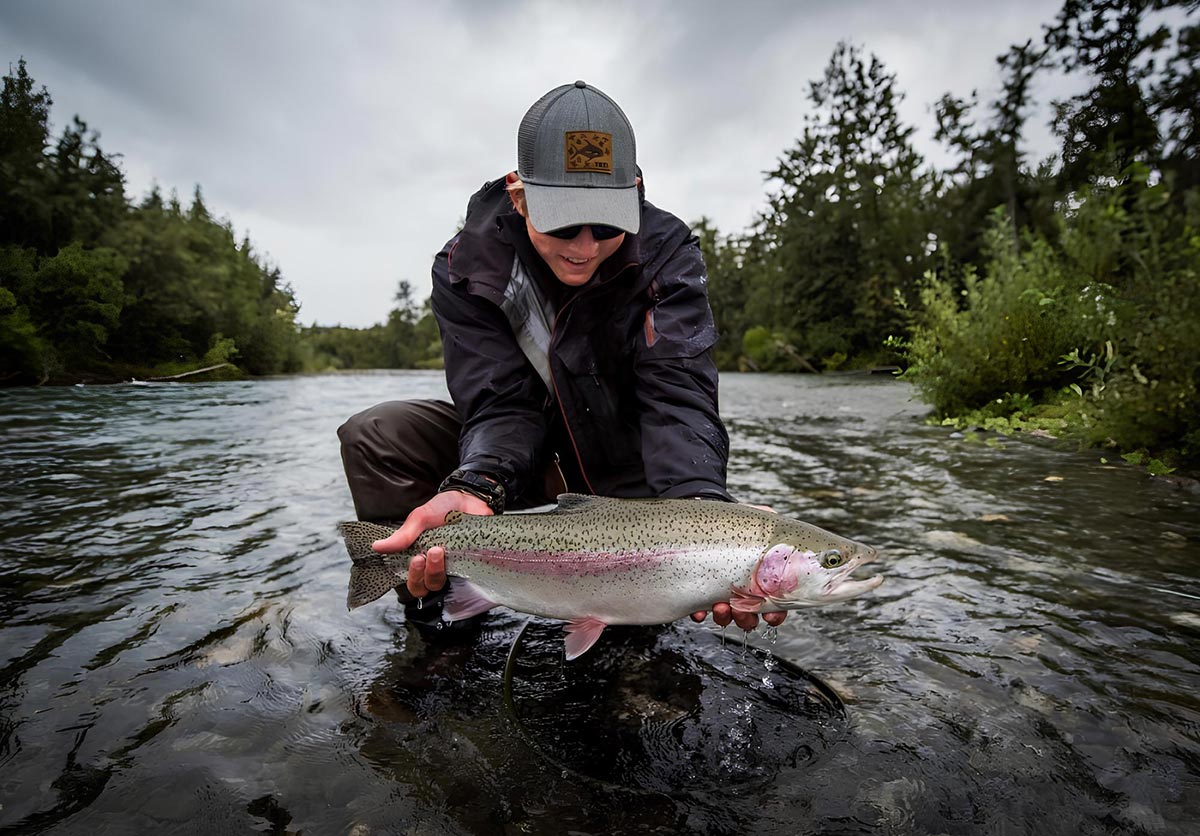
June is also one of the most genuinely productive dry fly windows of the year across Bristol Bay and Katmai rivers — massive insect hatches bring fish to the surface before the salmon arrive and egg patterns take over. Caddis and mayfly patterns produce well, and mouse patterns start delivering toward the end of the month as conditions warm, particularly at dawn and dusk.
With up to 18 hours of daylight, guides have the flexibility to follow the hatch and move between water types in a single day.
July — Sockeye Runs and Rainbow Trout Fishing at Peak Season
July is the month Bristol Bay is famous for, and it delivers on that reputation. Millions of sockeye push into the river systems from early in the month, kings are still running through the end of July when the season closes by regulation, and every predator in the ecosystem is on the move. For visiting anglers it is the most species-rich week available anywhere in Alaska — and the most in-demand. Lodge programs run at full capacity, fly-out seats fill first for July weeks, and the most productive water sees more angler pressure than at any other point in the season.
For rainbow trout, July sits in an interesting middle ground. Streamer fishing remains the dominant technique through most of the month. Trout are aggressive and well-fed on the ongoing smolt migration and the lamprey populations that share the river, and mouse patterns continue producing across the region.
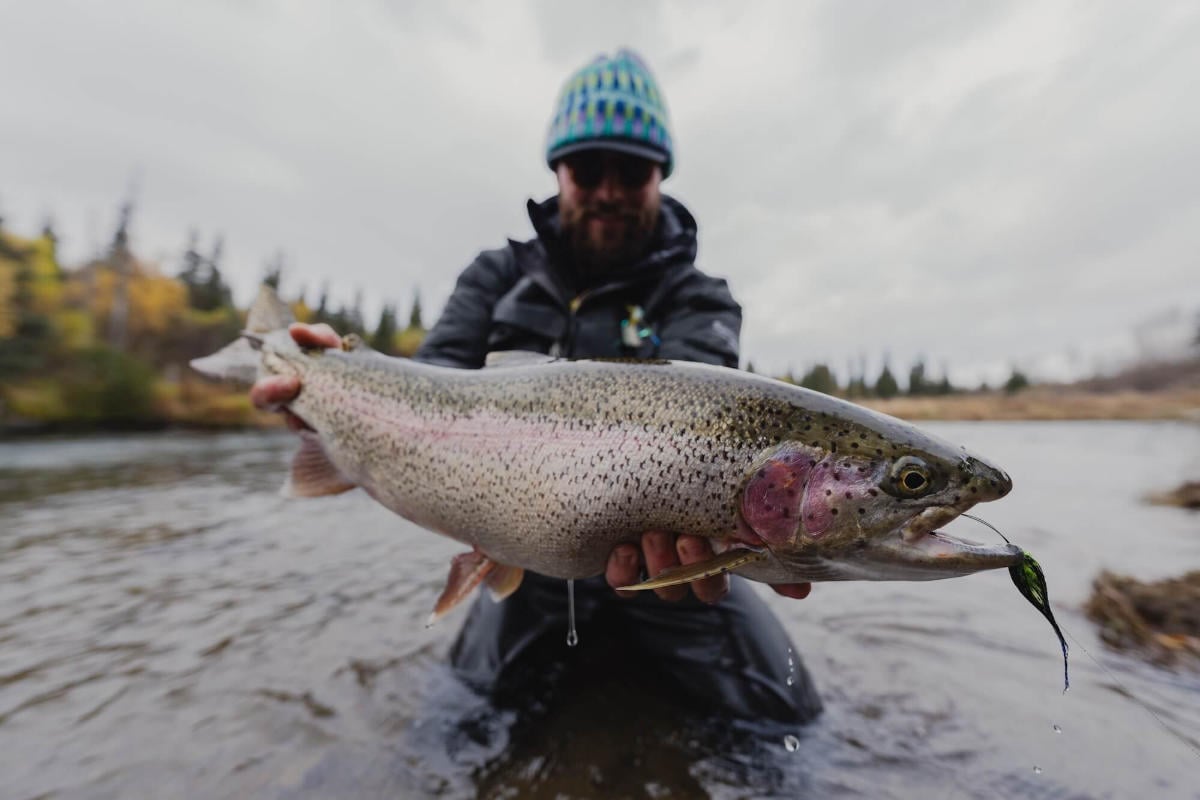
The egg drop — when sockeye move onto redds and begin spawning — gets properly underway through July as fish push into the river systems. It is from that point that trout fishing shifts decisively toward egg patterns, and the fish begin building the weight that defines September and October fishing.
For anglers whose primary target is rainbow trout rather than salmon, July is productive but not the peak. For trophy rainbow trout fishing, Alaska’s biggest fish are still building toward their seasonal best.
August — Coho Salmon, Egg Patterns, and Trophy Trout Conditioning
In August, Sockeye are past their peak run but deep into spawning across Bristol Bay’s river systems, and the food chain they’ve set in motion is now running at full intensity. Egg patterns are the dominant technique on most waters, but August also introduces something that changes the character of the fishing completely — salmon carcasses. Tens of thousands of spent sockeye breaking down in the current deliver a volume of flesh into the system that July simply doesn’t have, and trout respond accordingly.
Coho salmon arrive in fishable numbers from the first week of August. For anyone targeting rainbow trout, Alaska’s Bristol Bay systems benefit from the coho arrival adding a fresh-run species alongside char while extending the egg supply into a system where sockeye are already well into their spawn.
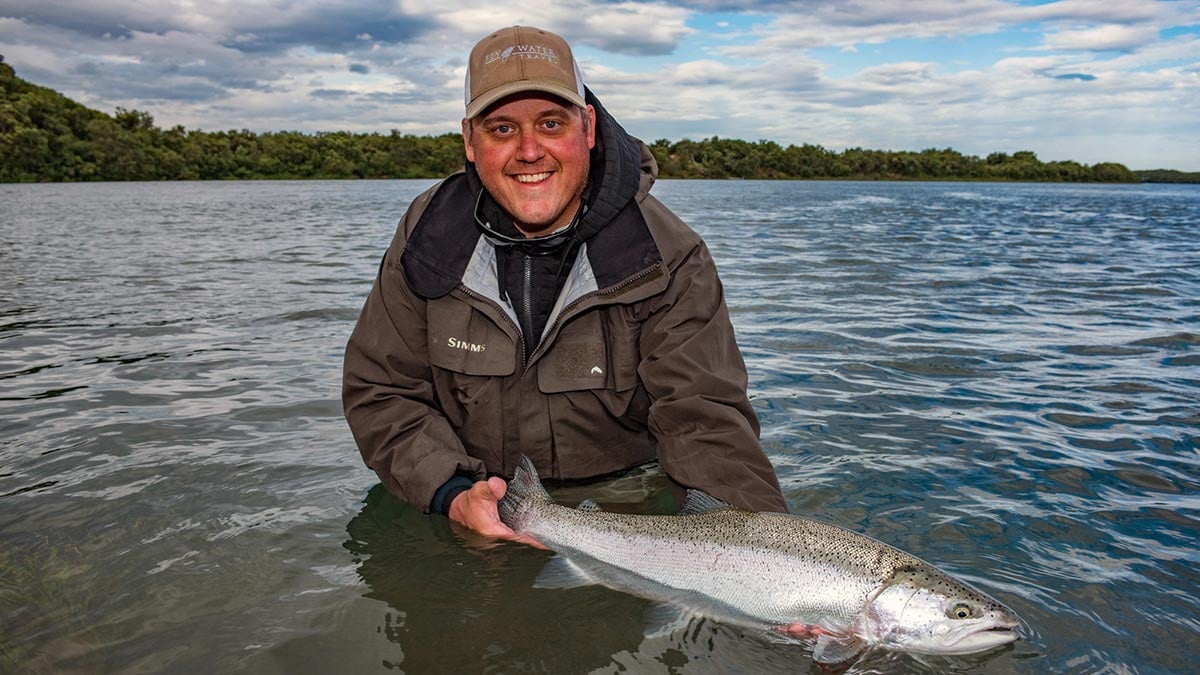
By mid-August the fishing becomes visual in a way that is difficult to find anywhere else. Trout positioned just downstream of active redds in water clear enough to see the riverbed, holding almost motionless, tilting slightly each time an egg drifts into their lane. Fishing during this period often allows you to watch the take before you feel it. Flesh flies and egg-sucking leeches produce alongside bead rigs as the month progresses and carcasses begin to pile on the gravel.
By late August the fish that will define the September and October trophy window are already taking shape — deeper in the body, heavier through the tail, beginning to show the conditioning that the next few weeks will complete.
Mid-August to mid-September is often considered the premier window for Bristol Bay rainbow trout fishing. As the egg supply starts to decline and easy food becomes less available, fish become more willing to chase a fly, and fishing success is typically at its highest.
September — Start of the Trophy Rainbow Trout Season on Alaska’s Rivers
September is when the fishing focus sharpens. Smaller streams across Bristol Bay begin to slow as salmon spawning numbers thin out, and the action shifts to the bigger lake-fed systems — the Naknek and Kvichak above all, but also other lake-headed rivers across the region where coho continue spawning well into the fall.
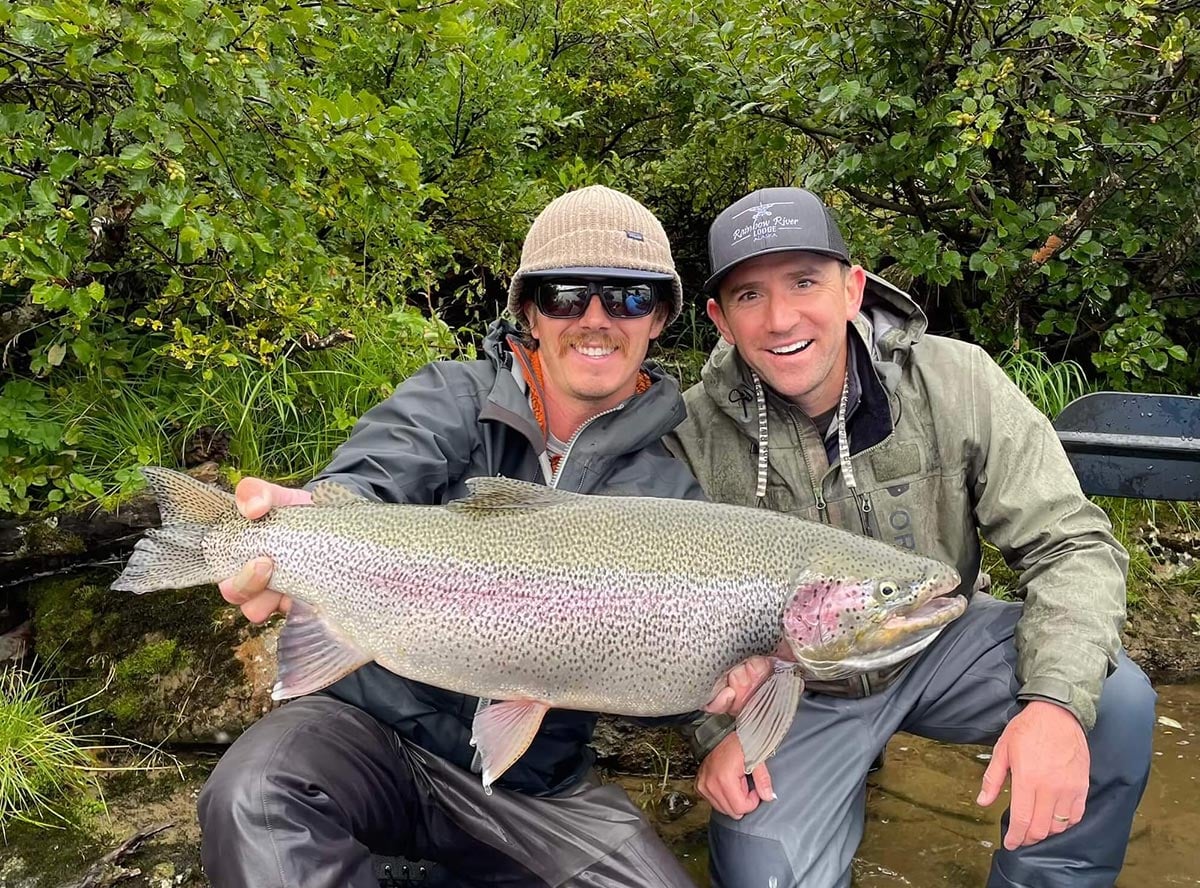
September is also when lake-run Arctic char appear in spectacular pre-spawn coloration across remote Becharof and Katmai destinations — a bonus for anglers who time their trip around the trophy trout window and find char fishing of a caliber that rivals the rainbows.
Egg patterns remain effective through September as coho move onto redds. As the month progresses and spawned-out fish begin to break down, flesh flies and large streamers take over.
During this part of the season, the weather begins to shift — cooler mornings, the first hints of the tundra turning, the occasional front rolling in off Bristol Bay. September can offer some of the season’s best fishing with conditions that are still largely manageable. For many guides who have worked these rivers for years, it is the month they most look forward to.
October — The Trophy Window
For Alaska trout fishing, October is the month that separates the anglers who plan around the calendar from those who plan around the fish. Some lodge programs have closed for the season while others are winding down. Cold weather fronts can quickly move in, and the lodges that remain open do so specifically for the trophy trout window. These trophy-focused operations across the Naknek, Kvichak, and Katmai systems are where the fish are at the peak of what a summer of feeding can produce.
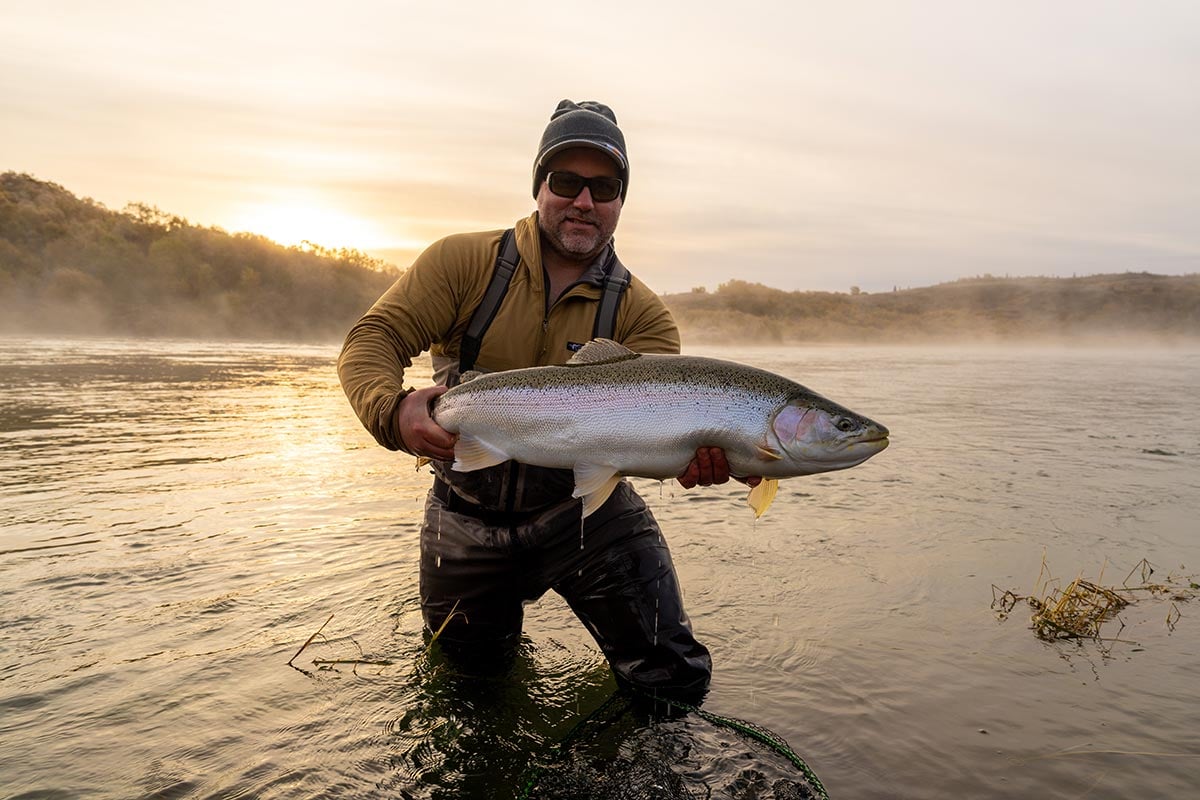
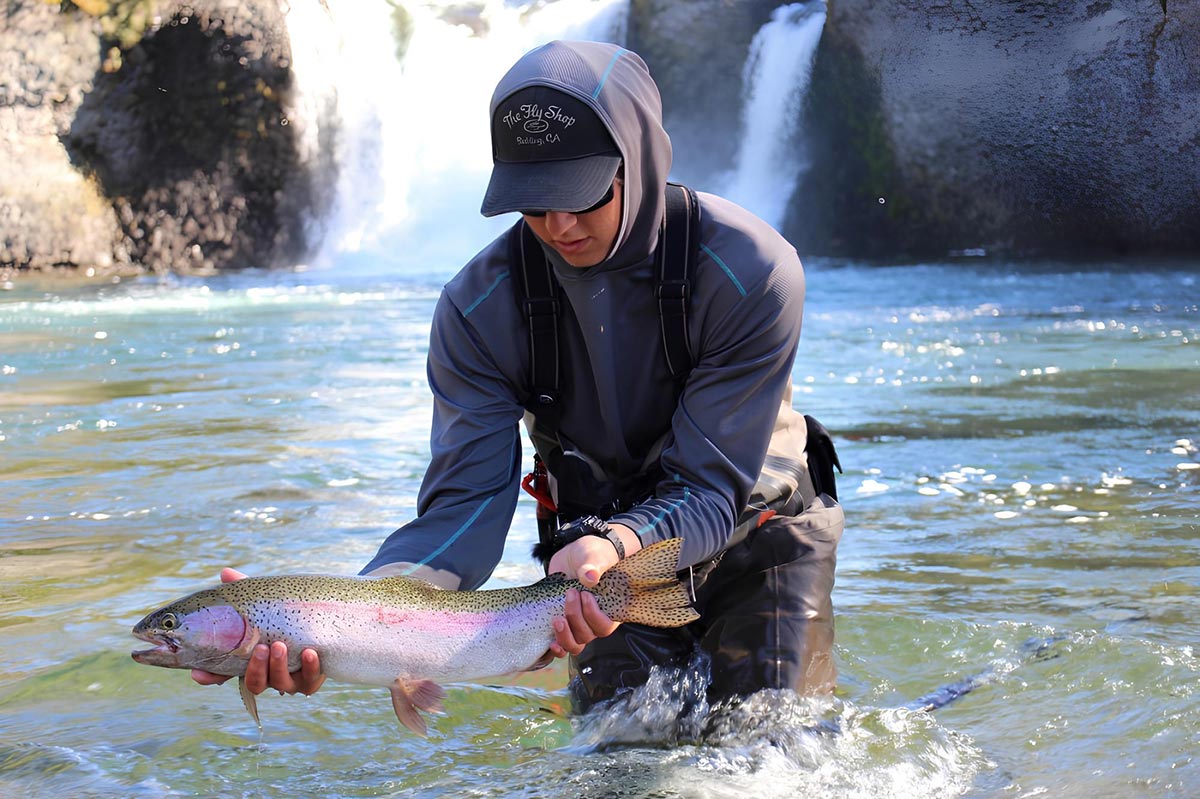
A Bristol Bay rainbow that has fed through an entire summer of eggs and flesh can weigh as much as 50 percent more than it did in June. And October is when those fish are at their heaviest and most powerful — the peak of what the Bristol Bay food chain produces over the course of a single season.
Alaska rivers will often run high and cold by October — flows that demand respect and make it a different proposition from the wade fishing available earlier in the season. The tundra has turned the color of old rust and copper. Bears that spent August on the spawning bars have disappeared into the hills. The lodges that are still open have the river largely to themselves.
For the angler who has come specifically for rainbow trout — who has planned around the fish rather than the season — this is what it looks like when everything lines up. Anglers who come back from October trips often describe it the same way: the month that reframed what they thought Alaska rainbow trout fishing was.
Planning an Alaska Rainbow Trout Trip
Choosing the Right River for Your Trip
Although most visiting anglers choose a lodge first and let the river follow from that decision, understanding what each system offers helps you ask the right questions before you book.
The rivers referenced through the seasonal sections above — the Naknek, Kvichak, Alagnak, and the Katmai streams — all fish differently and suit different anglers. For rainbow trout fishing, Alaska offers a range of options from remote fly-out wilderness programs to the road-accessible Kenai River.
The Naknek is the most logistically accessible of the Bristol Bay trophy rivers, reached via commercial flight from Anchorage to King Salmon, and consistently produces the highest number of trophy fish encounters per day in the fall. The Kvichak offers a more remote experience — lower fish density but arguably the highest ceiling for individual fish size in the region, accessed via small aircraft with Igiugig serving as the nearest hub.
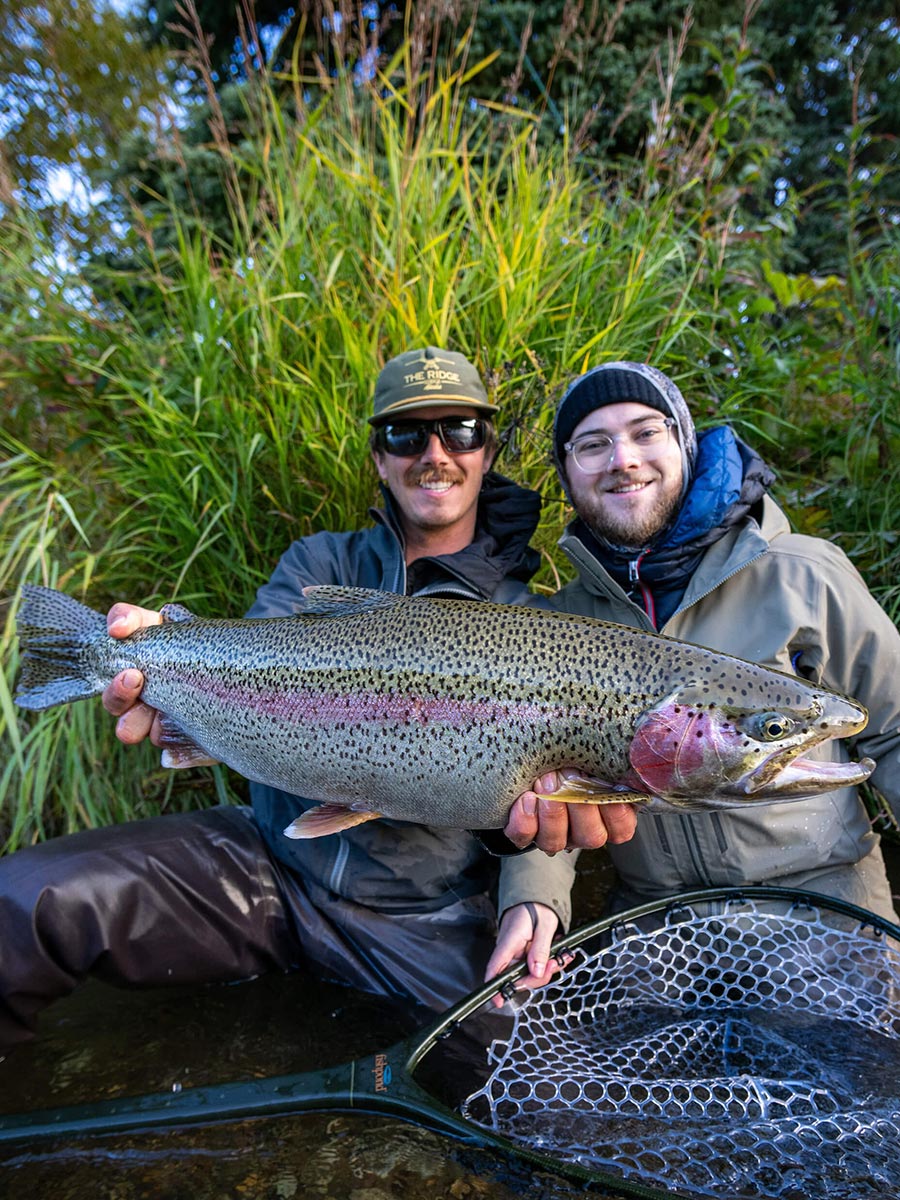
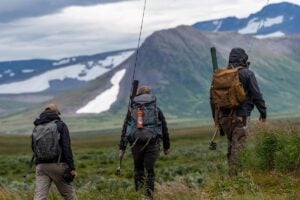
The Alagnak — a federally designated Wild and Scenic River running 75 miles through Katmai National Preserve, fly-in only from King Salmon — and the surrounding Katmai streams suit anglers who want variety across a week, moving between systems by floatplane and fishing intimate walk-and-wade water as well as larger braided channels.
For anglers who want genuine trophy rainbow trout fishing without the cost and logistics of a remote fly-out program, the Kenai River is the realistic alternative. Running approximately 80 miles from Kenai Lake to Cook Inlet on the Kenai Peninsula, it is fully road-accessible via the Sterling Highway — about two hours from Anchorage — making it the most accessible major trout fishery in Alaska. It produces fish to 30 inches in the section below Skilak Lake — particularly in September and October when salmon flesh is at its peak in the system and angler pressure drops significantly from summer levels. It is a guided drift boat fishery on its most productive sections, sharing the river with other anglers during peak season — a different proposition from the remote fly-out wilderness experience of Bristol Bay, but the fish are real and the access is straightforward.
Fly fishing for trout in Alaska on the Kenai is a legitimate starting point for anglers making their first Alaska trout trip. For a broader picture of Alaska’s rivers and regions, the regional guide covers the full range of what the state offers.
For anglers keen to learn more about where and when to fish for salmon in Alaska, our guide to the best salmon fishing in Alaska provides more detail around that.
How Alaska Rainbow Trout Lodge Programs Work
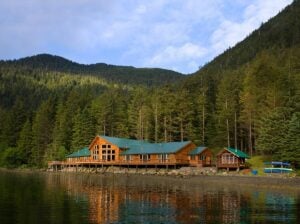
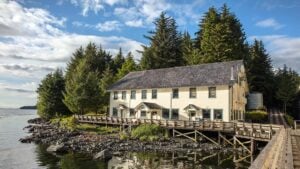
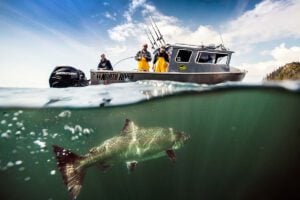
Bristol Bay fly-out lodge programs follow a broadly similar structure. Guests fly commercially to Anchorage and then to King Salmon — the regional hub for many Bristol Bay operations — where lodge aircraft collect them for the final leg to the lodge. A typical week runs seven nights (either Friday to Friday or Saturday to Saturday), with six full days of guided fishing. Fly-out fishing in Alaska between multiple drainages is the core advantage of a lodge program — what separates a good week from a week locked onto one river in poor conditions.
Programs built specifically around rainbow trout fish differently from salmon programs. The best guides for trout know where the fish are in the system week by week through the season, which smaller streams are holding fish ahead of the main river push, and when to move from dry fly presentations to lures, from eggs to flesh, as the season turns.
Not every lodge program is equally focused on trout — some are primarily salmon operations that fish trout opportunistically. It is worth asking specifically about the trout program, which weeks the lodge considers its best for trophy fish, and what fly-out access to the key trout systems looks like from their base.
Regulations Worth Knowing Before You Go
Regulations vary significantly by river and drainage. Rainbow trout are catch-and-release only on the Kvichak, Alagnak, and Nonvianuk drainages. The Naknek carries gear restrictions in the upper section from March through July. Felt-soled wading boots are illegal in all Alaska waters — rubber soles only. Current ADF&G regulations should be checked before any trip, as rules can change between seasons.
What is certain is that the fish are there from June through October. But the angler who understands why the trophy season doesn’t properly start until September, and why a fly-out program structured around trout fishes differently from one structured around salmon — that angler arrives with a genuine advantage.
Our Alaska fishing lodges guide covers the lodge programs built around this fishery — how they differ in access and approach, and how to match a lodge to what you actually want from the week.