The most common Alaska salmon planning mistake isn’t choosing the wrong fly or booking the wrong lodge — it’s choosing a famous destination without first asking whether it’s the right destination for the species you want, in the week you can travel. This guide is about fixing that. Region by region, river by river, species by species.
Alaska has no single answer to “where is the best salmon fishing.” What it has is a set of distinct regions — each with its own river systems, run timing, and access realities — that suit different anglers in different ways. Bristol Bay is not the Kenai Peninsula. The Kanektok River fishes nothing like the waters around Ketchikan. A week on the Russian River at peak sockeye feels nothing like a week on the Goodnews for coho. Understanding those differences is where good trip planning actually starts, and where most of the avoidable mistakes get made.
What “Best” Actually Means for Alaska Salmon Fishing
Before comparing regions, define what “best” means for your specific trip. Two anglers asking the same question can need completely different answers.

The best place to target kings in late June is not the best place to chase coho in August. The best places to fish in Alaska for an angler who wants to wade clearwater rivers on a fly rod are not the same as the best regions for someone who wants to combine saltwater halibut days with freshwater salmon. And the best salmon rivers in Alaska for a lodge-based program with fly-out access are not the same rivers that work for a self-guided road-system trip.
Species priority, travel window, fishing style, and how much logistical complexity you’re prepared to absorb — get that alignment right before you start comparing destinations. The sections below are organized to help you find it.
Our Alaska fishing lodges guide explains how different lodge programs are structured and which type of angler each one genuinely suits, if you’re working through the access side of the decision at the same time.
Bristol Bay: Alaska’s Most Productive Salmon Fishery
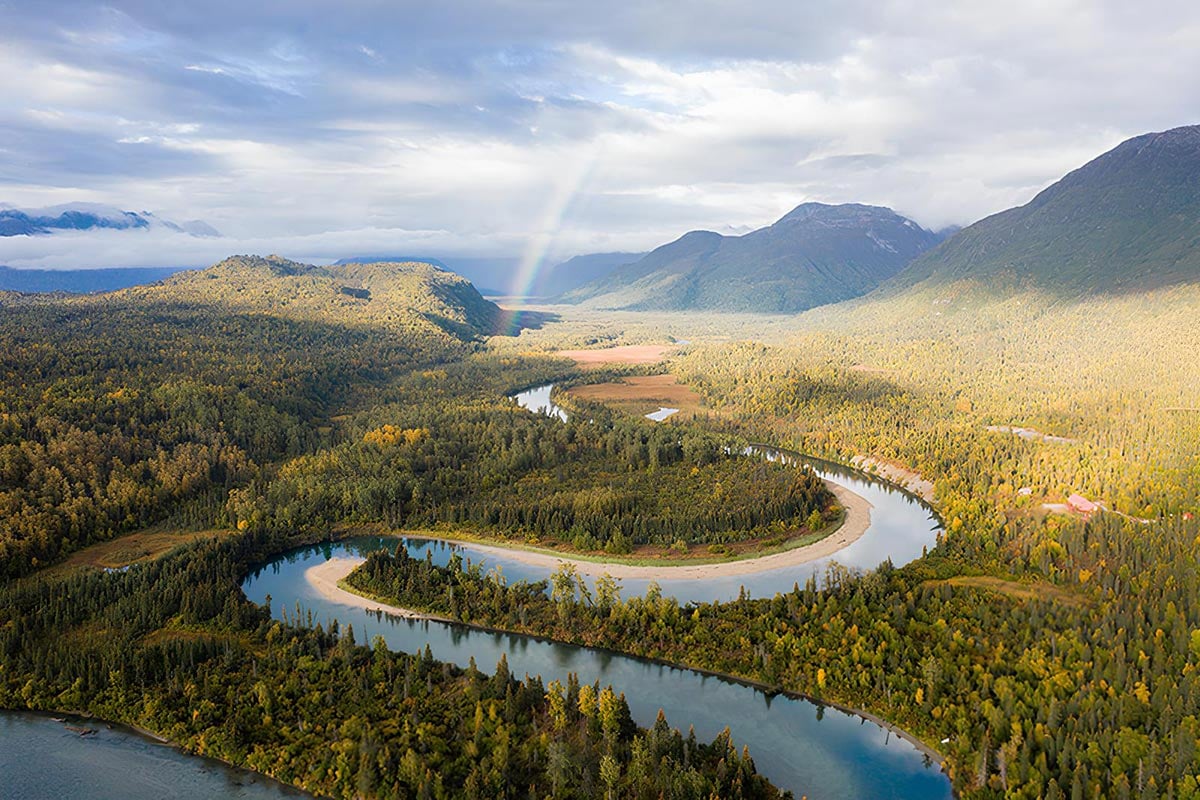
Bristol Bay is the name that comes up first in almost every serious conversation about best salmon fishing Alaska has to offer, and the reputation is earned. For anglers specifically planning salmon fishing in Bristol Bay, Alaska delivers on every front: the region hosts the largest wild sockeye salmon run in the world, some of the most productive king salmon rivers in the state, and clearwater systems that fish consistently well for rainbow trout, Arctic char, and grayling alongside the salmon runs.
For anglers whose priority is rainbow trout rather than salmon, our Alaska rainbow trout fishing guide covers the Bristol Bay trophy trout fishery in detail.
Key Rivers and What They Produce
The drainages that define Bristol Bay are the Naknek, Kvichak, Nushagak, and Alagnak. Each has its own character and its own best window.
The Nushagak River carries Alaska’s largest wild king salmon run. Kings build through June and concentrate hard in the latter half of the month. Guides who fish the Nushagak regularly describe the peak as one of the most time-sensitive opportunities in Alaska: it builds fast, peaks hard, and moves on quickly. The Bristol Bay king season runs mid-June through late July across the Naknek, Alagnak, Nushagak, and Togiak systems, closing statewide by regulation on July 31.
The Naknek, Kvichak, Nushagak, and Wood rivers are the engine of the Bristol Bay sockeye run — the largest wild sockeye run in the world. ADF&G sonar data confirms strong counts across these drainages in the first half of July in a typical year, with tapering noticeable by the end of the month. The Nushagak run moves through in a compressed window; being a week late produces a noticeably different trip.
Access Reality
Bristol Bay has no road access to its fishing water. Every trip begins with a commercial flight to a regional hub — King Salmon or Dillingham — but what happens next varies by lodge. Some operations on the lower Naknek River are reachable from King Salmon by road or boat. Most of the best fishing water, however, is accessible only by floatplane or bush charter from the hub. That inaccessibility is precisely what makes the fishing what it is: the rivers see a fraction of the pressure that would accumulate if you could drive to them. But it also means that weather, aircraft availability, and logistics shape the week in ways that have nothing to do with fish counts. A program can have outstanding water and still produce a frustrating week if it has limited fly-out options when conditions change. The lodges and camps that consistently deliver here are the ones with enough aircraft, enough backup drainages, and enough operational flexibility to keep guests on productive water when Plan A doesn’t cooperate — which in Bristol Bay, it sometimes won’t.
For a full breakdown of how Bristol Bay fishing works — the species, the seasons, the access model, and what to know before planning a trip — see our Bristol Bay fishing guide.
Kenai Peninsula: The Most Accessible Wild Salmon Fishing in Alaska
The Kenai Peninsula is where most anglers have their first Alaska salmon experience, and it does that job better than anywhere else in the state. Ted Stevens Anchorage International Airport is under two hours from the best salmon rivers in the region by road. There are tackle shops, hotels, rental cars, restaurants, and guides at every price point. For an angler who wants to know what the best fishing in Alaska feels like before committing to a remote fly-out program, the Kenai is the right place to find out.

The Kenai River and Russian River
The Kenai River runs 82 miles from its glacial headwaters to Cook Inlet and is one of the most intensively studied and carefully managed salmon rivers in Alaska. King salmon fishing on the Kenai River is built around two entirely distinct runs — managed separately by ADF&G, with their own regulations and their own windows — that between them cover late May through July. The early run arrives from mid-May and peaks through the first half of June. It draws less attention than the late run, typically less crowded, and is historically responsible for the largest individual fish of the season. The current world record king salmon — 97.25 pounds — was caught on the Kenai’s early run on May 17, 1985. No landed and officially weighed fish has come close since.
The late run builds through July and arrives at the same time as the sockeye push, which is where the Kenai’s character shifts. The Russian River, meeting the Kenai near Cooper Landing, is one of the most recognizable sockeye fisheries across Alaska’s fishing regions — and during peak timing in July, one of the most crowded stretches of fishing water in the state. Anglers stand elbow to elbow on the banks of a river that genuinely deserves better. Guides who know it well fish the sections most visitors never find, but even then, peak sockeye on the Russian is an experience you either embrace or decide isn’t for you. There is no middle ground.
That honesty is part of what makes the Kenai useful to understand clearly: road access is the best thing about it, and road access is also the reason it fishes the way it does at peak. The river is excellent. It is also easy to reach for everyone else.
Why the Kenai Still Earns Its Reputation
The Kenai Peninsula runs the longest salmon calendar of any Alaska region — kings from mid-May, sockeye through mid-August, coho arriving from late summer and running through October on the lower river. That range matters practically: it means that whatever week you can travel, there is almost certainly a species in season and a credible reason to be on the water. No other Alaska salmon region offers that kind of flexibility, and for anglers with fixed vacation dates who can’t build a trip around a specific run window, the Kenai is often the most honest answer to what will actually work. ADF&G also stocks 25 lakes on the Northern Kenai Peninsula with rainbow trout, Arctic char, and landlocked Chinook and coho — useful context if the trip includes non-fishing companions or mixed-ability groups who want productive days away from the main river crowds.
Experienced anglers who have fished the Kenai before often use it differently on return visits — adding saltwater days out of Homer or Seward for halibut and lingcod, targeting the lesser-known tributaries that hold fish without the Russian River’s crowds, or timing the October coho run when the pressure has gone and the river feels like a different place entirely. The Kenai in October, with silvers still running and most of the summer visitors gone, is one of the better-kept secrets in Alaska salmon fishing.
Southeast Alaska: The Most Versatile Salmon Fishing Trip in the State
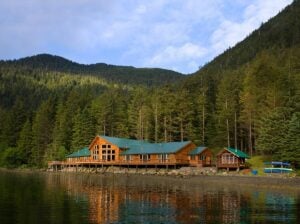
Southeast Alaska is a distinct style of trip — coastal, saltwater-driven, and built around infrastructure that Bristol Bay simply doesn’t have. Salmon fishing in Southeast Alaska covers a longer calendar and a wider species range than most visiting anglers expect: the region is reached by floatplane or scheduled flight rather than bush charter, lodge docks sit minutes from productive salmon grounds in the Inside Passage, and the season runs long enough to absorb a range of travel dates without forcing a compromise on species.

Species Mix and Key Systems
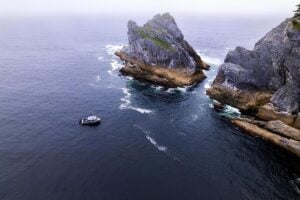
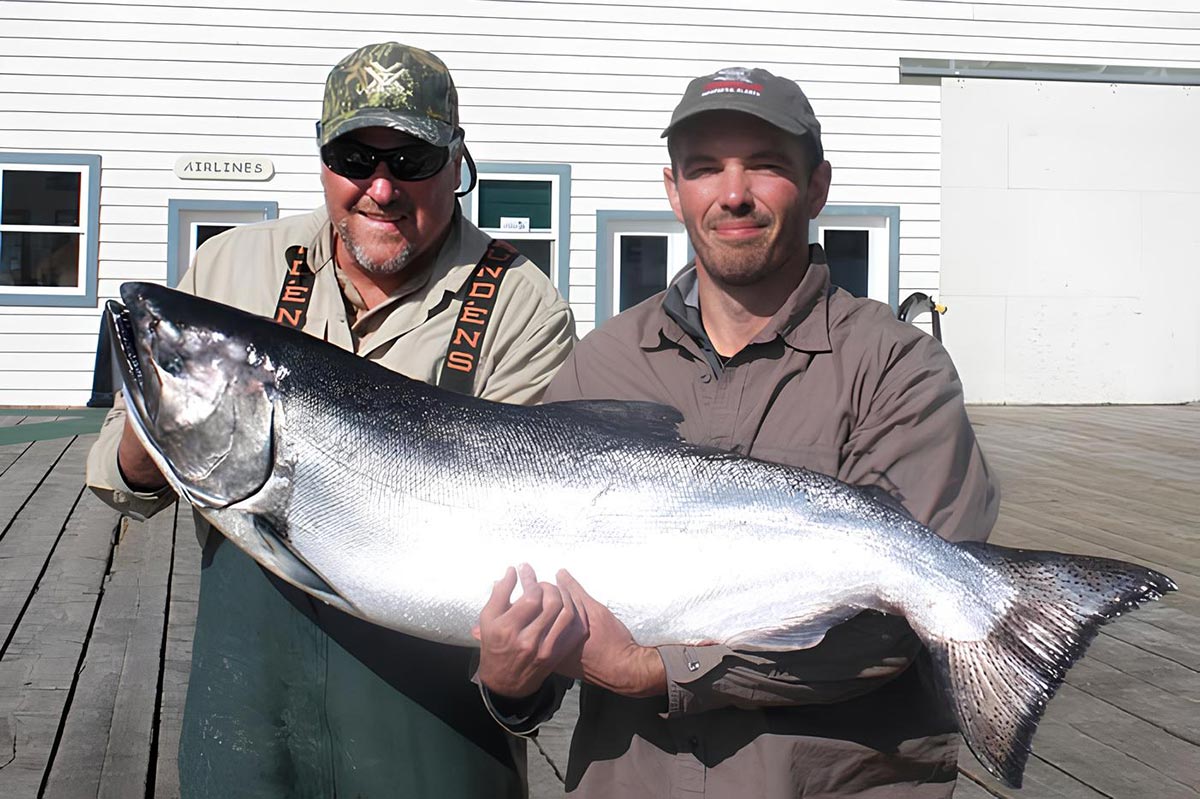
All five Pacific salmon species run through Southeast Alaska across a season that starts in late May and, on the best coho systems, continues into October. King salmon are the early draw — mature fish in the salt off Ketchikan, Prince of Wales Island, and Noyes Island from late May through June, holding in the channels and tide lines of the Inside Passage before beginning their freshwater push. The king fishery here is predominantly saltwater; anglers cover water by boat, reading structure and current rather than wading a gravel bar.
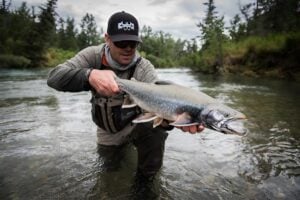
Coho salmon fishing in Southeast shifts character through the season. Saltwater silvers are available off Ketchikan and Prince of Wales Island from late July. By August they’re running into coastal rivers and creeks around Sitka, Juneau, and Ketchikan — and guides who know these small systems will tell you the freshwater fishing is a different experience entirely from the salt. More technical, more visual, and often more satisfying for fly anglers than the saltwater days that precede it. Fall coho continue running into September and October on the better Southeast rivers, fished by a fraction of the anglers who crowd the same water two months earlier. It is some of the least-pressured salmon fishing available anywhere in the state.
Pink salmon run in Southeast on a two-year cycle, with even-year returns substantially stronger than odd-year runs in most drainages. In a strong even year, pinks arrive in enormous numbers from mid-July — aggressive, willing, and ideal for introducing newer anglers to salmon fishing on a fly rod without the technical demands of king or coho fishing. Halibut, lingcod, and rockfish provide consistent bottom fishing throughout summer alongside the salmon calendar.
Saltwater vs River Fishing in Southeast
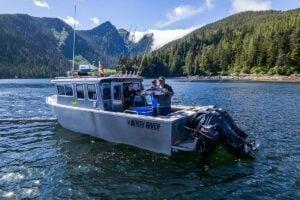
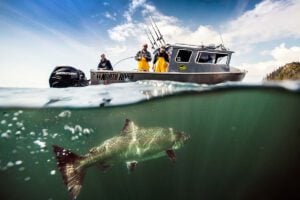
In Southeast, the word “salmon fishing” covers two experiences that feel almost nothing alike. Saltwater days mean running a boat out of a lodge dock into the Inside Passage — working structure, tide lines, and kelp beds for kings and coho in open or semi-sheltered water, with halibut a constant option on the bottom. River and creek days are something else: smaller water, fish you can actually see, and the kind of focused technical fishing — reading holding lies, presenting a fly to visible coho — that anglers who have fished Patagonia or Scandinavia would immediately recognize. For groups with mixed preferences, Southeast is the one Alaska region where you can satisfy the angler who wants nonstop boat action and the one who wants to wade a small coastal stream, often within the same week.
Western and Remote Alaska: Low-Pressure Wild Salmon Fishing
Most anglers who picture Alaska salmon fishing are actually picturing Western Alaska — even if they don’t know the name for it. The braided clearwater river, the tundra banks, the absence of other rods on the water. Bristol Bay is famous enough to have attracted a significant guided industry. Western Alaska is where you go when you want that same quality of fishery with a fraction of the company.

What Remote Alaska Delivers
The clearwater rivers of Southwest Alaska — the Kanektok and Goodnews among them — hold coho in numbers that compare directly with the most productive Bristol Bay systems. The difference is pressure.
The Kanektok is a 95-mile river draining to Kuskokwim Bay within the Togiak National Wildlife Refuge; coho arrive in late July and peak from mid-August into early September. The Goodnews runs a similar pattern with even less rod pressure. Both are regarded by guides who fish them regularly as among the most consistently productive and least-crowded coho destinations in the state. For anyone who has fished the Russian River at peak sockeye and wondered what Alaska fishing is supposed to feel like, the answer is usually somewhere in this direction.
Why Fly-Out Access Is the Point, Not an Upgrade
The best salmon water in remote Alaska isn’t reachable by rental car. DIY Alaska fishing works along the road system, and independent charter flights to remote water are possible — but in Western and remote Alaska, without local knowledge and backup options, the margin for a wasted week, or worse, is significant. The productive water here is behind a floatplane or a structured lodge program for good reason. Fly-out camps and lodge programs exist because they unlock rivers that are otherwise impractical to access — and they let guides move you to better water when conditions shift, rather than leaving you committed to one section of one river for the week. On a short trip, that mobility is the most valuable thing a remote program offers.
Best Salmon Fishing in Alaska by Species
If you want a faster answer, start with species first and let that narrow the region.

King Salmon
The Kenai River for road-accessible king fishing — two distinct runs spread across May through July, with the early run historically producing the largest individual fish of the season. The Nushagak in Bristol Bay for Alaska’s largest wild king run by volume, peaking hard in late June. Kings require the most precise timing of any species — windows have compressed on many systems, in-season closures based on ADF&G escapement counts are more common than they once were, and local sonar data and guide knowledge matter more here than for any other salmon.
Sockeye Salmon
Bristol Bay is the definitive answer for sockeye — the Naknek, Kvichak, Nushagak, and Wood rivers in the first half of July, at the peak of the world’s largest wild sockeye run. The Kenai runs sockeye slightly later, strongest from mid-July through mid-August, with road access making it the most reachable option. The distinction is straightforward: Bristol Bay offers better fishing in a remote setting; the Kenai offers easier access with more company on the water.
Coho Salmon
August is the primary coho month across most of Alaska. For silver salmon fishing in Alaska at its most consistent and least pressured, the Kanektok and Goodnews rivers in Western Alaska are hard to beat — peak timing from mid-August into early September, strong runs, low competition. Southeast Alaska delivers coho salmon fishing in saltwater from late July and in rivers through September. Bristol Bay systems including the Alagnak and Naknek tributaries fish well from early August. The right choice is a function of how much logistical complexity you’re comfortable with: Southeast is easiest; Western Alaska requires the most planning but delivers the most space.
When Is the Best Time for Salmon Fishing in Alaska?
Region and species determine the month more reliably than the calendar determines the region. Once you’ve identified your target species and preferred area from the sections above, our Alaska salmon season guide covers the specific run windows — by drainage, by month, and what ADF&G sonar data typically shows — so you can align your travel dates to the right peak.
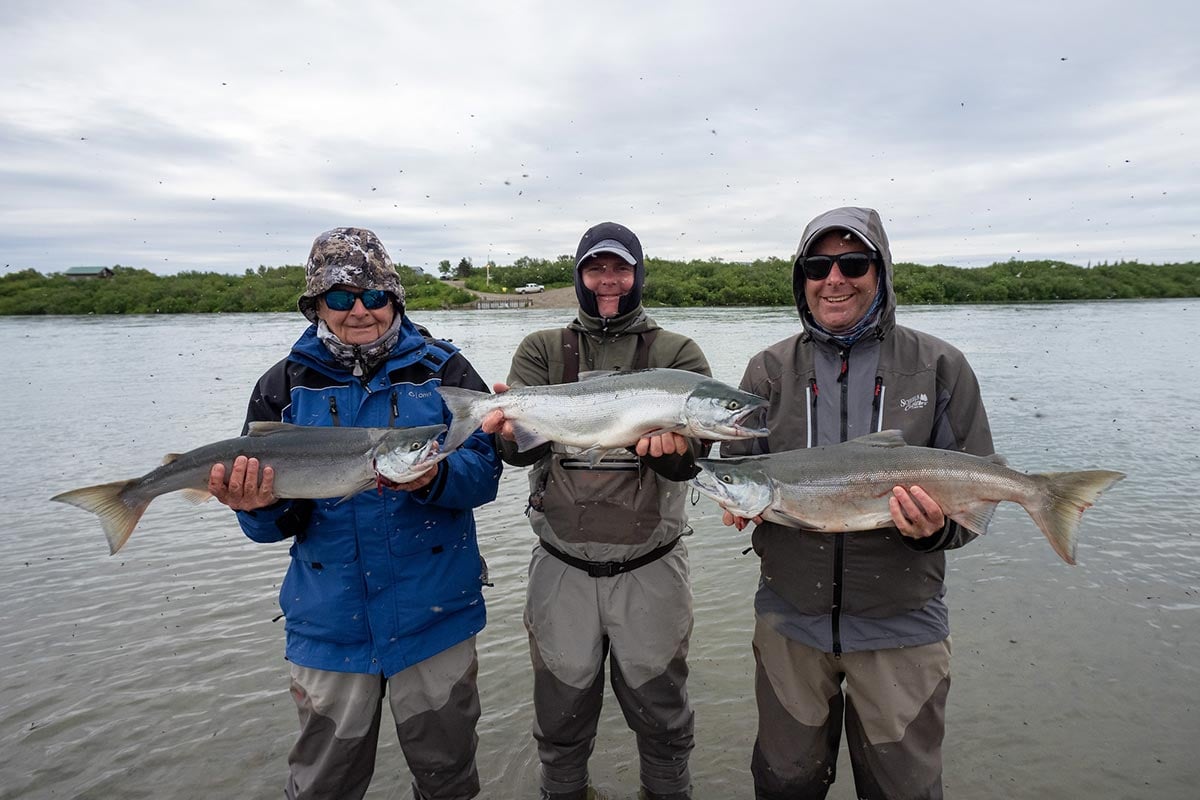
The one timing principle that applies across every Alaska region: runs move on their own schedule, not yours. Ocean conditions, water temperatures, and snowmelt can all push a peak earlier or later — sometimes significantly. Being wrong costs you most of a short trip. Guides with sonar access and years of river-specific experience are the most reliable way to be on productive water during a compressed peak window — which is the strongest practical argument for a guided or lodge-based program regardless of which region you choose.

How to Choose the Right Alaska Salmon Fishing Trip
A practical shortlist framework, by what you’re actually after:
- Remote wilderness, highest fishery output, multiple species: Bristol Bay — Naknek, Kvichak, and Nushagak drainages for kings and sockeye; Kanektok and Goodnews for coho. Lodge or fly-out program required. No road access to the fishing water.
- Road-accessible fishing, longest season, easiest logistics: Kenai Peninsula — Kenai River for kings and sockeye, Russian River for sockeye, coho through October. Best entry point for first-time visitors to Alaska.
- Saltwater and freshwater variety in the same week: Southeast Alaska — kings early, coho through September, halibut and lingcod running alongside the salmon calendar. Strong lodge and boat infrastructure.
- Low-pressure wild salmon fishing, serious coho focus: Western Alaska — Kanektok and Goodnews river systems. Charter or fly-out access required. The best ratio of fishing quality to angling pressure of any region in the state.

Budget in Alaska is a direct proxy for access: remote programs cost more because aircraft, boats, staff depth, and logistics are the actual product. If you’re choosing between a nicer lodge and better access, access wins — particularly on a short trip where a day of logistics problems can cost you a meaningful share of your total fishing time.
Alaska rewards the angler who plans specifically. The region, the species, the access model, the week — get those four things aligned and the trip tends to deliver. Leave any one of them to chance and Alaska is large enough and variable enough to make you feel it. Our Alaska fishing lodges guide covers the programs we’ve reviewed and how each one fishes on the water.