Dorado fishing in Argentina isn’t a single fishery. It’s a network of rivers, wetlands, and floodplain channels across the north, where water levels and fish movement change week to week. Knowing how those systems differ is what makes the difference between fishing the right water at the right time.
Argentina’s Golden Dorado Fishing Overview
Golden dorado fishing in Argentina is nothing like Patagonian trout fishing. The climate is subtropical, the water warm and turbid in places, and the fish move constantly in response to water level, bait, and temperature. Lodge-based programs concentrate across the Paraná basin — the second largest river system in South America after the Amazon — spread across Corrientes, Santa Fe, and the Delta south of Buenos Aires. Each area fishes differently, not just in character but in how a day is structured and how much water a guide can cover.
The main season runs September through April. Within that window conditions shift enough month to month that when you go matters as much as where.
Where to Fish for Golden Dorado: Northern Argentina across the Paraná system — Corrientes, the Iberá wetlands, and the Paraná Delta within easy reach of Buenos Aires. For trophy fish, the Uruguay River tailwater at La Zona — on the Argentine-Uruguayan border — offers exceptional size but strictly limited access.
When to Fish for Golden Dorado: September to April, with October and March the standout months. Early mornings and late afternoons produce the best fishing in mid-summer heat. Outside the main season, some fisheries specifically target dorado following the winter sábalo migration, running a separate June through November season.
Water Access Options: Most fishing is skiff or boat-based, covering new water throughout the day. Wading is possible on some systems when conditions allow.
Why Anglers Fly Fish for Golden Dorado
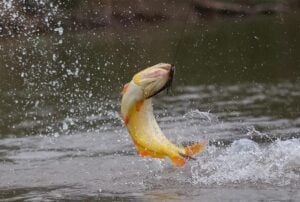
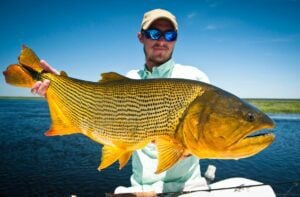
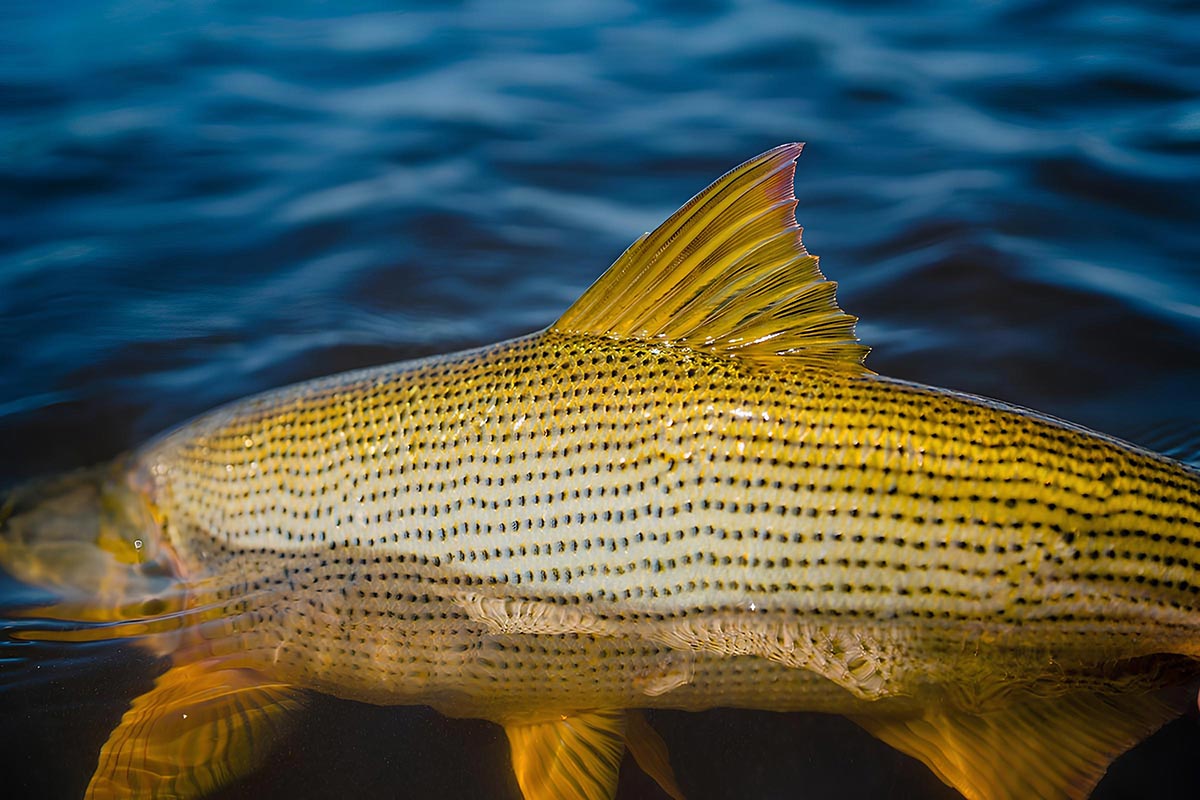
Golden dorado fly fishing in Argentina is visual and fast-paced. The fish — known locally as el dorado, or the river tiger — are aggressive, takes are hard, and even an average fish will test your strip strike and burn line quickly once hooked. A 4kg (9 lb) fish in the contained, slower water of the Iberá will use weed edges and current in ways that make it feel considerably larger — and on the main Paraná, where fish run bigger, the fight is on another level entirely.
Casting large, heavy streamers accurately — and repeatedly — is central to the fishing. Guides across the system recommend practicing both double-haul distance and accuracy before arriving, particularly for the Paraná where placing flies tight to specific bank structure often makes the difference.
The northern river systems are wide, warm, and alive — herons working the margins, capybara on the banks, kingfishers cutting across the water. None of it resembles the meditative, methodical experience of a Patagonian spring creek. For anglers who find the cold winds of Patagonia less appealing, the subtropical climate of the north is a genuine draw — fishing in warmth, through landscapes that feel closer to the Amazon than the Andes.
Many operators also offer conventional spin fishing alongside fly, making golden dorado accessible to non-fly anglers looking for one of the most explosive freshwater fights in South America.
The Golden Dorado Fisheries of Argentina
Argentina’s dorado fisheries are all quite different, and together span an enormous area of water best accessed by skiff or boat. The fishing is focused entirely in the country’s subtropical north, across several distinct areas.
Corrientes province, roughly 800km north of Buenos Aires, is the heartland, where the Paraná River runs wide and powerful through a landscape of channels, islands, and shifting sandbars. Inland from the main river, the Iberá wetlands spread across a vast low-lying plain of marsh channels and lagoons. Further south, as the Paraná begins to break apart approaching Buenos Aires, it fans into the broad tidal channels of the Delta — more accessible, and suited to shorter trips. Each region fishes differently in scale, pace, and what a day on the water actually looks like.
The Paraná River
Corrientes and Santa Fe Provinces
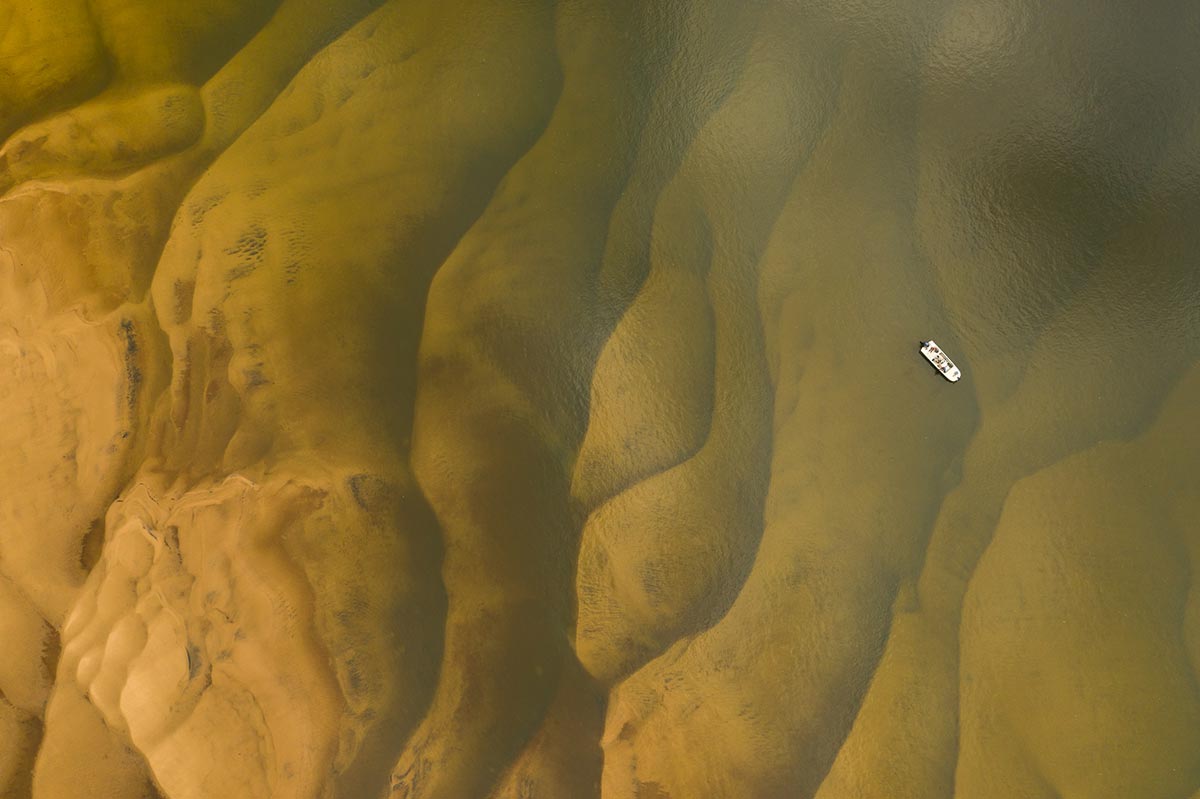
The Paraná River forms the natural border between Corrientes and Santa Fe provinces across this stretch of northern Argentina. Corrientes sits in the country’s far northeast, bordered by Paraguay to the north and Brazil to the northeast — roughly 800km from Buenos Aires, an hour by domestic flight. The middle and upper Paraná run wide and powerful here, braiding into secondary channels, islands, and shifting sandbars that guides cover by skiff throughout the day.
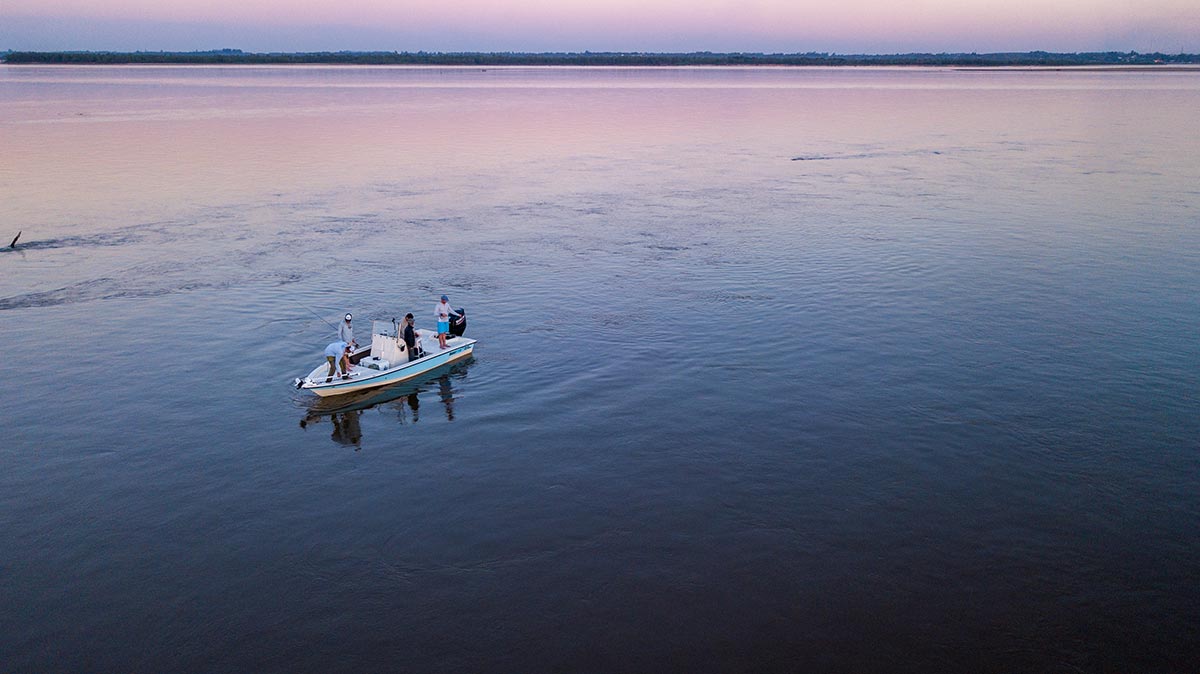
The two sides of the river fish differently. The Corrientes bank runs clearer; the Santa Fe side carries more sediment and colour, but its braided network of marshlands, lagoons, and tributary creeks creates its own distinct character — fishing exceptionally well during seasonal migrations. Both sides reward mobility, and guides are constantly reading conditions and moving to stay on fish.
It’s along this boundary that Argentina’s golden dorado fishing is most concentrated — and where some of the largest fish in the country are found. Averaging 10 to 20 pounds across a full week, with the biggest females pushing well beyond that on the better stretches, the Paraná is the most physically demanding of the Argentine systems and the one most likely to produce a fish of a lifetime outside of La Zona on the Uruguayan border.
The Iberá Wetlands
Central Corrientes
Inland from the Paraná, roughly 700km from Buenos Aires in the heart of Corrientes province, the Iberá wetlands spread across one of the largest freshwater ecosystems in South America — over 20,000 square kilometers of marsh channels, lagoons, and slow-moving water. The scale is different here — less boat time between spots, more time spent fishing specific pieces of water carefully.
The dorado here run smaller than the main Paraná — fish of 7 to 13 pounds are typical — but what they lack in size they make up for in aggression. Contained, slower water means fish are holding on specific structure rather than moving constantly, and a well-placed popper on a weed edge can produce an explosive surface take in inches of water.
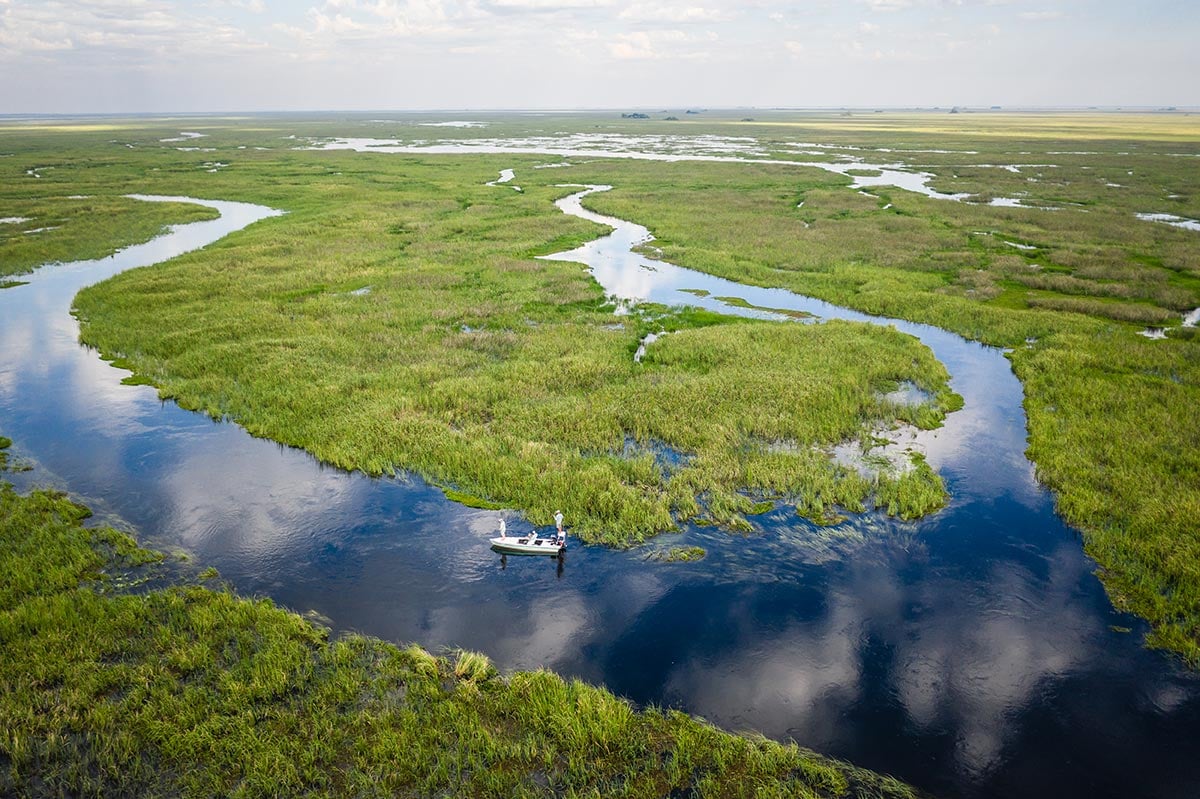
Fishing in the Iberá is more about reading what’s in front of you: weed edges, channel bends, cover. Fish behavior is shaped by immediate structure rather than the broader pulse of a big river. Surface patterns — poppers and mouse flies — are particularly effective in the clearer, slower water, and the evening sessions here can produce some of the most explosive takes of any Argentine system. Days are quieter and more contained, and the surrounding birdlife across the marshes — over 350 recorded species — is exceptional even by Argentine standards.
The Paraná Delta
Greater Buenos Aires
The Paraná Delta spreads across a vast labyrinth of tidal channels, backwater islands, and braided streams on the outskirts of Buenos Aires, where the river finally empties into the Río de la Plata — the widest estuary on Earth. Around an hour from the city by road and boat transfer, it is the most accessible dorado fishing in Argentina by some distance.
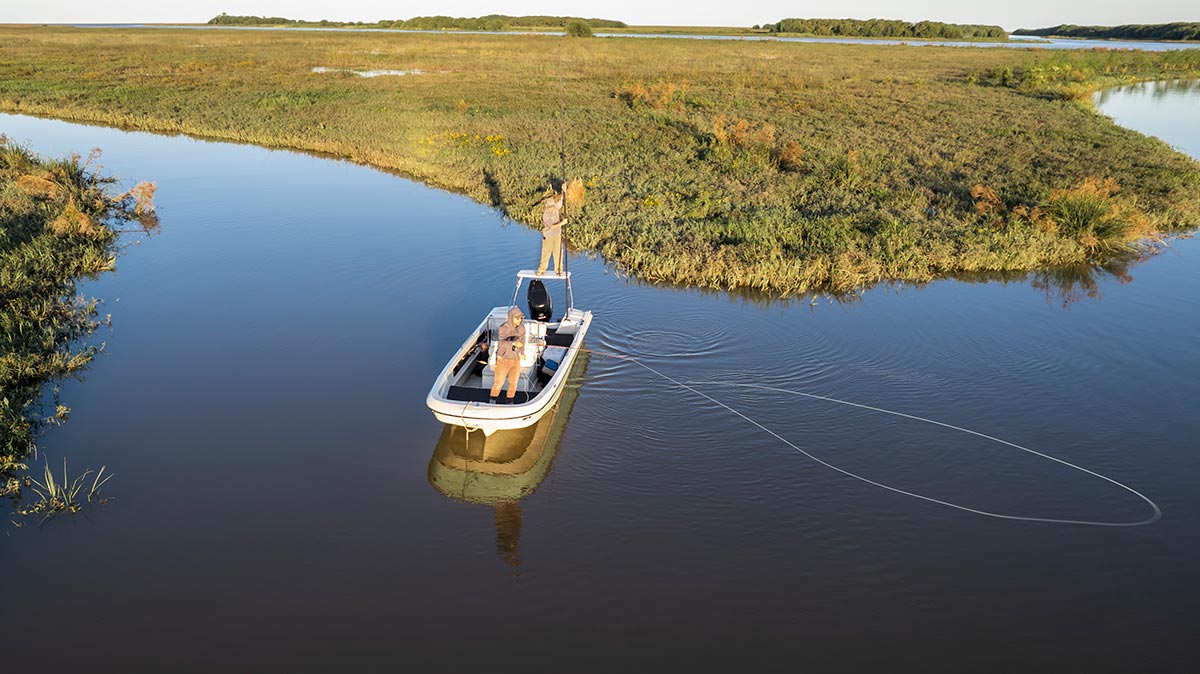
Dorado here average 7 to 8 pounds in the tighter channels, with larger fish possible when guides move out onto the main Paraná. The fishing is structure-based — sunken logs, channel bends, clear sandbars — and well suited to day trips or two to three day visits for anglers combining fishing with time in Buenos Aires.
La Zona
Uruguay River Trophy Fishery
To the far east of Argentina, La Zona sits on the Uruguay River at the Argentine-Uruguayan border, roughly five hours from Buenos Aires by road.
Below the Salto Grande Dam, the turbines flush baitfish constantly through highly oxygenated water, creating conditions that produce dorado of a size found nowhere else in Argentina. Fish here average around 14 pounds, twenty-pounders are routine, and the fishery holds over twenty IGFA world records — including the all-tackle record of 55lb 11oz and the fly-rod record of 50lb, both set here. Access is strictly limited to four boats, four days a week.
This is not a lodge week in the traditional sense. It’s a focused, high-intensity tailwater session for anglers whose primary goal is the largest dorado possible — and for that specific purpose, nowhere else competes.
When to Fish for Golden Dorado in Argentina
The lodge season runs roughly September through April. Temperature, water level, and clarity shift noticeably across those months, and those shifts affect where fish are holding and how consistently they feed. Underpinning all of it is the sábalo — the schooling baitfish that dorado depend on. When sábalo schools move, dorado follow within 24 to 48 hours, and guides track those migrations daily to stay positioned on feeding fish.
Spring Dorado Fishing
September to November
During spring, water temperatures rise and fish become active after months of slower metabolism. Early in the period water levels can fluctuate with rainfall, moving fish around the system. By October the Piracema — the mass upstream spawning migration of sábalo — begins in earnest. Enormous schools of baitfish move upriver, and dorado arrive in pursuit within 24 to 48 hours. October is consistently one of the strongest months of the year: fish are pre-spawn, actively feeding, and the largest females are at peak weight. The spawn itself typically begins by late November, but through October the fishing is at its most consistent.
Summer Dorado Fishing
December to February
With the onset of summer, the heat defines everything. January and February are the hottest months, with daytime temperatures regularly exceeding 35°C — not unlike fishing the Florida Keys in midsummer. The fishing is genuinely good — dorado are active, aggressive, and particularly responsive to surface patterns in the shallower water — but the effective window compresses into early morning and late afternoon. How a lodge structures the midday hours is one of the most important things to understand before you book.
Some upper Paraná operations close for a short period around the spawning season in November and December; check operator dates carefully when planning a summer trip.
Autumn Dorado Fishing
March to April
As temperatures ease through autumn, conditions stabilize. March in particular is a strong month — post-spawn fish are feeding hard to rebuild condition, sábalo are still moving through the system, and the full-day fishing window opens back up. Fishing spreads across longer hours and the pace of days is more even, making this a strong choice for anglers who want consistent action rather than intense early-morning bursts.
Winter Dorado Fishing
May to August
Most lodge programs on the main Paraná pause through winter as water temperatures drop and fish metabolism slows. However, some operators specifically run winter season programs from mid-June onwards, targeting dorado following the upstream sábalo migration along the middle Paraná. For these fisheries the winter months — particularly July and August — can produce aggressive, hard-feeding fish as dorado chase baitfish schools moving upriver ahead of the spring spawning run. For anglers whose schedule doesn’t allow a spring or autumn trip, it is worth asking operators directly whether a winter program is available on their stretch of river.
For a broader view of how Argentine seasons affect different fisheries, see our best time to fish in Argentina guide.
A Typical Golden Dorado Fishing Day
A dorado day is built around movement and decision-making. The fish are not holding in one place — they move through the system in response to bait, water level, and temperature, which means guides are constantly reading the river and adjusting position. A stretch that fished well on Tuesday can be unfishable by Thursday if heavy upstream rain muddies the water — which is why access to multiple sections of the system matters across a full week.
Skiff, Boat and Wade Fishing
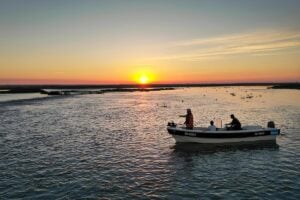
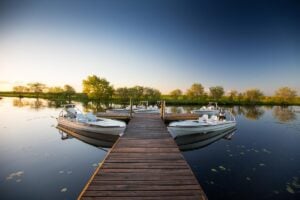
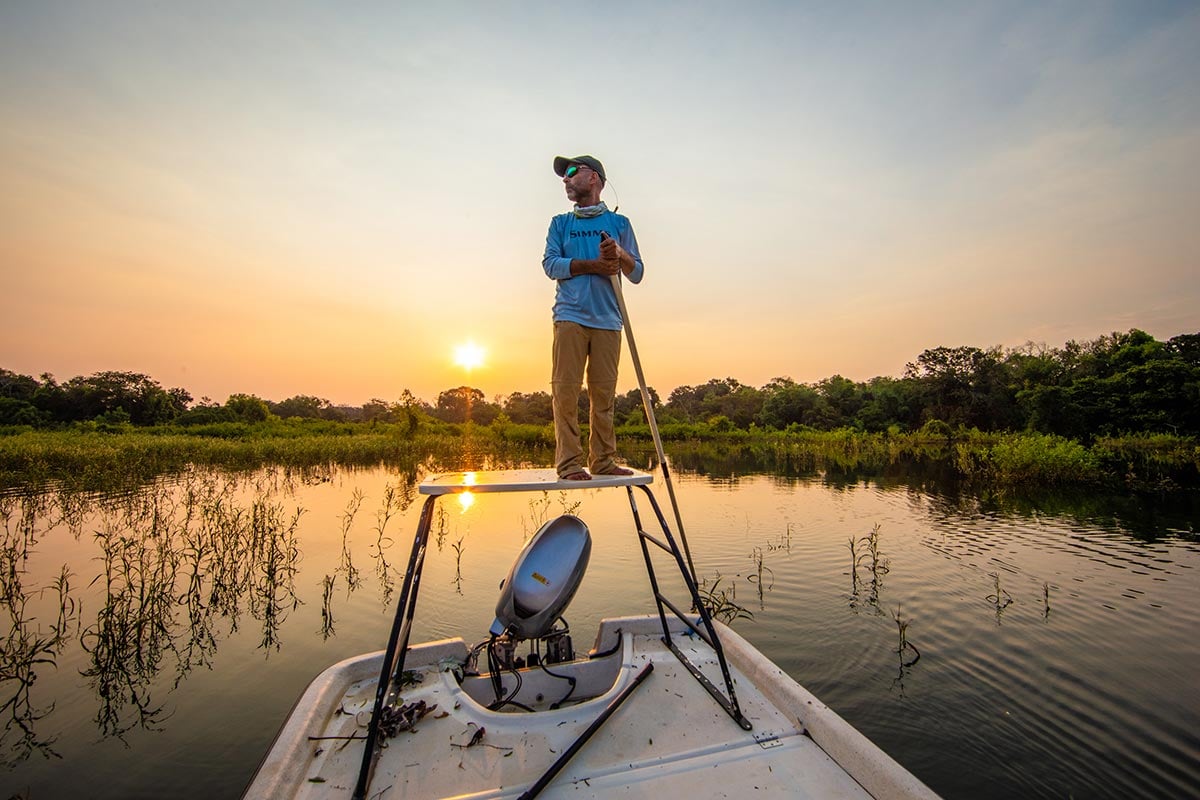
Fishing is done from a boat — skiffs which can be poled, panga-style vessels, and purpose-built fly fishing boats are all used across different operations, typically with two anglers and one guide. On the Paraná, runs between areas can be long. In tighter systems they’re shorter but more frequent. Either way, if the water in front of you isn’t producing, guides will move you on.
Wading is possible on some systems when conditions allow — particularly in the Iberá, where dropping water levels expose shallow channels and create opportunities to wade to specific structure, similar in some ways to a saltwater flats fishery.
How Heat Shapes the Fishing Day
Temperature defines the structure of a summer dorado day more than anything else. The productive window in December and January runs from early morning to 9:30am, and then again from 5pm until dark. By mid-morning the shallow water heats fast, fish slow down, and the effort-to-reward ratio drops sharply through the middle of the day.
How a program handles those midday hours — whether guides use them to reposition, take a rest, or run to better conditions further along the system — says a lot about how well the week is designed. On the main Paraná, guides tend to use the lull to make longer runs, covering ground to find better conditions. In the Iberá the approach is different — days move more slowly overall, with longer periods worked on specific areas.
As temperatures drop through the late afternoon fishing picks back up, and the evening sessions are where presentation choice starts to matter by system. On the Corriente and main Paraná, sub-surface streamers dominate low light. In the Iberá, guides increasingly favor surface patterns — mouse flies and sliders — and the takes in the last hour before dark can be the most explosive of the day.
The Paraná Grand Slam
The Paraná Grand Slam — landing a golden dorado, pacú, and pirá pitá in a single day — is one of the upper Paraná’s most compelling challenges, though it tends to come to those who commit to a full week rather than those chasing it from day one.
Pacú are powerful, deep-bodied fish that feed on fruit falling from overhanging trees and are notoriously difficult to hook on fly; pirá pitá are fast, acrobatic, and will take dry flies. Each species demands a different approach, and switching techniques convincingly across a single day is no small thing — which is exactly why it keeps experienced fly anglers coming back.
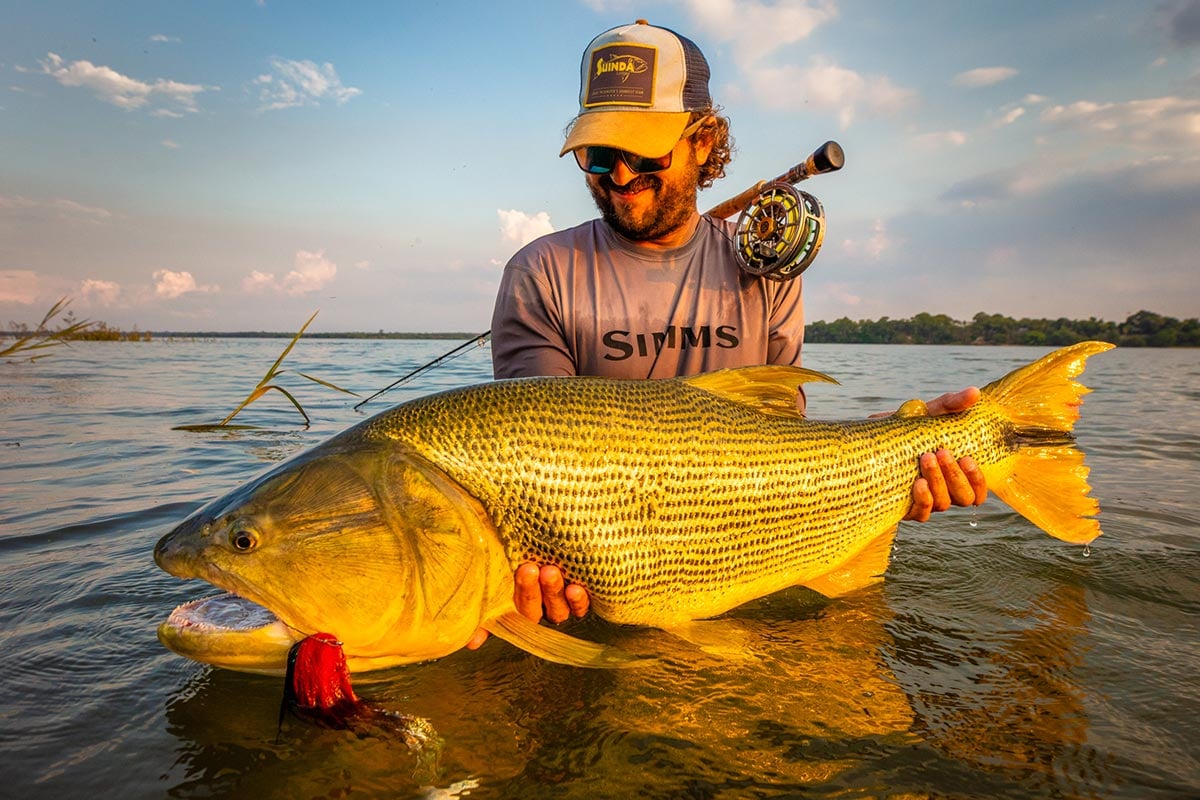
Fishing for Golden Dorado
Tackle and Stripping Techniques
Golden dorado fishing is best described as a hybrid of freshwater and saltwater fly fishing — the climate, skiffs, and poling platforms feel saltwater, while the hunting of fish around weed edges and natural structure will feel familiar to anyone focused on freshwater predator fishing for pike from a boat. The single biggest adjustment for most visiting anglers, whatever their background, is the strip-set — dorado have hard bony mouths and a trout-style rod lift will often result in a fish lost immediately after the take.
An 8 or 9-weight fast-action rod is standard across all Argentine systems. A tropical weight-forward floating line is the workhorse — the heat makes standard lines go soft and sticky. Bring a sinking or intermediate tip as a backup for deeper presentations on the main Paraná. A 40 lb wire tippet of 12–18 inches is the standard across Argentine systems — guides adjust down to 30 lb when targeting smaller fish in clear, shallow water, and up to 50 lb when fishing bigger colored water or specifically targeting larger fish.
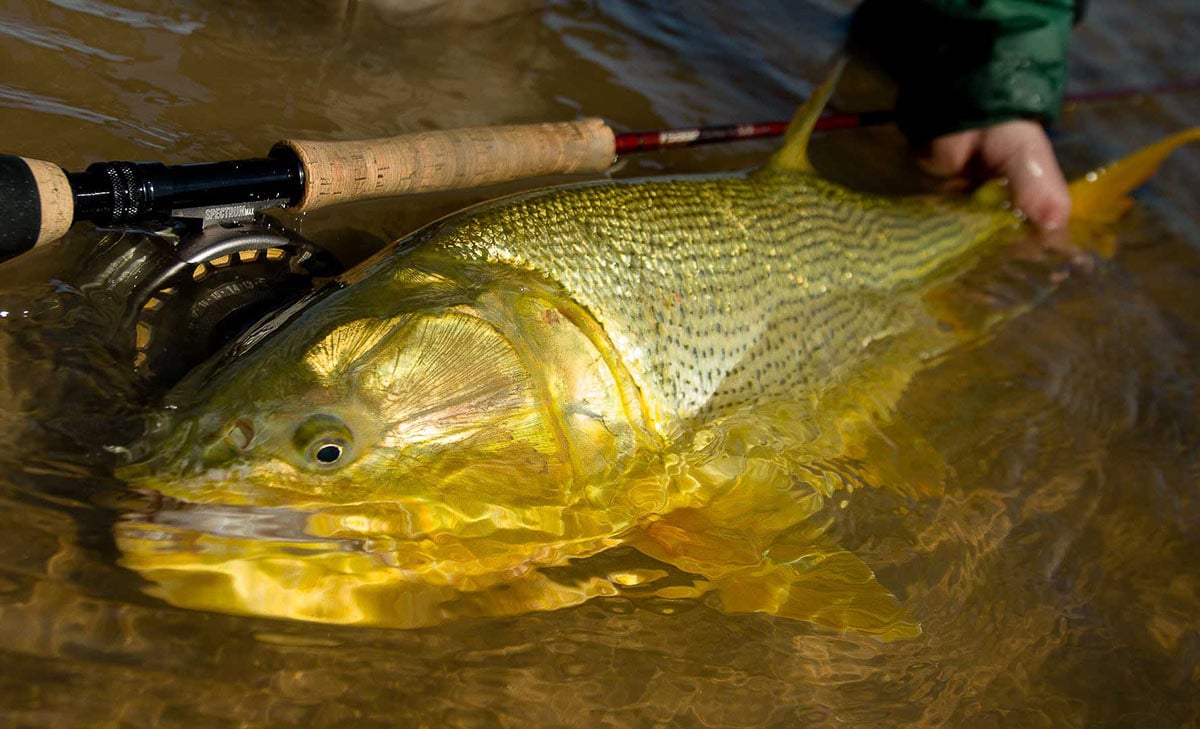
Once hooked, dorado will often jump and try to shake the hook free — lower the rod and point it toward them to briefly release tension, the same technique used for tarpon. It removes the leverage the fish uses to throw the hook mid-air. Both the strip-set and the bow to the fish are worth practicing before you arrive — guides will cover them on day one, but muscle memory built in advance makes a real difference.
Choosing the Right Golden Dorado Fishing Trips
Choosing the right golden dorado trip comes down to a few honest questions. When can you go — and how do you feel about heat? Anglers who prefer shoulder season fishing, cooler mornings, and full fishing days will find October, March, and April the most comfortable months. Those unbothered by subtropical heat can fish through the summer and still have excellent early morning and evening sessions.
How long you have shapes where you go as much as anything else. A day or two from Buenos Aires points naturally to the Delta. A full week opens up the northern systems — Corrientes, the Iberá, or a combination of both. Some operators run multi-system programs that split a week between the main Paraná and the Iberá wetlands, giving anglers a genuine contrast in a single trip.
The style of fishing matters too. If sight-casting from a poled skiff in clear lagoons appeals — patient, visual, technical — the Iberá is the natural choice. If covering large river sections from a fast boat, where hunting structure across a wide system is more your style, the main Paraná programs deliver that.
La Zona on the Uruguay River is in a different category entirely — a focused, high-intensity tailwater fishery fishing a strictly restricted 1,000-metre stretch below the Salto Grande Dam, day after day. There’s no exploring new water, no wilderness immersion — just the most consistently productive giant dorado fishing on the planet. It’s the right choice for anglers whose sole objective is the largest fish possible.
To view the differences between individual lodges across these systems, see our Argentina fishing lodges guide. From there you can browse individual lodge pages and contact owners directly to check availability and current conditions before booking your golden dorado fishing trip.