Abaco bonefishing owes everything to a geographic accident: the island has two completely different flats systems available within a single week’s program. The Marls on the west — 300 square miles of shallow, protected water where bonefish tail in numbers and the casting is almost always on — and the hard-sand ocean flats on the east, where the fish run larger, the water runs clear, and a sloppy presentation sends them to the horizon. Few destinations in the Caribbean give a serious fly angler access to that range without changing islands.
Most Bahamas bonefishing destinations do one thing well. Abaco does two — the Marls and Cherokee Sound — and that distinction is what drives the planning decision. Whether you have already fished Andros and want something different, or are planning your first Bahamas trip and want variety built into the week, Abaco bonefishing answers both.
Abaco Bonefishing: The Marls and Cherokee Sound
Great Abaco Island runs north to south with its development concentrated along the eastern shore, leaving the western side largely undeveloped. That western shore drops into the Marls — a vast, shallow system of flats, mangrove cays, and tidal channels stretching the length of the island. The eastern coast faces the Atlantic and holds a series of hard-sand flats and ocean cay systems where fish are fewer in number, considerably larger, and considerably harder to catch. Guides working Abaco have access to both, and the two fisheries are different enough that a week touching both rarely feels repetitive.

Bonefishing in Abaco, Bahamas draws two distinct types of angler: those after consistent shot counts and the Marls’ predictable tailing schools, and those after the technical challenge and bigger specimens of the east-side ocean flats. Getting the most from a week here means understanding which system suits your objectives — and ideally fishing both.
For lodge programs across the Abaco fishery and how they are structured, see our Editorial Guide to Bahamas Fishing Lodge Programs.
The Marls: 300 Square Miles of Productive, Protected Water
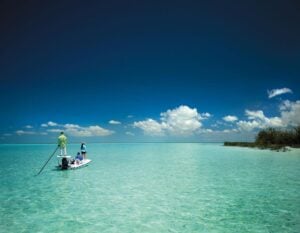
The Marls run the length of Great Abaco’s western shore — a National Park covering roughly 300 square miles of shallow mangrove-edged flats, winding creeks, and tidal channels. The flats run to around four feet across most of the system, and the bottom is predominantly soft marl, which means most fishing is done from a poled skiff rather than on foot. Wading is practical only on the firmer outer edges.

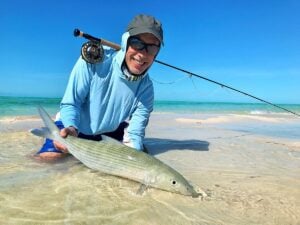
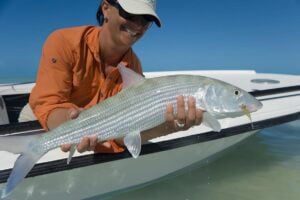
Bonefish average 2–4 lbs across the Marls interior, with fish in the 5–8 lb class appearing regularly on the larger flats and outer edges where the system meets deeper channel water. For shot volume — the number of casting opportunities in a full day — the Marls rank among the most productive environments in the Bahamas. Large tailing schools are a daily sight across most of the season. The system runs roughly 30 miles north to south — from Cross Harbour in the south to the flats off Treasure Cay in the north — with the ocean-side edge reachable within a 20-minute skiff run. On productive days, catching 10 to 20 fish is a realistic outcome.
October on the Marls: The Window Most Anglers Miss
October brings pre-spawning bonefish aggregations along the western edge of the Marls — schools that can stretch across an entire flat and represent one of the most remarkable sights in Caribbean bonefishing. Most visiting anglers never see it because they book in March or April. October pressure is significantly below the spring peak, the fish are active and largely undisturbed after the summer, and the pre-spawning window coincides with some of the calmer, more stable conditions of the early season. For anglers with scheduling flexibility, it is the most underrated month in the Abaco calendar.
Dock Access vs. Trailer Programs: What It Means for Your Fishing Week
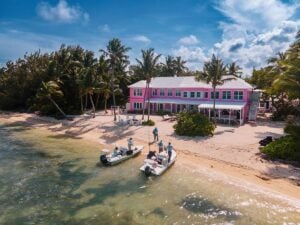
One operational distinction worth understanding before booking an Abaco program: the difference between a lodge with direct dock access to the Marls and a program that trailers skiffs to launch points each morning. The trailer-based model gives guides the flexibility to put in wherever the fishing is best that day — reaching the southern Marls, Snake Cay, and the East Abaco Creeks National Park system depending on tides and conditions. The dock-based model eliminates transit time and maximizes fishing hours on the Marls specifically. One program on Abaco has direct front-door access to the Marls; programs based further east or south use the trailer system. Neither is wrong — they suit different objectives and different types of weeks.
Cherokee Sound: Technical Fishing, Bigger Fish
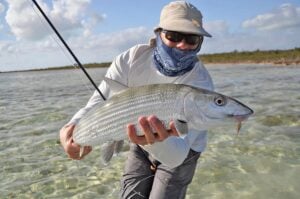
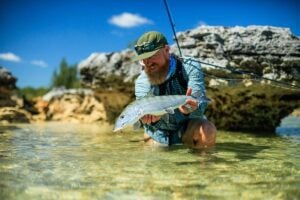
Cherokee Sound sits on the east side of Great Abaco, roughly 30 minutes south of Marsh Harbour by road. It is a different fishery in almost every respect from the Marls: hard white-sand bottom ideal for wading, fewer fish, but bonefish that average 3–5 lbs with trophy fish to 12 lbs reported regularly on the cleaner ground. The water is gin-clear and the fish are wary in ways that Marls bonefish typically are not. A sloppy cast, a heavy fly landing too close, or a guide’s pole touching the bottom at the wrong moment — any of these ends the shot. Cherokee Sound is the destination within a destination for anglers who travel specifically for the technical challenge and larger specimens.

The most consistent window for the biggest fish on the east side is December through February. Cooler water concentrates larger bonefish on the flats during warm tidal pushes, and January and February in particular produce the most reliable shots at double-digit fish on the Cherokee Sound ground. Trade winds run hard through this period — guides respond by fishing the Marls on blown-out days and running to the ocean side when conditions allow, which is exactly how the two-sided character of Abaco becomes operationally useful rather than just theoretically interesting.
The Cherokee Sound Blue Holes: Mutton Snapper and the April Window
The blue holes at Cherokee Sound attract a species most Abaco anglers are not specifically targeting — and should be. Mutton snapper move onto the flats and into these blue holes from April through June, taking a well-presented fly in conditions that require much the same sight-fishing approach as bonefish on the flat. Experienced anglers who know about this window plan around it specifically; it is one of the clearest indicators of genuine field knowledge of the Abaco fishery. For a week arriving in late April, the combination of peak bonefish conditions, the permit window opening on the southern flats, and mutton snapper in the Cherokee Sound blue holes puts more on the table simultaneously than almost any other window in the Bahamas calendar.
Permit Fishing on Abaco: Sandy Point, Mores Island, and Gorda Cay
Permit are present on Abaco with more regularity than on most other islands in the Bahamas, and for anglers with permit as a dedicated target rather than an incidental bonus, the southern flats are the clearest answer the island chain offers.
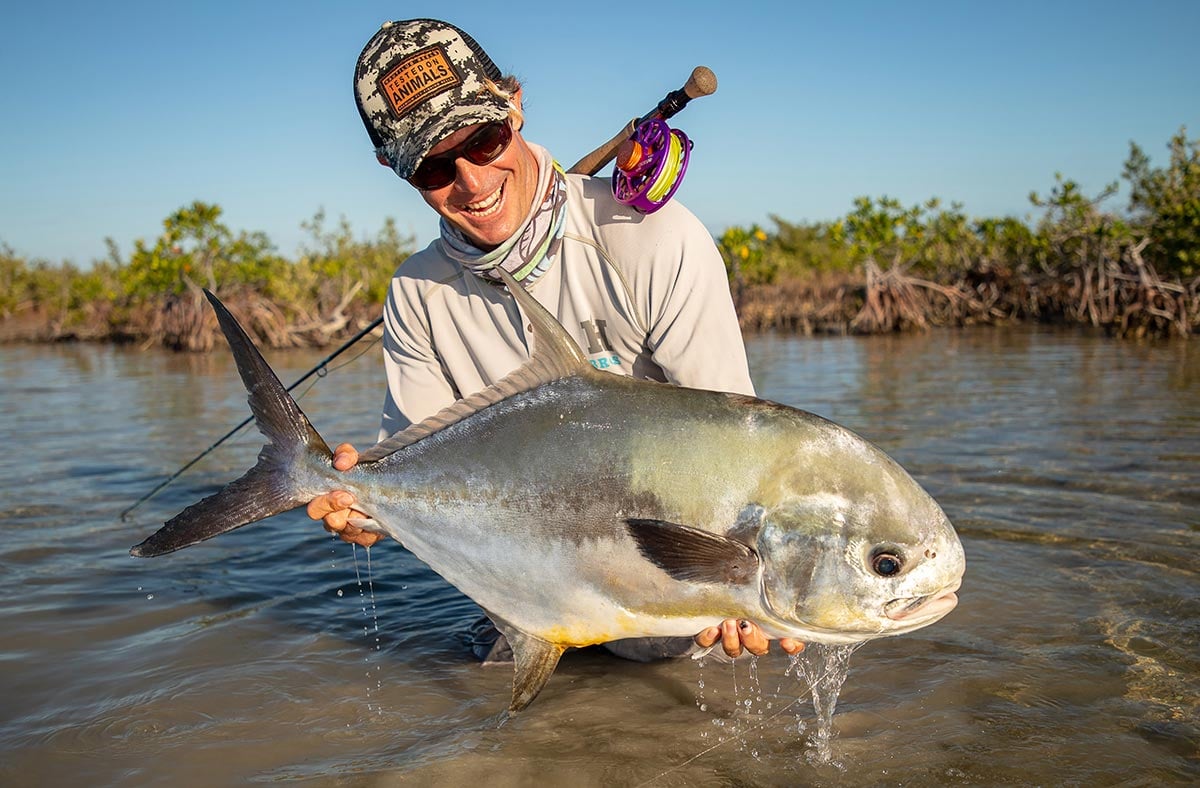
The most consistent permit water on Abaco concentrates around Sandy Point at the island’s southwestern tip, and across the nearby flats of Mores Island and Gorda Cay. These areas hold permit in numbers unusual for the Bahamas — fish that run large and are essentially unpressured, and behave accordingly. The Marls ocean edge also produces permit shots on calm days, particularly on the backs of stingrays working the tidal channels between the protected interior and open water. For a proper permit day, the southern flats are the target; for opportunistic shots while running the Marls, the ocean edge is worth watching.
The late spring and early summer window — May through June — is when permit are most consistently active on Abaco’s flats as water temperatures climb and fish push further onto shallower ground. Anglers booking this window specifically for permit should be rigged for it from the first morning.
Tarpon, Barracuda, and Offshore: The Rest of the Abaco Fishery
Tarpon are present in two distinct forms on Abaco. Juvenile fish hold in the blue holes and mangrove creek systems year-round. Adult migratory fish — typically in the 50–100 lb range — move through the backchannel and sheltered creek systems from late spring, with June and July the most productive window for larger fish. The calmer summer winds that settle in by June give guides more flexibility to reach the outer flats and the run to Mores Island, adding permit to what can become a genuinely multi-species day.

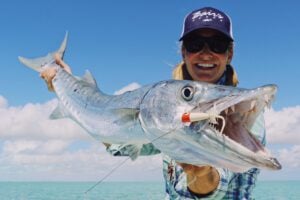
Barracuda are a constant presence on the flats across both sides of the island — large fish, aggressive takes, and a hard-fighting option between bonefish shots on slower tides. The blue holes at Cherokee Sound hold particularly large barracuda, and they are a useful species for keeping anglers sharp when the bonefish are proving difficult.
Offshore fishing — wahoo, mahi-mahi, and seasonal billfish — is within reach of most Abaco programs, with wahoo peaking through the winter months and mahi-mahi strongest from spring into early summer. Most programs are built around the flats fishing, but offshore days can be arranged.
How an Abaco Bonefishing Week Fits Together
A well-guided Abaco bonefishing week is built around two questions each morning: which side of the island is fishing better today, and what does the tide do from here. When a northeast wind runs overnight, guides favor the Marls — sheltered, protected, and almost always fishable in conditions that shut down the exposed east-side ocean flats. On the calmer days that arrive through spring and early summer, the full range of the island opens: the ocean-side flats for technical wading, Cherokee Sound for larger fish, the southern waters around Sandy Point and Gorda Cay for permit.
The program type shapes how that flexibility plays out day to day. Trailer-based programs choose their launch point each morning across the southern Marls, East Abaco Creeks, and Cherokee Sound — the fishing changes character day by day without requiring a change of island. Dock-based programs on the Marls trade that daily flexibility for more time in the water, with shorter runs and a deeper focus on one of the most productive flats systems in the Caribbean.
For a full breakdown of how Abaco differs from Andros as a bonefishing destination, see our guide to bonefishing in the Bahamas. For a deeper look at Andros specifically — the Bights, the West Side, and how weeks differ in structure and character — see our Andros island bonefishing guide.
The Guides Behind the Abaco Fishery
The local guides who work Cherokee Sound know this specific water in the way that only comes from a lifetime on it. They carry the kind of tidal and system-specific knowledge that directly affects how a day fishes — which channel holds fish on a falling northwest wind, where the larger singles push on an incoming tide, how the light needs to sit before you can see a tailing fish against the turtle grass.

That connection to the water runs deep: Cherokee Sound’s maritime heritage stretches back to the early 19th century, when the settlement built its own fishing smacks rigged with five sails rather than the standard seven, a local adaptation to the specific conditions of the sound. Bonefish guiding has been one of its primary livelihoods for generations, alongside crawfish fishing and deep-sea work.
The fish here are easily spooked — the shallow, open flats leave no margin for a poor presentation — and that’s precisely what makes a knowledgeable local guide the difference between a productive day and a frustrating one.
When to Fish Abaco: Matching the Season to Your Objectives
The lodge season runs October through June, and each window has a different character:
- October and November — Underrated. Pre-spawning aggregations on the Marls in October; lower pressure than spring; calmer conditions than the winter trade wind period. The most overlooked window in the Abaco calendar.
- December through February — Trophy window. Largest fish of the season on Cherokee Sound and the east-side ocean flats. Trade winds run consistently; guides use the Marls as the weather buffer.
- March through May — Peak season. Stable conditions, active fish across both sides of the island, and the permit window opening from late April. Prime weeks book a year or more in advance.
- May through July — Tarpon peak alongside continued strong bonefish action. Calmer winds give guides more flexibility to fish the full range of the island. The strongest multi-species window of the season.
For a detailed month-by-month breakdown of fishing windows across Andros and Abaco, see our Bahamas bonefishing season guide.
For a broader regional overview of the Abaco fishery, see our Abaco regional page.