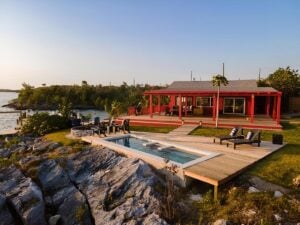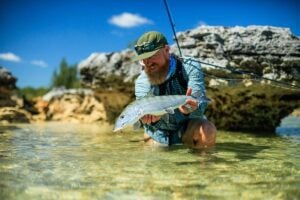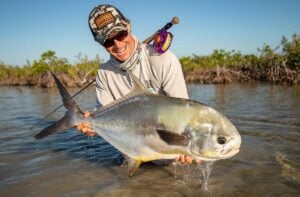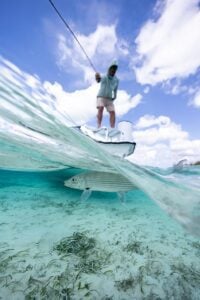
Explore fishing trips in Abaco, staying at carefully selected lodges that combine expert guiding, remote wilderness settings, and exceptional angling.
No results available
Abaco is the most accessible bonefishing destination in the Bahamas — direct commercial flights from multiple US cities into Marsh Harbour put anglers on the water with minimal travel friction. What makes the island genuinely compelling for serious fly fishers, though, is the range. The Marls on the west side offer some of the highest-density bonefish habitat in the Caribbean — vast, shallow, and lightly pressured. The east side’s hard-sand ocean flats present a contrasting and considerably more demanding fishery, where fish run larger, the water is clearer, and presentations need to be precise. Few destinations in the Bahamas give anglers access to such different fishing experiences from a single base.
Great Abaco Island sits at the northern end of the Bahamas archipelago, roughly 175 miles east of Palm Beach, Florida — the closest major bonefishing destination to the US East Coast. Development runs along the eastern shore of the island, leaving the western side largely undeveloped. The western shore drops into a network of shallow flats, mangrove cays, and tidal creeks known as the Marls — a protected, low-pressure fishery that functions as one of the most productive bonefish environments in the Bahamas. The eastern coast, by contrast, faces the Atlantic and hosts a series of hard-sand flats and ocean cay systems where fish are fewer in number but notably larger and more cautious.
For a full comparison of Bahamas fishing lodge programs including Abaco, see our Editorial Guide to Bahamas Fishing Lodge Programs.
The Marls form the defining feature of Abaco’s bonefishing reputation. Spanning roughly 300 square miles along the western shore of Great Abaco Island, this is a protected wilderness of shallow mangrove-edged flats, winding creeks, and tidal channels that holds some of the largest bonefish populations in the Bahamas.
The average depth across the Marls runs around four feet, and fish are present in numbers that produce consistent action throughout the season — large schools of tailing bonefish are a regular sight, and October and November bring spawning aggregations along the western edge that can number in the hundreds.
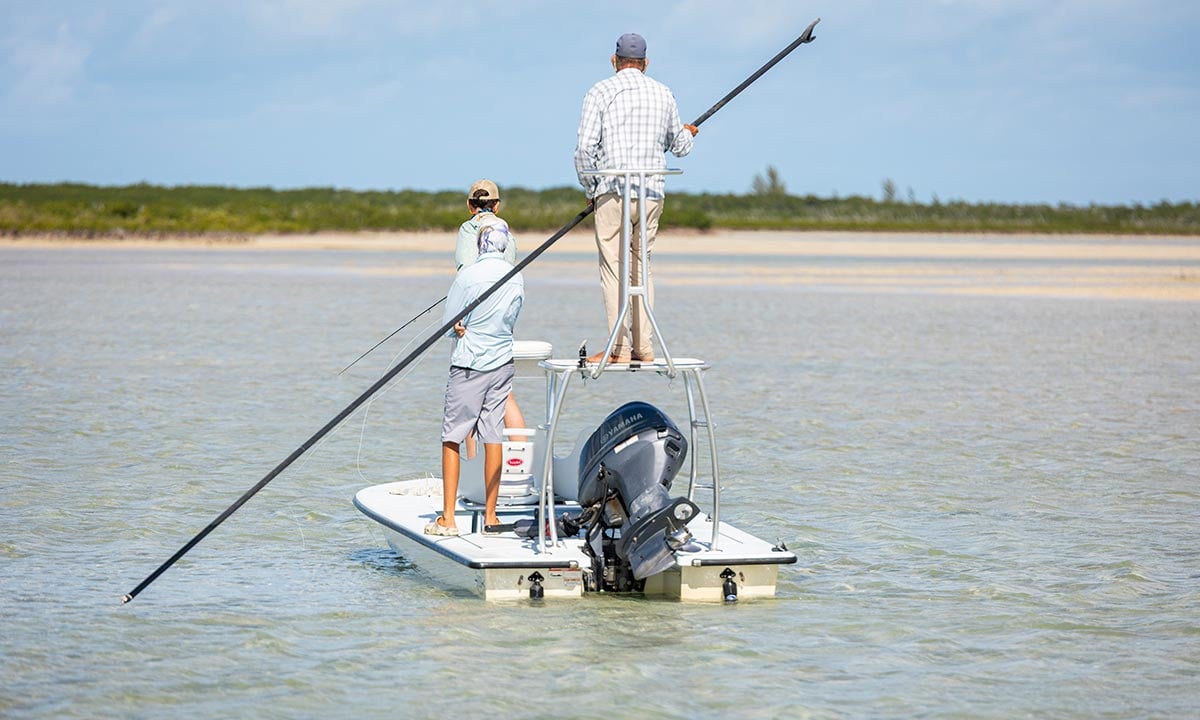
Most of the interior Marls fishing is done from a skiff: the bottom is predominantly soft marl, making wading impractical except on the firmer outer edges. Bonefish here average 2–4 lbs, with occasional fish to 7–8 lbs. The system is designated as a National Park, which has helped preserve its character.
Cherokee Sound sits on the east side of Great Abaco, approximately 30 minutes south of Marsh Harbour by road. It offers a fundamentally different experience from the Marls — hard white-sand flats ideal for wading, fewer fish, but bonefish that run considerably larger. Fish averaging 3–5 lbs are standard here, with trophy fish to 12 lbs reported regularly.
The clear water and hard-pressured, wary fish demand precise presentations and a measured approach; these are not the cooperative, freely tailing fish of the Marls interior. Cherokee Sound is the destination within a destination for anglers specifically seeking larger, more challenging specimens.
Sandy Point occupies the southwestern tip of Great Abaco and provides access to the southern reaches of the Marls as well as a diverse mix of flats, creeks, and offshore structure. The area is particularly noted for permit — the southern flats and nearby Mores Island and Gorda Cay hold permit in numbers unusual for Abaco, and large fish are a realistic target. The southern Marls accessed from Sandy Point also hold bonefish in a range of sizes across both wadeable hard-sand areas and skiff-access soft flats.
The East Abaco Creeks National Park encompasses Snake Cay, the Bight of Robinson, and a network of creek systems on the eastern side of the island. These areas offer productive skiff-based sight fishing for bonefish in sheltered water, and are particularly useful when Atlantic swell or trade winds make the exposed ocean flats difficult. Larger fish frequent these systems, and the combination of protected water and unpressured fish makes this a reliable option through the winter months when weather is less predictable.
FishingExplora lists carefully selected bonefishing lodges on Great Abaco Island with access to the Marls, Cherokee Sound, and the broader Abaco fishery. Contact hosts directly to discuss program structure, guiding approach, and availability.
For more lodge options across the island chain, see our Bahamas fishing lodges page.
FishingExplora’s editorial content draws on lodge input, guide experience, published field reports, and independent research to help anglers make informed decisions about premium fishing destinations.
The Marls on the west side offer high numbers of bonefish averaging 2–4 lbs in shallow, sheltered water — consistent action and lots of shots, mostly from the skiff as the soft bottom makes much of it unsuitable for wading. The east-side ocean flats, particularly Cherokee Sound, hold fewer fish but larger ones — averaging 3–5 lbs with trophy fish to 12 lbs — on hard sand that is ideal for wading. The fish on the east side are more technical and considerably harder to catch.
Abaco offers a wide size range depending on where you fish. The Marls produce fish averaging 2–4 lbs in large numbers, with occasional fish to 7–8 lbs. Cherokee Sound and the east-side ocean flats hold fish averaging 3–5 lbs with trophy fish to 12 lbs reported regularly. For the largest fish, the ocean-side flats during the cooler winter months — December through February — are the most consistent window.
October through June covers the full season. March through May is peak — stable weather, active fish, and the best combination of numbers and size. October and November are underrated: fish are fresh back on the flats in numbers following summer, and the Marls hold large bonefish spawning aggregations in October. December through February produces the largest fish but comes with trade winds and occasional cold fronts that guides manage by fishing sheltered water.
Yes — more so than most Bahamas islands. The southern flats around Sandy Point, Mores Island, and Gorda Cay offer some of the most consistent permit fishing in the region, and permit are encountered on the Marls channel edges and ocean flats throughout the season. Anglers targeting permit specifically should focus on the southern areas and plan for spring through summer when water temperatures are higher and fish are most active on the flats.
Abaco is the easiest bonefishing destination in the Bahamas to reach from the US. Multiple airlines fly direct to Marsh Harbour International Airport daily from Miami, Fort Lauderdale, Atlanta, and other East Coast cities. Nassau connections are also available via Bahamas Air, Sky Bahamas, and other carriers. Lodges coordinate transfers from Marsh Harbour — most are within 15 to 30 minutes of the airport.
An 8- or 9-weight is the standard. Abaco can be windy, particularly through the winter months, and an 8-weight is the minimum for accurate delivery at distance in a crosswind. On the sheltered Marls, a 7-weight is a practical option on calmer days where a delicate presentation matters more than distance. A 10-weight is worth packing if permit or tarpon are part of the program — both are realistic targets on Abaco and you will want to be rigged appropriately when the opportunity presents itself.
We use cookies to improve your experience and enable key features on the platform. You can choose which cookies to allow. Some features may not work fully without consent.