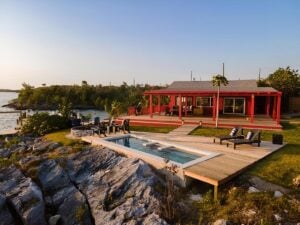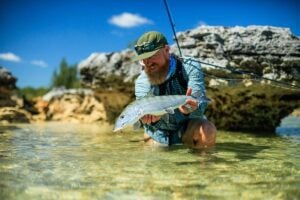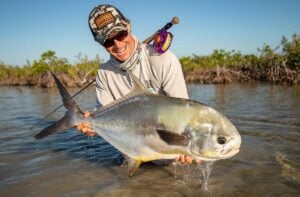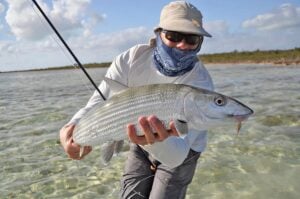
Explore fishing trips in The West Indies, staying at carefully selected lodges that combine expert guiding, remote wilderness settings, and exceptional angling.

No results available
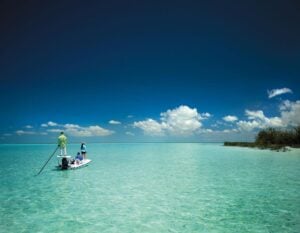
The West Indies stretches in a crescent arc from the Bahamas in the north to Trinidad and Tobago off the coast of Venezuela — more than 2,000 miles of islands, reefs, and open water. For anglers, the range this produces is hard to match: shallow flats in the north where bonefish and permit are the primary targets, offshore structure across the Greater Antilles where pelagic species are accessible close to shore, and protected backwater systems throughout the island chain where tarpon have been present for as long as guides have been fishing them.
The West Indies is made up of three major island groups: the Bahamas and Turks & Caicos in the north, the Greater Antilles — Cuba, Jamaica, Hispaniola, and Puerto Rico — running east to west across the northern Caribbean, and the Lesser Antilles curving south from the Virgin Islands to Grenada. Each group fishes differently. The flat, shallow-platform Bahamas are built for sight fishing on foot and by skiff. The mountainous Greater Antilles islands drop quickly into deep water, putting offshore species within a short run of shore. The smaller Lesser Antilles islands offer a mix of reef, inshore, and light offshore fishing in a compact geography.
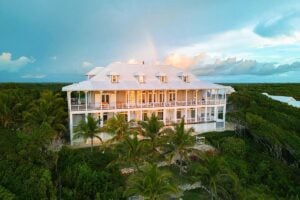
Lodge-based fishing programs in the West Indies are most developed in the Bahamas, where dedicated bonefishing operations have been running for generations. Access across the wider region is generally straightforward — multiple US gateways serve the northern islands, and inter-island connections reach the Lesser Antilles without difficulty.
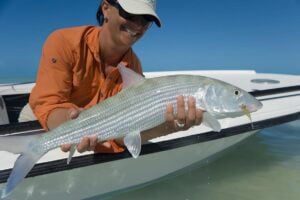
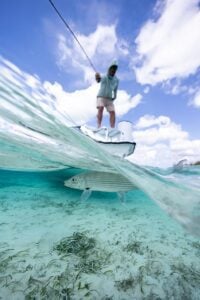
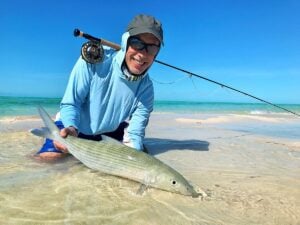
The most developed lodge-based fishing destination in the West Indies. The Bahamas holds more productive flats acreage than any other destination in the region — Andros, Abaco, and the southern cay systems all support dedicated bonefishing programs with multi-generational guide operations. Permit and tarpon are realistic secondary targets depending on island and season.
Puerto Rico offers a combination of accessible inshore tarpon fishing in the island’s lagoon and backchannel systems alongside quick offshore access to deep water on the north coast — one of the Atlantic’s established blue marlin grounds. A practical gateway island with direct US flights.
Productive flats and reef fishing with relatively low angling pressure. The shallow banks system holds bonefish in numbers and the reef structure supports consistent nearshore action. Less developed as a lodge destination than the Bahamas but increasingly on the radar of serious flats anglers.
Cuba holds remote and largely unpressured permit and bonefish fisheries — particularly in the Gardens of the Queen marine reserve system and the flats of the Isle of Youth. Access and logistics require advance planning, but the fishing quality on the right permit flats is among the best in the Caribbean.
The southern Lesser Antilles offer reliable offshore charter fishing for tuna, marlin, and wahoo. Deep water is close to shore across these volcanic islands, making for short runs to productive offshore grounds. Dominica in particular is noted for pelagic diversity close to the coast.
FishingExplora currently lists lodge programs in the Bahamas. Other West Indies destinations are referenced for planning purposes.
FishingExplora lists carefully selected fishing lodges and guided programs across the West Indies. Contact hosts directly to discuss program structure, guiding approach, and availability.
FishingExplora’s editorial content draws on lodge input, guide experience, published field reports, and independent research to help anglers make informed decisions about premium fishing destinations.
The Bahamas is the benchmark — Andros in particular holds the largest bonefish populations and biggest average fish sizes in the West Indies, with lodge-based programs that have been running for generations. Abaco and South Andros are also established destinations with distinct fisheries. Turks & Caicos offers productive flats with less angling pressure, though the lodge infrastructure is less developed.
March through June is the most consistent overall window — stable weather, active bonefish across the Bahamas, and the start of tarpon season. December through March produces the largest bonefish in cooler water but comes with trade winds. October and November are underrated in the Bahamas, with good numbers and lower pressure. Hurricane season peaks August and September — most Bahamas lodges close during this period.
Yes — the Bahamas holds permit on the deeper flats and channel edges of Andros and Abaco, and the southern cay systems around Sandy Point on Abaco are one of the more consistent permit fisheries in the region. Cuba’s remote flats systems are also considered among the best permit fishing in the Caribbean, though access requires more advance planning than other West Indies destinations.
An 8- or 9-weight handles most bonefish situations across the Bahamas and is the standard for flats fishing throughout the region. A 10-weight is worth packing if permit or tarpon are part of your program. For offshore species — wahoo, tuna, or billfish — conventional tackle is standard on most charter programs, though fly options are available on request at some operations.
Requirements vary by island. In the Bahamas a recreational fishing license is required for visiting anglers — lodge programs typically arrange this as part of the booking process. Other islands have their own licensing frameworks. Confirm requirements with your lodge or operator when booking.
We use cookies to improve your experience and enable key features on the platform. You can choose which cookies to allow. Some features may not work fully without consent.