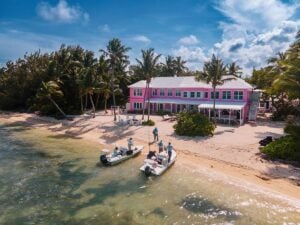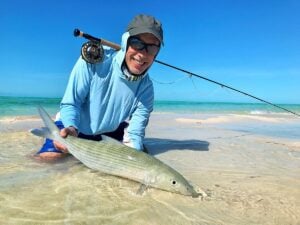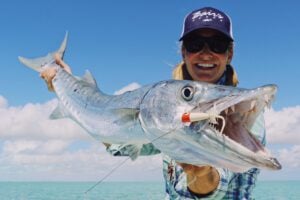
Explore fishing trips in South Andros, staying at carefully selected lodges that combine expert guiding, remote wilderness settings, and exceptional angling.
No results available
South Andros draws the serious bonefish angler for one reason above all others: size. While the rest of the island chain produces excellent numbers of fish, the southern and western sections of Andros have built a specific reputation for trophy-class bones — fish that consistently push into the 7–10 lb range, with double-digit fish a realistic target on the right tides. The combination of hard white-sand flats ideal for wading, vast and largely unfished creek systems, and a West Side that sees minimal pressure from visiting anglers makes this the most compelling trophy bonefishing destination in the Bahamas.
South Andros is the southernmost section of Andros Island — the largest island in the Bahamas at roughly 100 miles long by 40 miles wide and one of the least populated landmasses in the western hemisphere. The southern portion of the island is characterized by a sprawling network of tidal creeks, mangrove-edged cays, and hard-sand ocean flats extending from the South Bight down to the southernmost tip near Cistern Point and the Water Cays. The interior of the island holds an extensive system of inland ponds and channels that are largely inaccessible by skiff — reached on foot by guides who have spent their careers learning exactly where the fish go on a given tide.
The island’s west side — universally known among bonefish anglers as the Land of the Giants — is accessible from the South Andros dock by threading through Little Creek to reach the flats of the southwest coast. This route, developed by South Andros guides, replaces what was once a long and weather-dependent open-water run around the southern tip and opens up hundreds of square miles of lightly pressured water that the lodge-based fishery here is built around.
For a full comparison of Bahamas fishing lodge programs including South Andros, see our Editorial Guide to Bahamas Fishing Lodge Programs.
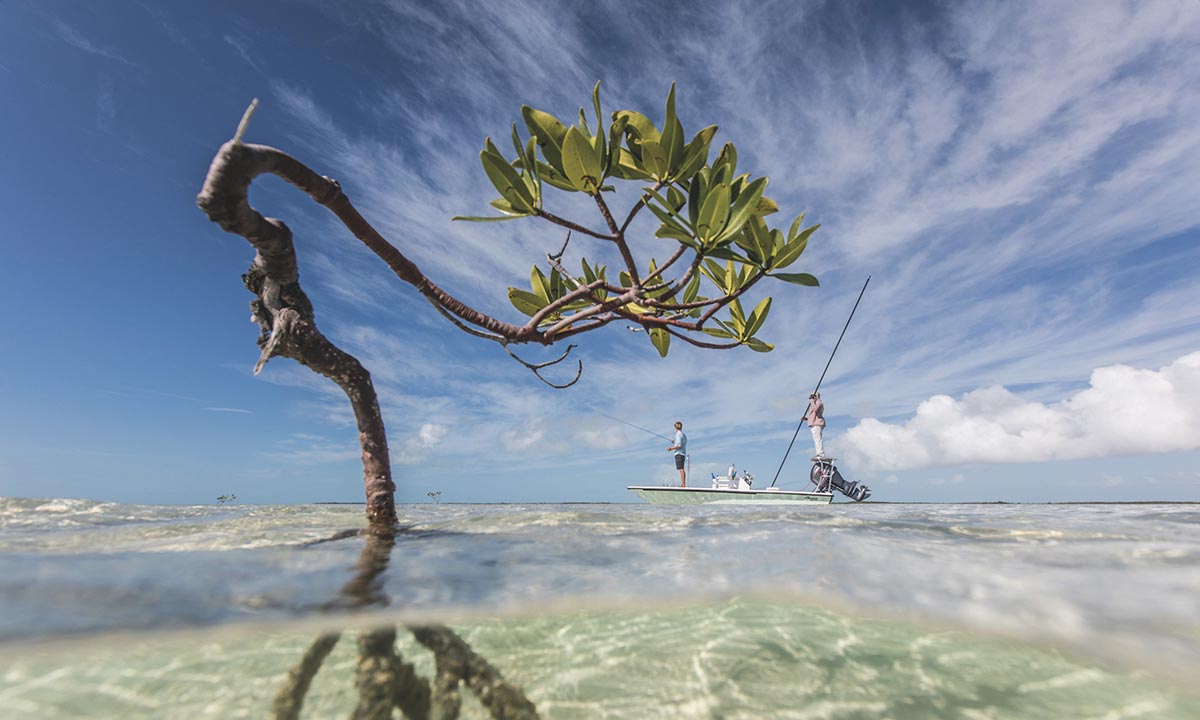
The two primary creek systems on the east side of South Andros, both accessible within minutes of the lodge dock. Despite the name, these are not small waterways — together they open into a broad network of bays, small cays, and connecting flats covering more than 120 square miles.
The creeks provide reliable shelter when trade winds make open-water fishing difficult, and they serve as the corridor to the West Side: guides thread through Little Creek to reach the southwest flats rather than running the full exposed coast, cutting a two-hour ride to around 45 minutes. Bonefish average 3–5 lbs through the creek systems, with larger singles and doubles working the deeper channel edges on dropping tides.
The hard-sand flats extending from the southern tip of Andros toward the Water Cays and Curley Cut Cays are what established South Andros’s reputation for trophy bonefish.
These flats run largely bright and firm-bottomed — ideal for wading — and see far less fishing pressure than the more accessible sections of the island. Large schools of bonefish, sometimes numbering in the hundreds, work these flats on a tidal schedule that guides follow precisely. The run out takes 45 minutes to an hour depending on conditions, which filters out casual traffic and means the fish here behave accordingly.
The ocean-facing flats and channel systems of the West Side represent the trophy-hunting end of the South Andros fishery. With minimal infrastructure, no resident population, and very few guides working this water consistently, the fish here have seen little pressure over many years. Double-digit bonefish — fish above 10 lbs — are encountered regularly by anglers who dedicate days to the West Side.
The conditions are more exposed than the sheltered creek systems and guides make the call based on wind and swell; when the weather cooperates, this is the water serious trophy hunters come to South Andros specifically to fish.
The South Bight is a broad tidal channel running east-west across the lower section of Andros, with deeper water than the creek systems to the south and direct access to the open ocean on the western end. It tends to hold larger individual fish — bonefish here are fewer in number but worth targeting for anglers after bigger specimens rather than high counts.
The Bight’s depth and orientation also make it a practical alternative when wind shuts down the exposed southern and western flats.
A network of landlocked saltwater ponds and lakes runs through the interior of South Andros. These can only be reached on foot or by skiff depending on the system, and are rarely fished by visiting anglers. Under the right tidal and temperature conditions they concentrate bonefish in shallow water — sometimes in schools — and the guides who know this territory treat it as a reliable option when conditions elsewhere are difficult.
FishingExplora lists carefully selected bonefishing lodges in South Andros with access to the South Bight, the southern cay systems, and the West Side of Andros. Contact hosts directly to discuss program structure, guiding approach, and availability.
For more lodge options across the island chain, see our Bahamas fishing lodges page.
FishingExplora’s editorial content draws on lodge input, guide experience, published field reports, and independent research to help anglers make informed decisions about premium fishing destinations.
The southern section of the island is where the big fish are. The hard white-sand flats of the southern cay systems and the remote West Side produce more trophy-class bonefish — consistently in the 7–10 lb range — than the more accessible parts of the island. Fishing pressure here is lower than on central or northern Andros, and anglers targeting a realistic shot at a double-digit fish tend to end up in South Andros.
South Andros produces the largest average bonefish size in the Bahamas. School fish across the creek and flat systems typically run 3–5 lbs. The southern cay flats and West Side consistently produce fish in the 7–10 lb range, and double-digit bonefish — above 10 lbs — are a realistic target for anglers who dedicate time to the less-pressured water. Few destinations in the Caribbean match South Andros for trophy fish opportunity.
The West Side is the ocean-facing flats and channel system along the uninhabited western shore of Andros. From South Andros, guides reach it through Little Creek — roughly 45 minutes, avoiding the long exposed run around Cistern Point. It sees very little fishing pressure and fish sizes reflect it. More exposed than the sheltered creeks, guides make the call based on conditions — when fishable, it’s the most consistent location for double-digit bonefish in the Bahamas.
October through June covers the full lodge season. March and April are the most productive overall — good numbers of fish, active feeding behavior, and calmer conditions than the winter trade wind period. For trophy fish specifically, November through March is the most reliable window: cooler water concentrates larger bonefish on the flats and double-digit fish are most commonly encountered in this period. Prime spring weeks at the best-known lodges book well in advance.
An 8- or 9-weight is the standard. South Andros can be windy, particularly through the winter months when trade winds run consistently, and an 8-weight is the minimum for delivering a fly accurately at distance in a crosswind. Bring two outfits if possible. A 10-weight is worth packing if tarpon or permit are part of your program.
Most anglers fly into Nassau and connect via Western Air to Congo Town Airport on South Andros. Direct scheduled service from Fort Lauderdale is also available via Watermakers Air, and private charter from Florida to Congo Town is a practical option for groups of four or more. Lodges coordinate transfers from Congo Town — the drive is typically 20 to 25 minutes. Build a buffer around interisland connections; domestic schedules can be affected by weather.
We use cookies to improve your experience and enable key features on the platform. You can choose which cookies to allow. Some features may not work fully without consent.