Discover the best tuna fishing destinations, guided trips, and lodge-based experiences worldwide. Explore remote waters and world-class angling with expert local hosts.

Pacific Region, Colombia
Amberjack, Bigeye Tuna, Cubera Snapper
No results available
Tuna fishing is about speed, power, and endurance. These apex predators push tackle and anglers to the limit—whether you’re chasing yellowfin on poppers, trolling for bigeye in bluewater, or jigging deep for mixed schools offshore.
Tuna draw anglers into the world’s most energetic and fast-paced fisheries. From the surface explosion of a yellowfin strike to the long, grinding runs of a giant bluefin, every encounter is earned. With species found across all major oceans, tuna offer something for every style—casting, trolling, or vertical jigging—often in remote, lodge-based settings.
Yellowfin are aggressive, fast-moving predators known for explosive topwater hits. Fish over 400 lbs have been landed, though most sport-caught yellowfin range from 50 to 150 lbs. Found in warm offshore waters, especially near current edges and floating debris.
Bigeye resemble yellowfin but prefer deeper, cooler layers. They can exceed 500 lbs and are prized for their endurance and thick build. Often caught trolling or jigging near thermoclines and deep seamounts.
The largest tuna species, Atlantic bluefin can surpass 1,500 lbs. They’re targeted in colder waters off Canada, the U.S. East Coast, and the Mediterranean. These trips often involve heavy tackle, kite fishing, or live bait.
Pacific bluefin top 1,000 lbs, while Southern bluefin reach 600 lbs. Both offer intense fights and are often caught trolling or casting near bait schools in Australia, New Zealand, and Japan.
Albacore are smaller (up to 80 lbs), but highly migratory and prized for their eating quality. Found in temperate waters, especially off California, Portugal, and parts of the South Pacific.
The most widely distributed tuna species, skipjack rarely exceed 50 lbs. They’re fast-growing, school-oriented, and often taken while trolling for mixed pelagics.
Bonito (Sarda spp.) are often grouped with tuna for their behavior and appearance. Though smaller (up to 20 lbs), they hit hard and run fast, making them a favorite on light gear in warmer waters.
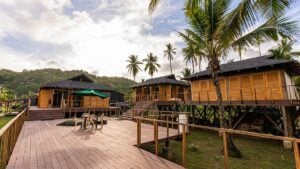
FishingExplora connects anglers with expert-led tuna fishing trips based at trusted coastal lodges worldwide. Whether you’re casting into bait balls in Colombia, trolling offshore banks in the Azores, or targeting Southern bluefin in Tasmania, these fisheries deliver power, distance, and serious guided access.
The Atlantic bluefin tuna is the largest tuna species, with documented weights exceeding 1,500 pounds. These giants are found in the North Atlantic and Mediterranean and are known for their immense power, endurance, and value. Pacific and Southern bluefin are also large but typically max out around 1,000 and 600 pounds.
Top tuna destinations include Colombia, the Azores, Cape Verde, Australia, and the U.S. East Coast. These regions offer access to yellowfin, bigeye, and bluefin, often with expert guides and well-equipped boats. Many trips are run from coastal lodges offering quick access to offshore tuna grounds.
Guided tuna trips require heavy-duty spinning or trolling setups rated for 50–100 lb line. High-capacity reels, fluorocarbon leaders, and lures like poppers, jigs, and trolling skirts are standard. A fighting belt and gloves help manage long battles with powerful fish in open water.
Yes, but it’s rather specialized. Some anglers troll large flies behind boats to hook tuna on fly gear. Others cast to bait balls or current lines when conditions allow. Skipjack and albacore are most common, though yellowfin are also possible. Heavy saltwater gear and strong backing are essential.
Tuna fishing is seasonal and varies by region. In tropical waters like Colombia, yellowfin can be caught year-round. Bluefin have more defined seasons—spring in the Med, summer in Canada and New England, and late fall in Japan. Timing often aligns with bait migrations and sea surface temperatures.
We use cookies to improve your experience and enable key features on the platform. You can choose which cookies to allow. Some features may not work fully without consent.