Atlantic Salmon Fishing on the Southwest Miramichi
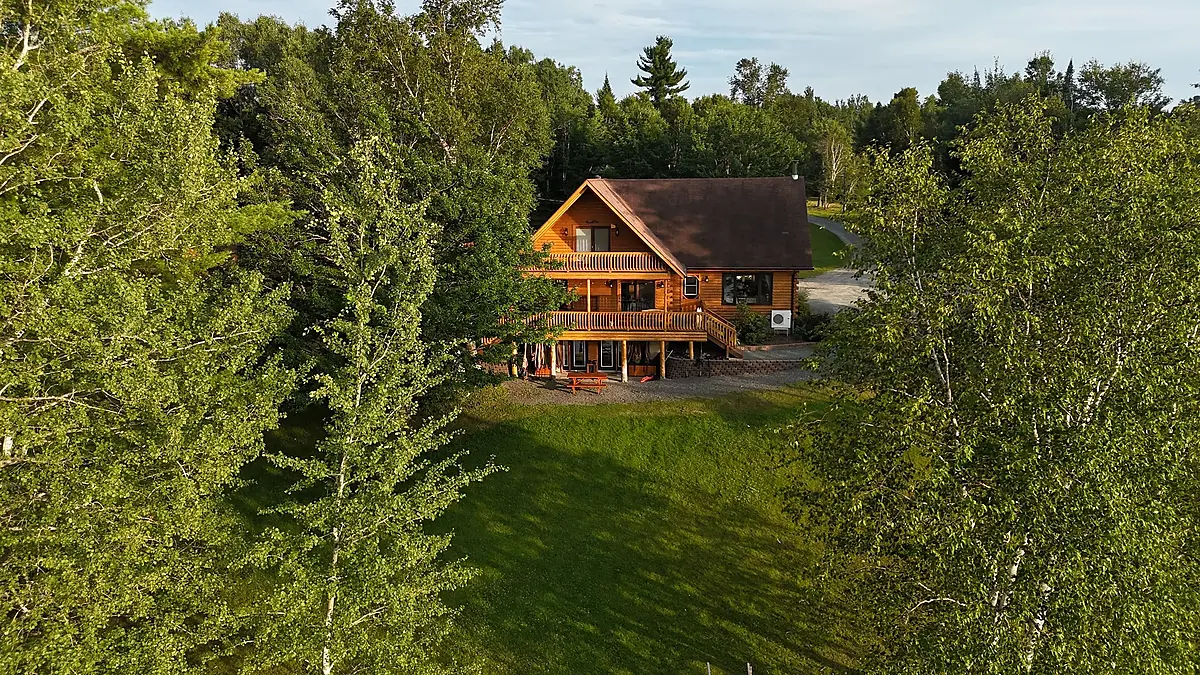
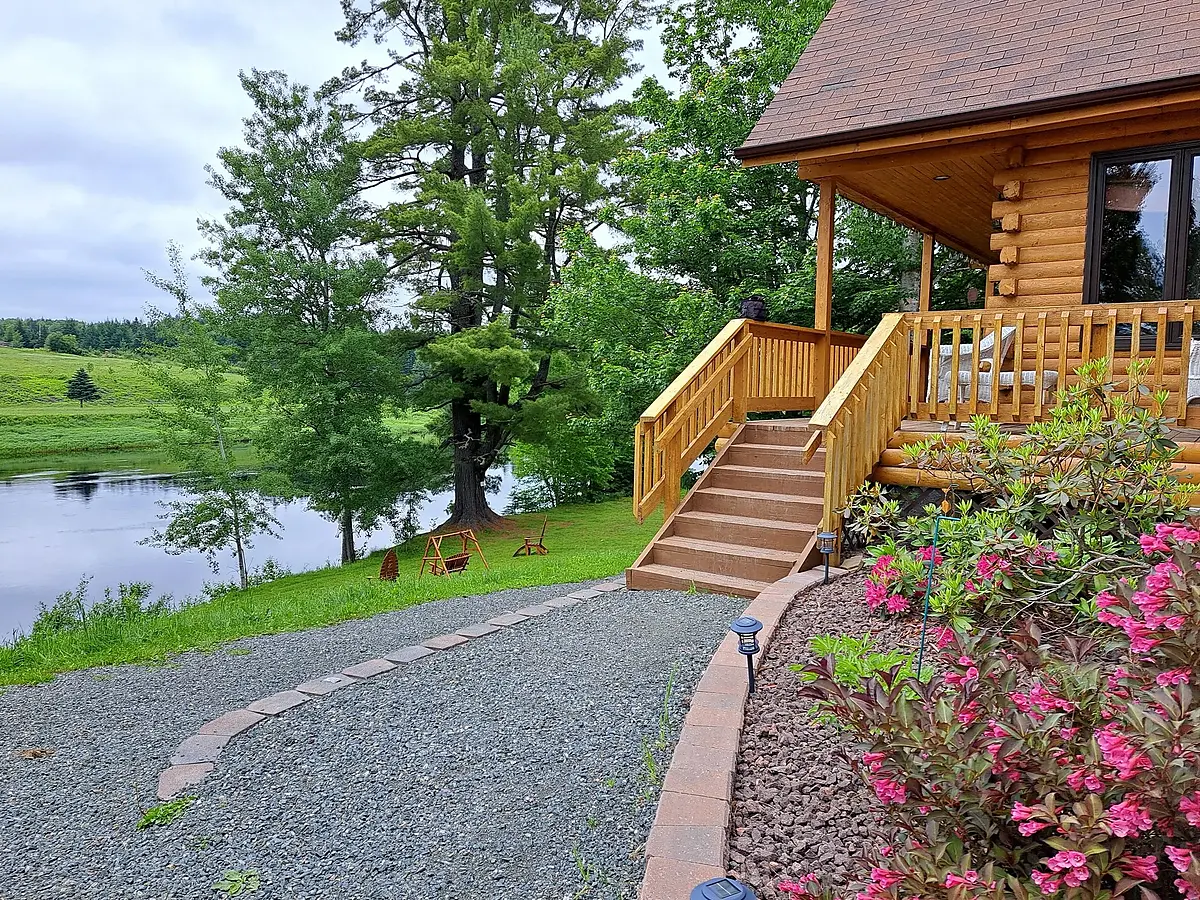
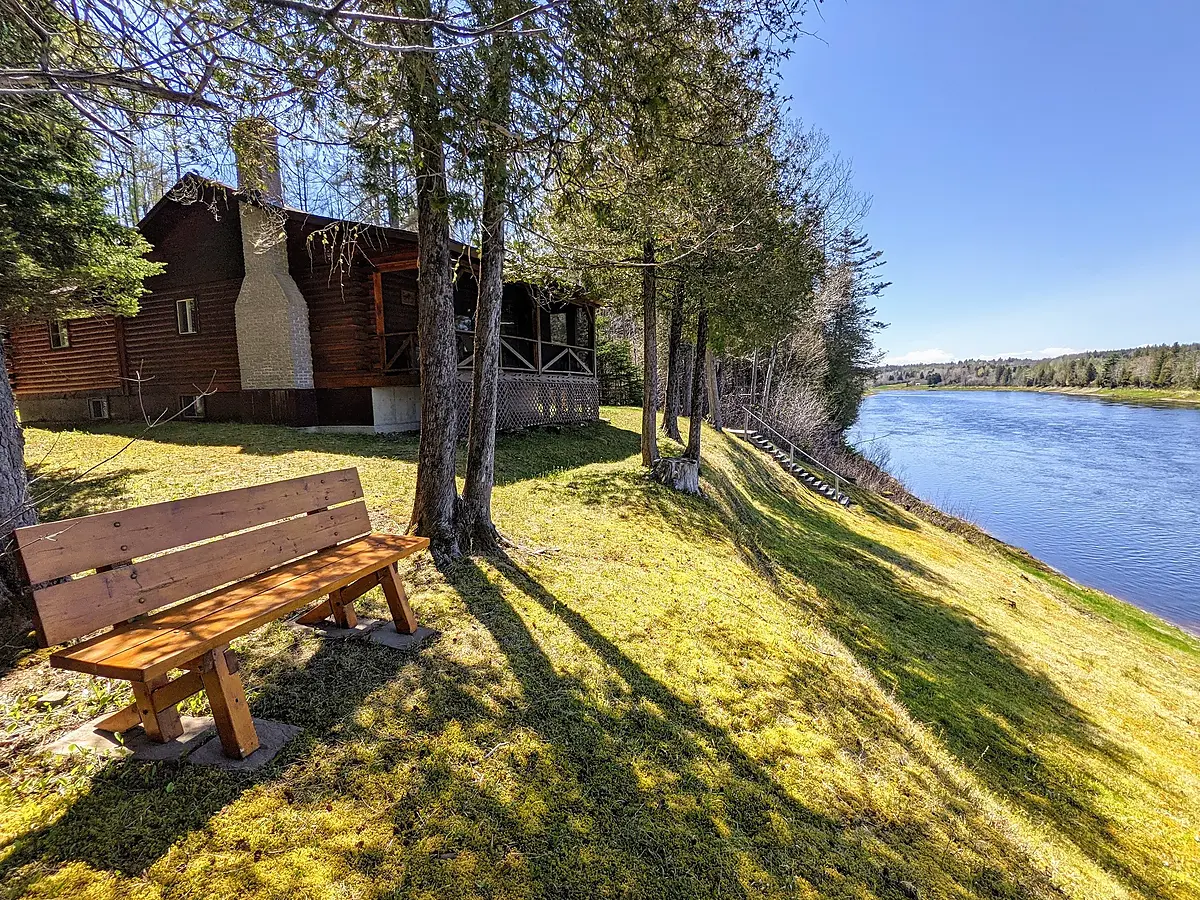
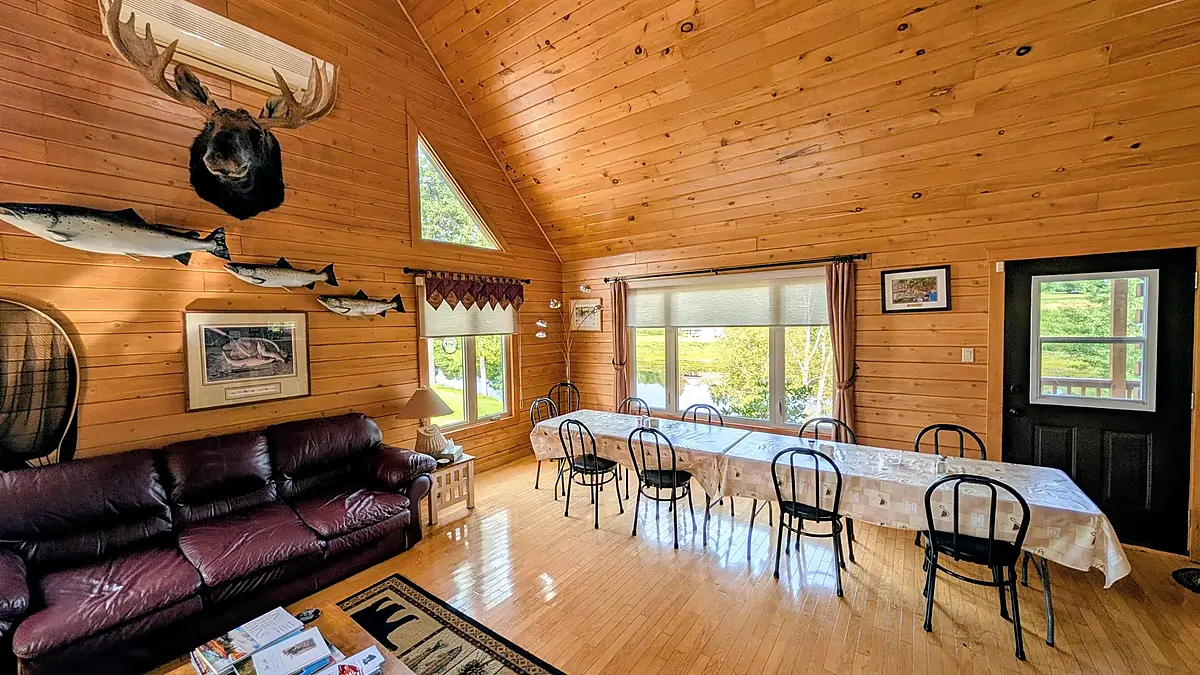
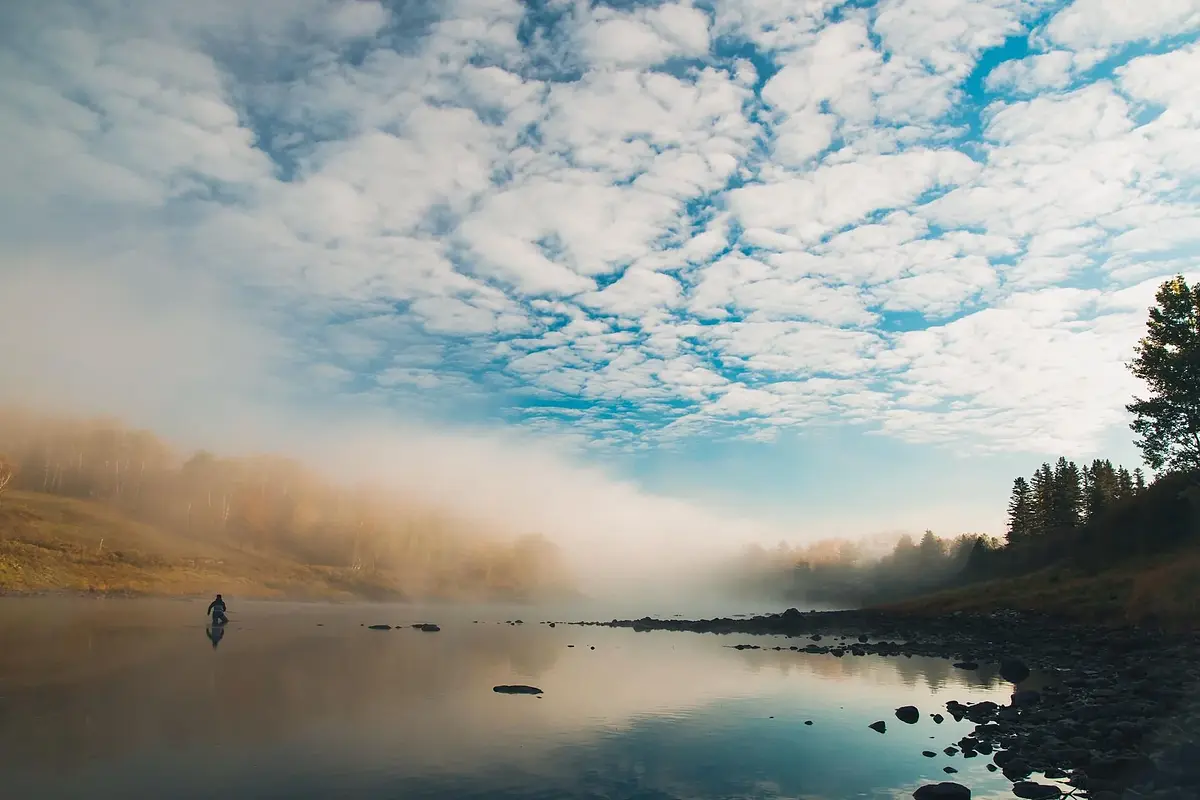
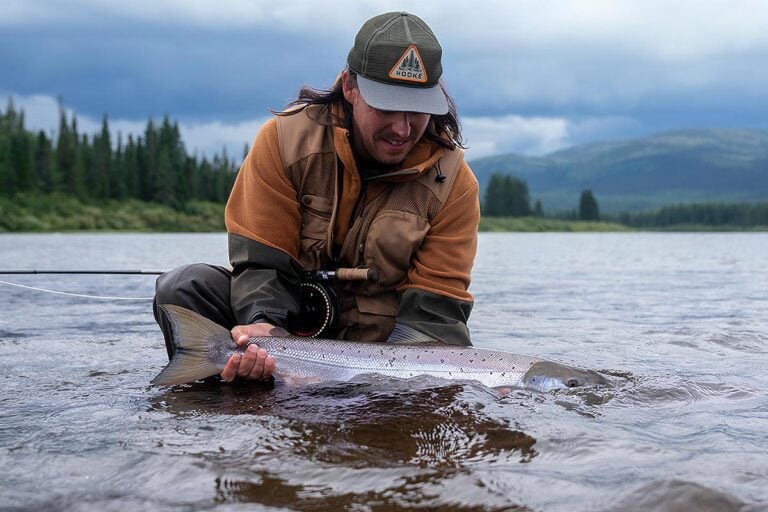
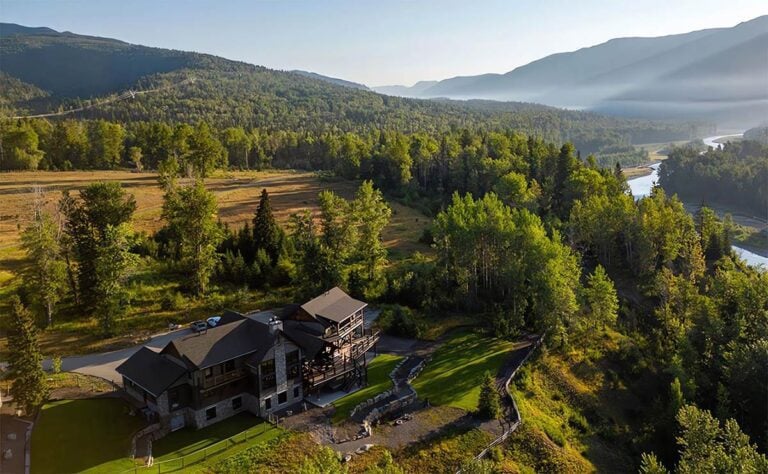
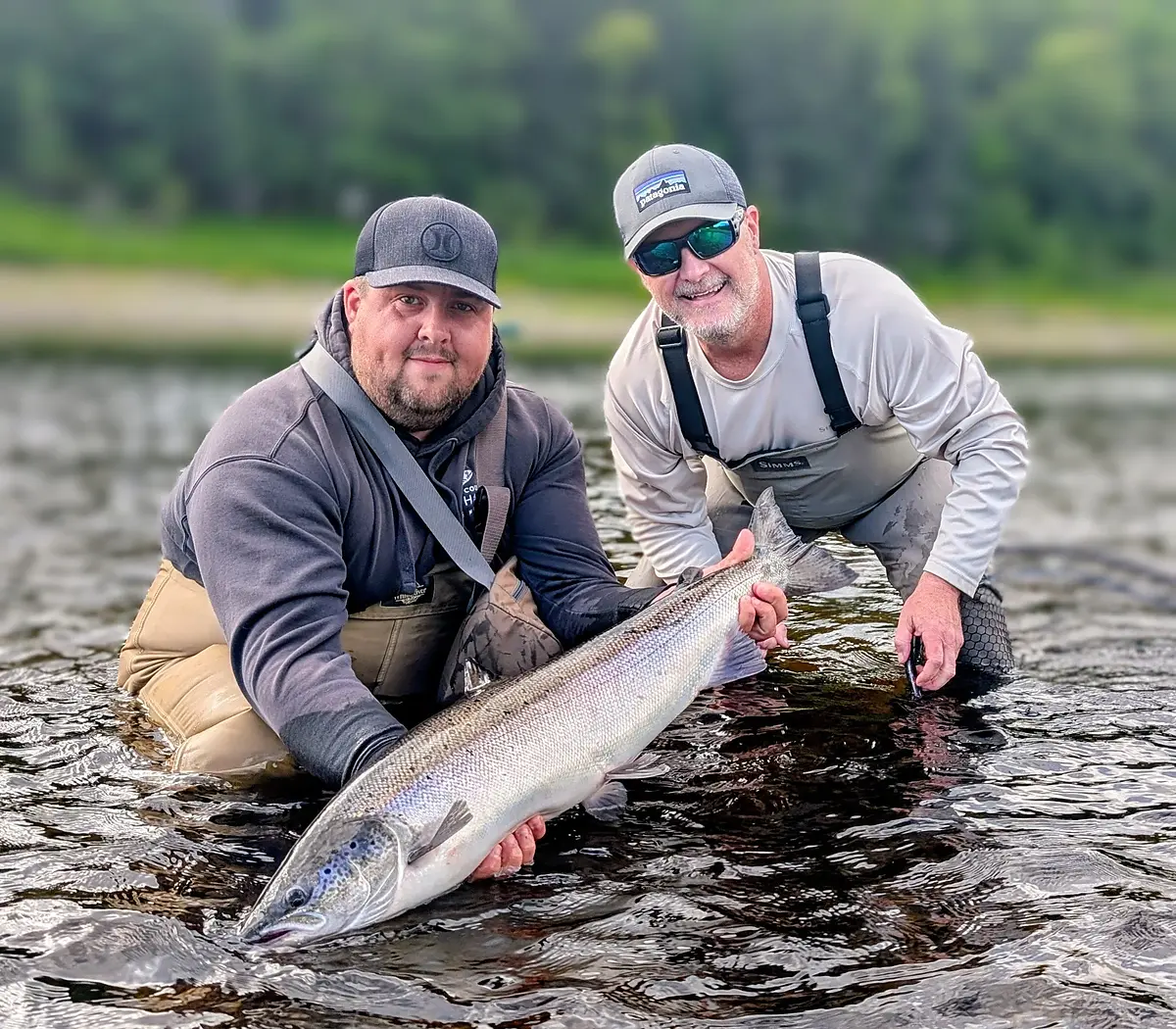
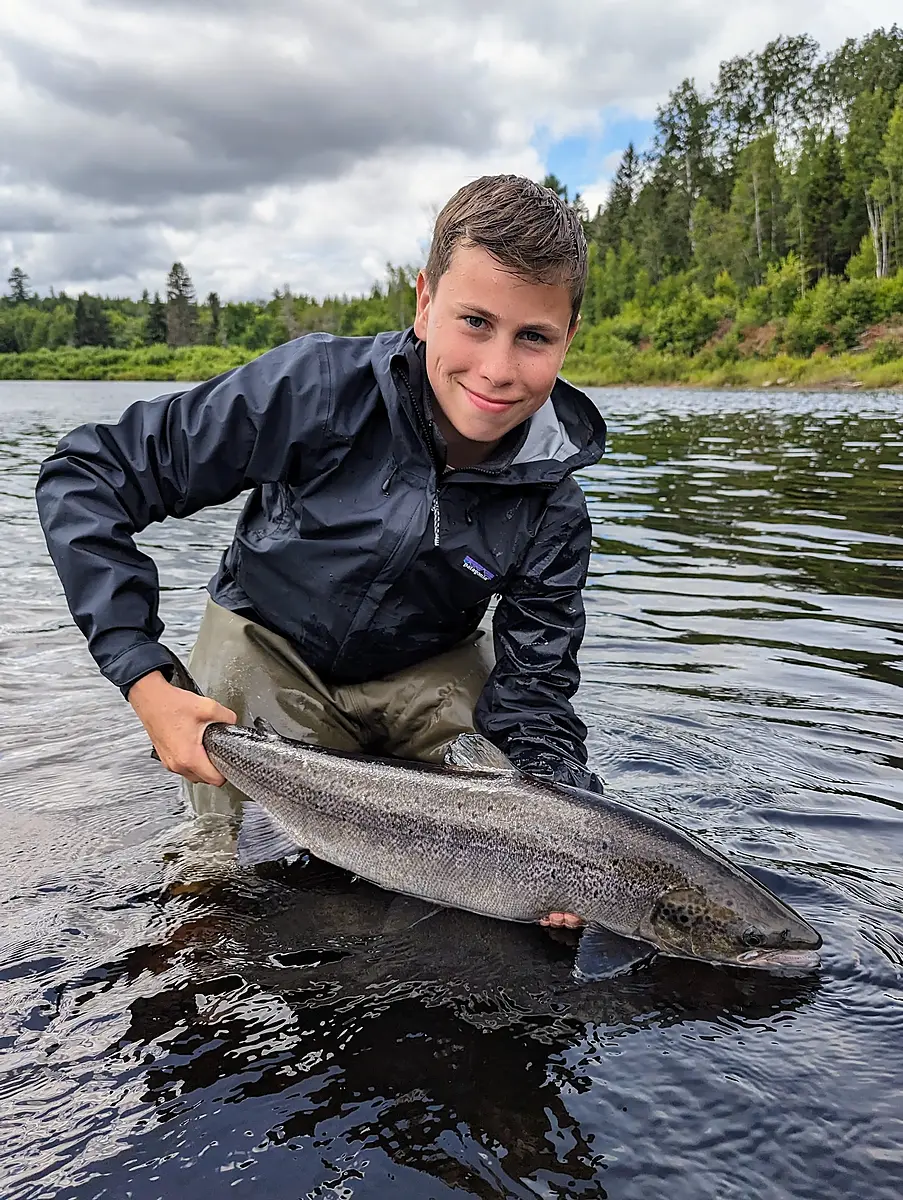
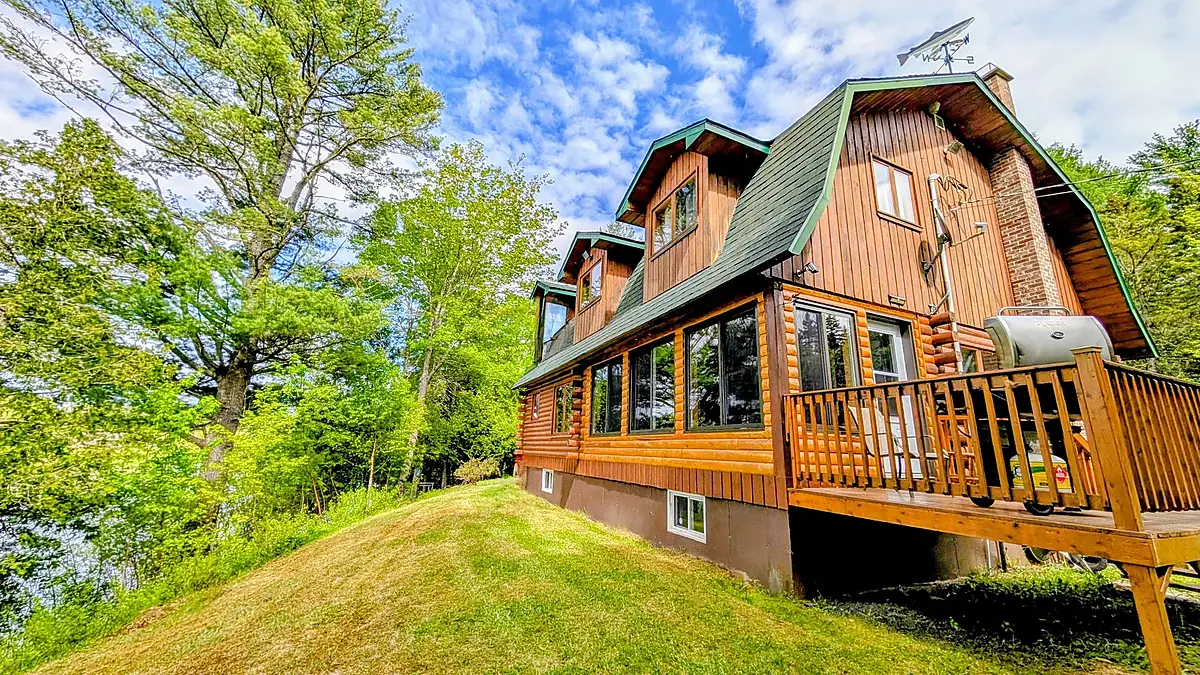
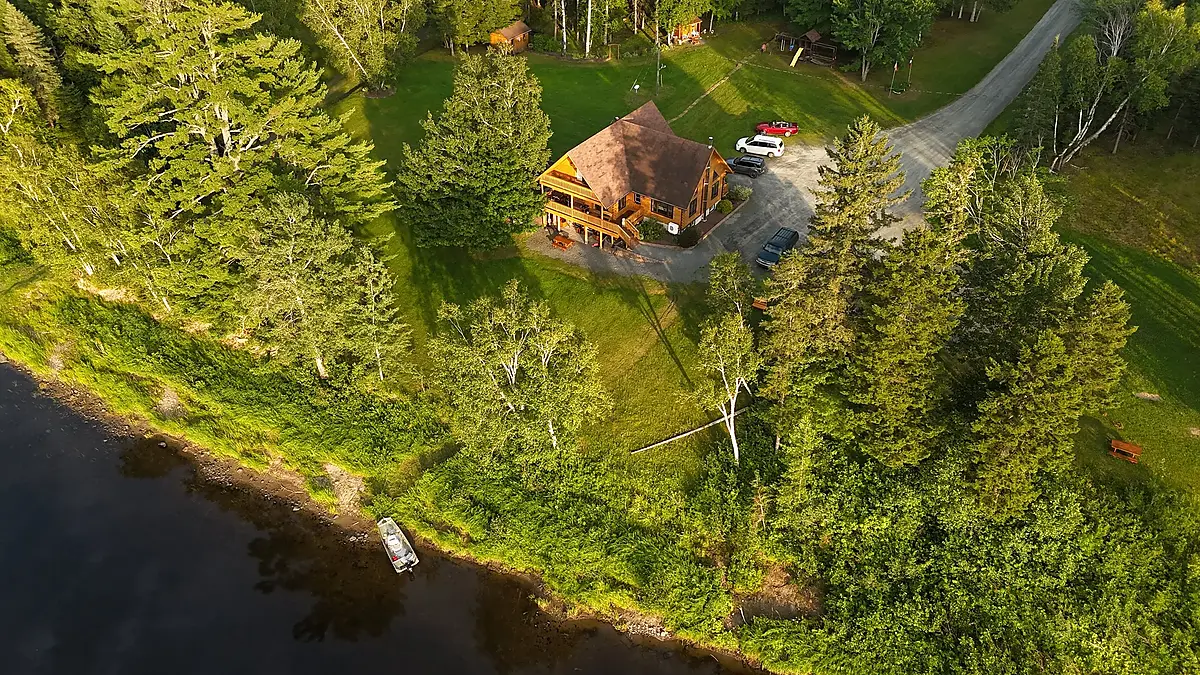
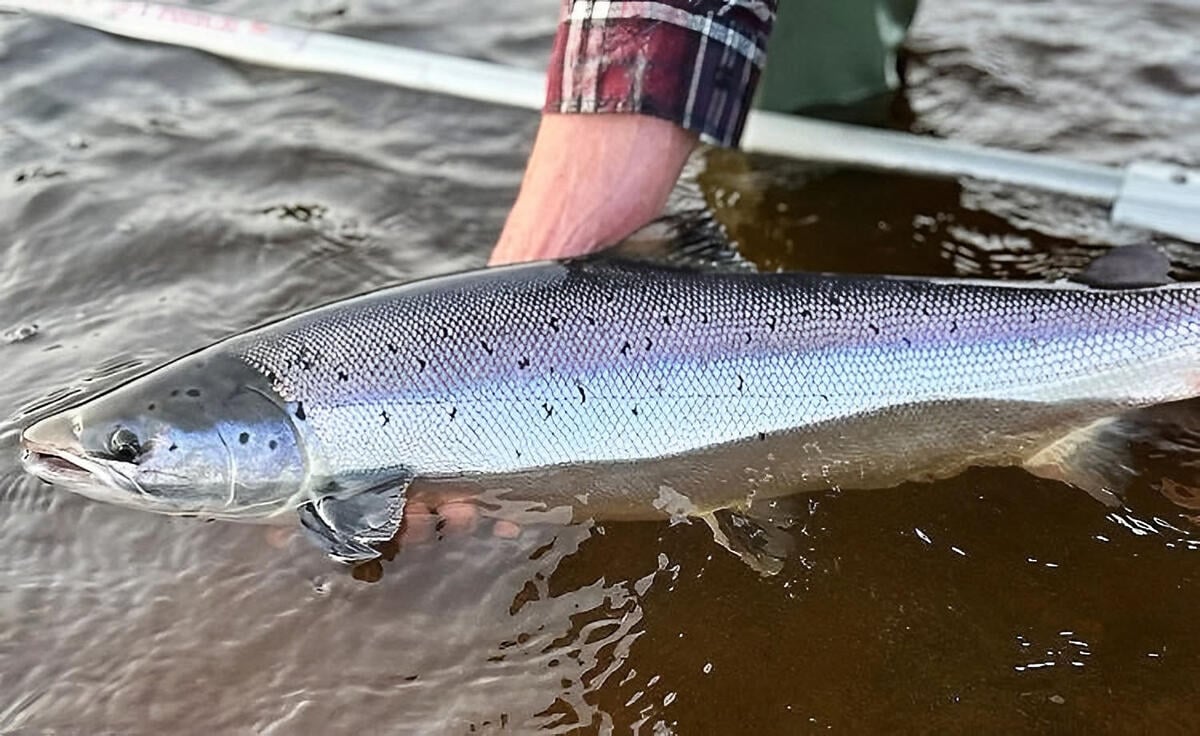
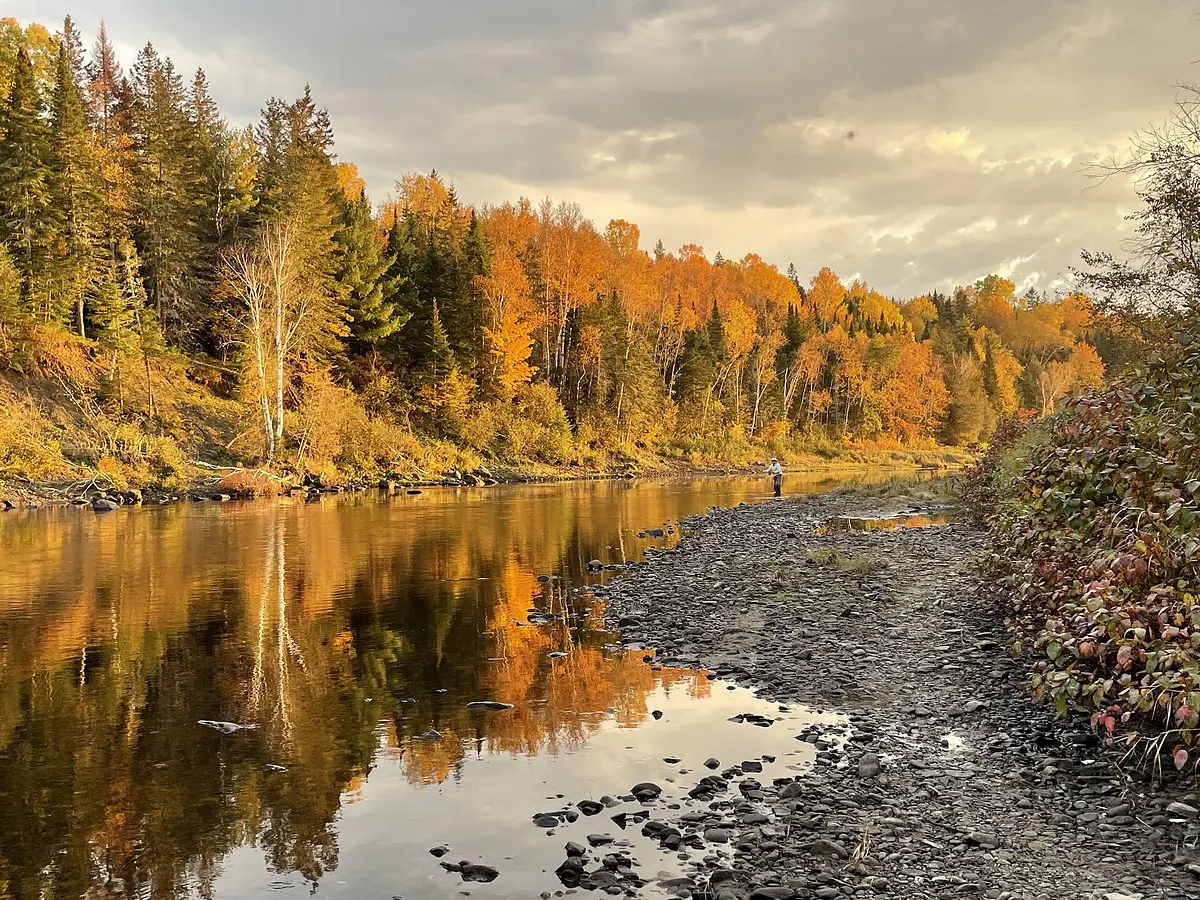
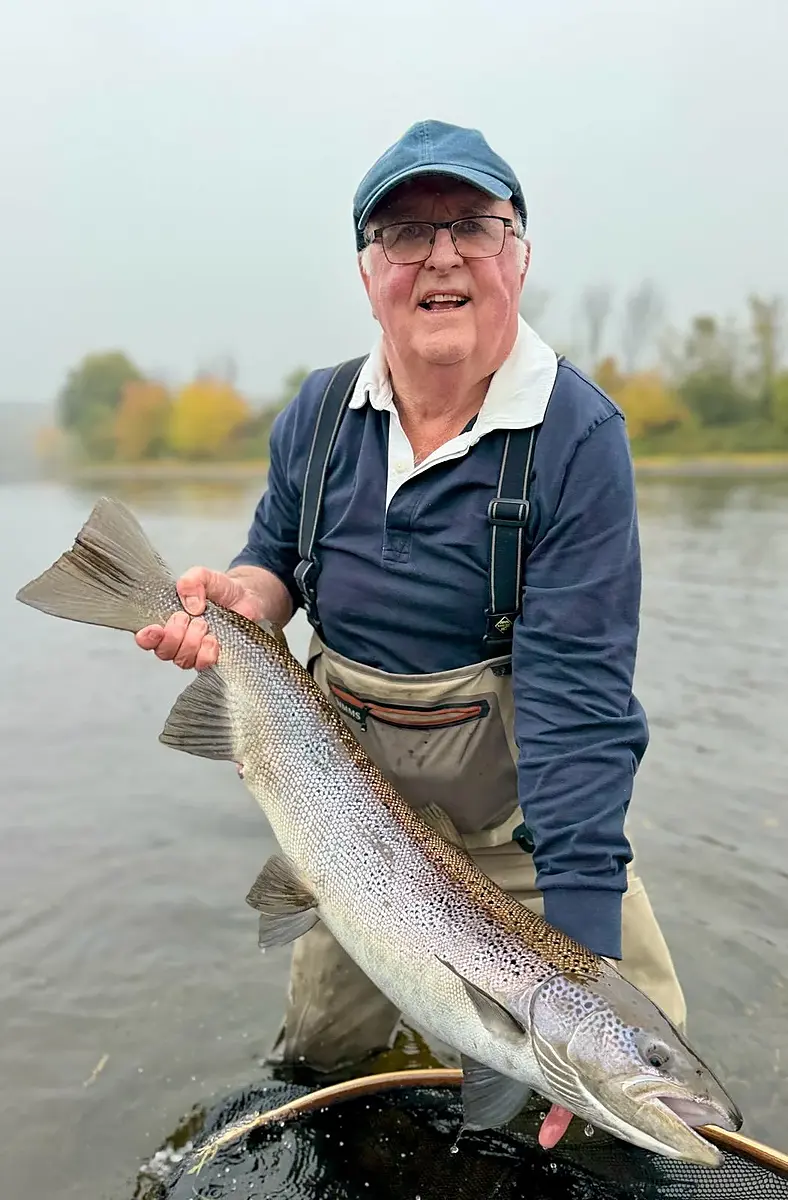
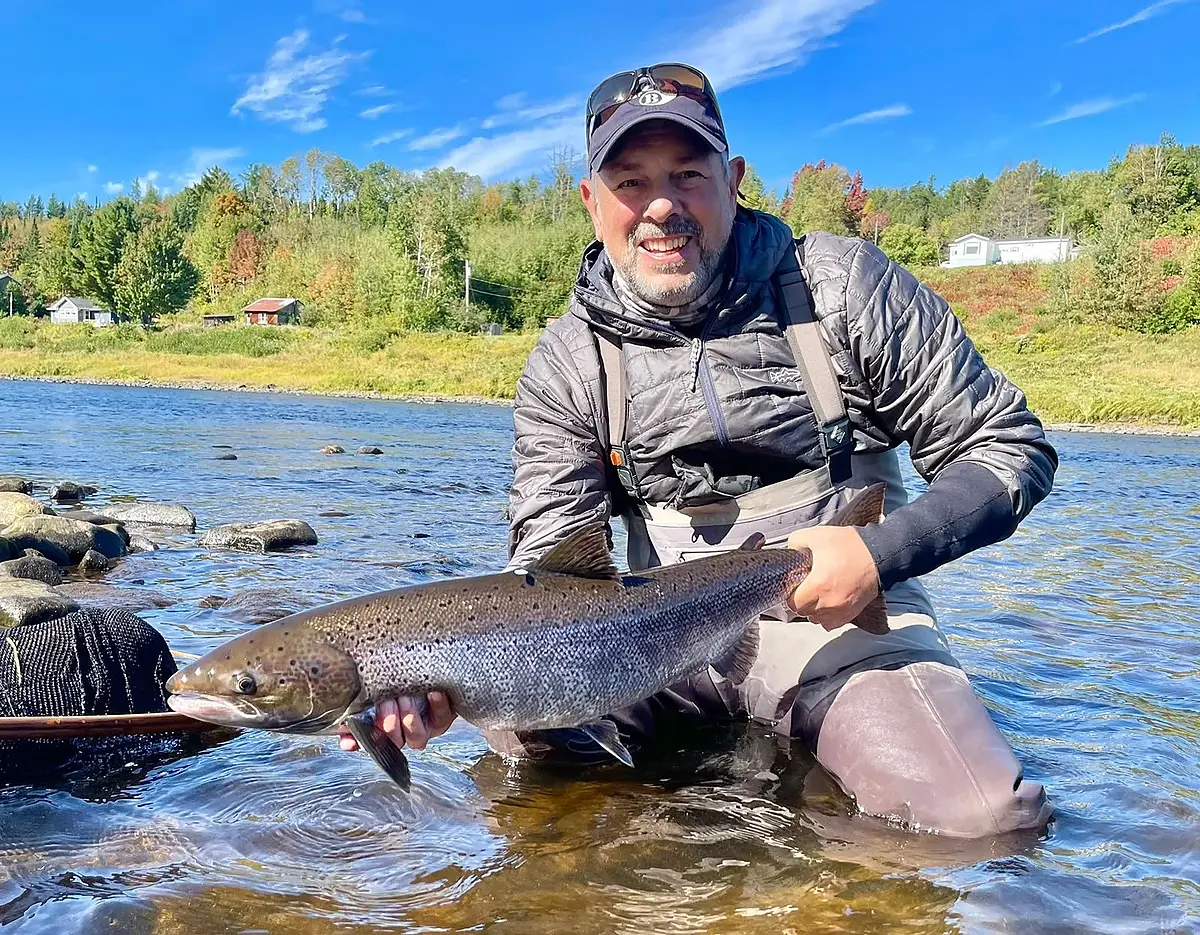
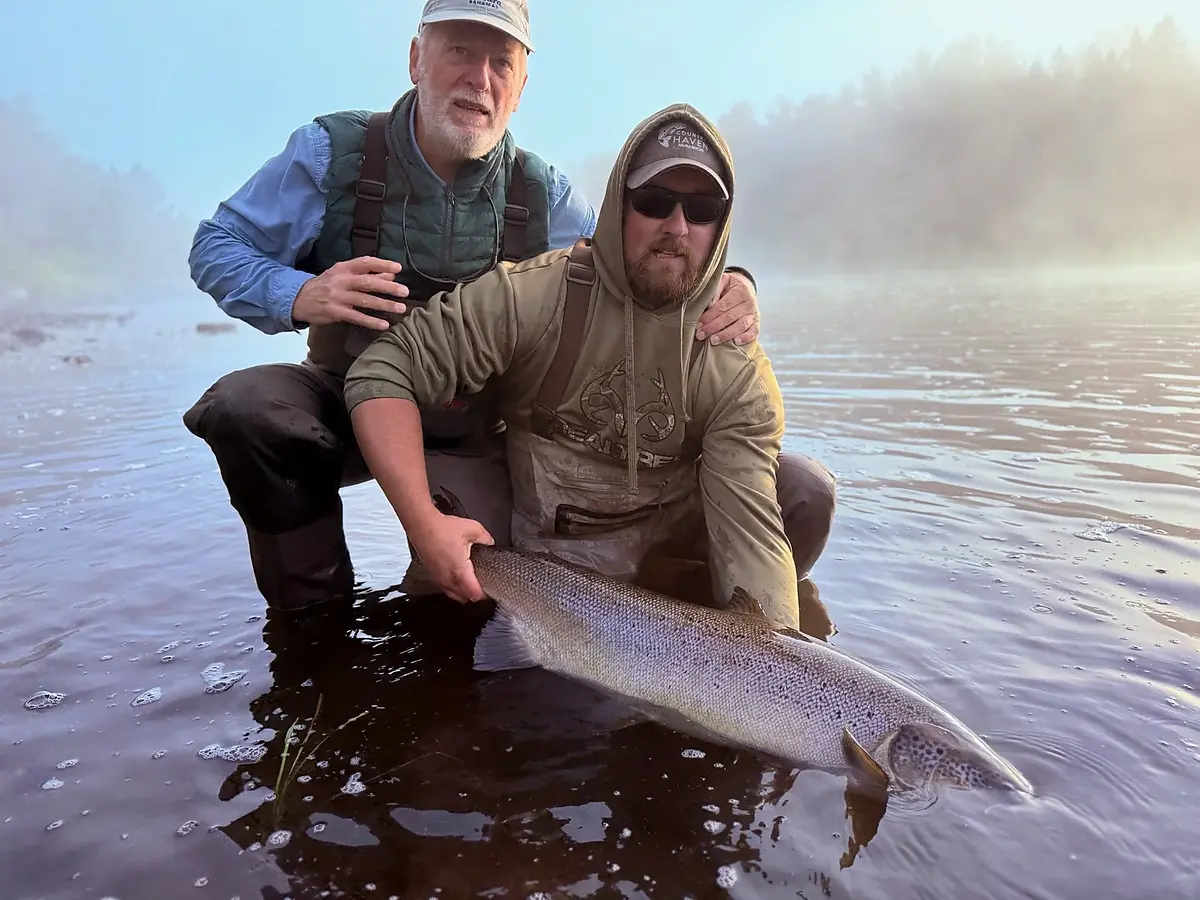
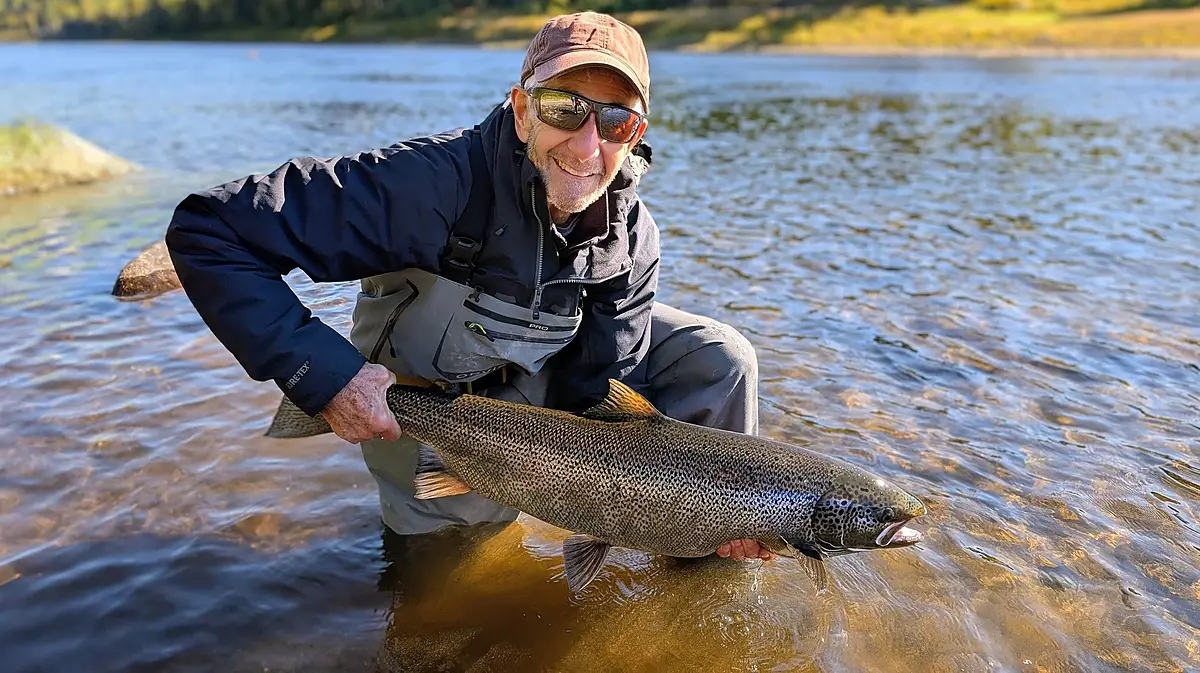
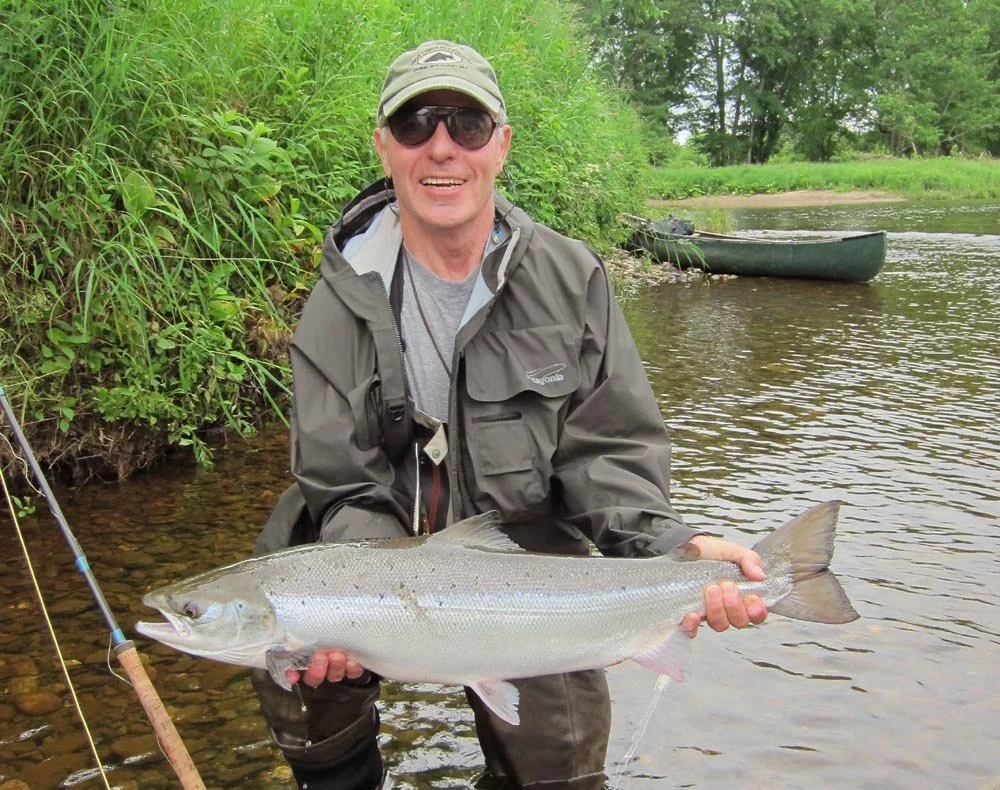
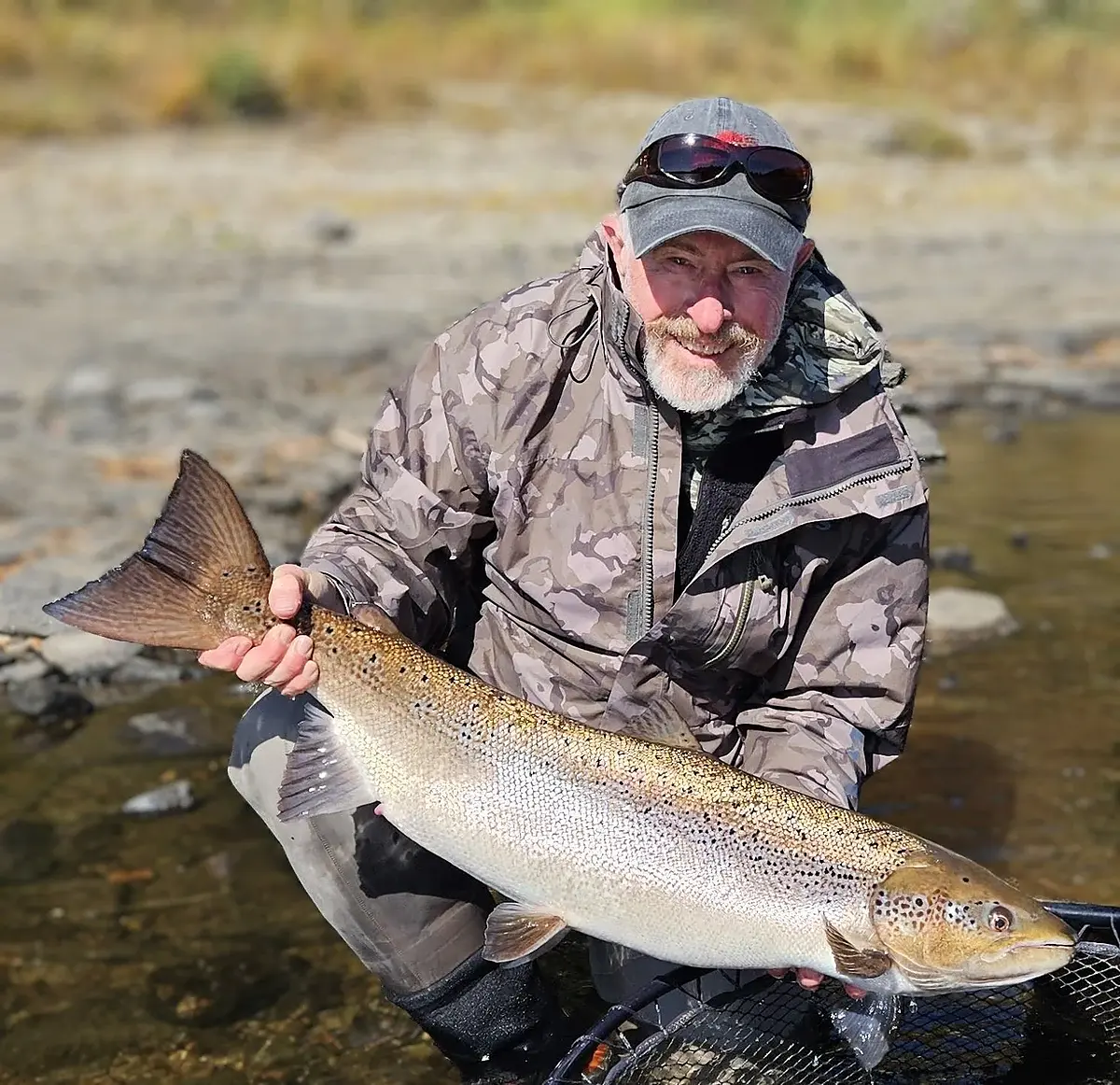
In central New Brunswick the Main Southwest Miramichi runs through balsam fir, spruce and hardwood forest on its way to the Gulf of St. Lawrence. The village of Blackville, on its banks, is where the Blackville Special and the Oriole were first tied, two flies that still turn up in Miramichi fly boxes. Just below Blackville, at Gray Rapids, Country Haven Lodge & Cottages looks up the river from more than 25 private pools on the main stem and its tributaries, the Cains among them. Grilse run 3 to 6 pounds, most salmon weigh 10 to 25 pounds, and fish over 30 pounds are landed every year.
The bottom is mostly gravel and the gradient moderate, so wading is comfortable for anglers of every ability. Pools come in two shapes: deep holds where salmon rest beside a run of swift water, and bar pools where a gravel bar and shallow water partly block the river. Because the lodge sits on the lower river, the salmon in these pools are fresh from the tide and still moving upstream.
The Main Southwest is one branch of the river system with the largest Atlantic salmon run in eastern North America. Fishing rights on much of the Miramichi are privately held, and the Main Southwest carries most of that private water, so a lodge with its own pools can rotate through them by the day instead of sharing one public run.
Choosing Between 25+ Miramichi Pools by River Height
Guides choose the water each day by river height and where the fish are moving, so a rising or dropping river changes the plan rather than the quality of the fishing. Mornings start calm on the water, lunch is at the lodge or on the river, and the evening session runs into long shadows before a late dinner. The pools lie within a drive of the lodge, the farthest about 45 minutes away, and the Cains River, a remote tributary fished for both salmon and brook trout, gives the program a second river to turn to when the main river is below optimal conditions.
Miramichi Salmon Season, April to October
The Atlantic salmon season runs six months, and the river looks and fishes differently at each end.
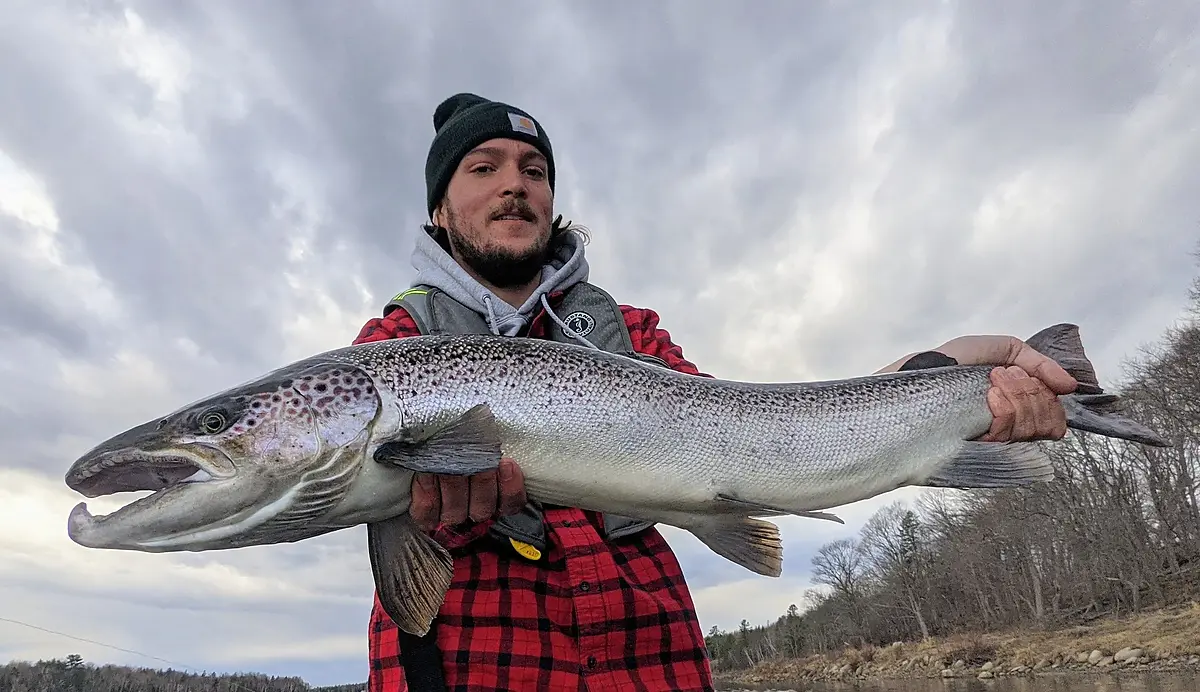
Spring, April 15 to May 15: The water is cold and often high with snowmelt in early April. Fishing is done from boats, normally one angler to a guide, for black salmon (kelts). These fish spawned the previous fall, spent the winter in the river and head back to the ocean in the weeks after ice-out. They are feeding fish and the easiest salmon of the year to catch, and 40-inch fish are among them. Streamers on sinking lines or sinking tips cover the deeper water, and boat fishing at this time suits anglers who would rather not wade.
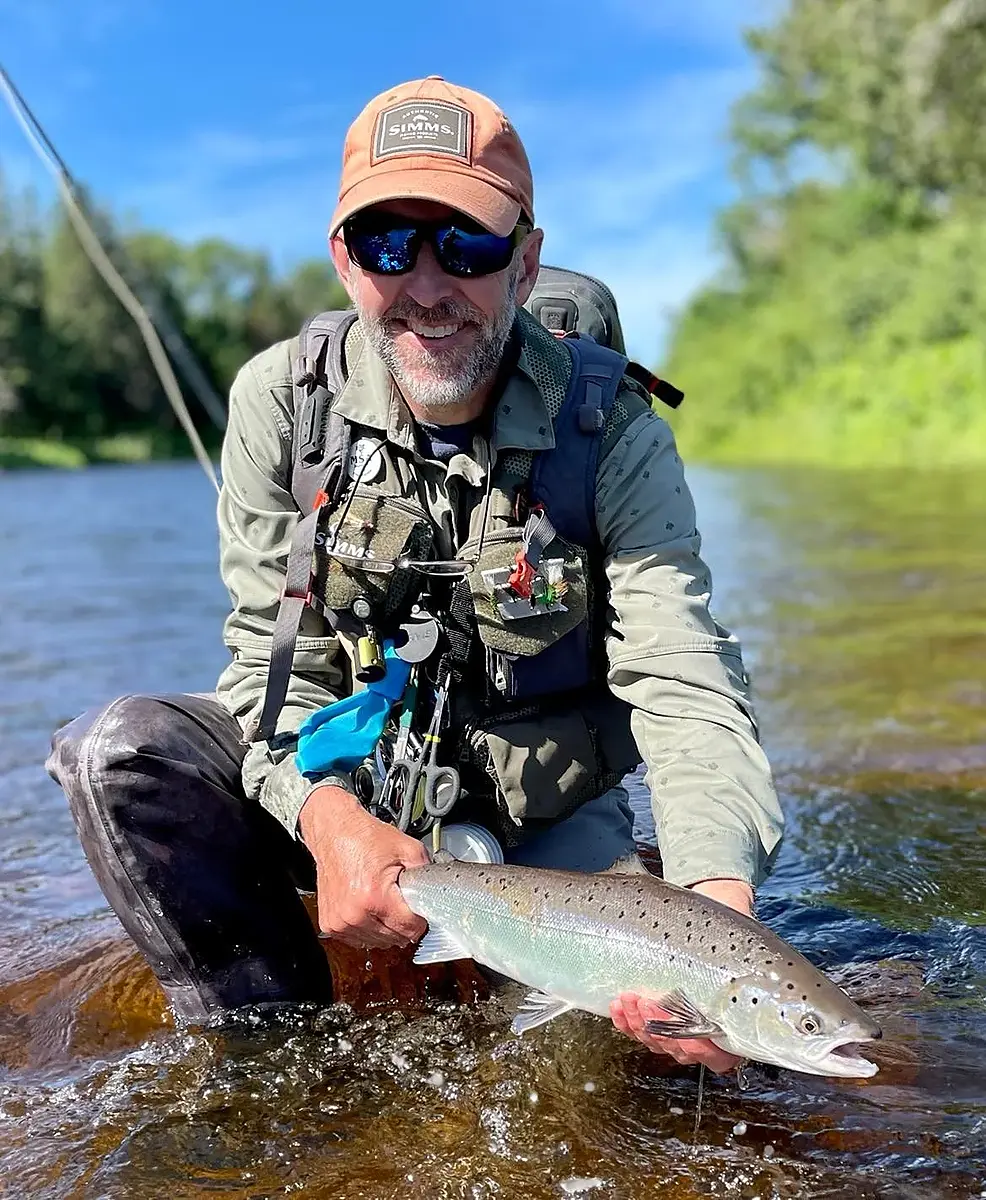
Summer, June to August: Fresh salmon arrive in the first week of June, and from then on the fishing is almost all wading, with boats rarely used. Summer fish are not feeding, so a well-presented wet fly on the swing or a surface fly skated across the pool is what moves them. In July and August the river’s Warm Water Protocol can shut down named pools to angling when the water runs too warm, and the guides will move guests to other water.
Fall, September to October 15: Large salmon, the same wet and dry fly methods, and maples and birch along the bank turning red and gold from late September. The stretch below the Cains is known for its fall fishing.
Miramichi Salmon Flies, Rods and Lines
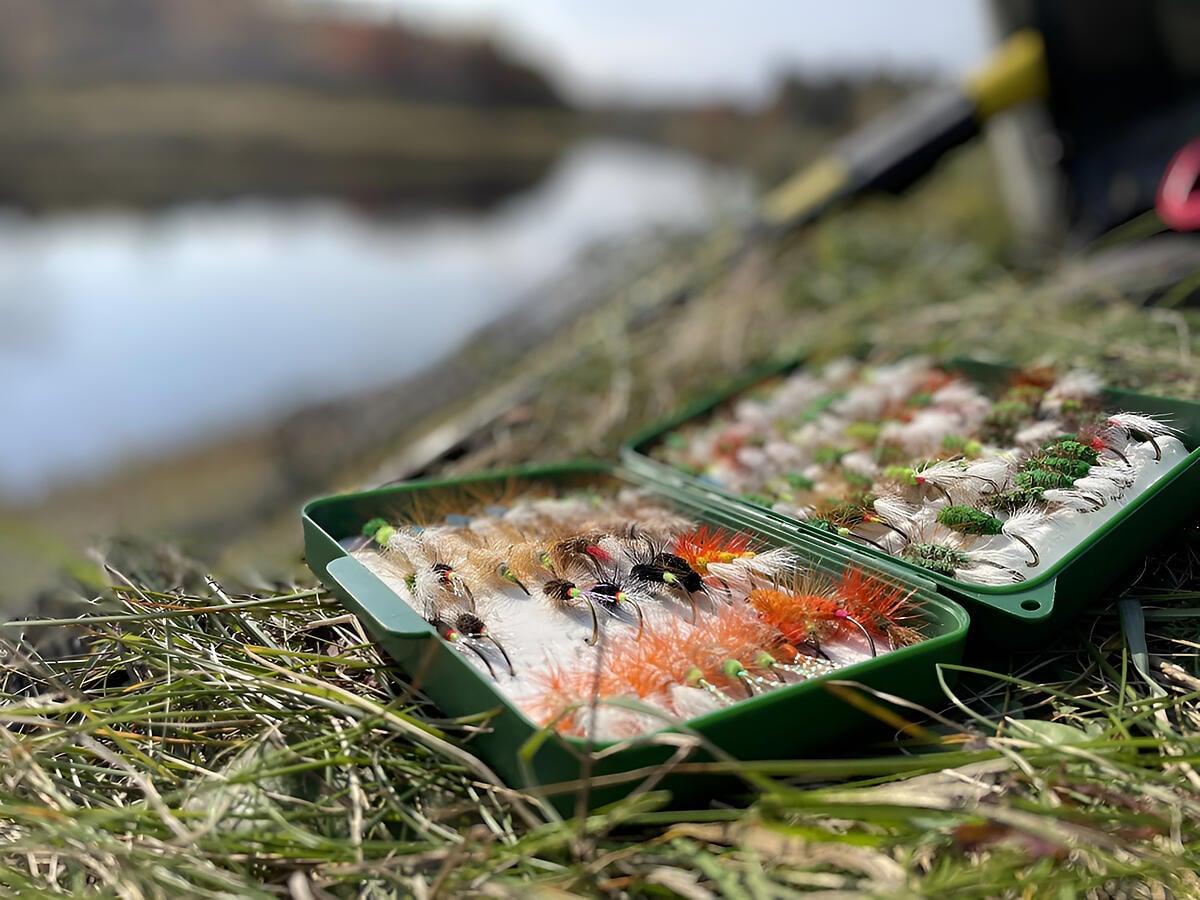
Eight and nine weights cover nearly all the salmon fishing, and single-handed rods and Spey rods both see regular use. Spring means sinking lines or sinking tips with smelt-style streamers such as Magog Smelt and Blue Smelt. In summer, floating lines and wet flies such as the Green Machine, Undertaker, Black Bear Green Butt and Cosseboom do the swinging work, while Bombers and Carter Bugs fish the surface. Fall brings the same setups with patterns such as Ally’s Shrimp, Red Frances and Copper Killer.
Dry-fly fishing is the highlight: a big wild salmon rolling up through the current to take a Bomber is the take most anglers return for.
Striped Bass, Brook Trout and American Shad
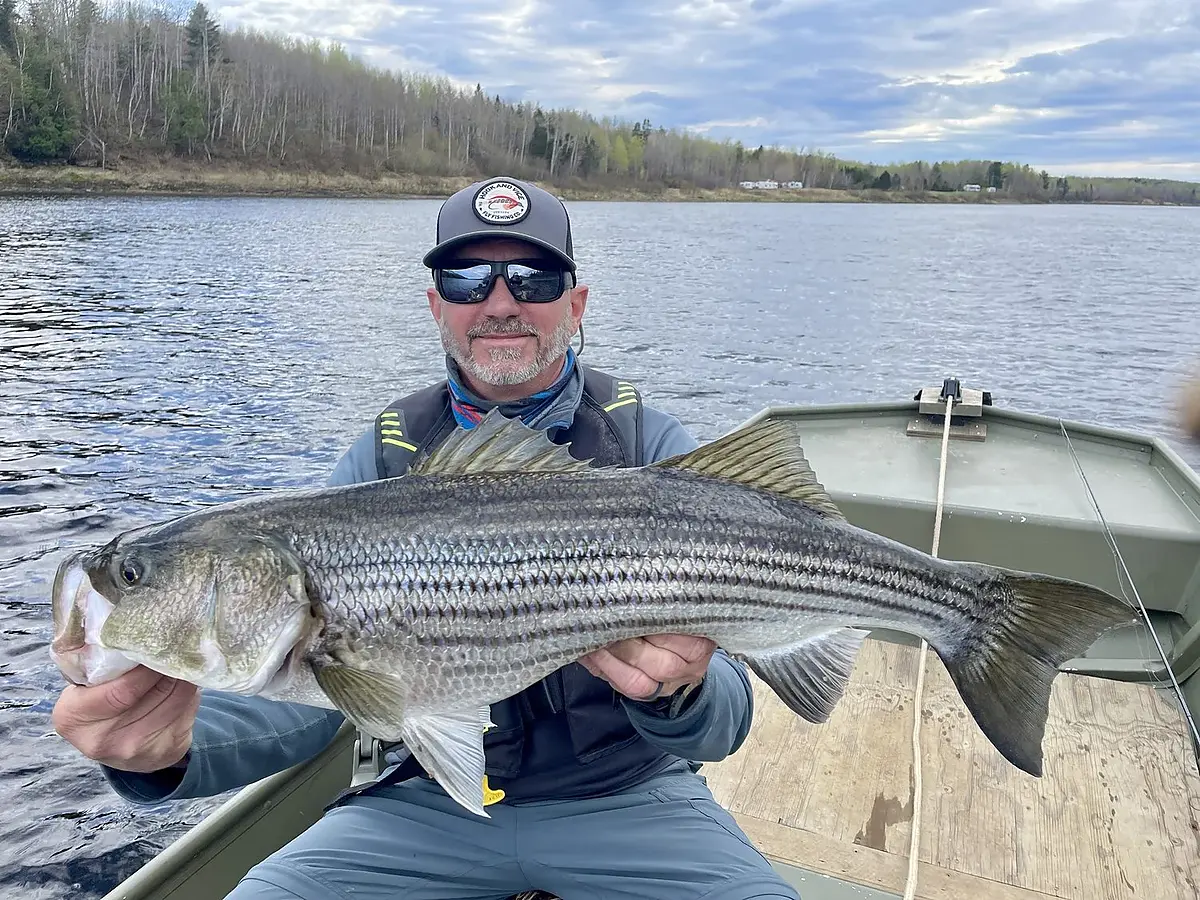
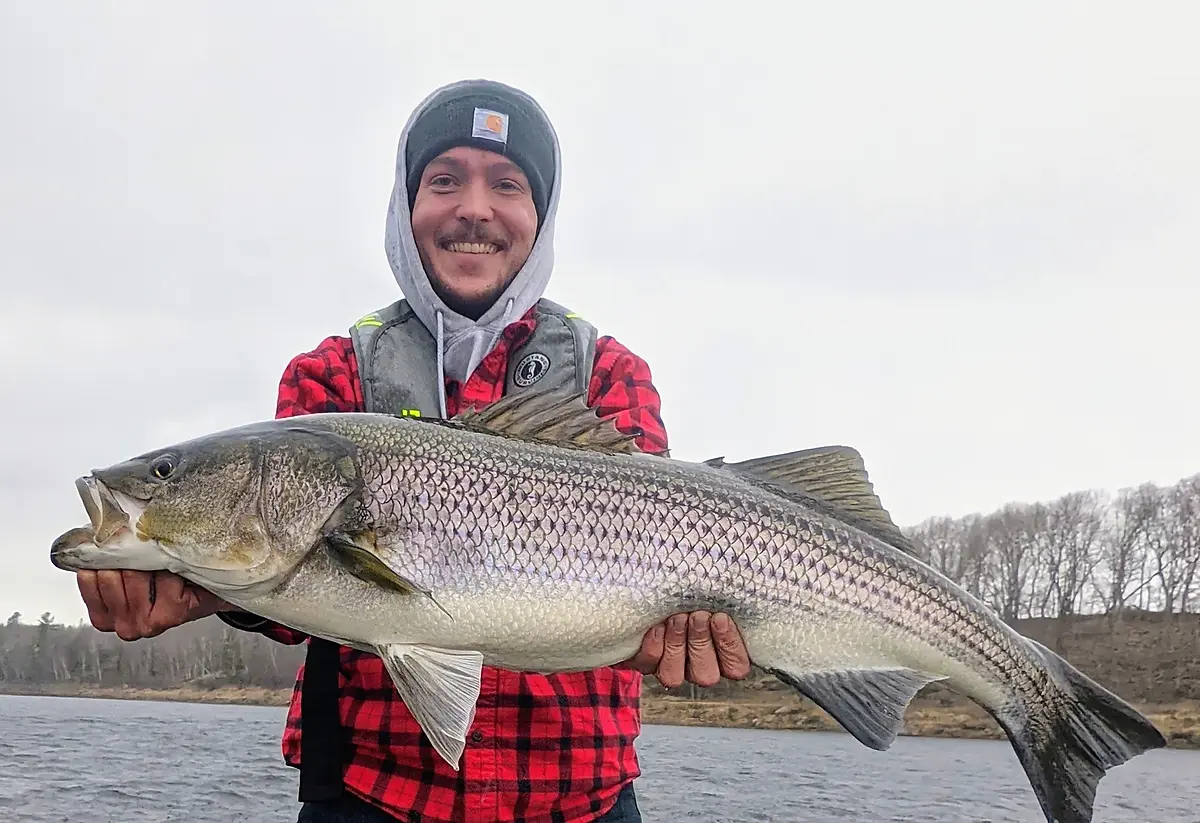
Native and sea-run brook trout up to 4 or 5 pounds add a second target, best from May to early July. Sinking-tip streamers work the faster water of the main river in May, and from June to early July dry flies on 4 to 7 weight rods with floating lines suit the Cains. Striped bass and American shad run in the lower river and tidal water from May to early July. Stripers of 30 to 40 inches are fished from boats and will take a dry fly, and many returning anglers now book the trip for them. In May the river holds salmon, sea-run brook trout and striped bass all at once, so a three-species slam is possible.
Miramichi Fishing Guides for First-Timers
Summer and fall guiding is two anglers to a guide, spring boat fishing is one to one, and private guiding is available. The team is made up of eight to ten guides, all New Brunswick Class 1 certified professionals with first aid and CPR, and many come from families that have guided the river for generations. German and French speaking guides are available on request.
Beginners get casting instruction and the lodge’s rods, reels and waders. A moderate level of fitness helps with wading, and the lodge can pick pools to suit mobility. Spring boat days need no wading at all.
Fly-Only, Catch-and-Release and Licenses
All Atlantic salmon fishing is fly only, barbless and catch and release. Every angler needs a New Brunswick fishing license, and non-resident anglers must fish Atlantic salmon waters with a licensed guide, which the guided packages cover. The lodge helps with licenses on arrival.
Miramichi River Conditions and Trip Dates
Run timing and water levels change from year to year, and a six-month season leaves room to choose. Contacting the lodge owner directly is the way to get current fish counts, river conditions and the pools fishing best before settling on dates.
At Country Haven Lodge & Cottages the appeal is range: one river fished three different ways across six months, and enough private pools for the guides to match the water to the day. It suits anglers who want Atlantic salmon without committing to a single stretch.
To learn more about the fishing and express an interest, message The Support Team.