


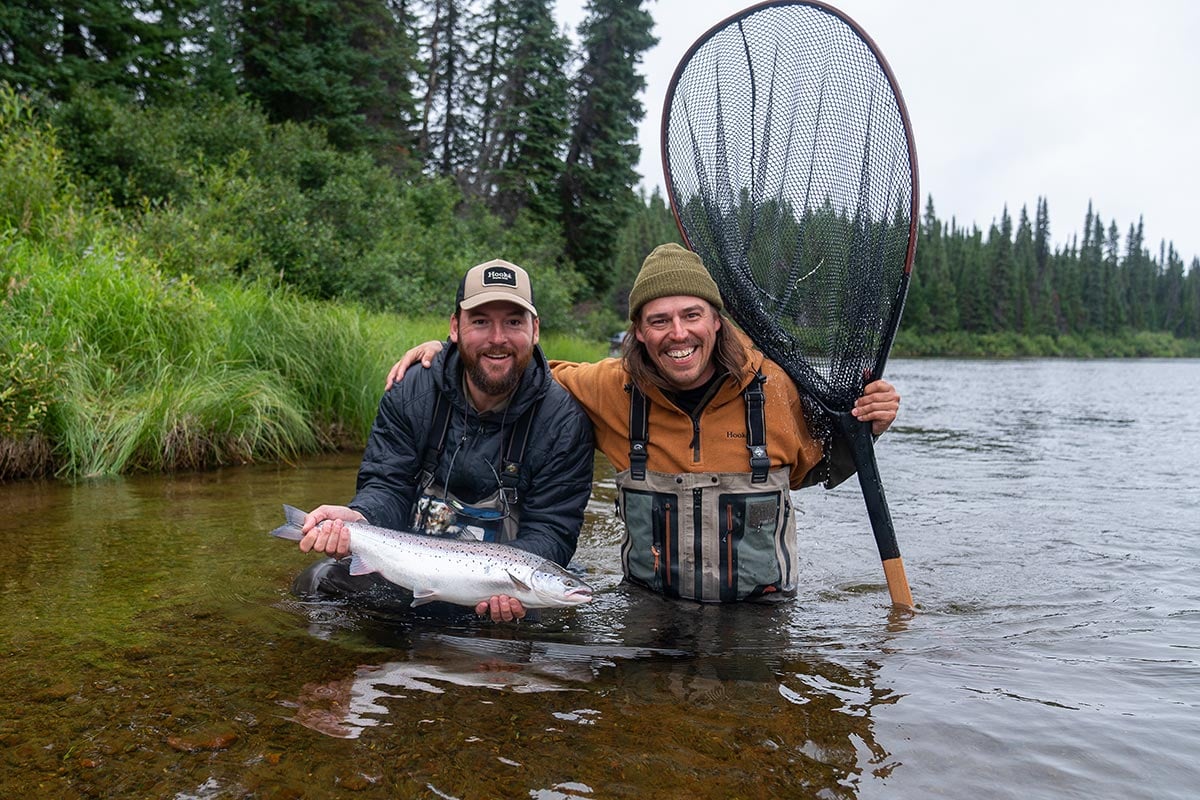

Atlantic Salmon Fishing in Northern Labrador
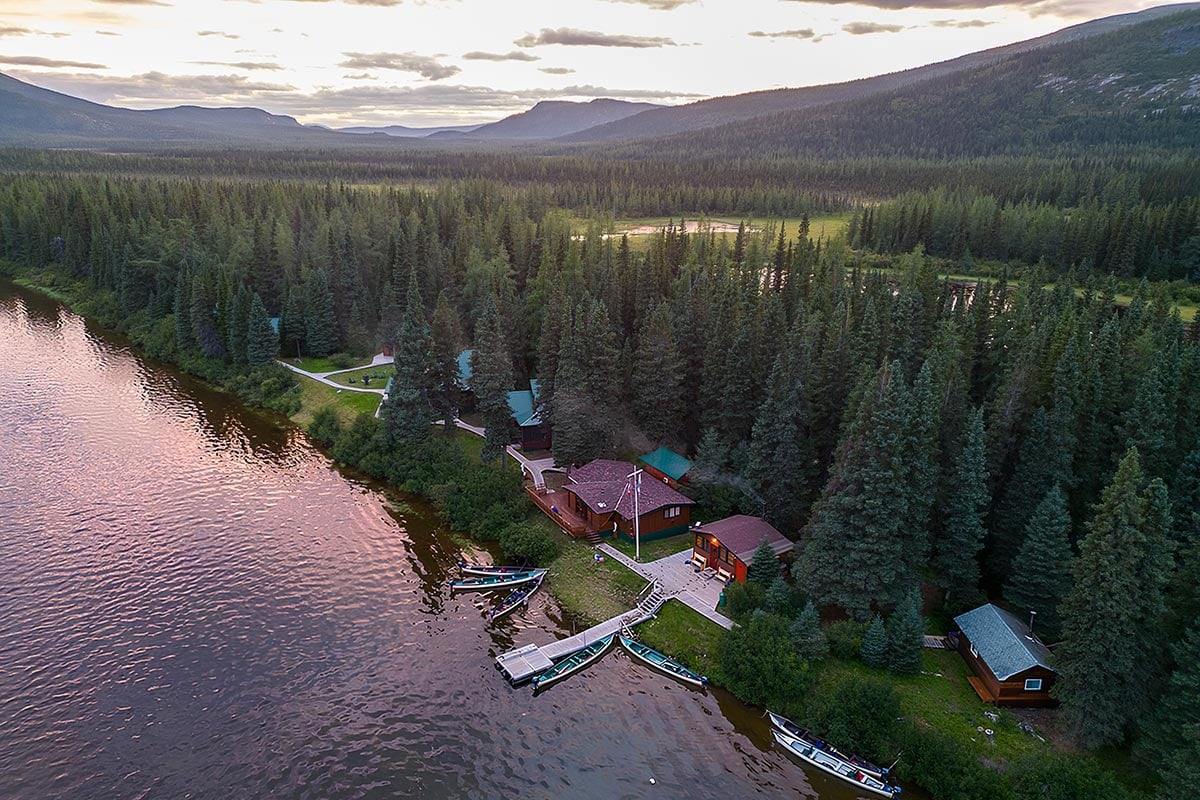
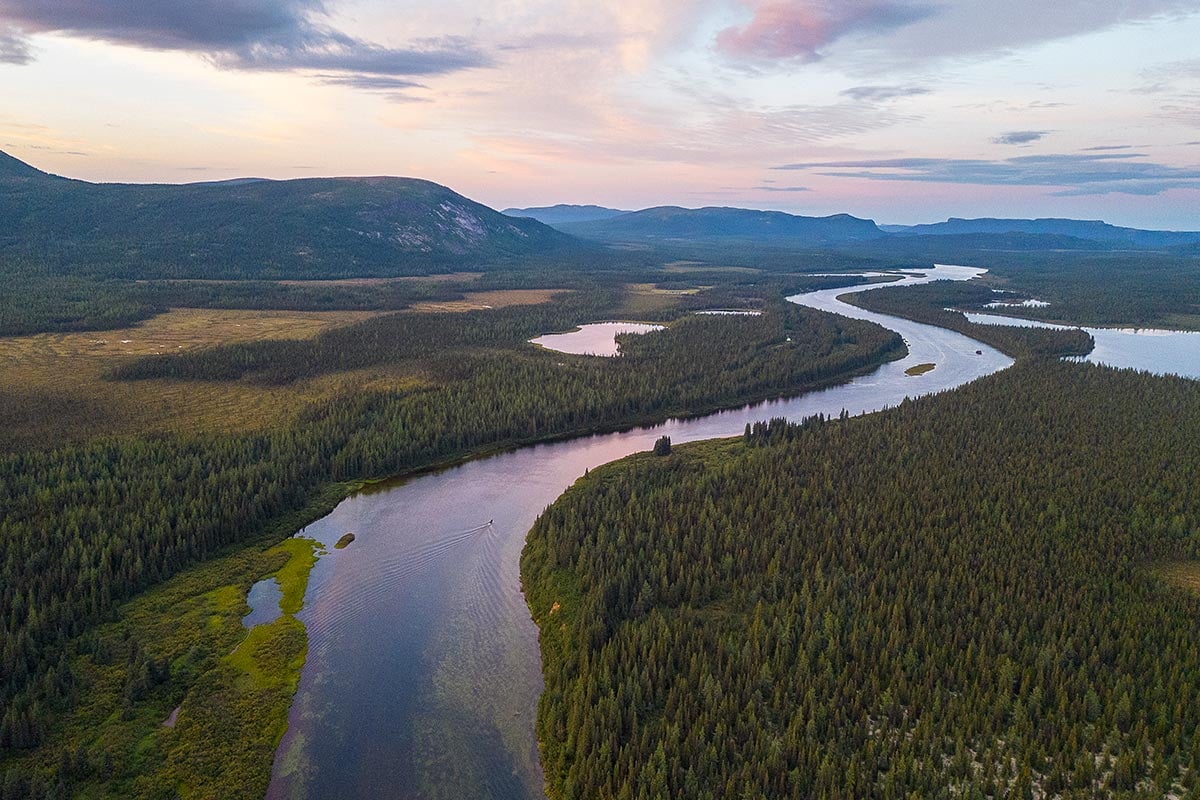
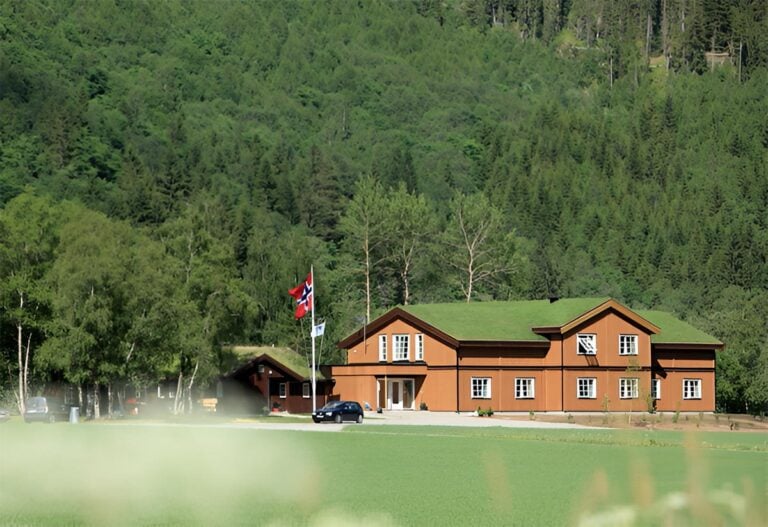
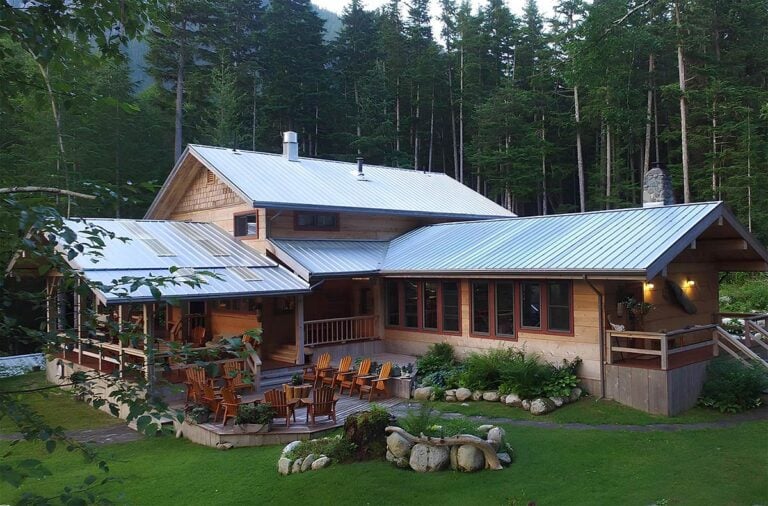
Flowers River Lodge fishes the Flowers River in northern Labrador, a remote Atlantic salmon system reached by floatplane from Goose Bay. Guests arrive in Goose Bay the day before their fishing week, stay overnight locally, and transfer into camp by floatplane the following morning, landing directly on the river near the lodge.
The program is fully lodge-based and built around wade fishing, with access handled by boat rather than road or trail networks.
River Character and Wading Conditions
The Flowers River is characterized by moderate gradients, large, well-spaced pools, and stable footing, allowing most fishing to be done comfortably on foot. Pools are open rather than confined, with room to move and cast without tight banks or heavy brush. Anglers typically enter the river from shallow edges before working through pools at a steady pace, reducing the need for difficult crossings or long climbs between fishing areas.
Clear Water and Sight-Fishing Opportunities
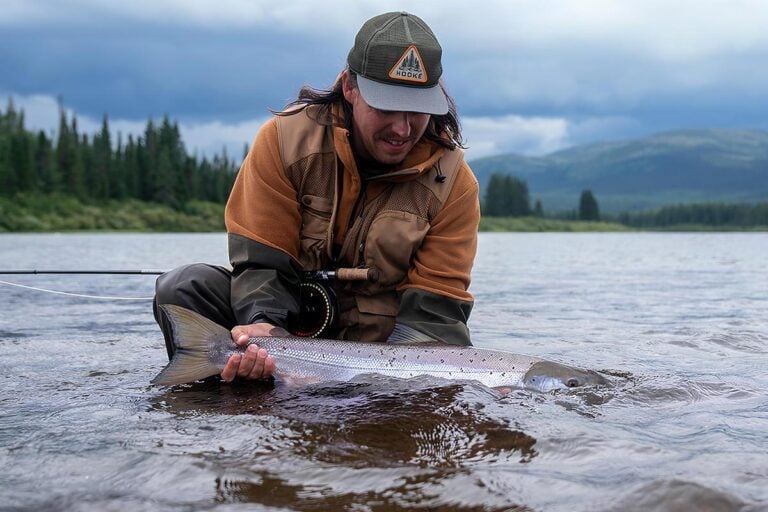
Under typical flows, the river runs clear, and salmon are often visible holding in pools before a cast is made. In many runs, anglers can watch fish track or follow a fly as it drifts or swings through the lie, adding a visual dimension that is not common on many salmon rivers. Dry flies are regularly used when conditions allow, with smaller patterns—often sizes 10 to 12—forming part of the normal rotation.
Daily Fishing Access by Motorized Canoe
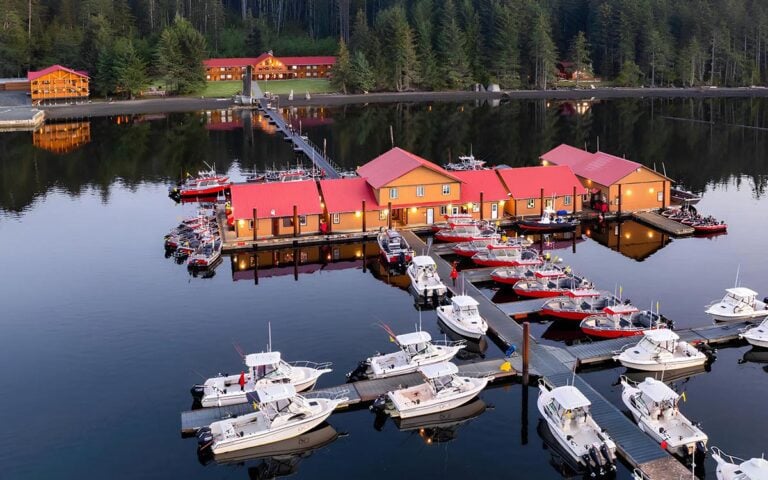
Motorized canoes are used as transport between pools rather than as fishing platforms. Guides move anglers between sections of river by canoe, stepping out to fish individual pools before continuing on to the next run. This approach allows different water to be covered efficiently during the day without long walks between pools.
Guide Ratio, Water Rotation, and Daily Rhythm
Guiding is structured at one guide per two anglers. Each day, guests are assigned specific sections of the river, with guides rotating anglers through different water over the course of the week to manage pressure. Days begin with breakfast at the lodge before heading onto the river, with lunch either taken back at camp or packed for the day, and fishing continuing into the evening before returning to the lodge for dinner.
Atlantic Salmon and Seasonal Arctic Char
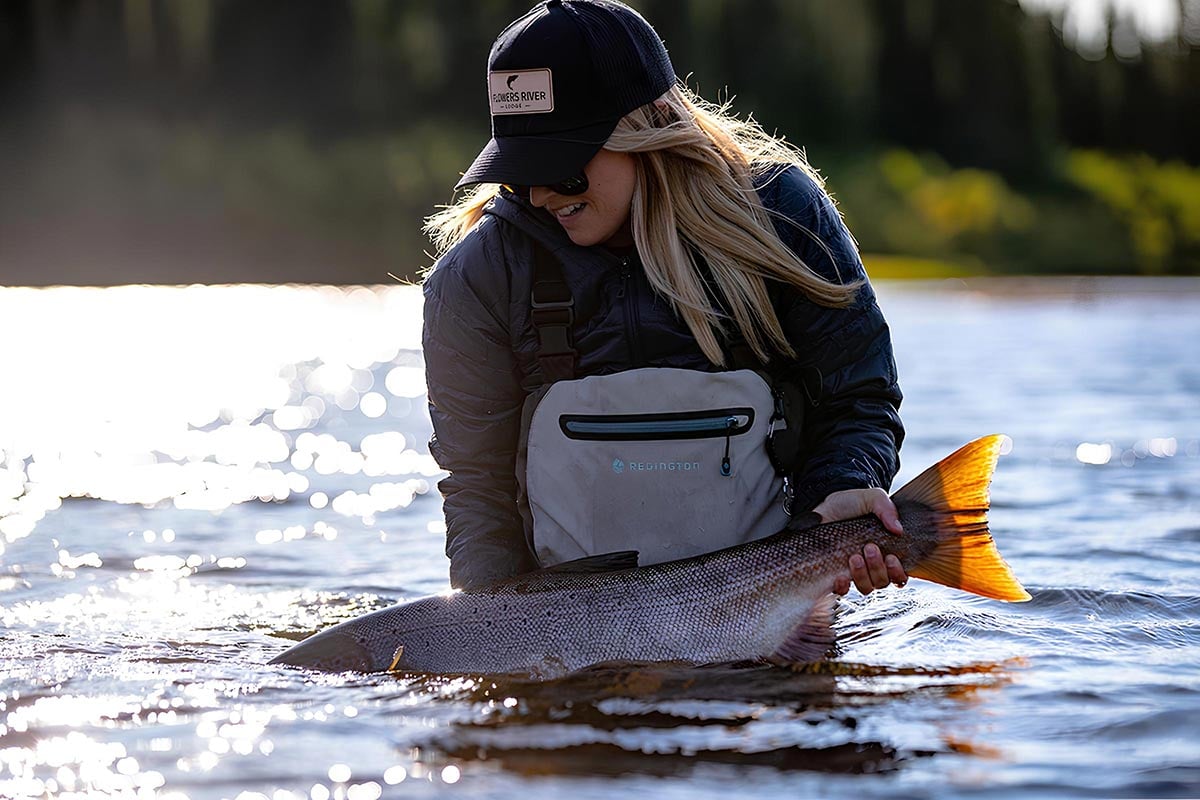
Atlantic salmon are the primary focus throughout the season. Fish in the 8–12 lb class are common, with larger salmon exceeding 20 lb present in the system each season. As the season progresses, Arctic char enter the river and provide a secondary opportunity, particularly later in the year. Char are taken on a mix of swung flies and nymphs and add variety when salmon become less responsive.
Lower River Two-Rod Downriver Program
Beyond the main lodge water, Flowers River Lodge offers a separate downriver option limited to two rods at a time, opening up a quieter stretch of the river away from the main camp. Access is by hovercraft, with days spent moving between pools by 20-foot canoe and fishing on foot once dropped into position.
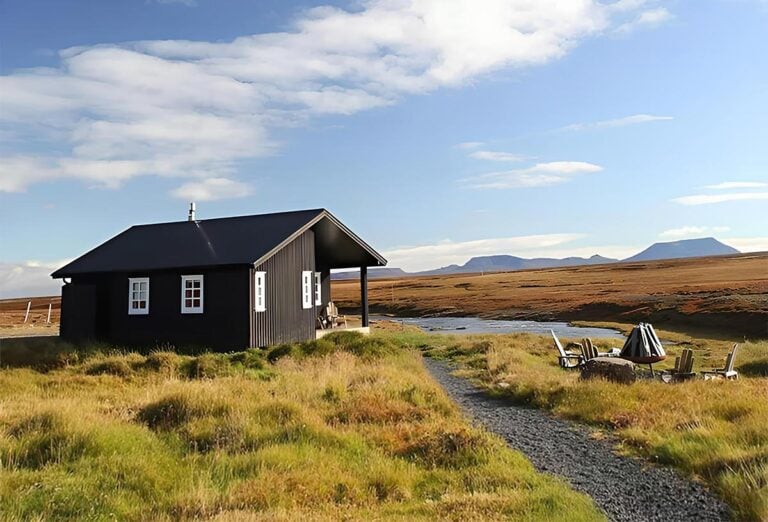
Accommodation is in a simple tent camp set back from the riverbank, with bunks, a wood stove, basic cooking facilities, an outhouse, and a small shower, all enclosed within a bear fence. Evenings are spent back at camp preparing meals, tending the fire, and getting ready for the next day’s fishing, with communication maintained throughout with the main lodge. On the final night, anglers return upstream to rejoin the main lodge for dinner and the last night of the trip.
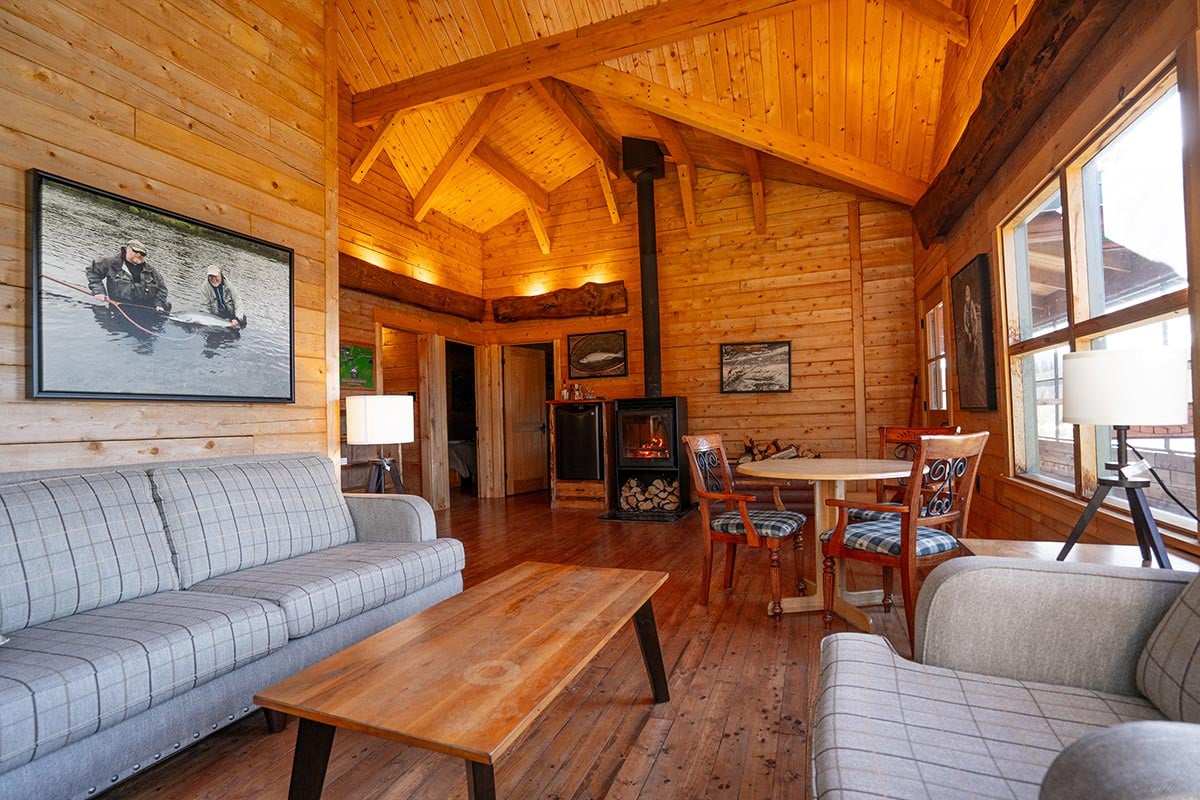
Flowers River Lodge offers a structured Atlantic salmon program built around clear water, practical wading, guided access by canoe, and the option to extend into a low-pressure downriver section for anglers seeking additional water and solitude.
To learn more about the fishing and express an interest, message Labrador Lodges.