


Atlantic Salmon Fly Fishing on the Gaula River
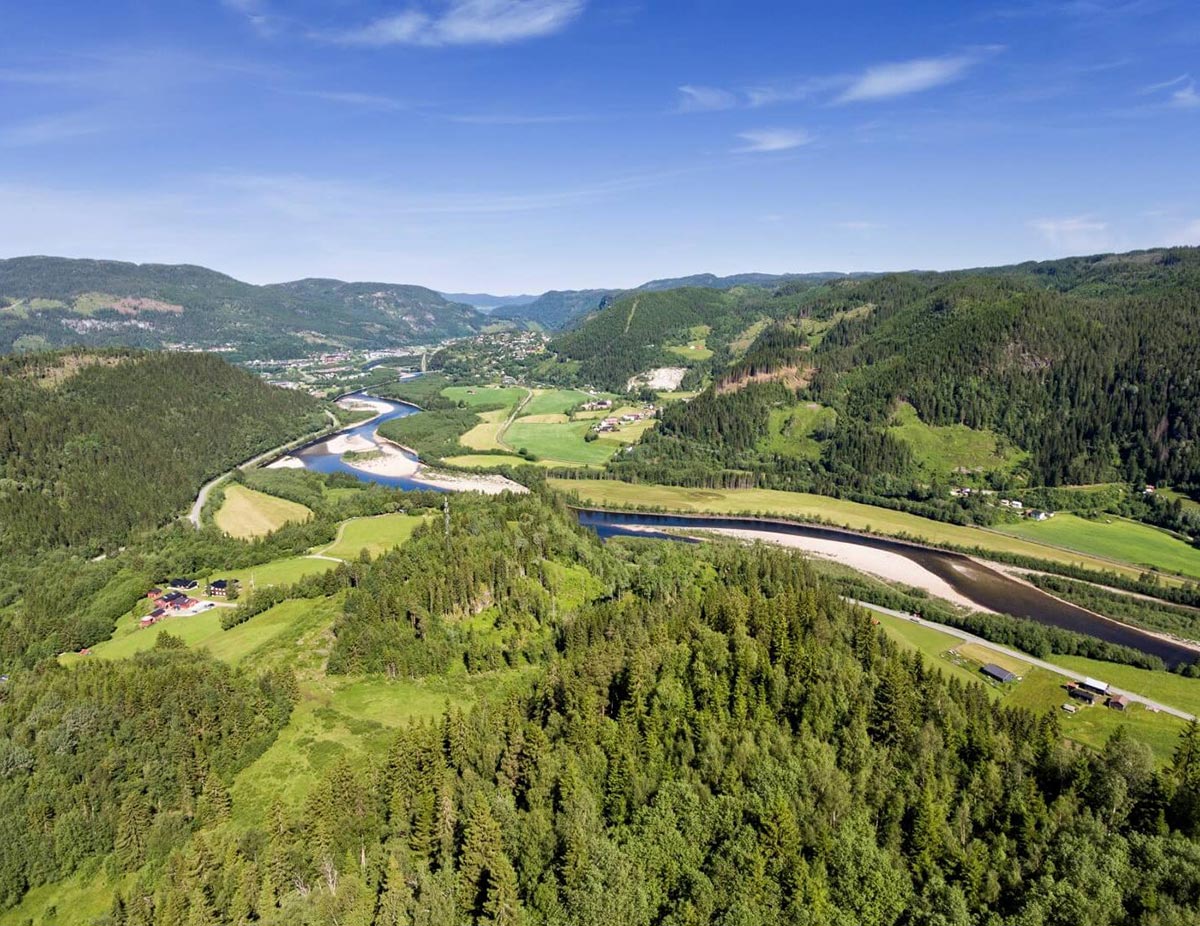
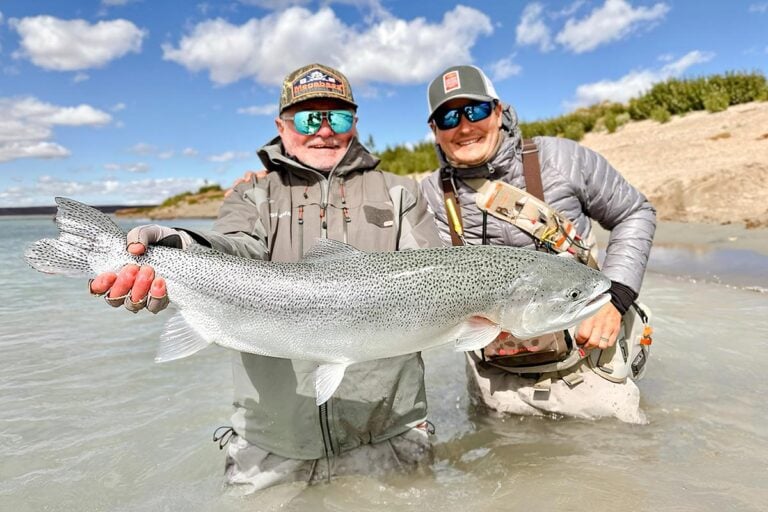
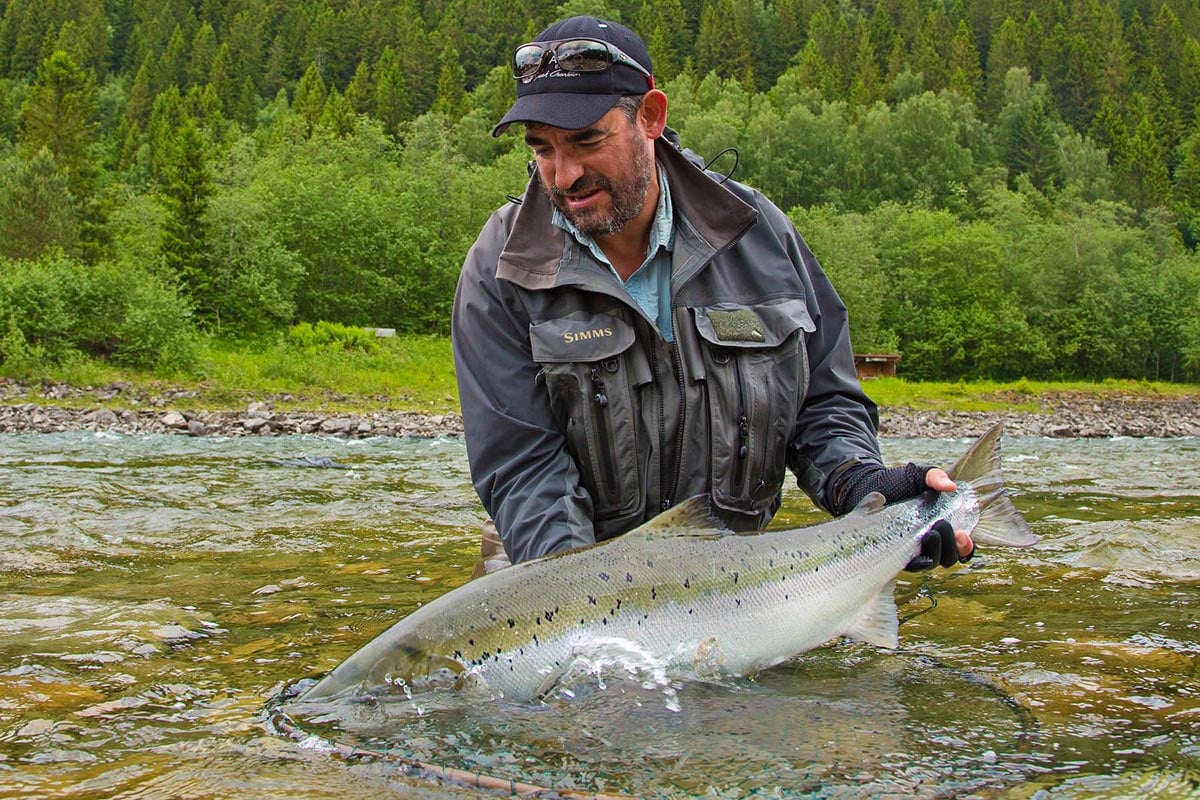
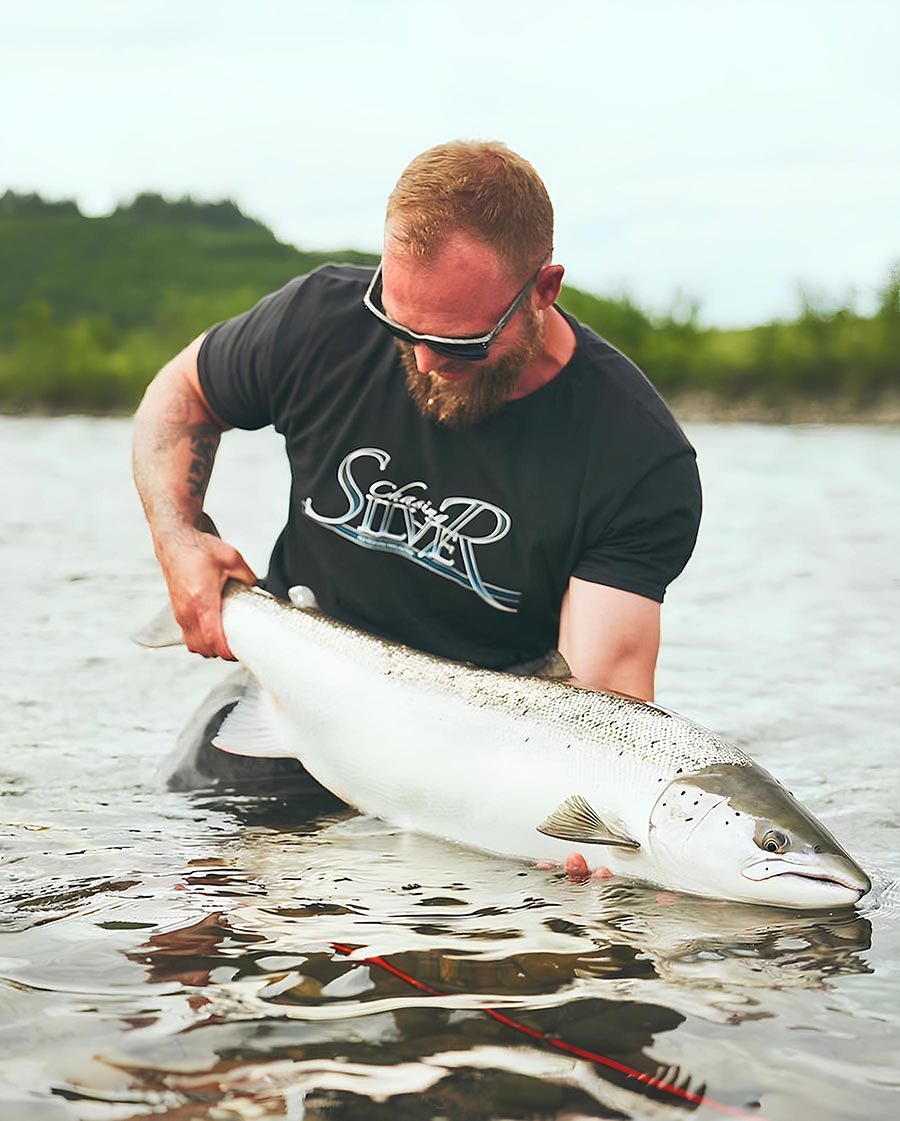
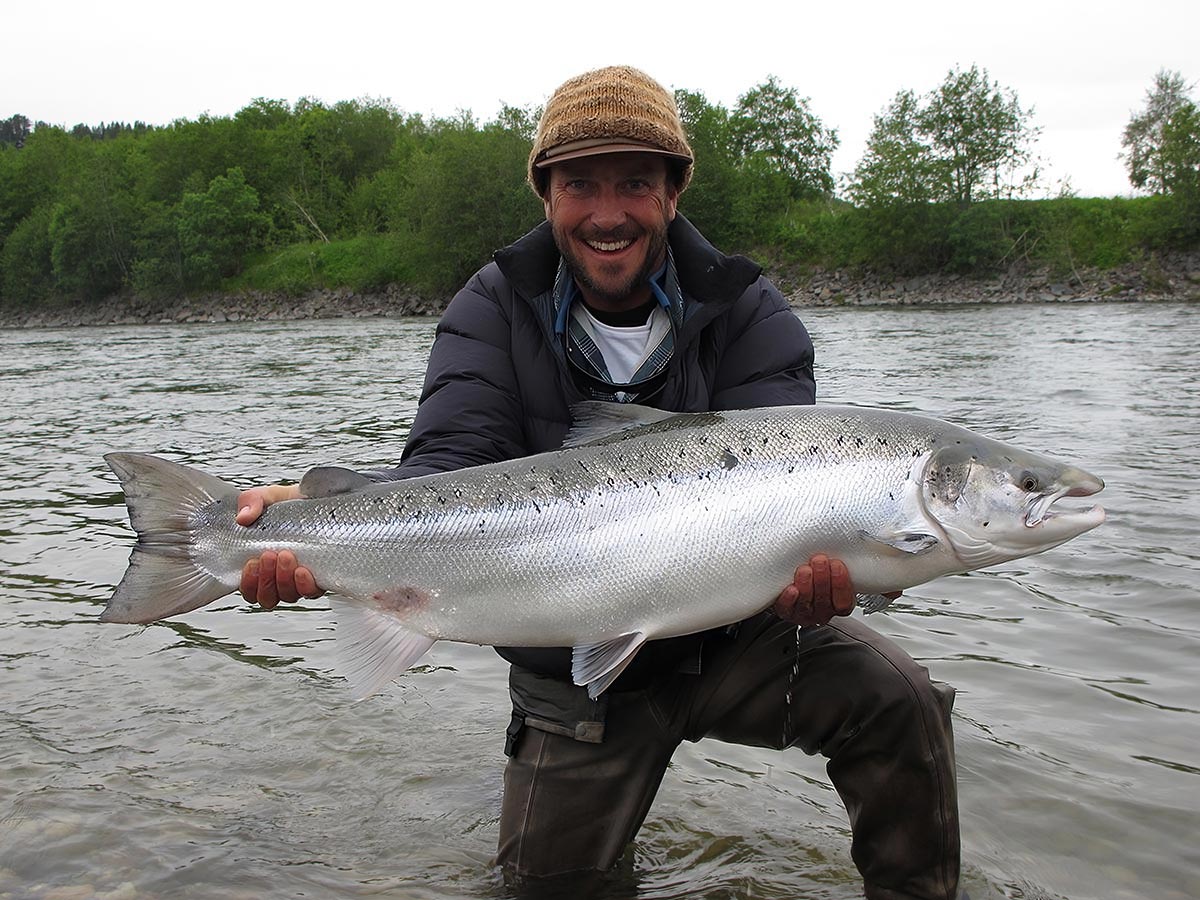
Set in central Norway, the Gaula River is a wild, free-flowing system untouched by dams, which flows from the mountains near Holtålen to the Trondheim Fjord. It’s famed for powerful, hard-running salmon, with fish over 18 kg (40 lb) landed each year.
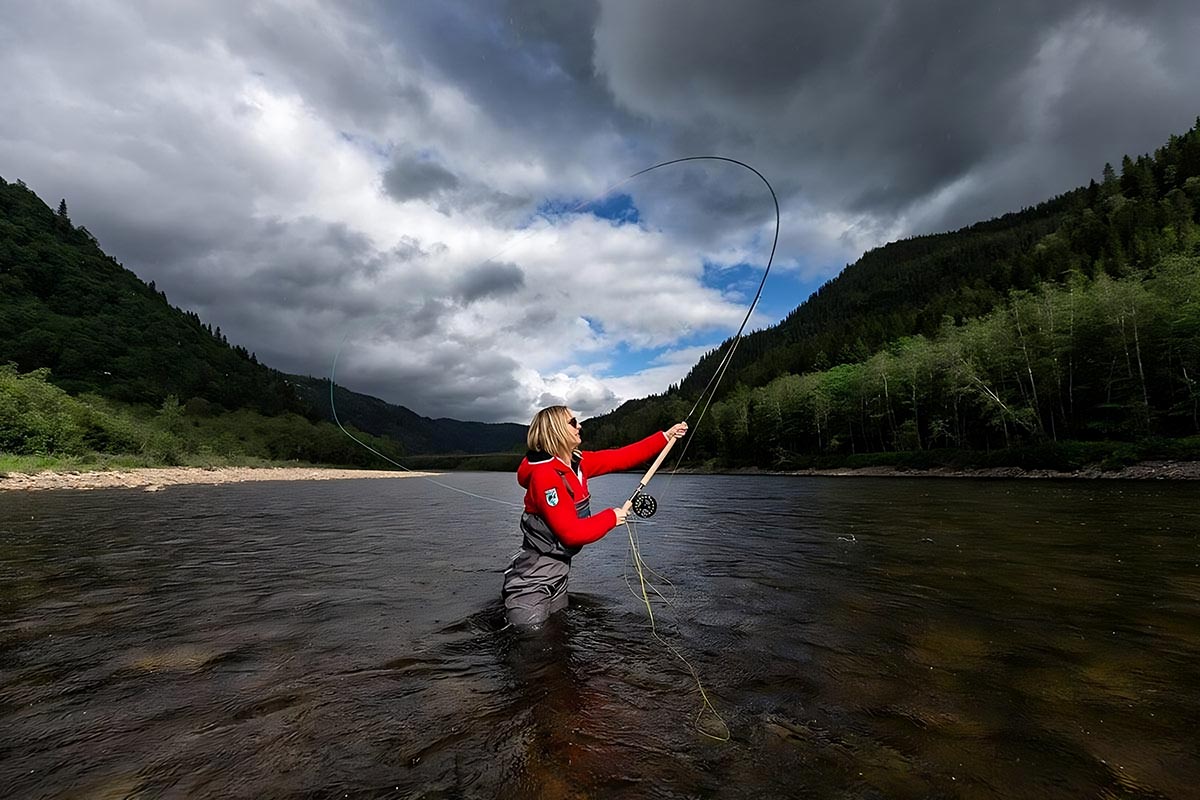
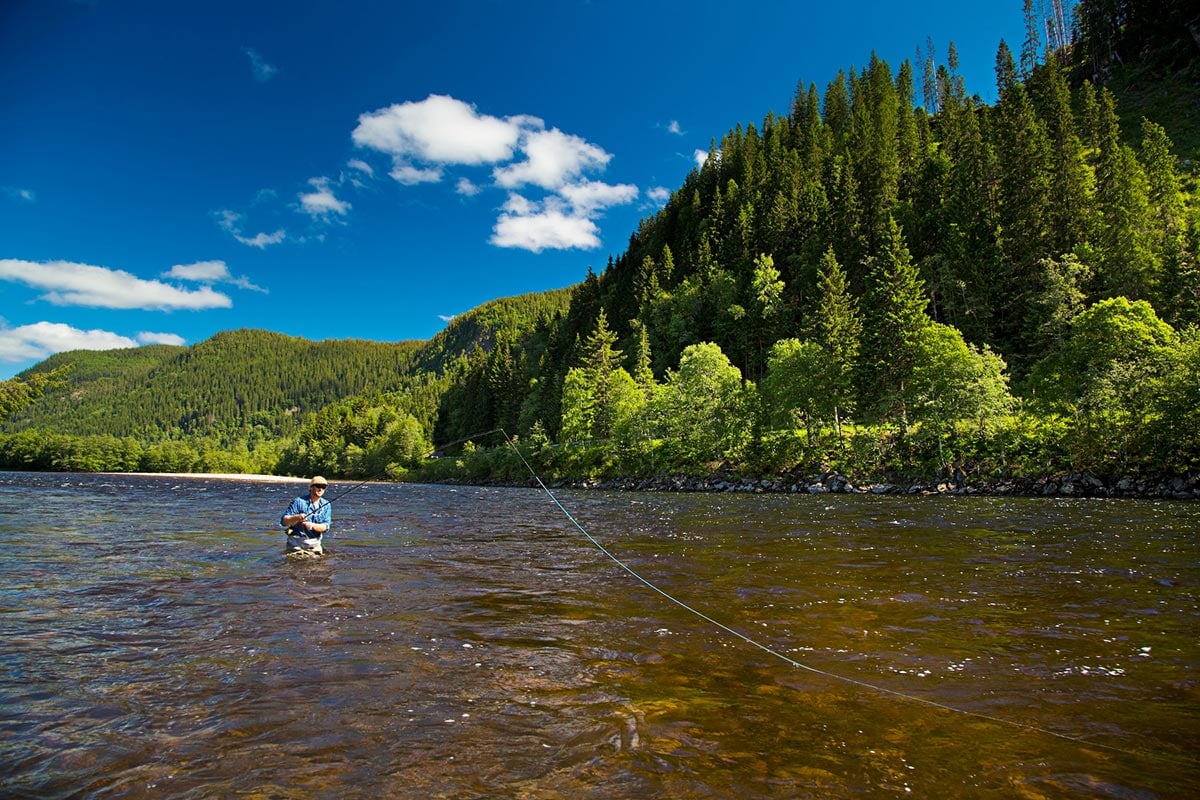
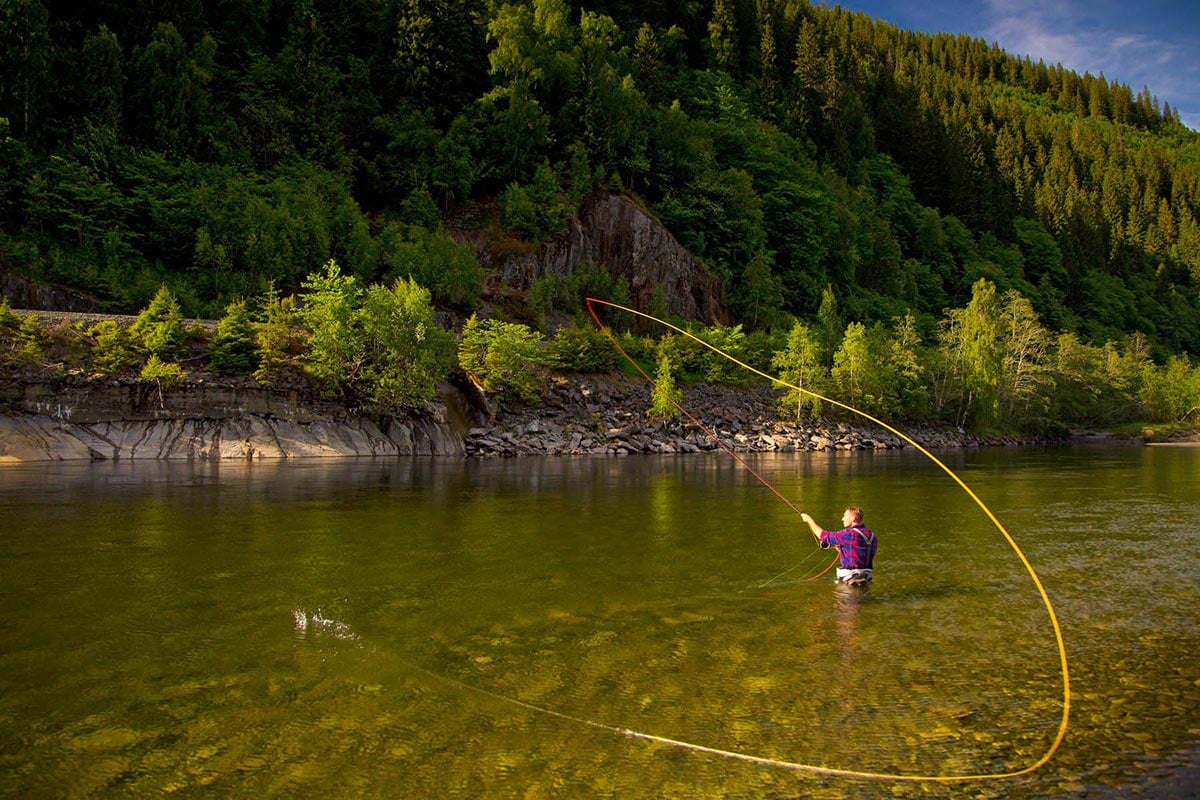
NFC is an established Atlantic salmon lodge with access to over 14 km of private, fly-only water on both banks of the Gaula. From classic holding pools like the Home Pool to dynamic runs such as Langøy, the river’s mix of depth, flow, and shifting gravel banks rewards anglers who can read the water and handle a Spey rod with confidence.
Beat Rotation and Guided Fishing on the Gaula
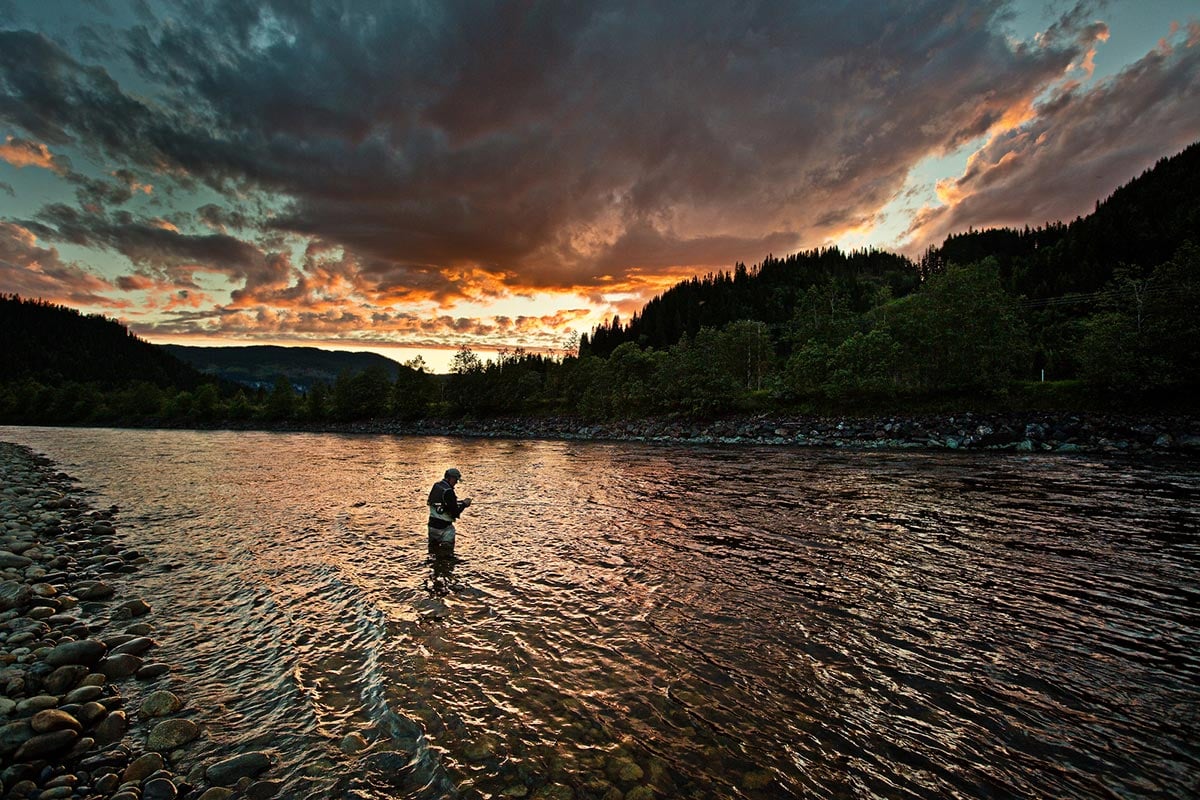
Fishing operates 24 hours a day on a rotation of four six-hour sessions—morning, afternoon, evening, and night—with two anglers per beat. This keeps angling pressure low and access fair across water that fishes in every level, from early-season high flows to slacker water in late-summer.
With a variety of pools suited to different river levels, every session offers something unique. The benefits both visiting anglers and repeat guests looking for a fair approach to salmon fishing on a premium river.
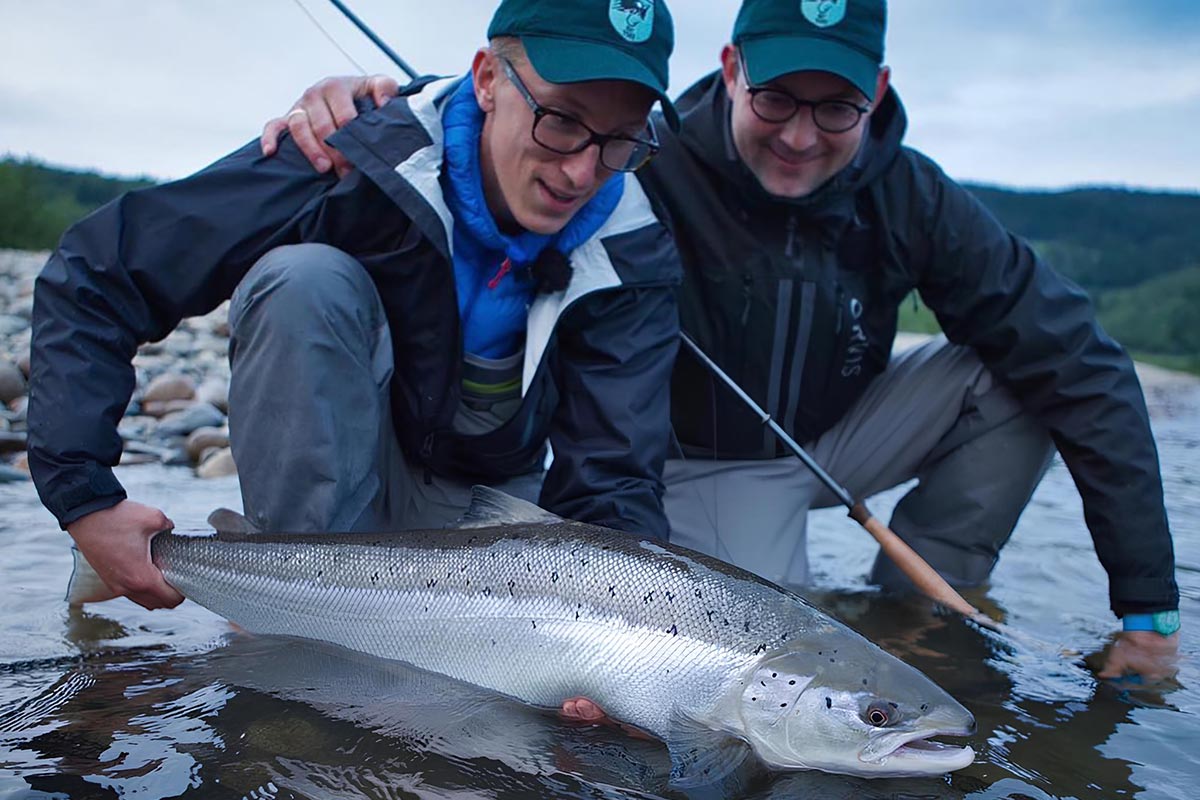
Fishing guides are available by the day or week. They’ll help with pool approach, line and sink-rate selection, leader taper, fly choice, and safe wading—critical on a big, changing river like the Gaula.
Best Summer Months to Fish the Gaula River
The Gaula salmon season runs from June 1 to August 31, with conditions that evolve as summer progresses. Early June typically brings cold, powerful flows—prime time for big fish and heavy tackle such as 14–16 ft double-handers, sink lines, and large weighted tubes.
By mid-season, river levels typically stabilize and have good water clarity. Intermediate or float/sink lines paired with 12–14 ft rods allow for more precise presentations combined with the use of smaller flies.
Later in August, when water runs low and clear, salmon hold in oxygenated necks or tailouts. Floating lines, lighter switch rods, and a willingness to mix tactics—including hitched or surface flies—can draw takes from otherwise cautious fish.
Consistent Salmon Fishing at all Water Levels
The Gaulfoss waterfall on the lower Gaula River often forms a temporary migration barrier for Atlantic salmon during high flows and colder water. As levels and temperatures stabilize, fish move above the falls, spreading through more of the river system. The Norwegian Flyfishers Club manages beats both below and above Gaulfoss—lower pools that fish best early in the season, and upper beats and pools that are productive even as the water drops and warms.
This combination of river structure and NFC’s managed beat rotation provides consistent Atlantic salmon fishing on the Gaula River throughout the season, regardless of changing water levels or temperature.
Gaula Heritage and Conservation Efforts
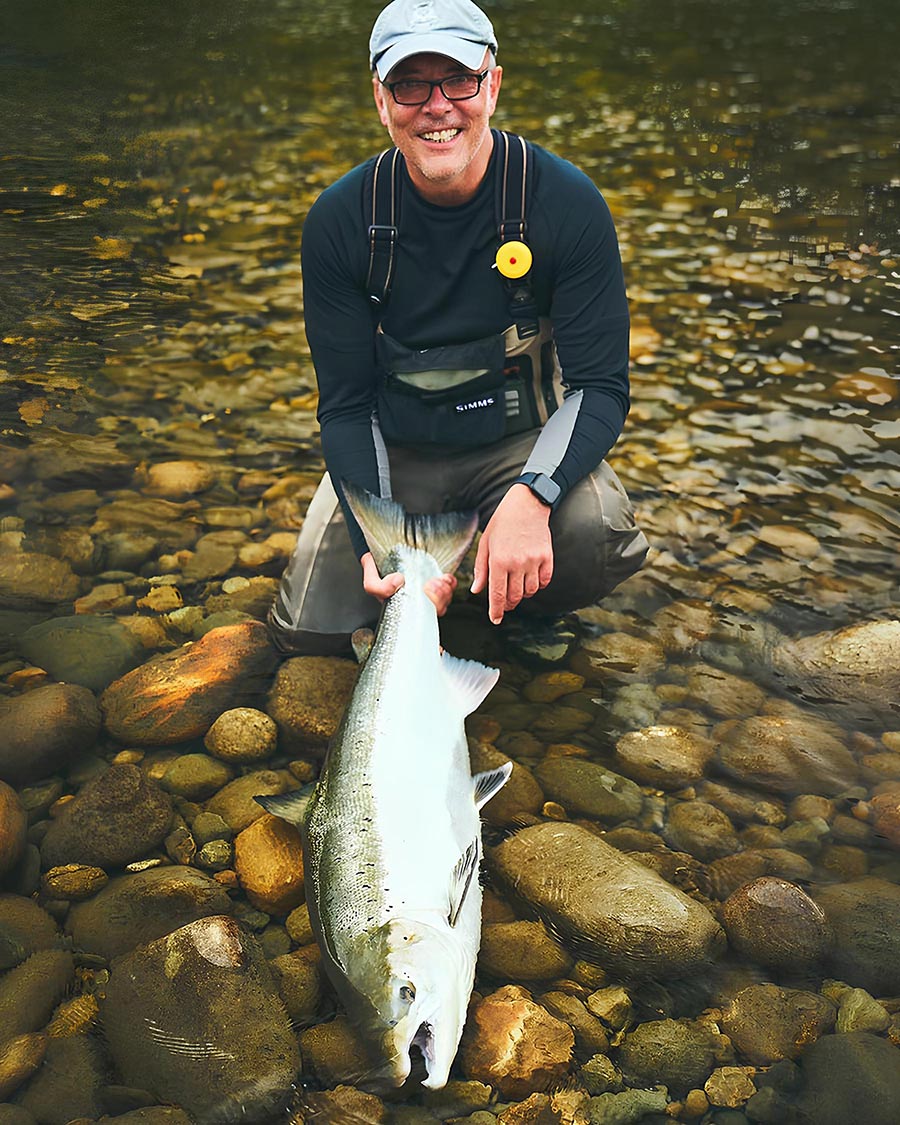
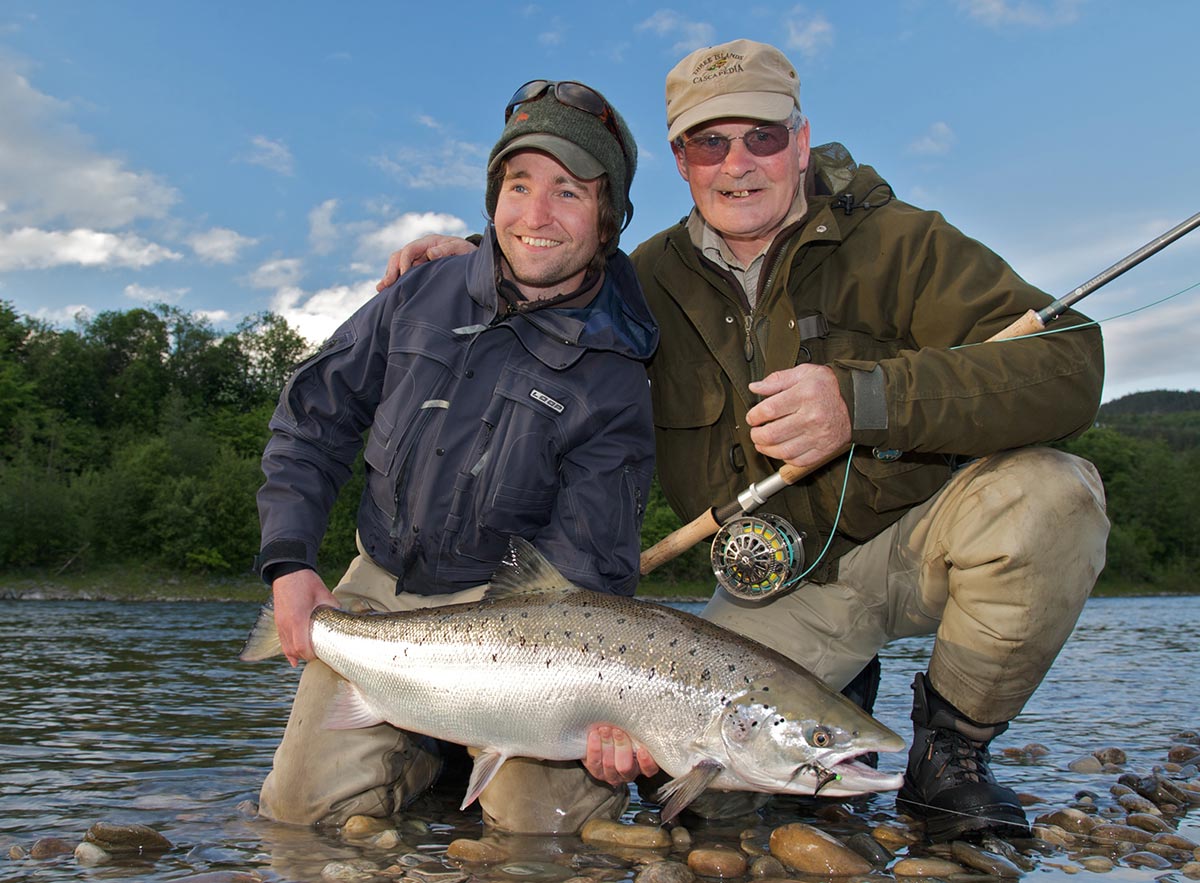
Founded over 30 years ago, NFC helped spearhead catch-and-release on the Gaula. Today more than 90% of salmon caught on NFC water are released. The club collaborates with major groups—including the North Atlantic Salmon Fund, Atlantic Salmon Federation, and Redd Villaksen—supporting science, education, and local stewardship so wild fish and the river community endure.
Central Lodge Access and River Connectivity
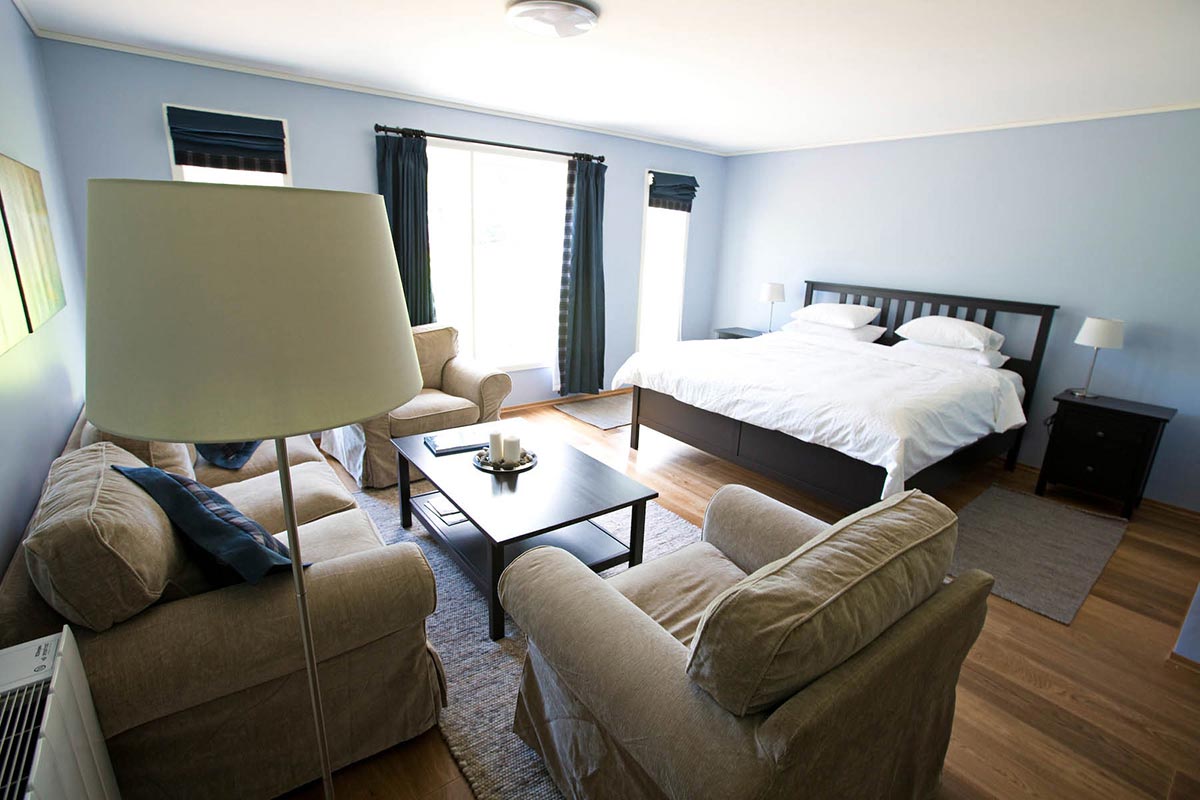
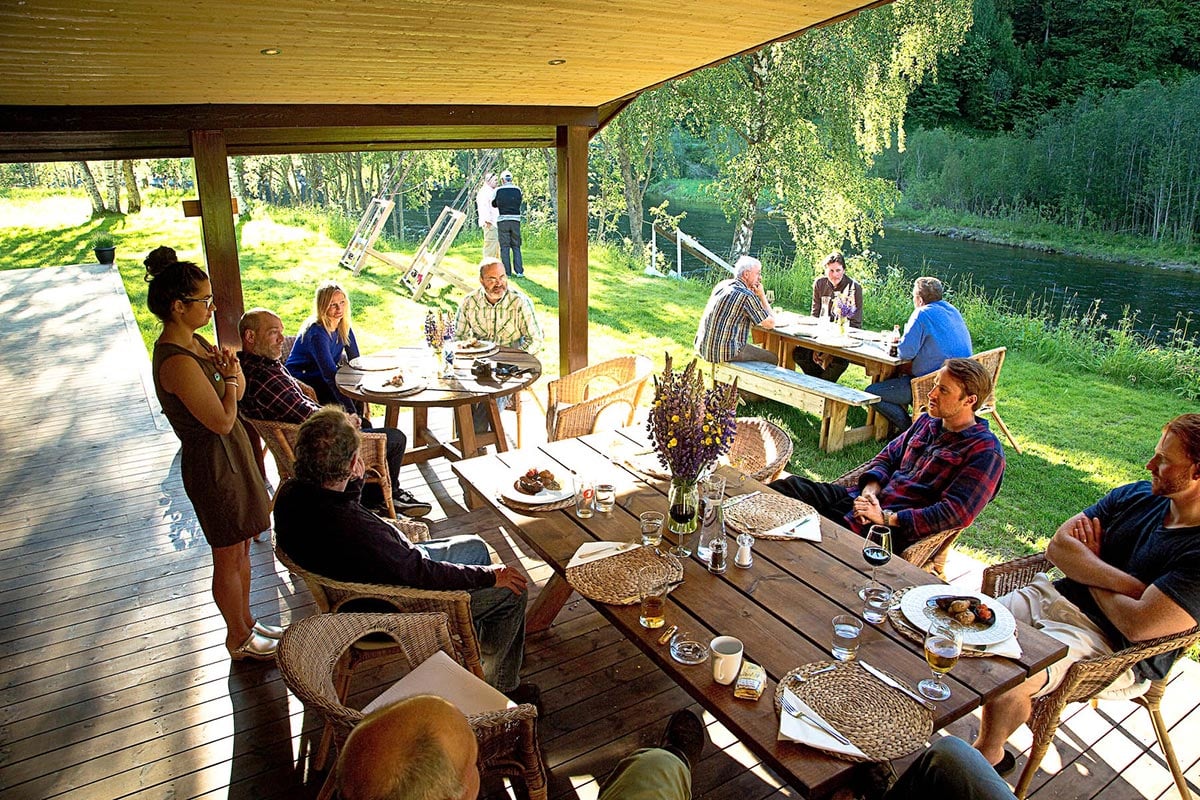
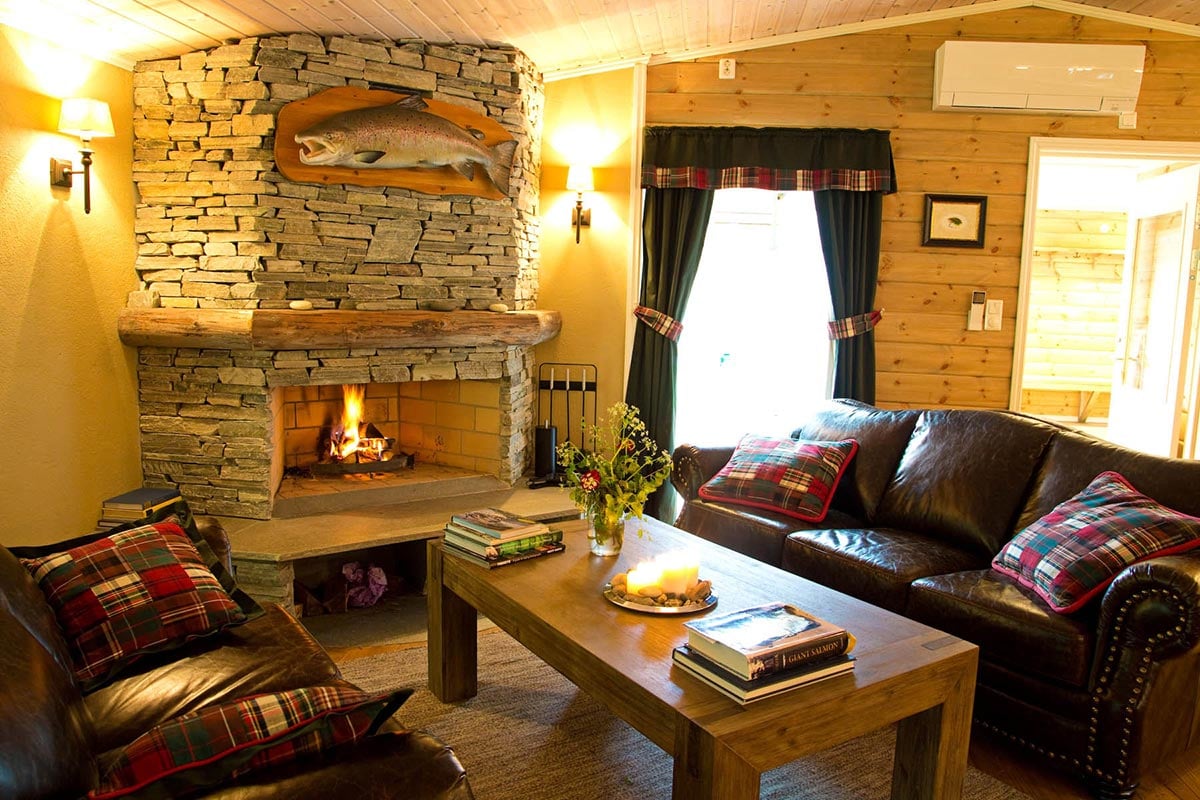
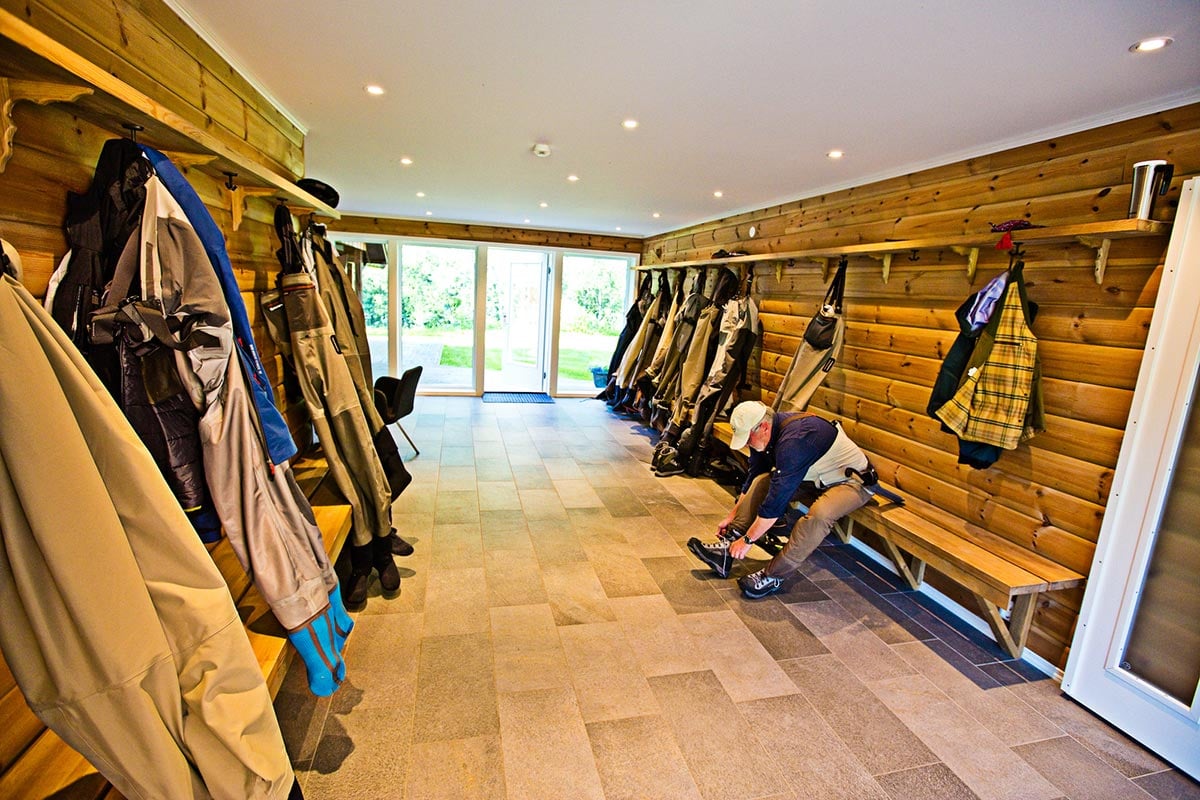
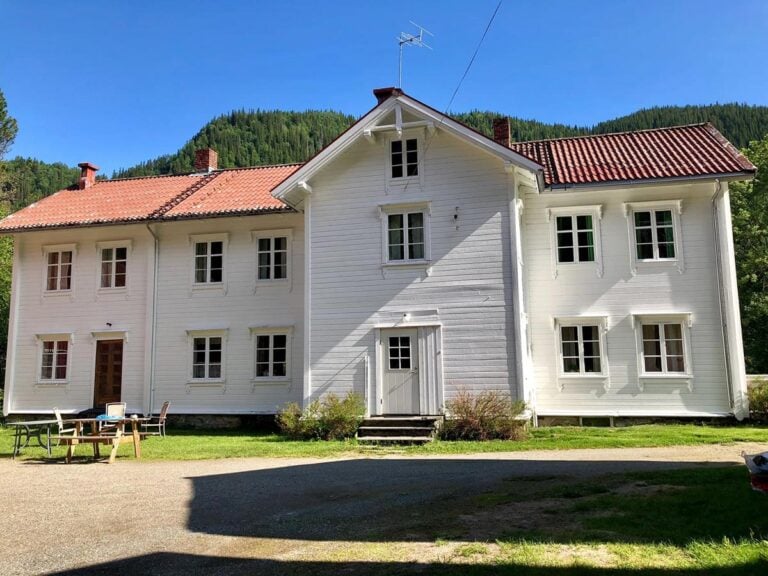
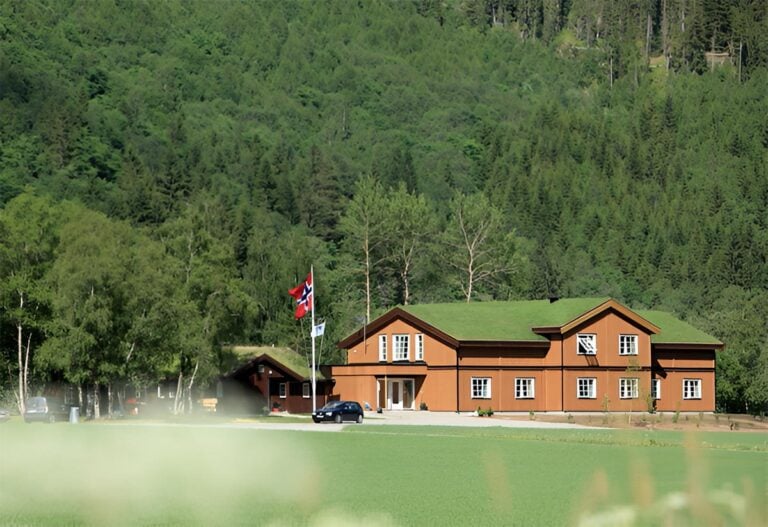
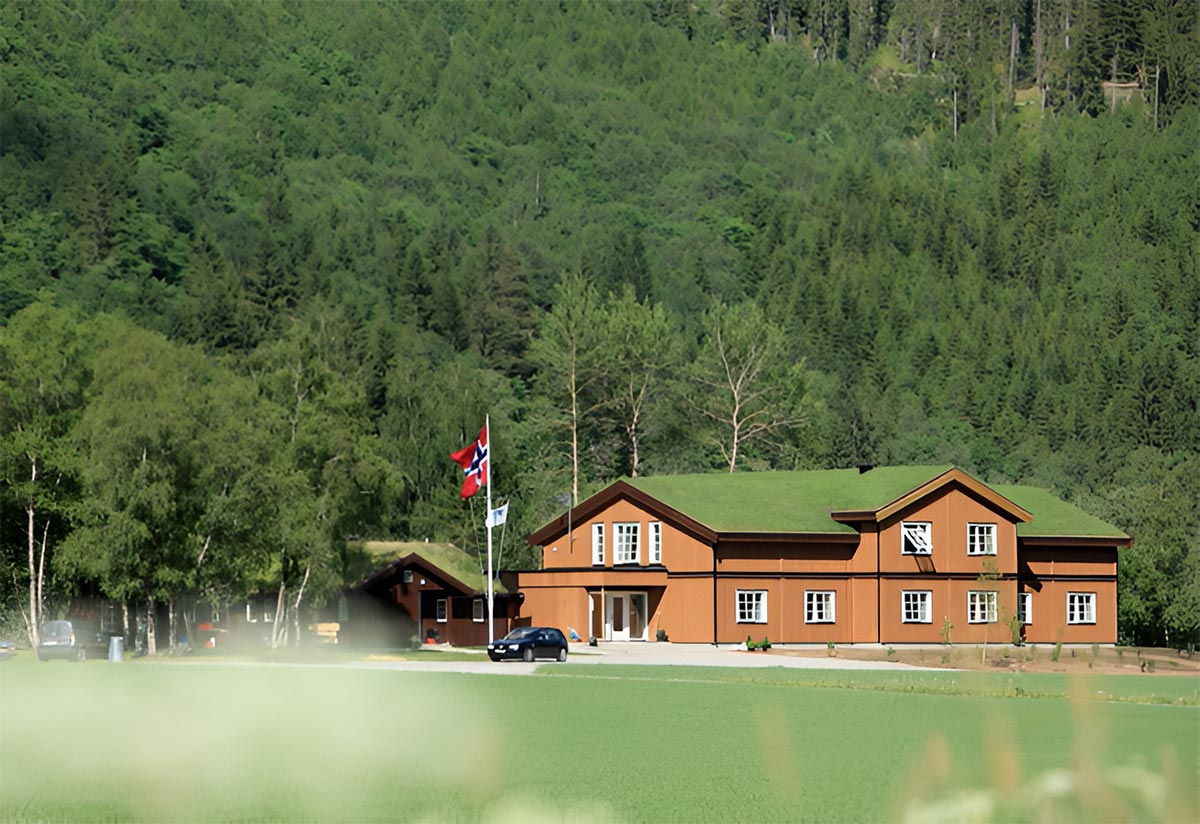
The Norwegian Flyfishers Club Lodge at Rogstadmoen, about an hour from Trondheim Airport, serves as the hub for guests fishing the Gaula River. Set within sight of the water, it combines comfort, easy logistics, and direct access to multiple beats. The lodge houses the fly shop, dining room, bar, and guide base, making daily transitions to and from the river seamless. Weekly programs begin with a Sunday evening welcome dinner and rotation briefing, after which anglers enjoy 24-hour access to NFC’s extensive salmon water.
From the quality of the Gaula River waters to the rhythm of the rotation, Norwegian Flyfishers Club delivers a focused, tradition-rich Atlantic salmon experience in the heart of Norway.
To learn more about the fishing and express an interest, message NFC.