
The Taimen Fly Fishing Experience in Mongolia
Set in one of the planet’s last truly wild landscapes, these taimen expeditions pair remote rivers with thirty years of guiding experience. The program spans two very different drainages with peak dates split by season. Fish Mongolia (June–August) targets a dramatic western canyon river in the Yenisei system while Mongolia River Outfitters (late August–October) focuses on a lower-elevation eastern river in the Amur system.
Both are fly-fishing-only, catch-and-release sanctuaries run in partnership with local communities, and both are expressly designed so you fish new water every day with no shuttles.
Taimen Fly Fishing in Mongolia’s Remote Rivers
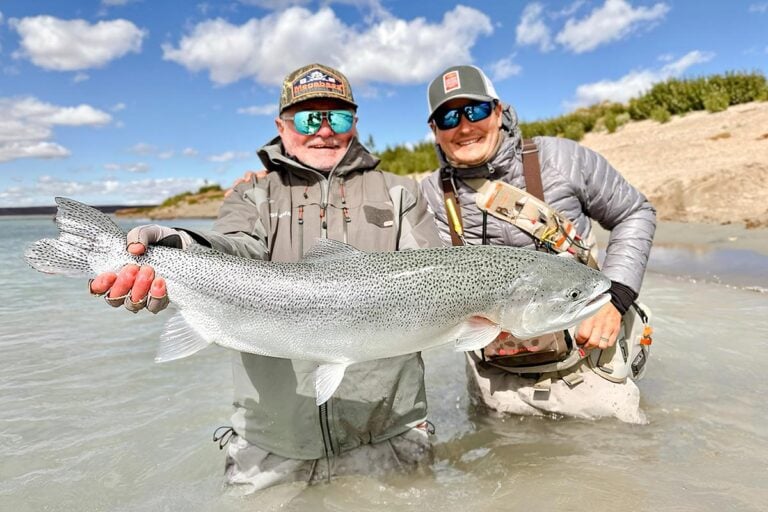
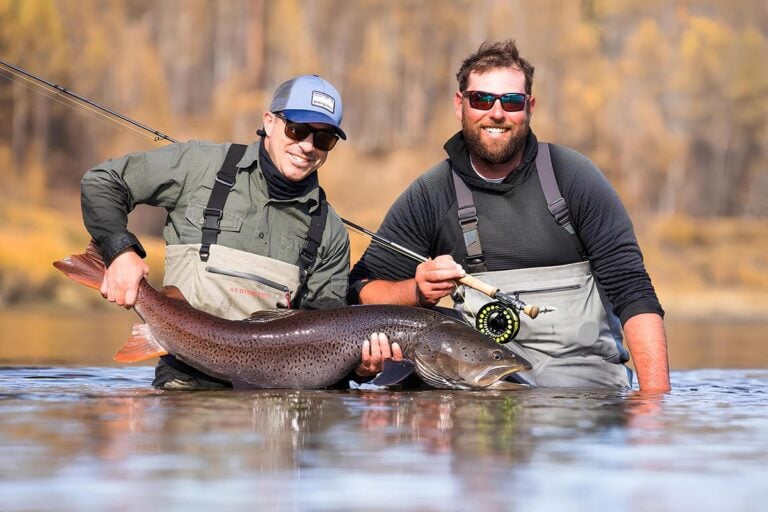
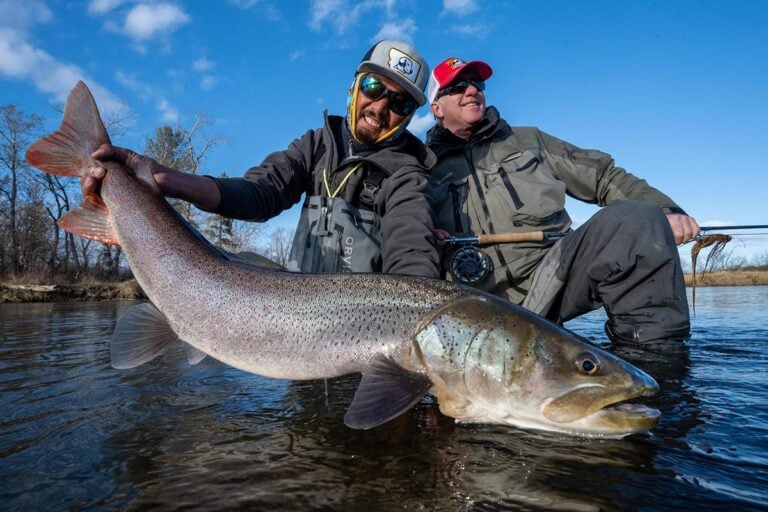
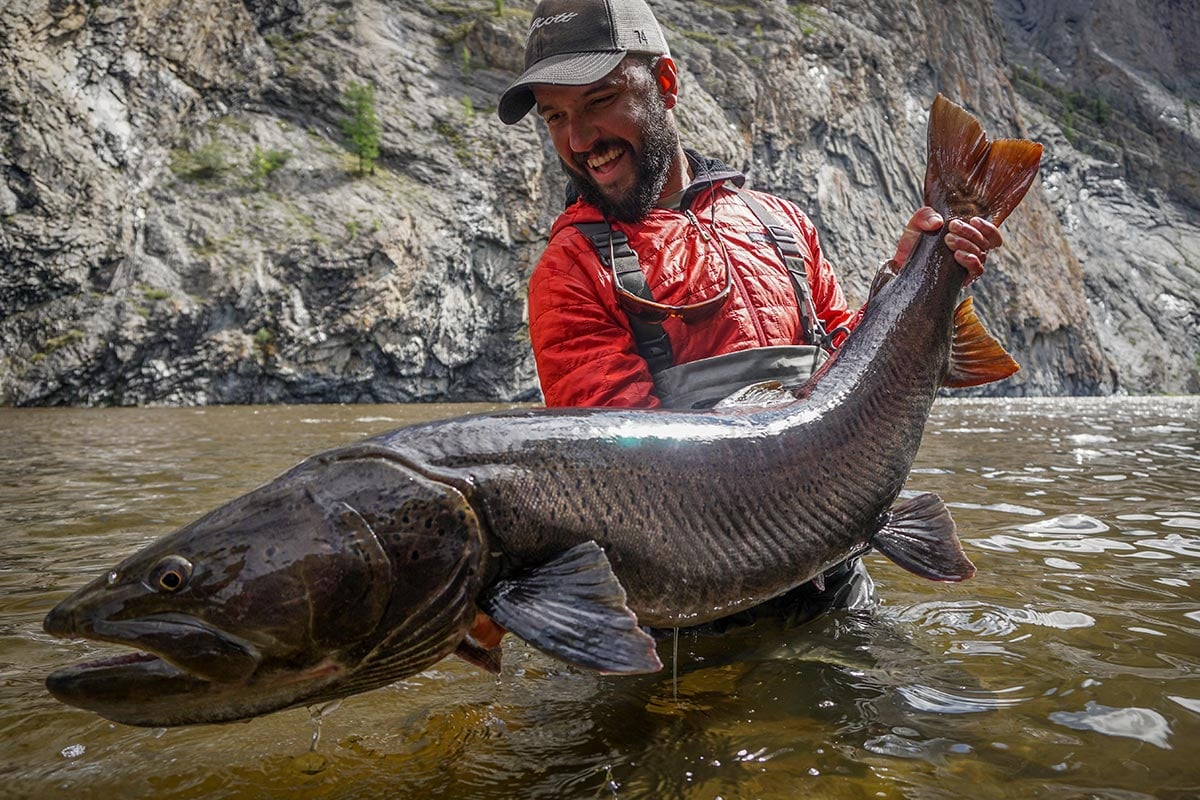
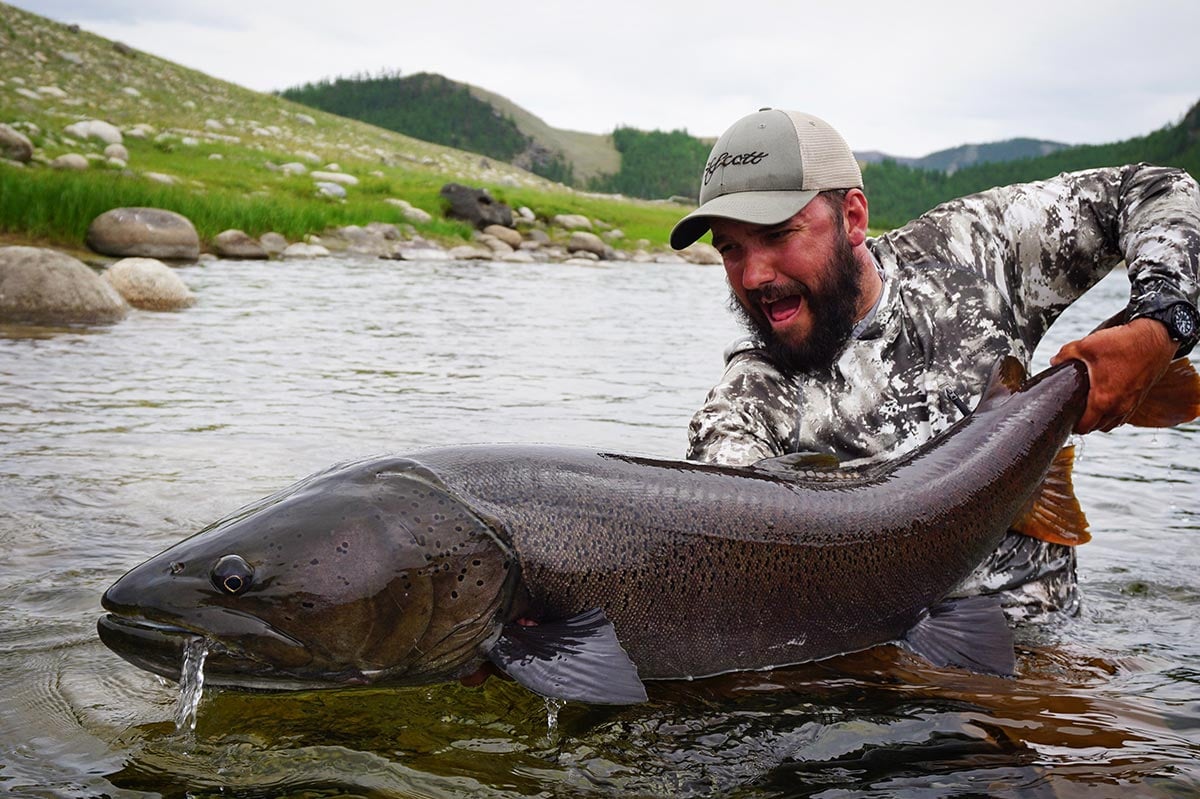
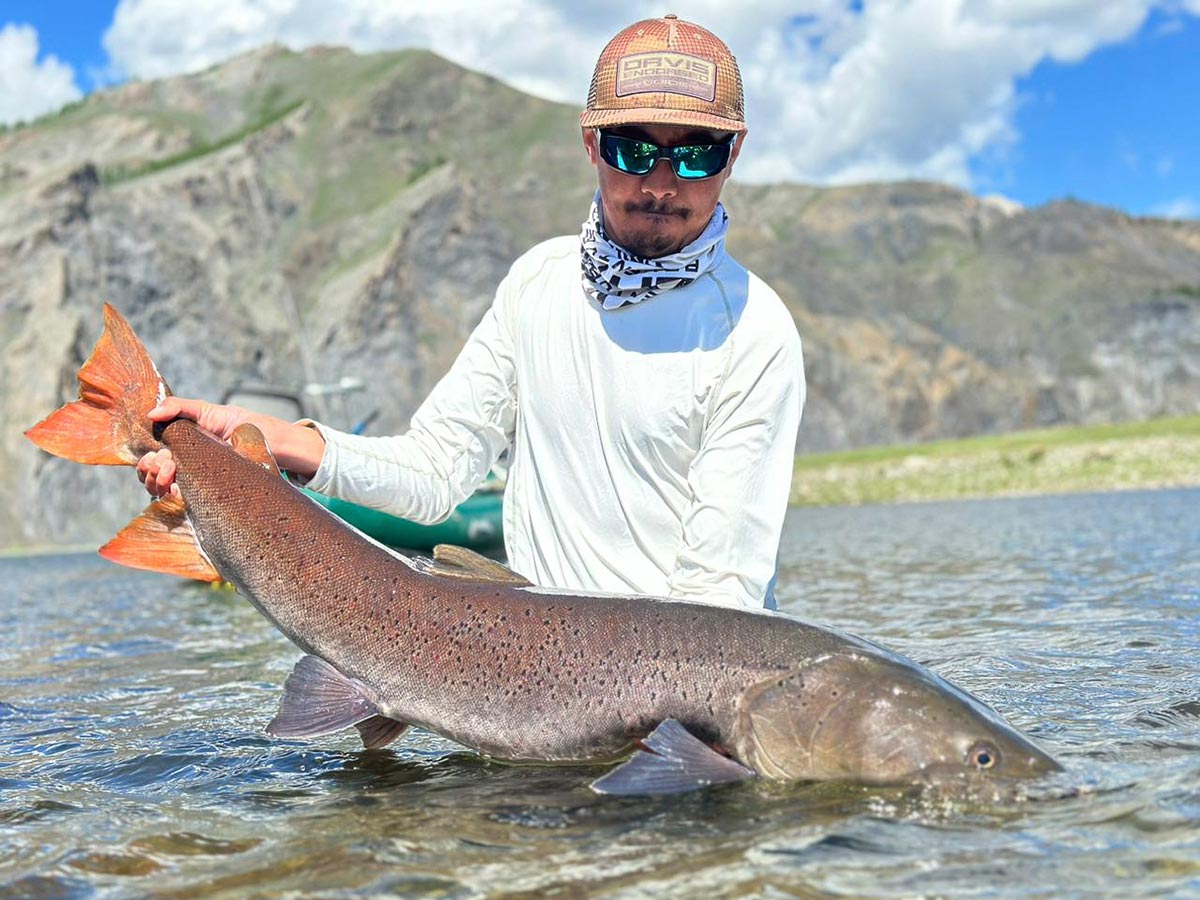
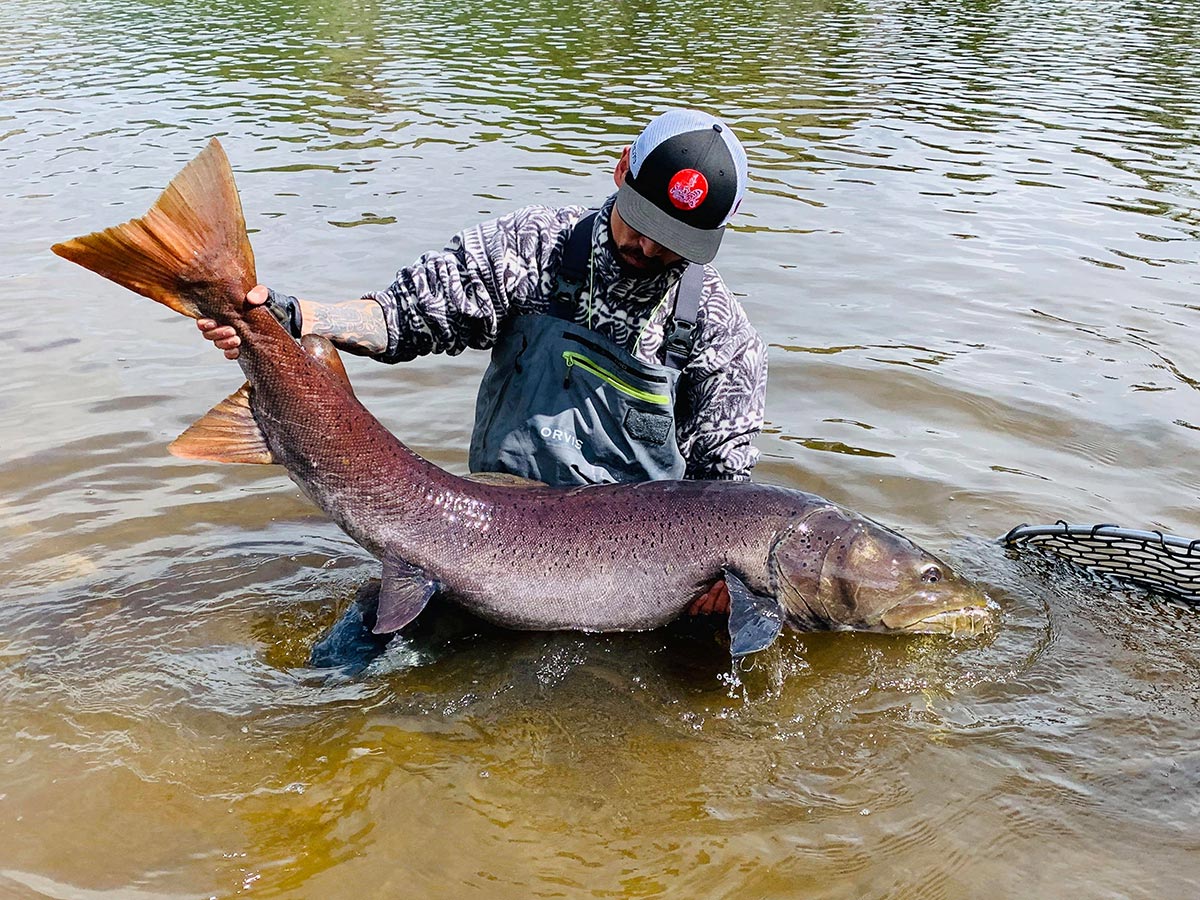
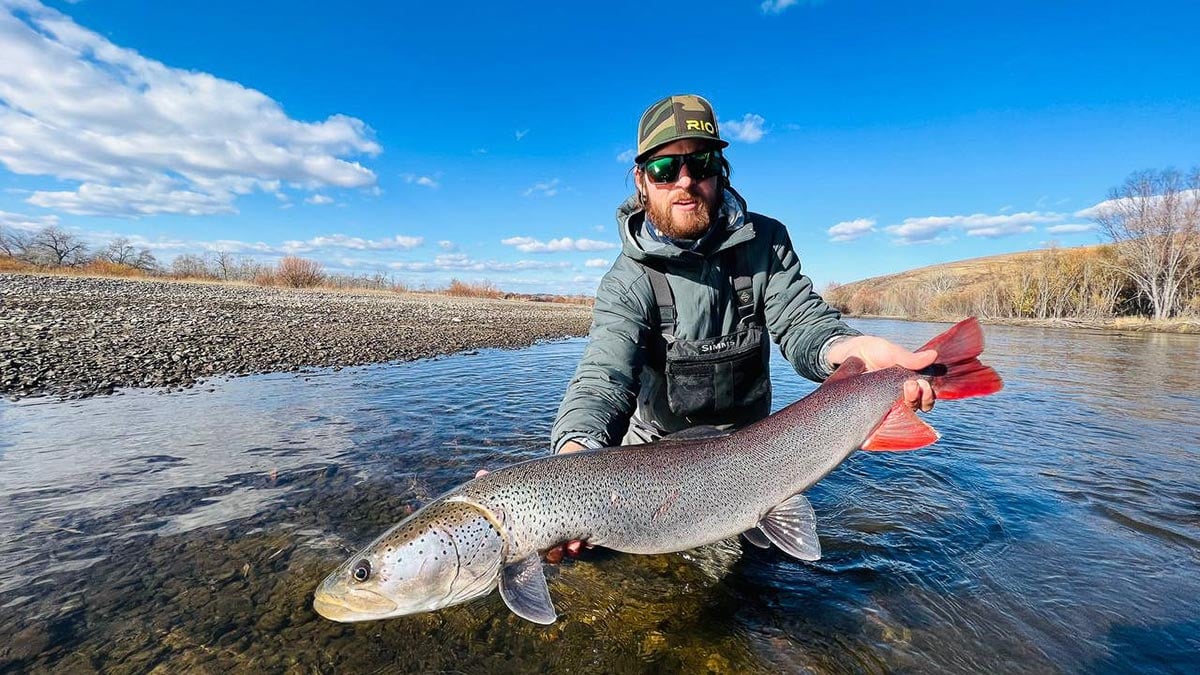
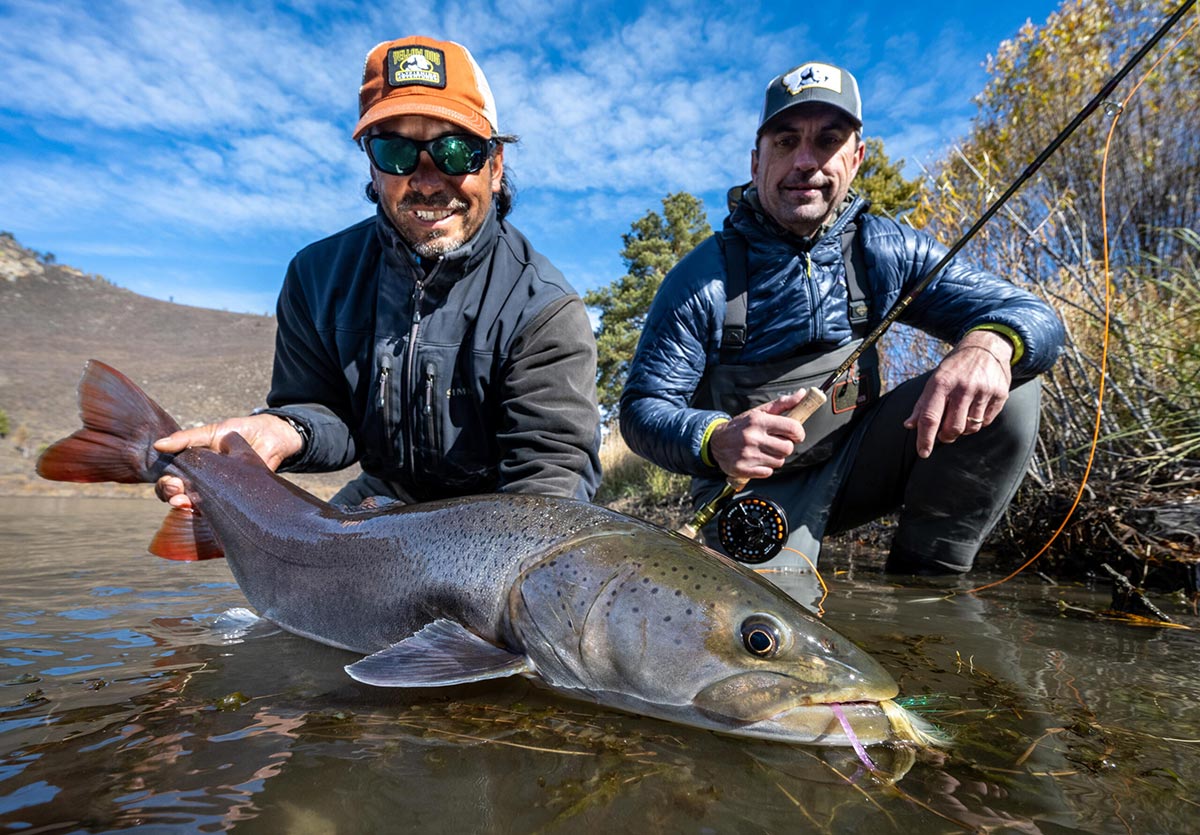
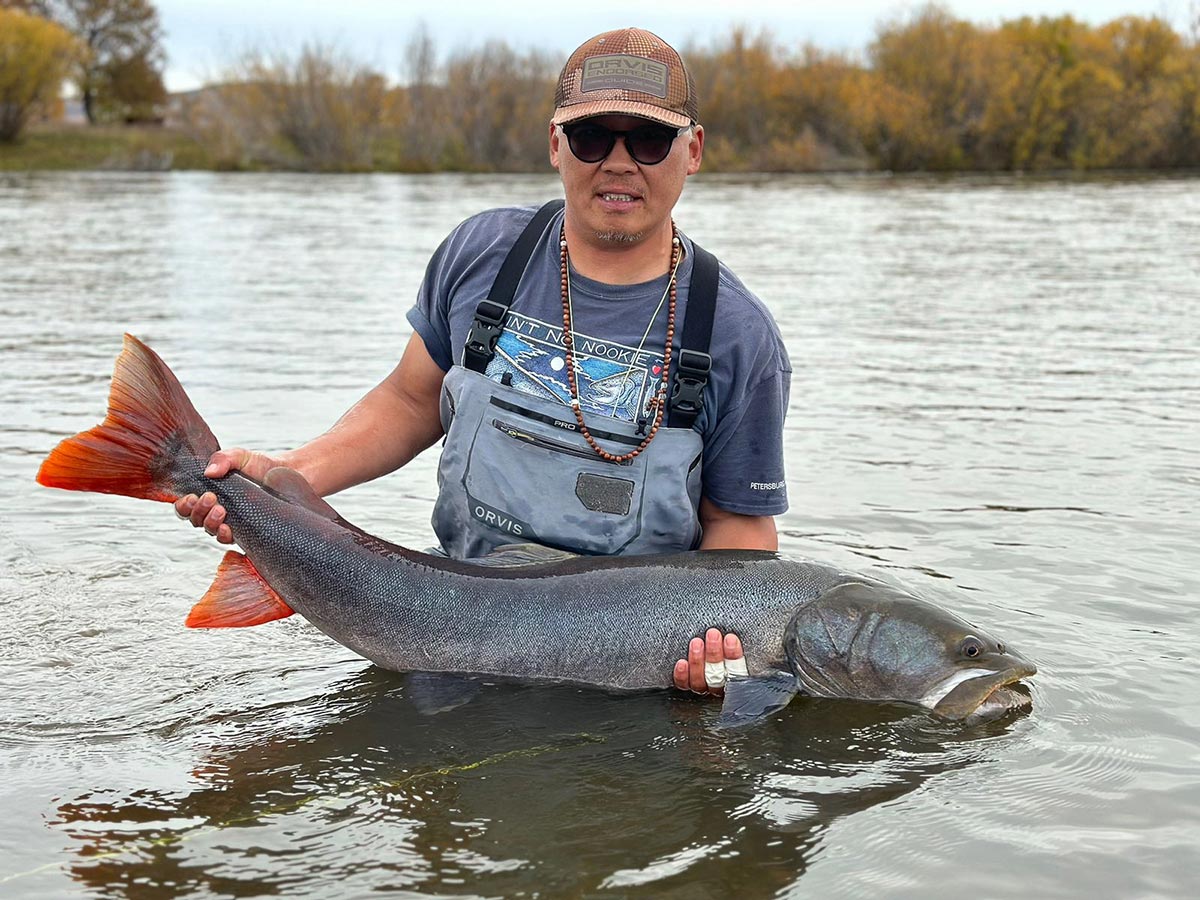
Taimen are apex salmonids—long-lived predators known for powerful surface takes and remarkable size. Most fish measure 25–40 inches, with chances at 50–60+ inch specimens for patient anglers when conditions align. Large topwater patterns or mouse flies often draw explosive rises, while big streamers fished on the swing remain reliable throughout the season. Every encounter is visual, rewarding sharp reflexes and steady focus more than technical precision.
Fish Mongolia and MRO – Two Rivers, Two Seasons
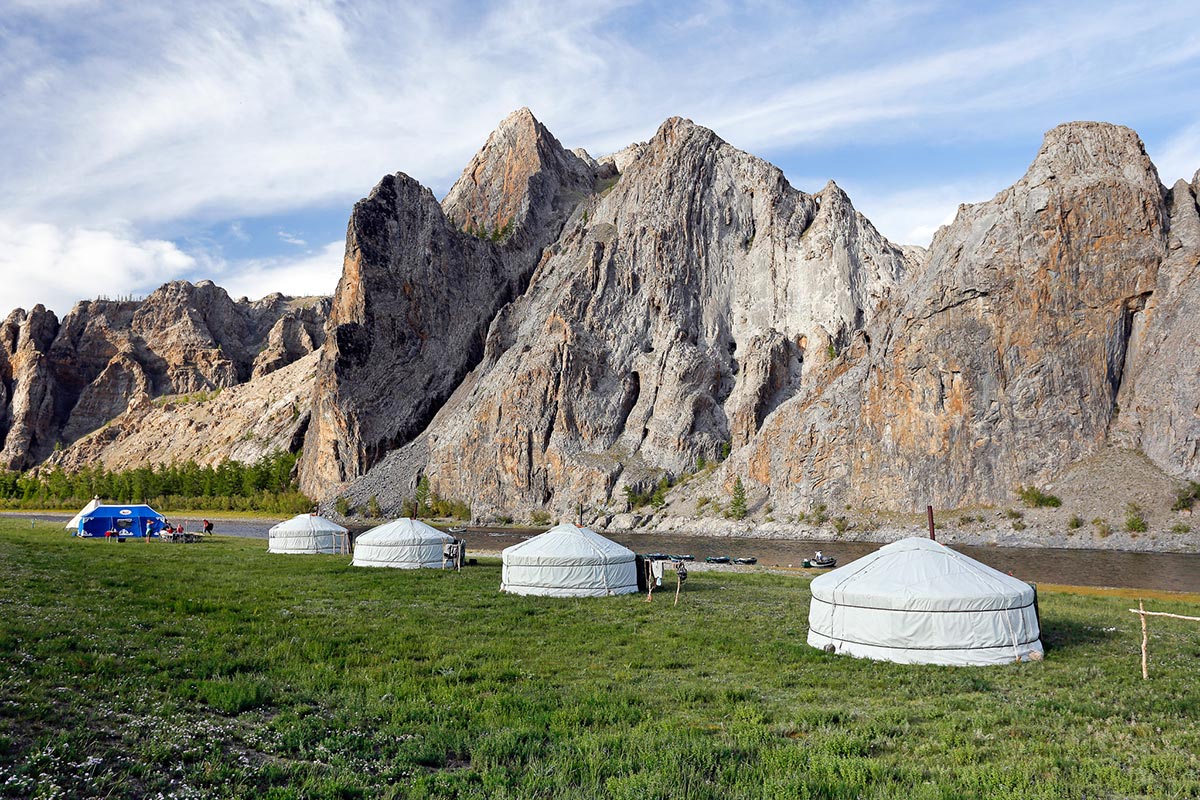
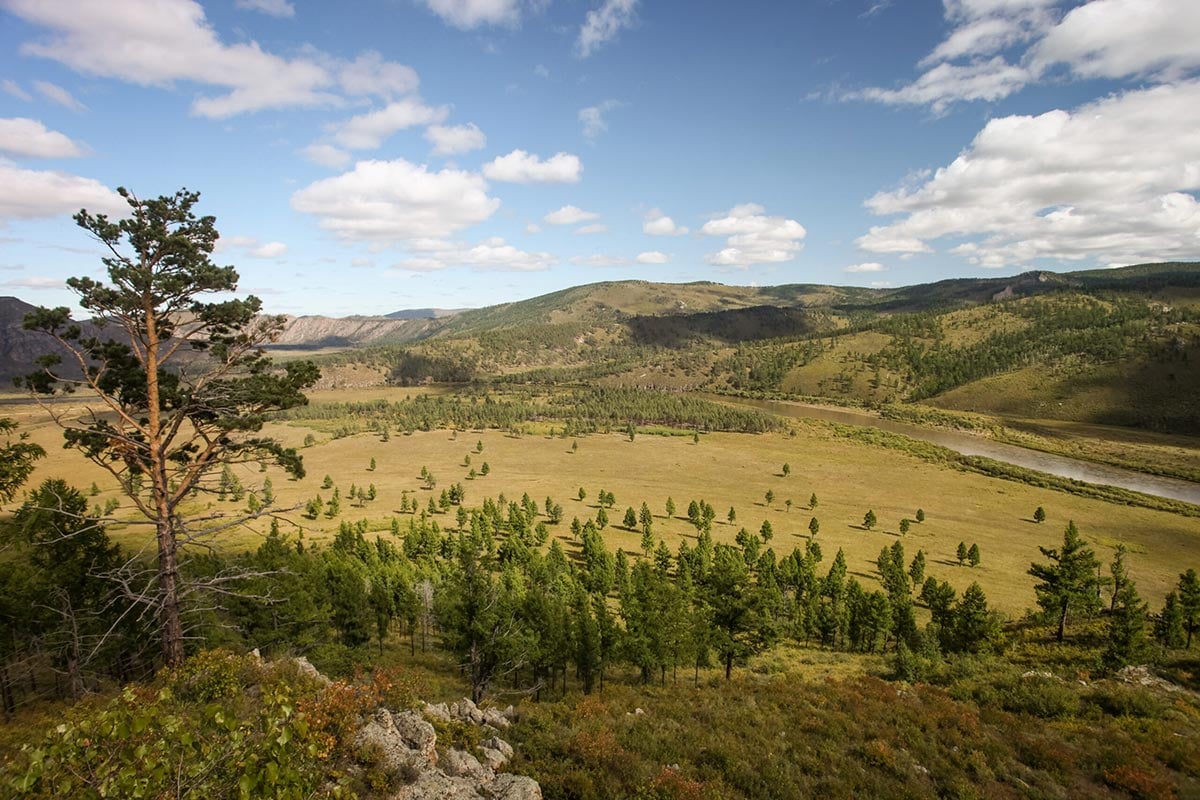
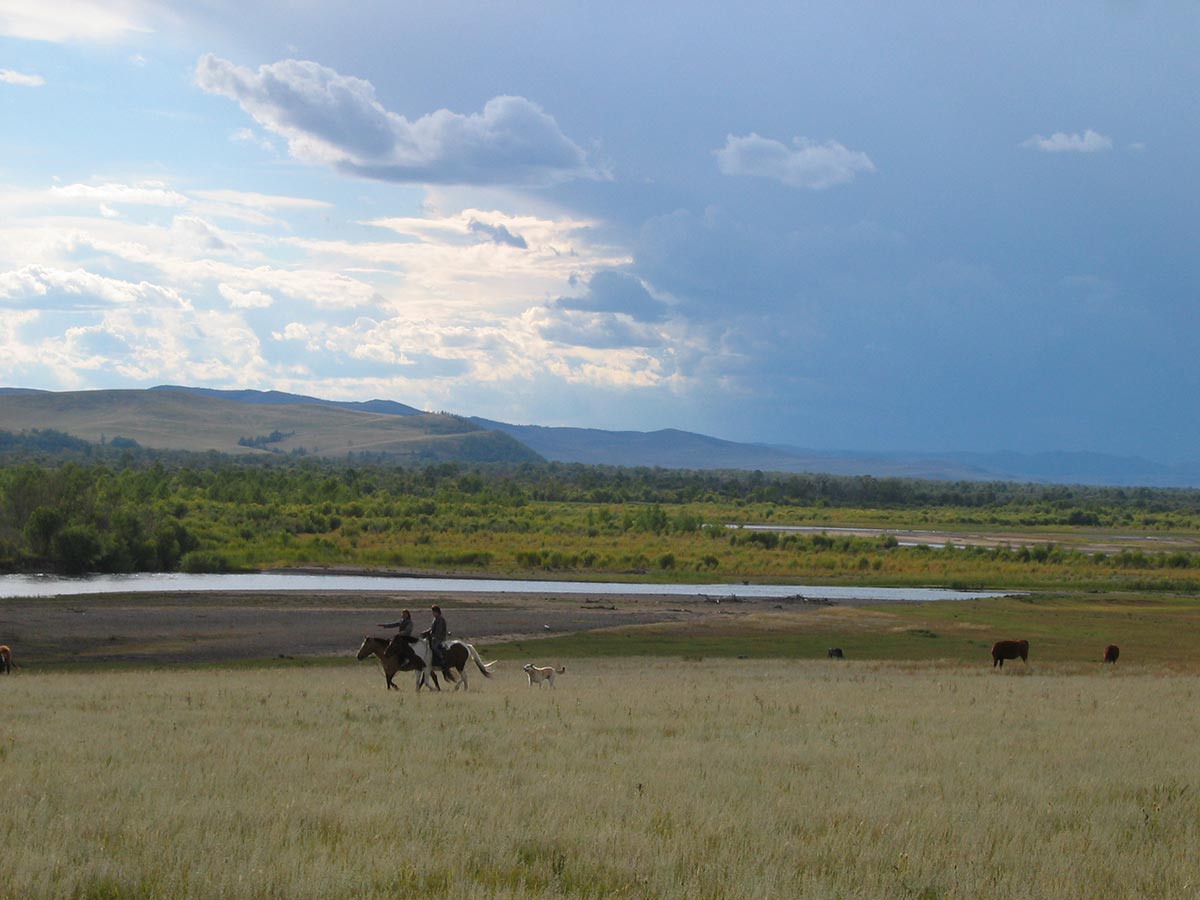
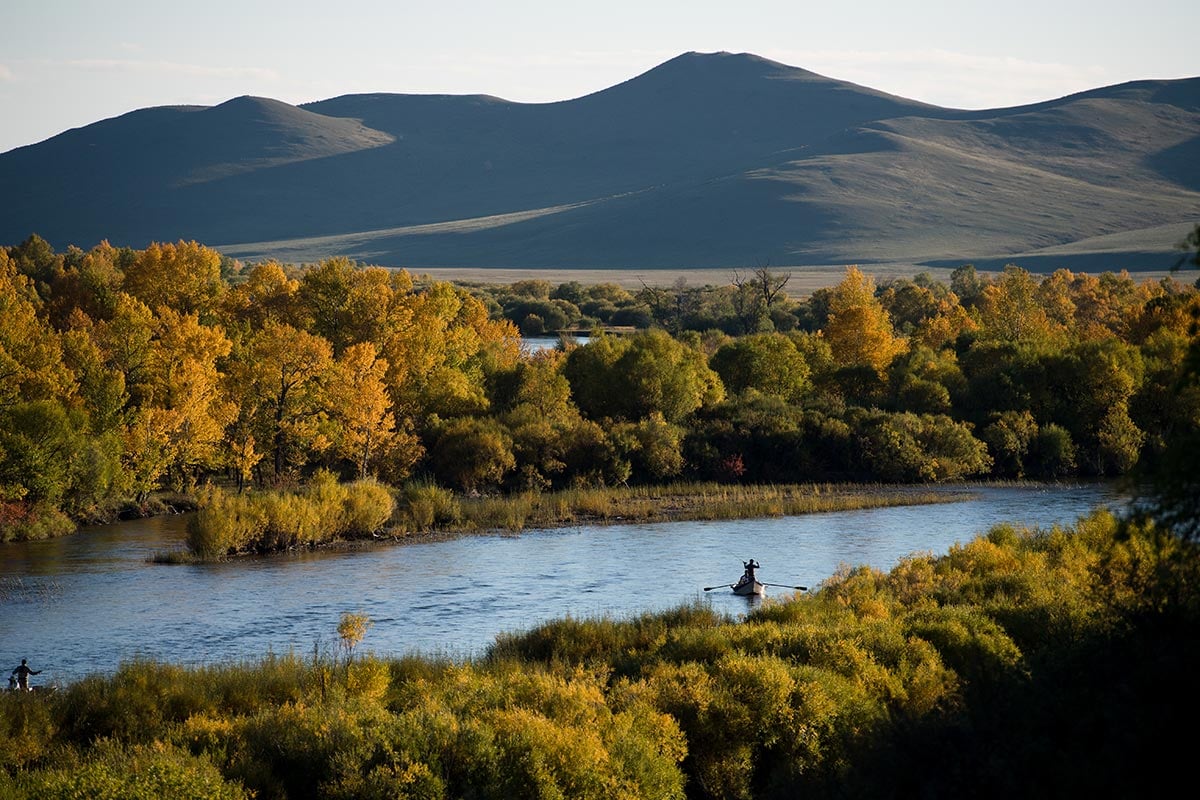
The western Fish Mongolia program (June–August) explores a high-country tributary of the Yenisei system, a clear freestone river flowing through canyons, forested valleys, and wadeable meadow reaches ideal for sight fishing. By late August, attention shifts east to the Mongolia River Outfitters season on the Amur drainage—a broader, more pastoral river with sweeping bends, tall cliffs, and long glides that hold large taimen.
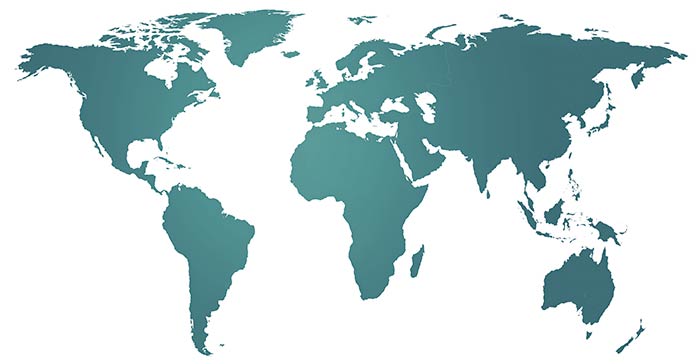
Operating on two rivers roughly 800 kilometers apart allows the team to follow the best weather and water levels from early summer through fall, keeping anglers on productive water across Mongolia’s full taimen season.
Boats, Beats, and Daily Rhythm
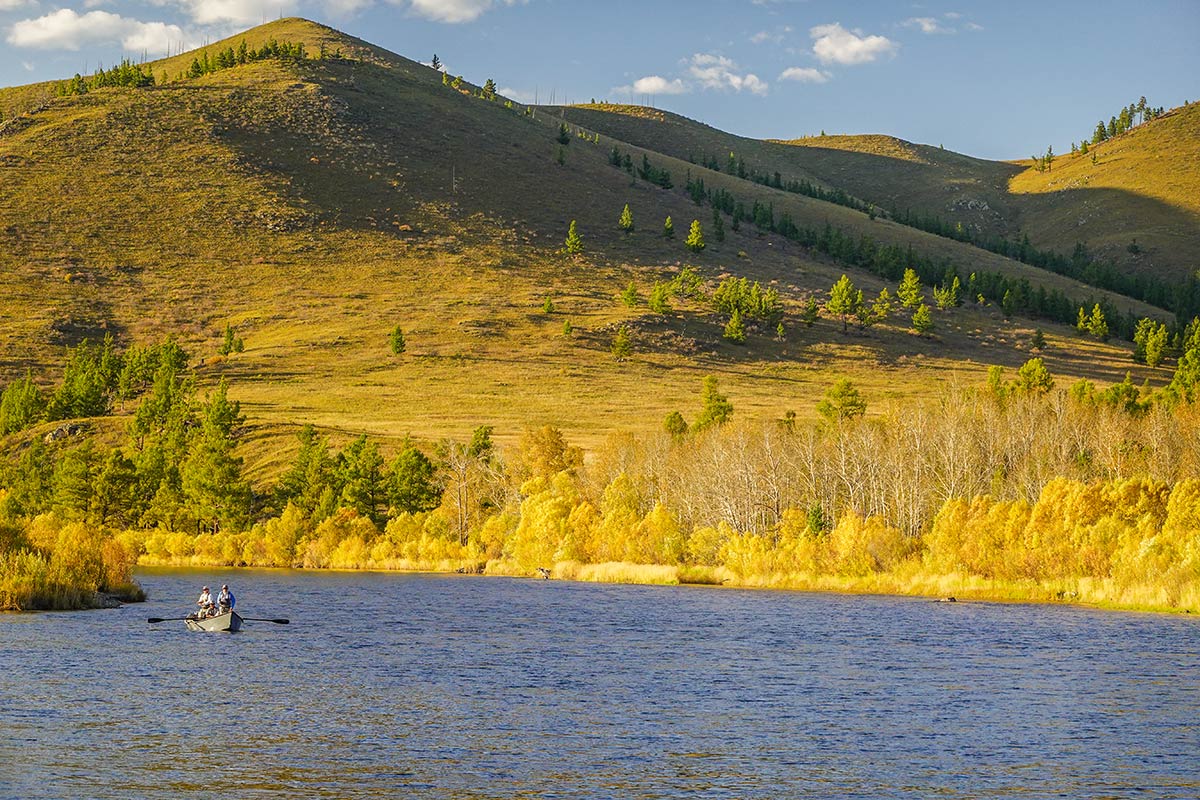
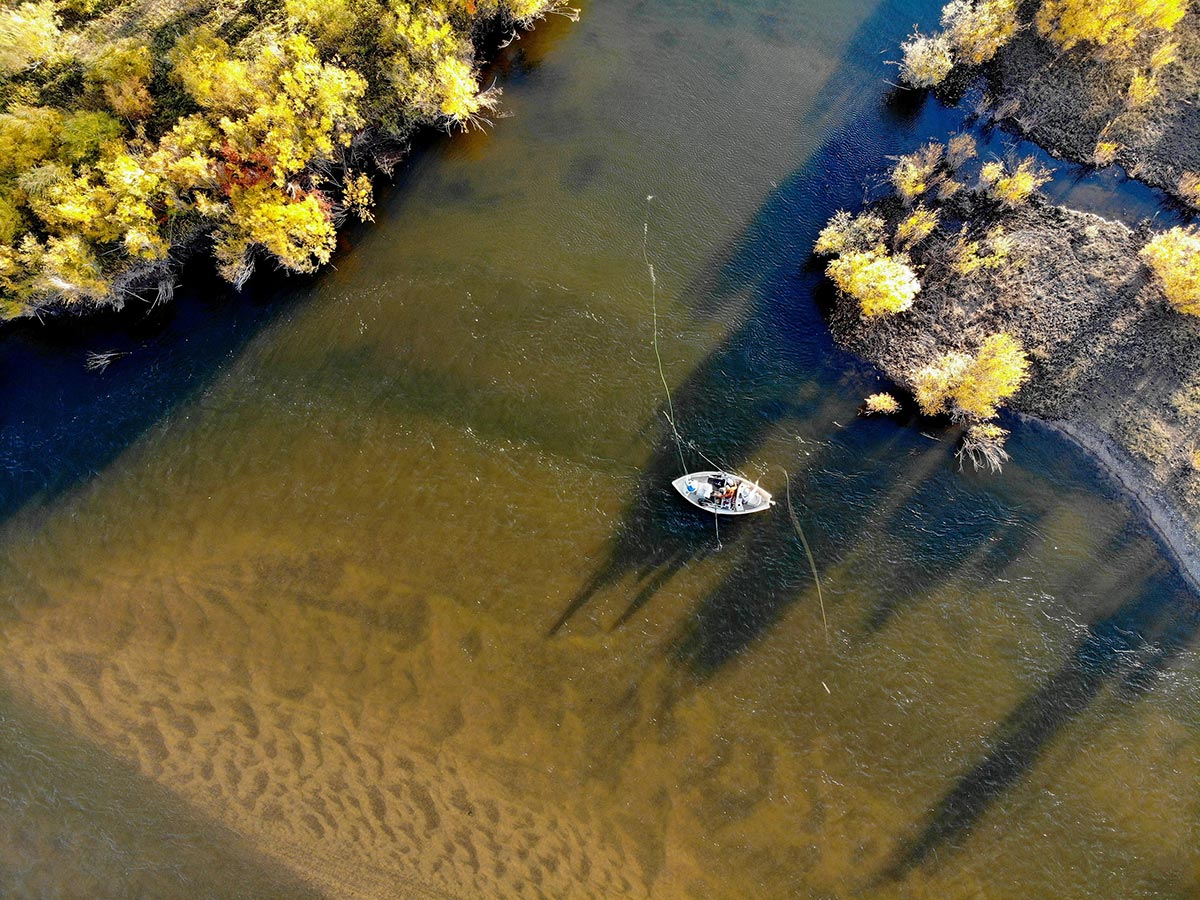
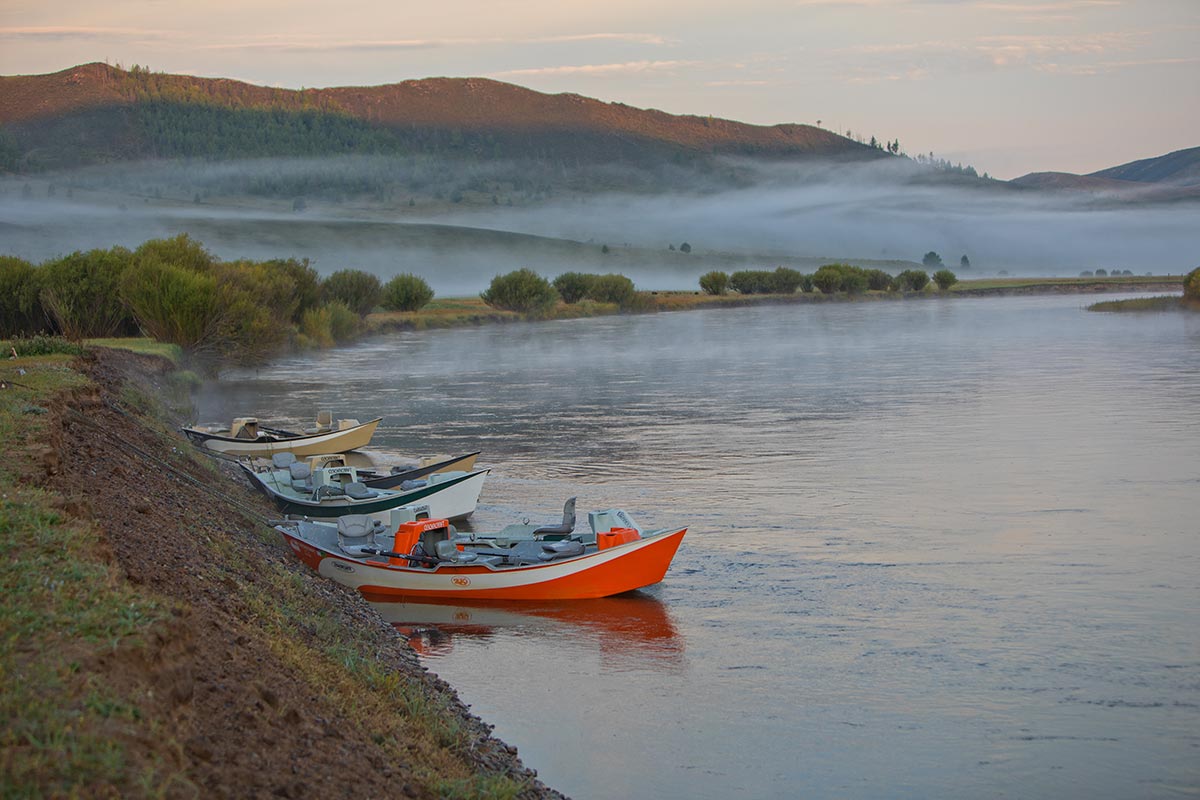
You travel quietly in purpose-built drift boats—NRS inflatables in the west and ClackaCraft drift boats in the east. The inflatable NRS boats are ideal for shallower, rockier canyons, while the hard-hull ClackaCrafts track smoothly through the broader lower river. Each carries two anglers and a guide, with all travel strictly non-motorized to protect the Taimen Sanctuary.
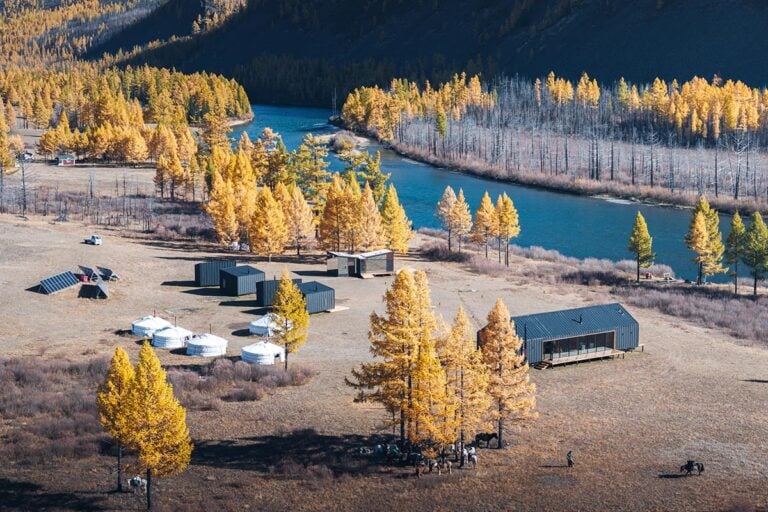
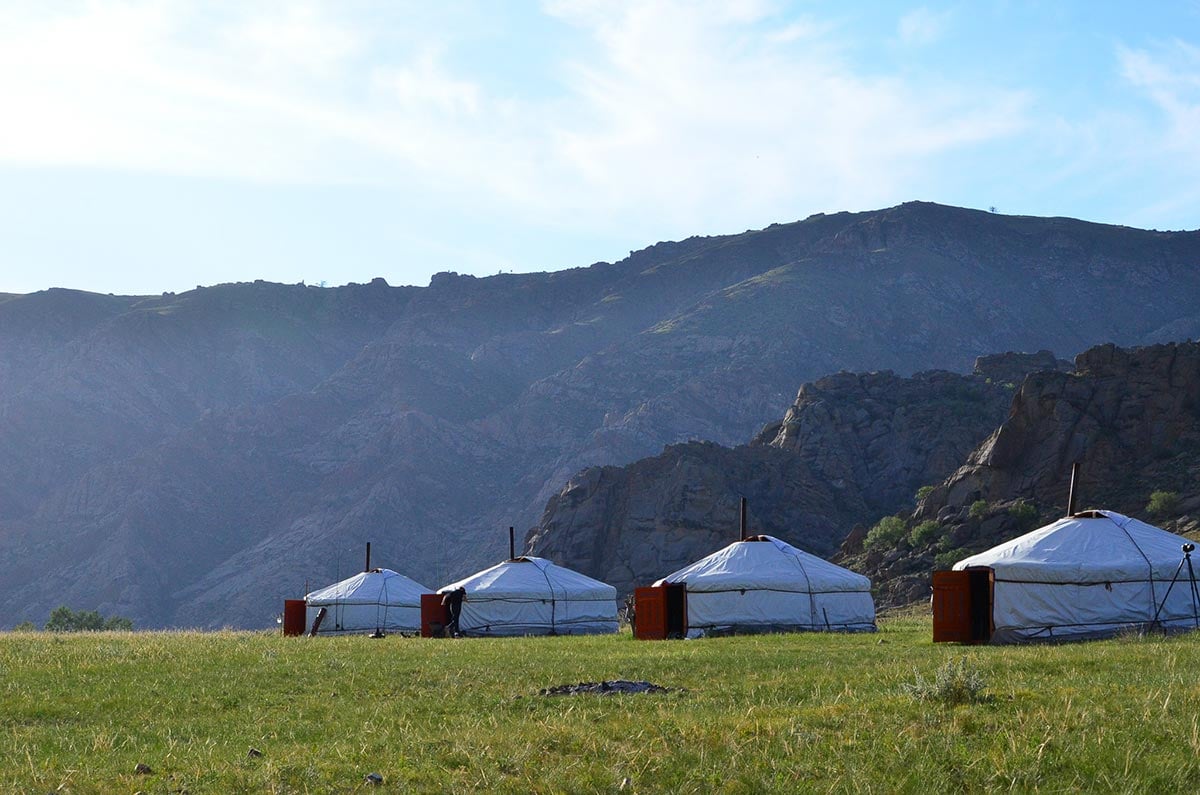
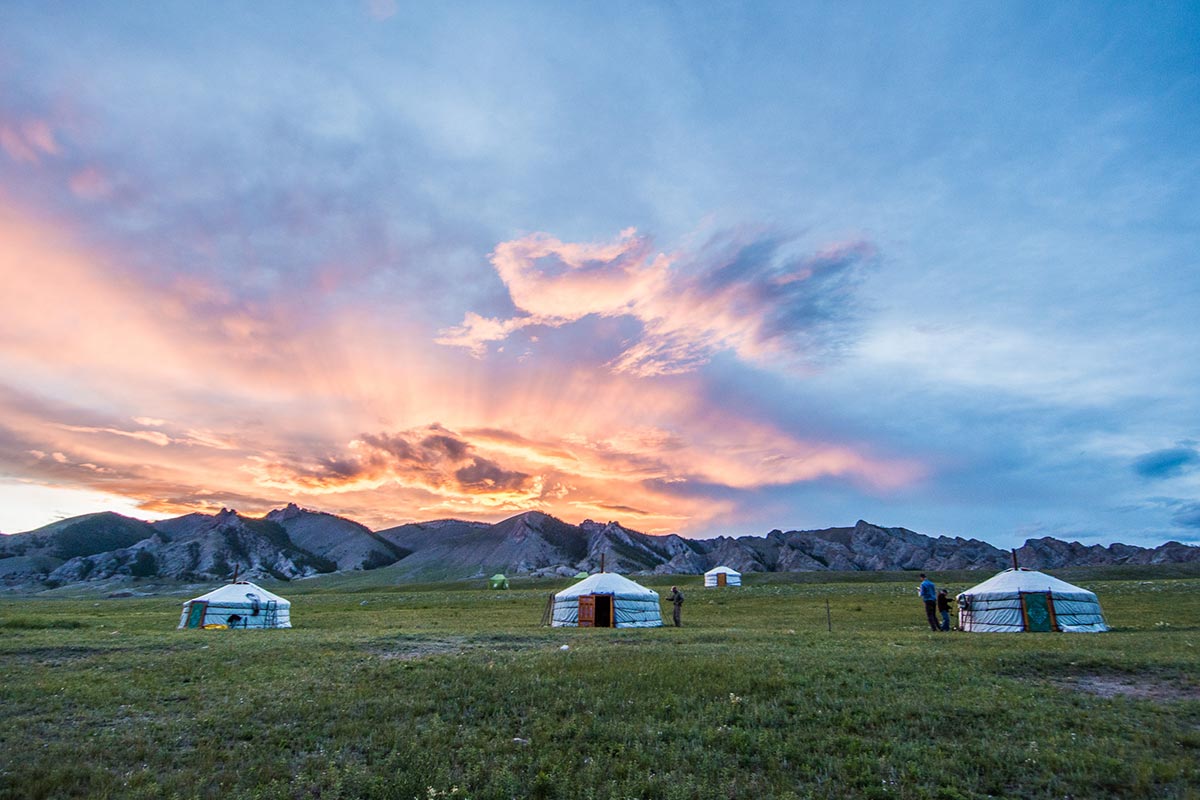
The logistics are dialed: float a new section each day, lunch streamside, and pull into a set-up camp by evening—no daily back-shuttles. It’s efficient, quiet, and maximizes time on productive water.
Flies, Tackle, and Tactics for Big Fish
Fishing here is almost entirely with single-handed 8–9 weight rods matched to floating lines—ideal for casting large flies tight to the bank or working across deeper channels. Double-handed rods are occasionally useful for swinging broad pools, though most anglers favor the control of single-hand setups.
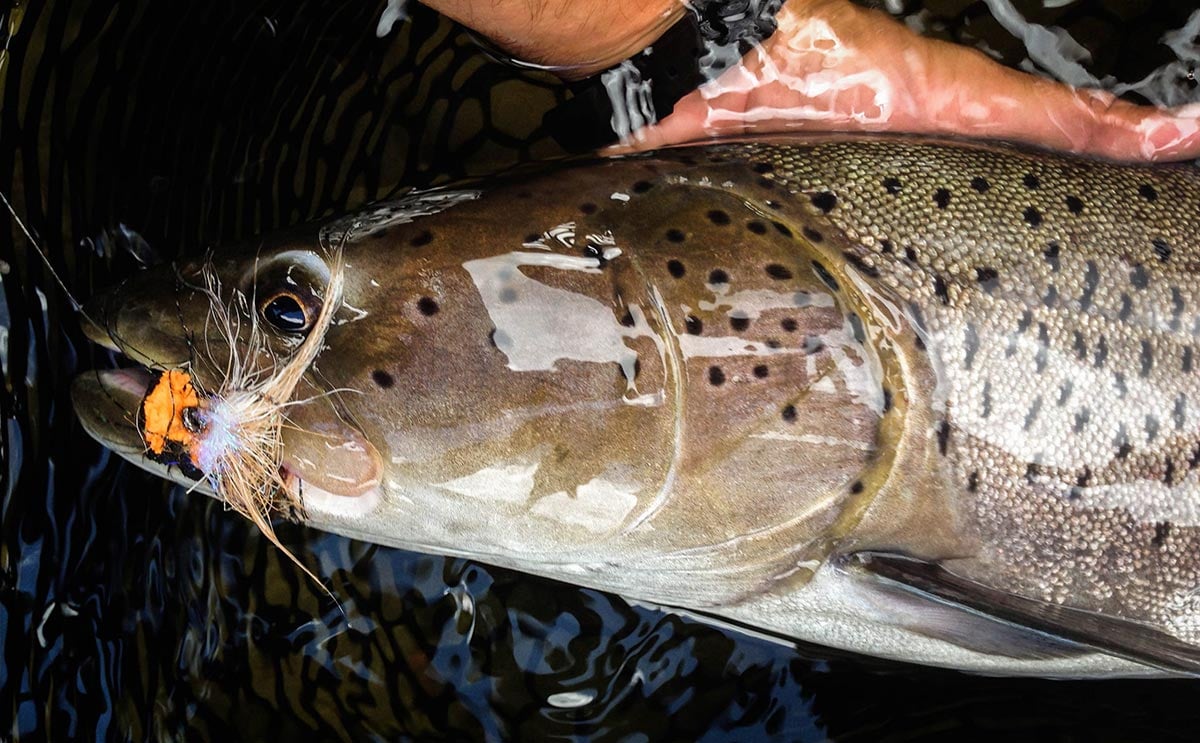
Surface takes are a hallmark of the fishery, with taimen often following or striking a fly several times before committing. Mouse and gurgler patterns provoke some of the most dramatic surface reactions, while heavy streamers fished on sink-tips reach fish resting in deeper runs or under cutbanks.
For lenok and grayling, lighter 4–6 weight rods and floating lines provide a change of pace and consistent action between taimen encounters. Guides rotate patterns and line types as light and water conditions evolve through the day, keeping anglers connected to the mood of the river.
Beyond Taimen: Lenok, Amur Trout, Grayling & Amur Pike
While taimen are the headline, these rivers also provide excellent fishing for lenok (Mongolian trout)—sleek, silvery fish marked by red lateral bands that rise eagerly to dry flies and small streamers in broken water. Most lenok range from 14–20 inches, with occasional fish over 20 inches landed each season
In contrast, the Amur trout, found only in the eastern drainage, are heavier-bodied and more territorial, favoring deeper runs where they strike hard at streamers or surface flies. These impressive trout often exceed 25 inches, with some reaching 30.
Amur pike patrol quieter side channels and weeded margins, often taking large streamers stripped through soft water. Grayling add steady sport in faster runs, often caught on small dries.
These waters also hold occasional asp, a silvery native predator that adds another element of variety to the fishing. Together these species offer diverse, consistent fishing throughout the season and balance the pursuit of Mongolia’s giant taimen.
Daily Life on the River
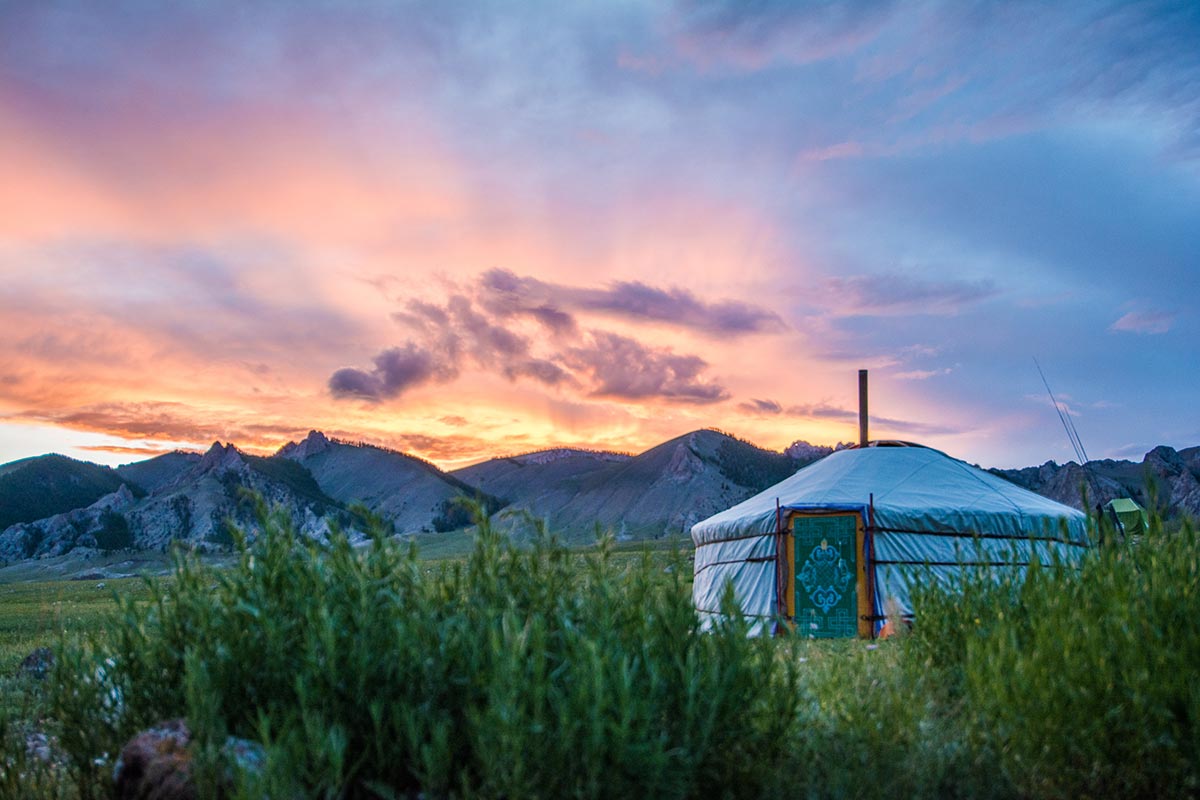
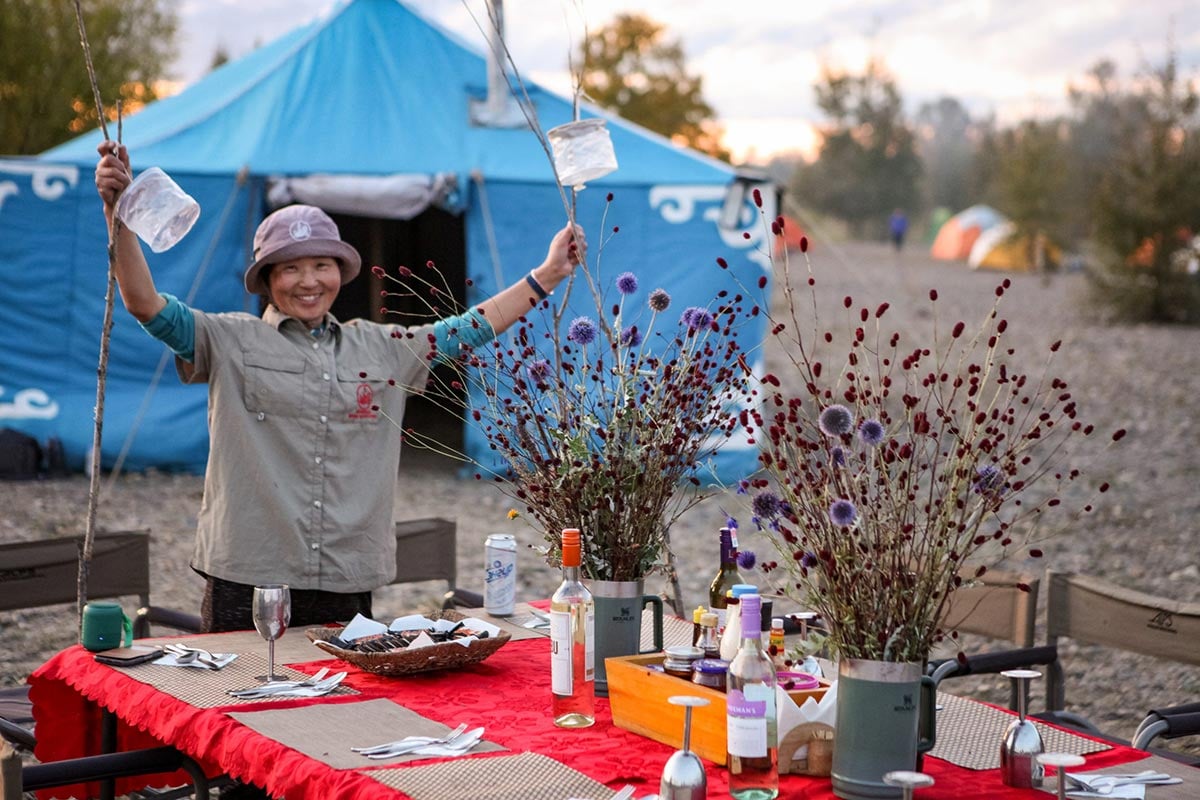
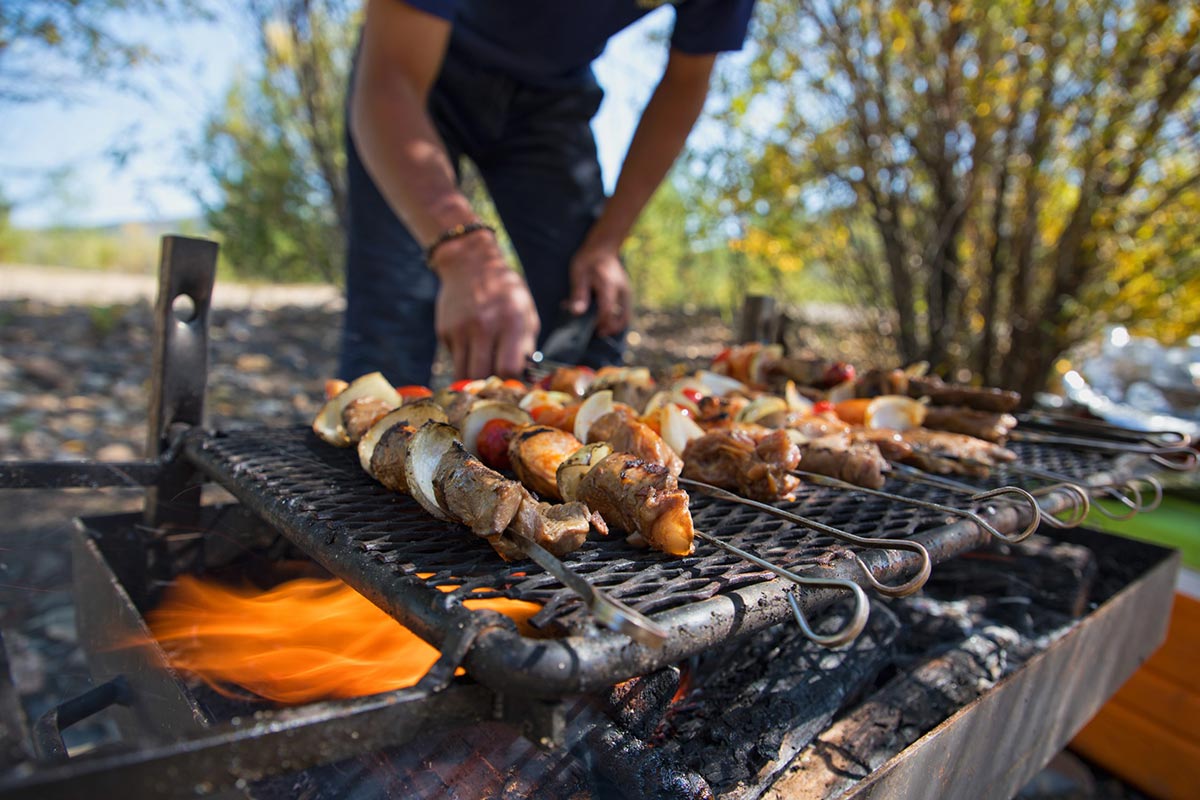
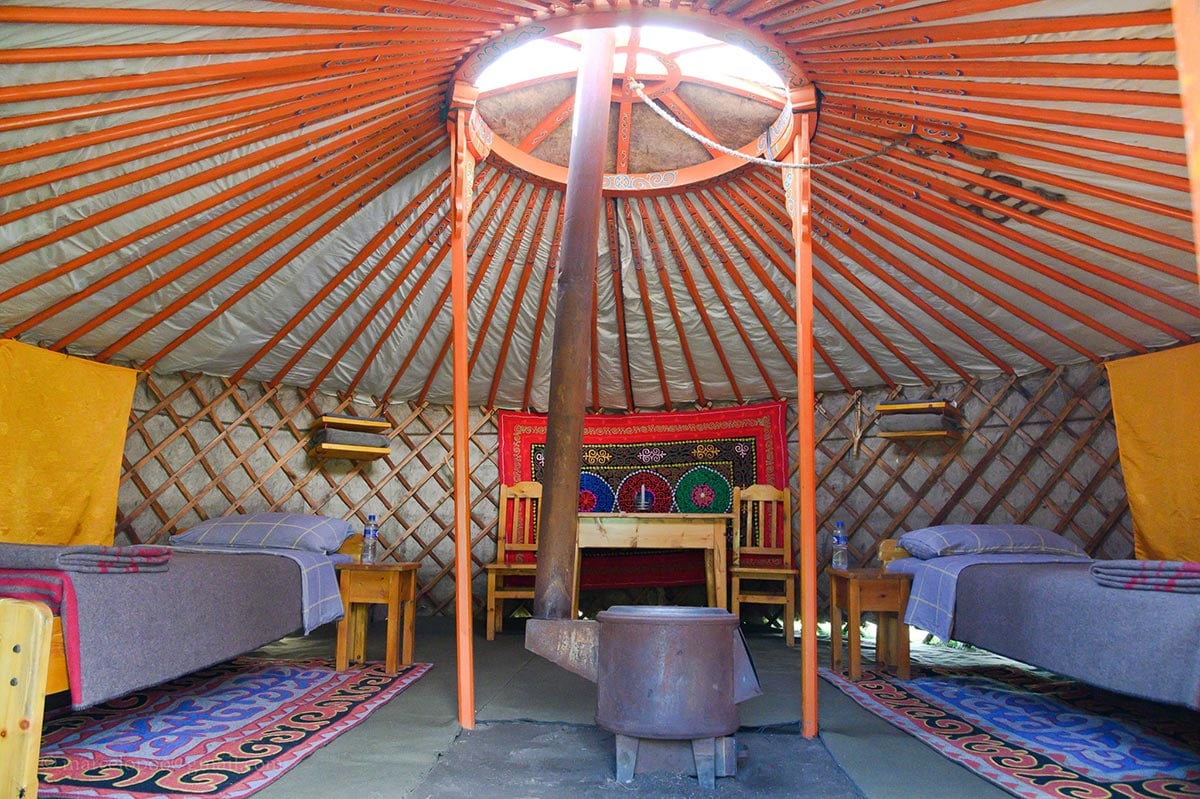
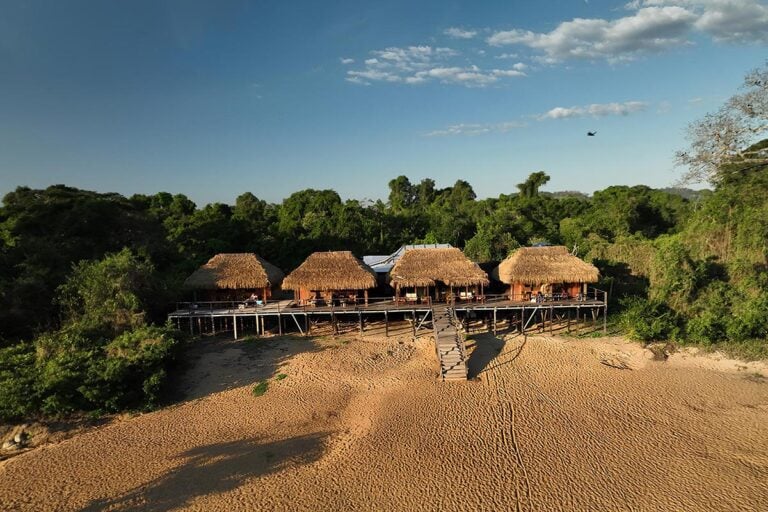
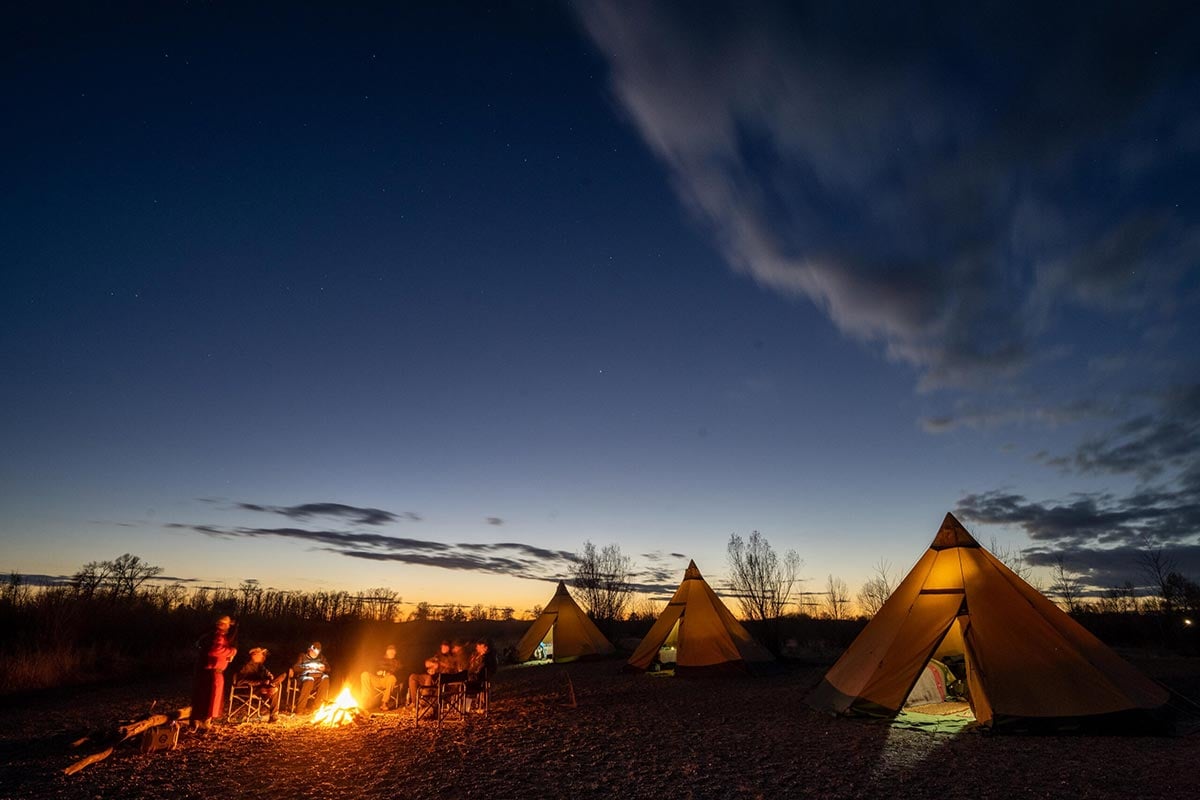
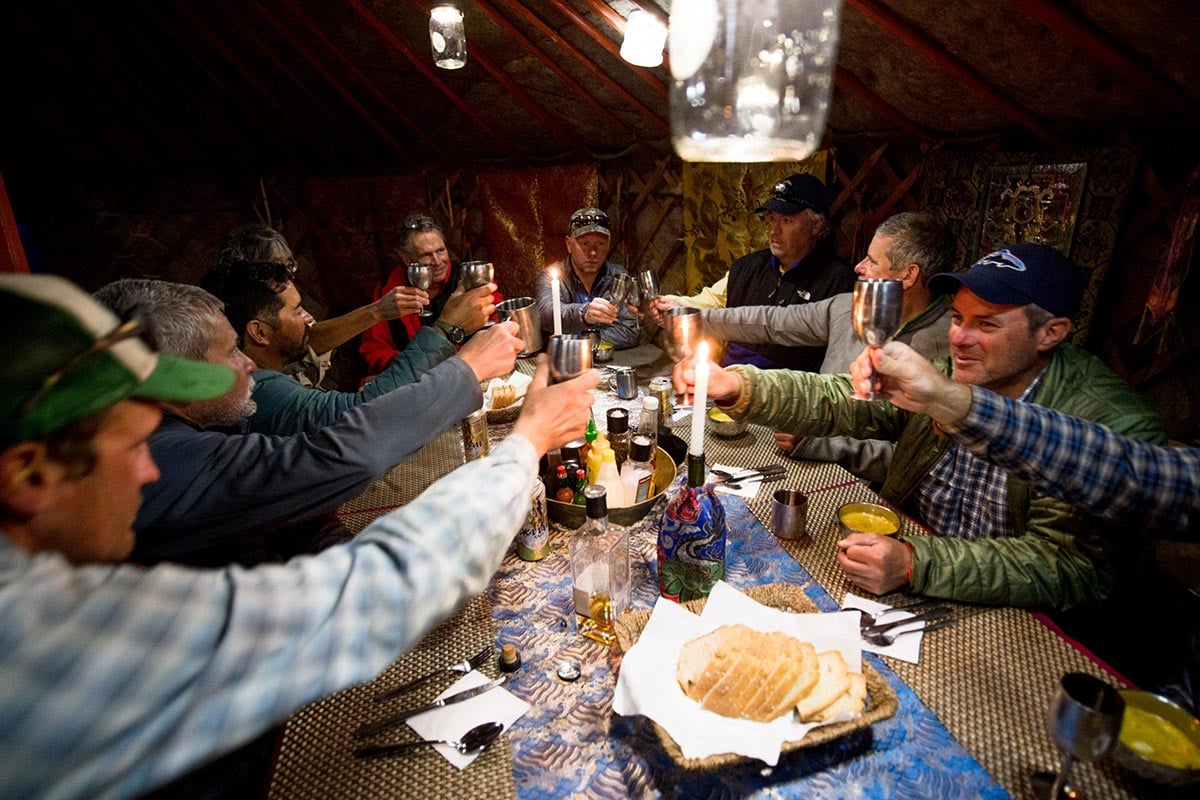
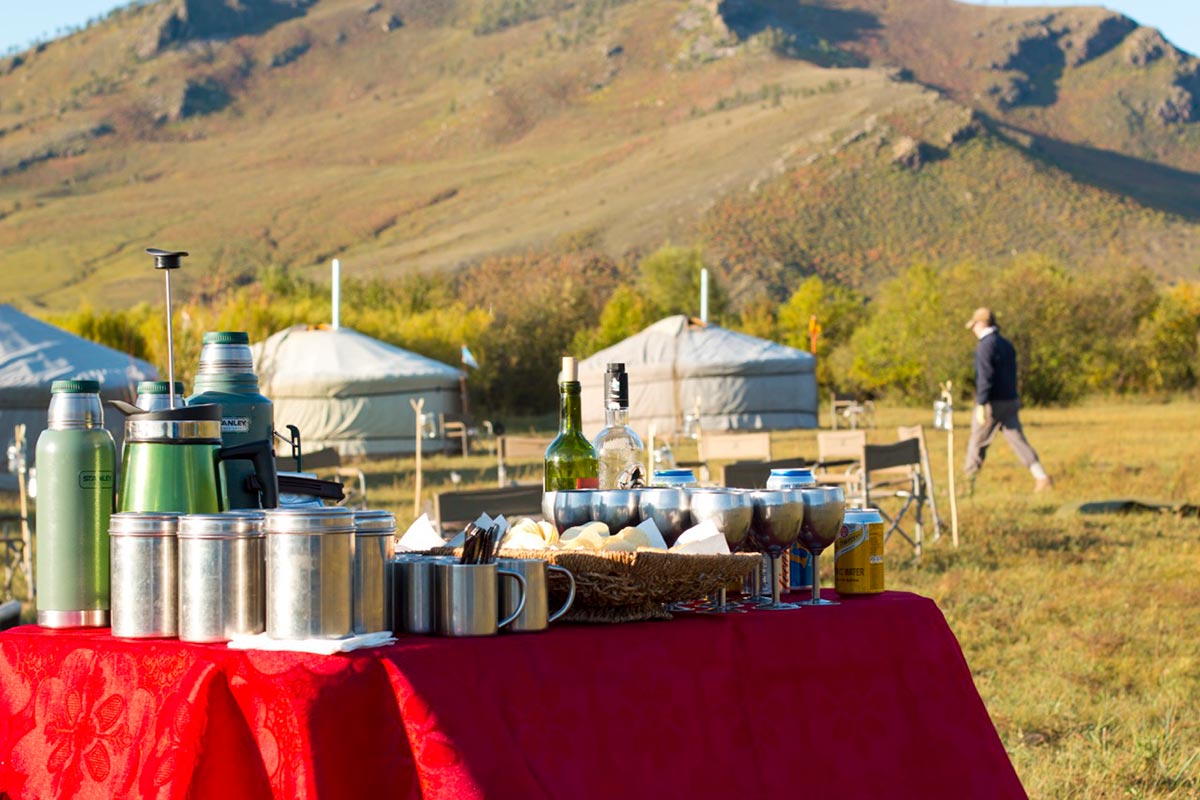
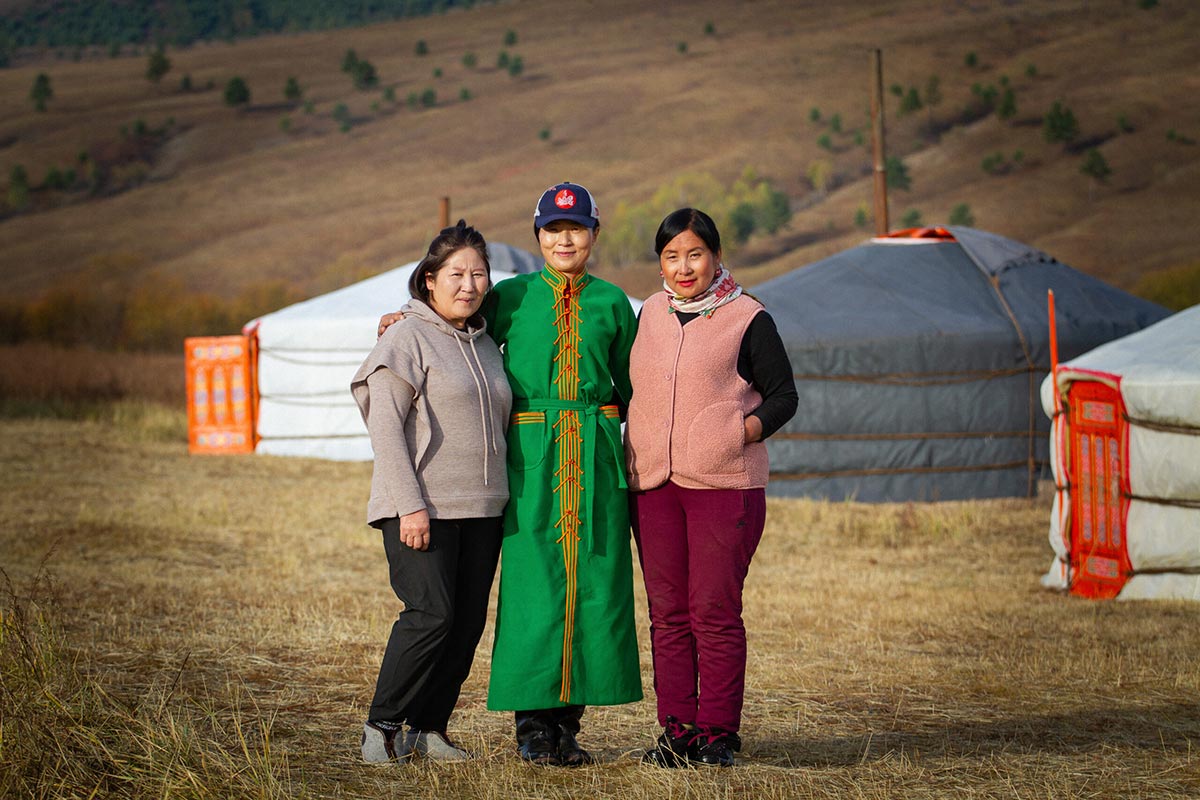
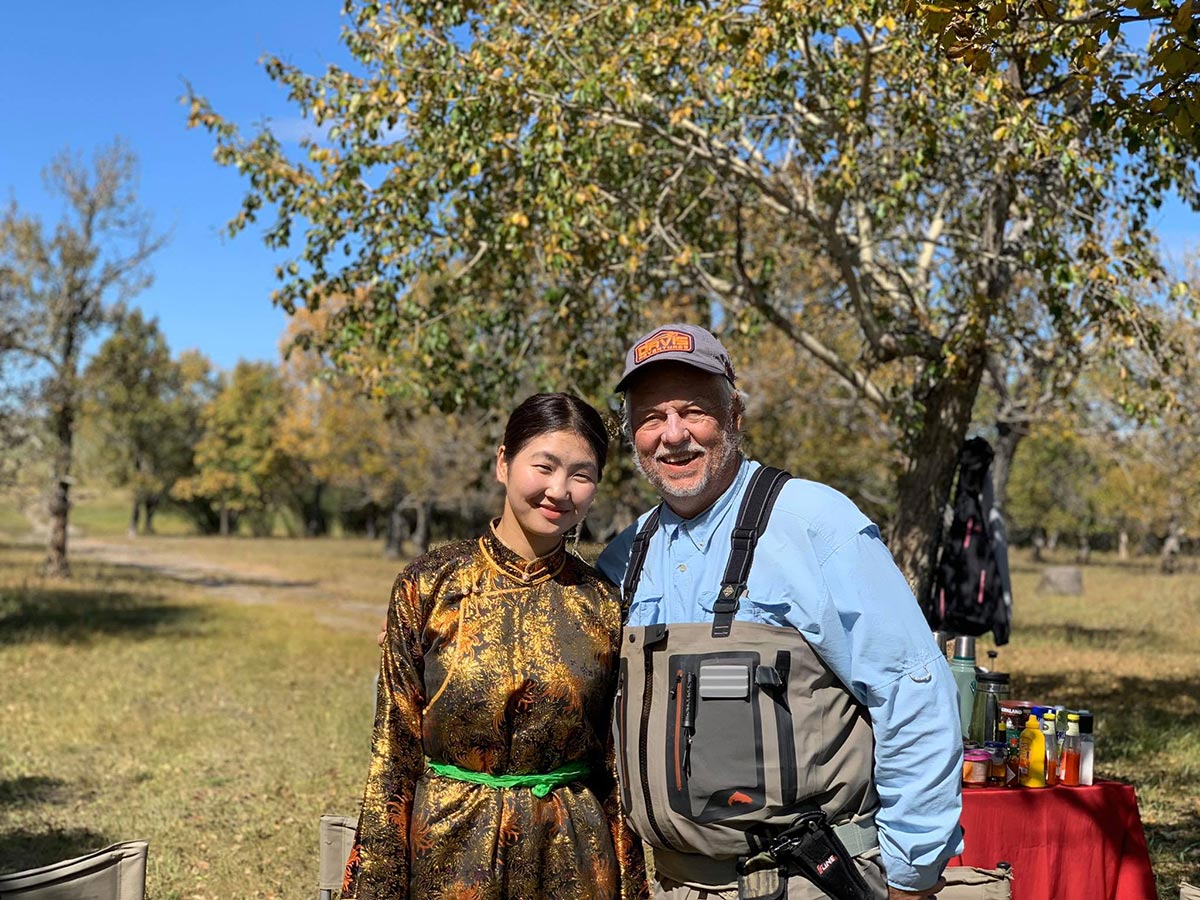
Days begin with hot coffee at sunrise and a hearty breakfast before setting off downstream. Lunch is served riverside beside the drift boats, with time to wade a few promising seams. Evenings bring a warm shower, a candlelit meal, and often music or fly tying around the stove. The routine is comfortable but focused on fishing, supported by a seasoned Mongolian and international crew who move camp and gear while you stay on the water.
Seasons and River Conditions
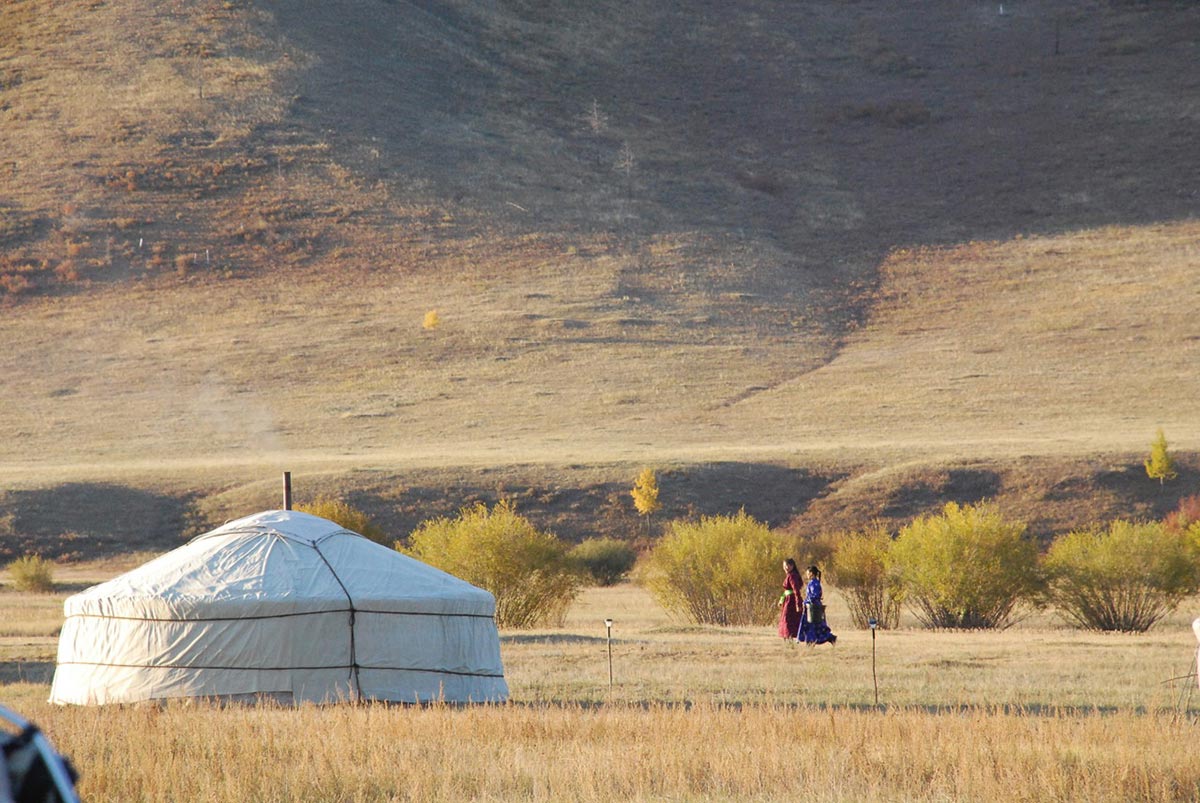
The entire taimen season runs from June through October. Early summer brings clear, warming water and active fish in the high-country canyons; by September and October, cooler weather and golden hills set the tone for MRO’s lower-river floats, when large taimen feed aggressively ahead of winter. Operating across two distinct regions ensures stable fishing conditions and extended season length in one of the world’s last true wilderness fisheries.
Conservation, Permits, and Why These Rivers Fish So Well
Both operations sit inside legally designated Taimen Sanctuaries—fly-fishing only for international anglers, single barbless hooks, no motorboats, and strict catch-and-release. Access is limited and controlled via outfitter-issued permits; decades of local partnerships and data collection underpin the fishery’s health. The result is a rare combination of wild fish, low pressure, and intact habitat across roughly 400 miles of conserved river.
Each week on these rivers feels like a true expedition—fresh water every day, exceptional guides, and a fishery that remains almost as wild as when it was first discovered.
To learn more about the fishing and express an interest, message Fish Mongolia.