Explore fishing trips in Mongolia, staying at carefully selected lodges that combine expert guiding, remote wilderness settings, and exceptional angling.

Northern Mongolia
Grayling, Lenok (Asian Trout), Taimen
Northern Mongolia
Grayling, Lenok (Asian Trout), Taimen
Northern Mongolia
Lenok (Asian Trout), Taimen
No results available
In the heart of Central Asia, Mongolia is one of the last genuine wild frontiers for freshwater fly anglers. Remote rivers, massive taimen, and wilderness float trips define the experience — built for those seeking solitude, challenge, and a deep connection to landscape and culture.
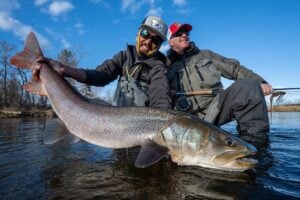
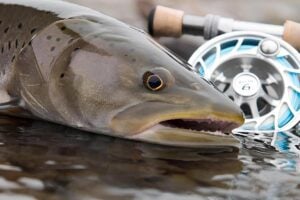
Vast, rugged, and strikingly remote, Mongolia offers an angling experience built around wilderness immersion rather than numbers. Rolling steppe, alpine rivers, and untouched waters stretch for miles — home to the taimen, the world’s largest salmonid. The target species — taimen, lenok trout, Amur pike, and grayling — are found in water that sees a handful of permitted anglers per season. Float trips cover river stretches measured in days of travel, not hours.
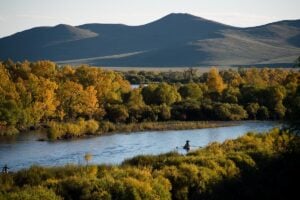
Northern Mongolia holds the most productive taimen systems in the country, centered on the Delger Murun and Eg-Ur watersheds. Conservation outfitters operate exclusive multi-day float trips on fly-only permitted water, with access controlled by seasonal quotas and outfitter management agreements.
Western Mongolia is sparsely populated and logistically demanding, with mountain rivers in the Altai range that see minimal pressure. The Khovd River system and lakes Khoton and Khurgan offer exploratory opportunities for taimen and lenok in high-altitude water rarely touched by visiting anglers. Trips here are horse- or raft-supported and suited to those willing to trade comfort for genuinely frontier conditions.
The Onon flows through the cultural heartland of Mongolia and supports one of the country’s viable taimen populations in the Pacific drainage system. Conservation-focused operations run limited trips here on protected water from late August through October, with Amur trout and Amur pike adding variety not found on northern systems.
Rivers closer to Ulaanbaatar are smaller and more accessible, with consistent lenok and grayling fishing on wade-based or short float trips. The Chuluut holds taimen in its deeper pools and remains fishable through summer when other rivers run high. Central Mongolia works well as a warm-up for anglers extending a longer itinerary or those with limited time.
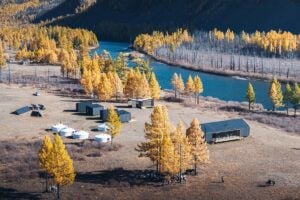
FishingExplora lists conservation-focused Mongolian outfitters running taimen float trips and wilderness camps across the country’s key northern river systems. These are specialist operations with permitted access to protected water, full logistics support, and experienced guiding teams.
FishingExplora’s editorial content draws on lodge input, guide experience, published field reports, and independent research to help anglers make informed decisions about premium fishing destinations.
Citizens of the US can enter Mongolia visa-free for up to 90 days. UK, EU, Australia, and New Zealand passport holders are currently permitted up to 30 days under a temporary exemption policy. Most other nationalities can apply via the eVisa system. All visitors require a passport valid for at least six months from arrival. Check current requirements before travel as visa policies are subject to change.
Yes. All fishing in Mongolia requires a permit, with taimen-specific licenses issued only through authorized outfitters holding management agreements on designated rivers. Permits — which run approximately $500 per angler — are typically included in guided packages. Independent fishing is not permitted on taimen waters.
Mid-June to early July and late August to early October are the prime windows. Both periods align with stable water levels and active feeding. August offers the best dry fly conditions for lenok and grayling; late September and October see the most aggressive taimen behavior as fish feed ahead of winter.
Most taimen operations require a domestic flight from Ulaanbaatar to a regional airport, followed by a five to six-hour drive or multi-day raft travel to reach the river. There is typically no road access to the fishing itself. Expect limited connectivity, satellite-supported communication, and full wilderness conditions throughout.
An 8 to 9 weight single-hand rod is standard for taimen on most Mongolian systems, with a floating line and large articulated streamers or topwater mouse patterns. On heavier systems like the Shishged, a #12 single-hand rod is recommended for surface patterns, or a double-handed rod in the 8 to 10 weight range for streamer work. A sink-tip line is worth carrying for high or off-color water on any system. For lenok and grayling, a 5 to 6 weight with a floating line covers most situations. Anglers are recommended to bring their own flies — confirm fly supply with your specific lodge before travel.
Mongolia has a dry continental climate, but conditions change quickly. Summer days are warm — comparable to Montana in July and August — with cool evenings year-round. Rain and even snow are possible in any month. By late September, temperatures drop noticeably and sub-freezing nights are common. Layering is essential regardless of when you travel, and waterproofs should always be in the pack.
Yes. Tipping is customary for guides, camp staff, and logistics teams. Outfitters typically provide guidance on amounts based on trip length and group size. Cash in US dollars is generally preferred in remote areas.
International flights arrive at Chinggis Khaan International Airport in Ulaanbaatar. From there, most outfitters arrange a domestic flight to a regional airport — typically Murun for northern river systems — followed by ground transfer to camp. Allow at least two days of travel from the US or Europe before reaching the river. Most packages include domestic flights, airport transfers, and hotel nights in Ulaanbaatar.
We use cookies to improve your experience and enable key features on the platform. You can choose which cookies to allow. Some features may not work fully without consent.