Discover the best grayling fishing destinations, guided trips, and lodge-based experiences worldwide. Explore remote waters and world-class angling with expert local hosts.

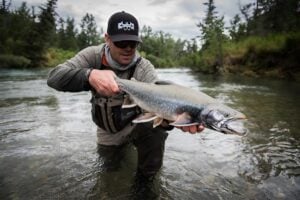
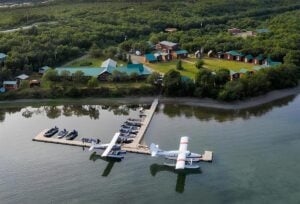
Bristol Bay, Alaska
Arctic Char, Chinook (King) Salmon, Chum (Keta) Salmon
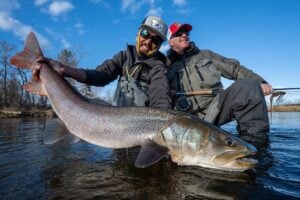
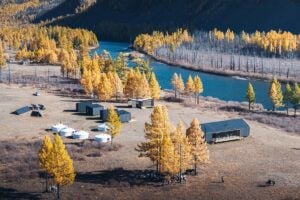
Northern Mongolia
Grayling, Lenok (Asian Trout), Taimen
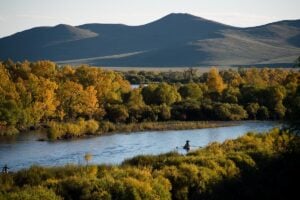
Northern Mongolia
Grayling, Lenok (Asian Trout), Taimen
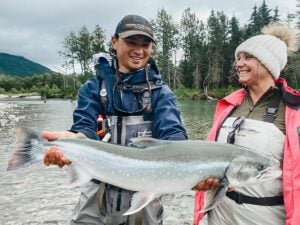
Bristol Bay, Alaska
Arctic Char, Chinook (King) Salmon, Chum (Keta) Salmon
Bristol Bay, Alaska
Arctic Char, Chinook (King) Salmon, Chum (Keta) Salmon
Bristol Bay, Alaska
Arctic Char, Chinook (King) Salmon, Chum (Keta) Salmon
Alaska, United States
Chinook (King) Salmon, Chum (Keta) Salmon, Coho (Silver) Salmon
Bristol Bay, Alaska
Chum (Keta) Salmon, Coho (Silver) Salmon, Dolly Varden
No results available
Grayling are freshwater salmonids known for their sail-like dorsal fin, willing dry-fly takes, and preference for cold, clean rivers. Found across North America, Europe, and Asia, they’re a favourite among traditional fly anglers. From the Arctic tundra of Alaska to the chalk streams of southern England and the wilderness rivers of Mongolia, they offer consistent surface action in waters that are often lightly fished and genuinely remote.
Two distinct but closely related species are covered here: the Arctic grayling (Thymallus arcticus), found across Alaska, Canada, and Siberia, and the European grayling (Thymallus thymallus), widespread from the UK to the Ural Mountains. Both share the same defining characteristics — the oversized dorsal fin, the willingness to rise, the preference for oxygen-rich current — but differ in range, size, and the fishing culture that has grown around them.
These fish thrive in oxygen-rich rivers and creeks, often in regions with low fishing pressure and strong seasonal insect hatches. While not typically targeted for size, grayling reward precision and finesse, making them ideal for light-tackle and dry-fly anglers.
Alaska holds some of the strongest Arctic grayling populations on earth, particularly in interior drainages and tundra streams. Float trips and fly-outs give access to clear rivers with eager fish and minimal pressure. The Ugashik Lake system in Bristol Bay and rivers of the Nome area consistently produce the largest fish in the state — over 70% of trophy grayling registered with the Alaska Department of Fish and Game come from the Ugashik system.
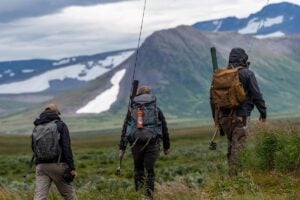
The taimen rivers of northern Mongolia also hold abundant grayling. Mongolia is one of the most diverse grayling habitats on earth, with five species present — including the Arctic grayling, the Baikal grayling (T. baicalensis), and the Hovsgol grayling (T. nigrescens), an endangered endemic found only in Lake Hovsgol and its associated rivers. On multi-day float trips, grayling rise throughout the day during summer hatches, making them a reliable and active companion species on unpressured water.
The UK, Scandinavia, and central Europe have a long tradition of grayling fishing. Rivers in England, Finland, Sweden, and across central Europe offer walk-and-wade access, prolific insect hatches, and ideal conditions for dry-fly and nymph anglers. In the UK, grayling fill the gap between the end of the trout season and winter, providing sport on chalk streams and freestone rivers from June through to March. Scandinavian rivers — particularly in northern Finland and Norway — produce considerably larger fish than their UK counterparts.
Remote areas of the Kola Peninsula, Kamchatka, and Yakutia hold exceptional grayling in untouched rivers. These fisheries are often part of multi-species trips combining taimen or char.
Grayling are found across several northern Canadian provinces and territories. Fly-in camps in Yukon, Northwest Territories, and Nunavut provide access to cold, lightly fished streams and lakes with good populations of Arctic grayling.
Grayling are valued for their beauty, their responsiveness to dry flies, and their presence in remote, often pristine waters. Their oversized dorsal fin is both a visual hallmark and a hydrodynamic tool. Unlike many river species, grayling often rise throughout the day, offering surface presentations even in mid-summer when other species have gone deep.
Their delicate takes and fast reactions suit light rods and subtle setups. For many anglers, grayling represent a return to traditional, visual fly fishing — where presentation, stealth, and timing still matter.
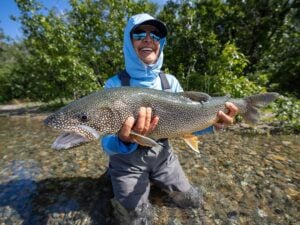
Both species are immediately identifiable by their large, sail-like dorsal fin — oversized relative to body length and far more dramatic than any other salmonid. The body is generally grayish-silver, often with highlights of gold or lavender, and scattered dark spots that can be X- or V-shaped on some fish.
The dorsal fin of the Arctic grayling is typically fringed in red and dotted with iridescent red, aqua, or purple markings, most vivid on large fish. The back is usually dark; the flanks can run black, silver, gold, or blue depending on the river system, with a gold band separating the sides from the white belly. Pelvic fins are striated in iridescent orange, red, or pink. The eyes are often gold. Males of both species display brighter, more intense coloration than females, particularly during spawning.
FishingExplora lists grayling fishing programs across Alaska, northern Europe, and Mongolia. Whether floating a remote Alaskan river or nymphing a Scandinavian chalk stream, you’ll find well-run operations with expert local guides.
FishingExplora’s editorial content draws on lodge input, guide experience, published field reports, and independent research to help anglers make informed decisions about premium fishing destinations.
Grayling are not trout but belong to the same family, Salmonidae. They sit in the genus Thymallus — distinct from the Salmo genus (brown trout, Atlantic salmon) and Oncorhynchus (rainbow trout, Pacific salmon). They share cold-water habitat preferences and respond to similar fly fishing techniques, which is why they are grouped with trout in angling circles. The name Thymallus comes from the Greek for thyme — a reference to the faint herbal scent the fish produce when freshly caught.
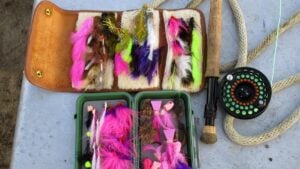
A 3 to 5 weight rod with a floating line and long leader suits most grayling situations. Use small dries or soft hackles during hatch periods, and nymphs when surface activity slows. Their takes can be subtle and fast — a sensitive, light setup helps detect strikes. On European rivers, sizes 14 to 18 are standard for dry fly work; in Alaska and Mongolia, grayling will also take larger attractors and terrestrials.
No. Although they are willing surface feeders, grayling also respond well to nymphs and small wet flies — and on many European rivers, sub-surface fishing consistently outproduces dries, particularly in autumn and winter or in deeper, faster runs.
Interior Alaska offers the most consistent grayling fishing — rivers near Fairbanks, the Brooks Range, and western fly-out drainages all hold good populations. For larger fish, the Ugashik system in Bristol Bay accounts for over 70% of trophy grayling registered with the Alaska Department of Fish and Game. The Alaska state record stands at 23 inches and 4 pounds 13 ounces, caught at Ugashik Narrows.
Yes. In Mongolia and parts of Russia, grayling share rivers with taimen and lenok. While taimen are targeted with large streamers, grayling provide dry-fly action throughout the day and are a valued secondary species on multi-day float trips.
Size varies considerably by species and location. Arctic grayling in Alaska typically run 10 to 20 inches; a fish over 3 pounds is considered large, and the state record is 23 inches and 4 pounds 13 ounces. In UK and most western European rivers, a 2-pound European grayling is a specimen and a 3-pounder is exceptional on most waters. Scandinavian rivers in northern Finland and Norway produce the largest European grayling, with fish to 2 kg caught regularly and occasional fish beyond that on the best systems.
We use cookies to improve your experience and enable key features on the platform. You can choose which cookies to allow. Some features may not work fully without consent.