Discover the best taimen fishing destinations, guided trips, and lodge-based experiences worldwide. Explore remote waters and world-class angling with expert local hosts.
No results available
Taimen are apex predators of remote northern rivers — ancient salmonids known for explosive topwater strikes and exceptional size. Found primarily in Mongolia and Russia, they’re a bucket-list species for fly anglers drawn to untamed wilderness and the most formidable trout encounter on earth.
Taimen (Hucho taimen), sometimes called “river wolves” for their pack-hunting behavior, are the largest member of the salmonid family. Native to Siberian and Central Asian drainages, they’re capable of living over 50 years and exceeding 60 inches in length. Listed as Vulnerable on the IUCN Red List and gone from much of their historical range, the fishable populations that remain in northern Mongolia and parts of Russia are among the most closely managed freshwater fisheries on earth. Their aggressive behavior, surface-oriented strikes, and scarcity make them one of the most sought-after wild fish on the planet.
Fly fishing for taimen is a visual and visceral experience — casting mouse patterns or large streamers into riffles, woody banks, and back eddies. They attack with speed and force, often leaping or twisting in shallow water. Targeting taimen requires travel deep into remote, lightly pressured watersheds, often by raft or fly-in access.
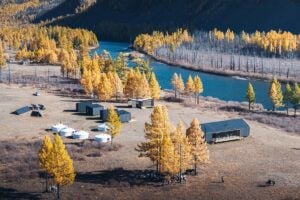
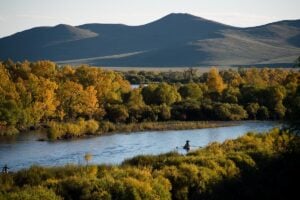
Northern Mongolia is the epicenter of modern taimen fly fishing. Protected by special-use zones and long-running conservation programs, rivers like the Delger Murun and Onon flow through sweeping steppe and forested valleys. Most trips are week-long expeditions supported by guided float camps or remote ger accommodations.
The same northern systems hold lenok and grayling throughout, providing dry fly action between taimen sessions.
Eastern Russia holds vast, near-inaccessible taimen drainages including the Tugur and upper Yenisei system. Fishing here is highly limited and logistically complex, but the rewards include large, rarely encountered taimen in true wilderness. Trips often require helicopters, permits, and extended planning.
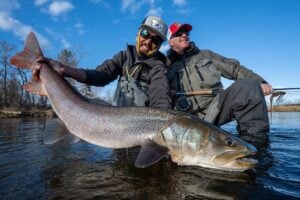
Taimen are trout in size and shape but behave more like freshwater apex predators — explosive, aggressive, and at the top of every food chain they inhabit. They often strike flies out of territorial aggression as much as hunger, making each take feral and unpredictable. Mature fish average 70 to 120 cm in length and 15 to 30 kg in weight; true trophy fish on rivers like the Shishged have been documented exceeding 130 cm.
What sets them apart is their combination of prehistoric presence and wild habitat. These fish inhabit some of the least disturbed rivers left on earth, and catching one means more than a photograph.
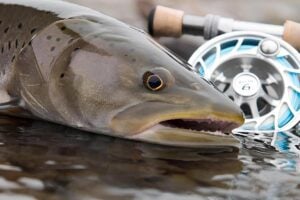
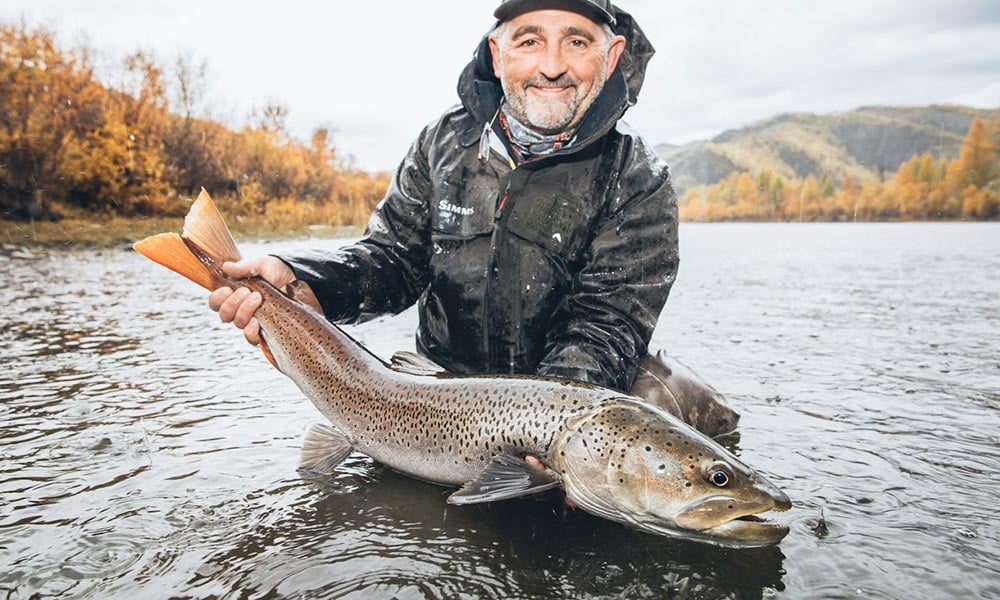
Taimen are long-bodied with powerful tails, large heads, and broad mouths built to engulf substantial prey. Coloration runs from gray-green on the head to reddish-brown toward the tail, with a pale white to gray belly and distinctively dark red adipose, anal, and caudal fins. Small, cross-shaped dark spots mark the head and sides — a useful field identifier. Older fish often show worn, scarred features that reinforce their primal look. Despite their bulk, they are agile and fast, particularly in shallow, swift water.
Water clarity and stable flows are key factors. Late season consistently produces the largest fish on northern Mongolia systems.
FishingExplora connects serious anglers to Mongolia’s specialist taimen operations — from raft-supported expeditions to exclusive-use rivers with strong conservation ethics. All partner lodges operate on catch-and-release principles with strict angler limits to protect these long-lived fish. Whether you’re floating a remote canyon or casting mouse patterns from a riverside ger camp, you’ll be fishing in one of the last great taimen frontiers.
FishingExplora’s editorial content draws on lodge input, guide experience, published field reports, and independent research to help anglers make informed decisions about premium fishing destinations.
Taimen are the largest salmonid in the world. Mature fish typically measure 70 to 120 cm and weigh 15 to 30 kg. Trophy fish on northern Mongolia’s protected systems — the Shishged in particular — have been documented exceeding 130 cm. Maximum lifespan is over 50 years, which contributes to their exceptional growth potential.
Surface mouse patterns are the signature choice, especially during warm months and low water. Large streamers — 6 to 10 inches — also work well, imitating baitfish or small mammals. Flies should be durable and fished aggressively. Confirm fly supply with your lodge before travel; remote operations vary in what they stock.
Taimen are native to river drainages across Russia, Mongolia, Kazakhstan, and parts of China — a range spanning roughly one-tenth of the earth’s land area. They are listed as Vulnerable on the IUCN Red List, with populations declining across much of that range due to overfishing and habitat pressure. Mongolia has become the global center for taimen conservation and catch-and-release sport fishing, with the most tightly managed and productive systems remaining in the north.
In Mongolia, yes — strict catch-and-release regulations are enforced across all permitted taimen waters, underpinned by the species’ Vulnerable status on the IUCN Red List and its slow reproductive cycle (sexual maturity at 7 to 9 years). Many Russian rivers operate under similar rules for visiting anglers, often with additional conservation fees and angling limits. Removing even a single large fish from a managed system can measurably affect population dynamics.
Taimen are not true trout but are closely related — both belong to the family Salmonidae. Taimen are classified in the genus Hucho, which sits within the same subfamily (Salmoninae) as trout, salmon, and char. They share the salmonid body plan and many behavioral traits with trout, including a preference for cold, fast-flowing rivers and a willingness to take surface flies. The key differences are scale: taimen grow far larger than any trout species, live significantly longer, and occupy a more dominant predatory niche. They are sometimes called “the world’s largest trout” in common usage, though taxonomically the more precise description is the world’s largest salmonid.
Most taimen fisheries require a domestic flight from Ulaanbaatar to a regional airport — typically Murun — followed by hours of 4WD travel or jetboat transfer to reach camp. There is typically no road access to the fishing itself. Anglers should expect limited connectivity and full wilderness conditions throughout.
We use cookies to improve your experience and enable key features on the platform. You can choose which cookies to allow. Some features may not work fully without consent.