Discover the best longfin jack fishing destinations, guided trips, and lodge-based experiences worldwide. Explore remote waters and world-class angling with expert local hosts.

Gabon, Central Africa
Cubera Snapper, Giant African Threadfin, Jack Crevalle
No results available
Longfin jack are striking, fast-moving predators found in tropical surf zones, estuaries, and nearshore current lines. Known for their trailing fins and aggressive hits, they appear in several remote fisheries across West Africa, the Indian Ocean, and Southeast Asia.
Also known as the longfin trevally (Carangoides chrysophrys), this species is occasionally encountered by anglers casting for other inshore gamefish. Their speed, unique profile, and sudden strikes make them a memorable addition to a day on the water.
Though not always pursued as a primary target, they are present in multiple high-quality fisheries and are often caught while working topwater or streamer patterns in bait-rich environments.
Longfin jack are found along the tropical coastlines of West and East Africa, including Gabon, Angola, Tanzania, Mozambique, and Kenya. They typically appear in dynamic areas—river mouths, beach breaks, and current seams—where bait is active. Anglers may encounter them while targeting threadfin, snapper, or other inshore species.
In remote areas like Farquhar and Cosmoledo, longfin jack appear sporadically in surf zones or flats edges, especially during bait movements. Their distinct fins make them easy to spot when present.
From the Andaman Sea to eastern Indonesia, longfin jack are distributed widely in tropical inshore waters. They’re often part of a diverse trevally mix around coral reef points and tidal channels.
Remote Pacific coastlines support healthy longfin jack populations. They’re typically found near reef drop-offs, mangrove estuaries, and coastal surf, often mixing with other jack species.
Longfin jack combine visual appeal with hard, fast strikes. Their flowing dorsal and anal fins set them apart, especially in clear tropical water. They’re known to hit topwater and streamer presentations with intensity and make quick, directional runs once hooked. Their surprise appearance—often in dynamic, unpressured waters—adds to their allure.
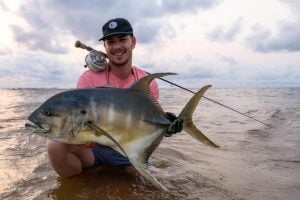
Longfin jack have a deep, silver body with a steep forehead and large eyes. Their most distinct features are the long trailing second dorsal and anal fins, which taper behind the body like streamers. Coloration is typically silver with pale horizontal bars and a blue or golden cast. Their fins flash in clear water, making them easy to spot when moving or turning near the surface.
Longfin jack tend to follow bait and current, showing up more often during tidal transitions or when baitfish schools are moving near shorelines and estuaries.
FishingExplora currently features lodge-based fishing in Gabon where longfin jack are occasionally encountered as part of a broader mixed-species experience. While not the primary focus of most trips, their aggressive behavior and distinct appearance make them a memorable part of any surf or estuary session in the right conditions.
Longfin jack are distributed across tropical Indo-Pacific waters—from West Africa and the Seychelles to Indonesia and northern Australia. They frequent surf zones, estuaries, and reef drop-offs where bait is present.
Most longfin jack range from 3 to 10 pounds, with occasional larger specimens up to 15 pounds. Their fight is quick and powerful, especially on light gear.
Yes—when present, longfin jack will hit streamer flies stripped quickly through current seams or surf. Anglers occasionally catch them while targeting other species like threadfin or trevally.
Their long, trailing dorsal and anal fins create a flowing silhouette in the water. These fins often flash silver or gold in sunlight, giving the species its distinct name and profile.
We use cookies to improve your experience and enable key features on the platform. You can choose which cookies to allow. Some features may not work fully without consent.