



A West African Coastal Fishing Experience
Setté Cama sits on a remote stretch of Gabon’s Loango National Park coastline, where long, undeveloped beaches backed by rainforest meet estuary water draining into the Atlantic. It’s a setting defined by contrast—open surf on one side, sheltered water on the other—and that contrast shapes how fishing unfolds here.
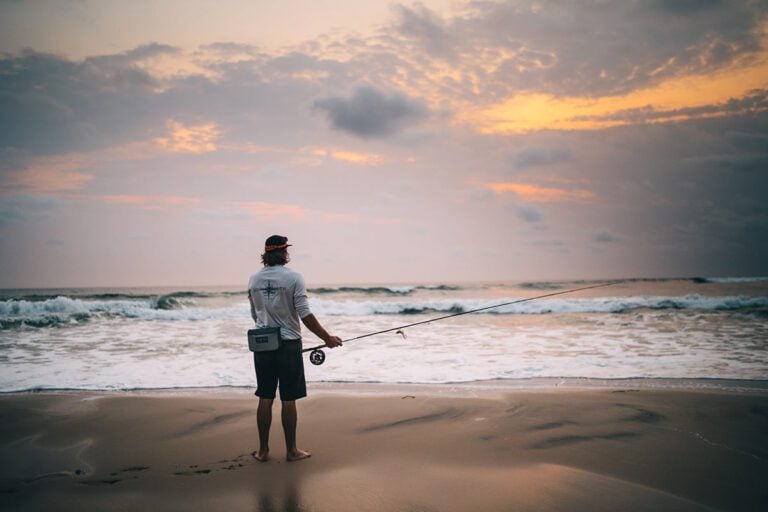
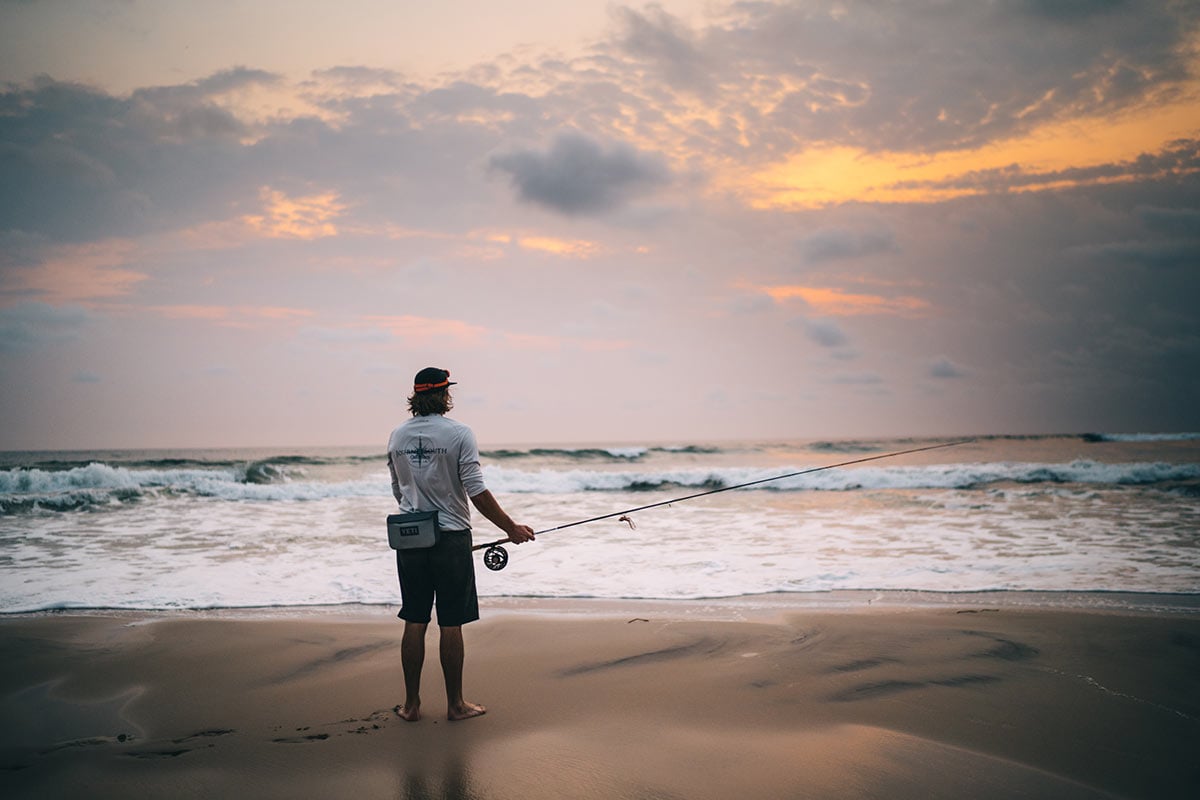
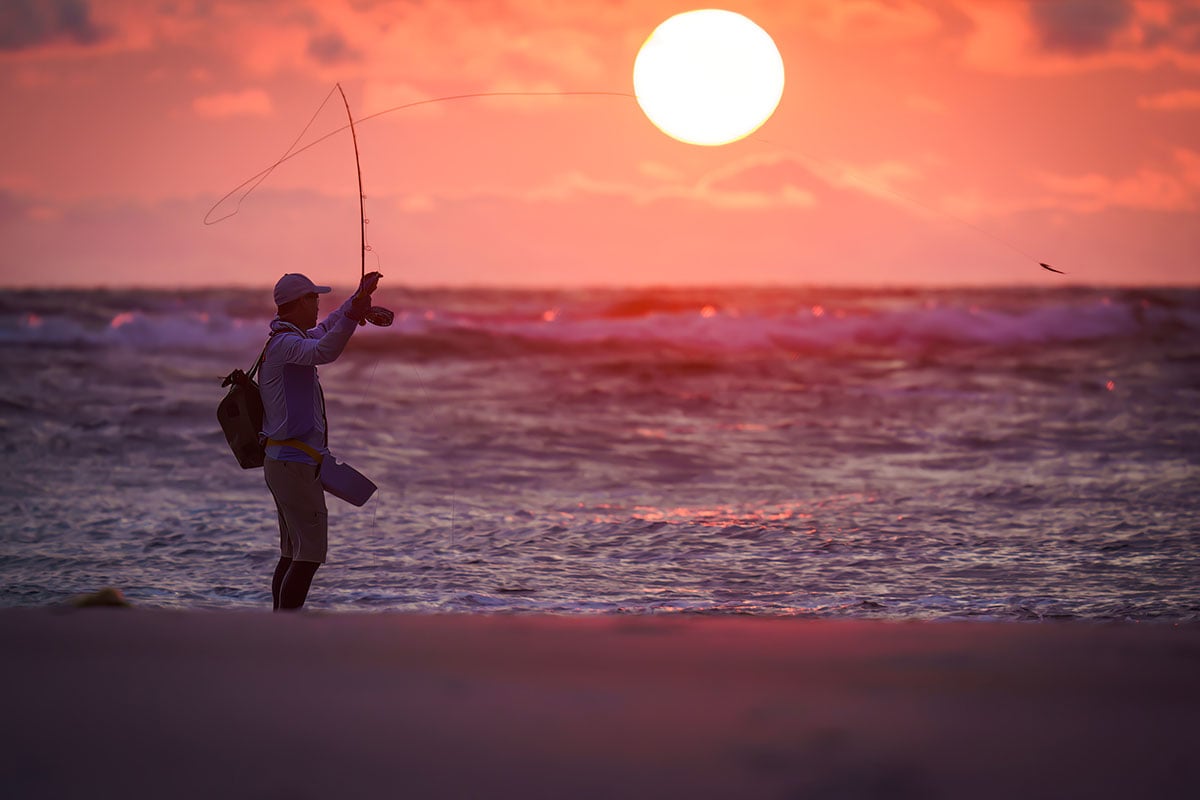
Fly and spin fishing are both part of the program, with days moving between walking the surf as Atlantic waves push in and fishing calmer interior water as tides draw fish into channels and edges. Some sessions are active and mobile along the beach, others slower and more deliberate inside the system, with water movement guiding where time is spent.
Over the course of a stay, anglers fish a wide range of water without settling into a single pattern. The experience is built around variety rather than routine, with each day shaped by the balance between exposed coastline and protected water inside Loango National Park.
Target Species and Fishing Variety at Setté Cama
Where surf meets freshwater flowing out of the lagoon, bait gathers along the transition between salt and brackish water. These mixing zones form naturally productive areas that attract predatory fish moving between the coast and the interior system.
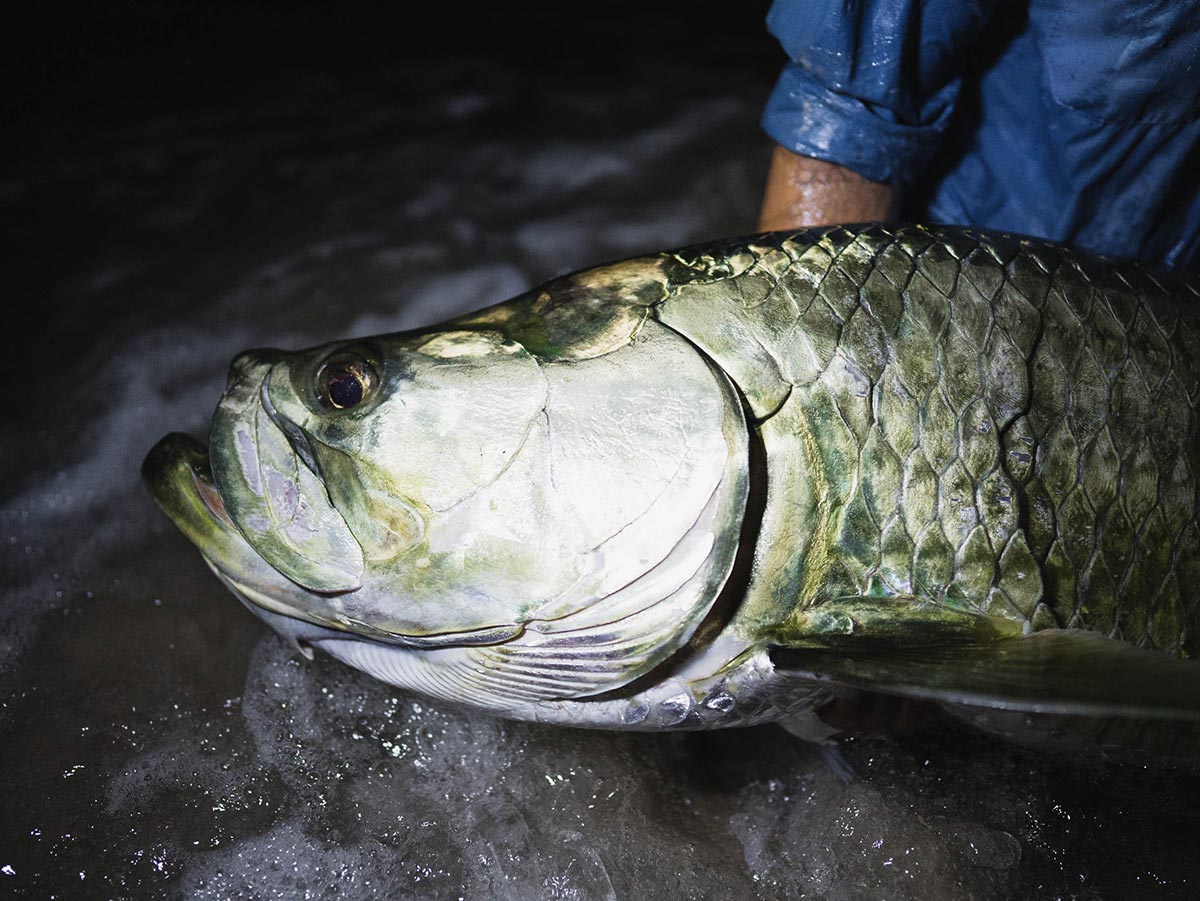
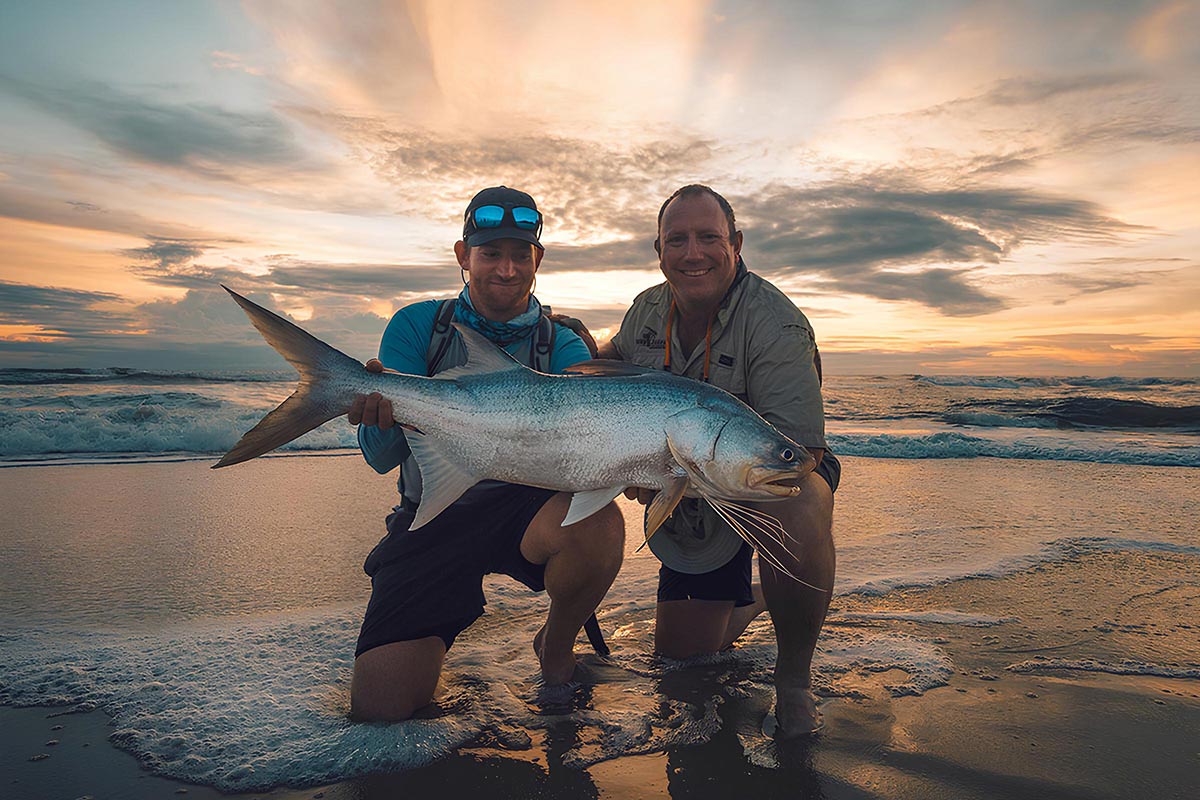
Tarpon are a primary draw at Setté Cama, particularly around estuary mouths and main channels where fish travel with both ebbing and flooding tides. The wider West African coastline has a strong reputation for large tarpon, and that broader Atlantic system gives context to the fish encountered here.
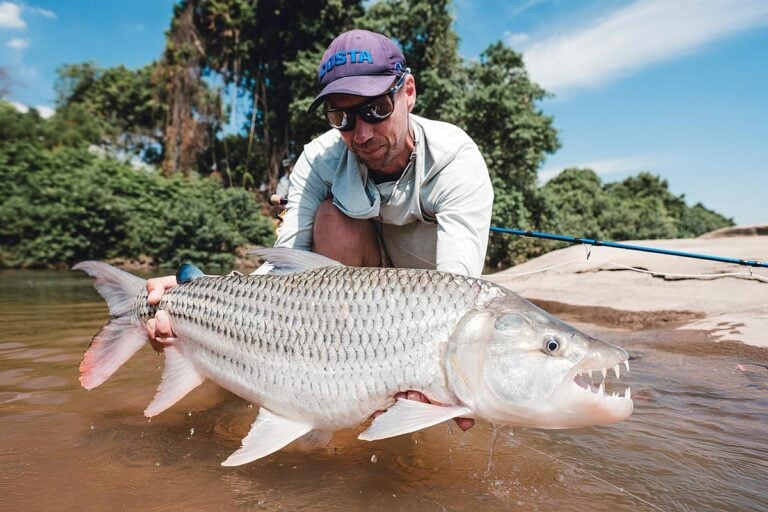
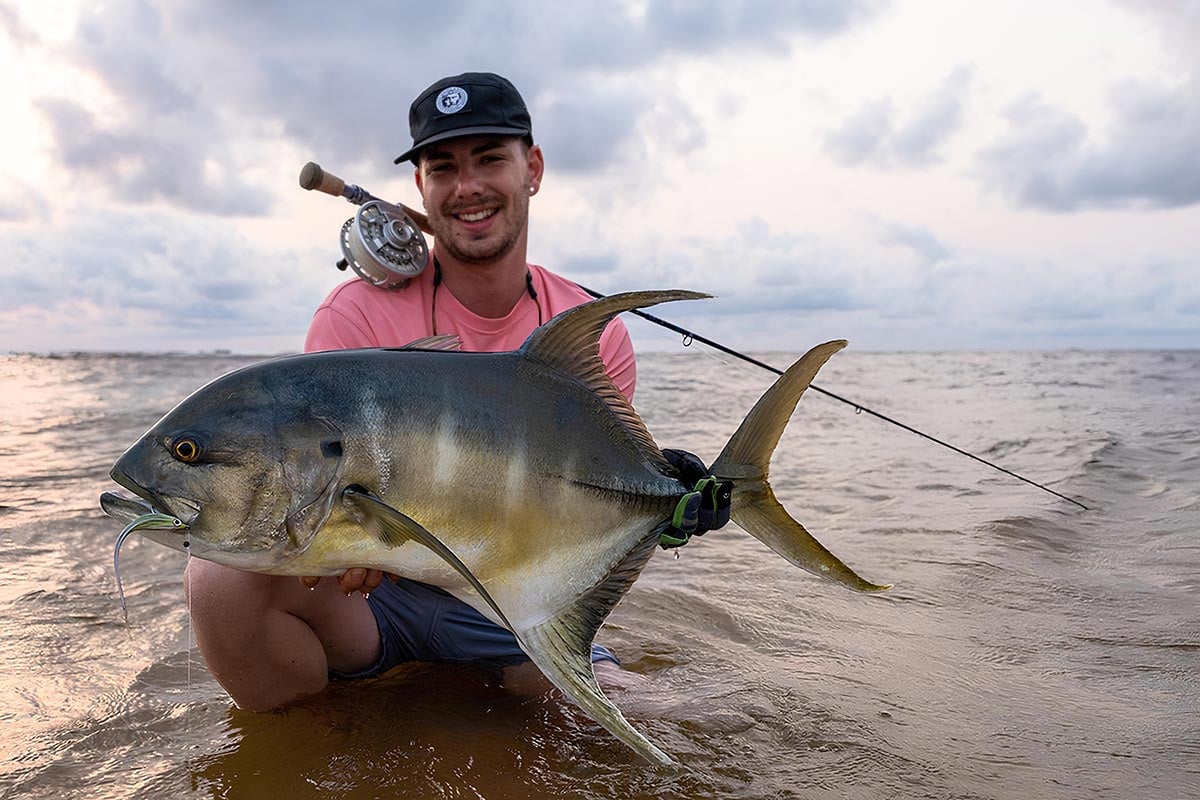
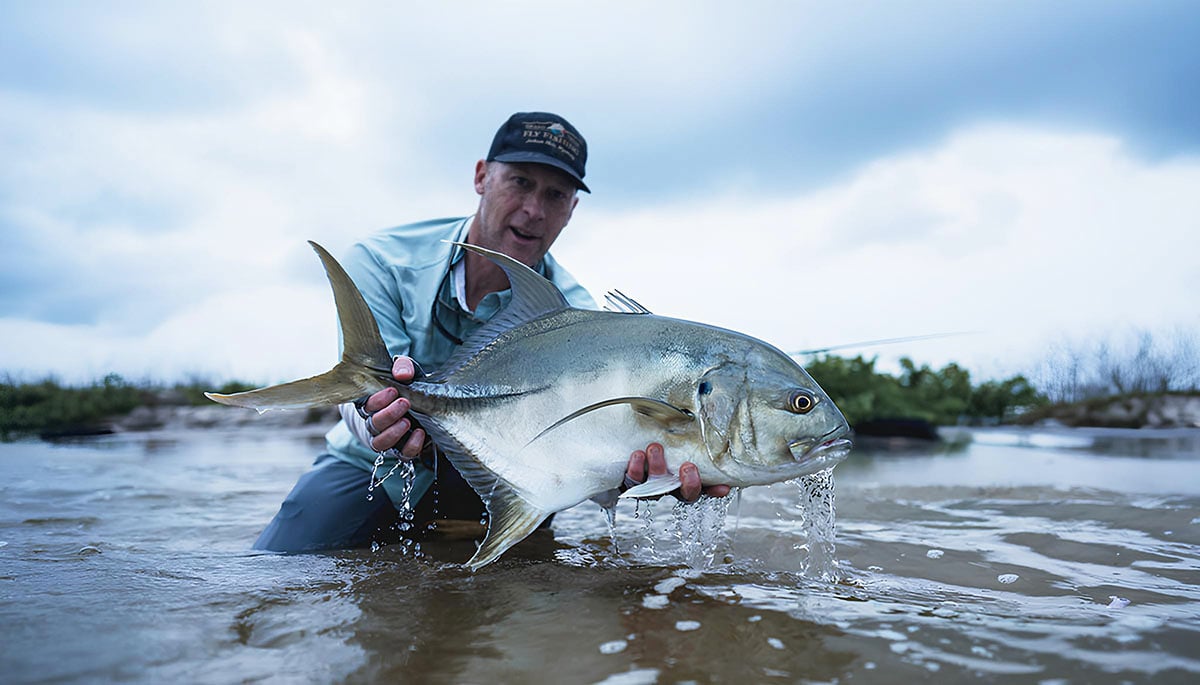
Giant African threadfin are another defining species, often found in the same connected water and easily recognised by their long, trailing pectoral filaments. Highly regarded by saltwater anglers, they are known for their speed and sustained power once hooked, standing out as one of the most memorable fish in the program.
Cubera snapper feature alongside longfin jack, jack crevalle, Senegal kob, barracuda, and leerfish (garrick), adding depth and variety to the fishery. Because these species share the same connected waters, it’s common for a single session to involve shots at different fish rather than focusing on one species throughout the day.
Fishing Access Across Coast, Lagoon, and Estuary
Fishing access at Setté Cama follows a clear, well-established pattern shaped by the landscape itself. Inside the estuary system, including Ndogo Lagoon, fishing is boat-based, with guides using skiffs to reach shoreline edges and river mouths as fish move with the tide.
Along the open coast, all fishing is done on foot. Anglers walk long, empty beaches, stopping to fish deeper cuts, wave edges, and shoreline features before moving on. The contrast between boat access inland and shore-based fishing along the coast gives the week a steady rhythm and keeps days from feeling repetitive.
Fly and Spin Fishing Opportunities
Both fly and spin fishing are used throughout the week, with anglers choosing methods as they move between surf, lagoon, and interior water. Some anglers stay with one approach, while others switch depending on where the day leads.
Guides support these choices by managing access and daily logistics, keeping the focus on fishing rather than planning. The result is a program that feels flexible without being loose, allowing anglers to stay engaged as conditions and locations change.
Guided Program and Group Size
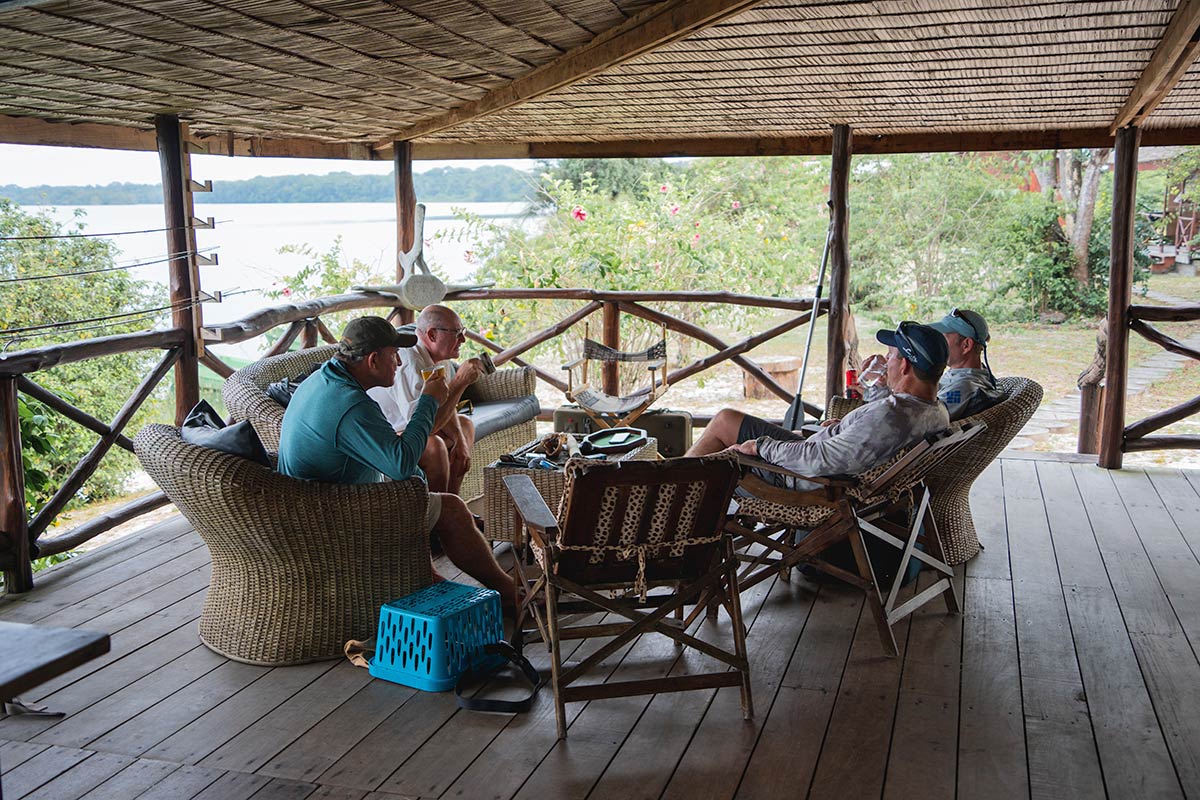
Setté Cama hosts a maximum of eight anglers at a time, guided by two experienced, English-speaking professional guides. This ratio has long been part of how the camp operates, particularly in an environment where large wildlife is present and fishing is done on foot as well as by boat.
Guides stay with anglers throughout the day, running boats inside the estuary and walking the coast during surf sessions, keeping days moving smoothly from the first casts to the return to camp.
Seasonality and Fishing Conditions
The fishing season at Setté Cama runs from September through April, aligning with the wetter months in southern Gabon. Increased freshwater flow from the rainforest feeds into the system during this period, influencing bait movement and the presence of predatory fish along the coast and connected waterways.
Rain typically arrives in short, sharp storms, with fishing planned around weather windows rather than lost to long periods of rain.
A Remote Setting Inside Loango National Park
The camp sits on the southern boundary of Loango National Park, surrounded by rainforest, waterways, savannah, and open beach. Wildlife is part of the daily backdrop, with elephants and forest buffalo sometimes visible along the shoreline during fishing sessions, occasionally crossing the same stretches of beach being fished.
There is little sign of human activity beyond the camp itself. Fishing takes place within a protected landscape, with operations run in cooperation with park authorities and established conservation frameworks, grounding the experience firmly in its surroundings.
Setté Cama is a place where fishing unfolds alongside intact coastline, wildlife, and protected water, offering a saltwater experience in Gabon that is shaped as much by its setting as by the fish themselves.
To learn more about the fishing and express an interest, message African Waters.