Discover the best tarpon fishing destinations, guided trips, and lodge-based experiences worldwide. Explore remote waters and world-class angling with expert local hosts.
No results available
Tarpon—often called the “Silver King”—are among the most iconic and powerful gamefish in the world. Whether sight-casting in shallow flats or battling giants in jungle estuaries, tarpon offer explosive takes, aerial fights, and unforgettable visual encounters.
Known for their size, strength, and acrobatics, tarpon (Megalops atlanticus) are one of the most sought-after saltwater species globally. They thrive in tropical and subtropical waters, often moving between coastal flats, mangrove creeks, estuaries, and river mouths.
Tarpon are strong visual feeders and respond well to both fly and conventional presentations. They’re one of the crown jewels of saltwater fly fishing, prized for their explosive takes and aerial fights. Sight-casting with streamers or baitfish flies is common in clear water, while in deeper or off-color zones, anglers often throw jigs, plugs, or live bait. Juvenile tarpon in backwaters are a favorite on lighter tackle, while migratory giants test gear and skill to the limit.
While known for bonefish, many Bahamian islands hold seasonal tarpon—especially in mangrove creeks and tidal lagoons. These fish are often under-targeted and respond well to fly or light spin gear.
From Campeche to Punta Allen, the Yucatán delivers consistent tarpon action. Spring and summer migrations bring larger fish to deeper cuts, while baby tarpon cruise inshore lagoons nearly year-round.
Northern Colombia offers remote tarpon fishing in estuarine and riverine systems. These fish are strong, unpressured, and often feed aggressively on tide changes.
Gabon’s beach and river mouth fisheries produce some of the largest tarpon in the world. These fish feed in heavy surf and tidal mouths, offering brutal fights and rare shots at true trophies.
Cuba’s southern cays and estuaries offer healthy tarpon populations, especially in spring. Anglers find a mix of juvenile and adult fish in remote flats and mangrove lagoons.
From the Keys to the Panhandle, Florida is ground zero for migratory tarpon. Sight-casting in clear water, especially during the late spring migration, is considered the gold standard.
The Caribbean coasts of these countries host large tarpon, particularly in murky, bait-rich river deltas. While often deep and off-color, the action can be intense on spin or bait.
While not a trophy destination, Belize offers frequent baby tarpon encounters in lagoons and back channels—ideal for fly anglers looking for variety.
Tarpon are found throughout northern South America, especially in deltas and tropical estuaries. These populations are often overlooked and lightly fished.
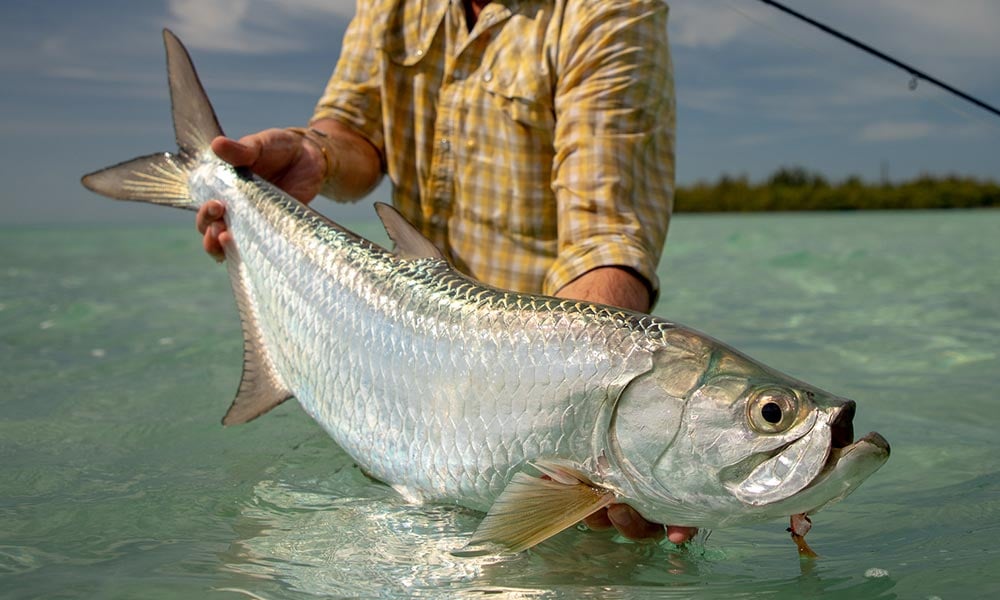
Tarpon are one of the few species that combine brute strength, stamina, and aerial acrobatics. Hooking one often means multiple jumps, blistering runs, and a drawn-out fight. Their scales shimmer like chrome, and their battles often unfold in visual, shallow water settings. Tarpon have earned their title as the “Silver King” for good reason.
Tarpon are large, sleek fish with elongated bodies and oversized silver scales. Their long dorsal fin and upturned jaw give them a distinctive silhouette. Tarpon have massive gill plates and a strong forked tail—built for speed and long runs. Fish range from 5–30 pounds (juveniles) to 150+ pounds for migratory giants.
Tides, light, and wind all impact tarpon fishing. Calm mornings, incoming tides, and clear conditions often produce the best shots.
FishingExplora features tarpon-focused lodges in the Bahamas, Yucatán Peninsula, Colombia, and West Africa—covering both juvenile fisheries and trophy-class locations. Whether you’re fly fishing for 30-pound fish in mangrove creeks or chasing 150-pounders in surf, these trips offer guided access to world-class waters with seasonal expertise.
Florida, West Africa, and the Yucatán Peninsula are among some of the best destinations for trophy tarpon. These regions offer seasonal migrations, large fish, and experienced guides—ideal for anglers chasing the Silver King.
Tarpon are not easy to catch on fly—they’re wary, strong, and often require long, accurate casts. Success depends on timing, tide, and stealth. But when it all comes together, few species offer a more rewarding saltwater fly fishing experience.
Fly fishing for tarpon on shallow flats involves spotting cruising fish and delivering accurate casts with baitfish patterns. Use 10–12 weight rods, floating or intermediate lines, and strip-set firmly on the take.
Most regions peak from April to July. Migration timing varies—Florida and Mexico see strong spring runs, while Gabon’s dry season (Oct–April) delivers surf-side giants.
Occasionally—juvenile tarpon may strike gurglers or poppers, especially in low light. Larger fish usually prefer subsurface presentations near bait schools or in deeper cuts.
Tarpon can exceed 200 pounds, though most trophy fish range from 80–150 pounds. The IGFA world record is 286 pounds. Juveniles under 40 pounds are common in backwaters and estuaries.