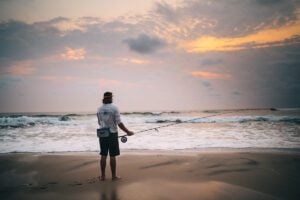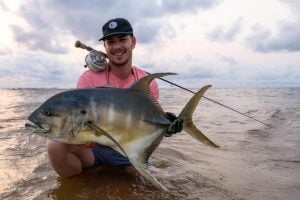
Explore trusted lodges and expert-guided trips offering access to productive waters for surfcast fishing.
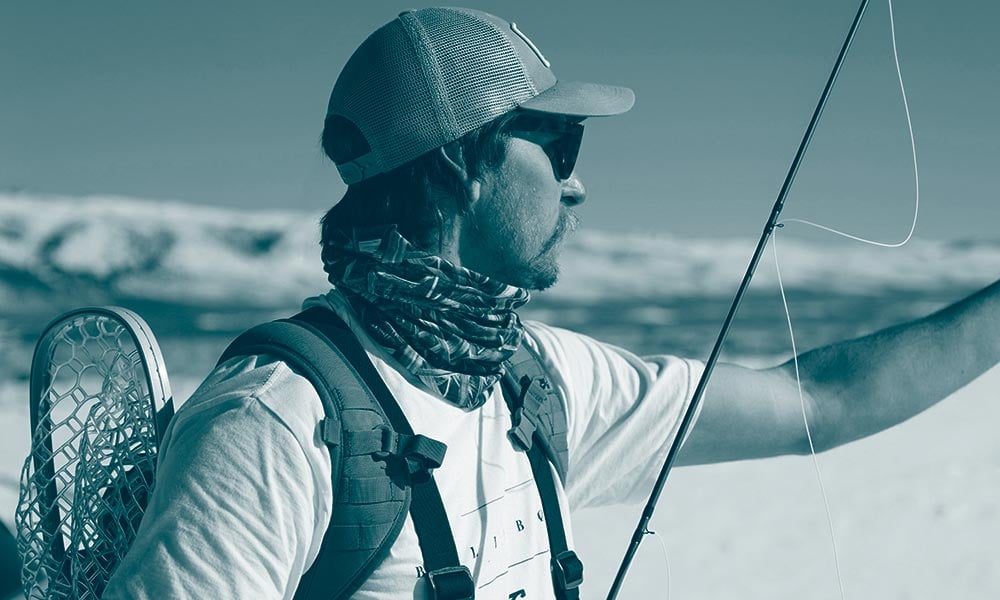
Gabon, Central Africa
Cubera Snapper, Giant African Threadfin, Jack Crevalle
No results available
Surfcasting gives anglers the ability to reach powerful fish from shore, casting heavy rigs beyond the breakers to deeper water. It’s a physical, timing-driven technique that relies on reading tides, swell, and beach structure to locate feeding zones.
Surfcasting—also known as surf fishing—is one of the most versatile shore-based techniques. It combines distance casting with strategic bait or lure placement to reach fish hunting just past the surf line. The goal is to place your presentation where currents, troughs, or sandbars concentrate bait. From sandy beaches to rocky points, surfcasting can deliver hard-hitting species without stepping foot on a boat.
Surfcasting gear needs to handle salt, abrasion, and distance. Start with a long rod (10–12 feet) with a strong backbone and fast tip for heavy payloads. Match it with a durable spinning reel—preferably with a sealed drag—and spool with braided mainline for casting range and bite sensitivity.
Leaders should be strong mono or fluorocarbon, typically 30–80 lb depending on species and terrain. Pyramid or sputnik sinkers help anchor bait in moving water. For lures, use topwater plugs, spoons, and swimbaits sized to match local baitfish. Waders, sand spikes, and rod holders round out the kit for longer sessions.
While surfcasting is often associated with DIY shoreline fishing, some premium lodges—especially in Colombia, Gabon, and parts of Mexico—offer guided surf fishing experiences. These trips are ideal for anglers looking to combine the excitement of land-based fishing with the logistics and insight of a professional operation.
Most surfcasters use rods between 10 and 13 feet. Longer rods provide more casting distance and leverage for managing fish in the surf. Pair with a high-capacity spinning reel and balanced setup for best performance.
Braid is preferred for its casting distance and sensitivity. Use 30–50 lb braid with a strong mono or fluorocarbon leader to handle abrasion and shock from long casts or heavy surf.
The best tides for surf fishing are typically around dawn, dusk, and during rising or falling tides. Moving water helps fish feed more actively, especially near troughs, cuts, and bait-rich zones.
Yes. Topwater plugs, spoons, and soft plastics are all effective—especially for active predators like bluefish, roosterfish, or snook. Match the size and action to local bait and surf conditions.
Sand spikes, rod holders, waders, and bait coolers can make multi-hour sessions more comfortable. Bring backups for leaders, rigs, and lures, as surf conditions can wear through gear quickly.
We use cookies to improve your experience and enable key features on the platform. You can choose which cookies to allow. Some features may not work fully without consent.