

Fly Fishing Greenland’s West Coast
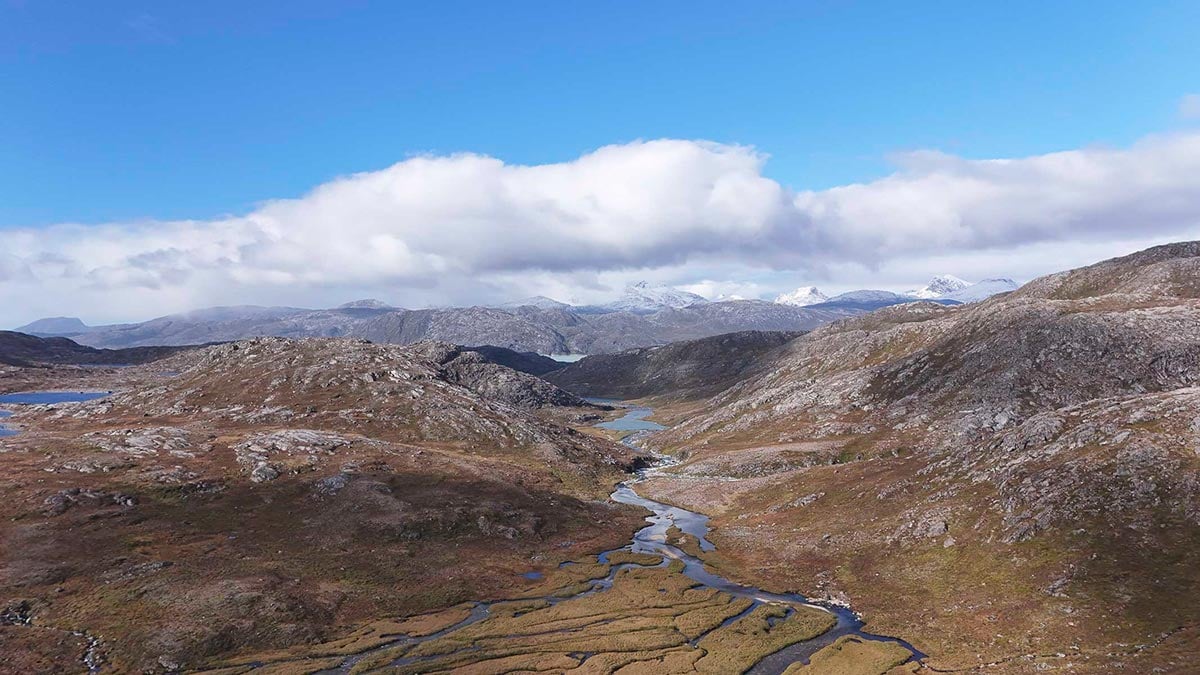
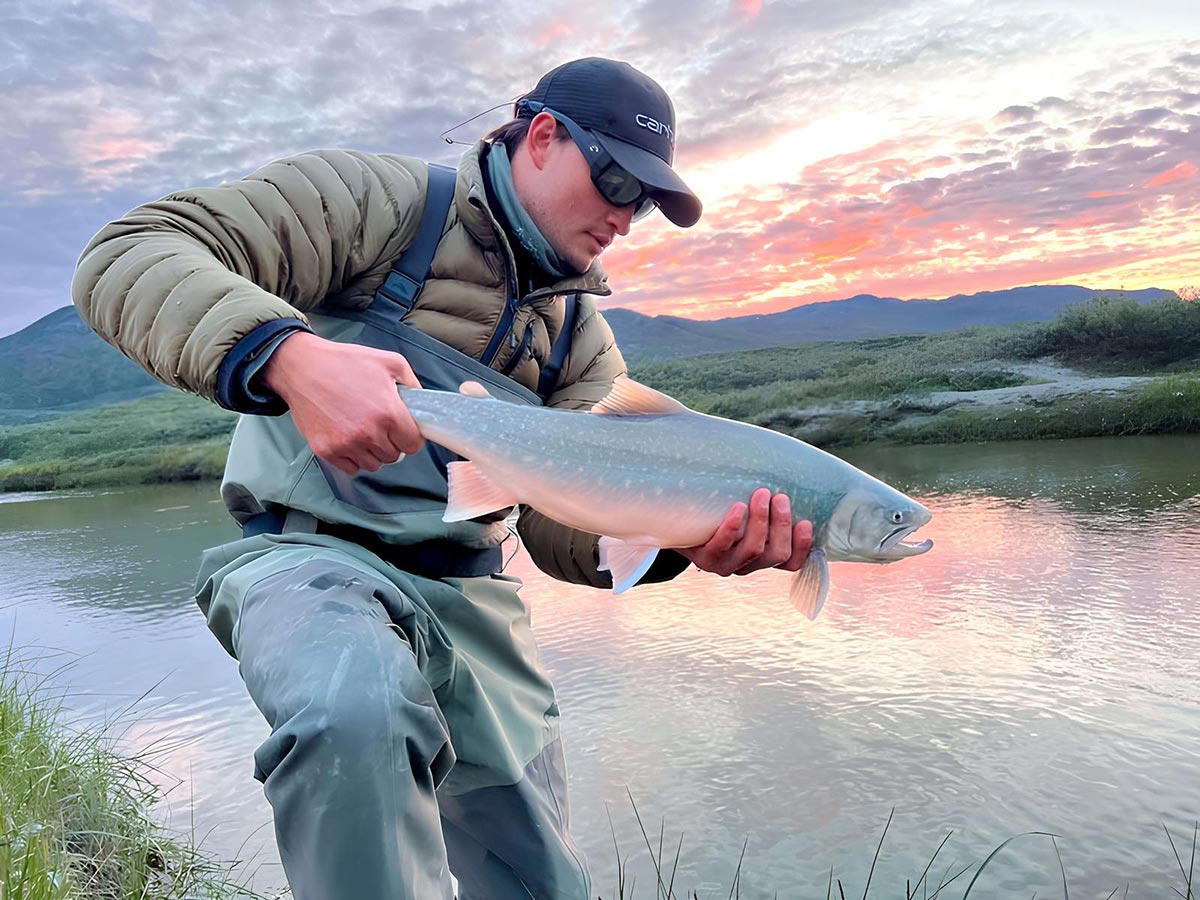
Fly fishing in west Greenland for Arctic char is built around clear rivers that run through wide coastal valleys, reached from Nuuk and far removed from regular angling traffic. Rawarctic focuses on this coastline with three core offerings: a guided day trip to Eqaluit Paarliit south of Nuuk, a stripped-back expedition on the remote Qussuk River, and a more comfortable three-river program based at Camp Isua in Kangerluarsussuaq fjord.
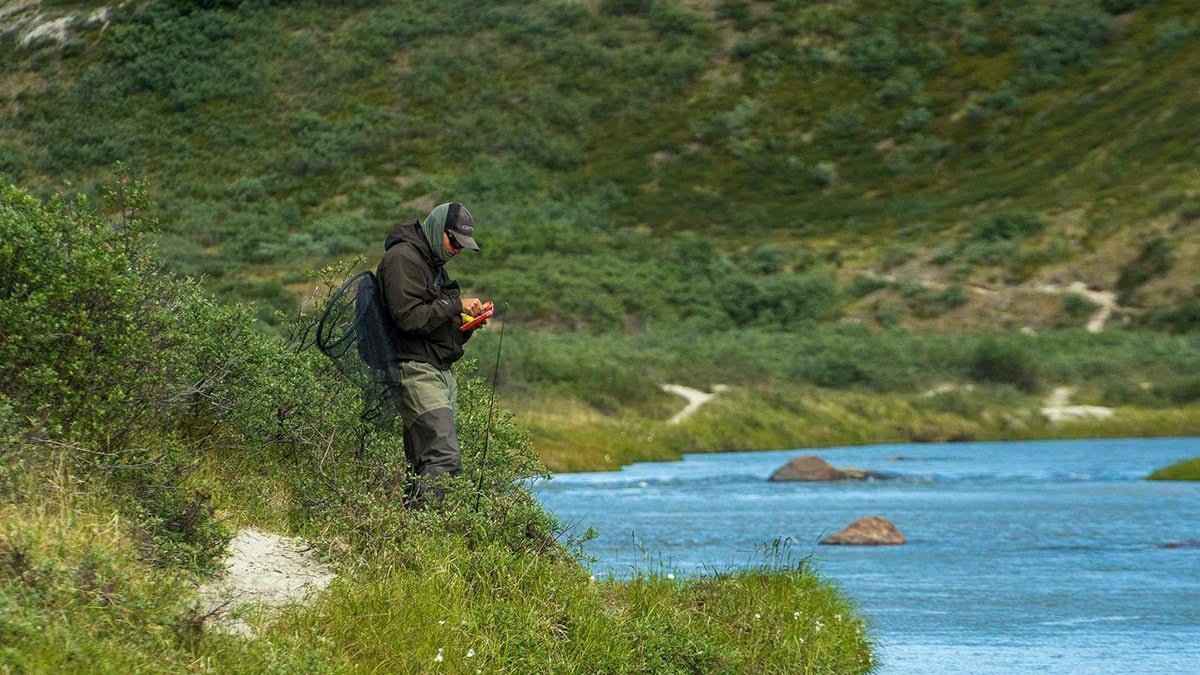
Across these options, small groups and close-to-water camps keep anglers tied directly to the landscape. These rivers hold strong summer migrations of wild Arctic char, and staying beside the river gives anglers the advantage of fishing at first and last light while being only steps away from water that rarely sees outside pressure. With no road access and a light operational footprint, most stretches remain quiet throughout the season, allowing anglers to move steadily through the valleys and follow fish as conditions change.
Arctic Char, Access and Season
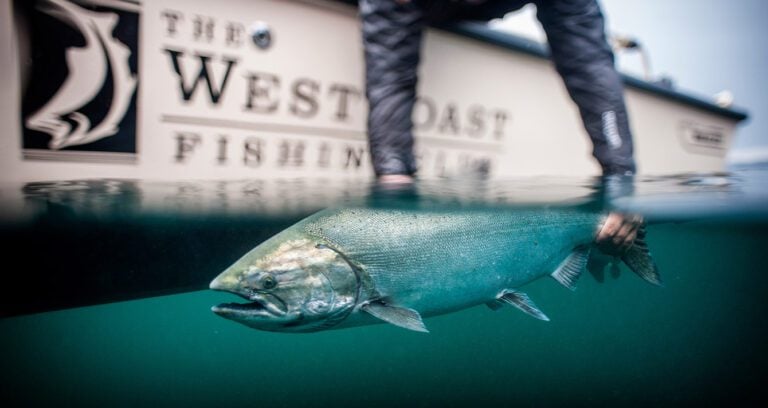
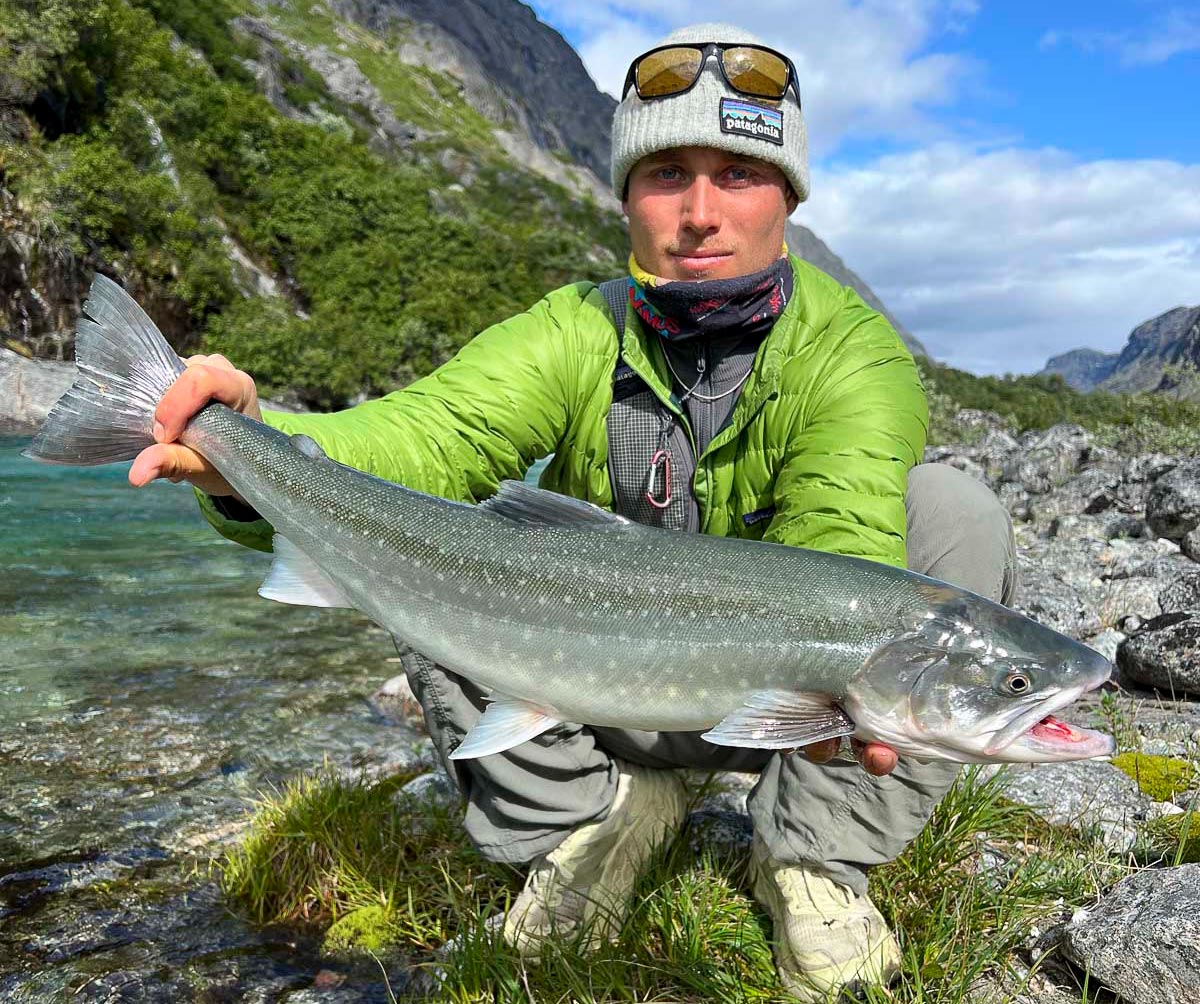
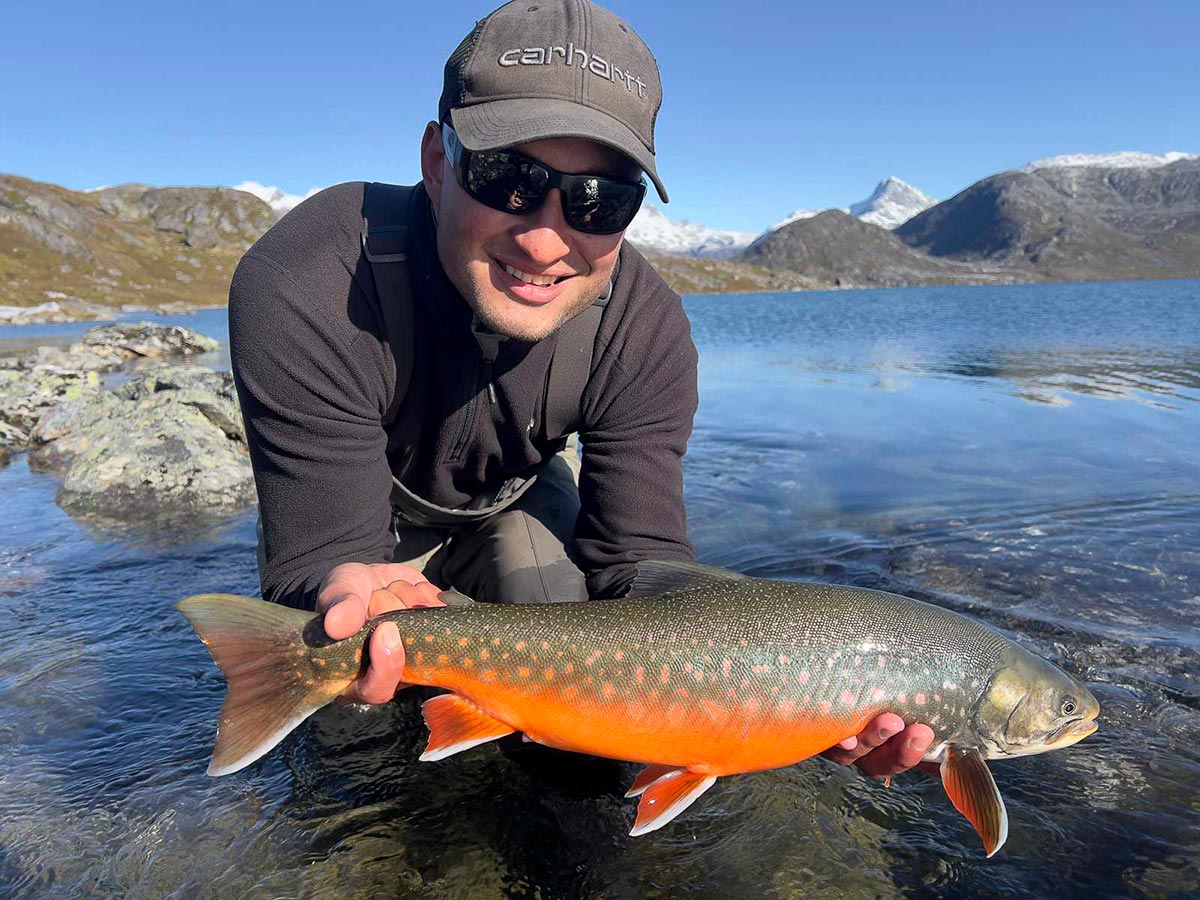
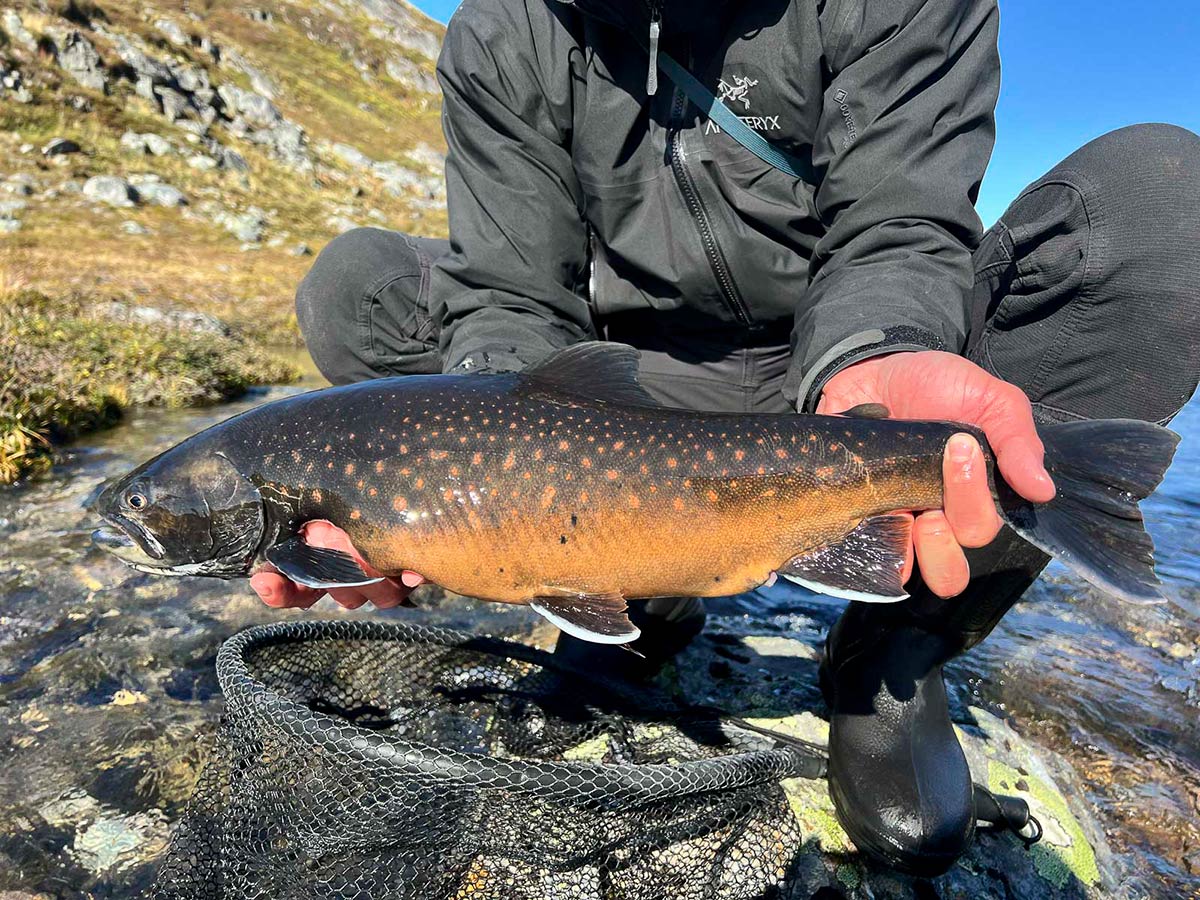
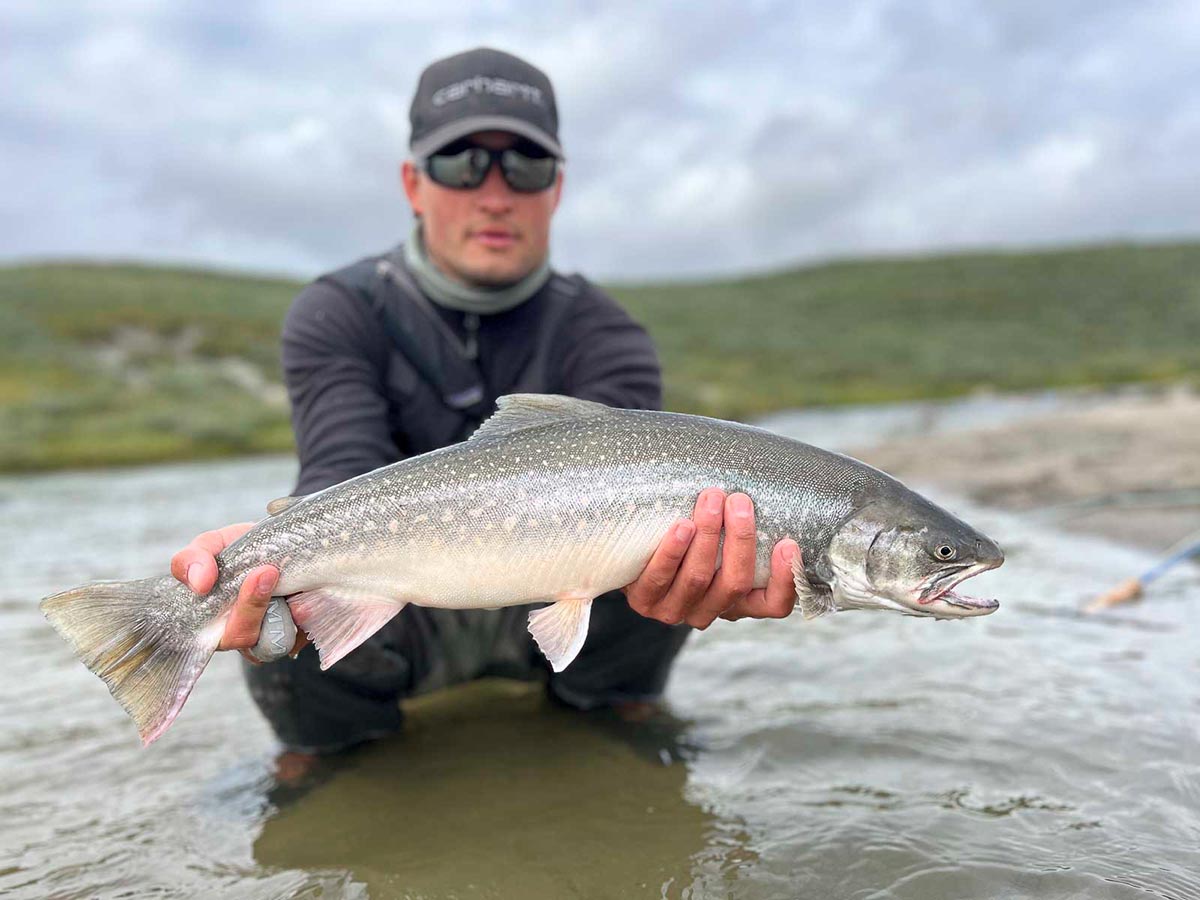
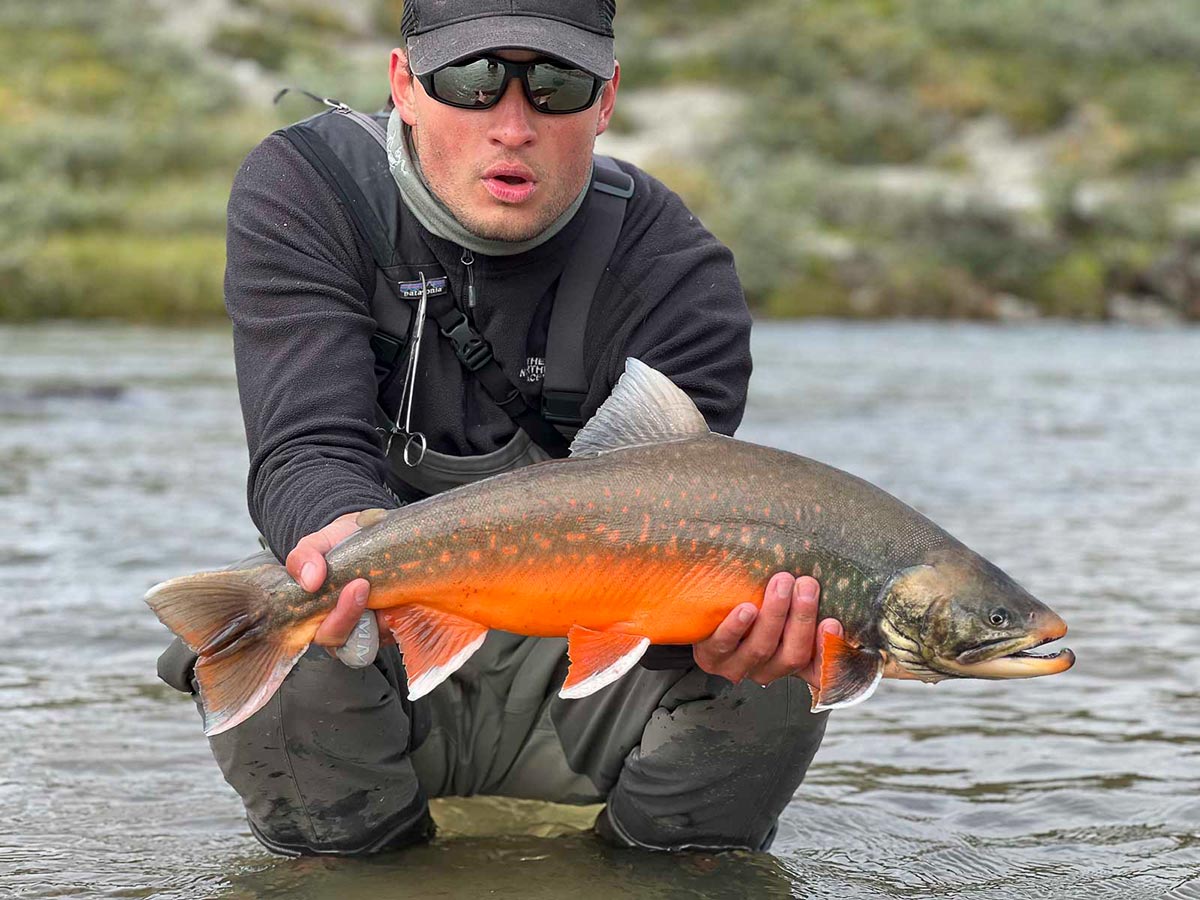
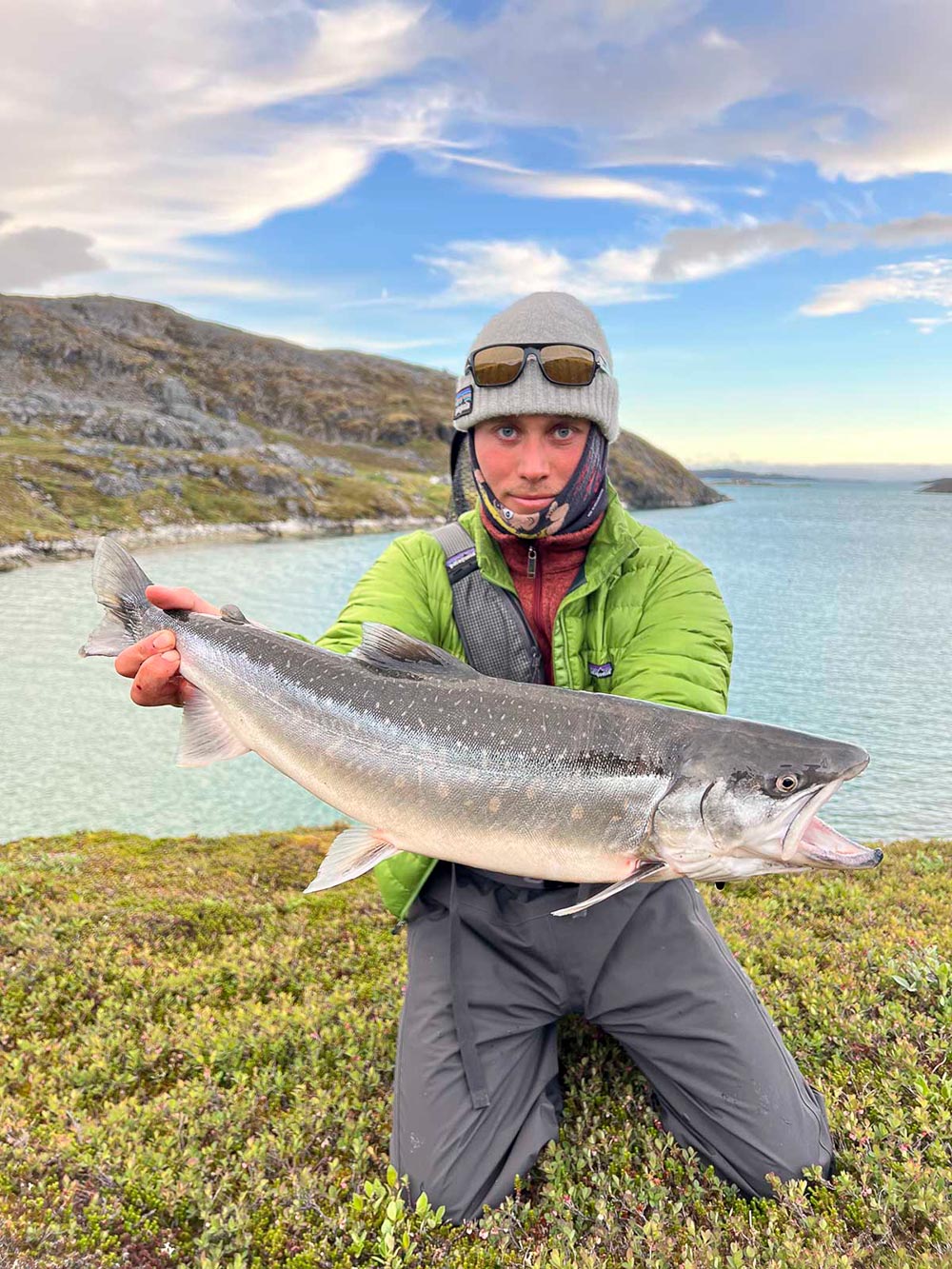
Across Rawarctic’s programs, anglers are fishing short coastal systems where char move in from the fjords through July, August, and into mid-September. These are wild, self-sustaining populations, with fish spreading quickly from the tidal edge into lakes, short rivers, and upper valley water. The rivers remain wadeable and readable at typical summer flows, and in most cases they can be fished directly from camp without long hikes, although longer walks to more remote stretches are part of the program for anglers who want to push farther and have the fitness to do so.
The combination of boat-only access from Nuuk, tight guest caps, and—for Qussuk—an exclusive concession that prevents other operators from using the system all helps keep pressure low across the season.
Eqaluit Paarliit: Day-Trip Char Fishing from Nuuk
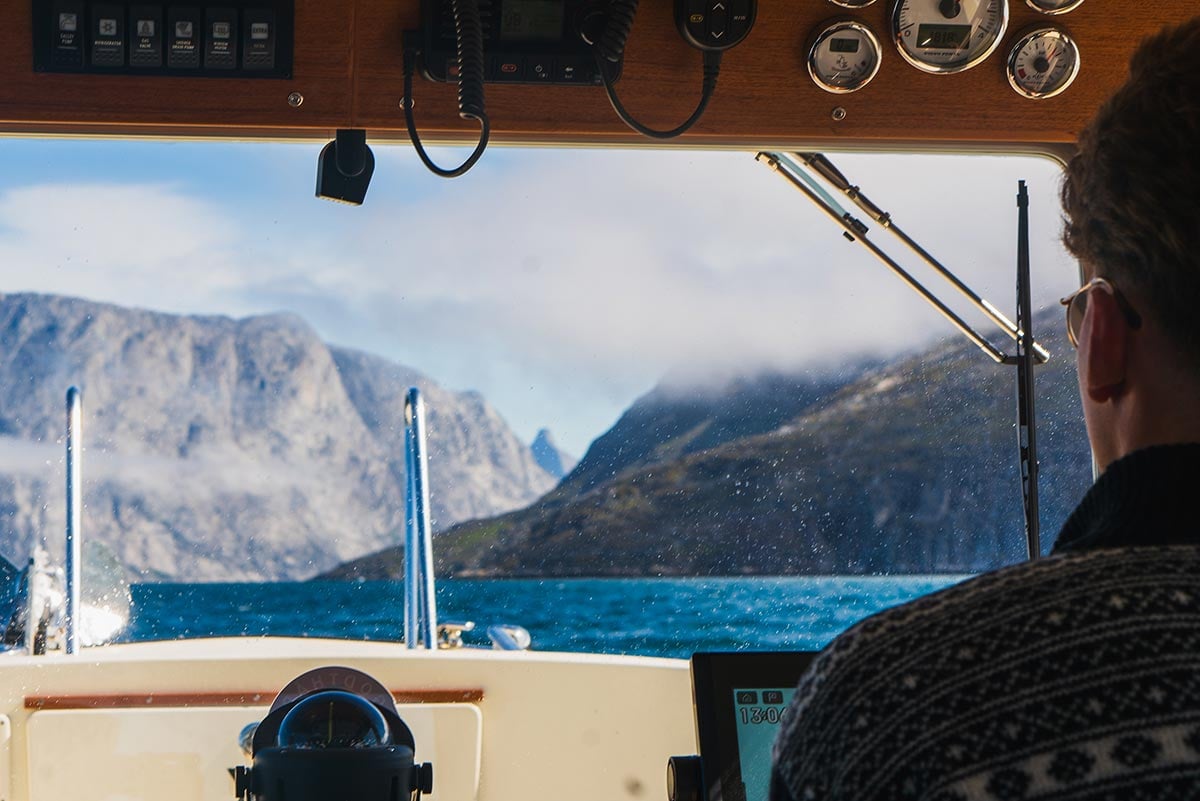
The Eqaluit Paarliit day trip is the most accessible way to experience Greenland char fishing on a single-day schedule. The day starts with roughly an hour’s run by closed Targa boat through fjords south of Nuuk, with steep rock walls and open bays giving a clear sense of the coastline. Once ashore in Præstefjord, anglers spend a full day working clear water where char can often be seen travelling through the current. Local guides position anglers on productive drifts and adjust flies and approach as light and flow shift through the day. A simple shore lunch breaks up the session before returning through the same fjord corridors toward Nuuk.
Qussuk River Expedition
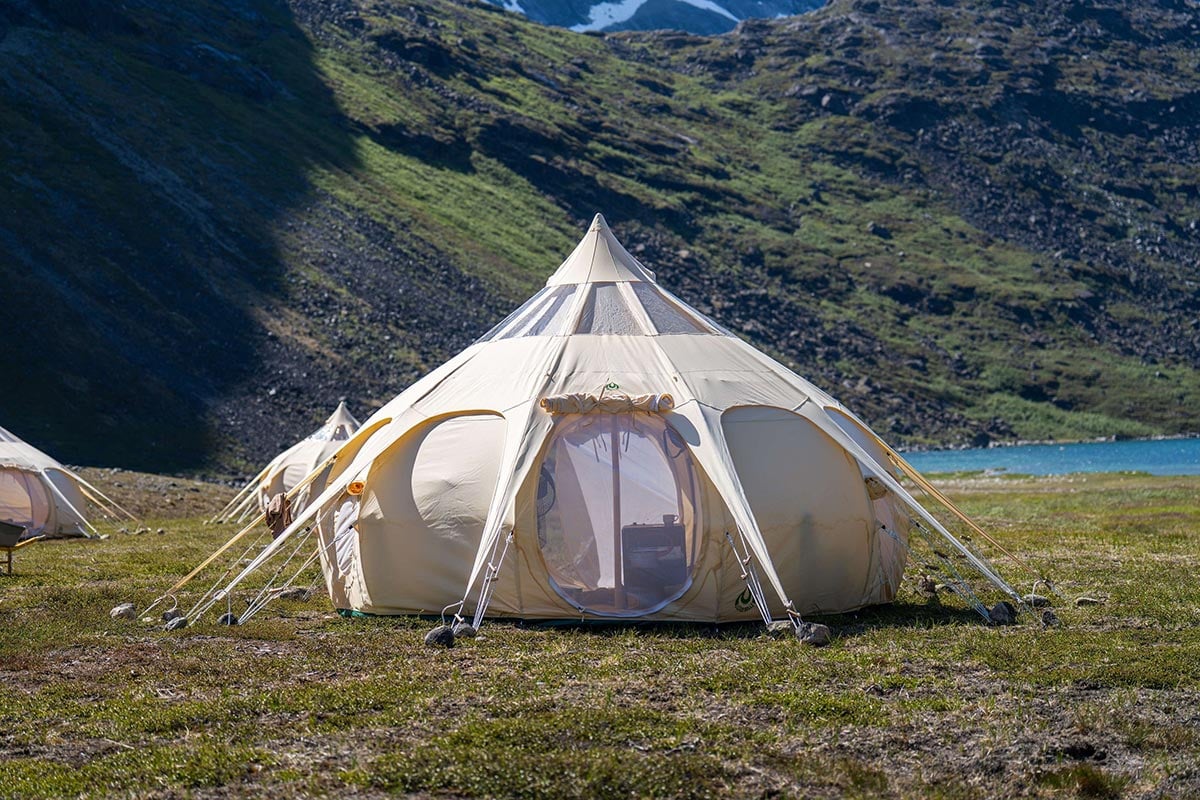
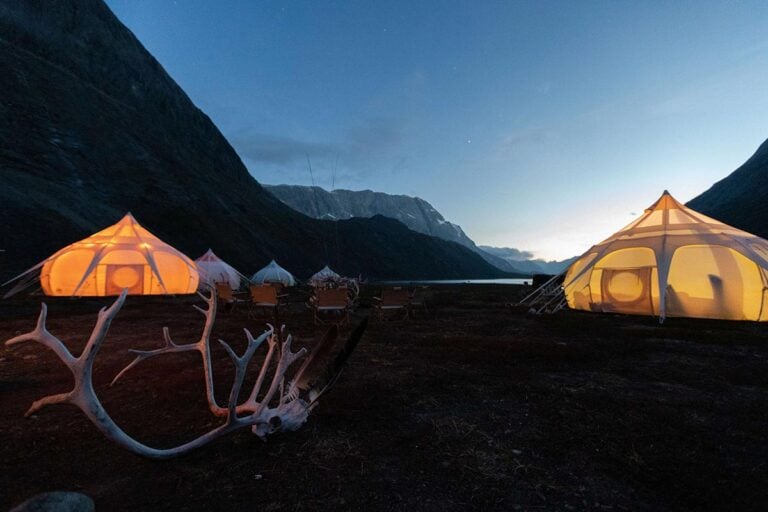
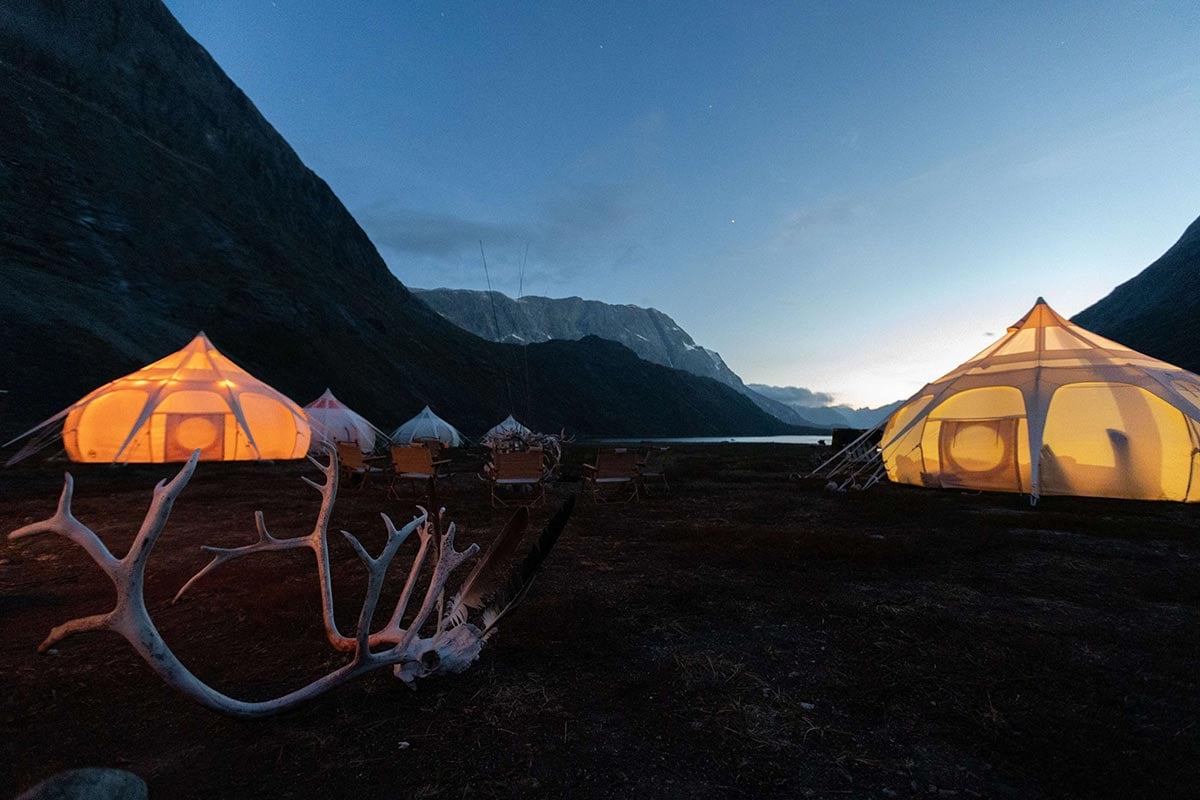
The Qussuk program is a more remote and physical option: a ten-day trip built around five full days on one of Nuuk’s wildest river valleys. Access begins with a two-hour boat ride deep into the fjords, followed by a transfer into a rugged rubber boat to move upriver. As you travel inland, sand dunes, open tundra, and caribou country replace any sign of settlement, and the river forms a self-contained corridor with no competing traffic. Camp is positioned on the river in a deliberately minimal backcountry setup in keeping with the environment.
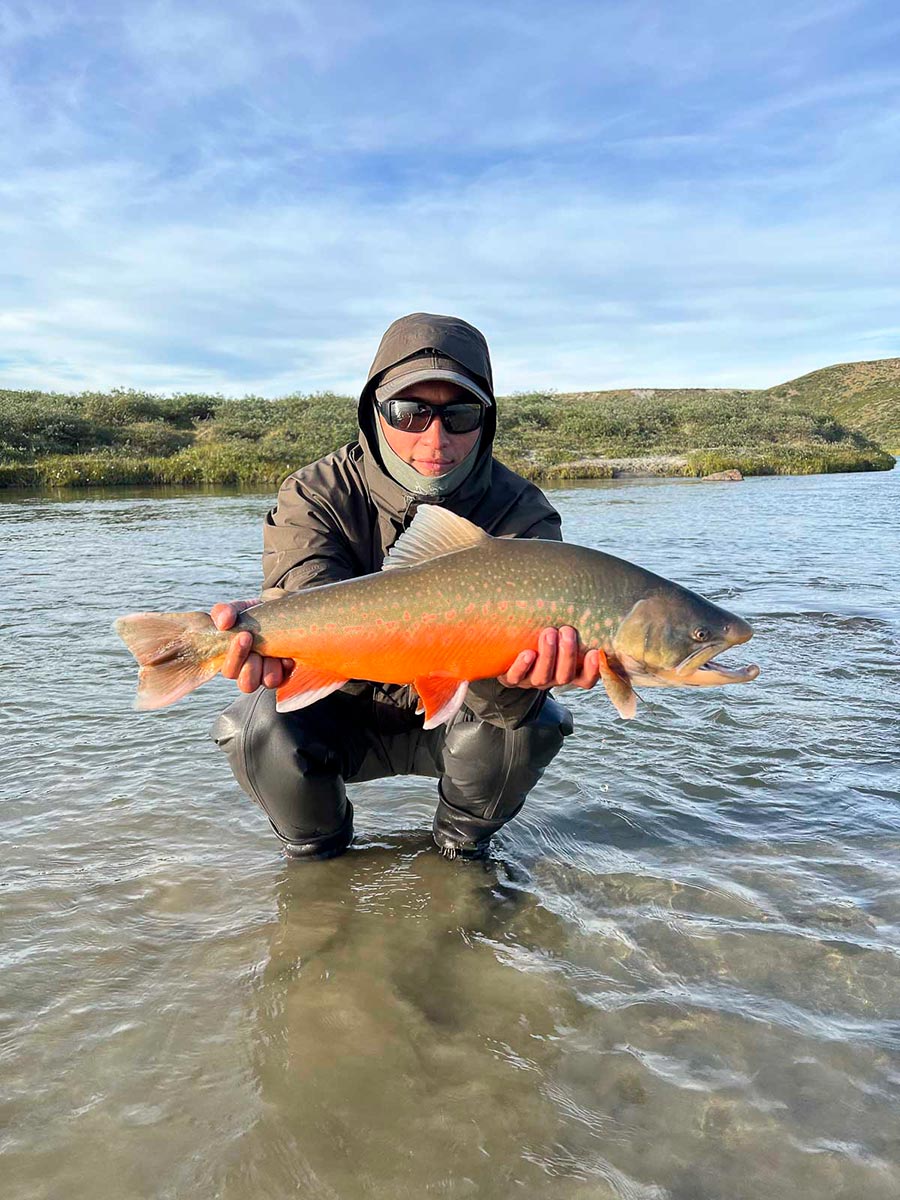
Fishing centres on roughly three kilometres of water below a waterfall that stops further upstream movement. This creates a defined stretch where char either push toward the falls or hold before spawning. Qussuk’s water carries a natural silty cast from the surrounding dunes, but this often works to the angler’s advantage: fish tend to feed aggressively, and surface-oriented patterns—particularly foam flies—produce regular reactions.
Terrain is flatter than many expect for Greenland, and the walks between camp and the central water are manageable for most anglers who can handle full days on their feet. With only a handful of guests each season and no other commercial operators permitted, Qussuk remains a genuinely low-pressure river.
Camp Isua: Three-River Program
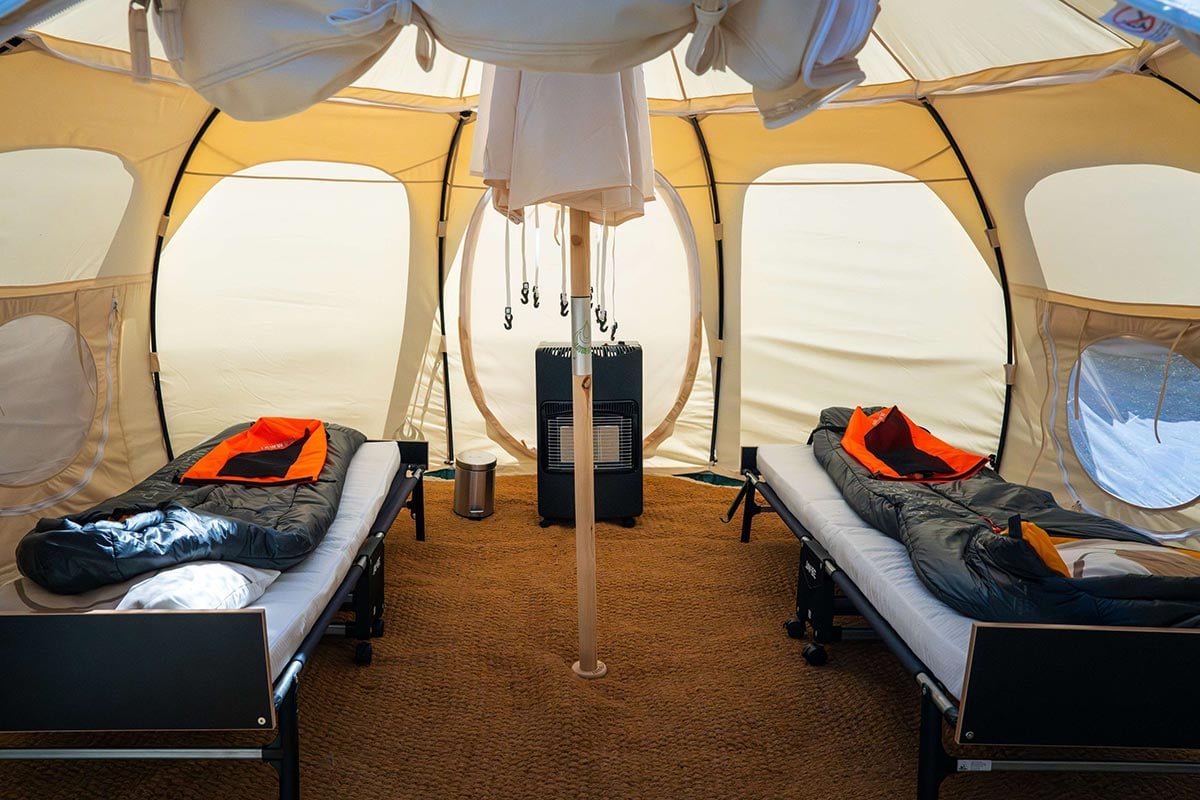
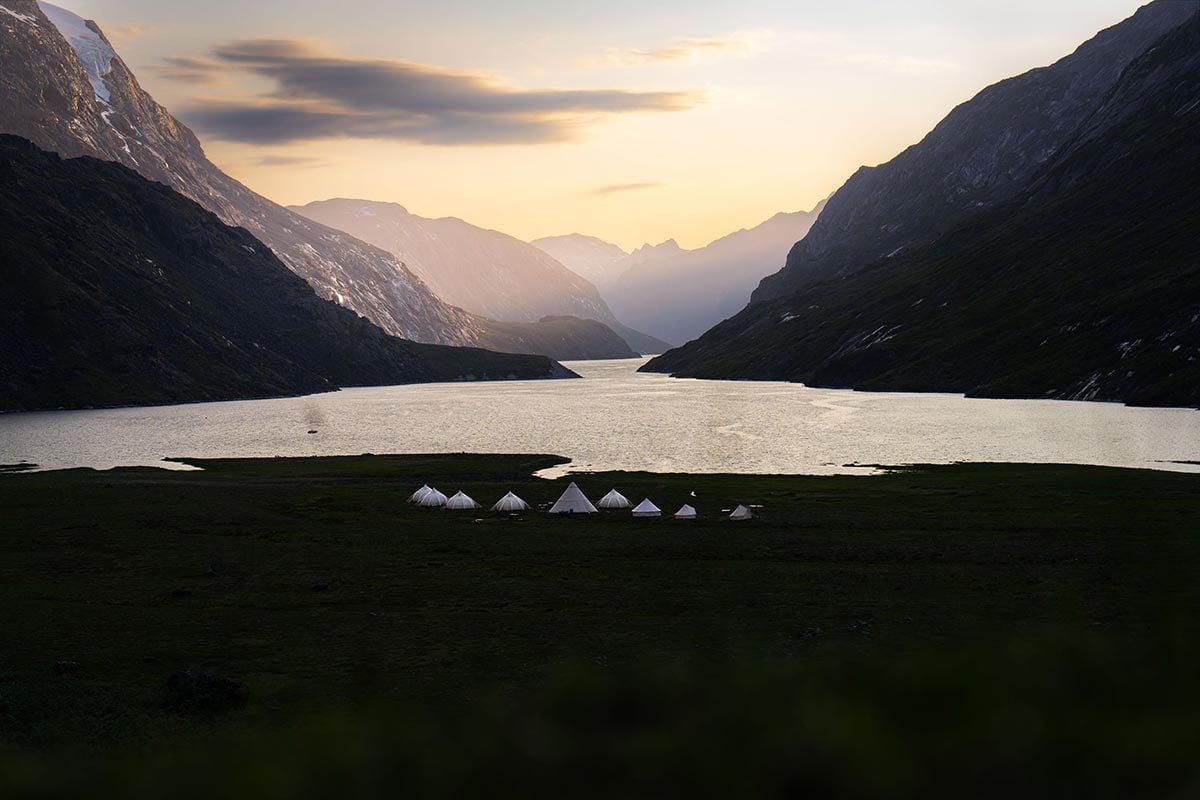
Camp Isua is a multi-river program set deep in Grædefjorden, giving anglers access to three distinct systems: Isua, Eqaluit and Tasiusaq (also referenced as Ilivertallip Kuua). Guests spend a full week fishing, with boat transfers used to rotate between rivers and keep each system rested. The trip begins with a four-hour Targa boat run from Nuuk, passing the mouths of the valleys you will fish later in the week. Daily briefings cover river choice, expected conditions, and any safety considerations tied to weather or tide timing.
With only eight rods per week and three rivers in rotation, pressure stays low. Some days start with a short walk to Isua; others involve a boat ride to Eqaluit or Tasiusaq. Lunch is taken on the river, and anglers typically return to camp in the evening to prepare gear and review the next day’s plan. The proximity of Isua to camp also allows for short after-dinner sessions during the long Arctic evenings.
The Isua River
Isua is the river most closely tied to the weekly rhythm at Camp Isua. It runs for more than ten kilometres through a steep-sided valley, with cold turquoise water that stays clear for much of the season. Char hold from the lower sections near camp all the way into the upper valley. Reaching the remote stretches requires hiking over moraine ridges and steeper ground, including the climb toward the well-known “Steps” pool, supported by a fixed rope. The lower and mid sections remain easily accessible and consistently productive, making Isua workable for both exploratory anglers and those who prefer shorter walks.
The Eqaluit River
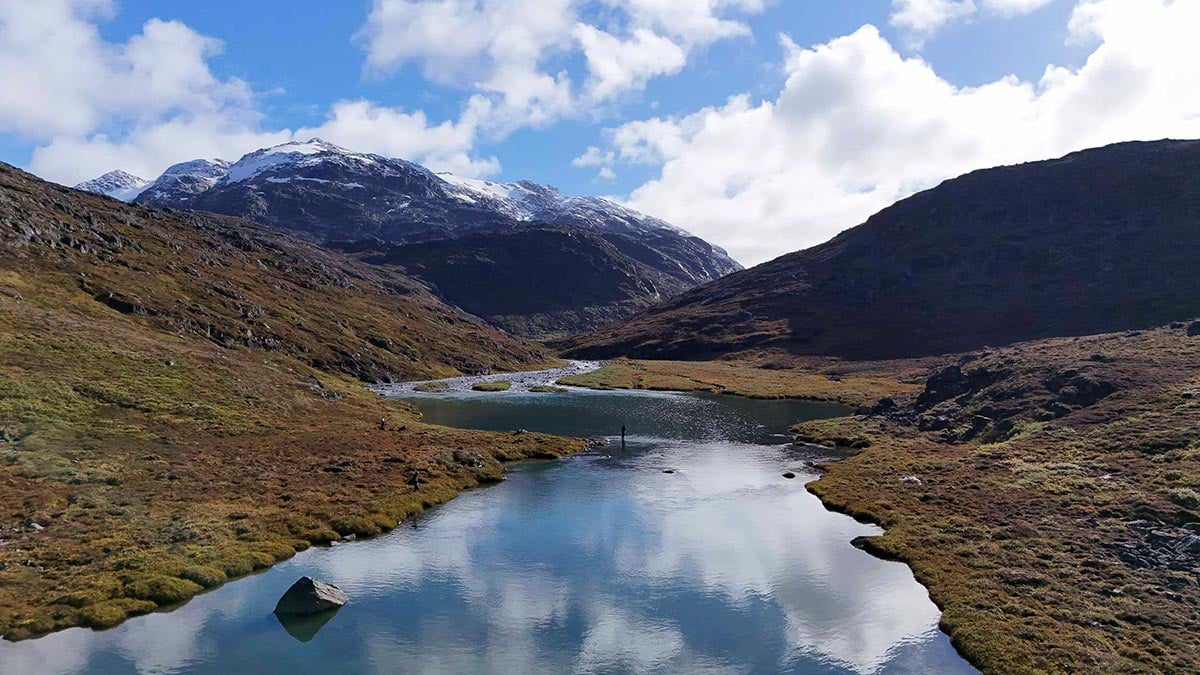
The Eqaluit system fished from Camp Isua is a chain of dark, clear lakes connected by a short two- to three-kilometre river. The current is fast enough to oxygenate the water yet even enough to make reading the river straightforward. Char hold in defined lies—moss-covered stones, seams, deeper slots—and the easy walking allows anglers to focus on casting and drift control. Reaching the valley involves a one-hour Poca 600 ride along still fjord water and a short, steep climb from the landing point. Once on the river, stable footing and clear current make it well suited to precise fishing, with sight opportunities when light allows.
The Tasiusaq River
Tasiusaq is the smallest of the three systems—around five hundred metres of river connecting turquoise glacial lakes with the narrow valley below. The river drops through small falls and chutes that act as natural ladders for char moving toward a crystal-blue spawning lake. A secondary stream enters lower down and is still being explored. Access requires another fjord run followed by a short hike; some transfers include a quick stop to pick up cod on the fly for dinner in one of the shallow bays. On the river, anglers are fishing compact, powerful water where every metre holds potential and the colour of the lakes adds a different visual element to the week.
Daily Rhythm, Guiding and River Management
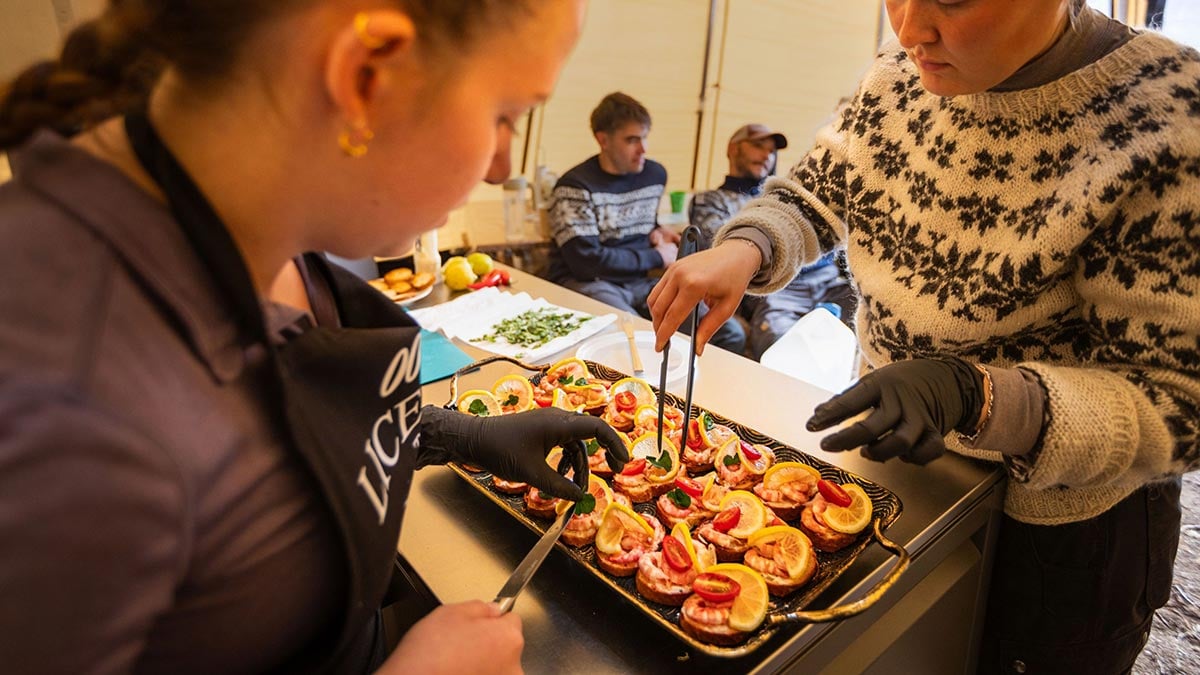
Across all programs, days are structured around long Arctic light rather than fixed schedules. At Camp Isua, mornings begin with coffee, breakfast and a briefing before heading to the river of the day. Some anglers stay close on Isua, while others transfer by boat to Eqaluit or Tasiusaq. Lunch is taken streamside, and evenings are typically spent back in camp with time to organise gear and review the plan for the next day. On Qussuk, the rhythm is more stripped-back: a simple backcountry camp, straightforward meals, and as much time on the water as anglers have the energy for.
Rawarctic manages pressure carefully. Only eight rods fish Camp Isua in any week, and at least one river is rested each day. Qussuk is a concessioned system where no other operator can run commercial trips, and only a small number of guests fish it each season. Greenland’s requirement to disinfect flies and hooks before arrival is enforced, and a catch-and-release policy applies, with a few fish kept selectively for meals.